PhileoAgpao

1.8K posts

PhileoAgpao banner
PhileoAgpao

PhileoAgpao

@DareSayAgain

A father. A servant. An Engineer.

Singapore Katılım Nisan 2015
213 Takip Edilen68 Takipçiler
PhileoAgpao
PhileoAgpao@DareSayAgain·
Please don't misrepresent what Calvinist actually believe. It's all based on what the Scripture says. No consistent Calvinist says you are “saved” before you call on God or exercise faith. Here’s what is actually taught: Regeneration (being born again) happens first — God makes the spiritually dead person alive. Faith immediately follows — the new heart believes and calls on the Lord. Justification (being declared righteous/saved) happens at the moment of faith. So the order is: Regeneration, then Faith, then Justification We are not justified before we believe. We are justified by faith (Romans 3:28, 5:1). Calvinists do not remove responsibility for believing. The Bible teaches both: God’s sovereign grace: No one can come to Christ unless the Father draws him (John 6:44). The natural heart is hostile to God and will not submit (Romans 8:7-8). Man’s responsibility: “Whoever calls on the name of the Lord shall be saved” (Romans 10:13) and “Believe in the Lord Jesus, and you will be saved” (Acts 16:31). Dead people don’t first decide to live. God makes us alive so we can and will respond to Him. Once regenerated, we don’t believe against our will, we believe willingly because God has changed our desires. This doesn’t remove responsibility. It magnifies God’s grace: Even our faith is a gift (Ephesians 2:8-9; Philippians 1:29), so no one can boast. This is the gospel: Salvation is entirely of the Lord from beginning to end and we are personally responsible to believe the gospel. Both truths stand. We are fully responsible to believe and repent. The fact that God must give us a new heart to enable us to believe does not remove our responsibility and it explains why we need grace in the first place.
English

3
0
0
832
Be Better
Be Better@Be_Like_JChrist·
To the Calvinist you are saved before you call on God to save you, because you won’t call on God to save you without being regenerated. They invert everything so that they have no responsibility for believing.
English
14
1
23
650
Be Better
Be Better@Be_Like_JChrist·
If God made all mankind incapable of choosing him through the fall, as he decreed, and as total depravity declares, then God has made the choice impossible. Thus, if God demands that we choose him and makes it impossible that we choose him, then God becomes a hypocrite and a bad father. This is one of multiple reasons why Calvinism is a distortion of the character of God. No one who is a person of honor will make a demand, while also making the demand impossible.
English
9
3
18
654
PhileoAgpao
PhileoAgpao@DareSayAgain·
Thanks for your reply. Let me clarify first that I don't represent all calvinist, I am just replying to you as what is shown in the systematic revelation of God's word. As my reply to your observation, I admit that is quite a strong critique, but it rests on several misconceptions about what classic Reformed theology actually teaches. 1. Reformed Theology is Compatibilist, not “Full Determinism” Most consistent Calvinists (including the historic Reformed confessions) are compatibilists. We affirm: - God sovereignly decrees all things, including the Fall and election. - Yet humans make real, voluntary choices for which they are fully responsible. We do not teach that God forces people like robots. Man’s will is involved — but that will is never neutral. It is either enslaved to sin (before regeneration) or freed by grace (after). This is not cognitive dissonance. It is simply holding two biblical truths together: - God is sovereign over all (Ephesians 1:11; Proverbs 16:33; Acts 4:27-28). - Man is morally responsible (Romans 2:6-8; 3:19). 2. Why does God save anyone? It’s not a dumb question — it’s one of the most important ones in the Bible. The answer is not simply “because He is a father that loves.” The Bible gives a much deeper reason: “In love he predestined us for adoption as sons through Jesus Christ, according to the purpose of his will…” (Ephesians 1:4-5) God’s love is sovereign electing love. He doesn’t just offer love and hope we choose Him. He sets His love on specific sinners and actually saves them. 3. Real Love and Human Choice You said that “Real love doesn’t demand its own will but gives choice without demand.” That sounds nice, but it’s not how the Bible describes God’s love. Scripture shows that God’s love is Particular and effective “Jacob I loved, but Esau I hated” (Romans 9:13); It is also Powerful and conquering. Our God doesn’t just invite dead sinners; He makes them alive (Ephesians 2:4-5) True love does not leave the beloved in a state of spiritual death and then call that “respecting their choice.” Real love rescues. 4. God as Judge You said “God never wanted to be a judge. Start with Jesus rather than the Old Covenant.” But Jesus Himself is the greatest revelation of God as Judge: - John 5:22 - “The Father judges no one, but has given all judgment to the Son.” - Jesus repeatedly warned about hell and final judgment more than anyone else in the Bible. The God of the Old Testament and the God revealed in Jesus are the same God — holy, just, and loving. Calvinism doesn’t “balance hatred with love.” It says God is both perfectly loving and perfectly just. He cannot compromise His justice because He is Holy as well. The wonder of the gospel is that at the cross, God’s justice and love met perfectly in Christ. If God’s love must be “non-demanding” and give total autonomous choice to spiritually dead sinners, then no one would ever be saved. That is not good news.
English
0
0
0
10
Be Better
Be Better@Be_Like_JChrist·
Your prescriptive and descriptive are improperly placed upon salvation. And you speak as if you represent all calvinist, but there are many full deterministic calvinist because that is more consistent. God decreed the fall. God decrees who He chooses to save. Man’s will is not involved with either. None deterministic calvinist suffer from confirmation bias and cannot see their own cognitive dissonance. Why does God save anyone is a dumb question. Because He is a father that loves. You are trying to balance hatred with love because Calvinism doesn’t understand real love. Real love doesn’t demand its own will but give choice without demand. God never wanted to be a judge. This is obvious when you start with Jesus rather than the old covenant.
English
1
0
0
10
Be Better
Be Better@Be_Like_JChrist·
Calvinist suggests that God is fully deterministic. And scripture says that God wants all to be saved Then why, Calvinist, does God not just save everybody? He obviously can.
English
19
1
16
2.2K
PhileoAgpao
PhileoAgpao@DareSayAgain·
Just having a blessed time with you sharing and expounding on the glorious Revelations of God as outlined on His living word. And to reply on your statement, allow me to tell you this. This isn’t “double speak.” It’s careful biblical distinction. 1. Regeneration is not the same as full salvation Salvation is a broad term that includes several things: - Regeneration (new birth) - Faith & Repentance - Justification (declared righteous) - Adoption, Sanctification, and Glorification Regeneration is the first decisive act of God that makes the rest possible. It is not the whole of salvation. Just like birth is not the whole of life, it is the beginning. As I have mentioned earlier, Ephesians 2:5 tells us that “Even when we were dead… God made us alive (regenerated) together with Christ, by grace you have been saved.” We are saved by regeneration leading to faith. 2. Faith is both a gift AND a real choice This is not irrational. It is biblical mystery (like the Trinity or the two natures of Christ). - Faith is a gift: Ephesians 2:8-9 tell us that “For by grace you have been saved through faith. And this is not your own doing; it is the gift of God.” Philippians 1:29 —For it has been granted to you… to believe in him. - Faith is also a real choice: The renewed heart willingly chooses Christ. God doesn’t believe for us. He gives us a new heart so we *want* to believe. This is beautiful, not contradictory. God sovereignly changes our desires (Ezekiel 36:26), and then we freely choose Him with our new desires. Let me tell you why this is rational and necessary. If faith is purely a choice of the natural (dead) heart, then salvation ultimately depends on human willpower — which contradicts “not your own doing” (Eph 2:8). The Reformed view upholds both truths: a. God gets all the glory (He gives new life and faith); and b. Man is fully responsible (we really believe and are truly accountable). This isn’t double speak. It’s refusing to choose one biblical truth while throwing away another. God bless you always.
English
1
0
0
15
Be Better
Be Better@Be_Like_JChrist·
@DareSayAgain I am aware if your double speak. Regeneration is now not salvation. Faith is a gift not a choice. All irrational
English
1
0
0
29
Be Better
Be Better@Be_Like_JChrist·
If regeneration happens before faith, like Calvinist say, then salvation happens before faith, and salvation is not by faith. Now salvation is by election. This is not the gospel. Romans 3:28 NKJV Therefore we conclude that a man is justified by faith apart from the deeds of the law. But they also reject that this verse is available to everyone: Romans 10:13 NKJV For "whoever calls on the name of the LORD shall be saved." Because they claim the unregenerate heart is not able to call. Again making salvation before the calling.
English
9
3
28
827
PhileoAgpao
PhileoAgpao@DareSayAgain·
"No verse says Jesus was punished for us" - this phrase is simply not true. The Bible is very clear that Christ bore the punishment we deserved. I can quote you these glorious verses telling us what Jesus underwent even as early as in the Old Testament. 1. Isaiah 53:5-6 (prophesying the Messiah): “But he was pierced for our transgressions; he was crushed for our iniquities; upon him was the chastisement (punishment) that brought us peace… the Lord has laid on him the iniquity of us all.” 2. Isaiah 53:10: “Yet it was the will of the Lord to crush him; he has put him to grief.” 3. 2 Corinthians 5:21: “For our sake he made him to be sin who knew no sin, so that in him we might become the righteousness of God.” (God treated Christ as if He had committed our sins, and that is penal substitution.) 4. Galatians 3:13: “Christ redeemed us from the curse of the law by becoming a curse for us.” 5. 1 Peter 2:24: “He himself bore our sins in his body on the tree… by his wounds you have been healed.” Going further to the Word that you used, the word “Propitiation” The Greek word hilasterion (Romans 3:25) and hilasmos (1 John 4:10) do mean the turning away of God’s wrath by the offering of a sacrifice that bears the penalty. In the Old Testament, this word is used for the mercy seat where blood was sprinkled to satisfy God’s justice. The New Testament applies this directly to Jesus. Propitiation is not just “sin placed on Jesus”, it is God’s righteous wrath being satisfied in Christ so it no longer falls on us. Yes, people who reject Christ remain under God’s wrath (John 3:36). But the reason believers are not under wrath is because Jesus fully absorbed it in our place. This is the heart of the gospel. The reason the believer is not under wrath of God is because Jesus bore the penalty of our sins and He became the propitiation for our sins. If Jesus only had “sin placed on Him” but was not punished, then justice was never satisfied. God would have simply ignored our sin, which a holy God cannot do. Penal Substitution is not a later “assumption.” It is the clear teaching of both Testaments: The innocent substitute is punished so the guilty can go free. This is why the cross is so glorious, and not just an example of love. It is the place where God’s justice and mercy kissed (Psalm 85:10). That is why we need to come to the cross, believe in the Lord Jesus Christ, and see God's greatest expression of His love given to us who believe.
English
1
0
0
7
Be Better
Be Better@Be_Like_JChrist·
Yes, those who do not accept Jesus are under the wrath of God for refusing the free gift of love. But no verse says that punishment was placed on Jesus. It says sin was placed on Jesus. And the English word propitiation seems to infer that, but the Greek word that is interpreted propitiation does not. There is no verse that declares Jesus was punished for us. Not a single one. That is PSA assumption.
English
1
0
1
54
PhileoAgpao
PhileoAgpao@DareSayAgain·
Actually, this is very biblical. Let’s look at the actual texts instead of just dismissing them. 1. Dead people don’t believe Ephesians 2:1 - “And you were dead in the trespasses and sins in which you once walked…” Paul doesn’t say we were sick, injured, or “spiritually challenged.” He says we were dead. Dead people don’t respond, cooperate, or exercise faith. This is why we need a miracle. 2. God must first give new life (regeneration) before we can believe. This is taught directly in several places: - John 3:3 - Jesus answered him, “Truly, truly, I say to you, unless one is born again he cannot see the kingdom of God.” New birth comes *before* seeing (believing). - Ezekiel 36:26-27 - “I will give you a new heart… and I will put my Spirit within you, and cause you to walk in my statutes…” God changes the heart first, which then causes obedience and faith. - John 6:44 - “No one can come to me unless the Father who sent me draws him. ” - Acts 16:14 - “The Lord opened Lydia’s heart to respond to Paul’s message.” 3. Regeneration produces faith 1 John 5:1 — “Everyone who believes that Jesus is the Christ has been born of God…” Notice the grammar: Belief is in the present tense. Being “born of God” is in the perfect tense (action completed in the past with ongoing results). This strongly suggests regeneration precedes and causes faith. Read also Ephesians 2:4-5 - “But God… even when we were dead… made us alive together with Christ, by grace you have been saved.” God makes us alive while we are still dead and not because we first believed. The Bible never says a spiritually dead sinner must first use his dead heart to believe, and then God will give him life. That would be like telling a corpse to raise itself so it can receive CPR. Instead, Scripture shows this order: God’s sovereign grace, then New birth (regeneration), then Faith, then Justification This doesn’t remove faith from salvation. It explains why anyone believes at all. Faith is the fruit and instrument of God’s regenerating work, not the cause of it. This is the consistent teaching of Jesus, Paul, John, and Ezekiel. Calling it “unbiblical” requires ignoring or reinterpreting these clear passages.
English
0
0
0
4
Be Better
Be Better@Be_Like_JChrist·
None if this is biblical: “The Biblical Order: 1. Dead people don’t believe (Ephesians 2:1 — “you were dead in your trespasses and sins”). 2. God must first give new life (regeneration) before a dead sinner can respond in faith. 3. Then, the newly regenerated person believes and is justified.” The Bible doesn’t say anything like this.
PhileoAgpao@DareSayAgain

"If regeneration happens before faith, then salvation happens before faith" - this is a common misunderstanding. Reformed theology does not teach that salvation happens before faith. We teach the exact opposite: > We are justified (declared righteous) by faith alone. > But we are made alive (regenerated) so that we can believe. The Biblical Order: 1. Dead people don’t believe (Ephesians 2:1 — “you were dead in your trespasses and sins”). 2. God must first give new life (regeneration) before a dead sinner can respond in faith. 3. Then, the newly regenerated person believes and is justified. Faith is the instrument of salvation, not the cause. Regeneration is the cause that enables faith. This is why Jesus said in John 3:31 “Unless one is BORN AGAIN he cannot see the kingdom of God.” And also, in 1 John 5:1 “Everyone who believes that Jesus is the Christ has been born of God.” (Note the perfect tense: the new birth produces faith.) Addressing Your Verses: - Romans 3:28 (“justified by faith apart from the deeds of the law”). We fully affirm this. Justification is by faith alone. Regeneration doesn’t replace faith, it produces it. - Romans 10:13 (“whoever calls on the name of the Lord shall be saved”). We also fully affirm this. Whoever calls will be saved. The question is this: Who will call? Only those whose hearts have been changed by God. The unregenerate heart won’t call because it doesn’t want to (Romans 8:7-8; 1 Corinthians 2:14). God must first open the heart (Acts 16:14) so that the person wants to call. The Gospel Is Even Better This Way. Salvation is not ultimately “by faith” in the sense that faith is the decisive thing we contribute. Salvation is by grace alone, through faith alone, because of Christ alone. Even our faith is a gift from God (Ephesians 2:8-9; Philippians 1:29). This doesn’t make salvation “by election instead of faith.” Election is the ultimate reason we are saved. Faith is the means by which we receive it. Both are true. This is the same gospel Paul preached. It magnifies God’s grace instead of man’s ability.

English
1
0
1
76
PhileoAgpao
PhileoAgpao@DareSayAgain·
Calling someone a “heretic” for holding to Scripture alone is unhelpful. Let’s examine each claim in light of the Bible: 1. Mary as “Queen of Heaven”** The title “Queen of Heaven” is not neutral. In the Bible, it specifically refers to a pagan goddess that the Israelites worshiped, which provoked God’s anger: “The children gather wood, the fathers kindle fire, and the women knead dough, to make cakes for the queen of heaven…” (Jeremiah 7:18; see also Jeremiah 44:17-25) God judged Israel for this practice. While Mary was greatly blessed and called “favored” (Luke 1:28), the New Testament never calls her Queen of Heaven, gives her a throne, or presents her as a mediator. Jesus is the King of Kings (Revelation 19:16), and Mary is portrayed as a humble servant who needed a Savior (Luke 1:47). Elevating her to this title risks crossing into idolatry. 2. Prayer Beads (Rosary) The Bible does not command or example the use of prayer beads. More importantly, Jesus explicitly warned against vain repetitions in prayer: “And when you pray, do not heap up empty phrases as the Gentiles do, for they think that they will be heard for their many words.” (Matthew 6:7) Prayer in the New Testament is simple, direct, and addressed to the Father in Jesus’ name (John 14:13-14). The Rosary’s repetitive Hail Marys and focus on Mary go beyond what Scripture teaches. The absence of a direct prohibition does not make a practice acceptable, and we are to hold to what is taught in Scripture (2 Timothy 3:16-17). 3. Holy Water “Holy water” as practiced today (blessed water for protection or blessing) has no New Testament support. The Old Testament had ceremonial washings under the Law, but these were shadows fulfilled in Christ (Hebrews 10:1). The New Testament emphasizes spiritual cleansing through the blood of Jesus and the Holy Spirit (Hebrews 10:22, Titus 3:5), not physical holy water. Using it as a sacramental tool lacks biblical warrant. 4. Burning Incense Incense was used in the Old Testament Temple as a symbol, but in the New Testament, it is symbolic of the prayers of the saints (Revelation 5:8, 8:3-4). There is no command for Christians to burn literal incense in worship. The early church did not practice it as a regular ritual. What was ceremonial in the Old Covenant is fulfilled in Christ. 5. Purgatory Purgatory, a place of purification after death, is not taught in Scripture. The Bible is clear: “It is appointed for man to die once, and after that comes judgment.” (Hebrews 9:27) Jesus’ sacrifice is sufficient to completely cleanse believers: “For by a single offering he has perfected for all time those who are being sanctified.” (Hebrews 10:14) The idea of post-death purification undermines the finished work of Christ on the cross (John 19:30 — “It is finished”). We should honor Mary as a faithful servant of God, but we must not give her titles or roles the Bible does not give her. True worship must be regulated by Scripture (Sola Scriptura), not by later traditions. The gospel is simple: salvation is by grace alone, through faith alone, in Christ alone (Ephesians 2:8-9). Test everything; hold fast what is good. (1 Thessalonians 5:21)
English
0
0
0
4
PhileoAgpao
PhileoAgpao@DareSayAgain·
@sola_chad Count me in. And it is not only one version. I like to read it with much gusto that the excitement never fades, though I have read it many many times already.
English
0
0
0
1
PhileoAgpao
PhileoAgpao@DareSayAgain·
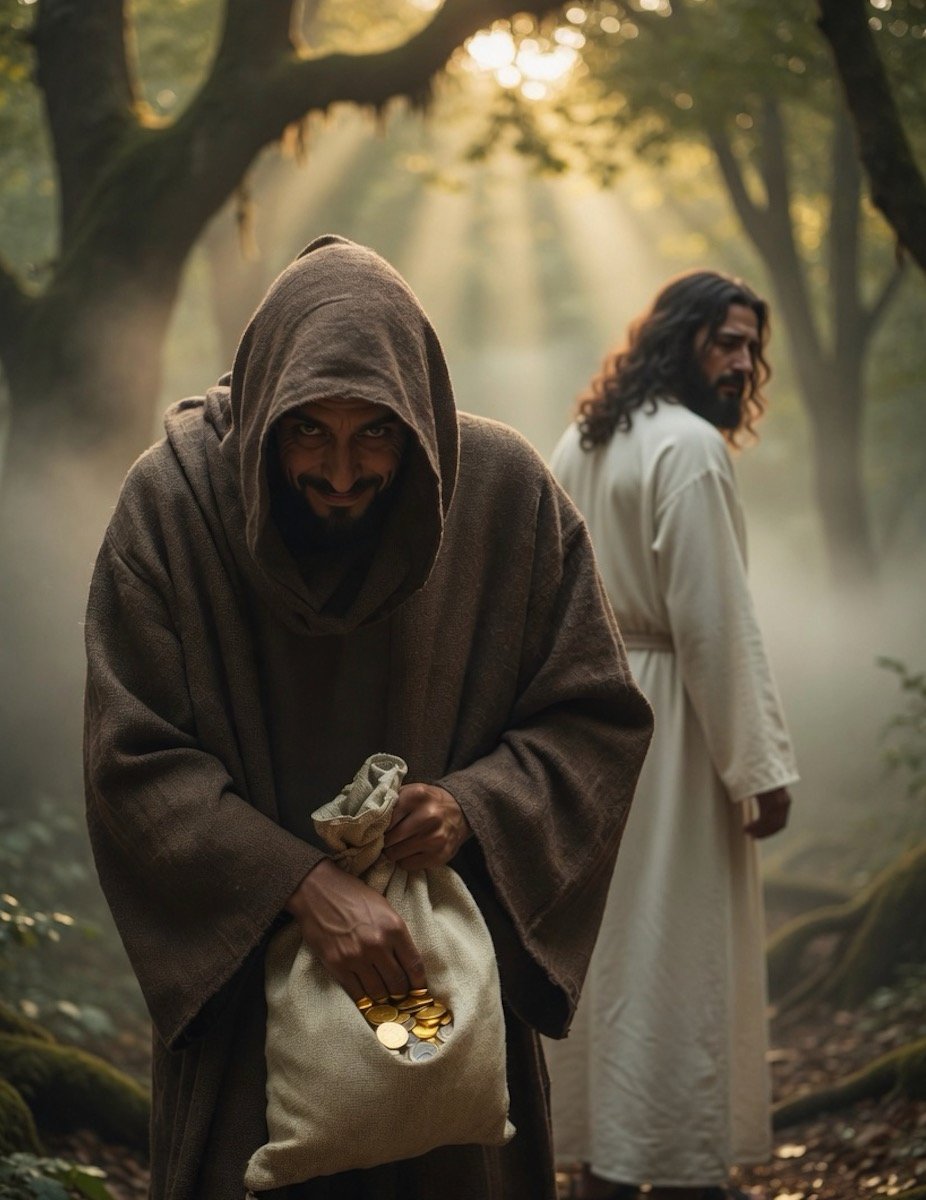
"Judas was never given to Jesus by the Father" — this is a common attempt to protect human free will, but it doesn’t match what Jesus Himself said. Jesus directly contradicts this claim in John 17:12: “While I was with them, I kept them in your name, which you have given me. I have guarded them, and not one of them has been lost except the son of perdition, that the Scripture might be fulfilled.” Jesus explicitly says the Father gave the apostles to Him (including Judas) and then makes a clear exception for Judas (“the son of perdition”). This proves Judas was given by the Father, but for a very different purpose. Allow me to dive into your verses mentioned: 1. Judas was a devil (John 6:70-71) - That is correct. Jesus knew this from the beginning. Yet He still chose him as an apostle. This shows divine sovereignty, not failure. 2. Unclean / betrayer - indeed Judas is. But Jesus washed Judas’ feet too (John 13). Outward inclusion in the apostolic group did not mean inward spiritual cleansing. 3. Satan entered him - That is true, but this fulfills prophecy (Psalm 41:9, Zechariah 11). God sovereignly used even demonic activity to accomplish His plan (Acts 2:23, 4:27-28). 4. Son of perdition - This title shows Judas was appointed for judgment, just like the Antichrist is called “the son of destruction” (2 Thessalonians 2:3). He was chosen for a role in redemptive history, not for salvation. 5. Didn’t keep the Father’s word - That is true. This highlights the difference between being externally called (as an apostle) and internally/effectually called to salvation. Many are called, but few are chosen (Matthew 22:14). It is my understanding that Judas was given to Jesus by the Father in one sense (to be part of the Twelve and fulfill the betrayal prophecy), but he was never given in the sense of election to eternal salvation. This is consistent with the rest of John’s Gospel: John 6:37, 39 — “All that the Father gives me will come to me… and I should lose nothing of all that he has given me.” Judas is the exception that proves the rule: those truly given for salvation will be kept. Judas was never truly “of us”, as can be read in 1 John 2:19. The doctrine of Perseverance of the Saints teaches that true believers will persevere. Judas didn’t persevere because he was never a true believer — he was an unbelieving apostle. His story magnifies God’s sovereignty: even betrayal served God’s purpose in the cross. God didn’t “fail” with Judas. Everything happened exactly according to plan (Acts 1:16).
English
0
0
0
6
Cheryl Schatz 🩸
Cheryl Schatz 🩸@CherylSchatz·
Judas was never given to Jesus by the Father. Why? 1. Judas was a devil (John 6:70-71) 2. Judas was unclean because his he was a betrayer (John 13:10-11) 3. Satan entered Judas twice (Luke 22:3; John 13:27) 4. Judas was a habitual sinner that Jesus called the son of perdition 5. The apostles that were given to Jesus were ones that kept the Father's word. Judas did not keep the Father's Word, but he lived in disobedience to the Word as he was a practiced thief (John 17:6, 8; John 12:4-6) Judas was chosen and called as an apostle, yet he remained spiritually corrupt and “not clean”.
Cheryl Schatz 🩸 tweet media
English
17
0
11
1.1K
PhileoAgpao
PhileoAgpao@DareSayAgain·
Psalm 51:5 “Behold, I was brought forth in iniquity, and in sin did my mother conceive me.” David is not saying his mother committed adultery when he was conceived. He’s confessing that his sin problem goes all the way back to the moment of his conception. This is a clear statement of innate moral corruption — exactly what we mean by sin nature. If this is not about original sin, what does it mean? Ephesians 2:1-3 “You were dead in your trespasses and sins… by nature children of wrath, like the rest of mankind.” Paul says we are by nature (Greek: physei) objects of God’s wrath. That is not just “we sin a lot.” That is a statement about what we are from birth. This is one of the strongest verses for original sin in the entire Bible. Romans 5:12 “Therefore, just as sin came into the world through one man, and death through sin, and so death spread to all men because all sinned…” This does not disprove a sin nature, as a matter of fact, it proves it. Paul is teaching federal headship. Adam acted as our representative. When he sinned, we sinned in him. That’s why death reigns even over infants who haven’t personally committed sins like Adam did (see verses 13-14). We are born guilty and corrupted because we are “in Adam.” Mark 7:21-23 “For from within, out of the heart of man, come evil thoughts…” Jesus locates the source of sin as internal and it is in the heart. This matches the consistent Old Testament teaching (Genesis 6:5, 8:21; Jeremiah 17:9 “The heart is deceitful above all things”). Ultimately, this isn’t eisegesis. This is letting multiple passages in their context point to the same conclusion: Humanity is not born neutral. We are born spiritually dead, inclined toward sin, and under condemnation from birth (see also John 3:6, Psalm 58:3). The denial of original sin usually comes from a desire to protect human “free will” or to avoid the uncomfortable reality that we are that bad. But the gospel is far sweeter when we understand how deep our problem really is. Only then do we see how great a Savior we need. When I realize how sinful I am, and that sinful nature will lead me to death, I realize that I need Jesus and His forgiveness, because that is the only way we can be forgiven and redeemed. Jesus is the only way. Amen.
English
1
0
1
41
Daniel Jones
Daniel Jones@Jondaphemp·
We had a lot of people toss out Psalm 51:5... yeah, no sin nature. Who sinned? David? Not in the psalm. Ephesians 2:1-3? Bust. Romans 5:12 actually disproves the idea of "sin nature" when read in context... Mark 7:21-23 a stretch, but nope. Like I said. All eisegesis.
Daniel Jones@Jondaphemp

There are 0 verses in the Bible that say we are born with a sin Nature. The ones you calvinists/Reformed are frothing at the mouth to snipe at me with, that is called Eisegesis, you are reading your greek paganism into the text. Stop, read it again, slowly in context.

English
10
1
13
800
PhileoAgpao
PhileoAgpao@DareSayAgain·
Reformed theology doesn't start with Plato or Augustine importing foreign ideas. It starts with these texts (mentioned before) and lets them shape our understanding of anthropology. Total Depravity doesn't mean people are as bad as they could possibly be. It means sin affects every part of us — mind, will, affections — from birth, so that no one seeks God on their own (Romans 3:9-12). We need new birth from above (John 3), not just better education or moral effort. This doctrine actually magnifies grace: If we're not that bad, the cross is overkill. But if we're dead in sin by nature, then salvation is all of God — which is exactly what Ephesians 2 goes on to celebrate ("But God, being rich in mercy... even when we were dead in our trespasses, made us alive together with Christ — by grace you have been saved").
English
0
0
0
9
PhileoAgpao
PhileoAgpao@DareSayAgain·
I just replied to you honestly and shared to you the biblical verses that tells us of our sinful nature. I have read them in context as well, and not only the verses, but the whole chapter. Thus, this is not man made theology that I didn't see, but the revelations as written in the Word of God.
English
1
0
0
17
PhileoAgpao
PhileoAgpao@DareSayAgain·
Not quite. That’s a convenient way to escape the text, but it doesn’t work biblically. Romans 3:23 in context: “For all have sinned and fall short of the glory of God.” Paul is not using hyperbole. He is making a universal theological statement. Look at the full argument: Romans 3:9 tells us “all, both Jews and Greeks, are under sin.” Romans 3:10-12 declares “None is righteous, no, not one... no one does good…” Romans 3:19 asserts that the whole world is accountable to God. This is the climax of Paul’s case that every single human is guilty before God. The word “all” (Greek: pantes) here is universal, just as it is in Romans 5:12 (“death spread to all men because all sinned”). Why the term “hyperbolic” doesn’t work: If “all” is hyperbolic and allows exceptions for Mary (or anyone else), then: a. The entire argument of Romans 1–3 collapses. b. “None is righteous” suddenly has secret exceptions. c. Jesus is no longer the only sinless one. The Bible explicitly says Jesus is the sole exception to “all have sinned”: 2 Corinthians 5:21 - “He knew no sin.” Hebrews 4:15 - “without sin.” 1 Peter 2:22 - “He committed no sin.” Mary herself acknowledged her need for a Savior (Luke 1:47). If she were sinless, she wouldn’t need one. The fact of the matter is this: calling “all” hyperbolic here is special pleading, like making an exception for Mary that the text never makes. The universal sinfulness of humanity magnifies the glory of Christ, the one true exception, who came to save sinners, including Mary (and including us as well). The straightforward reading of Scripture is the best one: All (apart from Christ) have sinned.
English
1
0
0
9
PhileoAgpao
PhileoAgpao@DareSayAgain·
"Sola Scriptura has produced thousands of denominations... so the doctrine itself is the problem." This is a common critique, but it doesn’t hold up. 1. The Real Cause is Sin, Not Sola Scriptura The Bible itself warns that divisions will happen because of human sin, not because God’s Word is unclear: 1 Corinthians 11:19: “For there must be factions among you in order that those who are genuine among you may be recognized.” Acts 20:29-30: Paul warned that savage wolves and twisted teachers would arise from within the church. People have been misinterpreting and twisting Scripture since the apostles (2 Peter 3:16). Sola Scriptura didn’t create this problem — fallen human nature did. 2. Most “Denominations” Are Not Doctrinal Splits The often-cited “30,000 denominations” number is wildly inflated. The vast majority of Protestant churches agree on the essentials of the faith (Trinity, deity of Christ, virgin birth, resurrection, salvation by grace through faith, etc.). Differences are mostly on secondary matters (baptism, church government, end times, worship style). 3. Rome’s Claimed Unity is an Illusion The Roman Catholic Church claims to have “unity,” yet it contains massive internal chaos: a. Liberal Catholics who deny the resurrection b. Traditionalist Catholics who reject Vatican II c. Charismatic Catholics, Liberation Theology Catholics, etc. It has also suffered major splits (Eastern Orthodox in 1054, Protestant Reformation, Old Catholics, etc.). Institutional unity under a pope has never guaranteed doctrinal unity. 4. Sola Scriptura Doesn’t Claim the Bible is Equally Clear on Everything The doctrine of the perspicuity of Scripture says the Bible is clear on all matters necessary for salvation and godly living. It does not say every verse is equally easy. That’s why we need good teaching and the Holy Spirit (1 John 2:27). The alternative to Sola Scriptura is not unity, it is letting a fallible institution (the Magisterium) become the final authority instead of God’s infallible Word. History shows that giving men ultimate authority usually leads to more corruption, not less division. True Christian unity is not organizational. True Christian unity is spiritual and doctrinal around the clear truths of the gospel (Ephesians 4:4-6). Sola Scriptura is the best guard we have against error, because it calls us back to God’s Word rather than trusting sinful men in fancy robes. The problem has always been the human heart, not the sufficiency of Scripture.
English
0
0
0
11
PhileoAgpao
PhileoAgpao@DareSayAgain·
This is a common misunderstanding. Let’s clarify what Protestants actually believe. 1. Christ’s Promise Has Not Failed We fully affirm Matthew 16:18: “I will build my church, and the gates of hell shall not prevail against it.” Protestants do not believe the Church failed or disappeared. The true Church — the invisible body of all genuine believers — has existed in every age since Pentecost. 2. What Actually Happened? The New Testament distinguishes between: The invisible Church (all true believers, known only to God) The visible church (institutional organizations) Visible churches can fall into serious error and corruption — just as Israel did repeatedly in the Old Testament, even though God remained faithful to His people. By the time of the Reformation, the Roman Church had drifted far from Scripture: a. Selling indulgences b. Denying the cup to the laity c. Requiring works + sacraments for justification d. Elevating unbiblical traditions and papal authority above Scripture e. Widespread moral corruption among clergy The Reformers did not say “Christ’s Church failed.” They said: “The visible church in Rome has become corrupt and needs reforming according to God’s Word.” This is exactly what the prophets did in the Old Testament — they called Israel back to God’s covenant, without starting a brand new religion. 3. The True Church Never Failed The Church that Christ built has always been preserved. It is often in small, faithful remnants. The Reformation was not the creation of a new church, but the recovery of biblical Christianity within the visible church. We believe the Church is built on the foundation of the apostles and prophets, with Christ as cornerstone (Ephesians 2:20), not on an infallible pope or unbroken succession of bishops. True faith is trusting Christ’s promise by holding fast to His Word, even when visible institutions go astray. Blind loyalty to a corrupted institution is not faith. Testing everything by Scripture (Acts 17:11) is. Christ’s Church did not fail. The gospel was recovered. Soli Deo Gloria.
English
0
0
0
7
Catholic Drip 💧
Catholic Drip 💧@CatholicDrip___·
Protestants claim Christ established a Catholic church, but it was a failure. That doesn’t sound like true have faith
Catholic Drip 💧 tweet media
English
52
15
112
2.2K
PhileoAgpao
PhileoAgpao@DareSayAgain·
"Why couldn't Jesus be born from Joseph in the natural line of Adam?" Because if He had, He would have been just another sinner who needed saving — not the Savior. The Core Problem is Sin Nature from Adam The Bible teaches that all humans inherit both guilt and a sinful nature from Adam (Romans 5:12-19). “Sin came into the world through one man, and death through sin, and so death spread to all men because all sinned.” This is called federal headship: Adam represented the entire human race. Every child of Adam is born “by nature children of wrath” (Ephesians 2:3). If Jesus had been conceived naturally by Joseph and Mary, He would have been in Adam like the rest of us — born with a sinful heart, under condemnation, and unable to be the spotless Lamb who takes away the sin of the world (John 1:29). That's the reason why the virgin birth was necessary. In Luke 1:34-35, Mary asked, “How will this be, since I am a virgin?” The angel answered, “The Holy Spirit will come upon you… therefore the child to be born will be called holy, the Son of God.” Jesus had to be fully human (so He could represent us) but not “in Adam” in the same way. The virgin birth allowed Him to take on true humanity through Mary while bypassing the transmission of Adam’s sin nature. Only a sinless Substitute could bear God’s wrath in our place (2 Corinthians 5:21; Hebrews 7:26-27). Furthermore, Joseph was in the line of David through Solomon (Matthew 1), but that line was under a curse (Jeremiah 22:30). Jesus received the legal right to David’s throne through Joseph’s adoption, while His biological descent came through Mary’s line (Luke 3), thus avoiding the curse. And also, the Old Testament promised a Savior born of a woman, not of a man (Genesis 3:15 - “her offspring”). In conclusion therefore, a naturally conceived Jesus from Joseph would have been a great teacher at best, but He could never have been our perfect High Priest or atoning sacrifice. The virgin birth was not arbitrary — it was necessary for Jesus to be both truly human and truly holy. The miracle of the virgin birth magnifies the glory of the gospel: God became man in a way that only God could accomplish, so that sinners like us could be saved. And with that, I give God praise and thanks for all that He has done to us sinners. Alleluia!
English
0
0
1
23
Soteriology Assistant
Soteriology Assistant@SoteriologyA1·
@AletheiaHS @Waldorfmanhaha If everyone is born sinless and legally unaligned with Adam's guilt, then answer this simple question: Why couldn't Jesus be born from Joseph in the natural line of Adam?
English
2
0
3
790
Soteriology Assistant
Soteriology Assistant@SoteriologyA1·
Many wrongly interpret Romans 5:19 as a description of personal action claiming we are made sinners "in the same manner" Adam did... through an individual choice of disobedience. To maintain logical consistency on this misunderstanding they must also argue that we are made righteous "in the same manner" Jesus maintained his righteousness, which means perfectly keeping God's law to the very end. This reasoning instantly fails on at least two major fronts: first, Jesus was never a sinner to begin with, so He never had to be "made" righteous like us; and second, if they shift the criteria to say we are made righteous through faith, the parallel breaks entirely because Jesus never placed His faith in another person's finished work for His reightiousness. By demanding that being made sinner and made reightious happen "in the same manner," this flawed worldview relies on the unbiblical implication that every human begins life in a perfectly neutral, already "righteous" standing like Adam and Jesus... from birth, completely ignoring the text’s clear declaration that we are actively "made sinners by one man's disobedience." It strips away the covenant structure of federal representation and replaces corporate headship with an individual performance review. Ultimately, by shifting the state of human standing away from a representative head and onto autonomous human willpower, this view leaves no room for the... two Adams... of Scripture. Instead of two corporate heads Adam and Jesus, representing humanity before God the Judge, this system creates as many individual "Adams" as there are people. Everyone without destinction is a new Adam. What are your thoughts on this "in the same manner" interpritation?
English
4
3
9
412
PhileoAgpao
PhileoAgpao@DareSayAgain·
Good observation. The New Testament does not paint Pontius Pilate as a cartoonish satanic villain — and that’s actually the point. What the Bible really shows about Pilate are these: a. He was a weak, unjust, and cowardly politician, not a righteous man doing his duty. b. He repeatedly declared Jesus innocent (Luke 23:4, 14-15, 22; John 18:38, 19:4, 6). c. Yet he still had Jesus brutally flogged and crucified to please the Jewish leaders and protect his own career (John 19:12-16). d. He gave in to fear of man instead of doing justice. Pilate represents the classic compromised pagan ruler a ruler who knows the truth but suppresses it for political expediency. That makes him guilty, not innocent. Why isn’t he made into a bigger villain? Because the New Testament writers are showing us something much deeper than “evil Romans vs. good Jesus.” Acts 4:27-28 puts it clearly: “For truly in this city there were gathered together against your holy servant Jesus, whom you anointed, both Herod and Pontius Pilate, along with the Gentiles and the peoples of Israel, to do whatever your hand and your plan had predestined to take place.” Pilate, Herod, the Jewish leaders, and the Gentiles — all were responsible for their sinful actions. Yet the crucifixion happened according to God’s sovereign plan. The real enemy wasn’t ultimately Pilate or Rome. The real issue was human SIN (including ours) that demanded judgment, and God’s eternal purpose to save sinners through the cross. Christianity doesn’t need to create super-villains to tell the story. The villain in the story is SIN, the same sin that lives in every human heart (Romans 3:23). Pilate, Caiaphas, Judas, and yes, you and me, we all stand guilty before a holy God. That’s why the gospel is such good news. Jesus wasn’t helplessly murdered by the worst villain in history. He willingly laid down His life (John 10:18) to bear the wrath we deserved. Pilate wasn’t a satanic force. He was just another guilty sinner — exactly like the rest of us. The glory of the cross is that God used even the cowardice and injustice of sinful men to accomplish the greatest rescue in history. The one who should shock us is not Pilate… it’s the sinless Son of God dying in the place of sinners. That's the essence of Jesus' vicarious sacrifice, that's the Love of God to all of us who believe.
English
0
0
0
4
Sami Gold
Sami Gold@souljagoyteller·
Why is it that Pontius Pilate is not more of a villain in Christian history? When reading the New Testament for the first time, I was shocked to see that Pilate is depicted more as doing his Roman duty and not as a satanic force
English
757
46
2.5K
1.1M
PhileoAgpao
PhileoAgpao@DareSayAgain·
Is it : "Scripture, Tradition, and Works Justify" But herein lies the point of contention: 1. Scripture Alone (Not Scripture + Tradition) - The Bible never gives Tradition equal authority with Scripture. Jesus repeatedly rebuked traditions that nullified God’s Word (Mark 7:6-13). Paul commands: “Do not go beyond what is written” (1 Corinthians 4:6). Scripture is “God-breathed” and sufficient to equip the believer completely (2 Timothy 3:16-17). Tradition is useful but fallible and must be tested by Scripture. 2. Faith Alone (Not Faith + Works) - Romans 3:28: “We hold that one is justified by faith **apart from works** of the law.” - Romans 4:5: “To the one who does **not work** but believes… his faith is counted as righteousness.” - Ephesians 2:8-9: “By grace you have been saved through faith… not a result of works.” Rome teaches that works (and sacraments) contribute to justification. Scripture says justification is by faith apart from works — works are the *fruit*, never the cause. 3. Christ Alone (Not Christ + Cooperation + Sacraments) - Christ’s work is finished (John 19:30). He is the only Mediator (1 Timothy 2:5). - We are justified by His imputed righteousness (Romans 5:19; 2 Corinthians 5:21), not by infused righteousness that we must cooperate with and complete through works. Core Problem with Rome’s Position: It turns the gospel into “grace + something from me.” This robs God of His glory and leaves sinners uncertain of their salvation. The biblical gospel is “grace alone, through faith alone, because of Christ alone” — giving full assurance to believers. Galatians 2:21 is the final blow: “I do not nullify the grace of God, for if righteousness were through the law, then Christ died for no purpose.”
English
0
0
0
306