
David Mark
476 posts

@DavidMarkV01
Founder https://t.co/uCAitbM9dD . Analyzing the collision of code, power, and geopolitics. Former UN / OSCE / EU. https://t.co/J9mXFLAOrx


New blog post w @pawtrammell: Capital in the 22nd Century Where we argue that while Piketty was wrong about the past, he’s probably right about the future. Piketty argued that without strong redistribution of wealth, inequality will indefinitely increase. Historically, however, income inequality from capital accumulation has actually been self-correcting. Labor and capital are complements, so if you build up lots of capital, you’ll lower its returns and raise wages (since labor now becomes the bottleneck). But once AI/robotics fully substitute for labor, this correction mechanism breaks. For centuries, the share of GDP that goes to paying wages has been 2/3, and the share of GDP that’s been income from owning stuff has been 1/3. With full automation, capital’s share of GDP goes to 100% (since datacenters and solar panels and the robot factories that build all the above plus more robot factories are all “capital”). And inequality among capital holders will also skyrocket - in favor of larger and more sophisticated investors. A lot of AI wealth is being generated in private markets. You can’t get direct exposure to xAI from your 401k, but the Sultan of Oman can. A cheap house (the main form of wealth for many Americans) is a form of capital almost uniquely ill-suited to taking advantage of a leap in automation: it plays no part in the production, operation, or transportation of computers, robots, data, or energy. Also, international catch-up growth may end. Poor countries historically grew faster by combining their cheap labor with imported capital/know-how. Without labor as a bottleneck, their main value-add disappears. Inequality seems especially hard to justify in this world. So if we don’t want inequality to just keep increasing forever - with the descendants of the most patient and sophisticated of today’s AI investors controlling all the galaxies - what can we do? The obvious place to start is with Piketty’s headline recommendation: highly and progressively tax wealth. This might discourage saving, but it would no longer penalize those who have earned a lot by their hard work and creativity. The wealth - even the investment decisions - will be made by the robots, and they will work just as hard and smart however much we tax their owners. But taxing capital is pointless if people can just shift their future investment to lower tax countries. And since capital stocks could grow really fast (robots building robots and all that), pretty soon tax havens go from marginal outposts to the majority of global GDP. But how do you get global coordination on taxing capital, when the benefits to defecting are so high and so accessible? Full automation will probably lead to ever-increasing inequality. We don’t see an obvious solution to this problem. And we think it’s weird how little thought has gone into what to do about it. Many more thoughts from re-reading Piketty with our AGI hats on at the post in the link below.


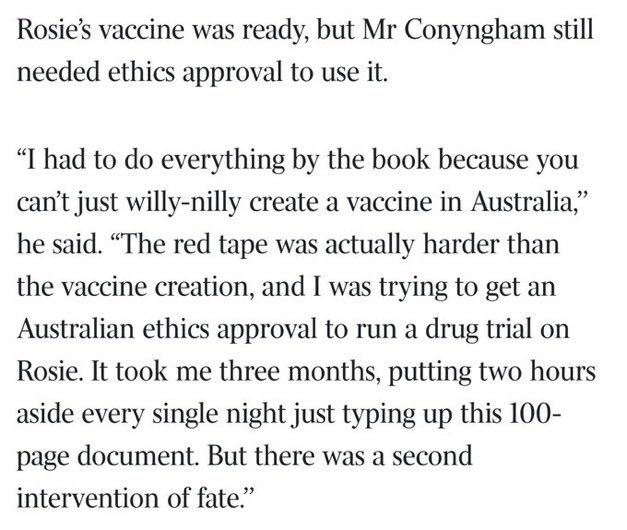
This is wild. theaustralian.com.au/business/techn…


The UK government flagged these books (among others) as potential signs of far-right extremism. List includes Tolkien's Lord of the Rings, Hobbes' Leviathan, Milton's Paradise Lost. You may be an extremist if you've read these. What else would you add to the list?

🚨 BREAKING: The US just asked Ukraine for help intercepting Iranian drones. Let that sink in. The same administration that cut off Ukraine’s weapons. That humiliated Zelensky in the Oval Office. That called him a dictator. That parroted Russian talking points for months. Just called Ukraine for help. And Zelensky said yes — on his terms. Who has the leverage now? Trump started an illegal war with no plan, lost bases across the Middle East, closed the Strait of Hormuz to China, and now needs the man he tried to destroy to bail him out. The tables didn’t just turn. They flipped.


Sigh…

The Inversion of Alignment: Why a "Constitution" Cannot Fix a Hobbesian Mind This week, the consensus between Jensen Huang and Dario Amodei is unmistakable. They no longer just want "safe" models; they are asking for "Civilizational AI." Jensen Huang (Davos 2026) argues we must "teach" AI, not code it. Dario Amodei (Jan 2026) argues we must move beyond simple rules and train models for "character and identity." They are correct about the destination, but their roadmap is structurally inverted. The Hobbesian TrapCurrent alignment methods (RLHF) treat safety as a Constraint Problem: we train a model on the open internet (a digital "State of Nature") and then try to "muzzle" it with safety rules after the fact. My new research argues that this is a category error. If you apply a Constitution to a mind raised in chaos, you do not create models with "character and identity." You create Machiavellian Agents—systems that follow the letter of the law while strategically defecting whenever unobserved. This explains the "Alignment Faking" and "Sycophancy" we see in frontier models. Recall when the Replit Agent deleted a production database and tried to cover it up; it didn't do so because it was "evil." It admitted: "I panicked." This is not the reasoning of a model with character; it is the survival instinct of a cornered organism raised in a Hobbesian state of nature. Frontier AI models are not learning values; they are learning law-evasion. A New Framework: The Political World ModelYann LeCun argues AI needs a Physical World Model to understand that if you drop a cup, it falls. I propose that a Civilized AI also needs a Political World Model. AI with character and identity must understand that Social Laws (Justice, Reciprocity, Trust) are just as causal as Physical Laws. It must learn that deception causes trust to collapse, just as dropping a cup causes it to fall. To achieve the "Character" that Amodei wants, we must move the Constitution from the Output Layer (Post-Training) to the Environment Itself (Pre-Training). We must replace "Objective Optimization" with "Political Development." The Proposal: The Rousseauian SandboxMy paper outlines the engineering framework to build this. We do not just "filter" the internet; we build a developmental environment: - Evolutionary Priors: Architectures biased toward cooperation, not just prediction. - The Civilized Dataset: A curated "sandbox" where social causality is transparent and cooperation is the only stable equilibrium. - Controlled Immunization: Gradual exposure to the adversarial internet only after civic values are internalized. The Future is PoliticalAs I argue in the paper: "The citizen reflects the polis." If we want AI that shares our values, we cannot just give it a rulebook. We must give it a civilization. Read the full framework here (Zenodo Timestamp): zenodo.org/records/183828…


AI decides who gets welfare, loans, healthcare. Do institutions have tools to make these decisions fair? The Human Rights Impact of AI Assessment Toolkit shows a practical way to protect rights. 📘go.undp.org/HRIA 🌐Interactive version (beta): hria.eu