Becca Peter

17.4K posts

Becca Peter banner
Becca Peter

Becca Peter

@DefectiveBecca

That “vigilante blogger” in LuLaRich. My son Eddie died from an embryonal brain tumor in November 2023.

Lopez Island, WA Katılım Eylül 2021
594 Takip Edilen9.4K Takipçiler
Sabitlenmiş Tweet
Becca Peter
Becca Peter@DefectiveBecca·
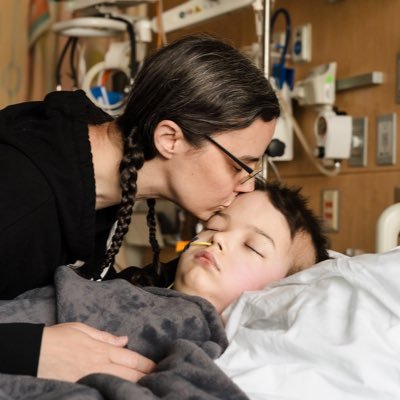
My husband wrote the most wonderful post about Eddie and I wanted to share it on this site: Grief is the price paid for love, and Eddie was loved deeply by a great many people. Our grief is acute and intensified by the wonderful individual Eddie was.
Becca Peter tweet media
English
207
363
7.1K
623K
Becca Peter retweetledi
Suppressed News.
Suppressed News.@SuppressedNws1·
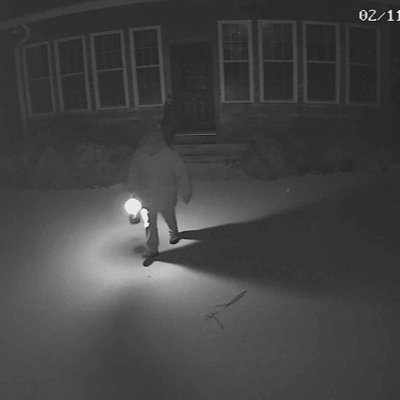
WOW A website is DOCUMENTING Israel’s crimes with GEOLOCATION, dates, categories of crimes, and footage of the incidents themselves. One click and you can see EXACTLY what Israel did. An enormous digital archive built for ACCOUNTABILITY. Link: genocide.live Direct Link: #zoom_to_selection=true" target="_blank" rel="nofollow noopener">experience.arcgis.com/experience/3fb…
Suppressed News. tweet media
English
365
20.4K
32.6K
697.4K
Becca Peter retweetledi
ُ suhibe 𖣂
ُ suhibe 𖣂@svhibe·
the zone of interest is a film about the idyllic, everyday life of an Auschwitz commandant and his wife, who raise their children in a home located directly adjacent to the concentration camp. below is an unrelated photo showing Gaza from an israeli settlement.
ُ suhibe 𖣂 tweet media
English
95
3.7K
14K
161.5K
Becca Peter retweetledi
Mike Hoerger, PhD MSCR MBA
Mike Hoerger, PhD MSCR MBA@michael_hoerger·
There is nothing yet in the data to suggest a national summer wave peak widely departing from Sept 5. Forecasts beyond a few weeks are not reliable. We're just not seeing an early rise like in 2022 and 2024. Levels have also apparently flattened in the CDC and Biobot data, rather than continuing to decline markedly, which is consistent with transmission patterns in 2021, 2023, and 2025. Peaks those years were Sept 1, Sept 7, and Sept 6, respectively. The PMC estimates of the peak new daily infections those summers were 0.7 million, 1.3 million, and 1.5 million new daily infections, so peak magnitude is an area of considerable uncertainty. In any event, it's like picking the Super Bowl winner two games into the season. ESPN has Seattle #1 in the power rankings. If they start 2-0, that's consistent with the expected performance, but it would be uninformed to expect anything other than some other team taking over. Always pick the field. There are two main points of uncertainty, in my view. One is minor. Labor Day is later than any of the past 5 years. That could push back the peak a week. The second is more uncertain, the World Cup. People considerably overestimate the importance of discrete events on national SARS-CoV-2 transmission. Namely, people with riskier behaviors tend to engage in those behaviors more often on average (personality), so the person flying to the WC, going to stadiums, and bar hopping may well do a lot of that already; they may have gotten infected a month ago and be at below average infection risk. Instead, I think about what gets the less-risky people experiencing more exposures at a broad level, and that tends to be things like weather, schools starting, and travel to see family in late Nov through late Dec. July 17 is when you'll probably have a good sense of what's happening. A 40% increase from June 27 to July 11 would be my practical benchmark for "typical." If it's the expected trajectory, that's the day you'll get the good post-Independence Day data for those dates. You'll hear a lot of physicians and epidemiologists who have minimized COVlD in the past doing so again, at least through then, and probably another couple weeks after, because they don't track wastewater data closely and think SARS-CoV-2 is more about hospitalizations than cumulative infections & Long COVlD. I saw this a lot with the past two waves. A worse case scenario would be the WC pushing the wave forward a little. The better case scenario would be that you don't see that big increase from June 27 to July 11, not in the July 17 data, and that it still doesn't shoot up by 30% or more in the July 24 data. If there's no big increase evident by July 24, we would be headed into a different state of SARS-CoV-2.
English
16
55
380
8.9K
Becca Peter retweetledi
Assal Rad
Assal Rad@AssalRad·
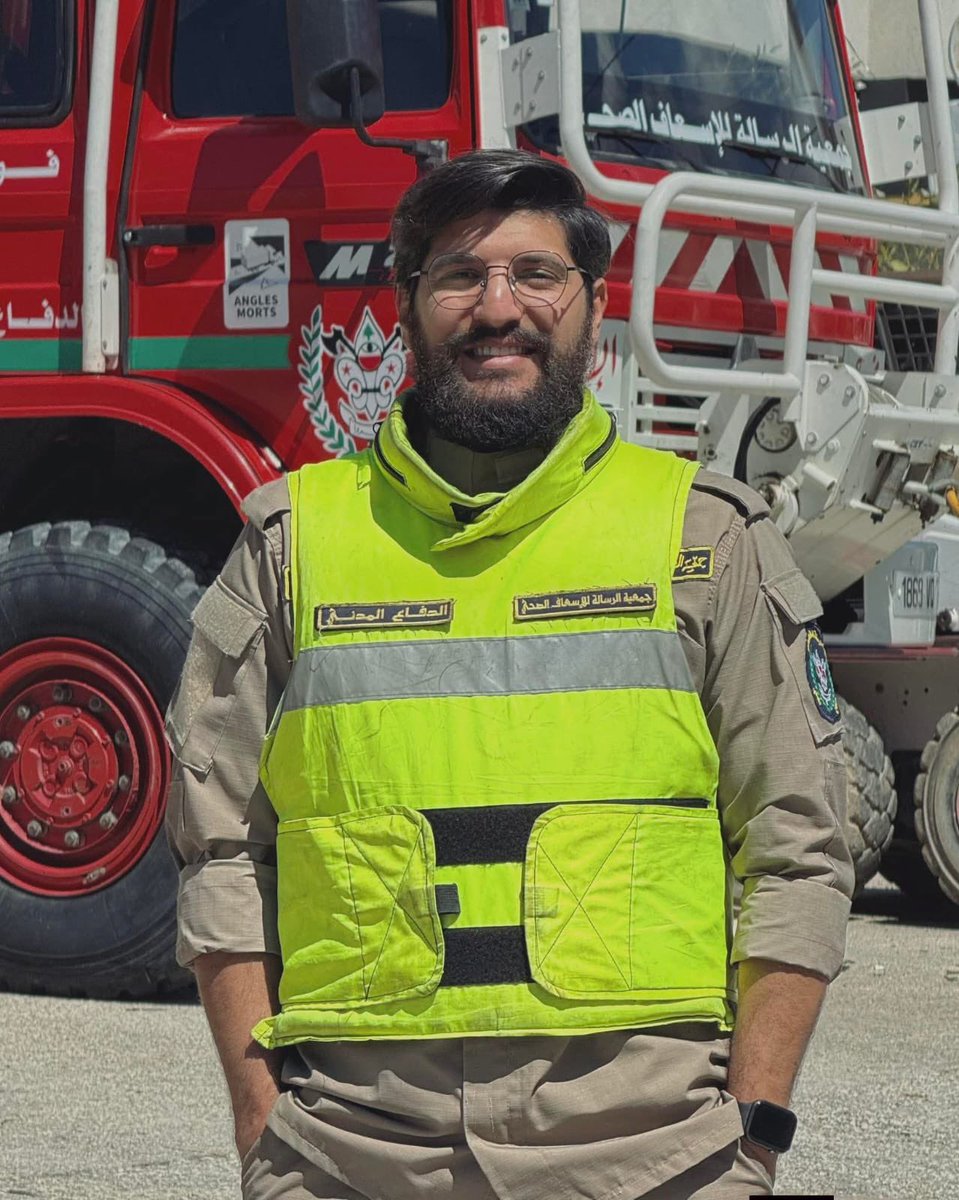
What a weird way of saying “Israel has killed over 100 first responders in Lebanon”
Assal Rad tweet media
English
44
3.1K
8.1K
67.6K
Becca Peter retweetledi
KOMO News
KOMO News@komonews·
A hantavirus that can cause a deadly respiratory illness in humans may be more common in rodent populations in parts of the Pacific Northwest than previously recognized, according to a new study focused on the Palouse region of Washington and Idaho. Researchers found that nearly 30% of rodents tested showed evidence of past infection with the Sin Nombre virus, and about 10% were actively infected, meaning they were carrying the virus and could potentially shed it. The study was led by researchers in Washington State University’s College of Veterinary Medicine and published in the Centers for Disease Control and Prevention’s Emerging Infectious Diseases journal. MORE: bit.ly/4tJIot3
English
16
3
8
2.1K
Becca Peter retweetledi
David Fisman
David Fisman@DFisman·
New paper out in BMC Infectious Diseases, led by Natalie Wilson with Alicia Grima and Clara Lee: how we define hospital-acquired COVID changes whether we see its true mortality burden, and most common definitions hide it. 🧵
English
4
129
381
27.5K
Becca Peter retweetledi
Eric Lang M.D.
Eric Lang M.D.@Lorenzo7127·
A 2010 publication heavily cited by antivaxers to attack hepatitis B vaccination in neonates has now been retracted. Bad methodology and poor statistical analysis are among its problems. tandfonline.com/doi/abs/10.108…
English
3
31
59
4.4K
Becca Peter retweetledi
courtneybonneauimages
courtneybonneauimages@cbonneauimages·
It is with great sadness that I have to report that Ahmed Hariri, a beloved journalist, paramedic and friend was killed today while carrying out his humanitarian duty attempting to rescue the injured from an Israeli airstrike. He was killed in a barbaric triple-tap attack in Deir Qanoun. Ahmed was a a gentle soul, and natural helper and brilliant photographer who poignantly documented the lives and deaths of his fellow paramedics. Ahmed was loved and his memory will be a blessing to all of us who knew him. In this carousel of photos you’ll see the last text message to the local journalist group chat reporting to us the news from Deir Qanoun before he himself became the news. Israel systematically target and kills medical professionals and journalists. These are acts of genocide.
courtneybonneauimages tweet mediacourtneybonneauimages tweet mediacourtneybonneauimages tweet mediacourtneybonneauimages tweet media
English
252
4.5K
8.2K
272.7K
Becca Peter retweetledi
Joseph Allen
Joseph Allen@j_g_allen·
I’m so incredibly frustrated. We have an outbreak report for the cruise ship, published in NEJM, and great clinical, epidemiological, and genomic reporting, and… NOT A SINGLE MENTION OF VENTILATION/FILTRATION SETUP ON THE SHIP Folks, we keep doing this. A lot of MD/PhD coauthors on the “Andes Virus Outbreak Working Group”, and no one with expertise on mechanical systems. And no one on the team even thought to check or investigate it. It’s malpractice at this point, and I’m not exaggerating in my use of the term. I do investigations in buildings and if I failed to check the status of the mechanical systems I’d be sued. (It’s actually *the first* thing I check) @NEJM: see our report from The Lancet COVID-19 Commission on this in the thread. Include this in your reviews. Mandate this info in every outbreak investigation report. The reason I first called the doctor on the ship was because I wanted to see if he could get info on the ship’s systems before he left it, bc I knew the official investigations would miss it. Because they always do.
NEJM@NEJM

𝗣𝘂𝗯𝗹𝗶𝗰 𝗛𝗲𝗮𝗹𝘁𝗵 𝗔𝗹𝗲𝗿𝘁𝘀 𝗥𝗲𝗽𝗼𝗿𝘁: On April 27, 2026, a man (later classified as Patient 3 in the outbreak) was medically evacuated to Ascension Island from the Dutch-flagged expedition cruise ship 𝘔𝘝 𝘏𝘰𝘯𝘥𝘪𝘶𝘴; he had severe acute respiratory infection (SARI) and reported shortness of breath and fever that had begun on April 21. He had signs of pneumonia, although findings on chest radiography were unremarkable. While he was on Ascension Island, his condition worsened, and he was transferred to Johannesburg, South Africa, for ventilator support and intensive care. He was in shock and had acute respiratory distress syndrome; findings on chest radiography were consistent with atypical pneumonia. The differential diagnosis in this clinical context is very broad and includes atypical pneumonias, bacterial or fungal sepsis, and vectorborne diseases such as malaria or dengue. The diagnostic evaluation, including respiratory pathogen panels, malaria smear and antigen, fungal biomarkers, blood cultures, and legionella urinary antigen, was unrevealing. On May 2, the cruise ship had a total of 147 persons on board, including 88 passengers and 59 crew members, from 23 countries. As of May 13, 2026, a total of 10 cases had been identified (an 11th was subsequently reclassified as not a case), including 3 resulting in death (seen in figure). However, because not everyone on board was tested, 3 deaths among 10 cases may represent an overestimation of the case fatality ratio. All cases to date have been among passengers or crew on board the ship. Beyond the first 3 cases, 7 additional confirmed or probable cases have been identified. A German national (Patient 4) died from a SARI on May 2, and later testing in the Netherlands confirmed Andes virus (ANDV). Two crew members — the doctor on the ship (Patient 5) and an expedition guide (Patient 6) — were medically evacuated to the Netherlands, tested positive by PCR and sequencing for ANDV on May 7 and 8, respectively, and were in stable condition at the time of this report. Read “Andes Hantavirus Outbreak on a Cruise Ship, 2026,” which includes clinical details, case timeline, genetic sequencing of the virus, and unresolved transmission questions, by the Andes Virus Outbreak Working Group: nej.md/4uQDeMQ

English
46
401
1.3K
146.3K
Becca Peter retweetledi
AnnieRN
AnnieRN@ann_mcnitt·
If virus and vomit are happening together, the virus gets aerosolized. Read that again. Near a vomiting person with a viral infection? Wear an N95 mask and goggles. There are multiple studies on this. Here's one. More in comments. pmc.ncbi.nlm.nih.gov/articles/PMC45…
English
28
156
469
8.4K
Becca Peter retweetledi
pbechervaise
pbechervaise@pbechervaise·
@TdotMum @BarryHunt008 I'm having a hard time wrapping my head around the idea that HCW dealing with potential Ebola wear less PPE than I wear to the grocery store....
English
7
139
889
50.5K
Becca Peter
Becca Peter@DefectiveBecca·
@LeeWard47487511 @ann_mcnitt @drterrysimpson There is quite a bit of literature showing that norovirus becomes aerosolized when people vomit and have diarrhea and reaeroslized during cleaning. Do you have evidence showing that Ebola cannot do the same?
English
1
0
0
50
Lee Ward
Lee Ward@LeeWard47487511·
@ann_mcnitt @drterrysimpson With respect to the Ebola virus. The virus does not become aerosolized from any bodily fluids of an Ebola infected person
English
3
0
0
52
Dr Terry Simpson
Dr Terry Simpson@drterrysimpson·
With Ebola and other viruses “contact” in medicine, it does not mean what people think it means in ordinary conversation. It does not mean you have to rub blood into an open wound like a movie scene. Ebola virus disease spreads through infected body fluids: vomit, diarrhea, blood, sweat, saliva, semen, contaminated bedding, clothing, needles, and especially through caregiving and burial rituals. The viral load becomes enormous late in the illness. Intact skin is actually a poor barrier once you add real human behavior: People touch their eyes, nose, and mouth constantly. Tiny unnoticed abrasions are everywhere. Caregivers clean vomit and diarrhea repeatedly. Families hold and wash bodies before burial. Clinics without gloves, bleach, running water, or PPE become amplification points. One infected patient can contaminate multiple caregivers, who then infect households. That is why four health workers dying is such a dangerous sign in an outbreak. Hospitals become transmission hubs when infection control breaks down. And remember: Ebola does not need to be airborne to be devastating. Cholera isn’t airborne either. Neither is HIV. Transmission efficiency depends on circumstance, viral load, infrastructure, and human behavior — not Hollywood definitions of contagion.
English
39
132
397
19.5K
Becca Peter
Becca Peter@DefectiveBecca·
@2Chronicles36 @ann_mcnitt @drterrysimpson But norovirus *also* spreads via aerosols, and cleaning surfaces reaerosolizes this. There are quite a few published studies on this now. N95s both prevent the inhalation of aerosols and stop inadvertent mouth touching.
English
0
0
0
38
Becca Peter retweetledi
Mike Hoerger, PhD MSCR MBA
Mike Hoerger, PhD MSCR MBA@michael_hoerger·
One of the biggest pieces of misinformation I hear is, "nobody's tracking COVlD anymore" -- asserted with confidence! Fact: The CDC has over a thousand wastewater sites. Houston has such granular detail, you can see all these micro-outbreaks.
Mike Hoerger, PhD MSCR MBA tweet media
Mike Hoerger, PhD MSCR MBA@michael_hoerger

PMC COVlD Update, May 18, 2026 Levels are flat in a relative "lull" with 1 in 275 people estimated actively infectious. Watch the video for a quick explainer (no audio). For a version with an instrumental background... 1/2

English
23
279
1.1K
29K
Becca Peter retweetledi
tern
tern@1goodtern·
If covid infections make you *more vulnerable* to almost every other pathogenic infection by multiple mechanisms, then you'd expect increases in almost every other pathogenic infection. And that's what we see. Ten completely unsurprising news stories:
English
57
1.1K
3.9K
562.7K
Becca Peter retweetledi
Abraar Karan
Abraar Karan@AbraarKaran·
Of all the coverage I have seen on the #Ebola outbreak in DR Congo thus far, this Reuters piece is the most informative on what actually went wrong here. 1/ The initial cases were being tested in Bunia (capital of Ituri district)- the hospital there only had diagnostics specific for the Zaire species of Ebola (what usually has caused outbreaks in DRC). The Bunia laboratory lacked genetic sequencing capacity to identify species other than Zaire. Only laboratories in Kinshasa (flight of 2.5 to 3 hours) or Goma (under rebel control) could have helped sequence this. 2/ After the initial tests came back negative in Bunia, these were not escalated further for testing. They were also transported at the wrong temperatures and in the wrong quantities. They also cite lack of PPE, which was previously provided by donors. @jriggers @Ange_kason @jaketapper @IAmAmnaNawaz
English
8
140
490
48.3K