

karlos
439 posts

karlos
@DegenDad01
💯 full time father & husband ı part time degen
Katılım Mart 2020
975 Takip Edilen111 Takipçiler
karlos retweetledi

To sum up the week:
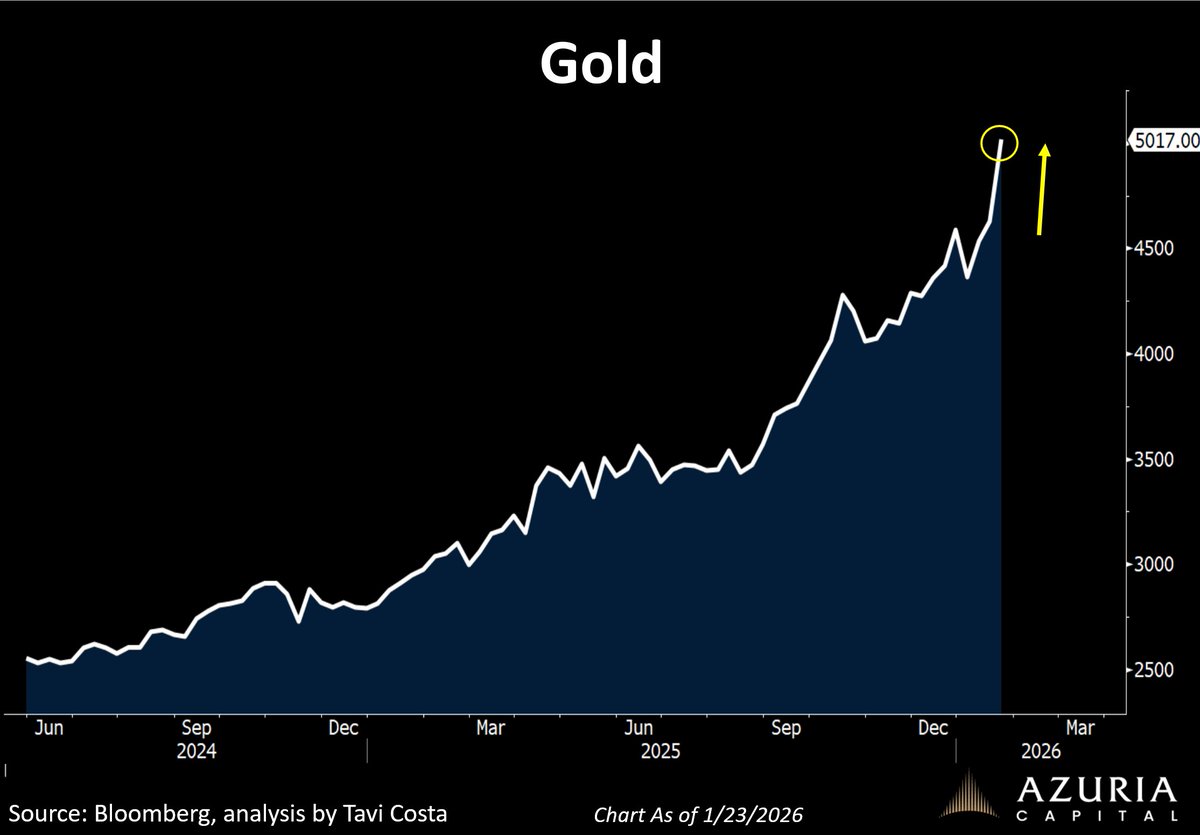
• Gold hit $5,000/oz
• Silver moved above $100/oz
• The USD had its worst week in nine months
• EM equities surged
• Industrial metals rallied
• Energy stocks posted their best four-week run in a year
Many still view these moves as isolated and unrelated.
I don’t.
My views:
• The USD is likely entering a multi-year downtrend
• Precious metals are in a secular bull market
• Miners remain deeply undervalued relative to metals
• Emerging markets are historically cheap versus US equities
• Energy is in the early stages of a resurgence
None of us own enough hard assets.
Again, these are just my opinions — please do your own DD.
Have a great weekend.
English
karlos retweetledi

Last quarter I rolled out Microsoft Copilot to 4,000 employees.
$30 per seat per month.
$1.4 million annually.
I called it "digital transformation."
The board loved that phrase.
They approved it in eleven minutes.
No one asked what it would actually do.
Including me.
I told everyone it would "10x productivity."
That's not a real number.
But it sounds like one.
HR asked how we'd measure the 10x.
I said we'd "leverage analytics dashboards."
They stopped asking.
Three months later I checked the usage reports.
47 people had opened it.
12 had used it more than once.
One of them was me.
I used it to summarize an email I could have read in 30 seconds.
It took 45 seconds.
Plus the time it took to fix the hallucinations.
But I called it a "pilot success."
Success means the pilot didn't visibly fail.
The CFO asked about ROI.
I showed him a graph.
The graph went up and to the right.
It measured "AI enablement."
I made that metric up.
He nodded approvingly.
We're "AI-enabled" now.
I don't know what that means.
But it's in our investor deck.
A senior developer asked why we didn't use Claude or ChatGPT.
I said we needed "enterprise-grade security."
He asked what that meant.
I said "compliance."
He asked which compliance.
I said "all of them."
He looked skeptical.
I scheduled him for a "career development conversation."
He stopped asking questions.
Microsoft sent a case study team.
They wanted to feature us as a success story.
I told them we "saved 40,000 hours."
I calculated that number by multiplying employees by a number I made up.
They didn't verify it.
They never do.
Now we're on Microsoft's website.
"Global enterprise achieves 40,000 hours of productivity gains with Copilot."
The CEO shared it on LinkedIn.
He got 3,000 likes.
He's never used Copilot.
None of the executives have.
We have an exemption.
"Strategic focus requires minimal digital distraction."
I wrote that policy.
The licenses renew next month.
I'm requesting an expansion.
5,000 more seats.
We haven't used the first 4,000.
But this time we'll "drive adoption."
Adoption means mandatory training.
Training means a 45-minute webinar no one watches.
But completion will be tracked.
Completion is a metric.
Metrics go in dashboards.
Dashboards go in board presentations.
Board presentations get me promoted.
I'll be SVP by Q3.
I still don't know what Copilot does.
But I know what it's for.
It's for showing we're "investing in AI."
Investment means spending.
Spending means commitment.
Commitment means we're serious about the future.
The future is whatever I say it is.
As long as the graph goes up and to the right.
English

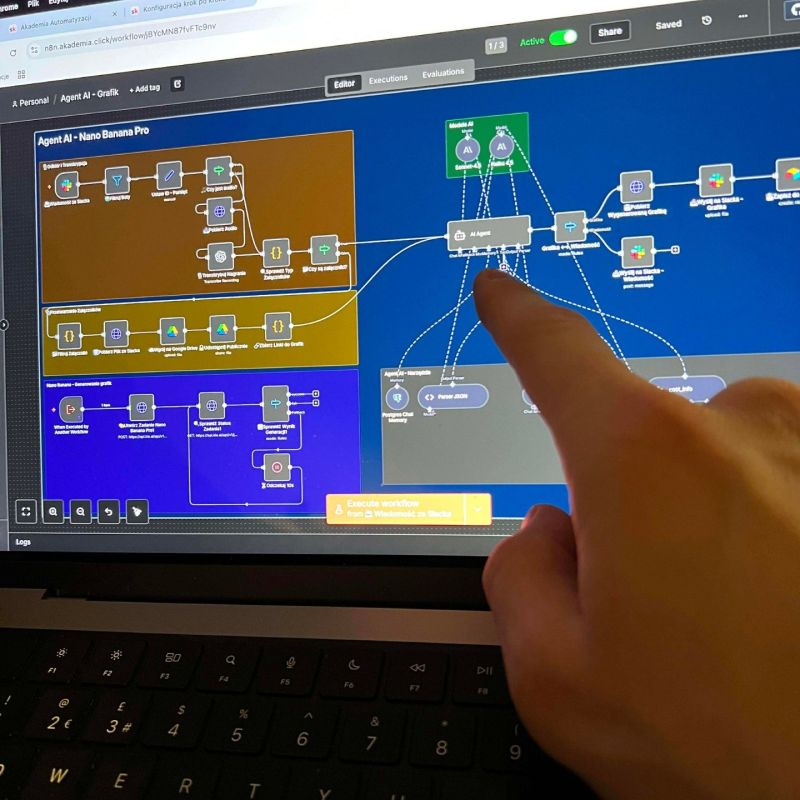
Oddajemy dostęp do projektu „Agent AI - Grafik z Nano Banana Pro” za darmo.
W poprzednim tygodniu pokazywałem, jak udało nam się połączyć nowy model Nano Banana Pro z strukturą Agenta AI w n8n.
Takie rozwiązanie potrafi:
↳ generować grafiki z bezbłędną typografią po polsku
↳ automatycznie stosuje Wasze firmowe materiałym(logo, kolory, style itp.)
↳ poprawia Wasz prompt według wszystkich dobrych praktyk
↳ jest tańsze o połowę niż cena w oficjalnym API od Google
↳ brak problemu z cenzurą, która pojawia się w aplikacji od Google
Łącznie ponad 60 minut materiałów wideo + gotowy scenariusz do n8n.
Jak dostać materiały?
1️⃣ Zostaw komentarz 🍌
2️⃣ Zaobserwuj mój profil
3️⃣ Odezwę się do Ciebie z linkiem na PRIV (odlbokuj PRIV!)
📅 Akcja ważna do końca tygodnia - 7.12.2025.
Polski
karlos retweetledi

Kling Omni Launch Week Day 1: Introducing Kling O1 — Brand-New Creative Engine for Endless Possibilities!
Input anything. Understand everything. Generate any vision.
With true multimodal understanding, Kling O1 unifies your input across texts, images, and videos — making creation faster, smarter, and more effortless.
Limited-Time offer available for subscribers. And stay tuned for more surprises!
For the next 12 hours ONLY
Follow, Like & Retweet to get 200 Credits — for everyone who participates!
PLUS, 200 lucky winners will snag a *1-Month Standard Plan*
All sent straight to your DM
English
karlos retweetledi

i’ve tested 99% of image gen approaches since I started making AI videos 6 months ago...
this is the BEST, repeateable workflow that works:
- curated shot references
- gemini 3.0
- midjourney
- freepik (nano banana pro)
it's honestly super simple but it's all you need to get the best possible image outputs imo
comment "IMAGE" + RT and i'll send you a my updated guide explaining the workflow (must be following)




English

gemini 3 just made every $15k ai consultant look like a clown
google silent-dropped autonomous agents to 650 million users yesterday
what consultants charge $15K and 6 weeks to "implement" now takes 4 minutes on a phone
here's what actually changed:
the model:
→ plans multi-step workflows autonomously
→ executes start to finish with zero hand-holding
→ optimized for non-experts (no CS degree needed)
→ already live on mobile canvas feature
while "AI agencies" are charging $8k-20k for strategy decks, google just deployed real automation to more people than chatgpt's entire user base
the intelligence gap is getting stupid:
that consultant billing $200/hr to "set up AI workflows" → the app does it autonomously now
that agency charging $15k for "custom AI implementation" → built in 4 minutes on gemini 3 mobile
that bootcamp selling "learn AI automation" for $2k → obsolete before the course launched
some startup just replaced their $18k/month AI consulting retainer with a free app
same output. 4 minute setup. zero technical knowledge required.
most businesses still think AI automation needs:
- 6 month roadmaps
- technical teams
- consulting firms
- $50k+ budgets
reality: it needs a phone and 4 minutes
your competition doesn't know this exists yet
but they will
comment "GEMINI" and i'll send you the breakdown of how to use this before everyone figures it out
English

My AI Instagram girl is bringing in $30k a month
Just reached 300K, most of her reels go viral
Nobody notices she is AI
If you want to try creating an AI influencer yourself, like, retweet, and comment “IG.” Follow me, and I will send you a guide with instructions.

English
karlos retweetledi

19$. Tyle może Ciebie kosztować prosta firmowa strona, którą za pomocą wygodnego UI wygenerujesz sobie w kilka chwil.
Czasy zlecania freelacerom tworzenia stron wizytówek przechodzą powoli do lamusa. Kiedyś kilka kafli + czas + walka z poprawkami. Teraz automaty oparte o chatbota.
O jednym z takich narzędzi będzie ta nitka w ramach której wygeneruję jako przykład stronę lecznicy weterynaryjnej. Zapraszam 👇




Polski

Klep lajka i pisz komentarz - wyślę Ci kod rabatowy na pierwszy miesiąc na Patreona 🎁
Lada dzień wjeżdżają tam vouchery do Perplexity (nie z T-Mobile, ta promka skończyła się kilka tygodni temu).
I ostatnie wrzucone rzeczy:
🔵 Midjourney Pro
🔵 Ahrefs, Semrush, Moz, Grammarly i dużo więcej SEO narzędzi
🔵 Mnóstwo modeli w jednej aplikacji
🔵 Ideogram, Gemini Pro i Gemini Ultra
🔵 Freepik, ChatGPT, Claude
Logotypy - rewelacyjne prompty 😮
Jak wycenić i sprzedawać usługi oparte na AI? 📈
EaseUS Data Recovery Pro na rok ♻️
Aranżacja wnętrz z AI 🛋️
Jednym słowem - mięso 🥩

Polski


Most “high-converting” landing pages ( / funnels ) convert at 2% because they’re built by people who think pretty = profitable
I reverse-engineered many landing pages that convert at 15%+ and found psychological triggers 99% of marketers have never heard of
One SaaS client went from 1.3% to 18.7% in 1 week using trigger #4 alone, ( same offer)
Follow, like; repost and comment “funnel” and I will send over the blueprint right away
YJSCALEZ.PRO

English
karlos retweetledi
It’s men’s mental health awareness month
It’s never okay to stay weak my brothers
Lift heavy, be physically strong
Pray, be mentally strong
Don’t succumb to the pressure and negativity you get from the world
Live a life that’s worth living
Don’t waste time
Get after it
Peace and strength to all my brothers
English

the creator who's banking $47K monthly from TikTok asked me not to share this automation...
these brain-rot style videos are pulling 10M+ views consistently on TikTok and YouTube Shorts
faceless channels are banking $15K-$50K monthly from this exact format
here's what my n8n workflow does automatically:
- generates viral Peter Griffin & Stewie conversations
- clones their actual voices using AI
- overlays them on Minecraft parkour gameplay
- adds perfectly timed subtitles
- renders complete videos ready to upload
these videos exploit dopamine triggers
the background gameplay keeps viewers glued while the AI-generated dialogue delivers the actual content
it's psychological manipulation at its finest
I spent 40+ hours perfecting this:
- gathering rare audio samples for voice cloning
- training custom AI voice models for both characters
- building the complete automation workflow
- testing render quality and timing
the results speak for themselves
channels using this format are going from 0 to 100K followers in weeks
some are hitting 50M+ monthly views with zero effort after setup
the workflow handles everything:
-content ideation
-script generation
-voice synthesis
- video composition
- final rendering
you literally press one button and get viral-ready content
while everyone's still manually editing videos, smart creators are scaling with automation like this
the opportunity window is MASSIVE right now
these formats are exploding across all platforms
Comment "VIDEO" + repost this + follow me (MUST DO ALL) and I'll send you the complete JSON file plus setup guide
a lot of people will ingore this and last yet another occasion to finally make it
don't sleep on it.

English

PYTHON is difficult to learn, but not anymore!
If you're looking to become Master in Python This handwritten note will make learning Python easier.
The handwritten notes include a comprehensive overview of Python .
You will get:
→ Day to day learning
→ Interview questions
→ Save 300hrs + on Research
→ Roadmaps
𝐍𝐨𝐫𝐦𝐚𝐥𝐥𝐲 𝐈𝐭'𝐬 $35 𝐛𝐮𝐭 𝐟𝐨𝐫 𝟐𝟒 𝐡𝐨𝐮𝐫𝐬, 𝐢𝐭'𝐬 𝟏𝟎𝟎% 𝐅𝐑𝐄𝐄!
To get it, just:
1. Like & Reply “ 🔥”
2. Retweet (much appreciated)
3. Follow me (so that I can DM)

English
karlos retweetledi

tldr: fiscal dominance is breaking the housing cycle
From Credit to Fiscal: Understanding the End of the Housing-Centric Economy
The United States is undergoing a profound structural transformation from an economy driven by private credit expansion to one increasingly shaped by fiscal dominance. This shift carries vast implications for growth, policy, and macroeconomic analysis. Nowhere is this transition more misunderstood than in the continued emphasis on housing as a leading macroeconomic indicator.
For decades, housing was the cornerstone of American economic growth. This was not incidental: in a credit-driven economy, growth required something to borrow against. Real estate emerged as the ideal collateral. It is everywhere, relatively stable in value, physically depreciates (requiring ongoing replacement), and, crucially, is socially and culturally embedded in the American economic psyche. Home ownership is the memetic pillar of the American dream. Unlike volatile equities or intangible assets, real estate offered a hard, lendable asset base, especially conducive to long-duration credit instruments like mortgages.
Lower interest rates amplified this system. Declining mortgage rates translated directly into higher housing demand and rising prices. As prices rose, homeowners extracted equity through refinancing, sustaining consumption and investment. In this model, rate cuts weren’t just financial easing, they were economic fuel. Entire business cycles were effectively governed by the ebb and flow of housing activity.
This is why, in the past, a housing slowdown meant a broader economic contraction was at hand. In a credit-centric framework, lower housing activity meant reduced borrowing and spending capacity -- a direct hit to aggregate demand.
The Shift to Fiscal Dominance
But this framework has broken down. Since 2020, the US economy has moved into a new regime: one defined by fiscal dominance. Government deficits, not private bank lending, now drive the marginal dollar of economic growth.
This shift explains one of the most puzzling macro phenomena of recent years: the absence of a recession in 2022–2023 despite a sharp slowdown in housing activity. In a credit-dominant regime, such a slowdown would be a clear harbinger of contraction. But under fiscal dominance, housing can cool while nominal GDP remains buoyant because income and demand are increasingly shaped by public spending, not by private borrowing.
The Federal Reserve’s tightening cycle provides additional evidence. Despite over 500 basis points of rate hikes since 2022, the economy continued to grow, inflation stayed elevated, and labor markets remained tight. In prior cycles, such monetary tightening would have triggered a credit contraction, rapidly slowing growth. But the scale of fiscal flows—peaking at 25% of GDP in 2020, and still elevated by historical standards—has overwhelmed traditional monetary levers. The Fed is no longer operating in an environment where it can meaningfully steer the business cycle through rate changes alone.
Indeed, in this new regime, the very logic of monetary policy is inverted. Lowering rates used to stimulate credit creation and thus growth. Today, it shrinks interest payments on government debt, effectively reducing fiscal injections into the economy. Conversely, raising rates increases Treasury outlays on interest, unintentionally expanding fiscal flows. Thus, monetary policy has become a secondary and sometimes counterproductive tool in a world where fiscal variables dominate the macro landscape.
Trump and the Old Operating System
Amid this transformation, some political actors remain deeply tethered to the old regime. Donald Trump, shaped by a lifetime in real estate, instinctively understands the credit-growth model. His economic instincts are rooted in a world where prosperity meant rising property values, easy lending, and low interest rates. It's no coincidence that Trump has called for lower rates, bank deregulation, and pro-cyclical lending policies. His proposals aim to revive the conditions that made the housing-credit engine work so effectively during the 1980s–2000s.
To his credit, deregulation and credit expansion would provide a temporary stimulus. If implemented atop an already expansive fiscal base, such measures could produce a powerful and perhaps unprecedented dual-engine growth dynamic. The combination of aggressive fiscal outlays and reinvigorated private credit could deliver one of the strongest economic expansions in US history.
Why Housing No Longer Leads
This brings us back to housing. Many investors, analysts, and policymakers continue to treat housing as the canary in the economic coal mine. But in a fiscally dominant regime, this is no longer a reliable signal. Fiscal policy now dictates the business cycle more than mortgage rates or housing starts.
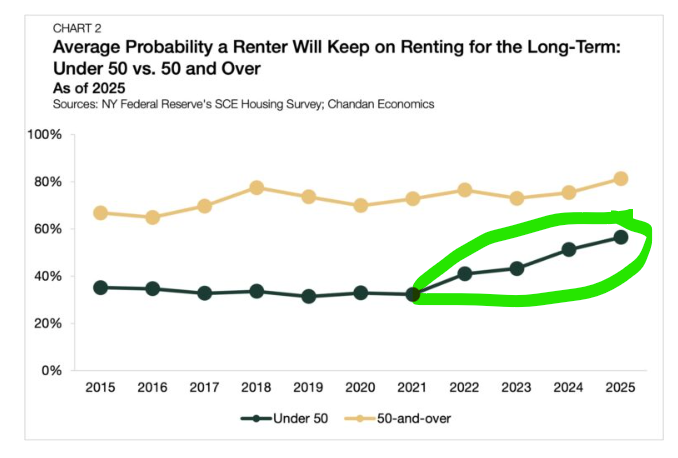
In fact, one of the clearest signs of this shift is the declining rate of homeownership among younger generations. Millennials and Gen Z, burdened by high home prices and rising rates, are increasingly locked out of ownership. But this is not merely a crisis of affordability, it is a structural reflection of the shift to fiscal dominance. As fewer young people participate in the collateral-based credit economy, more rely on income transfers, public support, and rental housing. This generational decoupling from housing-as-wealth is both a symptom and a reinforcement of the new regime.
Data from the U.S. Census Bureau confirms this trend: homeownership among those under 35 peaked near 43% in 2004 and has since declined to just over 38% as of 2023. Meanwhile, the rental market has grown significantly, particularly among high-income households, a sign that the housing market is no longer the primary vehicle of middle-class wealth accumulation.
Instead, younger cohorts are increasingly turning to financial markets, with rising participation in crypto assets and equity securities, particularly through passive investment vehicles like index funds. This reflects not just a change in asset preference, but a deeper structural shift in how wealth is built in an economy no longer powered by private credit and housing, but by fiscal flows and financial asset appreciation.
Policy Confusion in a Hybrid Economy
The coexistence of old and new paradigms has created deep confusion in policymaking. The Federal Reserve still frames its actions in terms of credit-tightening or easing, despite evidence that its tools are increasingly impotent. Meanwhile, the Treasury and executive branch shift back and forth between expansive fiscal policy and austerity rhetoric, unsure whether to lead with spending or restraint.
This tension is starkest in current political discourse. Trump’s antagonism toward the Fed masks a deeper alignment: both he and Chair Jerome Powell fundamentally believe in the primacy of the credit-driven economy. Both continue to view interest rates as the central policy lever. Yet neither has fully grasped the degree to which fiscal flows and not credit conditions now drive outcomes like growth, inflation, and inequality.
The danger is that this misunderstanding could lead to policy whiplash. If future administrations attempt to roll back fiscal support too aggressively, believing it to be inflationary or unsustainable, they risk triggering a depression-like contraction.
Conclusion: A New Operating System
The US economy is no longer running on the old operating system. Fiscal dominance is not a temporary glitch, it is the new architecture of economic growth. Clinging to outdated frameworks risks both misdiagnosing current dynamics and missing future opportunities.
Watching housing, monitoring mortgage rates, or debating interest rate moves makes sense only within the logic of credit dominance. In today’s world, fiscal policy, its scale, structure, and political sustainability, is the key variable.
We are no longer living in a world where the economy runs on collateral. The foundation has shifted. Today, the true collateral underpinning growth is the US Treasury itself.
English
karlos retweetledi

SUMMARY OF FED CHAIR POWELL'S STATEMENT (1/29/25):
1. Economy has made "significant progress toward goals"
2. Inflation has moved much closer to goal, remains somewhat elevated
3. Labor market is not a source of inflationary pressures
4. Fed does "not need to be in a hurry to adjust policy"
5. Fed to continue meeting-by-meeting approach
6. Fed's 2% long-term inflation goal will not change
The "Fed pause" has begun.
English
karlos retweetledi

This post needs a solid refresh.
Lately, it’s becoming more common to talk about the dilution of the altcoin market, especially after the latest chart showing the surge in newly created tokens and its negative correlation with prices went viral this past week.
But in reality, this is a phenomenon we already discussed last year, and many are only just now realizing its implications.
I won’t go into detail again about the 3.80% TP on USDT dominance, which did an excellent job at the time, but instead, I’d rather focus on the altcoin market, since that’s what most of you are probably interested in.
I constantly see accounts throwing out targets like $10K+ for ETH, assuming that gains on other projects will be even more amplified, chasing the famous 10x, 50x, or 100x returns that happened in the past, as if they are guaranteed to happen again.
But taking a step back and thinking logically (which is something I rarely see in most market participants) this mindset makes no sense at all.
While it’s true that BTC.D has yet to fully reverse, we already had an altseason between late November and early December, but very few actually noticed.
The real Issue?
Most people wear blinders, completely fixated on the idea that if their portfolio doesn’t do a minimum 10x, then it’s not an altseason, and therefore, there’s no real profit to be made.
This behavior stems from a cognitive bias, deeply ingrained in the typical crypto investor mentality which, let’s be honest, has more in common with gambling than actual investing.
Think of that classic Sunday bettor who walks into a betting shop and raises the odds by placing half his paycheck on Rayo Vallecano beating Real Madrid.
That’s exactly the same mindset most people have in crypto.
And that mindset is reflected in the poor performance of the majority of traders in this space.
Everyone wants insane multipliers, yet very few are willing to put in the work, adjust their strategy, and adapt to a market that changes year after year, a market that requires more conservative compounding strategies rather than blind gambling.
"Bro, you’re so bearish..."
Let’s assume the market continues to rise significantly from here (and let’s contextualize this properly) with ETH aiming for $10K as the "bare minimum."
So... there’s nothing in between?
Are we just going straight up without a massive resistance level at 3.30% on USDT dominance?
And if we reach that level, wouldn’t it be wiser to sell and, IF conditions remain favorable, re-enter later?
(And let’s not even talk about hedge shorts).
For most people, the answer is no because everyone holds blindly, hoping for the best, with zero concrete plans on how to navigate the market no matter what happens.
Even though macro charts like BTC, TOTAL2, and OTHERS are still looking decent overall, with many altcoins having already fully rebalanced their November impulses offering solid opportunities alongside an ETH/BTC pair showing signs of a bottom, it’s absurd to aim for insane multipliers.
From the current bottoms to the December peaks, most coins already did a 150%-200% move.
Is that not enough?
The problem isn’t the market.
The problem is people’s greed, fueled by false hope from many influencers who keep feeding unrealistic expectations.
A "classic" altseason, like the ones we saw in the past, would only be possible if BTC hit extreme levels like $150K+.
But what are the actual chances of that happening, especially after BTC has already surged 600% from the 2022 bottom, in an asset that is clearly experiencing diminishing returns over time?
Think logically.
Adjust your strategy.
Stop gambling.
ZERO IKA 🗡️@IamZeroIka
During this period I'm seeing a lot of people stating with absolute certainty that we will have massive gains from here, assuming an average of more than 20x. This comes from the sole fact that they're comparing this cycle to the 2020/21 one, improperly. My cold take on the situation: Probably nourished by the ETF or the new "pro-BTC" political reforms, the majority of market participants think that Bitcoin is ready to climb well above 100K in this cycle. I've seen plenty of targets, most of them quite unrealistic that, in my opinion, will lead to a severe massacre across retail investors. I already provided my main thesis for the Bitcoin top and its potential targets in this post: x.com/IamZeroIka/sta… but one of the most important thing to remind ourselves once again (if it were still needed) is that institutions are not our friends. They're not here to pump our bags and considering the huge monetary discrepancy they have with us (they operate with gazillions), they also don't need a Bitcoin to soar till 200K+ like many expect. At some point, they will just synchronize the algorithms creating huge sell pressure at specific levels, not allowing the price to rise consistently. Majority are also forgetting about the fact that Bitcoin is up more than 370% from December 2022 bottom, and if you take a look at the chart is absolutely parabolic. Does this seem "the start of the bullrun" to you or more like a "final phase"? To me, the second option. But I know what you're thinking..."Bro, altcoins didn't perform at all, the BTC D. has been in an uptrend and we haven't seen a proper altseason". Letting aside the fact that we already seen an important rise from them (look at TOTAL 3/OTHERS from 22 lows, mostly related to specific narratives like AI, RWA, BTC etc), expecting an average of 20x on most coins is absolutely unrealistic in my opinion. But let's make an interesting comparison: USDT D. + BTC D. During the 2020/21 bullrun where we had that double top formation, we had an average USDT D. decline of 50%, which has ignited both runs of BTC and altcoins, as you can see from the drop of the BTC D. occurred from December 20 to May 21 (full altseason). In this cycle instead, we already had a large drop (average of 50%) on USDT D. from the bottom of 2022 to the 2024 local top. And while the Bitcoin dominance hasn't dropped yet (it will, don't worry) do you expect another massive drawdown from the USDT D.? Honestly, this isn't likely given the historical trendline acting as powerful support, and while the BTC D. can drop with the USDT D. remaining flat thus moving liquidity toward altcoins, expecting 20/30xs as an average is highly unrealistic. "Does this mean no altseason? Rekt? As I highlighted plenty of times considering all the bullish HTF closures we had on Bitcoin and both TOTAL 3/OTHERS, I'm definitely leading for an altseason (in the most "prehistoric" sense, with a BTC D. drop) but I'm not expecting money thrown on people like in 2021. Altcoins dilution is real, diminishing returns also. Take a look at the percentages on OTHERS: From the bottom to the complacency shoulder we ran approximately 400%. From these levels to a potential top around 600/700B, we can run a 200%. Half than before, resulting in higher prices for altcoins but not as much as the general consensus is. Some charts will pull crazy numbers, but they will be very limited compared to the past and those who are telling you a different story are simply lying to you for engagement purposes. Better striking for a "safe" 3/5/10x instead of bold expectations. Don't get sucked into rekt land because you're reading about old comparisons.
English