Ayo
44.1K posts


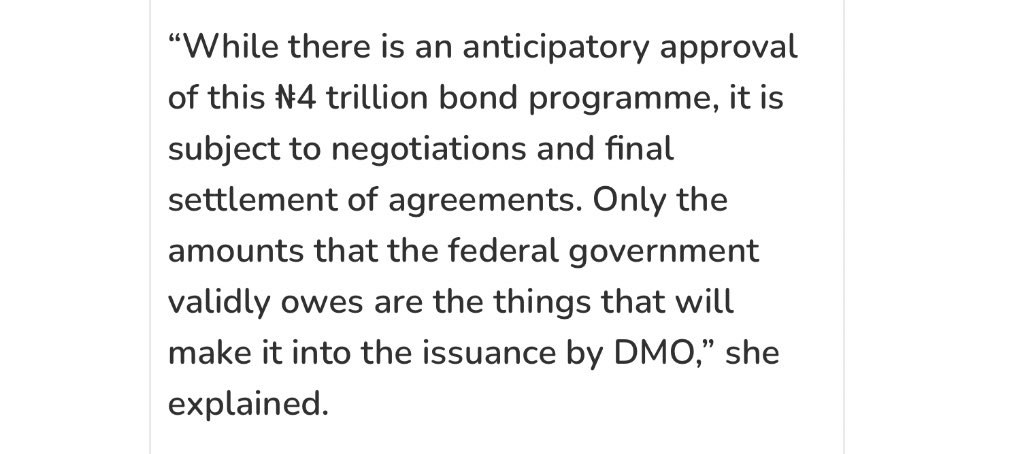
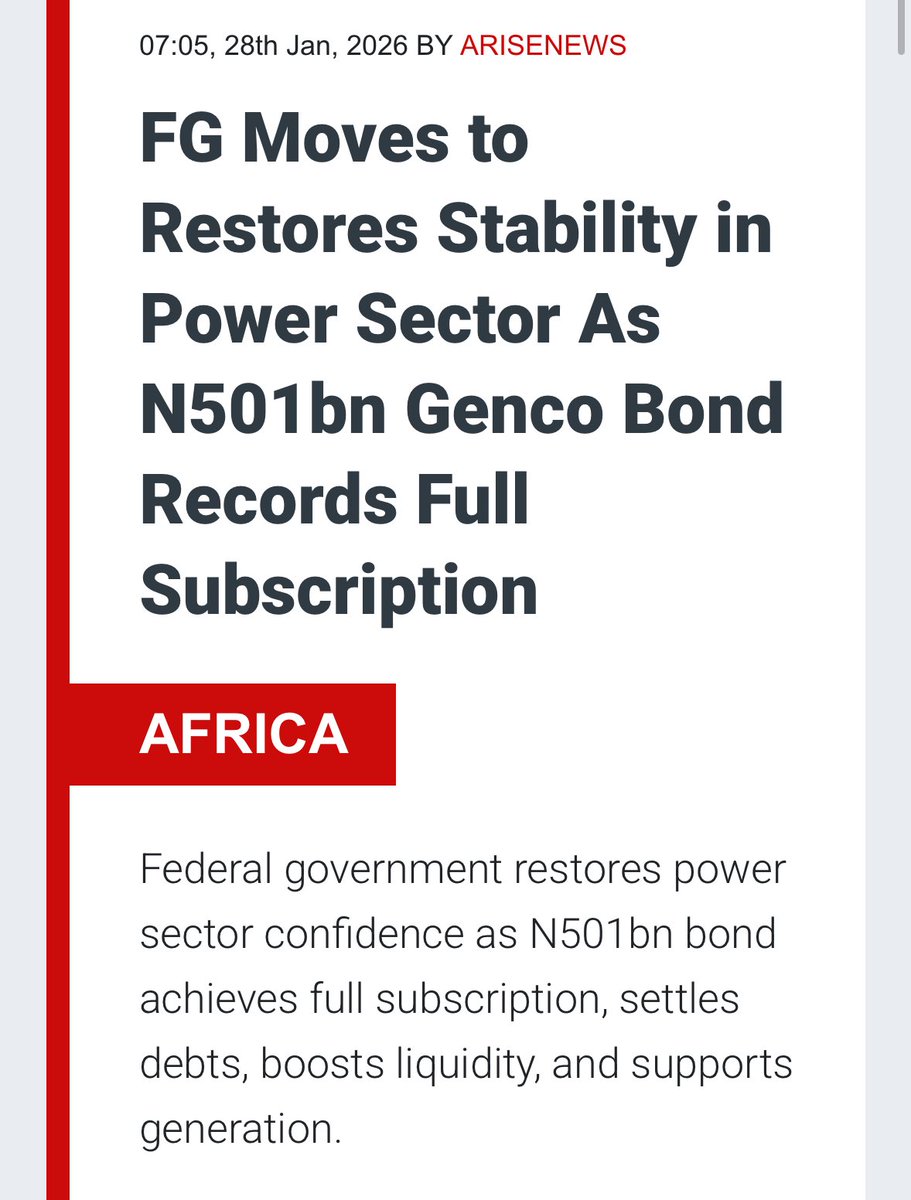
The Debunking: Fact vs. Spin 1. The "Single Process" Fallacy •The Lie: The argument claims these aren't "different approvals" but stages of one program. •The Reality: While technically a single "program," the shifting numbers (from 4 trillion to 3.3 trillion) represent a unilateral haircut by the government. Calling it a "validation" is a polite way of saying the government is refusing to acknowledge the full debt GenCos have already incurred. If you owe a shop 10k and "validate" it down to 7k, you haven't followed a process; you’ve defaulted on 3k. 2. The "Negotiation" vs. Coercion •The Lie: The post suggests GenCos are happily "signing settlement agreements." •The Reality: Industry reports indicate that GenCos are signing out of desperation, not agreement. With a N6 trillion+ total debt hang-over, accepting a N3.3 trillion bond is a "take it or leave it" scenario. The argument frames a lopsided power dynamic as a standard business negotiation. 3. The "Payments have Started" Distraction •The Lie: Citing the January 2026 bond as proof that "payments have started." •The Reality: Issuing a bond is not the same as liquidating debt with cash. A bond is simply moving debt from one ledger (Accounts Payable) to another (Long-term Debt). It doesn't solve the immediate liquidity crisis GenCos face when trying to pay gas suppliers today. The Rejoinder: An Exercise in Evasion The provided argument is a classic "Red Herring." It seeks to win a technical debate about administrative flowcharts while completely evading the subject of systemic insolvency. The Evasion: The author focuses entirely on the legality and sequence of the bond issuance. However, the actual subject of the original critique—and the crisis itself—is the widening gap between generation costs and revenue. By obsessing over whether the 4 trillion was "anticipatory" or "final," the author evades these three critical points: 1The Shortfall: Even if the 3.3 trillion is paid, it covers less than half of the verified N6.6 trillion debt. Where is the plan for the rest? 2The Gas Crisis: Gas suppliers operate on a "no pay, no flow" basis. Bond papers don't pump gas. The argument ignores the fact that the grid remains on the verge of collapse because the form of payment (illiquid bonds) doesn't meet the needs of the suppliers. 3The "Flip-Flop" Reality: The government has announced "final settlements" in 2013, 2017, 2019, and 2023. By focusing on the 2025/2026 timeline, the author ignores the historical pattern of the government promising a clean slate and then immediately falling back into arrears. Conclusion: The argument is a condescending distraction. It treats a national energy emergency as a "gotcha" moment over Google Search results. It fails to address the fundamental question: Why, after multiple "settlements," does the debt continue to grow while the lights stay off?

@ruffydfire Rufai didn't write this. Clearly shows someone funds the instigation against the government. This isn't journalism.


The Debunking: Fact vs. Spin 1. The "Single Process" Fallacy •The Lie: The argument claims these aren't "different approvals" but stages of one program. •The Reality: While technically a single "program," the shifting numbers (from 4 trillion to 3.3 trillion) represent a unilateral haircut by the government. Calling it a "validation" is a polite way of saying the government is refusing to acknowledge the full debt GenCos have already incurred. If you owe a shop 10k and "validate" it down to 7k, you haven't followed a process; you’ve defaulted on 3k. 2. The "Negotiation" vs. Coercion •The Lie: The post suggests GenCos are happily "signing settlement agreements." •The Reality: Industry reports indicate that GenCos are signing out of desperation, not agreement. With a N6 trillion+ total debt hang-over, accepting a N3.3 trillion bond is a "take it or leave it" scenario. The argument frames a lopsided power dynamic as a standard business negotiation. 3. The "Payments have Started" Distraction •The Lie: Citing the January 2026 bond as proof that "payments have started." •The Reality: Issuing a bond is not the same as liquidating debt with cash. A bond is simply moving debt from one ledger (Accounts Payable) to another (Long-term Debt). It doesn't solve the immediate liquidity crisis GenCos face when trying to pay gas suppliers today. The Rejoinder: An Exercise in Evasion The provided argument is a classic "Red Herring." It seeks to win a technical debate about administrative flowcharts while completely evading the subject of systemic insolvency. The Evasion: The author focuses entirely on the legality and sequence of the bond issuance. However, the actual subject of the original critique—and the crisis itself—is the widening gap between generation costs and revenue. By obsessing over whether the 4 trillion was "anticipatory" or "final," the author evades these three critical points: 1The Shortfall: Even if the 3.3 trillion is paid, it covers less than half of the verified N6.6 trillion debt. Where is the plan for the rest? 2The Gas Crisis: Gas suppliers operate on a "no pay, no flow" basis. Bond papers don't pump gas. The argument ignores the fact that the grid remains on the verge of collapse because the form of payment (illiquid bonds) doesn't meet the needs of the suppliers. 3The "Flip-Flop" Reality: The government has announced "final settlements" in 2013, 2017, 2019, and 2023. By focusing on the 2025/2026 timeline, the author ignores the historical pattern of the government promising a clean slate and then immediately falling back into arrears. Conclusion: The argument is a condescending distraction. It treats a national energy emergency as a "gotcha" moment over Google Search results. It fails to address the fundamental question: Why, after multiple "settlements," does the debt continue to grow while the lights stay off?


“Seun, I will not need a new jet. I can’t use N150bn to buy a jet (when 80% of our Primary healthcare centers) are not functioning.” —Peter Obi.


Lagos-Calabar Coastal Highway (Cross River Section)🔥 So this Highway is not ending in Lagos?😂


"We've been advocating for state police for more than 10- 20 years now, but it has always been countered by the Police itself especially the IG's. For Tunji Disu to now come forward with this framework, I think it's a bold step and I congratulate him." — Ex DSS Official


Dear Mr Onanuga, kindly explain why the President will approve 4 trillion Genco bond in 2025 And Approve 3.3 trillion for the same Genco in 2026 And approve 3.3 trillion for Genco in 2024 I am expecting your answer!