Destination Saigon retweetledi
Destination Saigon
22.9K posts

Destination Saigon
@DestSaigon
A funny and insightful travel memoir about Vietnam, released March 2010, by Walter Mason
Cabramatta, Australia Katılım Ekim 2009
4.2K Takip Edilen3.8K Takipçiler

If you have always wanted to write a spiritually-themed book, this is the perfect opportunity to learn from one of the experts. My dear friend Maggie Hamilton is teaching an online course with @writingNSW and I can't recommend it highly enough! writingnsw.org.au/whats-on/cours…
English
Destination Saigon retweetledi

I went to my first Death Cafe a few weeks ago and it was fantastic artshub.com.au/news/features/…
English
Destination Saigon retweetledi

In early Buddhism, sangha referred to a small group of monks who had attained enlightenment. Over time, the term expanded to include all monastics and laypeople. All together, this community is referred to as the fourfold sangha.
Learn more for free at the link below!
#fourfold-sangha" target="_blank" rel="nofollow noopener">tricycle.org/buddhism-sangh…
English
Destination Saigon retweetledi

This summer I'll be leading a course in Existentialism, Consciousness, and the Occult, based on the work of Colin Wilson, for the Kosmos Institute: kosmosinstitute.org/existentialism…
English
Destination Saigon retweetledi

Once upon a time, I told myself that I would like to write a book missing from our spiritual landscape: the great metaphysical reckoning, personally and philosophically, of positive-mind metaphysics.
I wrote it. I called it Daydream Believer. It divided readers of New Thought, the spiritual philosophy of mind causation popularized in the late-nineteenth century.
In that book, I tried—truly tried—to offer the truth about the causative powers of the mind. (The causation-correlation debate in science is active and meaningful. I use causal language in a practical, observational sense.) I yearned to bring down tablets from Mount Sinai for New Age readers. But—I had to deliver broken tablets. Because I had to tell the truth.
Some acolytes want confectionary miracles. I actually do offer miracles. They can be bitter.
But they will nourish you when superficial ingestions fail. And such formulas will fail.
Not because New Thought is wrong. It is not. But because, historically, the philosophy has done a better job of popularizing than refining itself. My aim is refinement. My tools are personal experiment, philosophical interrogation, and intellectual struggle.
This article tells that truth. -M-
____________
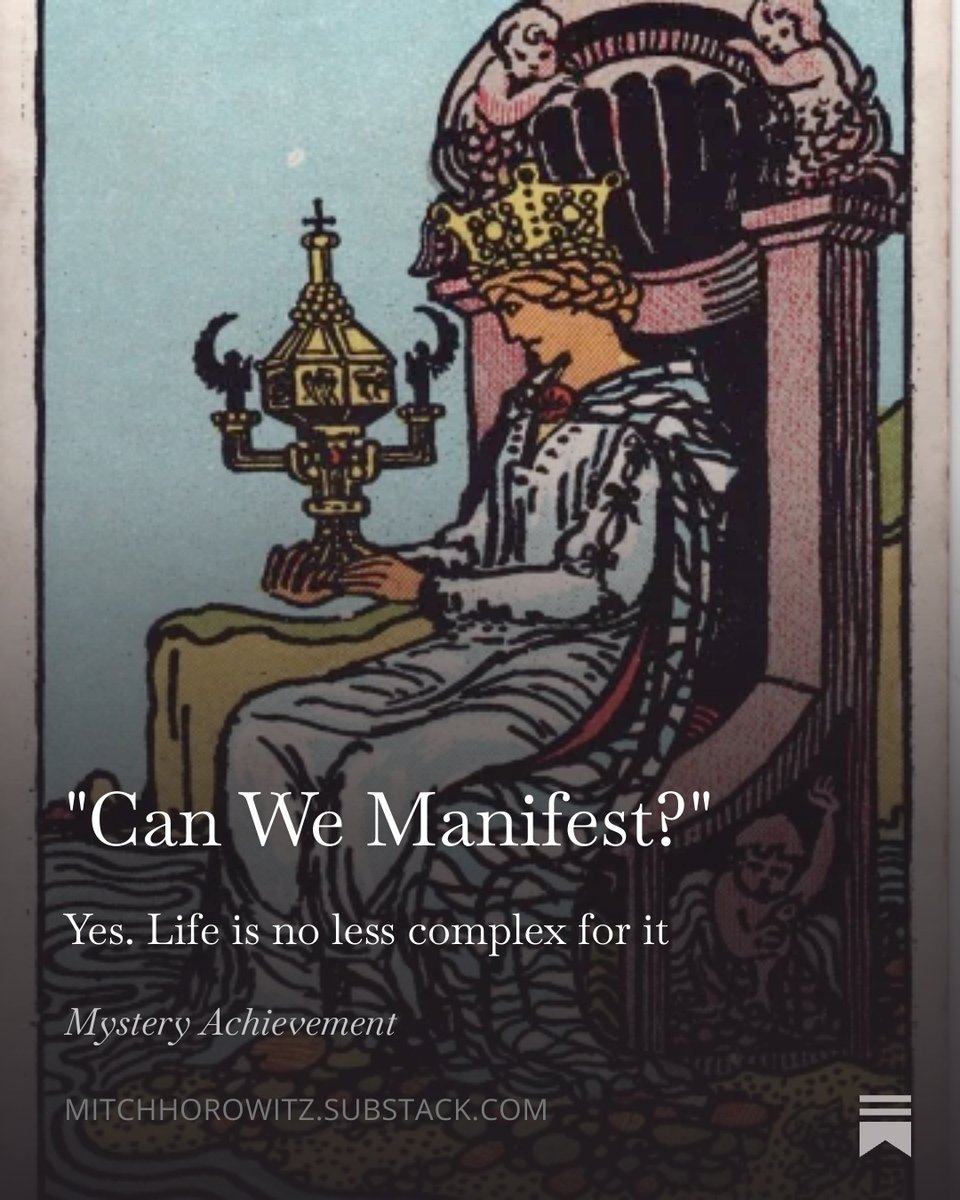
At a working lunch, publisher Gary Jansen asked: “Can we manifest?”
It is not my term. I use select—not out of contrarianism but because I reject the “super law” inference of phrases like manifest and law of attraction. We suffer myriad laws and forces.
But—I honor a direct question, our rarest resource. If you wish to pursue intellectual development, eschew rhetorical questions. They are hiding places.
I told my friend: Yes.
You should be heartened if you find my supporting argument persuasive.
But you should also take whatever truth it offers with grave seriousness in implication and demand.
Because no force requires more maturity of its user than that which is radically simple in power—and overwhelming in effect . . .
mitchhorowitz.substack.com/p/can-we-manif…

English
Destination Saigon retweetledi

One of my favourite cathedrals, and incredible that it will be finished in my lifetime🤞It inspired my thriller Gates of Hell.
HerodotusWave@HerodotusWave
The interior of the Basílica de la Sagrada Família in Barcelona, Spain, designed by architect Antoni Gaudí.
English
Destination Saigon retweetledi

I am about to make a claim. It is addressed to a sensitive few for whom self-development is a matter of hungry urgency. This little essay may be the most important of your life. I believe you will find yourself within its words. They are written with a true desire for your happiness. The hour is late and sincerity—among seekers and between reader-writer—is paramount. -M-
I am going to ask you the most important question of your life.
What is your Great Wish?
Not—Who are you?
I know who you are—as do you. You, and I, are beings, both physical and extra-physical, who exist in pieces.
Clarity alone—fleetingly—organizes us.
Many Westerners function within a gratification-oriented culture. Hence, the question—what is your Great Wish?—can appear banal or childish.
It is neither. It is deadly serious.
This question, the most important of your life, is constantly stolen from you. And, with it, your selfhood.
We are suffused with multiple and changing “I”s. That is the crisis of our splintered being. But—note this carefully—sensitive people, to whom my work is addressed, possess a magnetic center. From this place, your basic sense of relation to world whispers truth. Never deny or flee it. This is the esoteric meaning of Jonah swallowed as food when fleeing his mission.
I once told a trusted and capable therapist what I wanted in life. “But that’s superficial,” he replied.
I was neither shaken nor angered. Because I knew what I meant. “Listen,” I told my shrink,
"you’ve known me a long time. Do you really think that’s superficial? Or do you think that perhaps I have wrestled with that question, ethically and practically, and emerged with the intimate acknowledgment that this is, in fact, what I want? And if what I describe is true, it is, by nature, right."
Knowing what you want—your Great Wish—is not equivalent to attaining it. Or even being able to attain it. But without knowing, nothing is possible.
The question of knowing summons another: What commands your fealty in life? On this count, two great currents of truth appear to conflict.
The Greek-Egyptian wisdom of Hermeticism tells the individual to create as he was created: as above, so below.
The Ancient Chinese wisdom of Taoism tells the individual: just be.
Which is right?
“Every stick has two ends,” said G.I. Gurdjieff.
“The truest sayings are paradoxical,” wrote Lao Tzu.
You already know the answer. Both are right. One must, at times, find repose within activity and activity within repose. Therein, the ancients taught, lies a reconciling force . . .
mitchhorowitz.substack.com/p/what-is-your…

English
Destination Saigon retweetledi

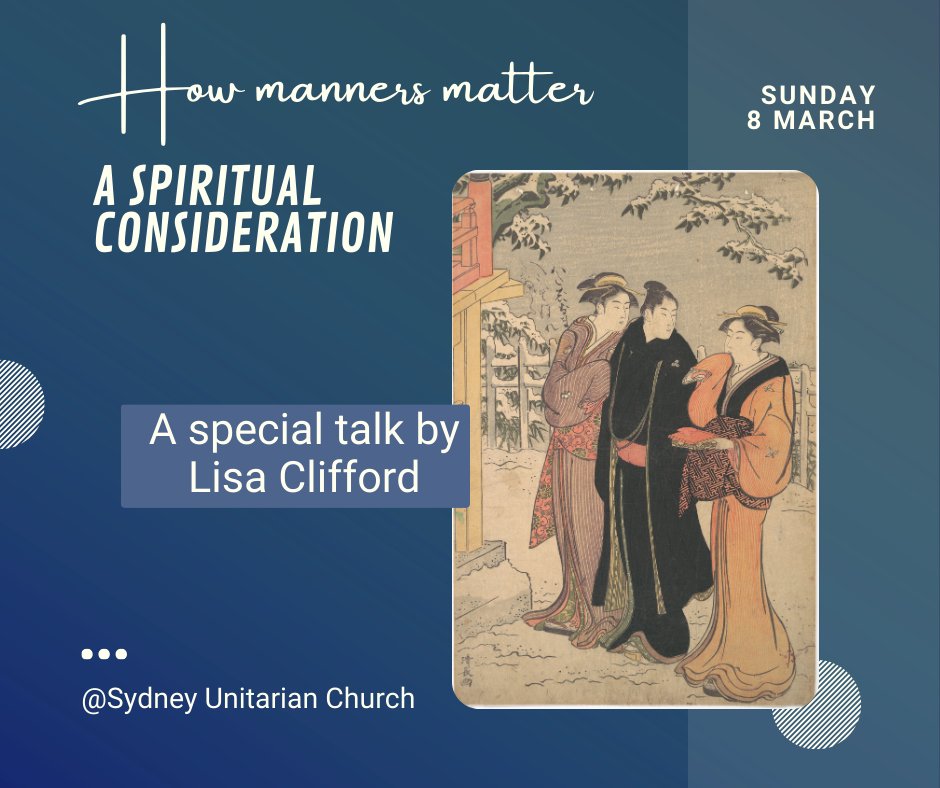
Take some quiet time for yourself tomorrow morning (Sunday 22 February), when I will be leading one of my rare meditation services at Sydney Unitarian Church. All are welcome, it is blissfully easy and costs nothing at all!
Details: sydneyunitarianchurch.org/Service_Diary_…

English
Destination Saigon retweetledi

I am a working artist. I have no outside source of income and my parents were so financially busted that I left drama school at age fifteen with the conviction that I had to earn my living entirely independently.
You can judge for yourself whether my financial acumen carried over to my passion for occult history.
To sustain that aspect of my life, I also worked twenty-seven years in corporate publishing—rising to the rank of vice president at Penguin Random House—which reflected an arduous day job. I am proud of that effort.
Today, people marvel at my prolificness. That element of my work reflects passion—and need. The two combine powerfully.
Due to passion and need, a few of the books I have written were commissioned projects. Money jobs. I stand by every one—and by every page.
I have conceded, at times, to sensationalistic or genre-sounding titles, such as Secrets of Self-Mastery or Cosmic Habit Force (some of my readers’ favorites, I should note). But here, too, I developed strength. A bold claim demands an all-the-greater defense. I carry that burden happily.
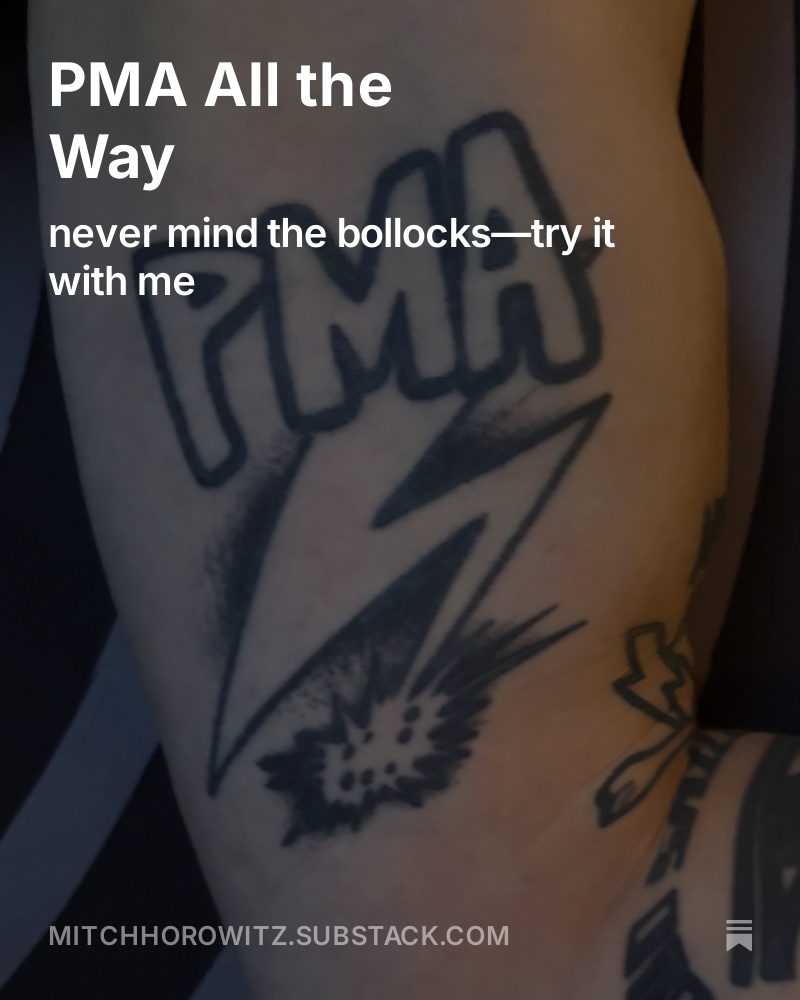
In these and other works, I am a critical exponent of positive thinking. Positive thinking or positive mental attitude (PMA) are dowdy terms that I nonetheless embrace both for clarity and refusal to cede language to cynics.
Someone I once published wrote—disingenuously, after I explained the matter on his podcast—that I “promote” positive thinking. No. I interrogate it.
This article is a muscular iteration of PMA. PMA has served me across my career. May it do so for you. I include an exercise for any who wish to try it with me.
-M-
mitchhorowitz.substack.com/p/pma-all-the-…

English