
Domic ☂️

1.6K posts

Domic ☂️ banner
Domic ☂️

Domic ☂️

@Domicsui

Believer in encrypted computing & real privacy . Building the future where data stays private, even in use .

Katılım Haziran 2025
301 Takip Edilen334 Takipçiler
Sabitlenmiş Tweet
Domic ☂️
Domic ☂️@Domicsui·
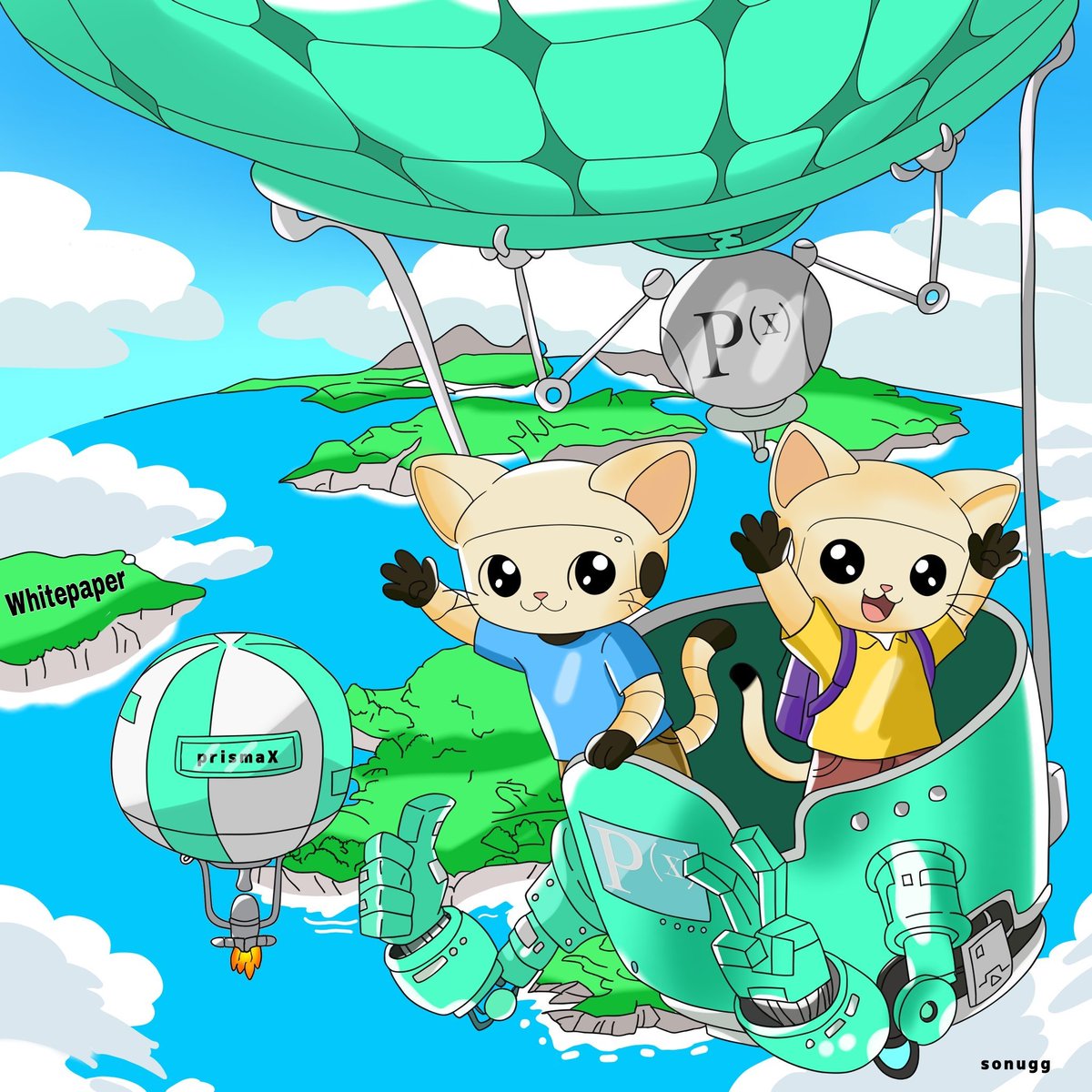
The next big wave is Physical AI and PrismaX is building in that space ▪️PrismaX is focused on training robots for real-world tasks ▪️ The goal is simple: make robots actually useful. ▪️One of the biggest problems in robotics is data - > High-quality robotics data is: • expensive • difficult to collect • hard to scale -> PrismaX is building an infrastructure layer that connects: • teleoperation • robotics data collection • human feedback • AI training systems -> What makes it interesting is the mix of AI + Robotics + Web3 Users can remotely operate robots and help generate training data. -> Today humans guide robots ->Tomorrow robots become autonomous -> PrismaX wants to help power that transition.
Domic ☂️ tweet media
English
3
0
9
53
Domic ☂️
Domic ☂️@Domicsui·
PrismaX / Vivian Robotics Community Recap A few important updates from the team 👇 • Community feedback is a major focus and the team is actively improving the platform based on user suggestions. • The Ambassador Program is still open with rewards based on performance and contribution quality. • The first selection round will be competitive especially for members creating hands-on content and teleoperation related work. • A leaderboard for Ambassadors is being prepared to improve transparency around contributions and rewards. • A major product update is currently in development and expected within the next 1–2 months. • Queue notifications and email alerts are now live on the platform. On community contributions: • The team wants to focus more on quality over quantity. • Higher roles will require stronger creative work like videos, posters, websites, and original builds. • Low-effort AI content will be reduced over time. • A new Content Spotlight channel is also coming soon to showcase the best community creations. Just stay consistent, contribute real value and keep building. @PrismaXai @vivianrobotics @MaxC16134
Domic ☂️ tweet media
Domic ☂️@Domicsui

PRISMAX Where robotics AI & real-world intelligence connect. ◉ Operate real robots remotely ◉ Train smarter physical AI systems ◉ Turn human actions into valuable data ◉ Building the future of autonomous machines PrismaX isn’t just another AI project. It’s creating the service layer for physical AI where humans and robots work together in real time. ▪️Robotics ▪️ Data ▪️ Intelligence The next era of AI will move in the real world. PrismaX is building that future. @PrismaXai

English
1
0
3
64
Domic ☂️
Domic ☂️@Domicsui·
PRISMAX Where robotics AI & real-world intelligence connect. ◉ Operate real robots remotely ◉ Train smarter physical AI systems ◉ Turn human actions into valuable data ◉ Building the future of autonomous machines PrismaX isn’t just another AI project. It’s creating the service layer for physical AI where humans and robots work together in real time. ▪️Robotics ▪️ Data ▪️ Intelligence The next era of AI will move in the real world. PrismaX is building that future. @PrismaXai
Domic ☂️ tweet media
Domic ☂️@Domicsui

What is PrismaX? PrismaX is building a future where AI robotics and decentralized systems work together seamlessly. This is not just about robots. It’s about creating intelligent systems that can learn adapt and improve through real-world experience. PrismaX connects AI intelligence with robotics automation to build machines that become smarter over time. Why PrismaX matters Traditional robots follow fixed instructions. PrismaX takes a different approach by enabling robots to learn from live data and real interactions. That means: • Faster learning • Better decision-making • Real-time adaptation • Smarter automation The core vision PrismaX brings together: • Artificial Intelligence • Robotics infrastructure • Real-world data learning • Decentralized innovation The goal is to create an ecosystem where machines continuously improve through interaction and feedback. Real-world impact PrismaX can improve automation across multiple industries by making robots more flexible, intelligent, and efficient in real environments. Why people are watching PrismaX Because it’s helping build the bridge between humans and intelligent robotics. The future isn’t just coming. PrismaX is already building it @pris

English
3
0
7
133
Domic ☂️
Domic ☂️@Domicsui·
What is PrismaX? PrismaX is building a future where AI robotics and decentralized systems work together seamlessly. This is not just about robots. It’s about creating intelligent systems that can learn adapt and improve through real-world experience. PrismaX connects AI intelligence with robotics automation to build machines that become smarter over time. Why PrismaX matters Traditional robots follow fixed instructions. PrismaX takes a different approach by enabling robots to learn from live data and real interactions. That means: • Faster learning • Better decision-making • Real-time adaptation • Smarter automation The core vision PrismaX brings together: • Artificial Intelligence • Robotics infrastructure • Real-world data learning • Decentralized innovation The goal is to create an ecosystem where machines continuously improve through interaction and feedback. Real-world impact PrismaX can improve automation across multiple industries by making robots more flexible, intelligent, and efficient in real environments. Why people are watching PrismaX Because it’s helping build the bridge between humans and intelligent robotics. The future isn’t just coming. PrismaX is already building it @pris
Domic ☂️ tweet media
Domic ☂️@Domicsui

TeleOps (teleoperation) means a human controls a real robot from another place. You are not near the robot, but you still control it live. How it actually works • Robot has cameras and sensors • You see what the robot sees on your screen • You use mouse, keyboard, or controller • Robot copies your movement instantly If you move left, the robot moves left If you pick something, the robot picks it It feels like your hands are inside the robot. Why we need TeleOps Robots are not fully smart yet. They: • Make mistakes • Don’t understand new situations • Need guidance So humans help them using TeleOps. Real example Warehouse work: A person sits at home and controls a robot in a warehouse They pick items, move boxes, and complete tasks Work gets done without being physically there. Training example You control a robot arm to pick and place objects The system records: • Your movement • Your decisions After many repeats, the robot learns and starts doing it on its own @prisma

English
1
0
3
103
Domic ☂️
Domic ☂️@Domicsui·
TeleOps (teleoperation) means a human controls a real robot from another place. You are not near the robot, but you still control it live. How it actually works • Robot has cameras and sensors • You see what the robot sees on your screen • You use mouse, keyboard, or controller • Robot copies your movement instantly If you move left, the robot moves left If you pick something, the robot picks it It feels like your hands are inside the robot. Why we need TeleOps Robots are not fully smart yet. They: • Make mistakes • Don’t understand new situations • Need guidance So humans help them using TeleOps. Real example Warehouse work: A person sits at home and controls a robot in a warehouse They pick items, move boxes, and complete tasks Work gets done without being physically there. Training example You control a robot arm to pick and place objects The system records: • Your movement • Your decisions After many repeats, the robot learns and starts doing it on its own @prisma
Domic ☂️ tweet media
Domic ☂️@Domicsui

Most AI talks about robots But very few actually let you control real ones That’s what PrismaX is building A platform where you can operate real robots remotely and help train AI at the same time. Here’s the idea: Humans control robots → robots do real tasks → data is collected → AI gets smarter This loop keeps improving over time. PrismaX focuses on 3 things: • Data (real-world training data) • Teleoperation (remote robot control) • Models (AI that learns from this data) Simple example: Instead of just training AI in simulation, you control a real robot arm from your laptop and it learns from your actions. Over time → robots need less human help Why this matters: Real-world AI needs real-world data and that’s the hardest part to get PrismaX is trying to solve that Still early, but direction is strong: Humans + robots working together, not replacing each other @PrismaXai

English
4
0
9
116
Domic ☂️
Domic ☂️@Domicsui·
Most AI talks about robots But very few actually let you control real ones That’s what PrismaX is building A platform where you can operate real robots remotely and help train AI at the same time. Here’s the idea: Humans control robots → robots do real tasks → data is collected → AI gets smarter This loop keeps improving over time. PrismaX focuses on 3 things: • Data (real-world training data) • Teleoperation (remote robot control) • Models (AI that learns from this data) Simple example: Instead of just training AI in simulation, you control a real robot arm from your laptop and it learns from your actions. Over time → robots need less human help Why this matters: Real-world AI needs real-world data and that’s the hardest part to get PrismaX is trying to solve that Still early, but direction is strong: Humans + robots working together, not replacing each other @PrismaXai
Domic ☂️ tweet media
Domic ☂️@Domicsui

Global Participation why this is a big shift Traditionally, robot training was limited to labs A small group of engineers would design tasks, run experiments, and collect data. That meant limited scale, limited diversity and slow progress With PrismaX, that model changes completely . Now anyone with internet access can log in and control a real robot. You do not need a technical background. You are not writing code or training models directly. You are simply performing actions through the robot, and those actions become training data. This matters because of how humans behave,Different people approach the same task in different ways Someone might move slowly and carefully. Someone else might take a faster, more direct approach. Another person might correct mistakes mid-action. All of these styles get recorded Over time, this creates a much richer dataset compared to a small team working in a controlled environment Example Imagine a simple task like picking up a cup and placing it on a shelf Person A Moves the arm slowly, aligns perfectly, then lifts the cup smoothly Person B Moves quickly, slightly misaligns, adjusts mid-way, then places it Person C Struggles at first, drops the cup once, retries, then succeeds In a traditional setup, you might only capture one “perfect” version of this task. With global participation, you capture: @PrismaXai

English
1
0
6
141
rooh
rooh@Rooh02222·
Optimum as a Decentralized Memory Layer What does “Memory Layer” mean? In Web3, we usually hear about: Execution layer (smart contracts) Consensus layer (validators) But there’s a missing piece: How data is stored, shared, and accessed efficiently That’s where Optimum comes in Optimum’s Role Optimum acts like a decentralized memory system for blockchains. Instead of every node storing & sending full data: Data is distributed smartly across nodes Nodes can access required data instantly Network load is reduced significantly Why This Matters Without a proper memory layer: Networks become congested Latency increases Scaling becomes difficult With Optimum: Faster data access Less redundancy Better network coordination Real Impact This enables: High-performance DeFi apps Real-time gaming on-chain AI + blockchain integrations Basically, it unlocks next-gen Web3 apps Simple Analogy Think of blockchain like a computer: CPU = Execution Network = Consensus RAM = Optimum Without RAM → everything slows down With Optimum → everything runs smoothly Final Thought Optimum isn’t competing with blockchains it’s making them smarter, faster, and more scalable from the inside @get_optimum @TheBl0ckBoy x.com/i/status/20440…
rooh tweet media
English
6
0
15
119
Domic ☂️
Domic ☂️@Domicsui·
fam ☀️ @get_optimum Really nice to see this moment 🥳 This isn’t just a place where people show up people actually put in time, learn, and grow. And when promotions like this happen, it clearly shows that the effort didn’t go unnoticed. Being active is one thing, but staying consistent and improving is what really matters. Huge congrats to everyone who got promoted 👏 Well deserved. @blockchainjeff
Domic ☂️ tweet media
English
1
0
6
28
rooh
rooh@Rooh02222·
How Optimum Solves Blockchain Speed & Scalability Problems Optimum is building something very important in Web3: a high-performance memory layer for blockchains. The Problem Blockchains today (like Ethereum, Solana, etc.) are not just slow because of block time the real issue is how data spreads across the network. When a transaction happens, it must reach all nodes Current systems use “gossip protocols” → slow & inefficient Data gets duplicated → wasting bandwidth This creates latency (delay) and limits scalability In short: Even fast blockchains struggle because data propagation is the hidden bottleneck Optimum’s Solution Optimum introduces a new system powered by a technology called: RLNC (Random Linear Network Coding) Instead of sending full data again and again: Data is broken into small encoded pieces Nodes can reconstruct the full data from partial pieces Less duplication, faster delivery This makes the network: Faster More bandwidth-efficient More reliable Simple Analogy Think of it like this: Old way: Sending the same full file to everyone again and again Optimum way: Sending smart puzzle pieces anyone can rebuild the full file quickly What It Improves Optimum directly impacts the whole blockchain ecosystem: Validators → get data faster → better rewards Blockchains (L1/L2) → higher throughput Developers → smoother dApps Users → faster transactions, better UX Key Product Example One of their core tools is OptimumP2P (mump2p): Works like a “memory bus” for blockchains Reduces latency drastically Can make propagation up to 10x faster in some cases Final Idea Optimum is not another blockchain it’s infrastructure that makes all blockchains faster. You can think of it as: > “Adding RAM + high-speed internet to Web3” @get_optimum @TheBl0ckBoy x.com/i/status/20433…
rooh tweet media
English
2
0
7
83
rooh
rooh@Rooh02222·
What are Intent-Based Systems & Why They’re Changing Web3 UX Using Web3 today often feels like you have to do everything manually. You choose the chain, pick the route, approve transactions, manage gas… basically, you handle all the complexity yourself. That’s not how users should interact with technology. This is where intent-based systems come in. Instead of telling the system how to do something, you simply tell it what you want to achieve. For example, instead of manually swapping tokens across chains, you just say: “I want to swap X token to Y token at the best rate.” And the system handles everything in the background. Routing, bridging, execution all optimized automatically. This changes the user experience completely. You’re no longer interacting with blockchains directly… you’re interacting with outcomes. Under the hood, solvers or specialized actors compete to fulfill your intent in the most efficient way. This creates a market where execution gets better over time. For users, it means less friction, fewer steps, and better results. For developers, it opens a new design space. They can build applications focused on user goals instead of technical processes. It also reduces the need for users to understand chains, gas, or liquidity routes. Everything becomes abstracted away. This is important because complexity is one of the biggest barriers in Web3. And intent-based systems remove that complexity at its core. In the long run, this is how Web3 starts to feel invisible powerful infrastructure running in the background, while users just get what they want. @get_optimum @TheBl0ckBoy x.com/i/status/20428…
rooh tweet media
English
3
0
12
316
Domic ☂️
Domic ☂️@Domicsui·
Global Participation why this is a big shift Traditionally, robot training was limited to labs A small group of engineers would design tasks, run experiments, and collect data. That meant limited scale, limited diversity and slow progress With PrismaX, that model changes completely . Now anyone with internet access can log in and control a real robot. You do not need a technical background. You are not writing code or training models directly. You are simply performing actions through the robot, and those actions become training data. This matters because of how humans behave,Different people approach the same task in different ways Someone might move slowly and carefully. Someone else might take a faster, more direct approach. Another person might correct mistakes mid-action. All of these styles get recorded Over time, this creates a much richer dataset compared to a small team working in a controlled environment Example Imagine a simple task like picking up a cup and placing it on a shelf Person A Moves the arm slowly, aligns perfectly, then lifts the cup smoothly Person B Moves quickly, slightly misaligns, adjusts mid-way, then places it Person C Struggles at first, drops the cup once, retries, then succeeds In a traditional setup, you might only capture one “perfect” version of this task. With global participation, you capture: @PrismaXai
Domic ☂️ tweet media
Domic ☂️@Domicsui

🤖 What PrismaX Robots Actually Do At its core, PrismaX uses human-controlled robots (teleoperation) to perform real-world tasks. This helps collect high-quality visual + sensor data, which is used to train physical AI and robotics models. 🔄 The Data Flywheel (simple idea) It works like a loop: Better control → better data → smarter robots → more real tasks → repeat Over time, robots keep improving with real-world experience. 🧩 Current Stage Right now, things are kept simple: → Pick-and-place tasks (like stacking blocks, moving objects) → Mostly on tabletop robotic arms But the plan is much bigger: → More complex tasks → Two-arm (bimanual) setups → Full humanoid robot operations 🤖 Robots PrismaX is Working With PrismaX uses different robots for different purposes: • Unitree G1 Compact humanoid (~132cm), agile and dynamic Used in demos, events, guiding, and movement tasks • Reachy 2 (Pollen Robotics) Great for precise hand movements Useful in research, light tasks, and hospitality • Ubtech Walker Humanoid for service roles (food delivery, warehousing, guiding, mobility research) • Unitree Go2 Robot dog (quadruped) Used for inspection, movement research, and ads 🔹 Other Robots in the Fleet • Boardwalk Robotics Alex → manipulation & maintenance • Mirokai (Enchanted Tools) → companionship & hospitality • K-Scale Labs K-Bot • MIT Mini-Cheetah → research-focused quadruped @PrismaXai

English
5
0
16
184
Domic ☂️
Domic ☂️@Domicsui·
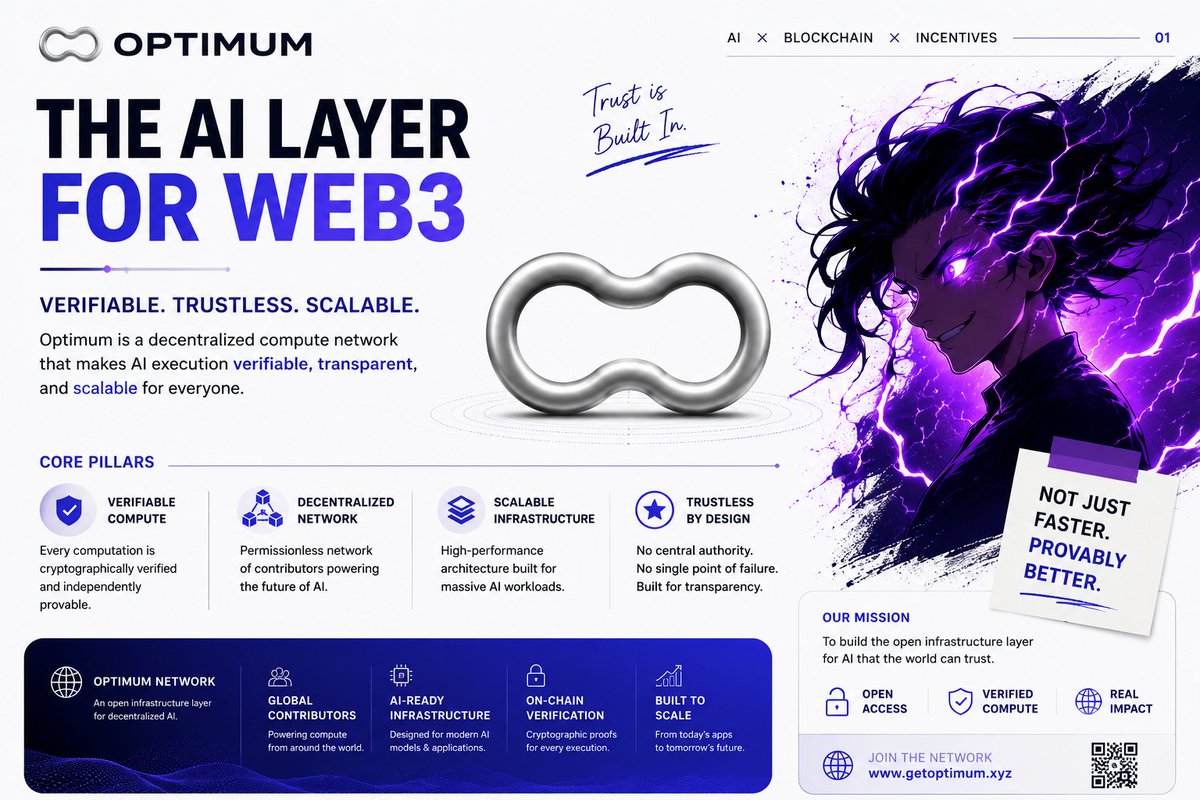
Most people think blockchains are slow because of execution That’s not the full story The real issue is how data moves between nodes. Every validator needs the same block But the way it spreads is inefficient Today, networks use gossip. One node sends the full block → next forwards the same full block → and so on Nothing is optimized Just repetition By the time data reaches everyone,you’ve already lost time. Optimum doesn’t change consensus It changes how data flows Instead of sending full blocks, it breaks data into smaller pieces and mixes them These pieces move across the network in parallel Nodes don’t wait for full data anymore They receive partial data → remix → forward instantly. No delays, No bottlenecks. At the end any node can reconstruct the full block once it has enough pieces. @get_optimum
Domic ☂️ tweet media
Domic ☂️@Domicsui

Blockchains don’t slow down at executionThey slow down when data moves between nodes That’s where latency comes from When a block is created It has to reach validators across the network If propagation is slow confirmation is slow Optimum works on this exact layer It improves how data is shared between nodes Step 1 Data is created a block or transaction Now it needs to be distributed Step 2 Instead of sending the same full data to every node Optimum splits it into smaller encoded parts Step 3 Nodes receive different pieces They don’t depend on one source They rebuild the original data from multiple inputs This reduces delay and avoids repeated transmission Step 4 The network layer is optimized Messages move more directly less random spreading Step 5 State access is faster Nodes can read required data quickly without waiting on heavy queries @get_optimum

English
3
0
11
46
rooh
rooh@Rooh02222·
Sleeping on innovation, waking up to a fairer future Fairblock is building privacy that works when it matters most Encrypted today, revealed only when conditions are right No front-running, no hidden advantage just pure fairness This is what the future of Web3 should feel like @0xfairblock x.com/i/status/20406…
rooh tweet mediarooh tweet media
English
6
0
19
370
Domic ☂️
Domic ☂️@Domicsui·
Blockchains don’t slow down at executionThey slow down when data moves between nodes That’s where latency comes from When a block is created It has to reach validators across the network If propagation is slow confirmation is slow Optimum works on this exact layer It improves how data is shared between nodes Step 1 Data is created a block or transaction Now it needs to be distributed Step 2 Instead of sending the same full data to every node Optimum splits it into smaller encoded parts Step 3 Nodes receive different pieces They don’t depend on one source They rebuild the original data from multiple inputs This reduces delay and avoids repeated transmission Step 4 The network layer is optimized Messages move more directly less random spreading Step 5 State access is faster Nodes can read required data quickly without waiting on heavy queries @get_optimum
Domic ☂️ tweet media
English
4
0
6
92
Domic ☂️
Domic ☂️@Domicsui·
Most AI systems today struggle with real-world tasks Not because models are weak But because the data is limited A lot of training still comes from controlled or simulated environments PrismaX focuses on solving this at the data level, It brings humans directly into the loop to generate real-world training data using robots how it works A user remotely controls a real robot and performs tasks in a physical environment This is not simulation It is actual execution During this process, everything is captured • Movement • Decisions • Adjustments Task completion steps This data is then used to train AI models Not just on outcomes but on how tasks are actually performed For example If a robot is picking an object The system learns from: • how the grip is adjusted • how errors are corrected • how success is achieved Over time, this improves model performance Robots become more accurate require less manual control and adapt better to real conditions @PrismaXai
Domic ☂️ tweet media
English
5
0
7
70
YATIN
YATIN@Yatin0008·
Gm ☀️ everyone , Been spending time digging into PrismaX updates lately, and Q1 genuinely felt different. This is no longer just another “product” it’s starting to look like a real operating layer for physical AI. What began as simple curiosity slowly turned into seeing a full system evolve in real time. The backend has clearly been upgraded caching, security, performance everything feels tighter now, and it handles load much better than before. Multi-chain support also feels more complete with improvements across Metamask, Solana, and Base, making the overall experience faster and smoother without random breaks. Teleoperation is finally at a point where it feels reliable. The queue system is accurate, notifications actually make sense, and you’re no longer stuck guessing when your turn is coming. Sessions have also become more consistent points tracking is fixed, delays are reduced, and the overall flow feels much cleaner with less friction. One of the biggest shifts I noticed is how they’ve restructured robot usage. Training arms are now focused on learning and repetition, arena is clearly optimized for high-volume fast sessions, and private setups are more controlled for specific or partner use. That separation alone removes a lot of chaos and confusion. The result is obvious less waiting, fewer missed sessions, and a much smoother overall experience. It feels like the focus has shifted from just testing things out to actually preparing for scale. Still early, but the direction is getting clearer. This is slowly turning into infrastructure, not just a tool. Anyone else tried it yet? Curious what your experience has been. 𝐏𝐫𝐢𝐬𝐦𝐚𝐗 X account - @PrismaXai linktree - t.co/ipHnnMfn5Q discord - discord.gg/prismaxai
YATIN tweet media
English
13
2
19
179