English
ELJefe
7.6K posts


$NASA ETF (which holds SpaceX) is +50% since early-April inception h/t @EricBalchunas @stockcharts


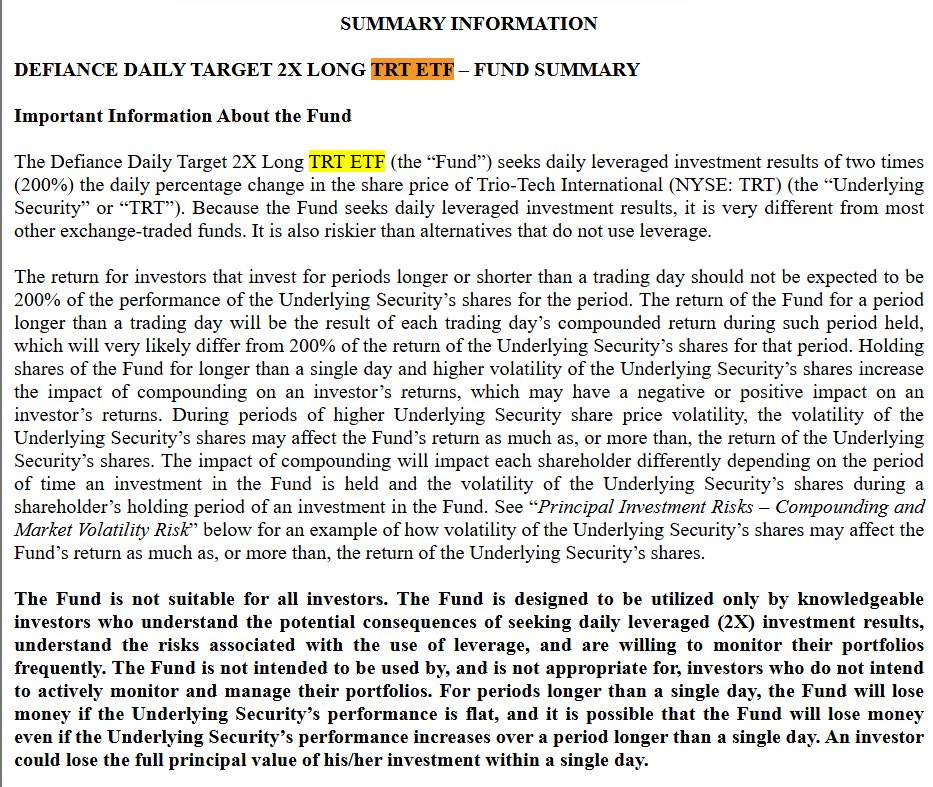
$TRT - the market just handed me a gift. I'm doubling down on this name. This is an $AEHR in the making and you are selling? I just rotated a +100% swing position from $TE into $TRT on today's dip at $11.78. Morgan Stanley estimates the Powered Shell at 6-14% of every hyperscaler build. That is $2-6bn per GW at stake. Every GaN and SiC device shipped into that layer needs to be tested before it goes into a rack. Both $AEHR and $TRT are major beneficiaries playing that opportunity differently. $AEHR operates at the wafer level. Before the chip is even cut from the wafer, Aehr burns it in. This is the earliest and most specialized test step in the entire production flow. If a GaN or SiC wafer fails here, it never becomes a device. $TRT operates at the back end. After the chip is packaged, Trio-Tech runs burn-in, environmental stress, and reliability validation. This is the final quality gate before a device ships to a customer. Same supply chain. Different layers. Neither replaces the other. The key difference: $AEHR is a US-listed Nasdaq name with wafer-level IP that is difficult to replicate. Higher margin, higher multiple, more institutional coverage. Power semi exposure has become one driver among several as AI processor burn-in takes over. $TRT is the Asian back-end pure-play catching the same wave at a much earlier stage of market recognition. Had a stellar ER with accelerating growth Q1: 58%. Q2 +82%. Q3: +124% revenue growth. $7.8M in orders already confirmed. Revenue run rate approaching $65M annualized. Balance sheet clean. Debt-to-equity O.11. New facility coming online in Malaysia, which is a hot spot. Higher execution risk but also much more room to re-rate if the AI and power semi ramp continues. The Morgan Stanley model shows $2-6bn per GW flowing into the Powered Shell. Every chip in that layer needs both test steps. $AEHR captures the front. $TRT captures the back. The opportunity is large enough for both to win. The difference is that $AEHR sits at a $2.5bn market cap and $TRT sits at $200mn. I am not trading this one for a quick flip. I am holding for an easy x3-x5 within a year. If it keeps dipping, I will buy more. I own both. I am loading up on $TRT. This is still early for $TRT but not for long. I'm long $TRT. NFA, you do you.



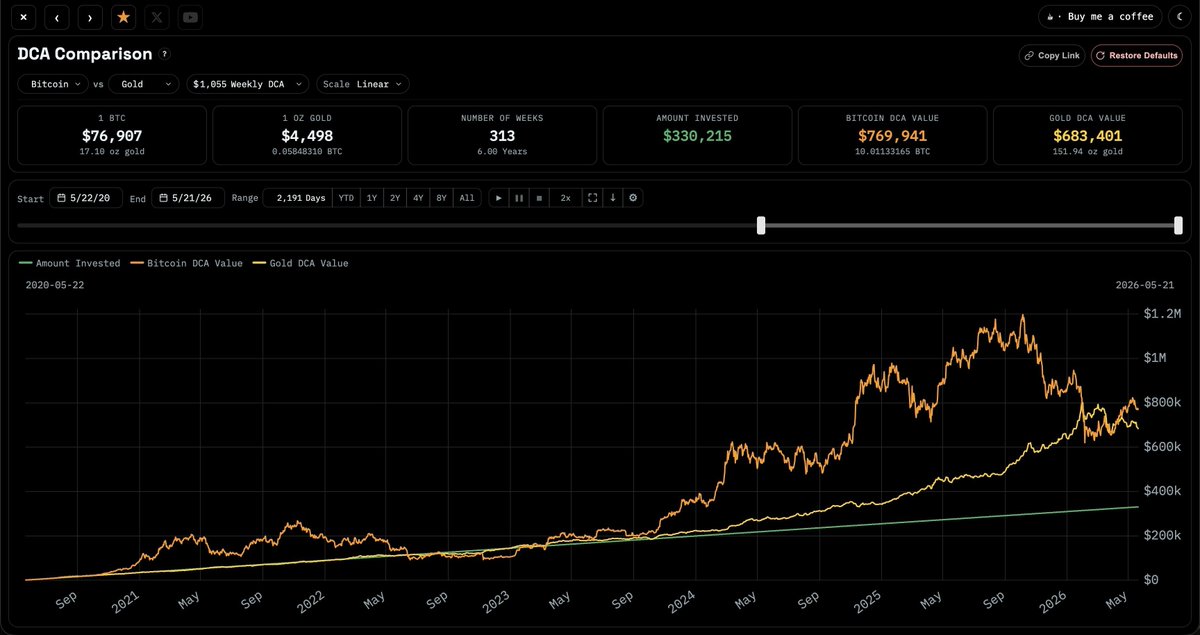
"Finally hit 10 coins 🙌🙌" After DCAing for the past 6 years and living like a peasant, I finally reached my goal." Legend ✨



Lutnick on the Hot Seat, Yet Again This week Swan Bitcoin filed an ex parte application in the Southern District of New York seeking court authorization to subpoena Cantor Fitzgerald and its former CEO, US Commerce Secretary Howard Lutnick @HowardLutnick, under 28 U.S.C. § 1782. The discovery would support foreign proceedings against the @Tether-appointed directors of Swan's joint mining venture, 2040 Energy: Tether Chairman and controlling shareholder Giancarlo Devasini and Bitfinex CEO JL van der Velde. According to the filing, in mid-2024 a group of Swan's own employees, led by then-CIO Raphael Zagury @alphazeta and working with Tether's now-CIO Zachary Lyons, secretly conspired with Tether to gut the joint venture. The filing states that Zagury's planning notes, found on Swan's corporate servers, laid out a coordinated mass resignation to be executed with "legal cover from Tether," referencing "Giancarlo [Devasini] side conv[ersation]s" and declaring that "Rain and hell fire needs to start." Zagury and Lyons are now both Tether-appointed directors at public company Twenty One Capital ($XXI), majority-owned and controlled by Tether, and fronted by @jackmallers. The filing states that on August 8, 2024, thirteen Swan employees resigned within hours, and that thousands of confidential documents were downloaded from Swan's systems. According to Swan, Tether replaced Swan within days with Proton, a new entity run by the same defecting employees and contractors. In December 2024, the Tether-appointed directors approved a related-party sale of 2040 Energy mining assets to a Tether subsidiary at what Swan alleges was a significant undervalue. The application targets Cantor and Lutnick because of their proximity to these events. According to the filing, in the weeks before the mass resignations, Devasini introduced Swan CEO Cory Klippsten to Lutnick to discuss a planned Swan IPO. Swan subsequently shared confidential mining data and IPO materials with Cantor. The filing notes that after the mass resignations and asset diversion, Cantor broke off contact with Swan without explanation. Cantor subsequently served as investment banker on a series of Tether-related transactions, according to the filing, including acting as placement agent for Tether's investment in Rumble and providing a SPAC for Twenty One Capital $XXI. Separately, the filing cites an independent Edison Group report noting that Tether sold Northern Data's mining subsidiary to Devasini-directed entities at a "50%" discount compared to precedent transactions, as part of the precedent to sell Northern Data to Rumble. The filing also surfaces Klippsten's many contemporaneous notes from conversations with Devasini. According to those notes, Devasini told Klippsten that Lutnick, then a private citizen, had claimed to have "managed to kill every bill about stablecoins" in Congress and was "working full time for Tether." A public UCC filing from October 2025 shows Tether as collateral agent for all assets of Dynasty Trust A, the Lutnick family trust that is the majority owner of Cantor. Bloomberg recently reported that Dynasty Trust A borrowed an undisclosed sum from Tether to finance its acquisition of Lutnick's ownership stake. The full filing is available here: scribd.com/document/10174…


$TRT holy f… TRT is going vertical +40% on the day after earnings confirm the sustained acceleration in growth and revenue. I have to thank @MauroBianchi24 for making me look at TRT again. He was telling me about this stock just yesterday, and his insights about a crushing ER were spot on. We are all better if we support each other. Let’s keep sharing alpha.



A $25,000 investment in Sandisk one year ago would be $1,061,115 today.