
Sabitlenmiş Tweet
Richard Doran
57.5K posts

Richard Doran
@DoranLex
long suffering fan of the @Guardians @Browns and devoted @BurnleyOfficial supporter#Noles
Katılım Şubat 2012
128 Takip Edilen164 Takipçiler
Richard Doran retweetledi

END: What Obama did was BAD. It's why third party settlements and sue and settle should be barred by law. But this is WORSE. It functionally ends any check from Congress on the president through the appropriations process. God help us handing this power to the next POTUS...
English
Richard Doran retweetledi

The court-by-court, jurisdiction-by-jurisdiction approach to imposing AI court filing rules via AO makes it hard on practitioners. SCOFL should address this via the rules of procedure.
FLBarNews&Journal@FLBarNews
AI court filing rules, expanded member benefits lead Florida Bar News Briefs. floridabar.org/the-florida-ba…
English
Richard Doran retweetledi

ACC average attendance this season
Florida State- 5,349
Clemson- 4,694
Virginia- 3,883
North Carolina- 3,180
Miami- 2,895
Georgia Tech- 2,891
NC State- 2,711
Wake Forest- 2,533
Louisville- 2,028
Stanford- 1,412
BC- 1,049
Virginia Tech- 919
Duke- 714
Cal- 634
Notre Dame- 621
Pitt- 369
Steve@sarge2466
@DudyNobleField @RobsRankings Do you have numbers from the ACC as a whole or just where do you pull these numbers from?
English
Richard Doran retweetledi

🚨 The Supreme Court declined to hear Florida’s lawsuit accusing California and Washington of illegally issuing commercial truck licenses to undocumented immigrants.
Justice Thomas dissents, joined by Alito.
English
Richard Doran retweetledi

President Rutherford B. Hayes is barely remembered in America, but is a NATIONAL HERO in Paraguay 🇺🇸🇵🇾
They named an entire state (called department in Paraguay) Presidente Hayes after him.
Its capital city is Villa Hayes, also named after him.
Every November 12 they celebrate Laudo Hayes Firm Day. A full week-long celebration of parades, music, and festivals. Because of him.
And yes, they even have a soccer club called Club Presidente Hayes.
Why? After the Paraguayan War nearly destroyed the country, President Hayes arbitrated a massive border dispute in 1878 and awarded Paraguay the huge Gran Chaco territory. That territory is about 60% of the land they have today.
Most Americans have never heard this story.
Paraguay never forgot 🫡🇺🇸🇵🇾

Barnaby Breaks History 🇺🇸@CorpBarnaby
🇺🇸 Most Badass Presidents: Combat Veteran Edition #6 Rutherford B. Hayes Rutherford B. Hayes, our 19th President, was one badass President. He was wounded four times, had four horses shot out from under him, and kept leading charges under heavy fire. Born October 4, 1822, in Delaware, Ohio. A successful lawyer and politician, Hayes volunteered for service when the Civil War erupted. He was appointed major in the 23rd Ohio Volunteer Infantry, the same regiment that included a young William McKinley. He quickly rose to colonel and commanded from the front in every fight. In the wild mountains of West Virginia, Hayes frequently led anti-guerrilla bushwhacking expeditions. During one raid, Hayes personally led a small squad that charged a cabin filled with Confederate bushwhackers, engaging in frantic, hand-to-hand combat to capture the post. Despite his high rank as a Colonel and General, Hayes refused to sleep in luxurious quarters if his men were roughing it. In spring 1862 a fragment from an exploding artillery shell struck Hayes directly below his right knee near Pearisburg. At the Battle of South Mountain on September 14, 1862, Hayes led a daring charge against entrenched Confederates at Fox’s Gap. A musket ball tore through his left arm just above the elbow, shattering the bone. He tied a handkerchief around the wound to stop the bleeding and remained on the field to lead before passing out. He lay stranded between the lines for twenty minutes while the fighting raged. A small squad of Union soldiers braved heavy Confederate musket fire to sprint out into the open clearing, lift Hayes off the ground, and carry him back behind Union lines. At the Battle of Kernstown on July 24, 1864, as the Union lines buckled and fell into intense confusion, a bullet struck him directly in the shoulder. At the same time, Hayes' horse was shot out from under him, violently crashing to the ground. Hayes managed to scramble to his feet and escape the rapidly advancing Confederates At the Battle of Third Winchester on September 19, 1864, Hayes' horse became stuck in deep mud. He dismounted and crawled across on all fours under heavy Confederate fire. His raw, gritty leadership inspired his men to follow him, breaking the Confederate line and routing the enemy. At the Battle of Cedar Creek on October 19, 1864, his horse was killed instantly in a gallop, going heels over head. He was thrown hard, sprained his ankle badly, and was hit in the head by a spent musket ball that lost its force going through someone else. Hayes passed out next to his dead horse. Believing the head wound was fatal, fleeing soldiers spread rumors that the colonel was dead, causing immense grief for his wife Lucy before the truth reached her. When Hayes regained consciousness, Confederate lines were closing in. Refusing to surrender, he managed to hobble away on his damaged ankle and scramble up a hill into a grove of trees to successfully evade capture. He fought in more than fifty engagements and rose to brevet major general for gallant and distinguished service. Even after serving as president, he explicitly stated that his favorite title was "Colonel" He bled for the Republic on Civil War battlefields long before he ever stepped foot in the White House. Thank you, Colonel! 🇺🇸🫡
English
Richard Doran retweetledi

Richard Doran retweetledi

It is with deep sorrow and profound love that we announce the passing of Sonny Rollins. The Saxophone Colossus died this afternoon at his home in Woodstock, NY at the age of 95. 1/2 conta.cc/4wFIDrM

English
Richard Doran retweetledi
MLB note to Commissioner Manfred
Every team should play on Opening day, Memorial Day, 4th of July and Labor Day and your national broadcast partners should be forced to air games throughout the day
How this isn't a thing I have no idea
English
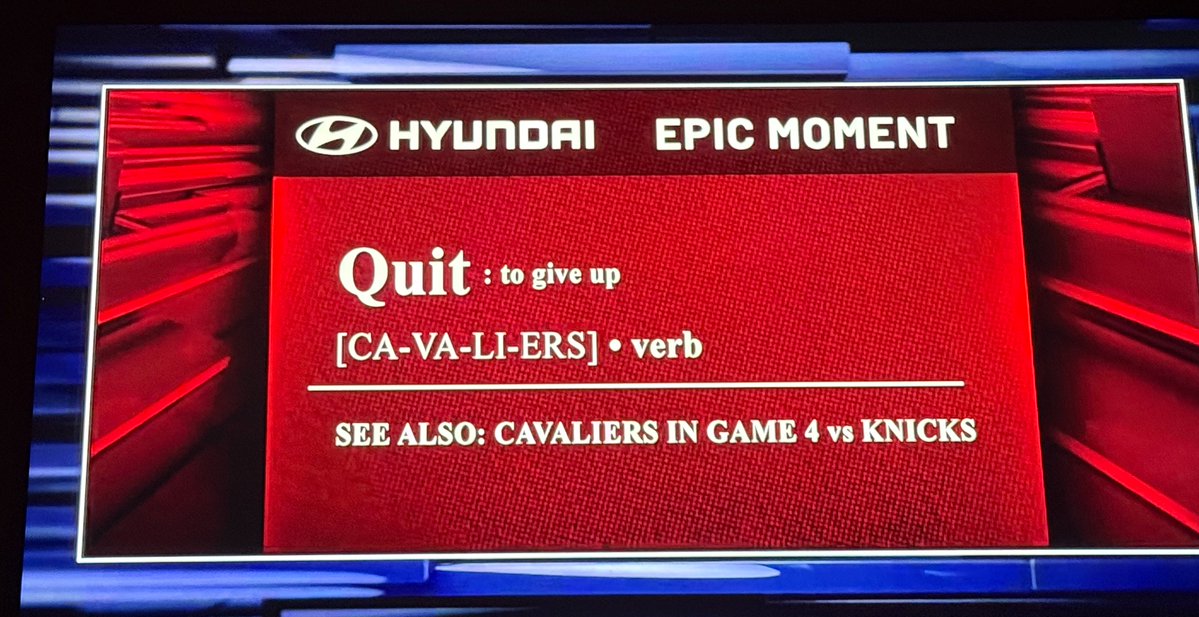
We took a step ahead this spring, but we are nowhere near where we need to be. I can’t thank the fans enough for the support this year. We will dig in all summer and do everything we possibly can to take the next step. We will grind until we get there.
Congrats to the @nyknicks, and best of luck in the Finals.
English
@ChristopherHale @brikeilarcnn There is an episode of the original Star Trek that explores this as a reality. It sticks w me 50 years later.
English

I told @BriKeilarCNN that Pope Leo XIV fears AI will strip war of any human conscience.
He carries a photo of a Lebanese child killed in 2025. He read the letter from the parents of 168 schoolchildren killed in Iran.
Machines killing children with no one deciding — that’s the type of war Leo opposes the most.
English
Richard Doran retweetledi

The Doors 🎩🪄The Unknown Soldier (1968)
Memorial Day is remembered once again with this powerful anti-war classic from 1968.
Jim Morrison and the band turned protest into performance art, and the message still hits hard today.
Remembering the brave
#MemorialDay 🇺🇸🇺🇸🇺🇸
English
Richard Doran retweetledi
Every year, I share this video of French caretakers who take sand from Omaha Beach in Normandy, and scrub them into the letters to give them the gold coloring.
They do this for all 9,386 US soldiers who died.
France also gave us this land as American soil. #MemorialDayWeekend
English
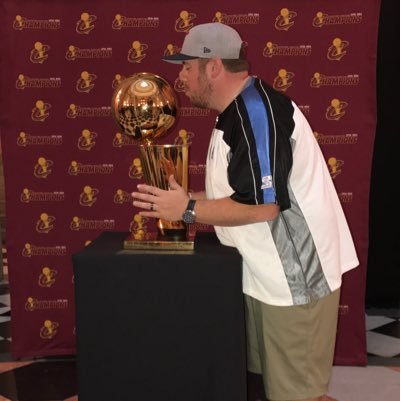
@REFLOG18 Knicks can hang their Eastern Conference Championship banner next to the NBA Cup Champion banner. Aren’t beating the Thunder or Spurs
English
Richard Doran retweetledi
Richard Doran retweetledi

Mercer missing the field is bad for college baseball.
If a mid-major can win 44 games, finish top 30 in RPI, rank among the national leaders in homers and still miss, what exactly is the path supposed to be outside the power conferences?
Column: baseballamerica.com/stories/ncaa-s…
English
@Warchant O surprise. The SEC network of experts thinks it’s great.
English
There are complaints. There will always be complaints.
But the NCAA baseball selection committee, which was chaired by FSU A.D. Michael Alford, seemed to draw favorable initial reviews from ESPN analysts:
on3.com/teams/florida-…
English
Richard Doran retweetledi

@SeminoleAlford not only failed @FSUBaseball he failed another ACC school to the favor of the SEC.
Carolina Baseball@DiamondHeels
The Chapel Hill Regional is set! #GoHeels
English
Richard Doran retweetledi
FSU is one of just three college baseball programs to host a regional in each of the last three seasons, joining North Carolina and Georgia.
English
Richard Doran retweetledi
