Alexander Young

708 posts

Alexander Young

Alexander Young

@DrAlexYoung

Mental health professional, educator and clinician; informaticist; clinical, services and policy researcher; implementation scientist

Los Angeles, CA Katılım Ağustos 2013
277 Takip Edilen254 Takipçiler
Alexander Young retweetledi
Elon Musk
Elon Musk@elonmusk·
This is great. At least those judges who release violent criminals who go on to hurt more people will be publicly shamed!
JohnnyFSE@JohnnyFSE

I built CourtWatch.us — a free public database for American citizens who deserve safer communities. You can track which judges released defendants who then got rearrested, skipped court, or violated their release conditions. All public records. All free. I started with Orange County FL and will be expanding to all 67 Florida counties and eventually every state in the country. This first batch of info is from 2024 and since public reports are released in March/April for the previous year, data is behind. But I wanted to see if this is plausible. After adding 2024,I'll add 2025 and then figure out how to get real-time-data uploaded. It's in beta — would love to know what you think 👇 Numbers don't lie, but criminals do. courtwatch.us @bennyjohnson @jockowillink @GrantCardone @LauraLoomer @nickshirleyy @j_fishback


English
4.3K
49.4K
217.8K
9.9M
Alexander Young retweetledi
JAMA Psychiatry
JAMA Psychiatry@JAMAPsych·
Survey study identifies that most patients with depression interpret the Patient Health Questionnaire instructions incorrectly, raising questions about its validity for clinical and research use. ja.ma/4c5whRm
English
1
35
94
14.5K
Alexander Young retweetledi
Andrej Karpathy
Andrej Karpathy@karpathy·
Judging by my tl there is a growing gap in understanding of AI capability. The first issue I think is around recency and tier of use. I think a lot of people tried the free tier of ChatGPT somewhere last year and allowed it to inform their views on AI a little too much. This is a group of reactions laughing at various quirks of the models, hallucinations, etc. Yes I also saw the viral videos of OpenAI's Advanced Voice mode fumbling simple queries like "should I drive or walk to the carwash". The thing is that these free and old/deprecated models don't reflect the capability in the latest round of state of the art agentic models of this year, especially OpenAI Codex and Claude Code. But that brings me to the second issue. Even if people paid $200/month to use the state of the art models, a lot of the capabilities are relatively "peaky" in highly technical areas. Typical queries around search, writing, advice, etc. are *not* the domain that has made the most noticeable and dramatic strides in capability. Partly, this is due to the technical details of reinforcement learning and its use of verifiable rewards. But partly, it's also because these use cases are not sufficiently prioritized by the companies in their hillclimbing because they don't lead to as much $$$ value. The goldmines are elsewhere, and the focus comes along. So that brings me to the second group of people, who *both* 1) pay for and use the state of the art frontier agentic models (OpenAI Codex / Claude Code) and 2) do so professionally in technical domains like programming, math and research. This group of people is subject to the highest amount of "AI Psychosis" because the recent improvements in these domains as of this year have been nothing short of staggering. When you hand a computer terminal to one of these models, you can now watch them melt programming problems that you'd normally expect to take days/weeks of work. It's this second group of people that assigns a much greater gravity to the capabilities, their slope, and various cyber-related repercussions. TLDR the people in these two groups are speaking past each other. It really is simultaneously the case that OpenAI's free and I think slightly orphaned (?) "Advanced Voice Mode" will fumble the dumbest questions in your Instagram's reels and *at the same time*, OpenAI's highest-tier and paid Codex model will go off for 1 hour to coherently restructure an entire code base, or find and exploit vulnerabilities in computer systems. This part really works and has made dramatic strides because 2 properties: 1) these domains offer explicit reward functions that are verifiable meaning they are easily amenable to reinforcement learning training (e.g. unit tests passed yes or no, in contrast to writing, which is much harder to explicitly judge), but also 2) they are a lot more valuable in b2b settings, meaning that the biggest fraction of the team is focused on improving them. So here we are.
staysaasy@staysaasy

The degree to which you are awed by AI is perfectly correlated with how much you use AI to code.

English
1.1K
2.4K
19.9K
4M
Alexander Young retweetledi
David Taylor
David Taylor@DavidTa23968240·
74% of people who stopped clozapine because of neutropenia were successfully rechallenged. Only 7% had another episode of neutropenia. thelancet.com/journals/lanps…
English
3
43
133
8.3K
Alexander Young retweetledi
Jonathan Haidt
Jonathan Haidt@JonHaidt·
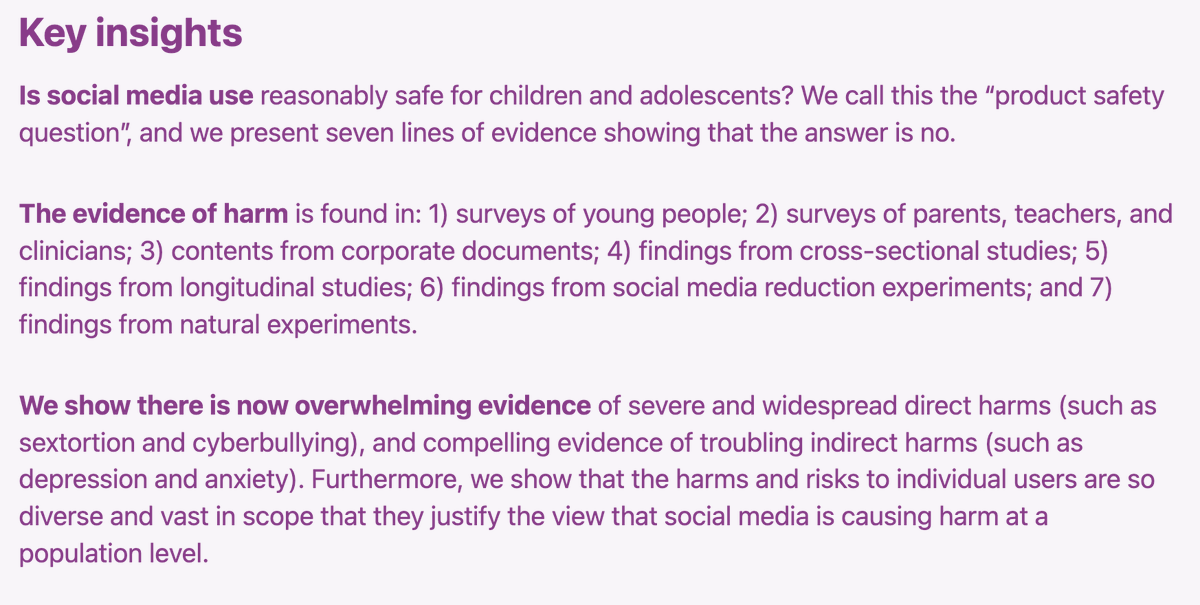
If you come across someone asserting there is "no scientific evidence" that social media is causing harm, please send them this link. We lay out seven lines of evidence, including RCTs, natural experiments, and testimony from victims & perpetrators of harm worldhappiness.report/ed/2026/social…
English
25
470
1.6K
149.4K
Alexander Young retweetledi
Matt Ridley
Matt Ridley@mattwridley·
In my lecture at @NIH, at the invitation of @NIHDirector_Jay, I explained why I changed my mind from thinking the lab leak theory of covid origins was unlikely to thinking it was almost certainly true. Please watch and assess the evidence yourself. videocast.nih.gov/watch/244438a5…
English
49
127
459
95.3K
Alexander Young retweetledi
Jonathan Haidt
Jonathan Haidt@JonHaidt·
Victory in the social media trial in LA! As of today, we are in a new world: a new era in the fight to protect children from online harms. A jury sided with Kaley and therefore with millions of children: Big Tech is harming kids on an industrial scale. For years, parents were told these harms were exaggerated, anecdotal, or simply the unavoidable cost of growing up online. Today, a jury affirmed what parents have long known: Meta and YouTube were designed to exploit young people, with devastating consequences. For the first time, the law aligns with common sense: social media companies no longer have a special exemption to harm children with impunity. Their shield is gone. They will be treated like any industry that knowingly harms children and lies about it. History will judge them as harshly as the tobacco industry. This bellwether case tested a new legal theory: the harm is not just what algorithms show children, but rather that these products were designed to foster addiction. The companies knew they were harming children by the millions—and did it anyway. They were negligent and dishonest. This outcome belongs first and foremost to the families, especially the many parents who, in the face of unimaginable loss, chose to speak out, demand accountability, and endure a painful legal process so that other children might be spared. This is just the beginning. Thousands of cases will follow, bringing Meta, Snap, TikTok, and YouTube to court. Much work remains in courts, legislatures, schools, and communities. But for now, let us all just savor the long-awaited arrival of justice. nytimes.com/2026/03/25/tec…
English
25
500
1.8K
203.2K
Alexander Young retweetledi
Chris Aiken, MD
Chris Aiken, MD@chrisaikenmd·
Bad news for psychedelics in new studies: ▪ No better than antidepressants once unblinding accounted for ▪ Possible risk of suicidality and persisting perceptual disturbances ▪ Psilocybin failed in a RCT of treatment-resist depression Full details: psych-partners.com/psychedelics-r…
Chris Aiken, MD tweet media
English
45
57
188
28.2K
Alexander Young retweetledi
Chris Aiken, MD
Chris Aiken, MD@chrisaikenmd·
ProLivRx is at-home wearable device for depression, FDA-approved based on one trial: ▪ 124 w/ failure of avg of 1.8 antidepressants ▪ Large effect size over 8 wk, more benefit at 16 wks ▪ Blind intact Detailed report at practice implications: psych-partners.com/wearable-heads…
Chris Aiken, MD tweet media
English
2
13
39
3.1K
Alexander Young retweetledi
JAMA Psychiatry
JAMA Psychiatry@JAMAPsych·
Among adults with severe mental illness, integrating #PhysicalActivity into psychiatric care improves psychiatric symptoms, cognitive health, and cardiometabolic outcomes, supporting longer life expectancy. ja.ma/4u6t7nG
JAMA Psychiatry tweet media
English
2
28
60
2.9K
Alexander Young retweetledi
Chamath Palihapitiya
Chamath Palihapitiya@chamath·
Agile Has Broken Your Company The Agile Manifesto was signed in 2001 by 17 developers trying to fix broken software projects. It worked…until it didn't. Twenty-five years later, Agile has become a $20B+ industry, and the software it produces is getting worse. The Four Principles The Manifesto prioritized: - Individuals and interactions over processes and tools - Working software over comprehensive documentation - Customer collaboration over contract negotiation - Responding to change over following a plan These aren't wrong in isolation but the problem is what they became in practice. "Responding to change" became an excuse to never finish anything. Stanford researchers found scope creep was institutionalized and rebranded as "sprint replanning," one of the top drivers of cost overruns. "Working software over documentation" quietly gutted institutional knowledge. A 2023 GitLab survey found only 12% of developers felt their codebase was well-documented. In other words, technical debt became structural. "Velocity" replaced quality. Story points. Burn-down charts. Throughput. None of these measure whether the software is any good. The Manifesto said build software that works, and a focus on velocity forgot that. The Numbers Are Damning McKinsey found technical debt now consumes 20–40% of engineering capacity in most large organizations. The Consortium for Information & Software Quality estimated poor software quality cost U.S. companies $2.41 trillion in 2022, with $1.52 trillion from operational failures alone. Agile has been the dominant methodology for most of that period. The Standish Group's CHAOS Report found that in 2020, only 31% of software projects were considered successful. What You Don't Notice Until It's Too Late Current software development best practices have killed systems thinking. When your planning horizon is two weeks, you don't design systems anymore, you assemble features. The result is a mess of fragmented architectures, microservices sprawl, and codebases no single engineer fully understands. The "Product Owner" role that was supposed to represent the customer became a bureaucratic proxy. A layer between engineers and business outcomes, distorting requirements at every handoff. The Alternative: Software Factory The best engineers have always known what actually works. They write specs. They think in systems. They document decisions. They go slow to go fast. At 8090, we call this approach Software Factory. We look at software delivery like a production system with defined inputs, quality gates, and measurable outputs. Architecture is a first-class citizen from day one, not something you refactor into after 40 sprints. Documentation is built in, not bolted on. Quality Is Speed Every hour spent on rework, incident response, and technical debt is an hour that could have gone into upfront design or testing. Speed and quality don’t need to be in tension - it’s a false choice in modern mythology. If your team still measures success in story points and sprint velocity, ask yourself: What's your defect rate? Your documentation coverage? Your time to onboard a new engineer? Your incident frequency? If you don't like the answers, it's probably time for a different model. Try Software Factory at 8090.ai
English
123
131
1.1K
208.6K
Alexander Young retweetledi
Jonathan Haidt
Jonathan Haidt@JonHaidt·
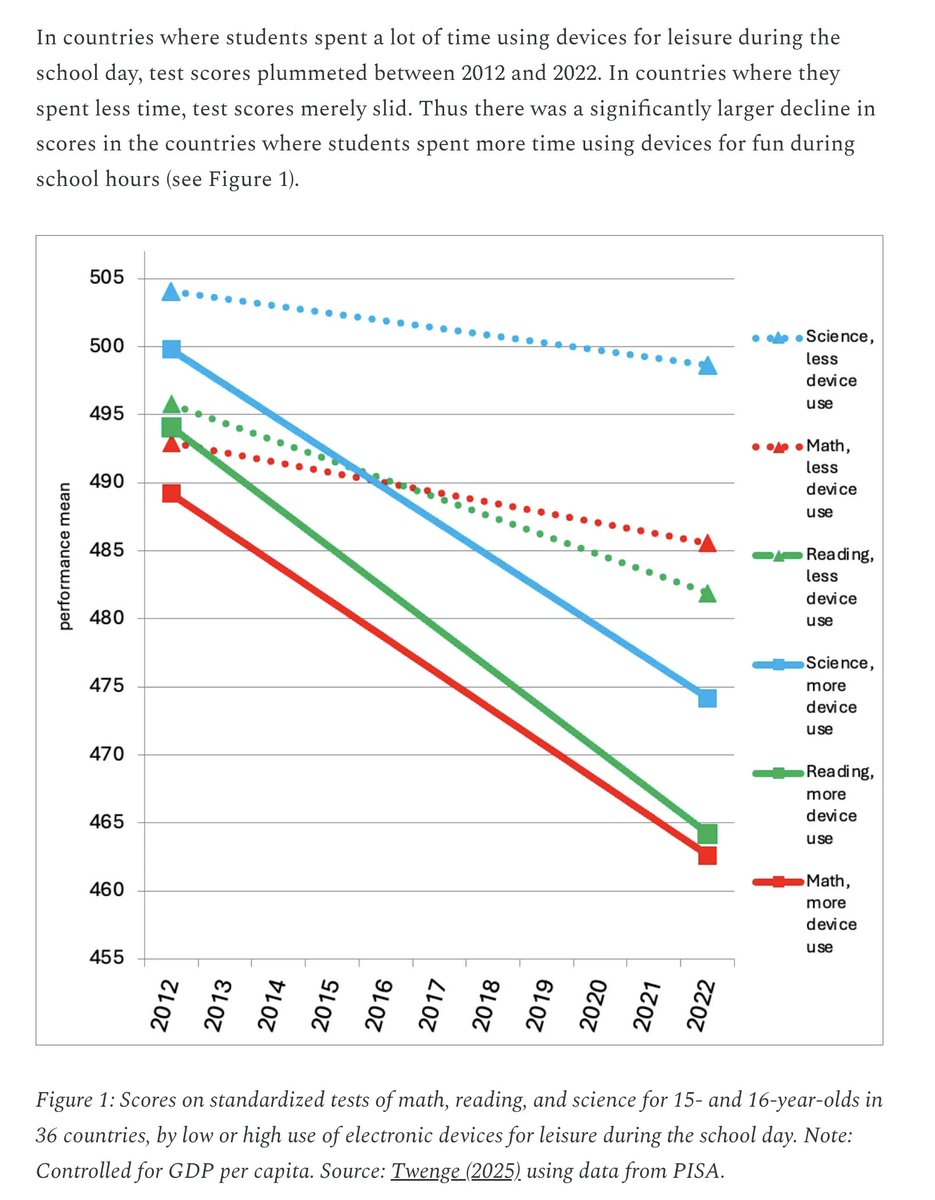
More evidence that the global decline in test scores that began after 2012 is linked to the proliferation of smartphones and computers in class: The slide was bigger in countries where students began spending more time on devices (for leisure) generationtechblog.com/p/phones-at-sc…
Jonathan Haidt tweet media
English
114
1K
3.1K
647.1K
Alexander Young retweetledi
Jonathan Haidt
Jonathan Haidt@JonHaidt·
Major new report on global trends in mental health, out today from Sapien Labs. Data from 2.5 million people across 85 countries. Some of the most important findings: 1) Young adults used to generally have good mental health, compared to older generations. But now, in ALL countries examined, they are doing badly compared to older generations in that country. 2) "Four key factors have emerged that together predict three quarters of this effect. These are diminished family bonds, diminished spirituality, smartphones at increasingly young age, and increasing consumption of ultra-processed food." 3) The decline of young people's mental health is "most pronounced in the wealthier and more developed countries." They note that it is in such countries that smartphones are given earliest, junk food is most heavily consumed, spirituality is most diminished, and family ties are looser and often weaker. 4) "A younger age of first smartphone ownership is associated with increased suicidal thoughts, aggression, and other problems in adulthood." 5) Here is their summary of findings on early smartphone ownership: "GenZ is the first generation to grow up with a smartphone. Among this group, the younger they acquired their first smartphone in childhood, the more likely they are to have struggles as adults. These struggles extend beyond sadness and anxiety to less discussed symptoms, such as a sense of being detached from reality, suicidal thoughts, and aggression towards others. The effects arise through disruption of sleep, increased risk of exposure to harmful online content, predators, and explicit material as well as increased probabilities of cyberbullying during crucial developmental years. Excessive time spent on smartphones also diminishes the development of social cognition that requires learned interpretation of facial expressions, body language, and group dynamics. The negative impacts are particularly sharp below age 13." The report is short, accessible, and important. Read it here: sapienlabs.org/global-mind-he…
English
26
586
1.5K
277.2K
Alexander Young retweetledi
JAMA Psychiatry
JAMA Psychiatry@JAMAPsych·
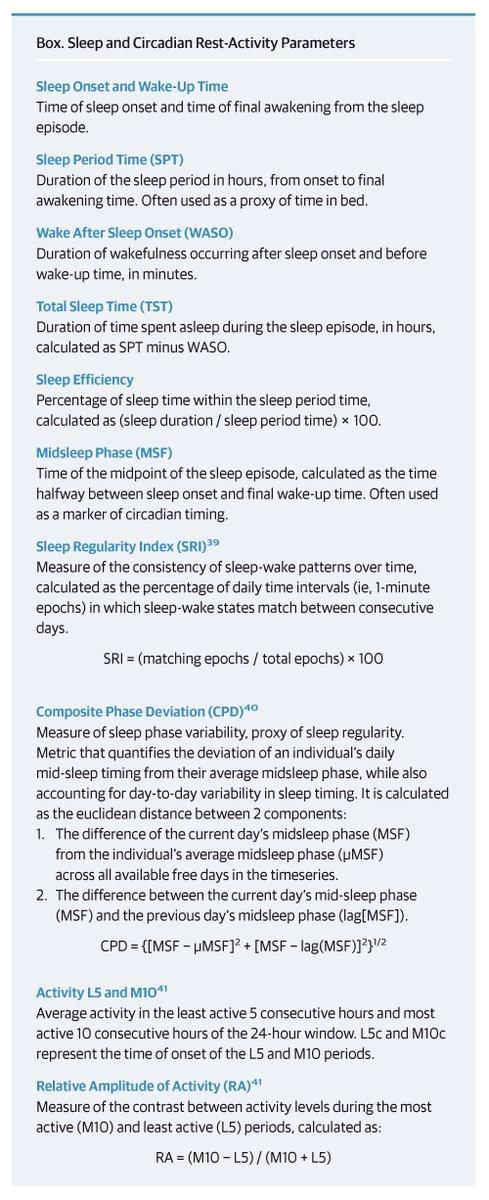
Actigraphy-derived measures of sleep phase variability and activity amplitude identified individuals at higher risk of relapse in #Depression, supporting their potential as scalable biomarkers in ongoing monitoring. ja.ma/4ahq7Nh
JAMA Psychiatry tweet media
English
0
8
26
2.3K