Colleen Smith, MD

1.6K posts

Colleen Smith, MD banner
Colleen Smith, MD

Colleen Smith, MD

@DrColleenSmith

Mom, wife, Emergency Medicine doc, foodie. Interests in medical education and simulation. Tweets are mine.

Manhattan, NY Katılım Nisan 2009
864 Takip Edilen692 Takipçiler
Sabitlenmiş Tweet
Colleen Smith, MD
Colleen Smith, MD@DrColleenSmith·
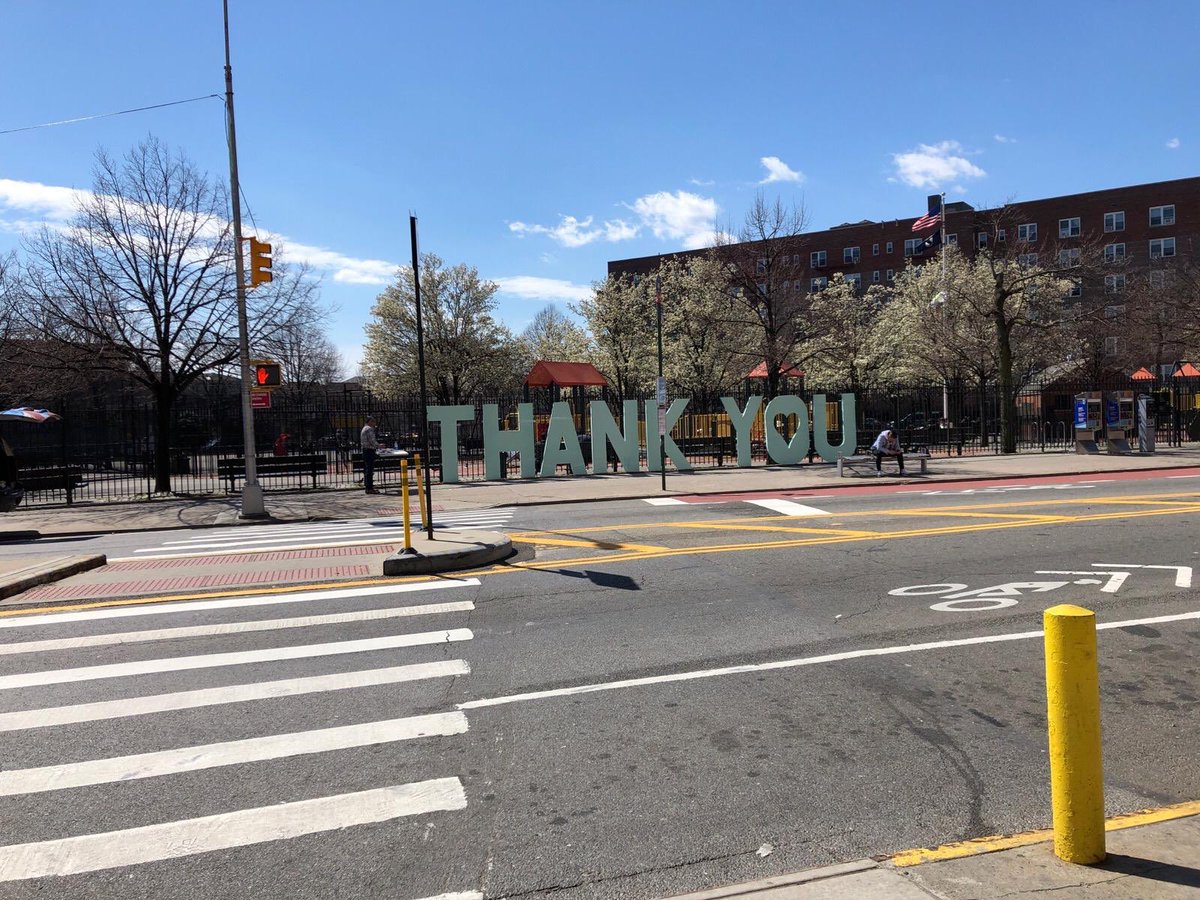
This just showed up across from Elmhurst Hospital. #coronavirus
Colleen Smith, MD tweet media
Queens, NY 🇺🇸 English
10
27
159
0
Colleen Smith, MD retweetledi
Neil Floch MD
Neil Floch MD@NeilFlochMD·
Ok. Please call a robot at 3 am when you have appendicitis. It will be nice to sleep.
Wally@soulfulsloth

@NeilFlochMD Doctors are currently like taxi drivers before Uber - self-important, entitled, terrible customer experience. It’ll be glorious to watch AI put them in their place.

English
107
411
4.5K
182.9K
Colleen Smith, MD retweetledi
Avi Bitterman, MD
Avi Bitterman, MD@AviBittMD·
What if I told you it's possible for doctors to care about the money, the patients, the science, and the art of medicine all at the same time?
English
53
85
638
25.9K
Colleen Smith, MD retweetledi
Center for Modern Health
Center for Modern Health@centermodhealth·
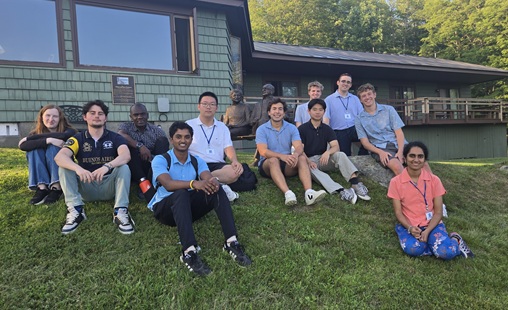
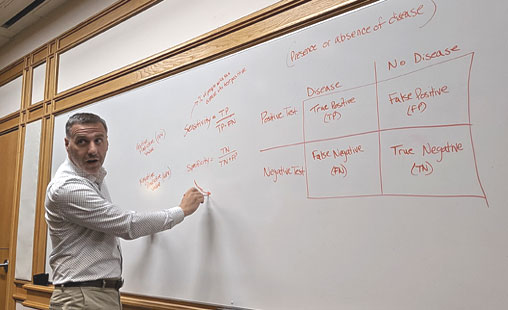
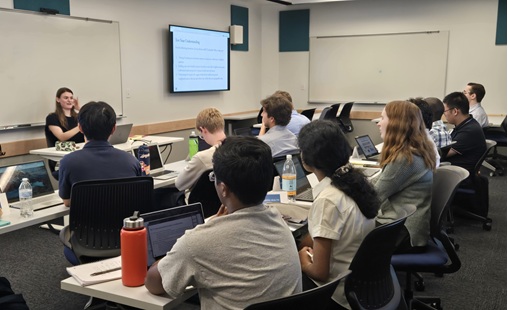
Students, check out our summer fellowship in health policy! Come study health policy with us this summer in New Hampshire. Program dates are July 7-18, 2026. Applications are due April 30, 2026. Tuition, room, and board are all covered. Apply now! centerformodernhealth.org/education.php
Center for Modern Health tweet mediaCenter for Modern Health tweet mediaCenter for Modern Health tweet mediaCenter for Modern Health tweet media
English
0
3
1
142
Colleen Smith, MD retweetledi
Anthony DiGiorgio, DO, MHA
Anthony DiGiorgio, DO, MHA@DrDiGiorgio·
No one is saying doctors are poor or that they should be pitied. The point is that bedside medicine does not compete against the average American salary. It competes against the other things highly trained people could do with the same time, skill, intelligence, work ethic, and tolerance for stress. A lot of doctors could make similar take home income doing far less clinical work, or no clinical work at all. Some can make excellent money in medicolegal consulting, device work, industry advising, health tech, expert witness work, locums, or administrative roles. In some cases, a doctor can generate income comparable to a salaried W2 job with a relatively small amount of self employed consulting time each week, while also getting more control over schedule, fewer nights, fewer weekends, less liability exposure, and more time with family. That matters. Because the question is not just whether a doctor’s gross income sounds high to someone on the internet. The real question is what it takes to keep someone doing a job that involves years of delayed earnings, heavy training costs, call, sleep disruption, lawsuits, missed holidays, missed kids’ events, and life or death responsibility. That is not a victim complex. It’s called opportunity cost. And if you underpay the hardest forms of clinical work relative to the alternatives, people will rationally do less of it.
Katrina 🇺🇸🇨🇳🇲🇽@zapatas_mom

Who said free? Doctors are among the highest paid profession in America. Peep the comments they keep ACTING like they’re getting pennies. They keep saying shit like “should we work for free” or “why should we make only 40k”. Go see the comments. They have this bizarre god and victim complex. What other profession behaves like this?

English
75
90
777
89.9K
Colleen Smith, MD retweetledi
Neil Floch MD
Neil Floch MD@NeilFlochMD·
I am often mocked by my Wall Street friends when I tell the story of the “collapse of American medicine”. It is a direct result of two laws: 1. HITECH act of 2009 that implemented excessive cost and regulations on private practices and 2. ACA “Obamacare” law implemented in 2010. The cumulative effect of these laws was: 1. The collapse of the longstanding doctor-patient relationship as “you could NOT keep your doctor.” 2. The progressive financial failure of private practice physician who eventually joined hospital systems and private equity to reduce their debt. 3. Increasing cost of medicine as more physicians were working under the benefit of additional payments that include a “facility fee” which is awarded the hospital systems and not private practitioners. 4. The increase in administrative costs as increase regulations are a characteristic of large hospitals systems and uncontrolled and government-backed insurance mandates. The above must be reversed in order to re-establish private practice in America.
Dutch Rojas@DutchRojas

15% of physicians remain in unaffiliated private practice. In 2010 that number was 75%. The physicians still standing are the ones who held out the longest. They don’t need employment. They need an economic structure that makes independence durable. That is a very large and very underserved market.

English
47
392
1.6K
134.2K
Colleen Smith, MD
Colleen Smith, MD@DrColleenSmith·
@larry_levitt What if we had the option to buy actual health insurance (not a payment plan) when young and healthy? Payment plans could also be offered - maybe they wouldn’t be the norm, maybe they’d be transitional for all of us middle aged sick folks who missed the young healthy window
English
0
0
0
36
Colleen Smith, MD
Colleen Smith, MD@DrColleenSmith·
@rbarbosa91 15 year into my practice in EM and every now and then this still happens to me and it takes me by surprise as well.
English
0
0
3
1.4K
Ron Barbosa MD FACS
Ron Barbosa MD FACS@rbarbosa91·
In July it will be my 20th year as a trauma/acute care surgeon, and on this random day, I went from writing notes to now starting an emergent case which, not only haven’t I seen before, but I’ve never even *thought* about this problem existing before. Welcome to the jungle…🤷‍♂️
English
12
8
253
45.4K
Colleen Smith, MD retweetledi
Jared Rhoads
Jared Rhoads@jaredrhoads·
When multiple pathways to living are equally valid, we might want to spend less energy encoding the "right" path into policy, and instead make sure that individuals are free to decide for themselves.
English
0
1
1
72
Colleen Smith, MD retweetledi
Jared Rhoads
Jared Rhoads@jaredrhoads·
Free-market healthcare does not mean less compassion. It means building a system where compassion isn't crowded out by bureaucracy.
English
0
2
4
51
TooManyGrasshoppers.....
TooManyGrasshoppers.....@NotEnoughAnts·
Obamacare allows insurers to make 15%. If they make more they have to refund the businesses that "overpaid". This incents insurers to pay MORE than market for everything so the 15% becomes a larger amount of money. The entire model leads to lax controls and price inflation beyond reason
English
2
0
1
412
Mark Cuban
Mark Cuban@mcuban·
Hospitals with dominant market share, where no insurer does, have leverage. No question. But. The first step in health care economics is the plan someone chooses. That plan sets the parameters and economics for every care choice the member can make. The very fact that patients can not shop for the best price and apply it to their deductible, or they can not afford their deductible , even in markets dominated by a system or two, shows where the leverage truly is Plus the insurance companies control ALL the patient economics once care starts. Which is huge leverage They ULCD Underpay Late Pay Claw Back Deny That distorts the entire healthcare economic system Yes , hospitals join in the fuckery, by doing shit like facilities fees , 340b abuse, Charge master arbitrage and abuse. And more. Yes. But they don’t control the cash. When hospitals and all providers grow their direct contracting businesses , see costpluswellness.com , you will see prices come down. So bottome line , take the big insurance companies out of the mix, hospital prices come down. It’s all right there on costpluswellness.com
Jason Martinez, M.D.@JasonMartinezMD

@DrDiGiorgio @mcuban @CharlesLutzMD Because the trendy narrative is insurance companies.

English
45
43
251
79.5K
Colleen Smith, MD
Colleen Smith, MD@DrColleenSmith·
@mcuban Just like Break Up Big Medicine - the answer isn't to take the big insurers away, it's to allow competition in the insurance marketplace. Allow insurers to offer plans outside of ACA. Increase shoppable options. Pass tax incentives to individuals. Encourage HSAs for all.
English
0
0
0
39
Colleen Smith, MD
Colleen Smith, MD@DrColleenSmith·
@Mullinata @mcuban Because of a variety of regulations that favor large, non-physician-owned hospitals to such a degree that incumbents have veto power over new establishments. Regs that make it illegal for docs to own hospitals or group practices, regs that prevent innovation
English
0
0
1
6
Mullinata
Mullinata@Mullinata·
@mcuban Why can’t we have local doctors and hospitals that you pay a monthly subscription to for 99% of services, then a cost share of bigger health issues. Big gov can offer HSA’s. Everybody stays in their lane and wins, no?
English
3
0
0
187
Mark Cuban
Mark Cuban@mcuban·
The are a function of health insurance plans. The insurance companies create plans with deductibles that most people can’t afford. So to get to the insurance money from their plan, they will loan the patient money to cover their deductible. That turns the hospital into a sub prime lender. Then the insurer will under pay, late pay and claw back in the contract. Costing the hospital more cash. And costing them in administrative costs even more Then the insurer will delay approvals and deny care, earning interest on the premiums. So then the hospitals. Non profit or not, have to compensate for the issue with insurance companies. So they create ridiculous shit like facilities fees, abuse 340b programs , abuse site neutrality and more. And of course non profits don’t pay taxes And then the biggest provider systems will say they can’t make money on Medicare. Which is a function of them spending like drunken sailors on everything they can. From buildings to consultants. There are more administrators than doctors and in aggregate they make more. It makes no sense that hospitals spend so much money on consultants. It’s a waste. It’s like them want them to give the CEO cover , so they can try to buy more hospitals which leads to more pay for the ceo Break em all up
Larry Goldberg@TeslaLarry

@mcuban you are not wrong. Now do the huge healthcare non-profits, their motivations and behaviours.

English
100
278
1.4K
218.7K
Colleen Smith, MD
Colleen Smith, MD@DrColleenSmith·
@mcuban The Break Up Big Medicine Bill doesn't fix the problem that vertically integrated cos face no competition. All the groups that will be divested will still face no competition from new POH or other alternative providers or payment schemes. They're trying but misguided.
English
0
0
1
18
Mark Cuban
Mark Cuban@mcuban·
Single payer COULD cut cost and improve care but there are 2 fundamental issues. 1. All plans proposed have placed the Sec of HHS in charge of the program. You can't have a political appointee in that position and it's hard to de-politiicize HC in this country 2. They assume that they can get providers and specialists to accept whatever rates they set. You are talking about organizations that in most cases, don't even know their costs. Why ? They don't want to know their costs. For lots of reasons to long to dig into here Proponents of M4A have to first get hospitals to the point where they can define all their costs and do a Bill of Materials for procedures. You can't negotiate a price for all Americans if you don't know what your costs are It's Shark Tank 101. So we get a stalemate. Politicians don't do the work needed. Hospitals and providers avoid the work needed Other countries started on their path to universal care decades and decades ago. When healthcare was much simpler technically and fiscally. If senators won't support the Break Up Big Medicine Bill or anything comparable , there is no chance of getting to single payer. Our politicians don't have the backbone to do what is needed. You can call out all but Hawley and warren. No one else has uttered a syllable in support
Berniebabe2016☮️🟧@berniebabe2016

@mcuban @IngGuthrie #MedicareForAll would resolve that issue. Healthcare should not be connected to employment.
English
348
266
1.5K
412.1K
Colleen Smith, MD
Colleen Smith, MD@DrColleenSmith·
@mcuban Another problem that goes along with point #2 is that, throughout the country, rates should depend on cost, which varies with the cost of living, etc. Should everyone be paid rates allowing survival in NYC? We need a market that is sensitive to local signals.
English
0
0
1
17
Colleen Smith, MD retweetledi
Lawson Mansell
Lawson Mansell@lawsonhmansell·
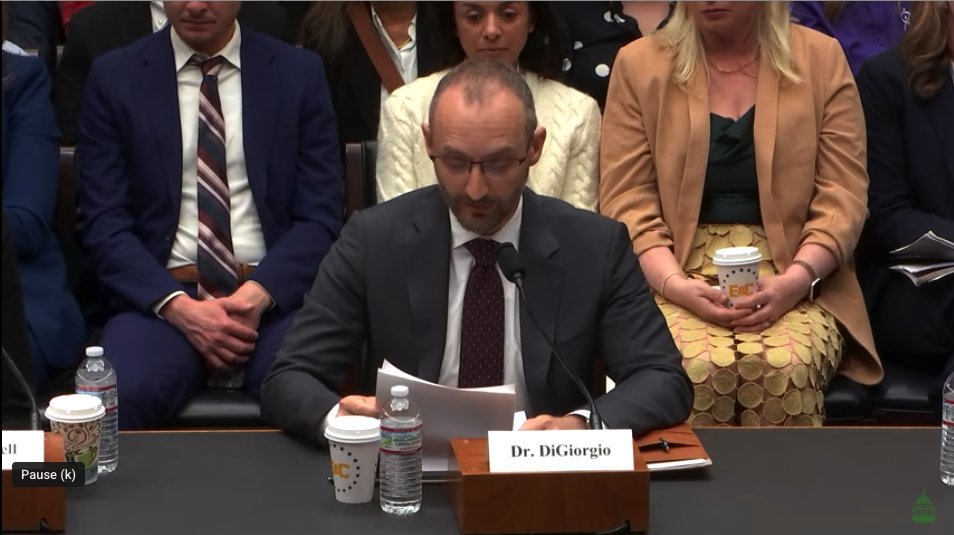
I cannot speak more highly of @DrDiGiorgio's testimony before House E&C this morning: "The system effectively starves independent practices of revenue while burying them in paperwork, making selling to a hospital the only viable way out." Full testimony: democrats-energycommerce.house.gov/sites/evo-subs…
Lawson Mansell tweet media
English
10
37
157
7.5K
Colleen Smith, MD retweetledi
Center for Modern Health
Center for Modern Health@centermodhealth·
Our survey to measure policy attitudes of state legislators on the issue of overdose prevention centers goes into the field today. We're excited about what we'll learn. (Sample frame is four New England states: ME, MA, CT, NH.)
English
0
1
0
43
Colleen Smith, MD retweetledi
Noah Kaufman, MD
Noah Kaufman, MD@noahkaufmanmd·
After 20 years working in emergency departments, I decided to try something different. We're opening a new kind of clinic in Denver called @KaufCare. Advanced urgent care run by board-certified ER physicians. Transparent pricing. No insurance games. Opening in about a month.
Noah Kaufman, MD tweet media
English
876
1.4K
12K
334.3K
Colleen Smith, MD retweetledi
Leah Houston MD
Leah Houston MD@LeahHoustonMD·
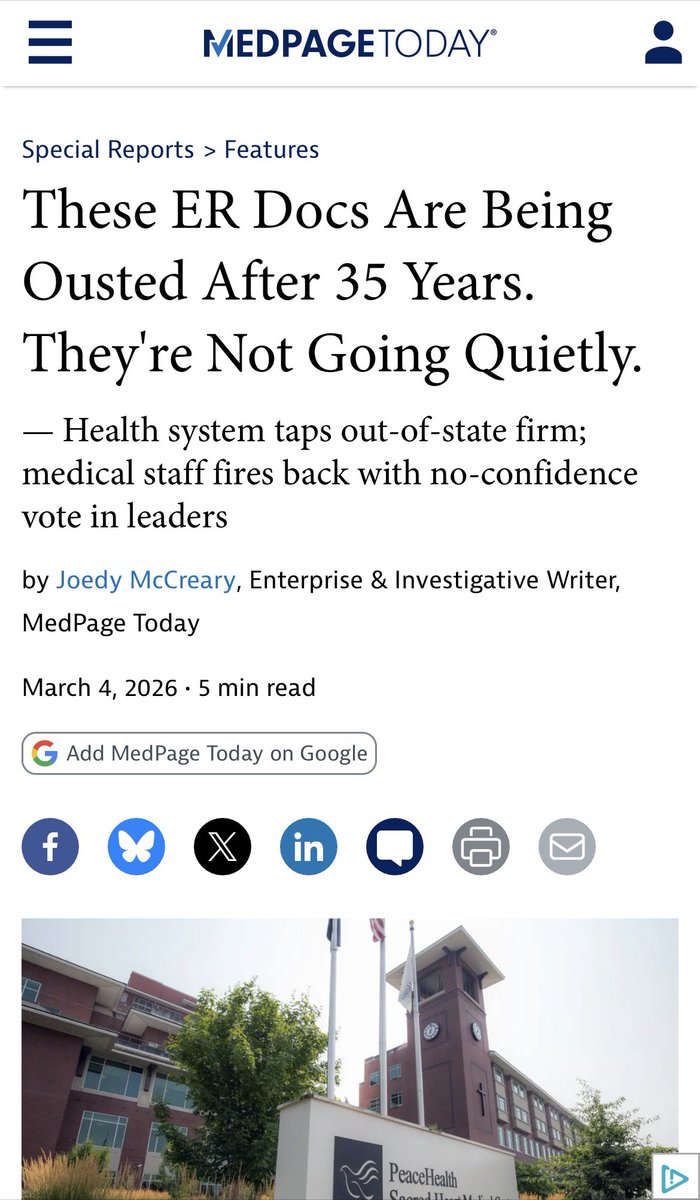
PeaceHealth just fired their local emergency medicine group. Those doctors live there. Their kids go to school there. Their spouses work there. It’s the only hospital in the community. Overnight they’re unemployed. And thanks to credentialing, it will take 4–6 months before they can work somewhere else. Meanwhile, they’ll also likely have to try to sell their homes and uproot their families. No paycheck. No easy transition. Probably no severance. Hospitals call this “normal operations.” There’s nothing normal about it. medpagetoday.com/special-report…
Leah Houston MD tweet media
English
36
94
354
43.9K
Colleen Smith, MD
Colleen Smith, MD@DrColleenSmith·
The Break Up Big Medicine Act attempts to fix a problem caused by regulating away competition and choice with more regulation. It's the homeopathic approach to healthcare reform. Roll back the stifling regulations instead - force big medicine to do better. @ewarren @HawleyMO
English
1
0
1
34