Jared Rhoads

10K posts

Jared Rhoads banner
Jared Rhoads

Jared Rhoads

@jaredrhoads

Health policy at @CenterModHealth and @DartmouthInst. #HxA. Real markets and real prices would fix healthcare.

New Hampshire Katılım Ocak 2012
1.1K Takip Edilen1.3K Takipçiler
Sabitlenmiş Tweet
Jared Rhoads
Jared Rhoads@jaredrhoads·
If your policy idea sounds nice in the abstract but doesn't take into account implementation challenges, second-order effects, or the possibility of unintended consequences, then it's actually a bad idea. Even more so if it violates individual rights.
English
3
4
58
0
Mark Cuban
Mark Cuban@mcuban·
First step is to require any hospitals that enjoy Non Profit Tax Benefits, to publish monthly all of their actual General Ledger transactions and invoices. You are non profit. You are being subsidized and often funded by taxpayers. We are your stakeholders, along with patients. There ain't a damn economic thing that you can't show. And no, Medicare Cost Reports are not comprehensive accounting reports.. They are pretty much useless for this. Second step is to make all NDAs and Confidentiality Agreements for any financial healthcare agreement, illegal It's beyond insane that US Senators, and POTUS, can't see what the federal government is paying for medications being provided through TriCare. With these sources of data, then, and pretty much only then, could proponents of M4A begin to figure out a plan
Chilly@chillypnl

This is such a clear-eyed breakdown, Mark especially #6 on hospitals having zero clue what procedures actually cost them (that derivative accounting point is brutal). You’re for universal coverage but you’re not sugarcoating the execution nightmare, which makes total sense coming from someone who actually fixed pricing opacity with Cost Plus. Real question: what’s one practical first step you’d take to force real cost transparency across the system before going full M4A?

English
96
245
1.7K
150.3K
Jared Rhoads
Jared Rhoads@jaredrhoads·
Dear political message-makers, please make your advocacy ads available in YouTube in high definition so that years later when I want to show them to my students in health policy class, we can enjoy them in focus! youtube.com/watch?v=buFi54…
YouTube video
YouTube
English
0
0
0
84
Jared Rhoads
Jared Rhoads@jaredrhoads·
To say a little bit more on this, if we could find some state law by which PBMs violate rights through coercion or special interest grifting then we'd ding them for it. But our bar for crying foul is high and everything we've looked at so far is the result of some voluntary arrangement.
English
0
0
1
13
Mark Cuban
Mark Cuban@mcuban·
Let me give you an example of where there is no gov intervention, and the impact on brand drug pricing. When a brand manufacturer sells a drug to one of the big 3 drug distributors that control more than 90 pct of their market, those multi hundred billion dollar distributors DONT negotiate the lowest price they can get. They literally pay retail price. Then, in exchange for paying promptly, and providing some data, they get a discount of a whopping 5 pct. For a $600 drug, their net cost is $570 For obvious reasons, that distributor can’t sell to your local pharmacy for less than $570. So when you go to buy that drug, and have no insurance, or a deductible of more than $600, that’s why you pay the full $600. The question is “why would multi hundred billion dollar distributors only negotiate a 5% discount on brand drugs?” I asked this very question to several CEOs of brand drugs companies First you have to know that the pharma companies don’t keep that full $570. Because they pay rebates and fees to the big insurance company PBMs , they end up netting about 50% , or $300 in this example I asked them why they didn’t sell to the big distributors at a little more than their net price, which would allow them to make more money. And it would also allow the distributors to sell to pharmacies at say $350 (so the distributors make more money ), and the pharmacies could sell to the uninsured and those during their deductible phase for $375. Meaning more patients could benefit from their drugs. This doesn’t mean every patient could afford their meds, but it means that more could. Saving $225 is not nothing. The CEOs each told me that they would like to, but can’t. Why? Because the ins company PBMs have told them that if they did this , they would reduce their position on their formularies. Which could cost them billions of dollars across all their drugs. None of this is against the law. It’s become standard industry practice. Until we break up these conglomerates , it will only get worse.
English
108
116
701
305.3K
Jared Rhoads
Jared Rhoads@jaredrhoads·
I can imagine a high-performing healthcare future with tons of vertical integration: everything you could want under one roof. I can also imagine a high-performing healthcare future with very little vertical integration. That would be a specialty shop for each service, like Regina Herzlinger's "focused factories" concept from 25 years ago. But we remain frozen in the middle like Buridan's ass. I blame the incumbents.
English
0
2
3
184
Jared Rhoads
Jared Rhoads@jaredrhoads·
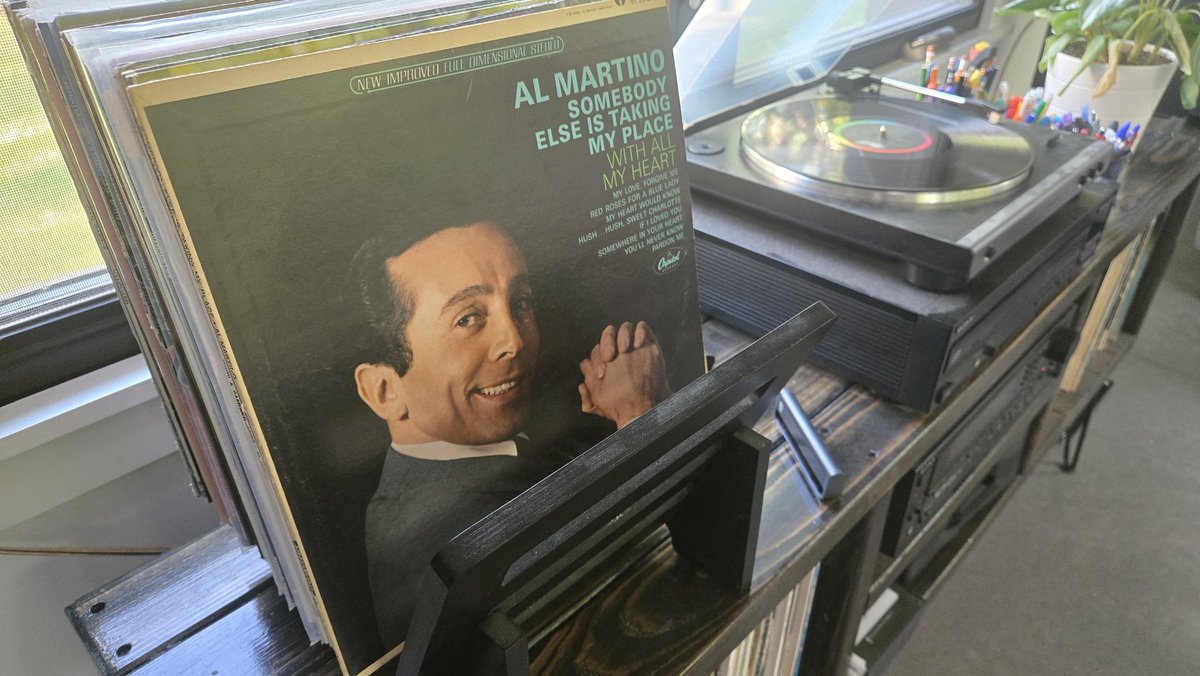
The "Greatest Generation" and the "Silent Generation" had the best dinner music. (I mean that as a compliment.)
Jared Rhoads tweet media
English
1
0
2
84
Jared Rhoads
Jared Rhoads@jaredrhoads·
Plants at the garden center are now named like thoroughbred racehorses... LIGHTNING STRIKE CURLY FRIES MIDNIGHT ROSE AGE OF GOLD EMPRESS WU BLUE MOUSE EARS PARADIGM FRILLY KNICKERS JACK FROST BRIDAL VEIL TOUCH OF CLASS PHENOMENAL I have photos of all, but X limits me to 4.
Jared Rhoads tweet mediaJared Rhoads tweet mediaJared Rhoads tweet mediaJared Rhoads tweet media
English
0
0
0
70
Jared Rhoads
Jared Rhoads@jaredrhoads·
@MD_pause It probably is more urgent, I agree. But that's also where the issue becomes general purpose immigration policy, and we hope for help from good folks like @David_J_Bier
English
0
0
0
40
PhysiciansOnPause
PhysiciansOnPause@MD_pause·
@jaredrhoads What about the physicians who already completed U.S. residency and fellowship, passed their boards, and are now being sidelined or pushed out mid-year because of broad immigration restrictions? By July, this will create major disruption in hospitals and clinics, yet almost no one is talking about it. I think this is a more urgent crisis.
PhysiciansOnPause@MD_pause

“Foreign-born physicians, many of whom serve rural and small-town America, particularly communities that voted most strongly for Trump, appear to have become one category too costly to sideline. These regions are among the most dependent on international medical graduates, and they are likely to be impacted the most by physician shortages resulting from these policies” Nearly 97 million Americans live in federally designated underserved areas. In these communities, foreign medical graduates represent approximately 51% of the physician workforce, compared with about 27% nationwide. The impact of these policies will be felt most acutely in July 2026, during residency transitions and annual physician hiring cycles. It will create operational nightmares for hospitals, place additional strain on already overextended staff, and ultimately translate into longer wait times, reduced access to care, and worse patient outcomes. Source: Immigrant Times article on foreign doctors and Trump-era immigration policy immigranttimes.org/post/under-tru… #PhysicianShortage #HealthcareCrisis #IMG #InternationalMedicalGraduates #RuralHealth #HealthcareAccess #LiftTheHold #USCIS #ImmigrationPolicy #PatientCare #MedTwitter


English
1
0
8
383
Jared Rhoads
Jared Rhoads@jaredrhoads·
Most state laws that enable doctors from other countries to seek a medical license without having to repeat residency training have a provision requiring an employment offer which includes a period of supervised practice. That is a more-than-adequate guardrail to check for whatever concern you most care about (training, current knowledge, language proficiency, cultural compatibility, bad actors, etc.). And, as is often the case in policy, the relevant question is not "Is this perfect?" It's "Compared to what?"
English
5
0
7
919
Jared Rhoads
Jared Rhoads@jaredrhoads·
Thank you Anish! I love that you're my loyal opposition on this ;-) Here's something that may be surprising but is important to understanding my position and reasons: I'm actually not especially motivated by workforce planning questions here. My goal isn't to help calibrate the number of physicians up or down based on reports or estimates. The problem I'm trying to solve is much simpler: if a fully trained physician is here legally, and a hospital/clinic/patient wants to hire that physician, I think it's plain wrong for the state to force them to repeat years of residency training before they're allowed to practice. I think that violates the rights of the doctor AND the rights of the hospital/clinic/patient who might want to hire that doctor. If there happens to be a physician shortage, then great. Letting more docs practice medicine instead of being Uber drivers helps out and has a nice side benefit. And if there's not a physician shortage--and you might really hate what I'm about to say here(!)--I would say good, too, because if we ever get around to making healthcare more of a free market then greater supply will drive prices down. (For the time being, I'm aware that we don't have a market and so there's the issue of physician-induced demand and overall program spending, but that's a central planner worldview, and it doesn't override my other goals.)
English
1
0
1
78
Anish Koka, MD
Anish Koka, MD@anish_koka·
@jaredrhoads Counterpoint: We don’t have a physician shortage. What problem are you trying to solve?
English
2
0
2
260
Jared Rhoads
Jared Rhoads@jaredrhoads·
@mcuban @BenDempsey18 @DrDiGiorgio We are building a 50-state health freedom index @centermodhealth and would gladly include a PBM variable, but on what? Are there policies that states have enacted that either give PBMs undeserved protection, or that prohibit competitors from outcompeting them?
English
1
0
2
67
Mark Cuban
Mark Cuban@mcuban·
No. Not close. It’s because of the opacity and information asymmetry from the insurance carriers and their PBMs, to employers. They lie. They cheat. They steal. And many use big consulting firms or brokerages that benefit by keeping things as they are. You should see the RFPs from some of the consultants. They might as well be contracts for the big companies. And the brokers, and some of the consultants get paid a vig Self insured Employers , who cover 65 pct of employers , don’t need the insurance carriers. They self insure. But for the reasons I mentioned, they hire them to manage their benefits. They could direct contract for some of their benefits. They could hire an independent Pbm and Third Party Administrator, and more , but they don’t. Which is why I spend so much time talking to CEOs, explaining to them that they can dump the big players and save a fortune.
English
13
8
75
51.1K
Jared Rhoads
Jared Rhoads@jaredrhoads·
@mcuban @PalmerLuckey A genuinely free market in healthcare would reduce the role of government (for Palmer) *and* make big vertically integrated companies compete (for Mark). Genuinely free means incumbents can't use policy to keep competitors out. We at @centermodhealth haven't given up on that.
English
0
2
7
185
Mark Cuban
Mark Cuban@mcuban·
Yeah. That won’t work. The biggest players are vertically integrated and too big to give a shit. They keep competitors out (like my companies ) , set pricing and the rules and could not give a shit about outcomes. Sounds great as a concept. But ideology is not a healthcare strategy. You break them up. Then you may be able to start to pull gov out at some levels.
English
51
6
250
62.6K
Mark Cuban
Mark Cuban@mcuban·
No chance it would. When there is regulatory capture, huge conglomerates effectively define the prices and rules. Not government. They would love to have government out of the way. They are so big, with so many subsidiaries, they could whatever they want. And it wouldn’t be to the benefit of patients.
Matthew Bednarik@BednarikMatt

@mcuban @GovBillLee Or just let the free market compete and get the government out of Healthcare. A free market would inevitably lead to lower costs for consumers.

English
192
42
693
338.5K
Jared Rhoads
Jared Rhoads@jaredrhoads·
Status signaling. And it's not just sports. Anything can be turned into this, even robotics teams, debate, youth orchestra, travel theater, math olympiad. Take any legitimate developmental activity, add professionalization, cultivate an arms race of spending, and there you have it. But if you're first-handed it's possible to be true to your values and not get sucked in.
English
0
0
2
331
Coach Vint
Coach Vint@coachvint·
I talked a dad who told me he spent $10k a year on travel baseball between tourneys, travel, and gear for his son. He got a partial scholarship to D-2 school. If he had put the $10k in a mutual fund each year, he would have had about $190,000. The scholarship was $5k a year.
English
737
551
7.4K
833.5K
Polymarket
Polymarket@Polymarket·
JUST IN: The Enhanced Games are set to debut this weekend in Las Vegas, with athletes allowed to use steroids, testosterone, HGH, & other banned substances.
Polymarket tweet mediaPolymarket tweet media
English
1.6K
3.7K
55.5K
41.3M