Felipe Suárez

2.8K posts

Felipe Suárez banner
Felipe Suárez

Felipe Suárez

@DrFelipeSuarez

Osorno, Chile Katılım Ekim 2015
542 Takip Edilen518 Takipçiler
Felipe Suárez retweetledi

Michael Okun
Michael Okun@MichaelOkun·
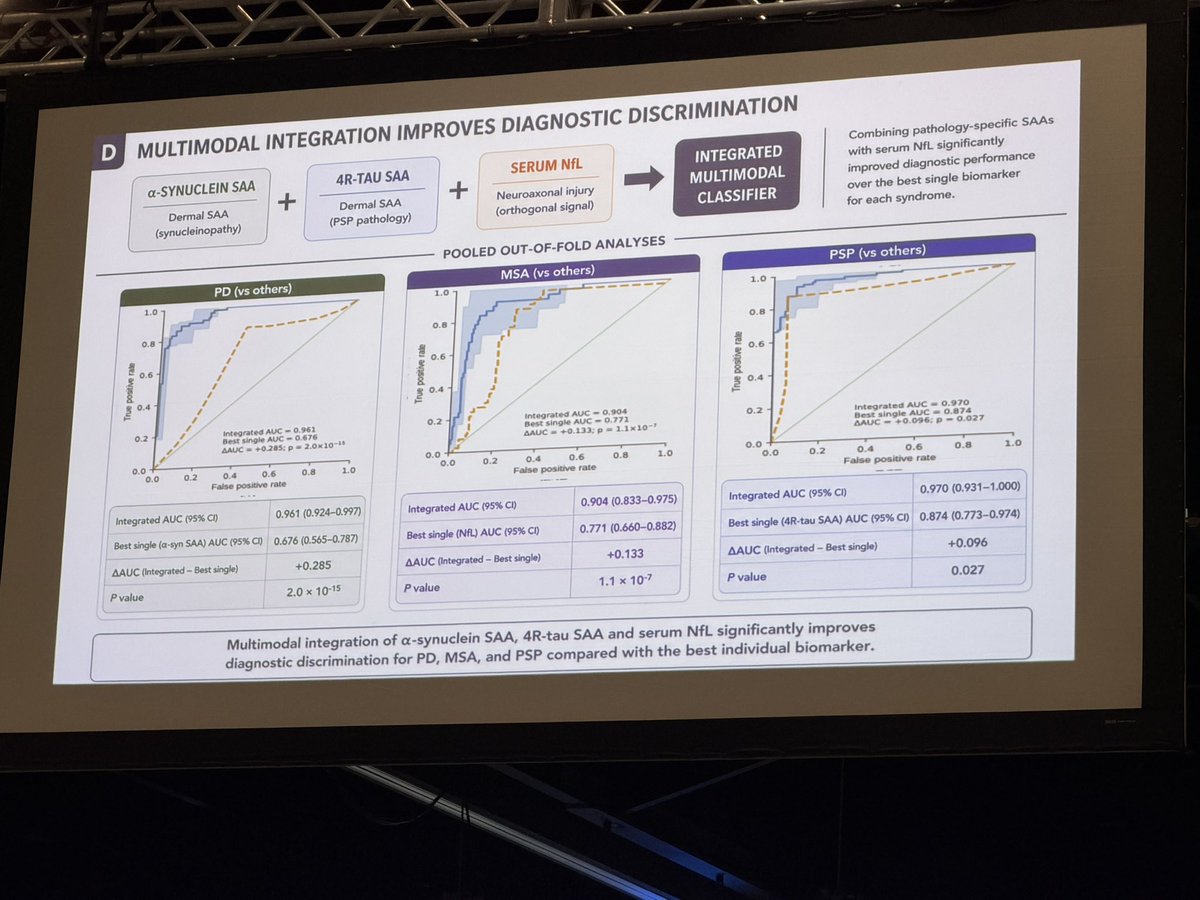
Big challenge in Parkinson’s is that synuclein seeding assays can be positive across many diseases. Nice plenary this morning showing how this group uses synuclein seeding + 4 R TAU + NFL to sort this out using a multi-modal biomarkers approach. This is one such approach used at the University of Toronto and presented today at the World Parkinson Congress.
Michael Okun tweet media
English
1
18
67
3.4K
Felipe Suárez retweetledi
Dr Ihab Suliman
Dr Ihab Suliman@IhabFathiSulima·
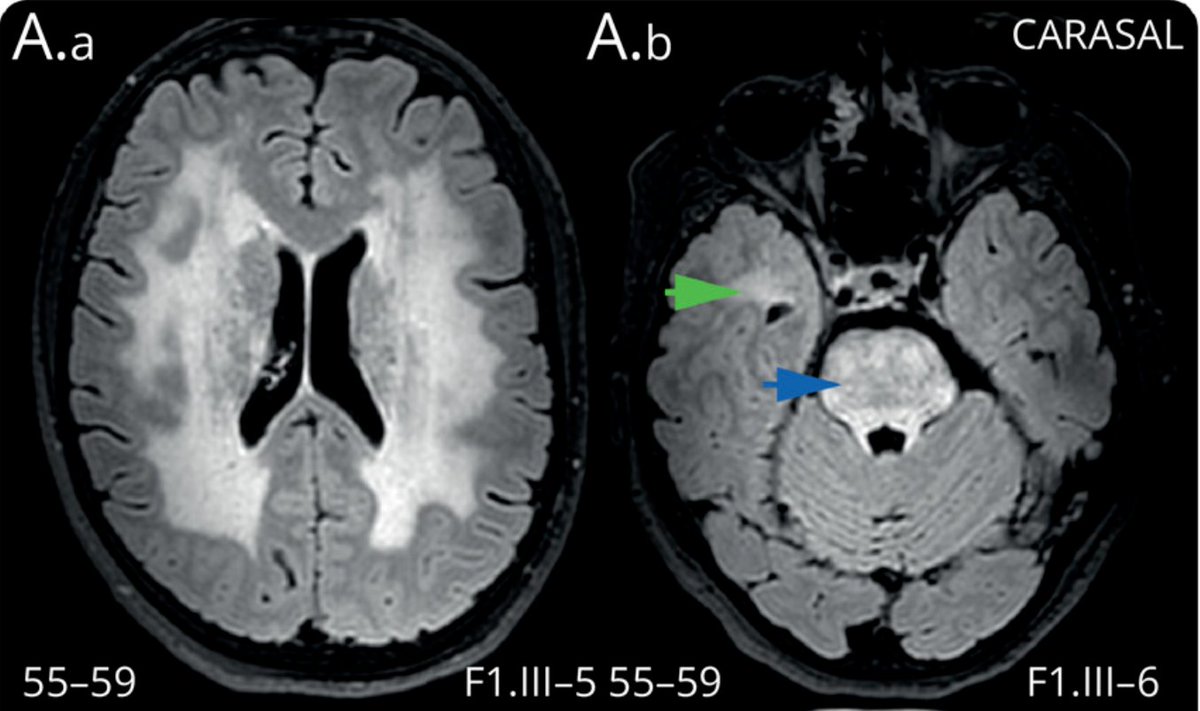
What is the description or diagnosis?
Dr Ihab Suliman tweet media
English
26
35
560
109.1K
Felipe Suárez retweetledi
Cephalalgia
Cephalalgia@JCephalalgia·
New in Cephalalgia Reports! This study aimed to compare nortriptyline monotherapy and combination therapy in the treatment of recurrent migraine of moderate frequency. Combination prophylaxis may offer superior frequency reduction in moderate-frequency episodic migraine. • Improved efficacy may enhance adherence and persistence. • Lower-dose polytherapy may preserve tolerability. journals.sagepub.com/doi/10.1177/25… #migraine #headache #brain #pain #neurology #neuroscience @neurocefaleia @doresdecabeca
Cephalalgia tweet media
English
0
8
14
921
Felipe Suárez retweetledi
Virginio Gallardo
Virginio Gallardo@virginiog·
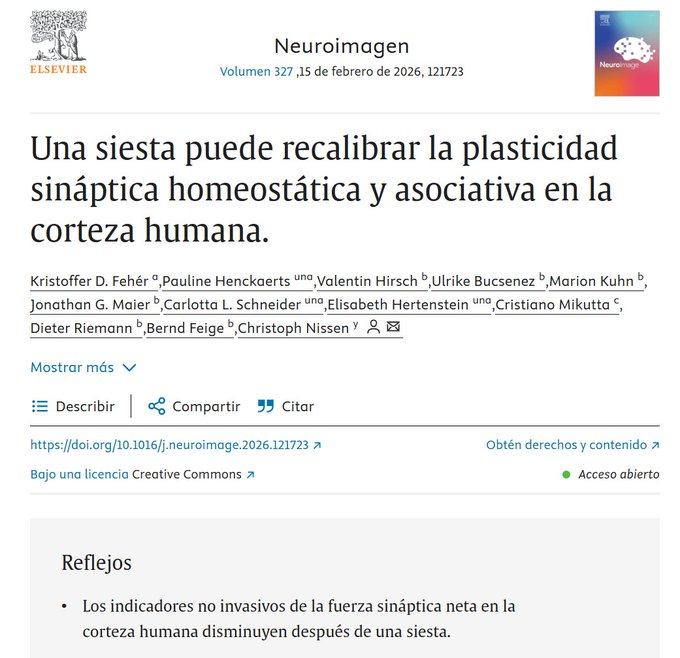
Otro, estudio, este de NeuroImage (2026), muestra que la siesta restaura la neuroplasticidad sináptica en la corteza humana Tendría impacto en la consolidación de la memoria y la capacidad de aprendizaje Se reduce el "ruido" sináptico acumulado sciencedirect.com/science/articl…
Virginio Gallardo tweet media
Español
2
101
357
8K
Felipe Suárez retweetledi
Doc Navarrow
Doc Navarrow@DocNavarrow·
✅Lyme neuroborreliosis with brainstem encephalitis. 🐒The “rounded M-sign” and “tarsier sign” have been described as subtle MRI clues in pontomesencephalic involvement. Although uncommon, recognizing these patterns may help narrow the differential. doi.org/10.1038/s41598…
Doc Navarrow@DocNavarrow

😐A middle-aged patient from the Black Forest region presented with progressive gait instability, tremor, and brainstem symptoms. 🔎🧠Two subtle imaging signs in these images may orient the diagnosis. What would be your differential?
English
0
19
59
3.4K
Felipe Suárez retweetledi
脳神経外科医 堀 聡 Satoshi Hori
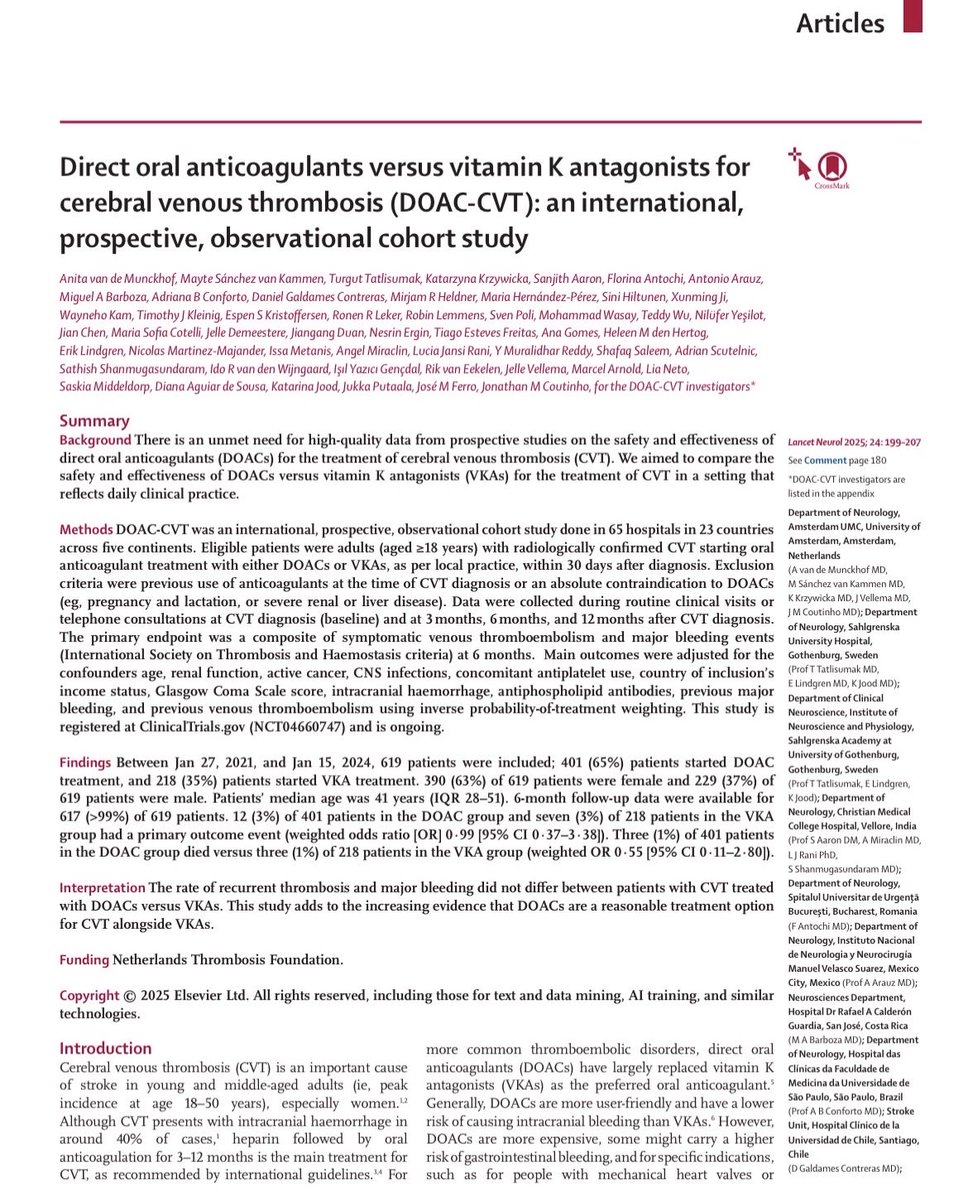
脳静脈洞血栓症に対する二次予防は、日本の脳卒中ガイドラインではワーファリンが第一選択 この論文ではDOACがワーファリンと比較して、血栓再発と出血性合併症の点で有意差がなかったことが示されている
脳神経外科医 堀 聡 Satoshi Hori tweet media
日本語
1
32
91
6.1K
Felipe Suárez retweetledi
Isaac Lamb, MD
Isaac Lamb, MD@IsaacLamb01·
The most important and specific element is the gait abnormality. The classic “NPH gait” is really a gait apraxia: wide-based, short stride, “magnetic”. One must carefully differentiate this from a cerebellar or sensory ataxia, parkinsonism, myelopathy, etc. (1)
Isaac Lamb, MD tweet media
English
1
1
12
759
Felipe Suárez retweetledi
Dr. Carlos Arnaud
Dr. Carlos Arnaud@carlos_arnaud·
Estudio de cohorte en Dinamarca 250 mil personas en seguimiento a 18 años sobre sus diagnósticos y tratamientos #Psiquiátricos Resultado: los diagnósticos se cambian y mueven en el tiempo, a eso se le llama #Transdiagnostico y depende de muchos factores jamanetwork.com/journals/jamap…
Dr. Carlos Arnaud tweet mediaDr. Carlos Arnaud tweet media
Español
1
17
92
4.2K
Felipe Suárez retweetledi
Mission Thrombectomy
Mission Thrombectomy@MThrombectomy·
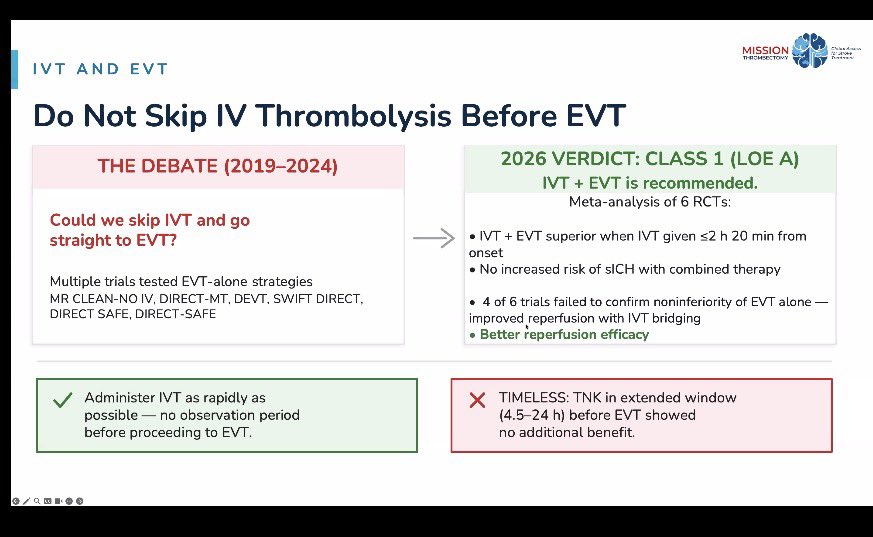
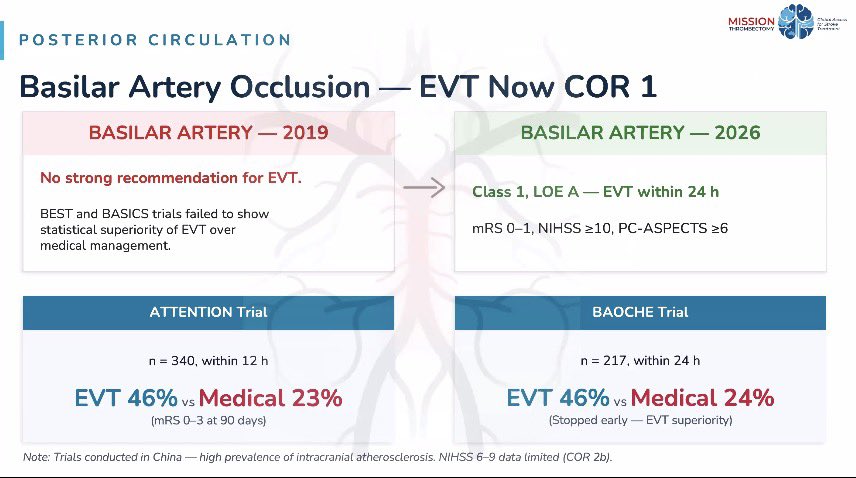
🧠🌍 Mechanical Thrombectomy Update by Dr. Daniel Vela Duarte EVT continues to evolve with growing evidence and refined patient selection. ⏱️ Time still matters, but selection is increasingly “time + tissue” based. 🧠 Extended window EVT (up to 24h) remains for carefully selected patients using imaging-based criteria. 🧭 Vessel coverage:
• ICA/M1 = standard
• Basilar occlusion = increasing evidence/support
• M2 occlusions = selected cases only 🧪 Imaging (CTA ± perfusion) remains central in identifying salvageable brain tissue. 💊 System efficiency and faster workflows continue to drive better outcomes. #Stroke #MissionThrombectomy #AHA2026 #SVIN
Mission Thrombectomy tweet mediaMission Thrombectomy tweet mediaMission Thrombectomy tweet mediaMission Thrombectomy tweet media
English
3
31
73
4.1K
Felipe Suárez retweetledi
Autoinmunes Medicina Interna Parc Taulí
Inflammatory Myopathies. NEJM ⏩5 major subtypes show distinct muscle, skin, lung, and systemic involvement. ⏩Myositis-specific autoantibodies now guide diagnosis, prognosis, and personalized treatment strategies. ⏩New targeted therapies nejm.org/doi/full/10.10…
Autoinmunes Medicina Interna Parc Taulí tweet mediaAutoinmunes Medicina Interna Parc Taulí tweet mediaAutoinmunes Medicina Interna Parc Taulí tweet mediaAutoinmunes Medicina Interna Parc Taulí tweet media
English
0
78
217
9.3K
Felipe Suárez retweetledi
Manuel Moquillaza
Manuel Moquillaza@mmoquillazaACV·
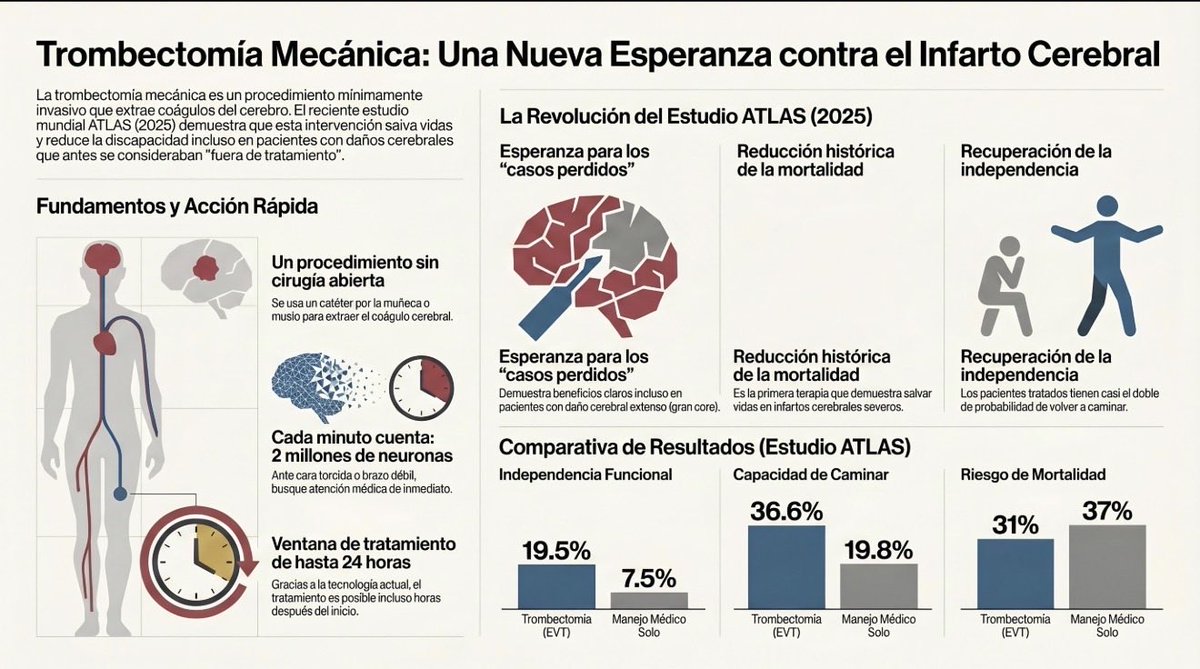
🧠⚡ 15 DE MAYO — DÍA MUNDIAL DE LA TROMBECTOMÍA MECÁNICA La trombectomía mecánica (TM) consolida en 2026 su posición como la intervención más coste-efectiva de la neurología cerebrovascular. Cinco aspectos clave bajo la evidencia actual: 1️⃣ EFICACIA FUNDACIONAL — HERMES: NNT 2.6 El meta-análisis HERMES (5 RCT, n=1.287) estableció OR 2.49 (IC95% 1.76–3.53) para independencia funcional (mRS 0–2) a 90 días. NNT = 2.6 para reducir un grado de discapacidad — la cifra más baja registrada en terapia de reperfusión cerebrovascular. 2️⃣ VENTANA EXTENDIDA 6–24 h — PARADIGMA “TISSUE-BASED” DAWN y DEFUSE-3 redefinieron la selección: ya no es el reloj, es el tejido. Mismatch clínico-radiológico o core por perfusión TC/RM (<70 mL) permite tratar wake-up strokes y ventanas tardías con beneficio sostenido. 3️⃣ ATLAS — LA REVOLUCIÓN DEL GRAN CORE (n=1.886) 🔥 El meta-análisis ATLAS de los 6 RCT (RESCUE-Japan LIMIT, ANGEL-ASPECT, SELECT2, TENSION, TESLA, LASTE) demuestra de forma definitiva el beneficio en infartos de gran core: • aGenOR 1.63 (IC95% 1.42–1.88), p<0.0001 • mRS 0–2: 19.5% vs 7.5% (EVT vs manejo médico) • Independencia ambulatoria (mRS 0–3): 36.6% vs 19.8% • Mortalidad reducida: 31% vs 37% — primera terapia de reperfusión que SALVA VIDAS en gran core • Beneficio incluso con ASPECTS 0–2 (ventana temprana) y core de hasta 150 mL • NNT 4.2 para mejorar ≥1 punto mRS; NNT 5.7 para deambulación independiente; NNT 14.6 para mortalidad 4️⃣ OCLUSIÓN BASILAR — CLASE I (AHA/ASA 2026) ATTENTION y BAOCHE consolidaron la TM en oclusión basilar (NIHSS ≥10, ≤24 h) como Clase I, con reducción significativa de mortalidad y dependencia severa. 5️⃣ FIRST-PASS, TIEMPO Y TENECTEPLASA Cada minuto = ~1.9 millones de neuronas. First-pass effect (mTICI 2c–3 al primer pase) y door-to-puncture <60 min son predictores independientes de mRS 0–2. La Guía AHA/ASA 2026 posiciona la tenecteplasa 0.25 mg/kg como trombolítico de primera línea pre-TM. ❓ ¿Sabías que… gracias al meta-análisis ATLAS, la trombectomía mecánica es hoy la primera y única terapia de reperfusión cerebral que ha demostrado REDUCIR MORTALIDAD en pacientes con gran core isquémico — incluso con ASPECTS 0–2 y volúmenes de hasta 150 mL — derribando definitivamente el dogma de que “el daño establecido no se trata”? — Dr. Manuel Moquillaza | Neurólogo Intervencionista | Coordinador de Neurología y NeuroIntervencionismo / Clínica Ricardo Palma | Primer y Único Centro Avanzado de ICTUS del Perú #TrombectomíaMecánica #ATLASMeta #LargeCoreStroke #NeurointervencionismoPerú #WorldThrombectomyDay
Manuel Moquillaza tweet media
Español
1
11
26
780
Felipe Suárez retweetledi
Sergio Ferrero
Sergio Ferrero@calotonterias·
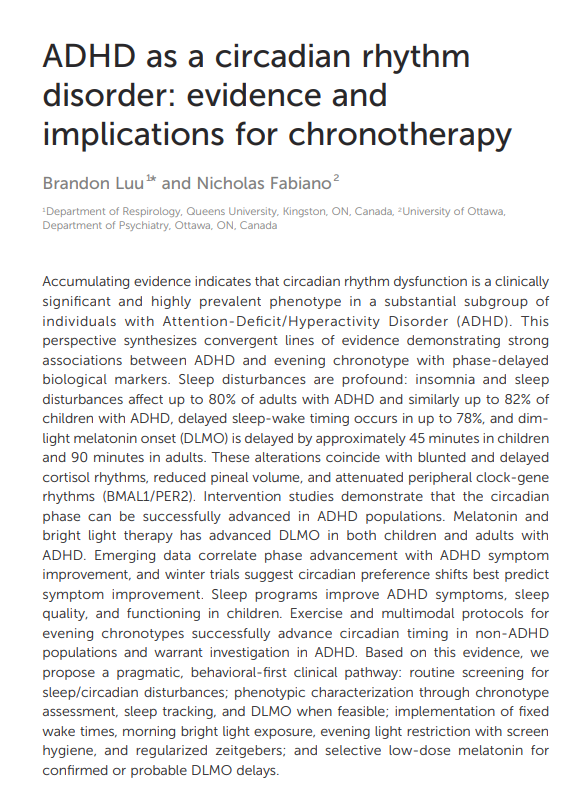
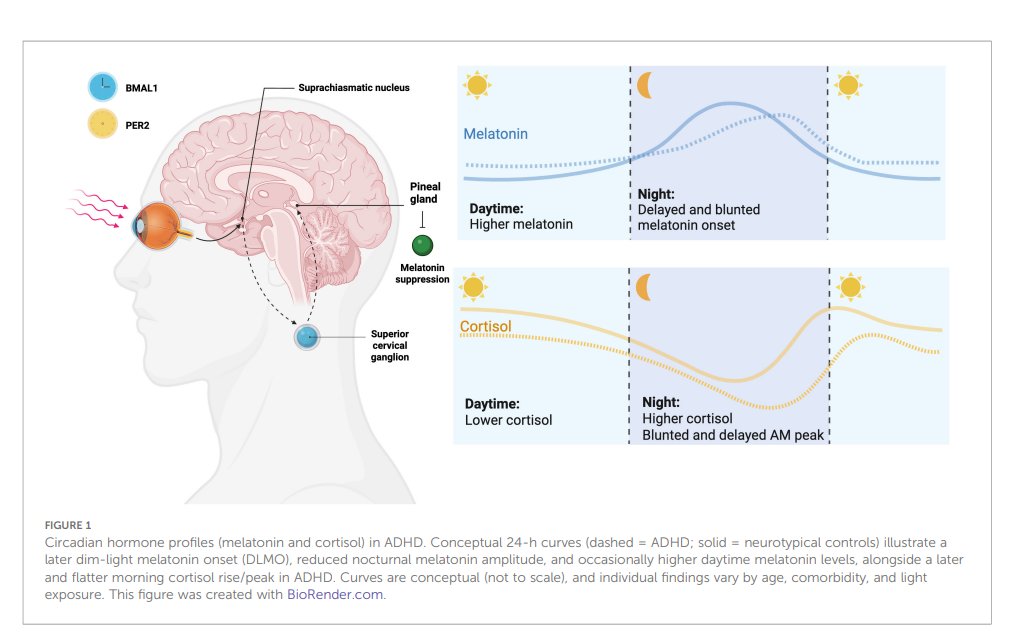
Muchos casos de Trastorno por Déficit de Atención e Hiperactividad (TDAH) son un trastorno del ritmo circadiano, y mejoran significativamente con cronoterapia: luz solar por la mañana, restricción de luz azul artificial por la noche, etc.
Sergio Ferrero tweet mediaSergio Ferrero tweet media
Español
5
140
919
23.2K
Felipe Suárez retweetledi
Lea Alhilali, MD
Lea Alhilali, MD@teachplaygrub·
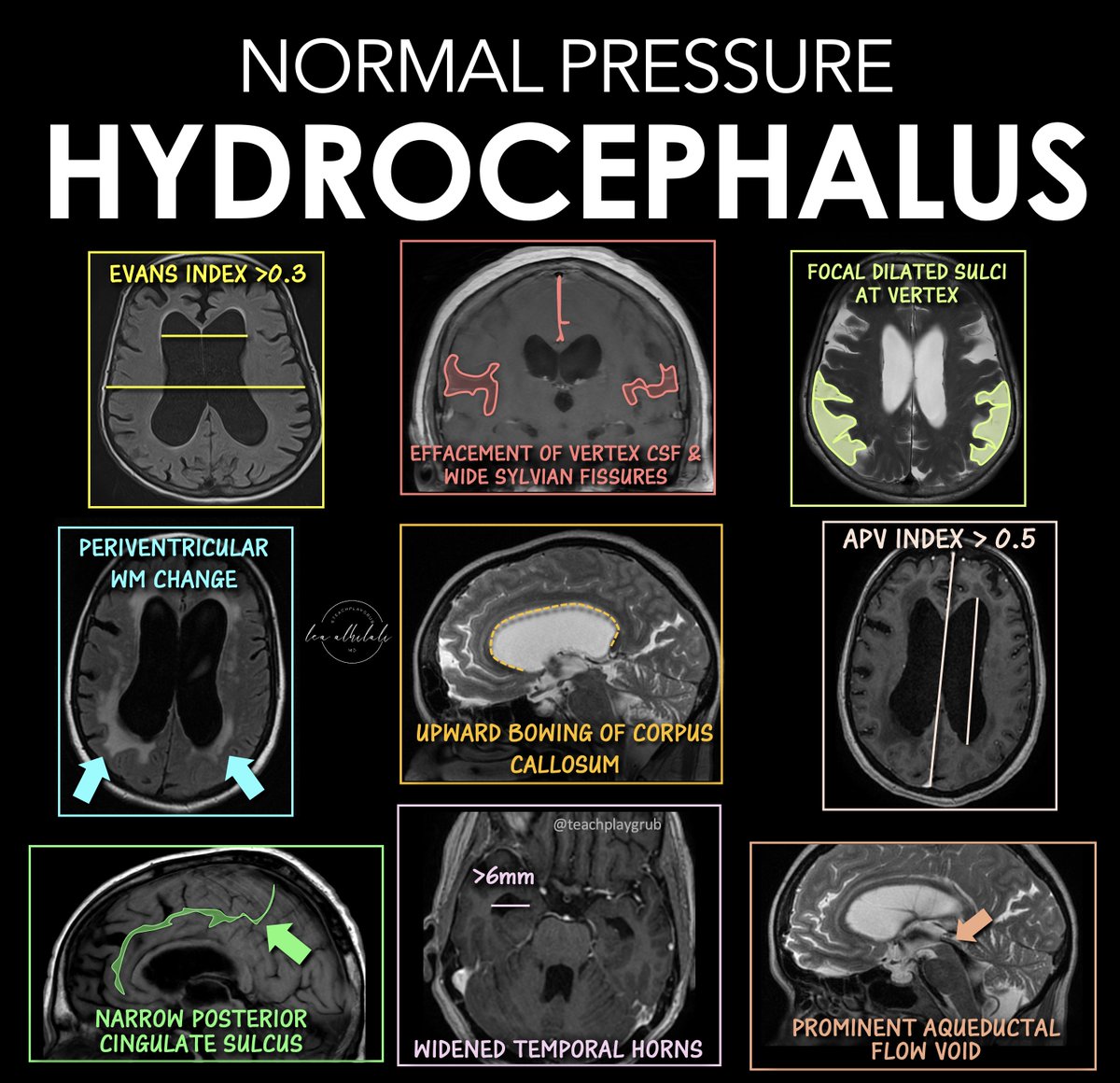
To call it or not to call it? That is the question! Do you feel a bit wacky & wobbly when it comes to calling normal pressure hydrocephalus on imaging? You don’t want to overcall it, but you don’t want to miss it either! Here are the signs of NPH 🔹 Evans Index > 0.3 --Enlarged frontal horns relative to skull width → ventriculomegaly. Remember it: “One out of three is too big for me!” 🔹 Periventricular White Matter Change --T2/FLAIR hyperintensity from transependymal CSF flow. Remember it: “Leaking pressure leaves a glow.” 🔹 Narrowing of the Posterior Cingulate Sulcus --Tight high-convexity sulci from crowding at the vertex. Remember it: “The top gets squeezed shut.” 🔹 Effaced Vertex CSF + Wide Sylvian Fissures --Tight sulci up top but enlarged fissures laterally (DESH pattern). Remember it: “Dry on top, wet on the sides.” 🔹 Upward Bowing of the Corpus Callosum --Ventricular expansion pushes the corpus callosum upward. Remember it: “If the corpus callosum is arched, the patient can’t march (wobbly)” 🔹 Temporal Horns > 6 mm --Early temporal horn dilation from hydrocephalus. Remember it: “Big horns before big vents.” 🔹 Focally Dilated Sulci at the Vertex --Patchy enlarged sulci despite surrounding crowding. Remember it: “Holes in a leaky roof = too much water on the brain!” 🔹 APV Index > 0.5 --Increased ventricular-to-parenchymal proportion suggesting hydrocephalus. Remember it: “Glass half full is too much!” 🔹 Prominent Aqueductal Flow Void --Increased CSF flow through the aqueduct on MRI. Remember it: “If the aqueductal flow is super black, the ventricles are out of whack.” Classic NPH imaging theme: enlarged ventricles + tight high convexities + disproportionate CSF redistribution. Hopefully now you won't wobble on the diagnosis of NPH!!
Lea Alhilali, MD tweet media
English
9
137
514
20.8K
Felipe Suárez retweetledi
Braydon Dymm, MD
Braydon Dymm, MD@BraydonDymm·
Eyelid myokymia: benign fasciculation of the orbicularis oculi, a clinical diagnosis An isolated 10-minute episode does not require hospital admission for MRI Brain and Neurology consult. Reassurance is the treatment of choice 👍
English
9
11
80
8.5K
Felipe Suárez retweetledi
NEJM
NEJM@NEJM·
Inflammatory myopathies are typically associated with a myositis-specific autoantibody that determines the diagnosis and prognosis. Myositis subgroups have distinct pathomechanisms that now allow for targeted therapies. Learn more in the Review Article “Inflammatory Myopathies” by Yves Allenbach, MD, PhD, and Olivier Benveniste, MD, PhD: nej.md/49Iy9Oo
NEJM tweet media
English
4
307
945
62.1K
Felipe Suárez retweetledi
Neurology Journal
Neurology Journal@GreenJournal·
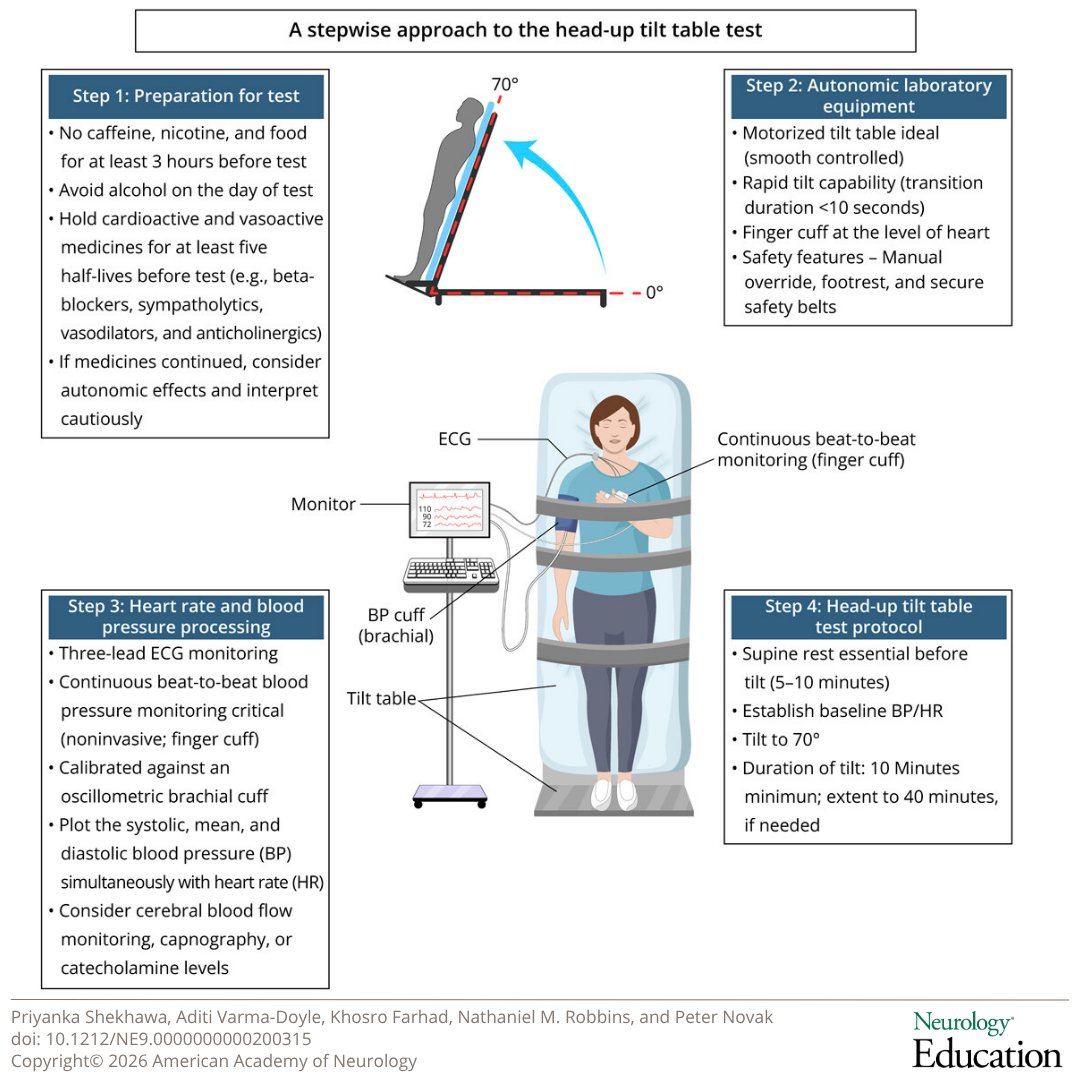
This Neurovisual by Shekhawat et al.walks through a stepwise approach to interpreting the head‑up tilt table test, from patient preparation and setup to signal acquisition and testing protocol, and illustrates the 3 core orthostatic hemodynamic patterns: hubs.la/Q04fwqct0
Neurology Journal tweet mediaNeurology Journal tweet media
English
1
13
41
2.8K