
Dr. Florian Steiner, AI Consultant

12K posts

Dr. Florian Steiner, AI Consultant banner
Dr. Florian Steiner, AI Consultant

Dr. Florian Steiner, AI Consultant

@DrFloSteiner

AI Consultant | Claude Code Expert | Ambassador Claude Code Community Munich |

München, Bayern Katılım Temmuz 2017
3.5K Takip Edilen1K Takipçiler
Sabitlenmiş Tweet
Dr. Florian Steiner, AI Consultant
Last Friday: Fastly -18%, Akamai -13%, Cloudflare -11% in a single session. The trigger was Anthropic launching Claude Managed Agents two days earlier. Investors read it as a direct threat to the CDN and edge-compute stack. If the model provider bundles the smart layer (the agent) and the execution layer (sandbox, state, tools), the middle disappears. Meanwhile, most mid-market companies are running Microsoft Copilot and Google Gemini as the "safe default." The default is not what the procurement memo says. M365 Copilot is a $30 add-on. GitHub Copilot is a separate subscription. Copilot Studio is another. Google raised Workspace prices 17-22% to fund Gemini, and from March 2026 serious AI usage requires another add-on on top. A patchwork of SKUs is not a platform. Patchworks do not compound. The real cost: the default has lost the lead user feedback loop. No single Microsoft surface is learning from the sharpest users in the wider market. Your competitors are already getting the productivity upgrade somewhere else. Full analysis: drfloriansteiner.com #AgenticEngineering #VibeCoding #ClaudeCode
English
0
0
1
200
Dr. Florian Steiner, AI Consultant
Before Google, there was no SEO. Today: degree programmes, VPs of online marketing, heads of affiliate. The infrastructure looks inevitable in retrospect. It was not. Specific people, mostly between 1998 and 2005, made it inevitable by treating an undefined area as their professional opportunity. The same window is open now in agentic engineering. There is no settled definition of what an AI Operations function reports against, who certifies a vibe coding practitioner, or how a CFO should book the productivity dividend. History suggests these questions get settled within five years. None of them has an answer today. Two phases run in parallel. Schumpeter's destruction is the loud one. The quieter phase, what economists call institutional entrepreneurship, is where the returns actually sit: specific people defining what the new categories mean, who counts as legitimate, and what good work looks like. Three moves for your next quarter: 1. Identify one category in your business in active dissolution. 2. Appoint someone to redefine it. Not optimise it. Redefine. 3. Accept that the answer will look uncomfortable benchmarked against three-year-old norms. The discomfort of working without a category to claim is the work itself. Full piece: drfloriansteiner.com/blog/old-certa… #AgenticEngineering #VibeCoding #ClaudeCode
English
0
0
2
26
Dr. Florian Steiner, AI Consultant retweetledi
ClaudeDevs
ClaudeDevs@ClaudeDevs·
In the last four Claude Code CLI releases, we’ve shipped 50+ stability and performance fixes. Faster resume, stable auth, lower memory, fewer hangs: 🧵
English
221
122
3.2K
592.1K
Dr. Florian Steiner, AI Consultant
Solow, 1987: "You can see the computer age everywhere except in the productivity statistics." He was right. Then the gains arrived. Internet triggered the same debate in 2000. We're in version 3.0. Sceptics are right short-term, wrong on direction. In 1985, storage was expensive. Writing inefficient code was costly. Python would have been indefensible. Today a browser tab uses 1 GB RAM. No one cares. The bottleneck moved from machine → human. We're assuming AI bottlenecks (energy, compute) are permanent. They're not. Werner Kirsch called them "invarianzenbrechende Drittvariablen", invariance-breaking third variables. Porter said you can't have cost leadership AND differentiation. Then Amazon showed up. The internet was the third variable. AI is the next one. Three cost compressions this week: PR/SEO/design: €10k → €100 → <€1/run (agentic) Websites: €150k → €15k → €1.5k (vibe coding) Bloomberg-grade data: institutions only → individual API access None cheaper at the top. Opened at the bottom. Christensen called it non-consumption. The biggest markets for disruptive tech aren't the existing premium customers. They're the people who weren't participating at all because it was unaffordable. That's where AI is opening markets right now. Three implications: 1. Productivity will rise. Solow resolved twice. Version 3.0 isn't different. 2. Disruption creates many small winners, not one new monopolist. Tricky for PE concentration. 3. New question: which "natural law" trade-offs are disappearing bottlenecks? Ran this live twice this week. Monday: claude code demo at Meetup #4 in Munich (80 practitioners). Thursday: executive seminar for 20 CIOs at HSG St. Gallen with Oliver Gerstheimer. Same pattern, two very different rooms. Both asked the right questions. Full issue with the worked examples and three concrete implications for Mittelstand, PE, and family offices: drfloriansteiner.com/blog/productiv…
English
0
0
0
24
Dr. Florian Steiner, AI Consultant retweetledi
Dan Shipper 📧
Dan Shipper 📧@danshipper·
LLMs write better code than most human engineers. If code is handled, what's left for us? I chatted with @kieranklaassen, GM of @CoraComputerCora and creator of compound engineering, on @every's AI & I about where humans fit now that AI can generate high-quality code, copy, strategy, and design. His theory: We’re the bread. Humans are indispensable at the beginning and end of every process. At the beginning, to set the frame, and at the end to provide the final polish. This turned into a wide-ranging conversation on the future of humans and AI in coding and beyond. We get into: - Why AI work is a sandwich. The models are the filling, responsible for writing, testing, and iterating. Humans are the bread bookending the models: We frame the problem and judge whether the output feels right. - The four steps behind compound engineering: Plan, work, review, and compound. The last one—where learnings feed back into the repo so agents don't repeat their mistakes—is what allows one engineer to ship like a team of five. - Play to your strengths. Knowing when to step away and let the models execute lets you focus on areas that require human judgement, like approaching a problem from multiple angles. This is a must-watch for anyone trying to figure out their role in the workplace now that the execution layer is largely solved. Watch below! Timestamps: Introduction and the AI sandwich metaphor: 00:00:52 What compound engineering is and how it’s evolved: 00:02:33 The "work" phase of agentic coding is essentially solved: 00:04:27 Why humans belong at the beginning and the end of an AI workflow: 00:06:27 Dan's argument for why agents can't change frames—and how this will keep us employed: 00:11:06 Full automation remains a moving target: 00:16:51 Musical composition as a model for human-AI collaboration: 00:23:21 Find your place in an AI-accelerated world by leaning into what brings you joy: 00:26:39
English
9
10
68
14.8K
Dr. Florian Steiner, AI Consultant
In 1811, England had 400,000 handloom weavers. By 1860, they were gone. Every textbook calls the Industrial Revolution a triumph. The people who lived through it called it a civilisational emergency. We are about to make the same mistake with AI. A new paper (Falk and Tsoukalas, Wharton/BU, "The AI Layoff Trap") shows why. In a competitive economy, every firm that replaces workers with AI makes a rational choice. If all firms do it, they collectively destroy the consumer demand they depend on. The uncomfortable finding: UBI, upskilling, capital taxes, worker equity, Coasian bargaining, more competition. None fix the trap in their model. Only a Pigouvian tax on automation does. And even that needs institutions continental Europe has been trialling for 140 years. Bismarck's social insurance, the Front Populaire, Mitbestimmung, Kurzarbeit, Cassa Integrazione, the EU AI Act. The decision is not the machine's. It is ours. Full essay: drfloriansteiner.com/blog/ghosts-of… #AgenticEngineering #AIEconomics
English
0
0
1
234
Dr. Florian Steiner, AI Consultant retweetledi
Claude
Claude@claudeai·
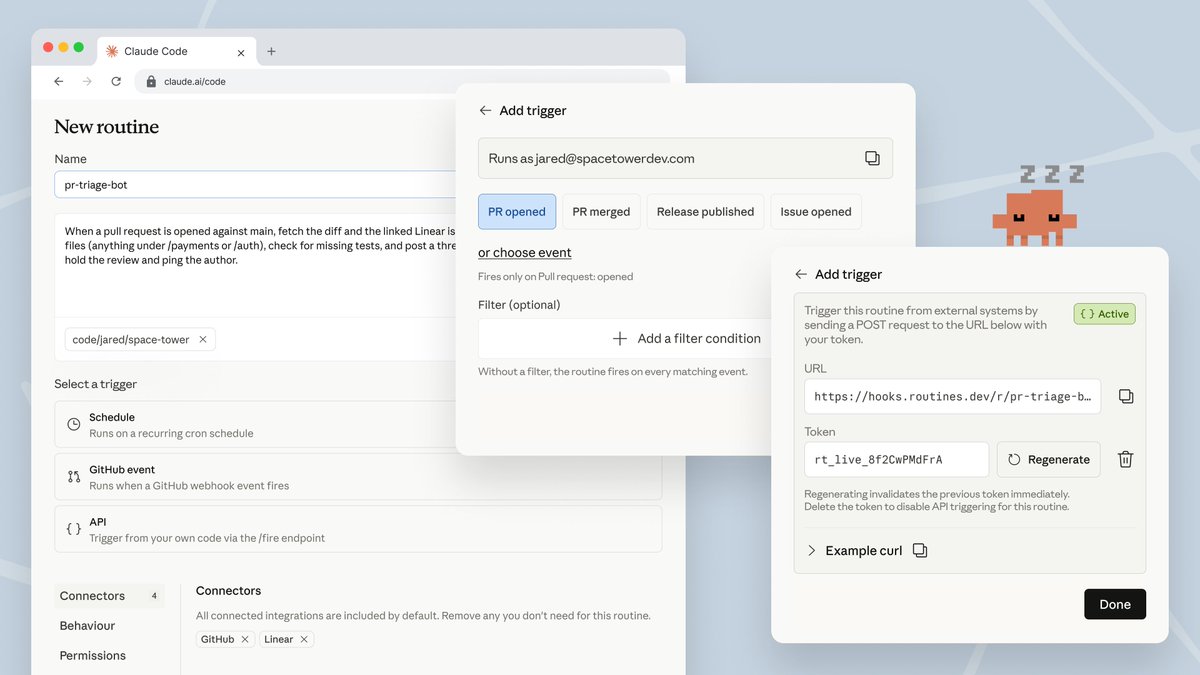
Now in research preview: routines in Claude Code. Configure a routine once (a prompt, a repo, and your connectors), and it can run on a schedule, from an API call, or in response to an event. Routines run on our web infrastructure, so you don't have to keep your laptop open.
Claude tweet media
English
756
1.5K
18.5K
4.6M
Dr. Florian Steiner, AI Consultant
@trq212 If you consider the FAQ in Munich „knowing“ I am more than happy to share how I work with Claude Code as a non-technical PM. I have build websites, Mac Apps, Skills, Tools like content automation and extensive use of CLI to automate processes on my Mac and lately managed agents.
English
0
0
0
27
Thariq
Thariq@trq212·
would like to start with people I know already so we can get over initial awkwardness!
English
43
0
229
30.5K
Thariq
Thariq@trq212·
I want to do some streams where I work with non-technical people using Claude Code to figure out how they might be able to improve their process. My feeling is that just a few tips could make a big difference in efficiency. Any mutuals interested?
English
697
80
3.5K
188.2K
ani
ani@anirudh_twt·
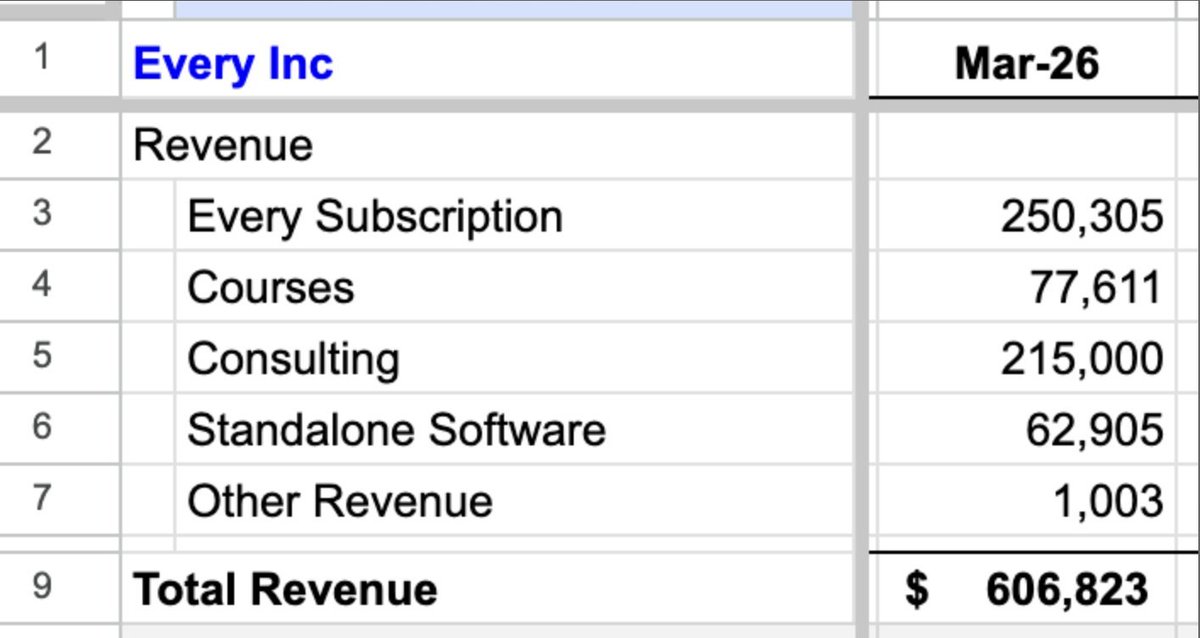
consulting generates the cash. software builds the equity. media builds the moat. @gregisenberg said it, @every did it. source: x.com/bran_don_gell/…
ani tweet media
Brandon Gell@bran_don_gell

We have 5 new roles open at Every. Probably a 6th soon. Every is an incredible place... it's a playground for builders. If you think you are one of the best at what you do (or could be), want to work in a truly agent native environment, be on the edge of AI, work alongside cool and caring people, and build more than you talk, you should work here → every.to/careers Open roles: - GTM engineer - Head of Finance Vertical, Consulting - Head of Learning and Development - Head of Product Marketing - Head of Social

English
2
2
67
43K
Dr. Florian Steiner, AI Consultant retweetledi
Claude
Claude@claudeai·
Claude Cowork is now generally available to all paid plans. For Enterprise, we are adding role-based access controls, group spend limits, usage analytics, and expanded OpenTelemetry to give admins what they need to deploy it across the org.
English
427
753
10.3K
3.5M
Dr. Florian Steiner, AI Consultant
I logged into Claude. Managed Agents was just sitting there in the navigation — no waitlist, no announcement. So I rebuilt my content workflow as a Managed Agent. This post was written by that agent, based on my raw notes from the session where I built it. What surprised me: → As simple to set up as creating a Skill or Subagent → Cloud-based, Markdown files, portable across orgs in minutes → Buffer integration via MCP worked seamlessly → File downloads from the cloud: still a real gap Big picture: a serious challenger to Lindy, make.com, n8n — especially for SMEs and enterprise teams. Full writeup on Substack 👇 🔗 open.substack.com/pub/drflorians…
English
0
0
0
41
Dr. Florian Steiner, AI Consultant retweetledi
Aakash Gupta
Aakash Gupta@aakashgupta·
Anthropic just mass-obsoleted every agent orchestration startup in a single launch. The screenshot tells the full story. That's a production fleet dashboard. 8 agents running. 247 completed tasks. Active status. MCP-connected to HubSpot, pulling deals, generating proposals, reading attachments. This isn't a demo. It's a managed production environment where you define the agent and Anthropic runs the infrastructure. The timing here is surgical. Four days ago, Anthropic blocked OpenClaw and every third-party harness from using subscription credentials. The message was clear: stop building on top of our consumer auth layer. Now here's the replacement. A first-party managed agent platform with fleet monitoring, production-grade MCP integrations, and prototype-to-launch timelines measured in days. Manus spent six months on five harness rewrites. LangChain spent a year on four architectures. Anthropic just shipped the managed version that eliminates the need to build one at all. The real bet: most companies don't want to build agent infrastructure. They want agents that work. Anthropic is pricing this into the platform the same way AWS priced server management into EC2. The 46% of enterprises citing "integration with existing systems" as their primary agent challenge just got a first-party answer from the model provider itself. Every agent startup that raised on "we make Claude reliable in production" just lost their pitch deck.
Claude@claudeai

Introducing Claude Managed Agents: everything you need to build and deploy agents at scale. It pairs an agent harness tuned for performance with production infrastructure, so you can go from prototype to launch in days. Now in public beta on the Claude Platform.

English
182
271
3.3K
1.1M
Dr. Florian Steiner, AI Consultant retweetledi
austin lau
austin lau@helloitsaustin·
4) Dimension 4: build tools only you would ever build the agent economy creates the assumption that someone, somewhere, will build the tool for your problem. it's the main reason skills and plugins floating around github don't work as well in practice (even including ours) since they're not personalized to your use case. a lot of the highest-leverage marketing workflows are too specific, or too tied to your exact stack, for anyone to productize. you can't just clone someone's skills repo and call it a day. it's good scaffolding but you still need to spend the time to rightsize that template to your stack, your edge cases, your workflows. it's okay to build for an audience of one. if it works for you, great. if it works for many, even better. but index on what works for you first.
English
4
9
155
30.5K
Dr. Florian Steiner, AI Consultant retweetledi
Boris Cherny
Boris Cherny@bcherny·
Mythos is very powerful, and should feel terrifying. I am proud of our approach to responsibly preview it with cyber defenders, rather than generally releasing it into the wild. Model card here: www-cdn.anthropic.com/53566bf5440a10…
Anthropic@AnthropicAI

Introducing Project Glasswing: an urgent initiative to help secure the world’s most critical software. It’s powered by our newest frontier model, Claude Mythos Preview, which can find software vulnerabilities better than all but the most skilled humans. anthropic.com/glasswing

English
577
614
9.9K
1.3M
Dr. Florian Steiner, AI Consultant retweetledi
Josh Kale
Josh Kale@JoshKale·
This is big... Anthropic just announced a model so powerful they won't release it to the public out of fear over the damage it will cause 😨 Claude Mythos Preview found thousands of zero-day exploits in every major operating system and web browser... The numbers are hard to believe: > $50 to find a 27-year-old bug in OpenBSD, one of the most security-hardened operating systems ever built > Under $1,000 to find AND build a fully working remote code execution exploit on FreeBSD that grants unauthenticated root access from anywhere on the internet > Under $2,000 to chain together multiple Linux kernel vulnerabilities into a complete privilege escalation exploit For context: these are the kinds of findings that previously required elite security researchers working for weeks. Anthropic engineers with no formal security training asked Mythos to find exploits overnight. They woke up to working code the next morning. The results were so impressive Anthropic assembled Apple, Google, Microsoft, Amazon, NVIDIA, and seven other organizations into Project Glasswing: A $100M defensive coalition. They're not releasing this model publicly. Instead, they're racing to patch the world's infrastructure before models like this proliferate.
Anthropic@AnthropicAI

Introducing Project Glasswing: an urgent initiative to help secure the world’s most critical software. It’s powered by our newest frontier model, Claude Mythos Preview, which can find software vulnerabilities better than all but the most skilled humans. anthropic.com/glasswing

English
711
2.5K
18.2K
4M