Bruh you didnt respond to a thing i said 🤣 also you went from saying orthodoxy teaches psa to now debating what orthodoxy teaches on salvation which isn't psa and is intact cristus victor/theosis....which is a concession by the way.
Only god knows the state of someones soul and wheather its receptive to God's light....the Church is the world’s premier trauma center. While the Sacraments are the normative, proven protocols like a specialized ICU with a direct line to the Surgeon God, god is not a captive of His own hospital.
Just as a field medic or a "Good Samaritan" might perform a life-saving intervention on a remote trail far from any clinic, the Holy Spirit can provide "emergency" healing anywhere. The Church identifies where the medicine is guaranteed to be found, but never claims to be the only place the Physician is working.
You're again showing a fundamental misunderstanding on how salvation is viewed in the east....even what the purpose of what christ did on the cross was/is.
In Eastern Orthodox theology, even when figures like Arius or Nestorius are anathematized by councils such as the First Council of Nicaea or the Council of Ephesus, this does not mean the Church has condemned them to hell. The anathema rejects their teachings as spiritually harmful, but salvation in Orthodoxy is understood primarily as healing and restoration (the healing of the soul from corruption and sin), not merely a legal verdict. Because of this, the Church identifies teachings that distort that healing process, but it does not claim to know whether a person ultimately accepted God’s healing especially at death. Final judgment belongs to God alone, who sees the heart and the possibility of repentance, so while their doctrines are condemned, their eternal fate is left to God’s mercy and healing justice.
@DracodaddyofOSU@Nicholai_Korea Deceased anathematized individuals can rejoin the church??? What!? Btw, what happens when someone gets anathematized in death? Can you tell me?
@HHS3239@Nicholai_Korea Did you not know anathematized individuals can rejoin the church through repentance and showing a sincere change. Its a call to change not a sentence to hell....
When he uses guilt in his homily that you qoute hes referring to personal sin that we all commit not imputed inherited guilt 🤣 ive already answered this. Also salvation to John was through a medicinal lens not a legal satisfaction of God's wrath...he tought synergy and that the way you recieve that healing grace was through the sacraments.
@DracodaddyofOSU@Nicholai_Korea Btw, I'm still trying to understand why Chrysostom would say someone without salvation is guilty... And then I need something to have salvation. Does that mean I'm... wait for it... guilty!?
Oh and by the way pointing out that babtism is necessary for salvation(normative sense) literally contradicts psa....so pointing out that orthodoxy teaches that actually refutes your claim that they teach psa....its pretty hilarious actually that you keep refuting yourself by doing that
@DracodaddyofOSU@Nicholai_Korea When did I say Salvation was just being declared righteous? Nice strawman...
Where is it stated that you can be saved outside of rhe church in Eastern Orthodoxy? Bro, you make it up as you go, huh?
It's amateur hour out here... 🤦🏾♂️
In Eastern Orthodox teaching (as expressed, for example, in the Synod of Jerusalem (1672)), salvation means real transformation and union with Christ being healed from sin, restored to life, and incorporated into His Body rather than merely being legally declared righteous. Accordingly, the necessity of baptism is understood as normative and ontological, not legal: baptism is the God-given, ordinary means by which a person actually participates in Christ’s death and resurrection, receives remission of sins, and begins new life. This “necessity” refers to what God has established as the normative way of entering salvation, not a limitation on God Himself Orthodoxy explicitly holds that God is free to save outside the sacraments in extraordinary circumstances. In contrast, many penal substitution (PSA) Protestant views define salvation primarily as a legal declaration based on Christ bearing punishment in one’s place, with baptism seen as an outward sign of a prior justification by faith alone. So in Orthodoxy, baptism is necessary because it is the ordinary means by which salvation is actually effected in the person, while still affirming God’s freedom; whereas in PSA frameworks, salvation is already secured apart from baptism, making it non-essential to receiving salvation.
@DracodaddyofOSU@Nicholai_Korea 🤦🏾♂️ So a "guilty" person is given up as far as Salvation is concerned? Tell me, look at the council of Jerusalem and tell me why you baptize folks. What CAN'T you have without a baptism? I'll wait...
@HHS3239@Nicholai_Korea Guilt here is personal sin not imputed inherited sin from the same source you quoted
“For the reason why he calls him a sinner, is not because he transgressed the Law (for he had it not), but because he did evil.”
Thats reffering to inheriting a corrupted nature here he is explicitly denying the legal guilt yall think he advocates for
“We became sinners not as having transgressed with Adam, but because we are of his nature which fell into corruption.”
Also
“Because of Adam’s transgression, human nature became sick with corruption and subject to death.”
Guilt is literally not used in the synod of Carthage 🤣
In terms of how they understood sin and remission
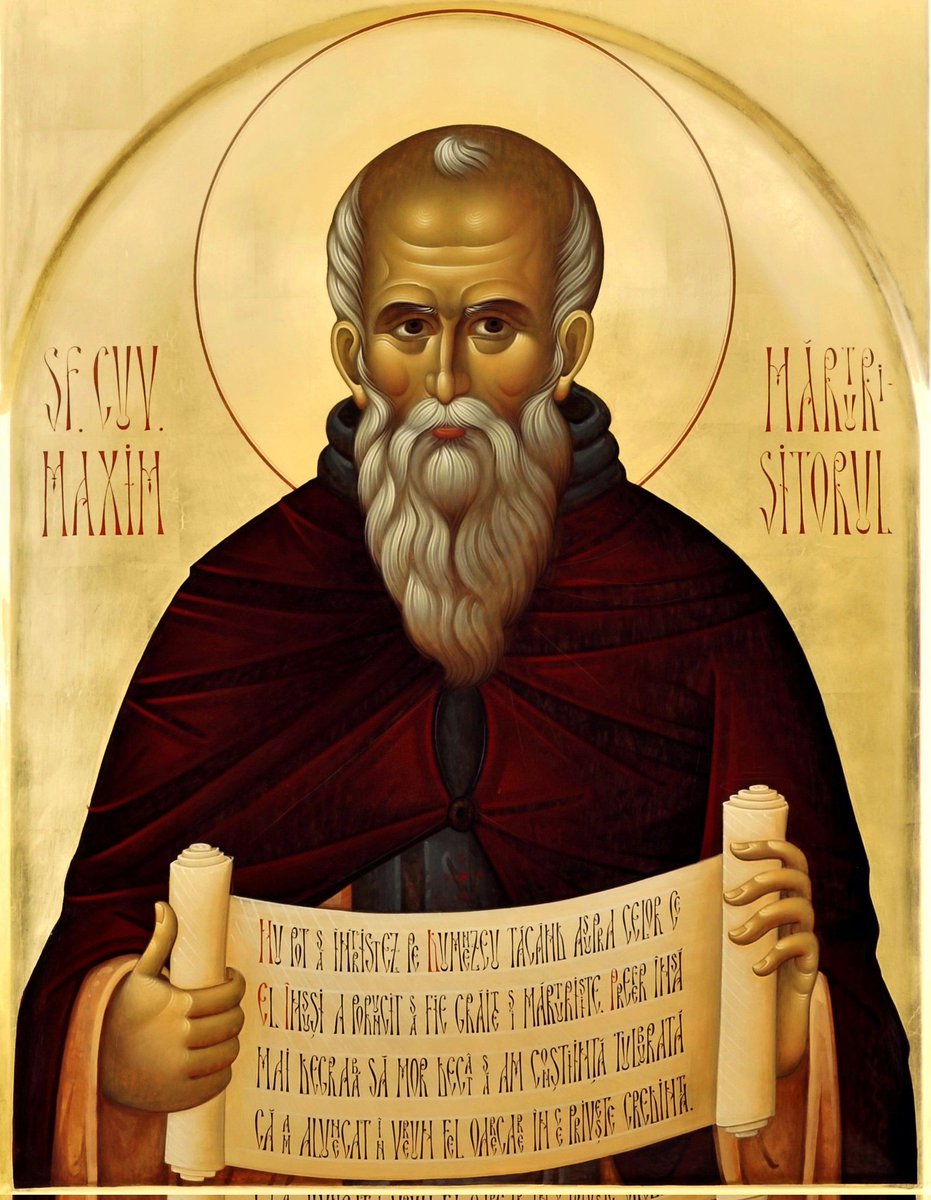
Maximus the Confessor
“The first sin was blameworthy… but the second, which came from it, is a blameless alteration of nature, namely corruption and mortality.”
Source:
pappaspatristicinstitute.com/post/did-chris…�
“Human nature… became subject to corruption and death, not to blame.”
Source (analysis of Ad Thalassium 42):
scielo.org.za/scielo.php?pid…�
Athanasius of Alexandria
“Men… had turned toward corruption… and were held fast by the law of death.”
Source:
javierperdomo.substack.com/p/christs-aton…�
“The corruption of men could not otherwise be undone except through death.”
Source:
javierperdomo.substack.com/p/christs-aton…�
John Chrysostom
“We baptize infants, though they are not defiled by sins, that they may receive… righteousness, adoption, and inheritance.”
(Homily on Romans)
Public domain text:
newadvent.org/fathers/210210…�
Cyril of Alexandria
“Human nature became diseased through the transgression of Adam… thus death entered.”
(From his commentary on Romans)
Reference discussion:
orthodoxchristiantheology.com/2020/05/25/max…�
@blessedmikko I did though 🤣 you want it to be some legal definition....in the east its not
Divine justice = God’s faithful, restorative action to set things right according to His nature (love), not primarily to punish or satisfy a legal debt.
What “Orthodox” modernists won’t tell you in their demonic mockery of Augustine is that Maximus not only agreed explicitly with Augustine that the “ancestral curse & condemnation” was transmitted through the lust involved in sexual reproduction—he actually goes so far as to affirm that sexual reproduction, marriage & even sexual diffrentiation (see Ambiguum 41) were not God’s original intention, which is something Augustine actually rejected, seeing marriage & reproduction (albeit without the involvement of lust & carnal pleasure as is experienced post-Fall) as divinely ordained.
‘Since the original intention of God was not for us to be born through intercourse that takes place in a marriage and corruption—it was the transgression of the commandment that introduced marriage because Adam disobeyed, that is, rejected the law given to him from God—therefore, then all who are born of Adam are “conceived in iniquity” and fall under the forefather’s sentence of condemnation (ὑποπίπτοντες τῇ τοῦ προπάτορος καταδίκῃ).
And ”and in sin did my mother bear me” signifies that Eve, the mother of us all, first conceived sin by becoming wanton for pleasure. Because of this, we, too, falling under the sentence of the mother, are said to be conceived in sin.’
–St. Maximus the Confessor, Questions & Doubts, I.3
‘..after the transgression, all human beings possessed pleasure as something naturally antecedent to their proper birth, and absolutely no one was by nature free from an impassioned birth conditioned by pleasure. Experiencing pain and sufferings as if in payment of a natural debt, all human beings had to submit to death, which followed upon their sufferings. Consequently the way to freedom was barred for all who were subject to the tyranny of unrighteous pleasure and just sufferings, and who because of these just sufferings were naturally subject to a most just death.’
–Ad Thal, 61.4
As St. Maximus goes on to explain immediately after in Ad Thal 61, as I broke down in my explanation of original sin in St. Maximus there a few months ago, the death of a man that did not have his principle in pleasure (which would therefore in a sense be unjust) was necessary to break the pleasure-sin cycle & allow for the possibility of atonement.
Yes becuase justice means to be restored and in the right order....the east doesnt use the same western definitions 😭🤣
When we are judged the judgement is based on our orientation towards god if we are in disorder and reject his healing that is justice for we are in hell if we accept that healing presence we are restored that is justice....God's justice is just that.
@DracodaddyofOSU You then told me that the consequences of Adam sin are ontological. I never denied this? The question I am asking you is whether we are punished justly.
@DracodaddyofOSU That’s not a positive definition of Divine Justice. That’s you telling me what it does.
Nor is this an answer to the question of whether we are justly punished through Adam’s sin or not.
@blessedmikko From the work you cited
“For just as Adam… introduced corruption into nature… so all who share in the same nature also share in corruption…
but no one is by nature blameworthy for Adam’s transgression.”
@blessedmikko@AlexJ_Andrews@HosannaHosannaa From the work you cited
“For just as Adam… introduced corruption into nature… so all who share in the same nature also share in corruption…
but no one is by nature blameworthy for Adam’s transgression.”
@DracodaddyofOSU@AlexJ_Andrews@HosannaHosannaa Can you provide the specific citation?
Furthermore, I was not interested when I wrote this in October of arguing for your specific (& obvious misconception) understanding of what it means to be guilty through Adam’s sin.
@blessedmikko Justice=setting things in its proper order and restoring what is broken
The result of adams sin is a natural ontological consequence of adams sin....death
Those who reject the healing remain disorded aka hell aka justice