DraganDeeWhy

425 posts

DraganDeeWhy

DraganDeeWhy

@DraganDeeWhy

There is no devil it is just god when he is drunk

Katılım Mayıs 2012
43 Takip Edilen130 Takipçiler
Ryan Dally
Ryan Dally@Ryandally08·
#BREAKING Anthony Albanese has launched an "extraordinary" attack on US President Donald Trump. He said Trumps threat was "unbecoming of a US president" He added "I don't think it's appropriate to use language such as that from the President of the United States" Albo is just trying to burn all bridges with our biggest and greatest ally at this point. #Auspol
Ryan Dally tweet mediaRyan Dally tweet media
English
1.1K
247
1.1K
61.5K
DraganDeeWhy
DraganDeeWhy@DraganDeeWhy·
@Algore09algor Me to. I have two questions Why all these public health government paid NGOs think that should have a say in this cleary criminal and economic and political issue? Why do they think that cutting access to tobacco products will reduce demand?
English
0
0
0
15
Alan CMA
Alan CMA@Algore09algor·
Having read most of the submissions to the inquiry, one thing stands out the usual suspects are still pushing the same tired playbook. More enforcement, higher taxes, tighter controls. No reflection, no accountability, no sign that anything has been learned from what’s already gone wrong. It’s the same ideas that helped create the current mess, now being presented as the solution to it.
English
2
5
19
141
reason
reason@reason·
E.U. officials brag about busting a cigarette smuggling network, but people fed up with high tobacco taxes will make sure there are more to take its place. reason.com/2026/04/15/sky…
English
3
10
30
2.8K
DraganDeeWhy
DraganDeeWhy@DraganDeeWhy·
@SincDavidson The cut down is not enough, we need a whole new approach. Start from the scratch.
English
0
0
0
27
DraganDeeWhy
DraganDeeWhy@DraganDeeWhy·
@jkelovuori @PantherNoster Even if they succeed, then what? Claim victory and blaim that not enough enforcement has been aplied? These days o just think " Let them, let them repat the same old mantra. If Sulatan Murad the IV, Russian tzars, Chinese emporers could not stop smoking with a death penalty....
English
0
0
2
10
Jukka Kelovuori
Jukka Kelovuori@jkelovuori·
@DraganDeeWhy @PantherNoster They are hoping for the big legal companies (BAT, PMI, Imperial) to exit the Australian market, having been driven out by an illicit market. Not about health. All about "fighting Big Tobacco".
English
1
0
1
11
DraganDeeWhy
DraganDeeWhy@DraganDeeWhy·
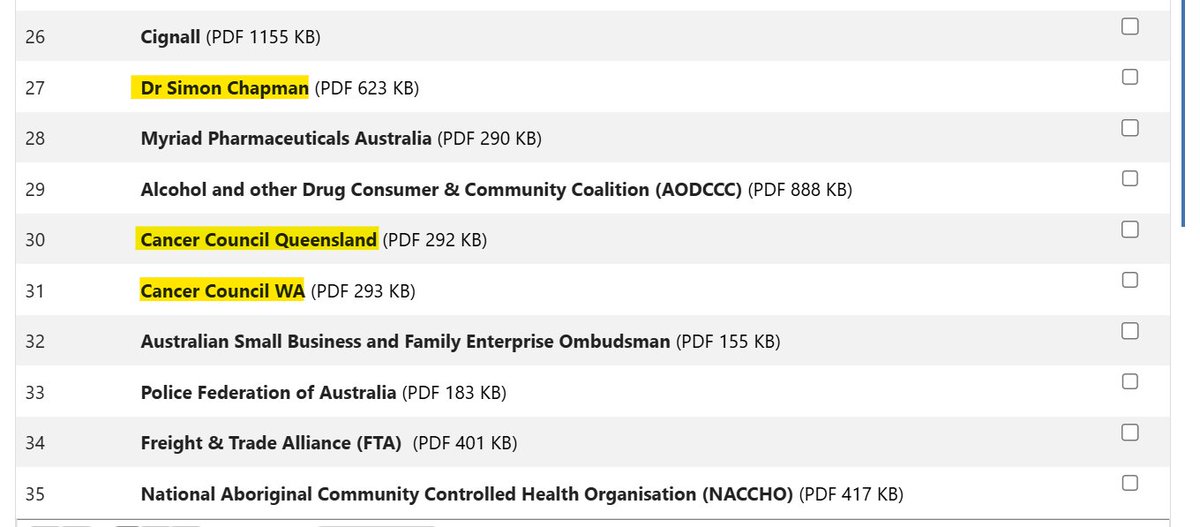
@jkelovuori @PantherNoster Yep, I read his submission. And off course the rest of the state Cancer Councils will appear as well. Emily Banks is missing. Let them, just let them, lets keep the status quo.
English
1
0
2
16
DraganDeeWhy
DraganDeeWhy@DraganDeeWhy·
@Algore09algor I will have a look at his submission. What is annoying is that in all of this everyone is treating consumers/ users as some abstract factor that does not think. They think, they adjust, they respond to market conditions just like with any other consumer product.
English
0
0
7
38
Alan CMA
Alan CMA@Algore09algor·
At first glance, Simon Chapman's submission acknowledges something important: cheap illicit tobacco is now widespread, highly accessible, and eroding the price barrier that once discouraged smoking. But rather than follow that logic to its obvious conclusion that extreme taxation has created the conditions for this market, he instead bends over backwards to deny the role price plays in driving it. This is the central contradiction in his argument. Chapman repeatedly states that price is a “universally acknowledged” driver of smoking behaviour. Yet when that same principle applies to illicit markets where a $7 pack competes against a $40–$60 legal product, he suddenly dismisses price as irrelevant. You can’t have it both ways. If price reduces consumption, then extreme price gaps will inevitably redirect consumption. That’s not ideology, that’s basic economics. His attempt to argue that illicit trade exists everywhere, regardless of tax levels, is another sleight of hand. Of course, illicit markets exist globally, but the scale, visibility, and violence attached to Australia’s market are what make it exceptional. Open, shopfront sales. Delivery services advertised on trees and social media. Firebombings. Turf wars. That’s not business-as-usual, it’s a market supercharged by unprecedented margins. And this is where Chapman’s dismissal of James Martin becomes particularly telling. Martin’s work doesn’t rely on rhetoric - it reflects well-established criminological principles: when profit margins are extreme, organised crime will enter and expand. Australia has effectively engineered one of the most lucrative black markets in the world through policy settings that pushed legal prices far beyond what enforcement alone can control. Ignoring that doesn’t make it untrue, it just avoids the uncomfortable implication that policy has backfired. Chapman’s arithmetic argument that even large tax cuts wouldn’t undercut illicit prices is also overly simplistic. Illicit markets don’t operate in a vacuum. They respond to risk, enforcement pressure, and margins. Narrow the gap, and you reduce the incentive structure. Leave a 500–800% margin in place, and no amount of policing will keep pace. Perhaps most concerning is his continued defence of the pharmacy-only vape model. In theory, it mirrors tightly controlled systems like pharmaceuticals. In reality, it has failed. Consumers didn’t migrate to pharmacies; they migrated to the black market. The result? Less regulated access, not more. More illicit supply, not less. And, increasingly, evidence that some users are shifting back to smoking as legal alternatives become harder to access. Instead of acknowledging this, Chapman frames the issue almost entirely as a failure of enforcement and compliance. But enforcement cannot overcome economics at this scale. When the reward is enormous, and the risk historically has been low, criminal participation isn’t an anomaly. It’s predictable. There’s also a broader tone throughout the submission that’s hard to ignore. Critics are caricatured as “economically illiterate” or industry-aligned, rather than engaged with seriously. That might work rhetorically, but it doesn’t address the substance of the argument. And increasingly, that argument is being made not just by commentators, but by criminologists, economists, and even policymakers who are starting to acknowledge that the current approach is unsustainable. In the end, Chapman is right about one thing: Australia is facing a serious illicit tobacco crisis. But his refusal to recognise the role that extreme pricing and restrictive policy settings have played in creating that crisis means his proposed solutions are more enforcement, harsher penalties, and tighter controls, which risk doubling down on the very conditions that allowed it to emerge in the first place. When policy creates a market this profitable, ignoring the economic drivers doesn’t solve the problem. It entrenches it.
English
10
10
32
1.1K
Phil
Phil@phil_w888·
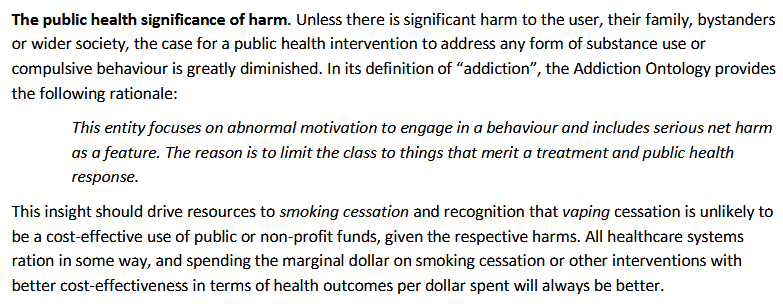
@NTR_Journal "Given constrained public health budgets and the current lack of evidence on the cost-effectiveness of vaping cessation interventions, policy makers will need to determine whether and how meeting this demand should be prioritized" The answer is obvious. Some can't accept it.
Phil tweet media
English
1
3
4
103
Shanaka Anslem Perera ⚡
Two chokepoints. Two monopolies. One deal. And a window that closes in six weeks. On April 15, Treasury Secretary Scott Bessent told Reuters: “They’re not going to be able to get their oil. They can get oil. Not Iranian oil.” He was speaking about China. He was describing the Hormuz blockade as a targeted weapon against Beijing’s 11 to 13 percent dependence on Iranian crude, not just Tehran’s revenue. China can deliver the mirror statement without saying a word. Beijing controls 60 to 70 percent of global rare earth mining, 85 to 91 percent of processing, and 90 to 94 percent of permanent magnet manufacturing. Heavy rare earths approach 100 percent. In October 2025, Announcement No. 61 imposed licensing on any product containing more than 0.1 percent Chinese rare earth content. You can get rare earths. Not Chinese rare earths. Both chokepoints converge on the same endpoint: the semiconductor fab. Oil flows through the Strait of Hormuz and becomes the LNG that generates 42 percent of Taiwan’s electricity, which powers TSMC. Oil becomes the naphtha that feeds ethylene crackers, which produces the polyethylene packaging for chip shipment. Oil becomes the sulfur byproduct of Gulf refining, which becomes the sulfuric acid that etches silicon wafers. Every barrel that does not transit Hormuz weakens the molecular chain that ends at a transistor gate. Rare earths flow through Chinese processing facilities and become the neodymium-iron-boron permanent magnets inside every EUV lithography stepper motor, every missile guidance system, every electric vehicle drivetrain, and every wind turbine generator. Every kilogram that does not clear Chinese customs weakens the magnetic chain that ends at the same transistor gate. Two supply chains. Two chokepoints. One fab. The mega deal forming between Washington and Beijing is not about oil or minerals in isolation. It is about the swap. Bessent’s blockade leverage says: we control whether your Iranian crude flows. China’s Announcement No. 61 responds: we control whether your magnets ship. The negotiation is a mutual hostage exchange conducted through chokepoints, and both hostages are inputs to the same product the entire world needs. The timeline asymmetry is what makes the next six weeks decisive. The US can enforce the oil chokepoint today. Zero breaches. Six turnarounds. China’s rare earth leverage bites slower, measured in processing delays that cascade over months. But US alternatives take three to seven years to scale. Project Vault, the $12 billion strategic stockpile, provides a 60-day buffer. MP Materials has a $400 million DoD equity stake. Australia committed $3.5 billion in April. None replace Chinese processing before 2028. The leverage geometry is asymmetric but time-bound. Right now, both sides hold maximum leverage simultaneously. The US has a working blockade that proved 100 percent effective in 48 hours. China has an unmatched processing monopoly no Western facility can replicate this decade. If the May summit produces a grand bargain, both sides trade chokepoint access for chokepoint access, and the dependency stabilizes into managed interdependence. If the summit fails, the US accelerates diversification that erodes China’s rare earth leverage over three to seven years, while China accelerates rail and shadow-fleet alternatives that erode the blockade’s oil leverage over months. The deal must happen while both weapons are loaded. After that, both sides begin disarming unilaterally, and the architecture that emerges will be weaker, more fragmented, and more dangerous than a negotiated swap. Two chokepoints. One fab. Six weeks. open.substack.com/pub/shanakaans…
Shanaka Anslem Perera ⚡ tweet media
English
33
193
479
75.9K
DraganDeeWhy
DraganDeeWhy@DraganDeeWhy·
@LivePippas Why are health experts asked questions that are clearly in the domain of criminologists?
English
0
0
3
301
DraganDeeWhy
DraganDeeWhy@DraganDeeWhy·
@MarewaGlover It is kind of like with video piracy, ones there was a product at the price level the market was willing to pay it stopped.
English
0
0
3
34
Prof Marewa Glover
Prof Marewa Glover@MarewaGlover·
It’s an election year in NZ so the usual political footballs are being hauled out of the basement. Everything has to sound like an alarming disaster. The black market in tobacco is always there. It wouldn’t be there if no one wanted to smoke. The real problem is the protection racket - protecting the cigarette trade and smoking by denying people access to the alternative products that are rapidly displacing cigarettes🚬. Keeping people smoking is partly by design (manipulated by those profiting from smoking 🚬) and the astounding incompetence of the maleable under-qualified people now in positions of influence. The fastest, less costly solution is to repeal the stupid dumb ban on tobacco-free oral nicotine pouches! Let people have access to another highly effective way to stop smoking. Don’t apply tobacco excise tax to it. Plus, remove the 50% tax on heated tobacco products, if they’re still on the market. Smart and science-based. Other than that the only taskforce needed is one that looks at how to stop the anti-vaping lies propagated to scare people off vaping and back to smoking. Stop funding any health NGO, Trust, or company that is disseminating untruthful, scientifically debunked anti-nicotine slop.
William McGimpsey🇳🇿@TheZeitgeistNZ

The black market in tobacco products has grown to over 25% of total consumption in NZ. Now there are calls for a government taskforce to address it. But the real issue here is regulatory failure. Tobacco is overtaxed beyond the pigouvian level and so people are finding ways around it. Just reduce the excise tax rather than pouring a whole heap of government resources into a taskforce. Read more - nzherald.co.nz/nz/politics/ca…

English
4
20
59
2K
Dr. Eli David
Dr. Eli David@DrEliDavid·
After two weeks of naval blockade, Iran's economy will fall off a cliff. The regime knows it, and they know that Trump knows it. Between a rock and a hard place, they have two options: 1. Do nothing, the economy collapses, the regime is toppled 2. Accept Trump's surrender terms
English
385
1.2K
6.9K
117.4K
DraganDeeWhy
DraganDeeWhy@DraganDeeWhy·
@jkelovuori @_davidlimbrick @LivePippas Went through more or less all of them, the government will not be any wiser from this one either. I honestly do not expect a different outcome, then from the previous ones.
English
0
0
1
15
Pippa Starr - Let's Improve Vaping Education! 🇦🇺
When Arthur Laffer, the expert economist who literally invented the “Laffer Curve” feels compelled to explain to the Australian Government Inquiry Into Illicit Tobacco Crisis: “The evolving pattern of decreasing revenue and an increasing illicit market observed in Australia’s tobacco sector is impossible to reconcile with the claim that successive increases are still operating in a ‘win–win’ range.”, , hence offering a basic lesson in economics, then its bloody clear that there in no more excuses for the continued absurdities of current failed policy! @ALIVEadvocacy @Algore09algor @SincDavidson @_davidlimbrick @mattjcan @AngusTaylorMP @Anne_Ruston @BenFordhamLive
English
3
21
66
3.4K
DraganDeeWhy
DraganDeeWhy@DraganDeeWhy·
@_davidlimbrick @LivePippas The submissions are more or less the same like any of the previous ones. It just depends what side the government will choose. It is between well established "status quo entrenched institutions" or "reason and pragmatism"
English
0
0
0
21
DraganDeeWhy
DraganDeeWhy@DraganDeeWhy·
@LivePippas The sad thing is that this was obvious to everyone with an IQ obove the room temperature, years ago. But our "experts and governments " knew better.
English
0
0
1
24
DraganDeeWhy
DraganDeeWhy@DraganDeeWhy·
@BenFordhamLive The same Border Force that claimed and testified that they shut down vapes coming into Australia by 90% and made this stupid law possible. Too late now.
English
0
0
0
15
Ben Fordham Live
Ben Fordham Live@BenFordhamLive·
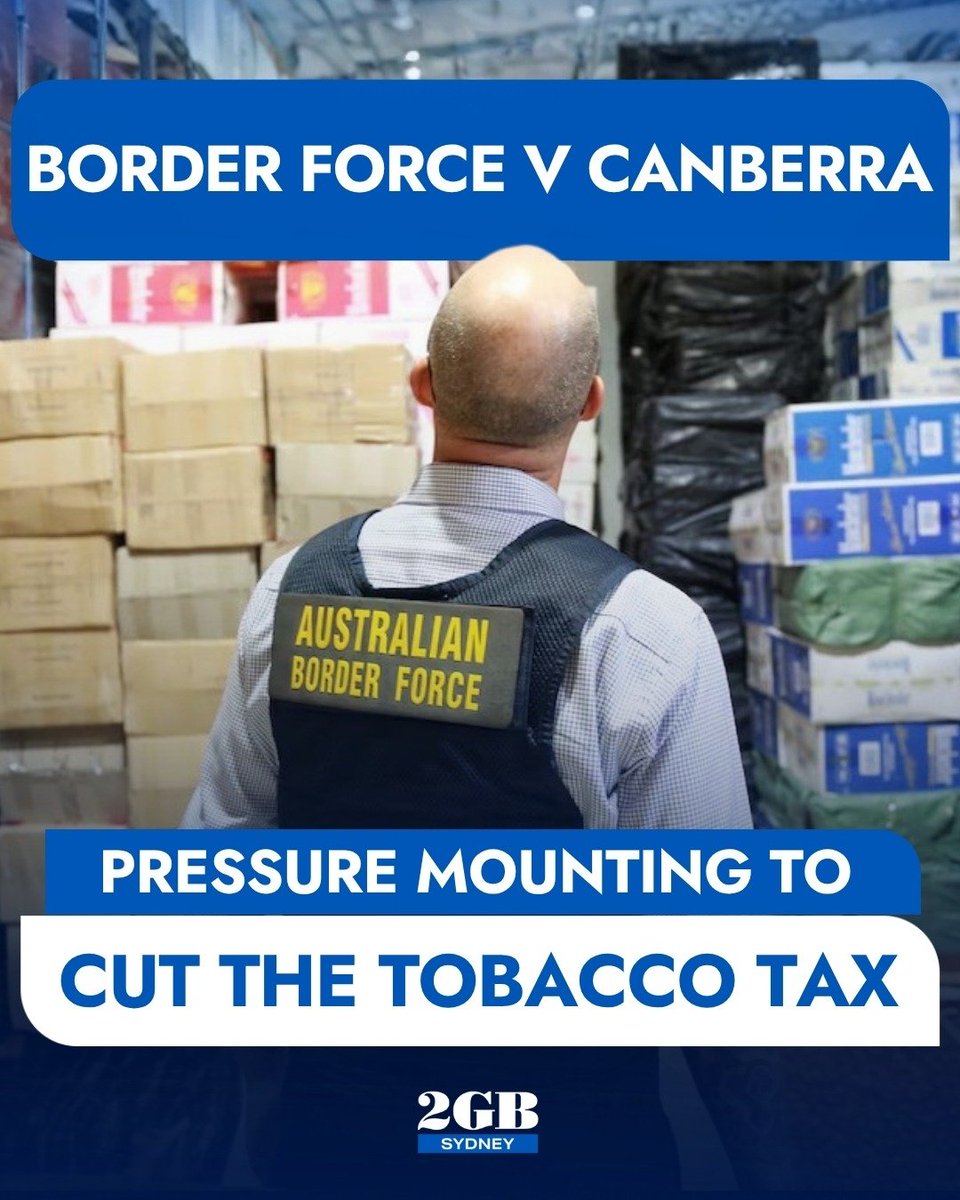
The Australian Border Force has some advice for Canberra. They’re calling on the Federal Government to slash the tobacco tax to help control the black market. Listen to the details HERE. 🎧omny.fm/shows/ben-ford…🎧
Ben Fordham Live tweet media
English
31
12
62
2.2K
DraganDeeWhy
DraganDeeWhy@DraganDeeWhy·
@Glenn_Diesen It is just a matter of time till other countries start to use the same tactics. "I do not like the way you negotiate, we will kill your negotiating team!"
English
0
0
0
26
Glenn Diesen
Glenn Diesen@Glenn_Diesen·
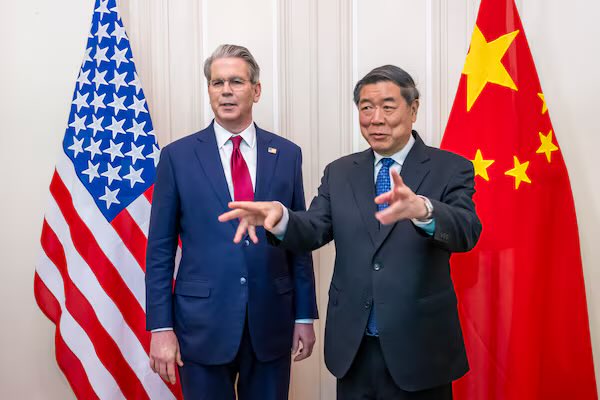
The US has very quickly normalised the murder of foreign leaders.
Glenn Diesen tweet media
English
867
6.9K
17.6K
658.9K