
Dsleuth
16.5K posts

Dsleuth
@Dsleuth_
I am a sinner saved by Gods grace. God exposes all hidden & never looses. If I make a claim as fact, already have the evidence. 😏









I know most of you didn’t go to law school, and you shouldn’t have to. But there’s something about how your savings and retirement accounts are held that I think you deserve to understand in plain English. My name is David Rogers Webb. I ran a hedge fund for years. What I found in my retirement is that the legal rules for owning stocks and bonds changed quietly over the last 30 years. And those changes matter if things get bad in the financial system. Let me explain it like I would to my own parents: 1. The stocks in your account may not be in your name When you buy Apple or Pfizer through your broker or 401k, the paperwork usually says the shares are held by “Cede & Co.” That’s the nominee for the Depository Trust Company. You’re called the “beneficial owner.” That means you have a promise from your broker that you own the shares. But legally, on the books, the shares belong to the system. It’s like having a claim check for a coat at a coat check. You don’t hold the coat. You hold the ticket. 2. Your shares are mixed with everyone else’s The law now treats all these shares as one big pool. Your 200 shares of Apple sit in the same pool as a million other people’s shares. That pool can be pledged as collateral for loans and other financial deals. You didn’t sign off on that. But the rules allow it. 3. If there’s a crisis, other creditors get paid first If a big bank or clearinghouse fails, the law says the people who made secured loans against that pool get paid before you do. Your claim comes after theirs. That means your retirement savings could be used to stabilize the system, even if you had nothing to do with the problem. 4. This is legal, and it happened slowly Nothing illegal is happening here. These rules were changed through updates to commercial law, starting in the 1990s. The idea was to make trading faster and cheaper. The unintended effect is that direct ownership was replaced by a chain of claims. Why I call it “The Taking” I’m not saying someone is stealing from your account today. I’m saying the system is built so that in a severe crisis, the collateral in that pool can be redirected under existing law. You would have no legal recourse, because you never had direct ownership to begin with. What can you do? The first step is awareness. Ask your broker or plan administrator how your shares are held. If you want, you can request “direct registration.” That means the shares are registered in your name on the company’s books, not in the pooled system. It’s slower, but it’s yours. You can also consider holding some assets outside the system entirely. I’m not telling you what to buy or sell. I’m saying you should know what you actually own before you need to use it. The bottom line: Most people think they own the stocks in their account. In reality, they own a claim against a broker, and that claim sits inside a system designed to protect itself first. Once you understand that, you can decide if you’re comfortable with it. If you’d like, I can give you a simple checklist for how to call your broker and find out exactly how your shares are held.




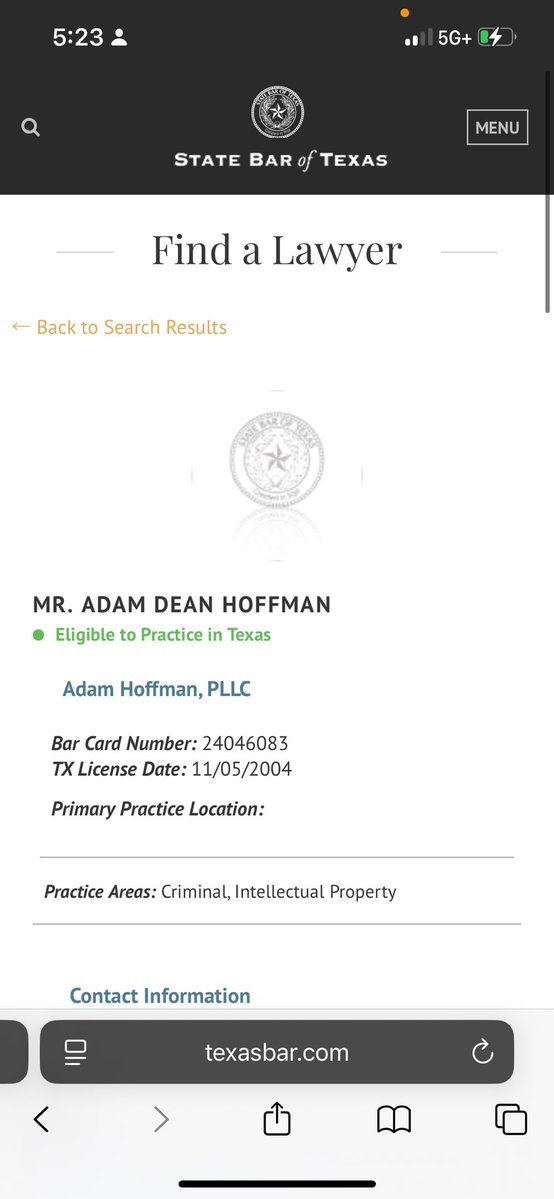
This is Adam Hoffman, a 49-year-old Waco, TX attorney. He faced life without parole for repeatedly raping a young boy. Texas AG Ken Paxton offered him 1 day in jail and no need to register as a sex offender. A judge increased his sentence to a whopping 60 days. He gets out in June. Not an immigrant. Not a trans person. Not a Black or brown person. Every MAGA accusation is a confession. Full story: letsaddresstexas.substack.com/p/ken-paxtons-…
