Gary Turner
957 posts

Gary Turner
@DtaGuy
Solid state physicist (retired). Born at 309 ppm CO2. Same handle on the 🦋, where I plan to post in future as well as here. Follow ≠ approval.


I am a farmer and the outright owner of a $400,000 John Deere combine, and this morning a sensor decided I am not allowed to drive it. The sensor was working perfectly. That was the problem. An emissions reading drifted, the machine did what the manual calls a derate and everyone out here calls limp mode, and now I have a full tank, a full engine, and 3 miles an hour. It is October. The forecast is rain Thursday. The corn does not care about the settlement. I did everything you are supposed to do. I bought it outright. I did not lease. I have the title, the manual, the torque specs, and 40 years of knowing which bolt is which. I can rebuild the engine on a tailgate. What I cannot do is tell the engine it is allowed to run. Because the thing that stopped it is not a part. It is a permission. The reset lives in software, the software lives with the dealer, and the dealer is 90 minutes away and booked through Friday. So I called. I always call. That is the instruction, and I follow the instruction. They said someone could come Monday. I said the crop will be down by Monday. They said they understood. I have learned that when a company says it understands you, it means it has written down that you were told. Yesterday the FTC announced I won. Right to repair. 10 years of it. I read the whole thing at the kitchen table with the combine sitting dead in the field I can see from the window. Here is what I learned about winning. The settlement says I get the same software the dealer gets, eventually, on a schedule they report every 60 days. It does not say the software arrives before the rain. It does not say the machine will listen to me tomorrow. It says that someday, carefully, I will be allowed to ask it the same way the dealer asks it. I own the steel. I always did. I just found out I have been renting the word go, and the lease has 10 years left, and the corn is still in the field.


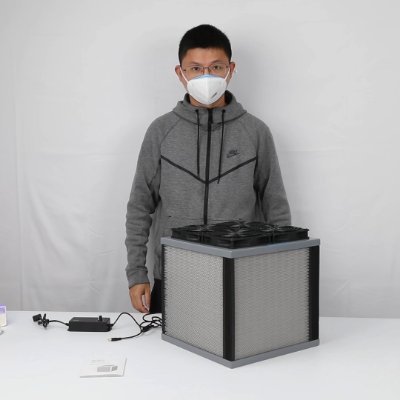
Today we're launching Intercept: a $500M philanthropic initiative to make respiratory infections, like the common cold and flu, a thing of the past. We treat respiratory infections as a minor nuisance, but that’s really not the case. Most of us will spend 5% of our lives (!) sick from these viruses, they kill 1M people a year, cost $600B annually in productivity, and periodically threaten civilization through pandemics. So, if they’re such a big problem, why haven’t we dealt with them yet? Last year we convened ~40 leading scientists, pharma R&D leaders, biotech investors, and regulatory experts to better understand that. We heard two main reasons: (1) First, it’s just technically very challenging: respiratory viruses represent hundreds of distinct, mutating strains across several families. Fortunately, recent breakthroughs make this newly possible. (2) Second is a lack of funding: broad-spectrum solutions have historically been underfunded, in part because they’re not a great fit for most philanthropic or commercial funding (and while COVID generated a burst of activity around preventing and understanding respiratory infections through an influx of new funding, that hasn't been sustained). We think that with enough focus and funding, this might be solvable. Intercept is a $500 million philanthropic initiative that will take advantage of new tools to catalyze the development and deployment of two types of products: broad-spectrum preventatives and air cleaning technologies. This problem is undoubtedly difficult. But it’s more tractable now than it’s ever been. We think we should give it our best shot. We’re enormously grateful to our anchor funders: @stripe, @AnthropicAI, @TheFluLab, @FoundationOAI and individuals from Jane Street. And, I’m very excited to be building this with @incredutility and the rest of the team.




🆕🚨 A @CDCgov analysis of the #Bundibugyo #Ebola outbreak warns that, under a worst-case scenario with poor isolation measures and only 20% of cases isolated, the outbreak in DRC and Uganda could exceed 20,000 cases and 2,000 deaths. But these projections are not destiny. The same analysis shows that rapid case detection, isolation, contact tracing, IPC, and community engagement can dramatically change the trajectory of the outbreak. The urgent priority is getting resources, personnel, and support to the epicenter of the outbreak. The fastest way to protect global health is to stop transmission at its source. #EbolaOutbreak cdc.gov/mmwr/volumes/7…