DuckDB
1.1K posts

DuckDB
@duckdb
DuckDB is an analytical in-process SQL database management system. "DuckDB" and the DuckDB logo are registered trademarks of the DuckDB Foundation.
Amsterdam, The Netherlands Katılım Mayıs 2019
57 Takip Edilen24.3K Takipçiler

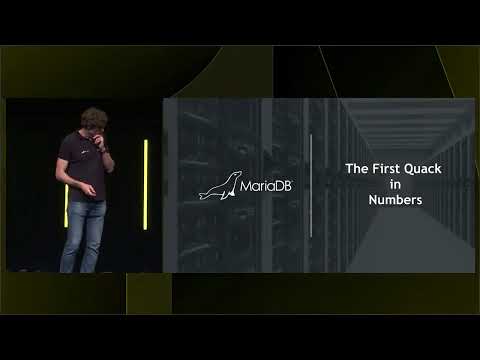
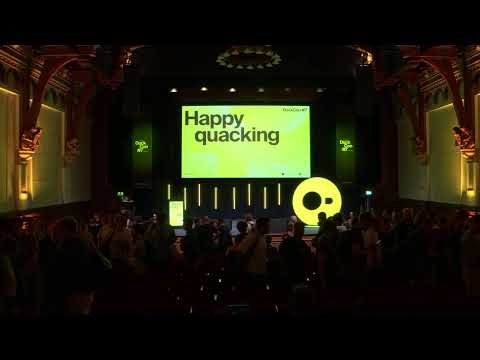
Hannes Mühleisen just revealed the Next Big Thing for DuckDB at AI Council 2026: Quack, a protocol that turns DuckDB into a client-server database.
True to DuckDB's philosophy, Quack is simple and fast. You can set it up in seconds and it delivers high-performance remote access, turning DuckDB into a full-fledged general-purpose database system.
We are very excited to see the possibilities Quack will unlock, from serving multiple concurrent writers to creative architectures with several DuckDB processes talking to each other. The ingenuity of our community never ceases to amaze us and we're certain that we'll see many use cases we did not even think of.
For now – follow the link in the thread, give it a spin and let us know what you think. Happy quacking!

English

The Delta and Unity Catalog extensions in the latest DuckDB release come with a fresh set of features and have shed their experimental labels. In today's blog post, Ben Fleis walks you through the key improvements:
✍️ You can now write Delta tables with DuckDB. Multiple inserts within a transaction produce a single atomic version in the Delta table.
🤝 The Unity Catalog unlocks multi-writer access. DuckDB and other clients such as Spark can now perform writes alongside each other with the catalog handling concurrency control.
⏪ You can use the coolest feature of data lake formats: time travel. This lets you query any Delta table at a specific historical version. Thanks to incremental snapshot loading, this is fast even across large Delta logs.
Read the full blog post for more – link in the thread 🧵

English

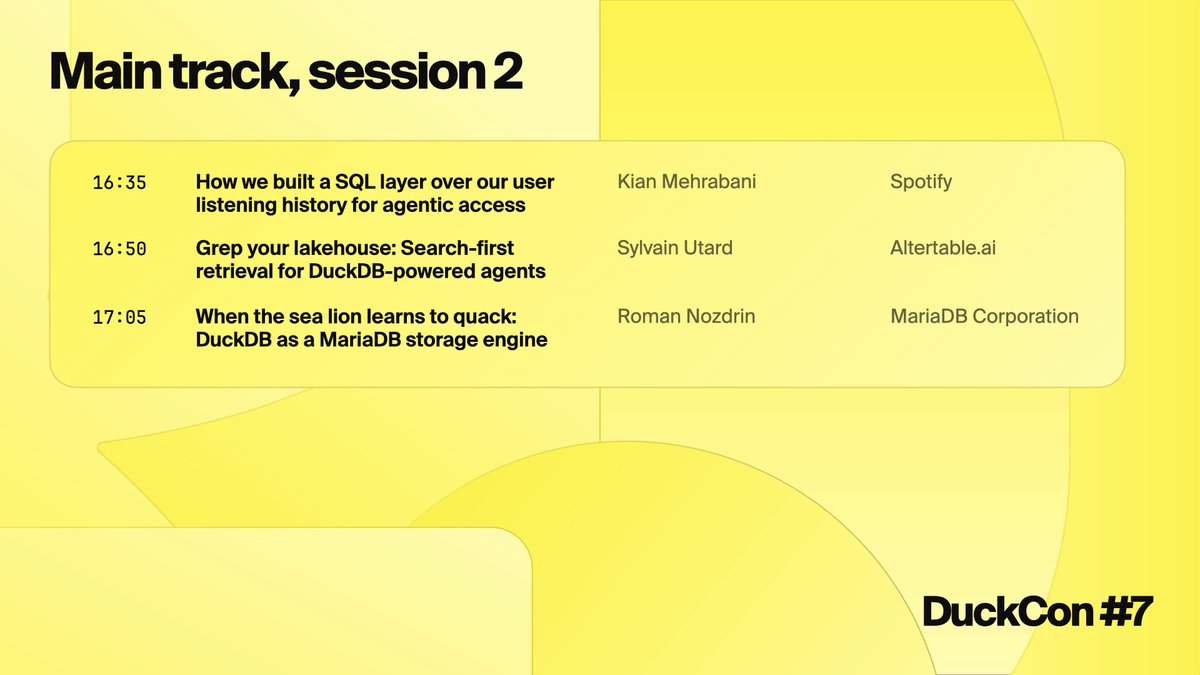
We're excited to announce the program of DuckCon #7 Amsterdam!
The event will start with the “State of the Duck” talk, covering DuckLake v1.0 and the super-secret next big thing for DuckDB – something we cannot tell you more about yet as it will be released next week!
We'll continue with six regular talks covering use cases, technologies built with DuckDB and DuckLake, and a talk on how Spotify uses DuckDB to analyze their listening history.
The program also features six lightning talks, including one on how the Toyota Gazoo Racing World Rally Team built an application with DuckDB.
Finally, we'll have drinks and snacks so you'll have ample time to socialize with the flock!
For the full program and registration, follow the link in the thread.

English

Today is Star Wars day! We are taking the opportunity to tell you about our journey, not across galaxies, but through the process of creating DuckLake dataframe clients with the use of a clanker 🤖.
Read more at ducklake.select/2026/05/04/duc…

English

A great short post on DuckDB: peterdohertys.website/blog-posts/dab…
We certainly didn't expect “interactive installations and art projects” among the list of use cases, but we agree with the author that DuckDB could definitely work in that context too 🎨
English

@_miguelangel You can use the AUTOMATIC_MIGRATION flag: #connecting-to-an-older-ducklake" target="_blank" rel="nofollow noopener">ducklake.select/docs/stable/du…
English

We are happy to release DuckLake v1.0, a production-ready lakehouse format specification. Its reference implementation, the ducklake DuckDB extension, is available as of today in DuckDB v1.5.2.
Since releasing the DuckLake manifesto in May 2025, we have seen massive adoption, with DuckLake deployed in production at multiple organizations, third-party clients supporting DuckLake, and even an upcoming O'Reilly book. DuckLake v1.0 ships many new features (inlining, partitioning, bucketing, type system improvements) and guarantees backwards-compatibility in the specification.

English

The Register published a report on DuckLake v1.0:
> In a blog post accompanying the 1.0 launch, Pedro Holanda, DuckDB Labs principal engineer, said the company's benchmark shows 926× faster queries and 105× faster ingestion when compared to Iceberg, the open table format.
> "When I wrote the blog post about saying we had the 1,000x difference, I felt like, 'Oh, some people are gonna get angry,' but no one got angry. They're like, 'This is a real problem.' I even had someone say they were cheating with the architecture. That's the whole point: cheating with a better design," he told The Register.
As bonus content, here's a snippet from our recent podcast where Mark Raasveldt and Pedro Holanda explain how data inlining works.
The Register@TheRegister
DuckDB uses RDBMS to attack classic 'small changes' problem in lakehouses go.theregister.com/feed/www.there…
English

We heard that a specification looks more serious if it's served as a PDF.
Well, you can read the DuckLake documentation as a PDF now (blobs.duckdb.org/docs/ducklake-…)! This document covers both the specification and the DuckDB extension's usage.

English


Yesterday, we released DuckLake v1.0 and also published a podcast where Pedro Holanda and Mark Raasveldt talk about the DuckLake – going into quite some technical details on compaction and the challenge of long-running data lakes. Listen to the full conversation on YouTube or Spotify! Links in the 🧵
English

And don't forget about the DuckDB v1.5.2 announcement: duckdb.org/2026/04/13/ann…
English

Read the announcement blog post for more details: ducklake.select/2026/04/13/duc…
English

DiDi, Design and Implementation of DuckDB Internals, treads on a path through selected internals of DuckDB. It cover topics such as memory management, indexing and optimization.
duckdb.org/library/design…
English

TaDa, Tabular Database Systems, is a course on the fundamentals of relational database management systems. It teaches file formats (CSV, Parquet), columnar storage, memory management, and of course, SQL.
duckdb.org/library/tabula…
English