

SeNNa
13.9K posts
SeNNa
@Duke_ThoTH
Exiled DukeofMK in Silson, Ex-banker turned QS & Cost Engineer. Curious mind with a keen interest in geopolitics in a multipolar world.
United Kingdom Katılım Haziran 2010
2.3K Takip Edilen2.7K Takipçiler
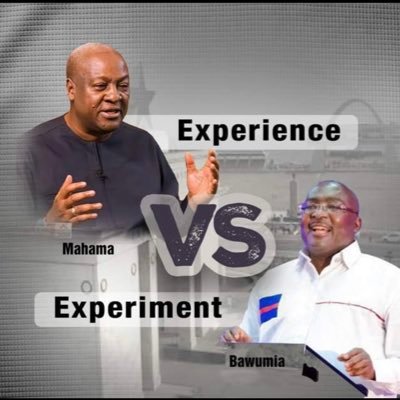
Former president Jerry John Rawlings was given ONLY 1 car for his retirement.*
This is according to a letter* written by former chief of staff, Kojo Mpiani and shared by Abdul Malik Kweku Baako,
The more they try to explain, the more they expose ex president Kuffuor. Silent 🤫 is Golden Malik Kweku Baako.

English
SeNNa retweetledi

JUST IN:
🇮🇱 Huge explosion in Israel
Hebrew media report a very large explosion in Beit Shemesh, west of Jerusalem.
These media, stating that the army is preventing emergency vehicles from entering the scene, clarified that the explosion likely occurred in a sensitive facility.
English
SeNNa retweetledi

Americans are told that they must absorb rocketing costs of war of choice on Iran.
Put aside gas price hike and stock market bubble. Real pain begins when U.S. debt and mortgage rates start to jump. Auto loan delinquencies are already at 30+-year high.
This was all avoidable.

English
SeNNa retweetledi

🚨Russian sources claim that a Russian Aerospace Forces (VKS) Su-35S shot down a Ukrainian F-16AM Fighting Falcon using an R-37/77 air-to-air missile.
The missile launch was recorded by Ukrainian monitoring channels; however, the outcome of the engagement remains unconfirmed.

English
SeNNa retweetledi
BREAKING:
🇺🇸🇮🇷 Iranian hackers have gained access to gas station monitors and systems across various U.S. states – CNN
Iran breached the systems that monitor the amount of fuel in storage tanks, allowing them to tinker with display readings on the tanks. It would also allow them, in theory, to make a gas leak go undetected.


English

SeNNa retweetledi

"لا شيء سوى الحرب"
ترجمة أحدث فيديو موسيقي لدينا إلى اللغة العربية.
إهداء إلى أصدقائنا الناطقين بالعربية.❤️🌍
العربية
SeNNa retweetledi
«و من تکون دوننا...»
بإكرام صبا الخيامی التي أصبحت صوت الحقيقة
العربية
@cdrafrica She will be released before the weekend and it’ll be the last we hear of this story.
English

🇬🇭 BREAKING :
BREAKING: Queen Amadia, wife of Goldridge CEO Dr. Sledge, has reportedly been arrested by EOCO at Accra International Airport while allegedly attempting to leave the country amid ongoing investigations tied to the Minerals Income Investment Fund.

English
SeNNa retweetledi

BREAKING: US court suspends sanctions against UN Special Rapporteur Francesca Albanese
This is why they want to silence her:
English


@tv3_ghana They should go and demonstrate at the US Embassy for his release. Mmoaaa
English

SeNNa retweetledi

Part II added. The impact on emerging economies
Patricia Marins@pati_marins64
How a second Phase of the War in the Gulf Would Affect Emerging Economies Imagine that oil prices have already risen 45% to 50%. Fertilizer prices have increased by more than 40%, with the Gulf accounting for roughly one-third of global seaborne fertilizer trade. In addition, the region handles more than 20% of the global LNG market and a significant share (approximately 23–30%) of the world’s chemicals and plastics trade. The first phase of the conflict against Iran caused major disruptions but spared much of the critical infrastructure, both in Iran and in the other Gulf countries. If the conflict resumes with full intensity, the scenario would be severely negative on a global scale, with particularly harsh impacts on emerging economies. From an environmental standpoint, many of these economies already show a clear trend toward greater coal use to offset rising gas and oil prices. In a scenario of wider destruction of the Middle East’s industrial and energy facilities, whose reconstruction would take years, this trend could intensify significantly. Another aspect that would deteriorate dramatically is poverty and hunger. In April 2026, the IMF, World Bank, and IEA issued a joint statement describing the current shock as substantial, global, and highly asymmetric, with a far heavier burden on low-income importers, rising food inflation, job losses, and downgraded growth forecasts for emerging economies. The manufacturing sector, including processing and supply chains, is already feeling the disruption in petrochemical and naphtha supplies, forcing partial shutdowns across Asia. Small and medium-sized enterprises, which account for 60–70% of industrial employment, are in severe difficulty due to raw-material shortages, especially in Vietnam and Thailand. Even with some reshoring and friendshoring toward Latin America and the fragmentation of global supply chains into regional blocs, the world would still face strong inflationary pressure on these products. In adverse scenarios, projections indicate significant reductions in downstream Asian production, potentially in the 20-50% range in the first six months. Personally, I believe these scenarios still underestimate the full risks of a total war in the Middle East. The metals industry would also be severely affected, with a double impact: expensive energy plus shortages of petroleum coke and petrochemicals. This could drive steel and aluminum costs up by as much as 70%, with global production falling 8-15% (adverse-scenario estimate). Full article: open.substack.com/pub/global21/p…
English
@BongoIdeasHQ I wish the FBI can arrest more MPs and rid Ghanaian society of these criminals. The @FBI is doing what Ghana police, EOCO and Special Prosecutors offices cannot do. Well done @FBI 👏
English

FBI reportedly arrests Ghanaian MP in alleged US$32m financial crime investigation in the Netherlands!
The Member of Parliament for Asante Akim North, Ohene Kwame Frimpong, has reportedly been detained by Dutch authorities as part of an investigation connected to the U.S. Federal Bureau of Investigation (FBI).
Sources close to the matter say the MP is facing allegations of financial crimes, including money laundering and suspected romance scams, involving an estimated $32 million.
And he was arrested in the Netherlands.

English
@Serwaa_Amihere Please, go on and complete them yourself. Thank you for your attention to this matter.
English

If government is prioritising roads by budgeting to expend over 60bn within 4 years, why can’t we do same with Agenda 111 hospitals?
If we need 27bn to complete ALL Agenda 111 projects, why can’t the government do needs assessment to complete at least 80 of these hospitals within 4 years?
English
SeNNa retweetledi
Nothing but WAR
Find the real history here;
In our Lego-style videos.
English
@cdrafrica The @FBI is doing what Ghana police, EOCO and Special Prosecutors offices cannot do. Well done @FBI 👏
English
🇬🇭 UPDATE :
Hon.Kwame Ohene Frimpong has reportedly been arrested in the Netherlands by authorities in connection with a long-running international investigation allegedly linked to the FBI.
The case involves suspected financial crimes, including money laundering and romance scams, said to total about $32 million.


English
SeNNa retweetledi
LRF has a surprise for Tarriff man Every day.
Paddystinian@Paddystinian
Another New Lego-Style Soundtrack: Hail To The Tarriff Man! 🤣🎶🔥🔥
English
SeNNa retweetledi
Iran: China walks on eggshells, but will not yield to Trump
President Trump arrives in China tomorrow and is expected to lay a massive deck of cards on the table for Xi Jinping, provided Beijing cooperates on Iran. But… not everything is a bed of roses.
Trump is trying to convince Xi that Iran is now a toxic asset, threatening China’s ties with Arab countries and Western trade. But after what happened in Venezuela, Beijing is wary of cooperating with the U.S. regarding Iran.
They fear Washington wants to undermine their energy security. Even with Taiwan as a potential bargaining chip, I doubt the Chinese will sell out the Iranians.
Trump’s decision to impose sanctions on China right before his visit did not go down well. Unlike in the past, he has begun severely punishing Chinese banks and independent refineries that process Iranian oil. Instead of being intimidated, Beijing hit back hard. For the first time, China formally invoked its 2021 anti-foreign-sanctions legislation.
The Ministry of Commerce (MOFCOM) issued an order prohibiting Chinese companies and citizens from recognizing, enforcing, or complying with U.S. sanctions against the five refineries named by Trump, including the giant Hengli Petrochemical.
The Chinese went even further than just tariff threats: they preemptively blocked Meta’s $2 billion acquisition of the AI startup Manus, signaling that American investments can be barred in retaliation.
Chinese regulators also instructed state-owned banks to reduce their purchases of U.S. Treasury bonds.
Trump is arriving in China with the posture of someone who imposed sanctions, issued threats, and now has something to negotiate. But all his shots have backfired.
His position is delicate, because he will make demands that are unlikely to be met.
Trump is expected to demand that China reduce or halt its purchases of Iranian oil.
Today, Beijing is the main buyer, processing nearly 90% of Iran’s oil exports through independent refineries that operate outside the Western financial system. Washington’s goal is to financially isolate the Iranian regime and force it to accept a new peace deal, which, in practice, would mean Iran’s virtual surrender.
Recently, Trump claimed that Xi Jinping had agreed not to supply weapons to Iran. At the summit, he will seek formal guarantees against the export of dual-use goods and military components.
What I sincerely believe is happening here has more to do with China’s relations with the Gulf countries. Far from canceling its ties with Iran, Beijing will certainly try to set up a dialogue group involving Qatar and Saudi Arabia.
Despite its good relations with the UAE, the links to Israel and the West, plus its disagreements with the Saudis and Qataris, keep it politically distant from the Chinese geopolitical interests, although this does not affect commercial ties.
Full article:
open.substack.com/pub/global21/p…

English
SeNNa retweetledi
President Trump is frustrated because the Israelis sold him the pipe dream that arming the Kurds & other Iranian dissidents would quickly topple the Iranian regime, leading to a quick victory. This failed to happen because it was a plan based on wishful thinking not the realities on the ground.
Instead of being mad at the Kurds, who are our critical counter terrorism partners, he should focus his ire on the Israeli government officials who lied to him to get us entrenched in this war and whoever in his inner circle that allowed the Israelis to manipulate U.S. policy to support Israel's primary goal.
Israel's primary goal was to get us into the war, not to make sure the pipe dream they were selling would actually work.
Israel has always understood that they can't topple the Iranian regime without us doing the majority of the fighting, they needed to get us into the war.
The Israelis kept their goal in mind when feeding us "intel" about Iran. Unfortunately, President Trump's inner circle failed to keep Israel's main goal in mind when receiving Israeli "intel" and providing context to the President.
Rapid Response 47@RapidResponse47
.@POTUS: The Iranian people "want to go out on the streets. They have no weapons. They have no guns. We thought the Kurds were going to give [them] weapons, but the Kurds disappointed us. The Kurds take, take, take... I’m very disappointed in the Kurds."
English