Edoardo Crivellaro

23.9K posts

Edoardo Crivellaro banner
Edoardo Crivellaro

Edoardo Crivellaro

@ECrivellaro

Business & Ops https://t.co/3P7Ygw7hDR. Wide thinker addicted to first principles. Deliberate deoptimizer. Moderate optimist.

Katılım Haziran 2012
1.2K Takip Edilen992 Takipçiler
Sabitlenmiş Tweet
Edoardo Crivellaro
Edoardo Crivellaro@ECrivellaro·
Replying fast (<10min) should be a KPI to measure and a skill to show in CVs
English
0
0
0
555
Edoardo Crivellaro retweetledi
Rohan Paul
Rohan Paul@rohanpaul_ai·
Terence Tao: Months of uninterrupted time at Institute for Advanced Study made him less inspired, not more. "You actually do need a level of distraction in your life. It adds enough randomness and temperature - that optimized systems remove."
English
6
38
231
14.7K
Edoardo Crivellaro retweetledi
Andrew Curran
Andrew Curran@AndrewCurran_·
Terence Tao responding to a question on what advice he would give someone considering a career in math in 2026: 'Yeah, so we live in a time of change. It is, as I said, we live in a particularly unpredictable era. And I think things that we've taken for granted for centuries may not hold anymore. So, yeah, the way we... do everything, not just mathematics, will change. In many ways, I would prefer the much more boring, quiet era where things are much the same as they were 10 years ago, 20 years ago. But I think one just has to embrace that there's going to be a lot of change and that, you know, the things that you study, some of them may become obsolete or revolutionized, but some things will be retained. There'll be a lot of opportunities for things that you wouldn't be able to do before. So, I mean, in math, you previously had to basically go through years and years of education to be a math PhD before you could contribute to the frontier of math research. But now it's quite possible at the high school level or whatever, that you could get involved in a math project and actually make a real contribution because of all these AI tools and lean and everything else. So there'll be a lot of non-traditional opportunities to learn. So you need a very adaptable mindset. There'll be one for pursuing things just for curiosity, for playing around. And I mean, you still need to get your credentials. I mean, I think for a while it would still be important to sort of still go through traditional education and learn math and science and so forth the old-fashioned way for a while. Yeah, but you should also be open to very, very different ways of doing science, some of which don't exist yet. Yeah, so it's a scary time, but also very exciting.'
Dwarkesh Patel@dwarkesh_sp

The Terence Tao episode. We begin with the absolutely ingenious and surprising way in which Kepler discovered the laws of planetary motion. People sometimes say that AI will make especially fast progress at scientific discovery because of tight verification loops. But the story of how we discovered the shape of our solar system shows how the verification loop for correct ideas can be decades (or even millennia) long. During this time, what we know today as the better theory can often actually make worse predictions (Copernicus's model of circular orbits around the sun was actually less accurate than Ptolemy's geocentric model). And the reasons it survives this epistemic hell is some mixture of judgment and heuristics that we don’t even understand well enough to actually articulate, much less codify into an RL loop. Hope you enjoy! 0:00:00 – Kepler was a high temperature LLM 0:11:44 – How would we know if there’s a new unifying concept within heaps of AI slop? 0:26:10 – The deductive overhang 0:30:31 – Selection bias in reported AI discoveries 0:46:43 – AI makes papers richer and broader, but not deeper 0:53:00 – If AI solves a problem, can humans get understanding out of it? 0:59:20 – We need a semi-formal language for the way that scientists actually talk to each other 1:09:48 – How Terry uses his time 1:17:05 – Human-AI hybrids will dominate math for a lot longer Look up Dwarkesh Podcast on YouTube, Apple Podcasts, or Spotify.

English
28
223
1.8K
402.1K
Edoardo Crivellaro retweetledi
Dwarkesh Patel
Dwarkesh Patel@dwarkesh_sp·
The Origin of Species was published in 1859. Principia Mathematica was published in 1687, two centuries earlier. Conceptually, it seems like natural selection is much simpler than the theory of gravity. So why did it take two centuries longer to discover? A contemporary of Darwin's, Thomas Huxley, read the Origin of Species and said, “How extremely stupid not to have thought of that!” Nobody ever said the same for not beating Newton to the Principia. I wonder if the reason this happened is that Darwin’s cannot be decisively tested. The evidence is circumstantial, retrospective, and cumulative. There's no equivalent of Newton running the numbers on the moon's orbital period and radius, and confirming that it corresponds to his theory. In fact, nearly two thousand years before Darwin, the Roman poet Lucretius argued in De Rerum Natura that organisms suited to their environment survive while ill-adapted ones perish. But nobody built a science on it. Without a tight verification loop, the idea just floated by. Terence Tao argues that Darwin succeeded where Lucretius failed because he had the ability to convince people that the gaps in his theory (specifically, what is the mechanism of heredity) would be filled. This was less about ‘hard’ scientific insight, and more a matter of having good research taste and being persuasive. But it was crucial for progress in biology.
English
49
98
902
128.8K
Edoardo Crivellaro retweetledi
Dwarkesh Patel
Dwarkesh Patel@dwarkesh_sp·
Terence Tao spent a year at the Institute for Advanced Study - no teaching, no random events of committees, just unlimited time to think. But after a few months, he ran out of ideas. Terence thinks that mathematicians and scientists need a certain level of randomness and inefficiency to come up with new ideas.
English
59
331
3.3K
300.6K
Edoardo Crivellaro
Edoardo Crivellaro@ECrivellaro·
@mymind please set up an integration with Claude, it would be extremely helpful to have your knowledge stored in mymind available for suggestions and conversations through Claude
English
0
0
0
37
Edoardo Crivellaro retweetledi
Z Fellows
Z Fellows@zfellows·
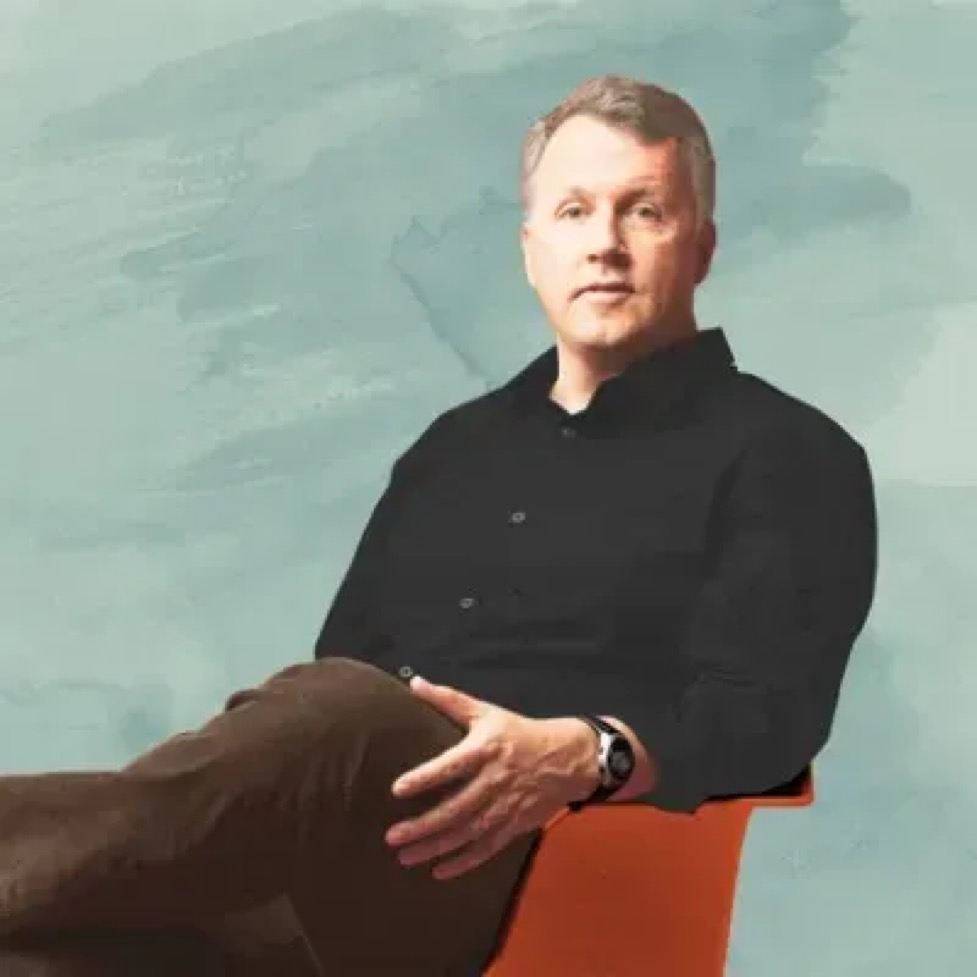
"If you're in a job that feels safe, you are not going to get exceptional, because if there is no danger, there is almost certainly no leverage.” - Paul Graham
Z Fellows tweet media
English
8
51
621
15.5K
Edoardo Crivellaro retweetledi
Sergey Radchenko
Sergey Radchenko@DrRadchenko·
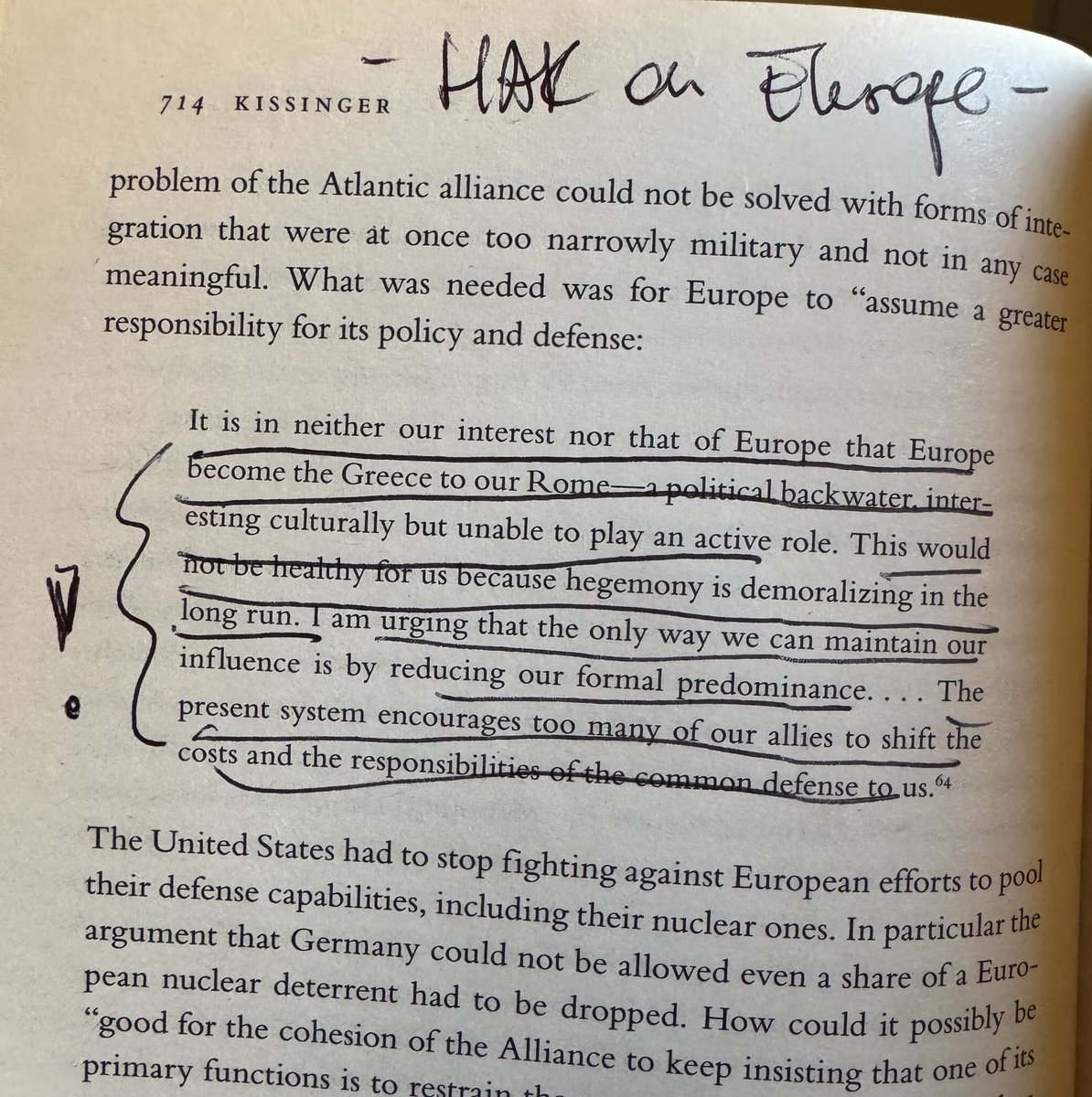
Kissinger on Europe in 1966. Remarkable foresight here. This is from ⁦@nfergus⁩’s amazing biography of Kissinger, Vol. 1.
Sergey Radchenko tweet media
English
74
557
2.8K
168.8K
Edoardo Crivellaro retweetledi
NVIDIA GeForce
NVIDIA GeForce@NVIDIAGeForce·
Announcing NVIDIA DLSS 5, an AI-powered breakthrough in visual fidelity for games, coming this fall. DLSS 5 infuses pixels with photorealistic lighting and materials, bridging the gap between rendering and reality. Learn More → nvidia.com/en-us/geforce/…
English
25.1K
7.1K
69K
91.6M
Edoardo Crivellaro retweetledi
Dustin
Dustin@r0ck3t23·
Uber founder Travis Kalanick just inverted the entire automation panic. Everyone assumes AI eliminates human value. The physics say the opposite. Kalanick: “Let’s say the entire world, everything in our world, was automated except for plumbers. You had machines making buildings. You would basically have like a thousand buildings a day.” The algorithm can design a skyscraper in a millisecond. It cannot connect the pipes. When compute violently accelerates the speed of construction, the unautomated human becomes the ultimate bottleneck. And the bottleneck captures all the margin. Kalanick: “How valuable would those plumbers be? Extremely valuable. Those guys, each and every plumber would be like LeBron. Why? Because plumbing is the long pole in the tent to progress.” If the machine needs a human to finalize physical execution, that human doesn’t get replaced. Their economic value goes exponential. Kalanick: “You got so much efficiency everywhere else that you need millions of plumbers.” The market thinks automation drives human wages to zero. The physics dictate it drives the bottleneck’s wages to infinity. The next decade doesn’t belong to whoever out-computes the machine. It belongs to whoever stands at the exact point where the digital engine meets the physical world. Kalanick: “If we get to this place where autonomous cars are everywhere, if it was a thousand to one, you still probably have, I don’t know, 20 million jobs, 50 million jobs.” The panic over job destruction assumes a static volume of output. When output goes infinite, the system demands more human oversight. Not less. Waymo doesn’t delete the human. It shifts them from driver of one vehicle to director of a thousand. Kalanick: “Until we get super AGI, humans are valuable and they are going to become more and more valuable because they will be the long pole in the tent to progress.” You are no longer the engine. You are the grid.
English
270
221
1.7K
407.6K
Edoardo Crivellaro retweetledi
Formula 1
Formula 1@F1·
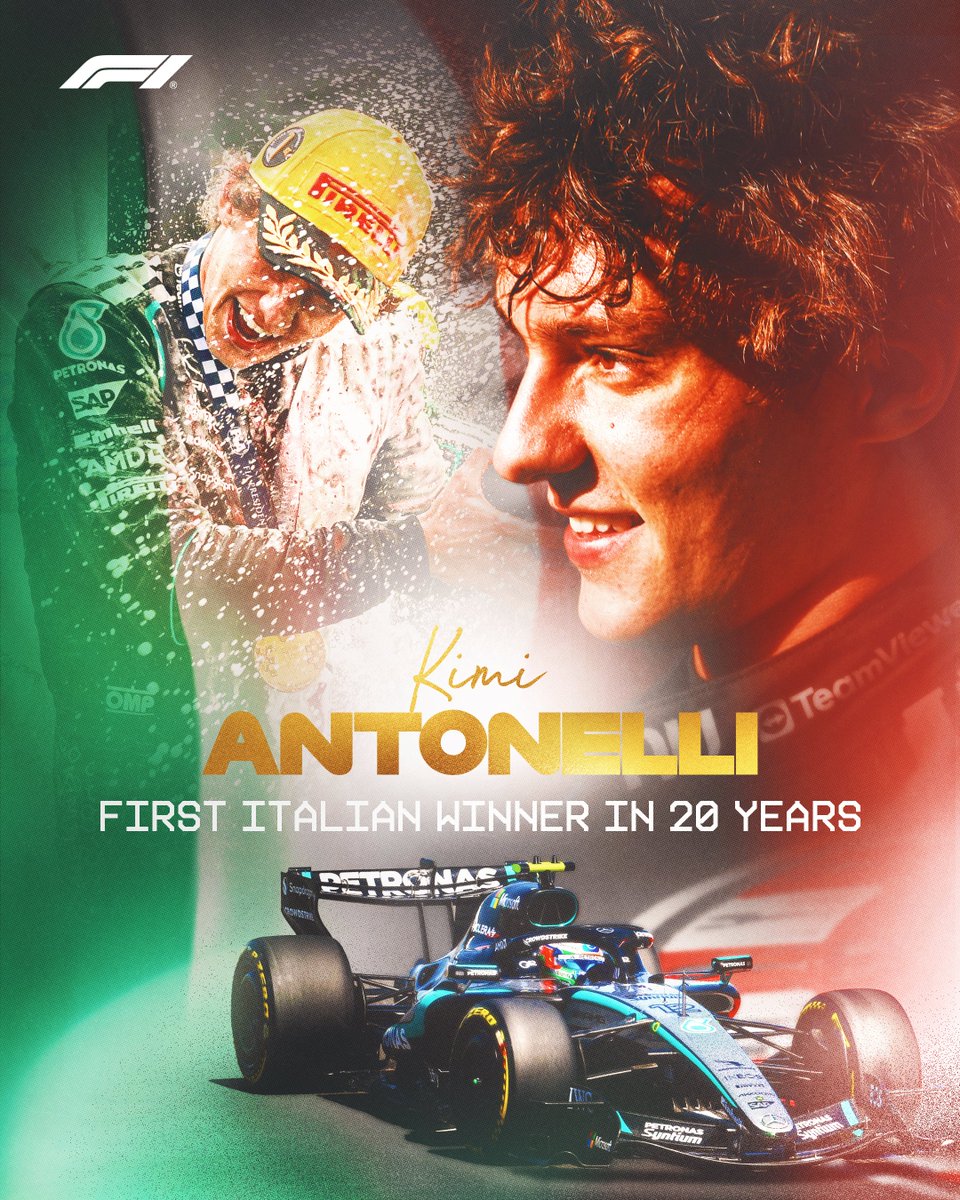
Italy returns to the top step! 💚🤍❤️ Kimi Antonelli brings the glory back to his home country 🤩 #F1 #ChineseGP
Formula 1 tweet media
English
153
4.7K
29K
468.6K
Edoardo Crivellaro retweetledi
Motorsport
Motorsport@Motorsport·
"That's for all the kids out there who dream the impossible. You can do it too, man.” - Lewis Hamilton
Motorsport tweet media
English
63
8K
37.9K
619.4K
Edoardo Crivellaro retweetledi
Formula 1
Formula 1@F1·
An emotional day for Kimi! 🥹 #F1 #ChineseGP
English
735
16.4K
84K
1.7M
Edoardo Crivellaro retweetledi
Athenaeum Book Club
Athenaeum Book Club@athenaeumbc·
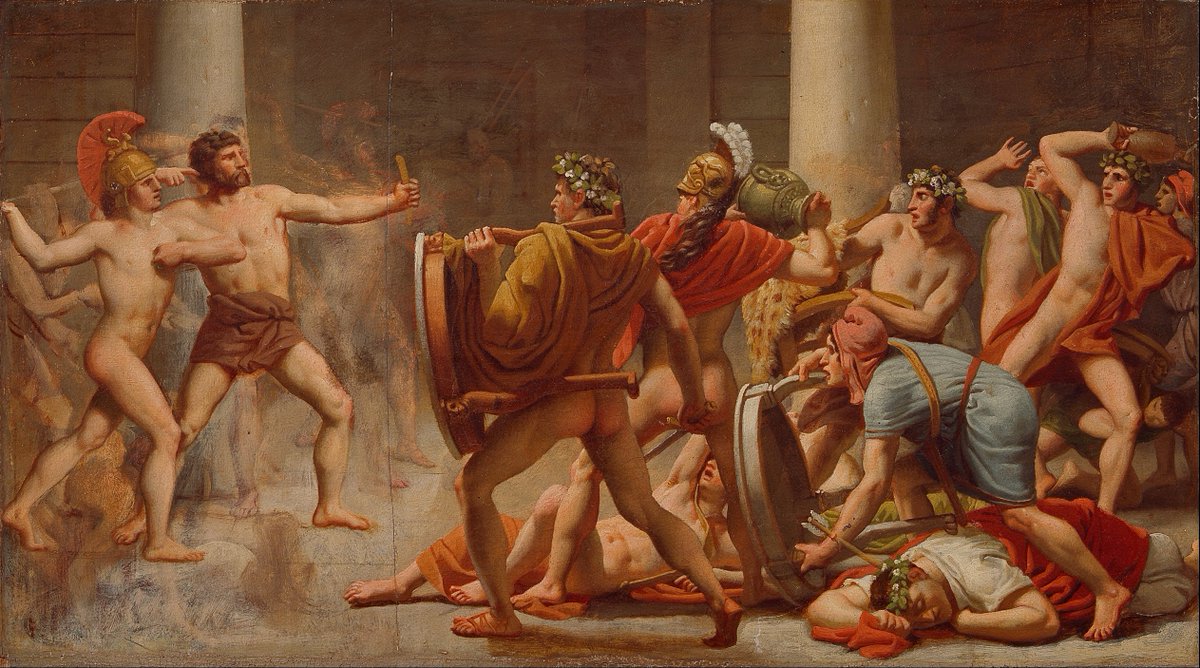
A powerful scene in the Odyssey happens when Odysseus finally returns to Ithaca after twenty years of war and wandering. You would expect the story to end with celebration, with the hero coming home, the family reunited, and order restored. Homer does something far stranger. Odysseus arrives disguised as a beggar, because Athena warns him that the palace has been taken over by more than a hundred suitors who have been living there for years, eating his food, drinking his wine, and pressuring his wife Penelope to marry one of them. They believe Odysseus is dead and in their minds the kingdom is already theirs. So the king of Ithaca walks through his own halls dressed in rags while the men stealing his house sit comfortably at his tables. They mock him, throw scraps at him, and one of them even strikes him, and Odysseus takes it. That is the remarkable part, because the same man who blinded the Cyclops and survived twenty years of disasters now stands quietly while strangers insult him in his own home. Homer tells us his heart burns inside his chest and that he wants to attack them immediately, yet he restrains himself and waits. Instead of striking, Odysseus studies the room carefully. He counts the men, watches their habits, and quietly observes which servants remain loyal and which have betrayed him. The hero of the Odyssey does something most people cannot do, which is delay revenge until the moment is right. Eventually Penelope announces a contest and brings out Odysseus’ great bow, declaring that she will marry the man who can string it and shoot an arrow through twelve axe heads lined up in a row. One by one the suitors try and fail, because none of them can even bend the bow. Then the beggar asks for a turn. The suitors laugh at first, but the bow is eventually handed to him. Odysseus takes it in his hands and strings it effortlessly. Homer says the sound of the bowstring tightening rings through the hall like the note of a swallow. Then he places an arrow on the string and sends it cleanly through all twelve axe heads. In that moment the beggar disappears. Odysseus turns the bow toward the suitors and reveals who he is. What follows is one of the most brutal scenes in Greek literature. The doors are sealed and the suitors realize too late that they are trapped inside the hall. Odysseus, his son Telemachus, and two loyal servants begin killing them one by one. There is no escape, no mercy, and no negotiation. The men who spent years consuming another man’s house die inside it. It is a violent ending, but Homer wants you to understand something important. The real danger to Odysseus was never just the monsters and storms on the long journey home. It was the possibility that someone else might take his place while he was gone. When Odysseus finally returns, he reminds everyone in Ithaca of a simple truth: a man’s home is not truly his unless he is willing to fight for it.
Athenaeum Book Club tweet media
English
1.8K
12.4K
69.4K
27.9M
Edoardo Crivellaro retweetledi
Matteo Franceschetti
Matteo Franceschetti@m_franceschetti·
The top performers of the next decade don't look like the top performers of the last one. Two profiles win. The extreme expert, one engineer doing the work of an entire team alone, with 10 to 100 agents running underneath them. Irreplaceable because of depth. And the extreme generalist, a first-principles thinker who can cover almost any role in the company. The founder profile. The person who just gets things done. The distribution is shifting fast
English
69
121
1.1K
64K