Erik Errikson
1.3K posts

@Theresa_Finn_ Frau oder Homosexueller?🤔
In welcher Situation, die man nicht aktiv mit herbeigeführt hat, kommt man in die Verlegenheit das Unterteil von einer Frau im Gesicht zu haben?🤔 In einer dunklen Gasse wird sie wohl nicht gelauert haben?
Deutsch

BITTE WAS?
„Sie schob ihre Unterwäsche zur Seite und rieb ihre widerliche Vagina an meinem Gesicht, bis ich die Augen aufschlug und mich über sie erbrach.“
Ob Justin Trudeau auch kotzen muss, wenn Katy Perry sich ihre Möse an seinem Gesicht reibt?
Sie ist schließlich nicht Emmanuel Macron.

Deutsch
@rita_spera79198 @pati_marins64 drones. They caused huge economic damage.
English
@rita_spera79198 @pati_marins64 They destroyed billion dollar radars that will take years to rebuild if China actually provides the rare earth required to build them. They made those bases in the middle east a burden rather than an asset, for both, the Usa and the gulf states. They destroyed dozen of expensive
English

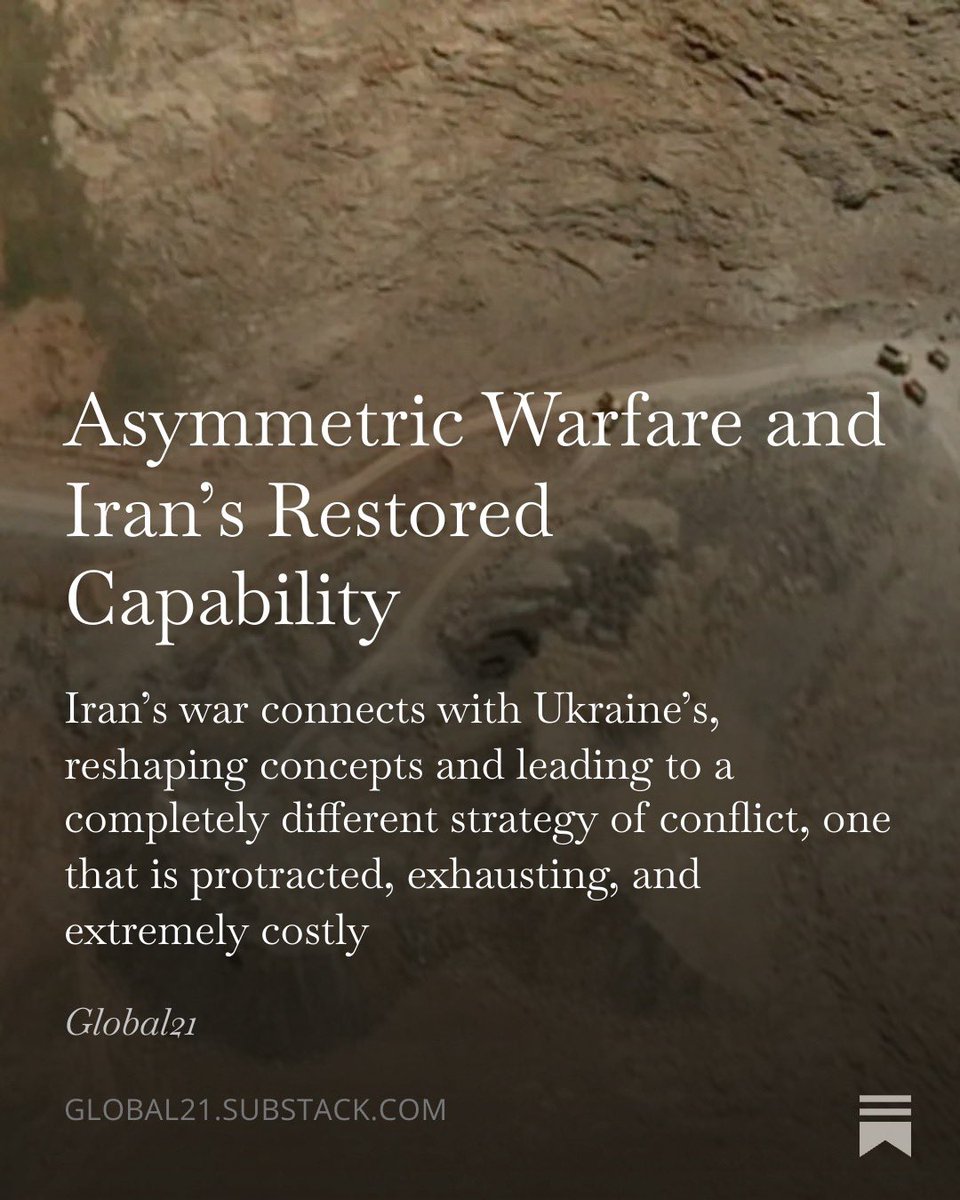
Asymmetric Warfare and Iran’s Restored Capability
Satellite images show that Iran has already cleared the bunkers, silos, and launch pads at these sites in just over 48 hours after the ceasefire.
I believe this means they have quickly regained the ability to launch hundreds of missiles per day, at a moment when the coalition’s stock of interceptors is running low.
And this is a major problem for the coalition, because in the first 48 hours fo war alone, they launched more than 700 missiles and nearly 1,000 drones.
I know Netanyahu and Trump really wanted to win this war, but have they truly understood the kind of war they are fighting?
This conflict teaches us a great deal about modern and asymmetric warfare.
In conventional war, if a force loses control of the skies, it usually means the destruction of its equipment and military structures, stripping the army of its ability to react.
Everything becomes vulnerable, from barracks to small checkpoints.
But asymmetric warfare is different. You prepare for a conflict in which you will be heavily bombed and must respond with resilience and gradual deployment, turning the war into a long, exhausting, and attritional struggle.
The key point is that the entire structure must be protected in underground bunkers or very well hidden to survive successive waves of bombings.
In Iran’s case, a mountainous country, many of these fortifications are built inside mountains, taking advantage of the natural terrain, just as the Vietnamese used the jungle to hide their equipment.
These constructions require significant investment and long-term planning, often spanning decades. It is estimated that the Iranian project has cost between $15-20 billion, with dozens of underground bases for storage, maintenance, and assembly of military equipment.
In addition to the missile force, the navy and air force also have these underground bases.
Continue reading:
open.substack.com/pub/global21/p…
English
@dmac0123 @pati_marins64 making bases in the region nearly unusable, keeping aircraft carriers hundreds of miles away, causing causing huge economic damage and inflation in the west is not loosing either... Also,whats the source for the one trillion dollar damage?
English

@EErrikson @pati_marins64 Well, if you count $1 trillion in infrastructure loss “winning”, I guess we need to redefine it all
Also, it’s not over
Iran “surviving” is not US losing
If you link Trump’s actions with Venezuela and poss Cuba, it was never about regime change or uranium to begin with
English
@dmac0123 @pati_marins64 There are reasons why countries loose wars... Quite obviously Iran was underestimated.
English
@pati_marins64 “I know Netanyahu and Trump really wanted to win this war, but have they truly understood the kind of war they are fighting?”
Let me guess….
They don’t know anything but Patricia, on her phone on X, knows everything
🙄😂
English

@SteinhausHelena muss man die Leute eigentlich reinlassen? Ich dachte immer, das sei nur mit richterlichem Beschluss möglich.
Deutsch

Der Bericht des Außendienst vom Jobcenter liest sich wie ein Stasi-Bericht. Auf 4 Seiten wird dort ein nicht angemeldeter Hausbesuch dokumentiert. A. ist privatinsolvent und bezieht #Bürgergeld, er ist wegen schweren Depressionen in Behandlung und wird vom Jobcenter akribisch

Deutsch
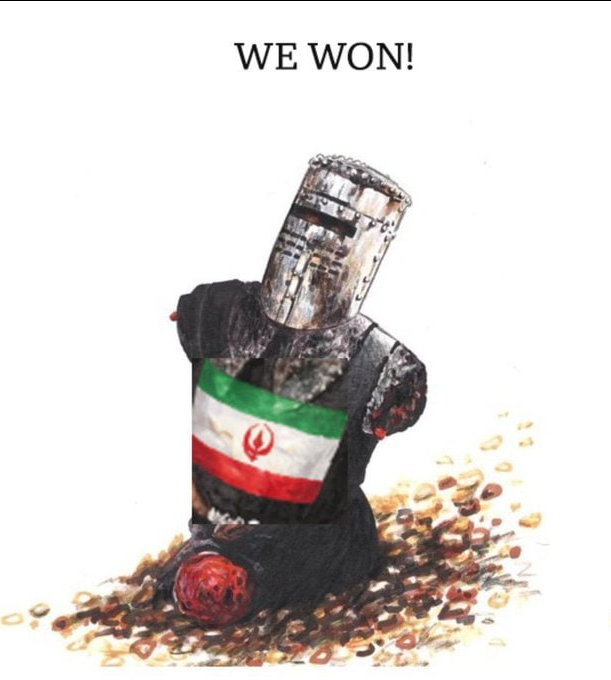
@OlgaBazova The US bombed Iran with impunity for 40 days
The missile factories are smashed, the enriched uranium stockpile scattered, the straits are open
NONE of Iran's terms have been agreed to
Iran has been mauled
The US has had more success in Iran than Russia has had in Ukraine
English


@IvArends @Shaheen72223471 @clashreport Enjoy your dreams. Just stay in that dreamworld. Its quite tough in the real world
English

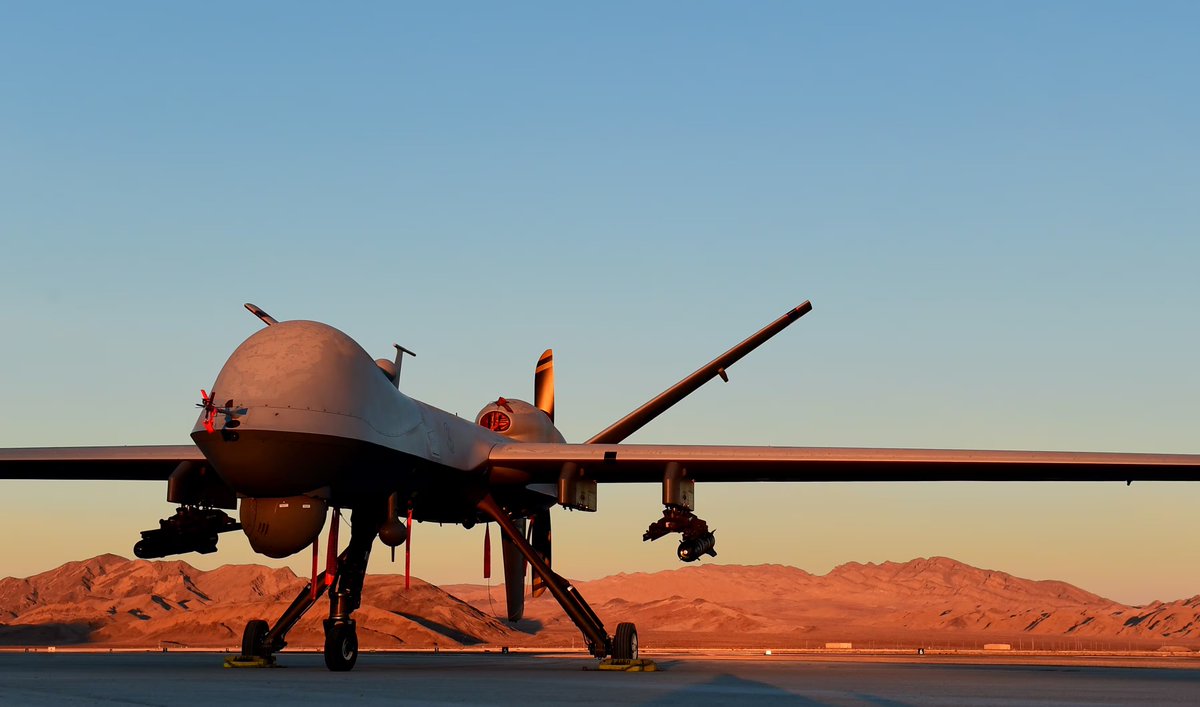
The U.S. has lost 24 MQ-9 Reaper drones in the Iran conflict (8 since April), totaling about $720 million.
Source: CBS
English
Deutsch

@mrvanilleowl @AdonisKorp62493 @sparbuchfeinde Genauso wie beschrieben.
Man müsste angelegte Werte verkaufen.
Selbst wenn man es verhindern könnte filialen abzusägen, wird das nur eine gewisse Zeit funktionieren, bis die ersten Läden schließen, bis es Flächendeckend spürbar wird. Forschung u. Investitionen leiden dann auch.
Deutsch

Was ich bei „Tax the rich“ nie verstehe:
Der mit Abstand reichste Deutsche ist Dieter Schwarz. Sein Vermögen (~70 Milliarden Euro) ist im Wesentlichen sein Anteil an Lidl/Kaufland.
Bei 2% Vermögenssteuer pro Jahr müsste er etwa 1,4 Milliarden Euro an den Staat zahlen.
Vermögen, das nicht in Cash verfügbar ist. Er müsste also jedes Jahr Lidl / Kaufland Filialen verkaufen.
Wer kauft die? Gefährdet das langfristig die Firma als Ganzes? Ist weniger Wettbewerb unter Discountern gut für den deutschen Endkunden?
Oder übernimmt der Staat die Filialen über Enteignung und es sitzen in Zukunft deutsche Beamte bei Lidl an der Kasse?
Deutsch

@KobeissiLetter Does anyone honestly think those bases are in Europe to protect Europe, they’re Americas first lines of defence , they are not concerned about turning Europe into another battleground as long as it keeps them safe, they’ve never been under attack at home
English

BREAKING: The US-Europe alliance is reportedly reaching a "breaking point" over the Iran War, and President Trump has "mused" to aides about backing out of NATO, per WSJ.
Details include:
1. Trans-Atlantic ties between the US and Europe are "deteriorating rapidly"
2. Trump has expressed "disgust" with European allies for not joining the US-Israeli war against Iran
3. Trump is questioning whether defending Europe serves US interests at all if Europeans do not help American military interventions in the Middle East or elsewhere
4. The White House’s stance is being described as a "break" with American global strategy since WW2
US-NATO relations appear to be at new lows.
English
Erik Errikson retweetledi


@Ibrahim_Dalibi @MonitorX99800 If not for nukes, Russia would break in a day if you had the ability to reach deep inland with enough ordinance.
The US would do it quick.
China is another matter. US isn’t winning that war
English

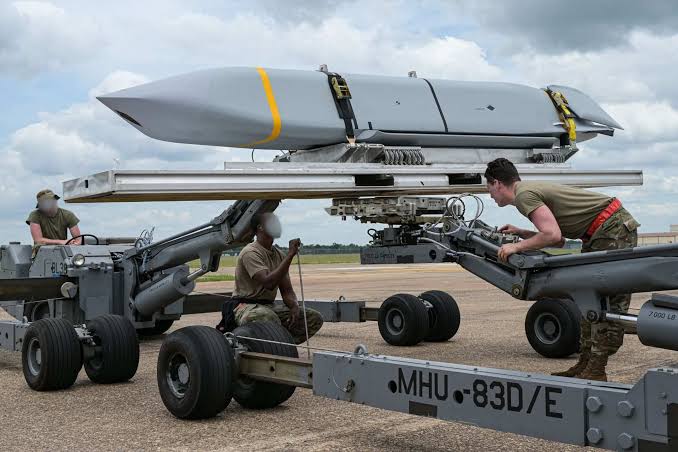
🇺🇸🇮🇷⚡️– Bloomberg reports that U.S. has used almost its entire stock of JASSM-ER stealth cruise missiles against Iran, drawing even from reserves allocated for other operations such as a potential conflict with China.
Out of the total 2,300 before the war only arround 425 would remain globally.
English

@EErrikson @WesternPedoWars @pati_marins64 I don’t know what you mean by ‘isr’, but if you compare the number of supplied Western tanks with the number of lost Russian tanks, you can see that the number of supplied Western tanks was negligible.
However, the era of tank battles is almost over.
English
From Ukraine to Iran: How Asymmetric Warfare Challenges Superpowers
The model of asymmetric warfare based on drones and missiles is capable of challenging any major power.
When Russian troops invaded Ukraine in February 2022, no one could have imagined that a militarily inferior and disorganized country would transform itself, in just a few years, into one of the world’s leading drone powers.
In the first 3 to 4 months of the war, the situation was dire. General Volodymyr Karpenko, commander of logistics for Ukraine’s Ground Forces, revealed that the country had lost about 50% of its heavy equipment: roughly 400 tanks, 1,300 armored personnel carriers, and 700 artillery systems.
At that time, Western supplies covered only 10% to 15% of Ukraine’s real needs to sustain the war effort.
Ukraine entered the war with approximately 270 medium- and long-range anti-aircraft missile launchers and another 250 short- and medium-range systems, totaling around 5,500 missiles.
This arsenal was rapidly depleted within the first year.
Russian forces advanced with relative ease against Ukraine’s conventional resistance. In the early stages, Ukraine was fighting the exact type of war Moscow wanted: a conventional force-on-force confrontation where Russian superiority was overwhelming.
Only in 2023, due to Russian logistical problems and poor planning, did the advances begin to stall.
It was then that investments started in 2022 began to bear fruit.
The drone ceased to be an auxiliary tool and became Ukraine’s main weapon. Programs like “Army of Drones,” launched in July 2022, and the United24 platform boosted production through donations and state contracts.
The number of companies exploded: from about 100 in 2022 to more than 500 in 2025. Production jumped from an estimated 200-500 thousand drones in 2023 to 1.7-2.2 million in 2024, with a target of 4 million in 2025.
In 2023 and 2024, Ukraine literally flooded the battlefield with drones, which became the primary cause of Russian casualties.
Drone pilot training schools proliferated. In 2023, more than 20,000 pilots were trained. The “Army of Drones” project alone trained 10,000 operators by May 2023 and another 10,000 in the following six months.
By 2024, the total number of trained pilots reached 80-100 thousand across about 60 active schools. In 2025, between 150,000 and 200,000 pilots were trained.
Companies such as Motor-G, Vyriy Drone, Helsa, DragoDrones, Skyeton, and Wild Hornets, along with hundreds of small workshops, formed a complete ecosystem.
Today, Ukraine produces electric motors, flight controllers, carbon and fiberglass frames, Li-ion/LiPo batteries, and virtually all necessary components, much of it with domestic technology.
This ecosystem completely changed the dynamics of the war and dramatically slowed Russian advances. By 2025, with the maturation of its missile industry (many assembled in underground facilities), Ukrainian strikes began reaching deeper into Russian territory.
This raises an important question: If Ukraine had already possessed this drone and missile ecosystem in 2022, would it have been invaded in the first place?
Iran learned this lesson much earlier.
After the war with Iraq, Tehran launched a deliberate long-term project of technological autonomy. It was not based merely on wartime improvisation, but on systematic investment in universities, research centers, and reverse engineering.
Universities such as Sharif University of Technology and Amirkabir became cradles of aeronautical engineers and materials specialists.
The Islamic Revolutionary Guard Corps forged direct ties with these institutions, establishing research centers like the SSIC and making full use of the infrastructure left behind by the American Bell Helicopter company in Isfahan, which gave rise to HESA industry.
Join my Substack to read the full article:
open.substack.com/pub/global21/p…

English
@SchoeneWolfram @WesternPedoWars @pati_marins64 The most important part was isr. Also, they got Himars in the first year. And its not that western tanks made a huge difference in practice.
English
@WesternPedoWars @pati_marins64 Western help was always too much to die and to small to win.
1st western tanks after 1y, 1st airplanes after 3y.
„Every resource“?
You are dreaming.
English
@SiddiquiZadaa @Glenn_Diesen Helping Iranian people was obviously always a lie.
English

@Glenn_Diesen He started out claiming to help the Iranian people, but now he is driving them back to the Stone Age. His goals change every single day. Is he even fit to remain President of the USA anymore???
English

Trump: "We're gonna bring them back to the stone ages, where they belong". Keep in mind that an initial justification for the war was to "help" Iranians.
English
@simpatico771 Not need to involve neandertals here, humans were always barbaric and still are.
English

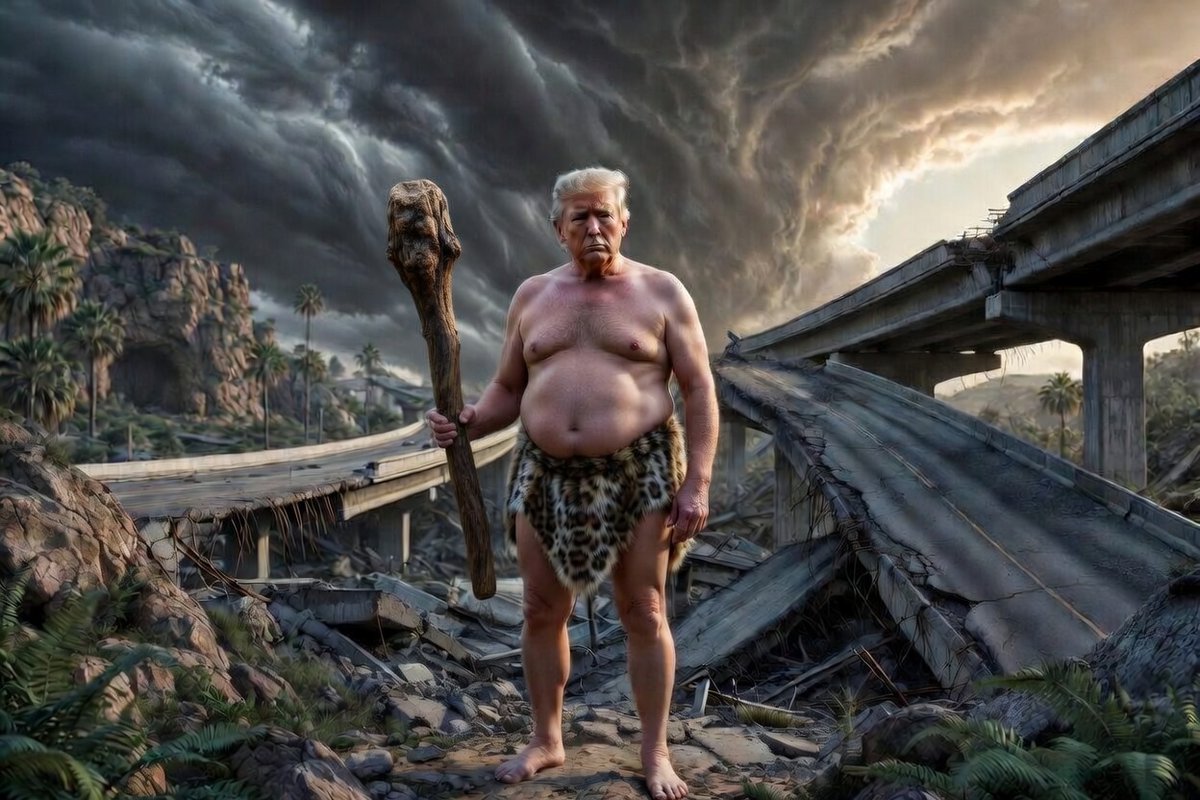
⚡️🇺🇸I finally understood it: "We're bringing them back to the stone ages."
Translation: "We're going to show Iran a level of savagery and inhuman barbarism not seen since the Neanderthal times."
English
@bassbuddha @Polymarket Plottwist: That was a grey alien in the Epstein suit.
English


BREAKING: Former Congressman Matt Gaetz reveals he was once briefed on alien "breeding programs" where captured aliens were breeding with humans to create a hybrid race.
English
Erik Errikson retweetledi


@nawid_23 @nymoen_ole "Nach dem Sturz hat sich das für viele deutlich verschlechtert." Klar, die neuen Machthaber haben sich ja erdreistet, nicht mehr 50 Prozent der Ölgewinne an internationale Konzerne abzuführen. (und in Wirklichkeit sogar mehr)Dafür musste das Land ja mit Sanktionen belegt werden.
Deutsch

Frag doch mal einen Iraner, der zur Zeit des Shahs gelebt hat: kostenlose Krankenversorgung, bezahlte Auslandsaufenthalte zum Studium, starke Währung, international anerkannt und persönliche Freiheit im Alltag. Klar, politische Freiheit gab es damals nicht, und das wird auch zurecht kritisiert. Trotzdem konnten viele Menschen ein relativ normales und stabiles Leben führen.
Nach dem Sturz hat sich das für viele deutlich verschlechtert. Der Iran ist international isoliert, wirtschaftlich am Boden und ein großer Teil der staatlichen Mittel fließt in Konflikte im Nahen Osten. Gleichzeitig sind selbst einfache Dinge wie öffentliches Tanzen oder Singen verboten, während politische Freiheit weiterhin fehlt.
Dazu kommt, dass sich in all den Jahren keine echte demokratische Alternative entwickelt hat. Viele haben das Vertrauen verloren, dass sich im System grundlegend etwas ändert. Deshalb ist es nicht überraschend, dass manche irgendwann sagen, lieber der Sohn des Shahs als noch ein weiteres Jahr unter den Mullahs. Oft geht es dabei weniger um Nostalgie als um Frust und den Wunsch nach einem halbwegs normalen Leben.
Wieso können Linke diesen Umstand nicht würdigen und müssen ständig über denn CIA, Mossad, Anti-Imperialismus oder dergleichen sprechen?
Deutsch