EuroSpeechwriters

5.9K posts

EuroSpeechwriters banner
EuroSpeechwriters

EuroSpeechwriters

@EUSpeechwriters

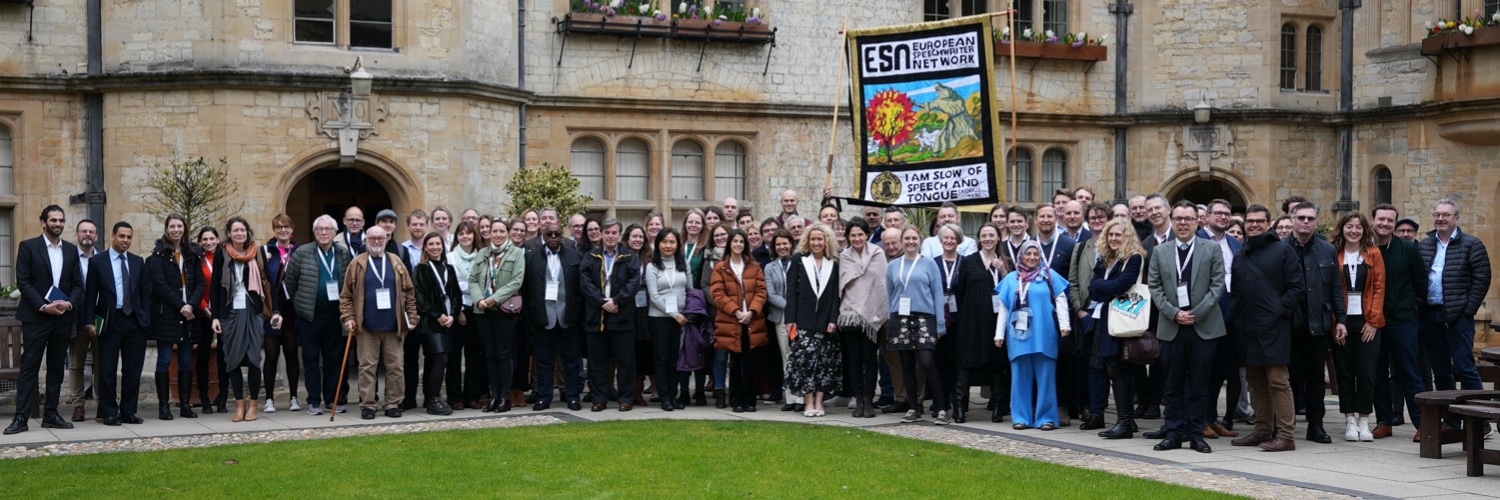
Rhetoric created western civilization; and rhetoric can save it. - Jay Heinrichs Join us to take part in our conferences, seminars and online events.

Katılım Ocak 2013
3K Takip Edilen2.7K Takipçiler
EuroSpeechwriters retweetledi
milton
milton@miltonappl3·
If chiasmus rules apply--and they should--this being the *dead* center of Troilus and Cressida, in a Garden of Eden, which itself uses chiasmus, then the yellow highlight below is the thesis of the entire drama. This is new scholarship: All my tweets are, to my knowledge.
milton tweet media
English
4
2
58
9.8K
EuroSpeechwriters retweetledi
DonPJenn
DonPJenn@DonPJenn·
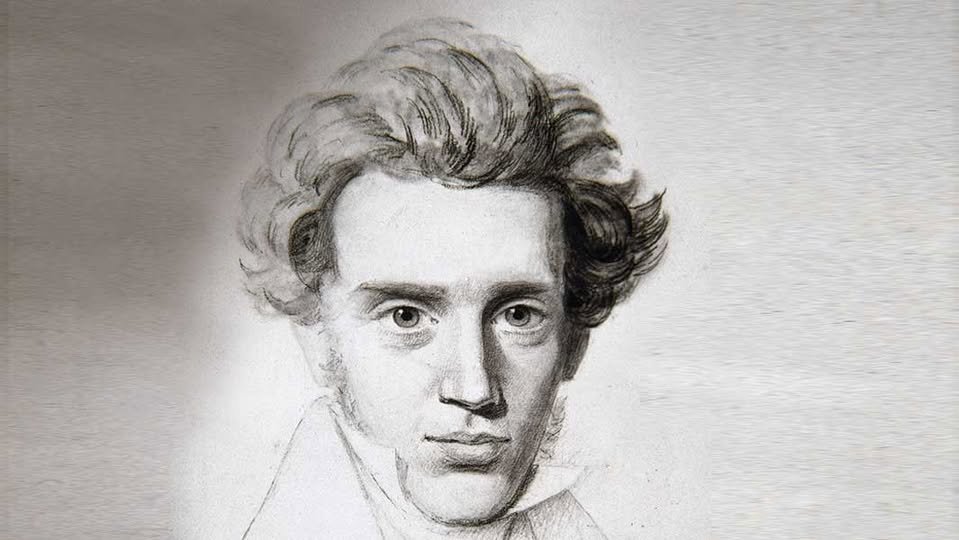
"The melancholy have the best sense of the comic, the opulent often the best sense of the rustic, the dissolute often the best sense of the moral, and the doubter often the best sense of the religious." Soren Kierkegaard
DonPJenn tweet media
English
2
22
144
6.5K
EuroSpeechwriters retweetledi
Michael Millerman
Michael Millerman@millerman·
Henry Kissinger's speechwriter Winston Lord once spent days on a report, then submitted it. Kissinger sent it back: 'Is this the best you can do?' Lord rewrote it, resubmitted. Same response. This went on 3-4 times. Finally Lord snapped: 'Damn it, yes, it's the best I can do.' Kissinger: 'Fine, then I guess I'll read it this time.' This is exactly how I work with Claude.
Michael Millerman tweet media
English
41
353
3.6K
251K
EuroSpeechwriters retweetledi
Olga Bazova
Olga Bazova@OlgaBazova·
2500 years from today. The teachings of Don Tzu.
English
163
3K
7.9K
282.1K
EuroSpeechwriters retweetledi
Big Brain Philosophy
Big Brain Philosophy@BigBrainPhiloso·
Babette Babich on why reading philosophy in translation is a fundamental problem: "If you don't read Aristotle in Greek, you cannot understand his argument. If you don't read Plato in Greek, you cannot understand his argument." Her reasoning is precise: translation is not a neutral act. "If you translate it into English, someone somewhere along the line will vary the word and then the argument falls apart." She uses Nietzsche as her sharpest example. The Cambridge edition aside, most English translations of Nietzsche don't give you Nietzsche. They give you the translator's interpretation of Nietzsche. She names Walter Kaufmann specifically: "He earns his name, he's a salesman. He sold Nietzsche to everyone as someone who was not really Nazi. He's very good. But that's the problem." The same logic applies to analytic philosophy's engagement with continental thinkers: "Analytic philosophers can teach you how to read Nietzsche. But I would say they really can't. You cannot read Nietzsche in translation. You can, but you'll be reading a lovely man, R.J. Hollingdale. You will not be reading Nietzsche." Her deeper point is about what makes a genuine continental philosopher and why that tradition is quietly disappearing: "The distinction is over because everyone has died. Who are actual continental philosophers? You're looking at one. But there are not a lot of them. And I'm not long for this world." What made Gadamer great wasn't that he wrote "Truth and Method". It's that he was a philologist first. He read Greek. What made Nietzsche penetrating was that he was a scholar of Greek. That's precisely why Bernard Williams took him so seriously. The language wasn't incidental. It was the method. When the last generation who had those teachers is gone, something irreplaceable goes with them.
English
69
51
274
22.9K
EuroSpeechwriters
EuroSpeechwriters@EUSpeechwriters·
The way in which I create myself is by means of a quest. I go out into the world in order to come back with a self. M.M. Bakhtin
English
0
1
1
68
EuroSpeechwriters retweetledi
Daniel Wortel-London
Daniel Wortel-London@dlondonwortel·
Harvard University, to their eternal glory, has provided online recordings of hundreds of authors who have graced their stages over the past century. We are talking Siegfried Sassoon (!), Dylan Thomas, W.H. Auden, E.M. Forster, and more. Dive in! hollis.harvard.edu/discovery/sear…
English
23
567
2.2K
104.6K
EuroSpeechwriters retweetledi
DavidWilson34 🏴󠁧󠁢󠁳󠁣󠁴󠁿
Forget the Gettysburg Address, this speech surpasses it. Soaring oratory, the crowd in the palm of her hand, the power of the words, poetry and prose, emotion dripping from every syllable. If this doesn’t stir the blood nothing will. Magnificent! 🔥🔥
English
160
84
452
45.6K
EuroSpeechwriters retweetledi
History Girl
History Girl@HistoryGirlBW·
Oxford University students in the 1950s.
English
19
97
605
18.5K
EuroSpeechwriters retweetledi
Maxwell Meyer
Maxwell Meyer@mualphaxi·
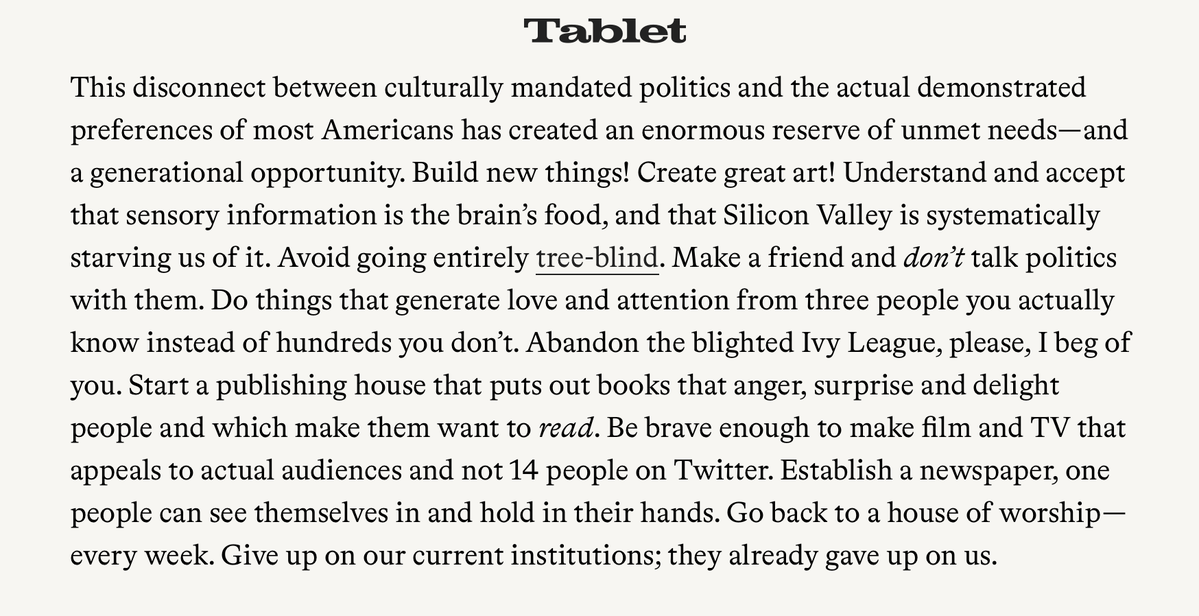
Probably the most important paragraph I've read in the last decade. I keep coming back to it. Written in 2021 by the one and only @alananewhouse The chasm between mainstream cultural institutions and what Americans actually want... a goldmine for creative entrepreneurs.
Maxwell Meyer tweet media
English
6
47
393
15.2K
EuroSpeechwriters retweetledi
David Perell Clips
David Perell Clips@PerellClips·
John F. Kennedy was one of America's best speechwriters, and his secret weapon was a rhetorical trick called Chiasmus. Some examples: 1) "Ask not what your country can do for you; ask what you can do for your country." 2) "Mankind must put an end to war, or war will put an end to mankind." 3) "Let us never negotiate out of fear, but let us never fear to negotiate." All of these follow the same pattern. The lesson is that humans love symmetry. Both in buildings like the Taj Mahal or St. Paul's Cathedral, and with language when we have symmetrical sentences like the ones JFK used to use so often.
English
36
131
1.2K
161.7K
EuroSpeechwriters retweetledi
David Perell Clips
David Perell Clips@PerellClips·
The Beatles used all kinds of rhetorical tricks in their songwriting, which is one reason why their music is so memorable. Two examples: 1) Anadiplosis, which is where the last word of one verse starts the next one, such as with "You say goodbye and I say hello. Hello, hello!" 2) Epanalepsis, where each verse begins and ends with the same word, like in the song 'Yesterday' which goes: "Yesterday / All my troubles seemed so far away / Now it looks as though they're here to stay / Oh, I believe in yesterday." These are fancy words for very simple rhetorical tricks that you'll see in all kinds of popular music. — Mark Forsyth
English
41
105
1.5K
314.7K
EuroSpeechwriters
EuroSpeechwriters@EUSpeechwriters·
Praise by name, criticize by category. Tom Murphy
English
0
1
0
42
EuroSpeechwriters retweetledi
Foundation Father | M.A. Franklin
Foundation Father | M.A. Franklin@FoundationDads·
In 1895, a French social psychologist named Gustave Le Bon published a book so dangerous that it became the private playbook of dictators for the next century. Hitler quoted it. Mussolini kept it by his bedside. Edward Bernays used it to build modern propaganda. The book's name? "The Crowd." Its core claim: The moment people form a group, they become stupid. Not slightly dumber. Fundamentally, structurally incapable of rational thought. And the tactics he described for controlling them still work on you right now. 🧵 (thread)
Foundation Father | M.A. Franklin tweet media
English
201
1.9K
4.9K
237.4K
EuroSpeechwriters retweetledi
Mark W.
Mark W.@DurhamWASP·
Evelyn Waugh chatting with Elizabeth Jane Howard about being old [he was 60 at the time].
English
48
244
1.2K
129.5K
EuroSpeechwriters retweetledi
DepressedBergman
DepressedBergman@DannyDrinksWine·
"I think Robert Donat was God." --- Peter Sellers Remembering the great Robert Donat on his 121st birthday!
English
17
44
318
17.5K
EuroSpeechwriters
EuroSpeechwriters@EUSpeechwriters·
There seems to be an interesting law: bad and pretentious language drives out good and simple language. And once human language is destroyed, we shall return to the beasts. Karl Popper
English
0
1
1
93
EuroSpeechwriters retweetledi
Daniel Steinmetz-Jenkins
Daniel Steinmetz-Jenkins@daniel_dsj2110·
French linguists on the English language
Daniel Steinmetz-Jenkins tweet media
English
645
278
2.9K
215.6K