
Earth

5.8K posts

Earth banner
Earth

Earth

@Earthsfave

Sharing my thoughts on crypto, striving to be a better person, and exploring the world one day at a time. Multicyle investor.

Katılım Ağustos 2013
131 Takip Edilen13K Takipçiler
Earth retweetledi
Ted
Ted@TedPillows·
S&P 500 $SPX has struggled from May to October during midterm election years. 🔴 1962: -21.49% 🔴 1966: -21.22% 🔴 1970: -0.1% 🔴 1974: -32.5% 🔴 1978: -8.64% 🟢 1982: +17% 🔴 1986: -7.62% 🔴 1990: -18.7% 🔴 1994: -1.86% 🔴 1998: -18.33% 🔴 2002: -30.54% 🔴 2006: -4.73% 🔴 2010: -6.08% 🔴 2014: -5.37% 🔴 2018: -5.06% 🔴 2022: -19% 2026: ????
English
261
469
3.8K
1.1M
Earth retweetledi
Bull Theory
Bull Theory@BullTheoryio·
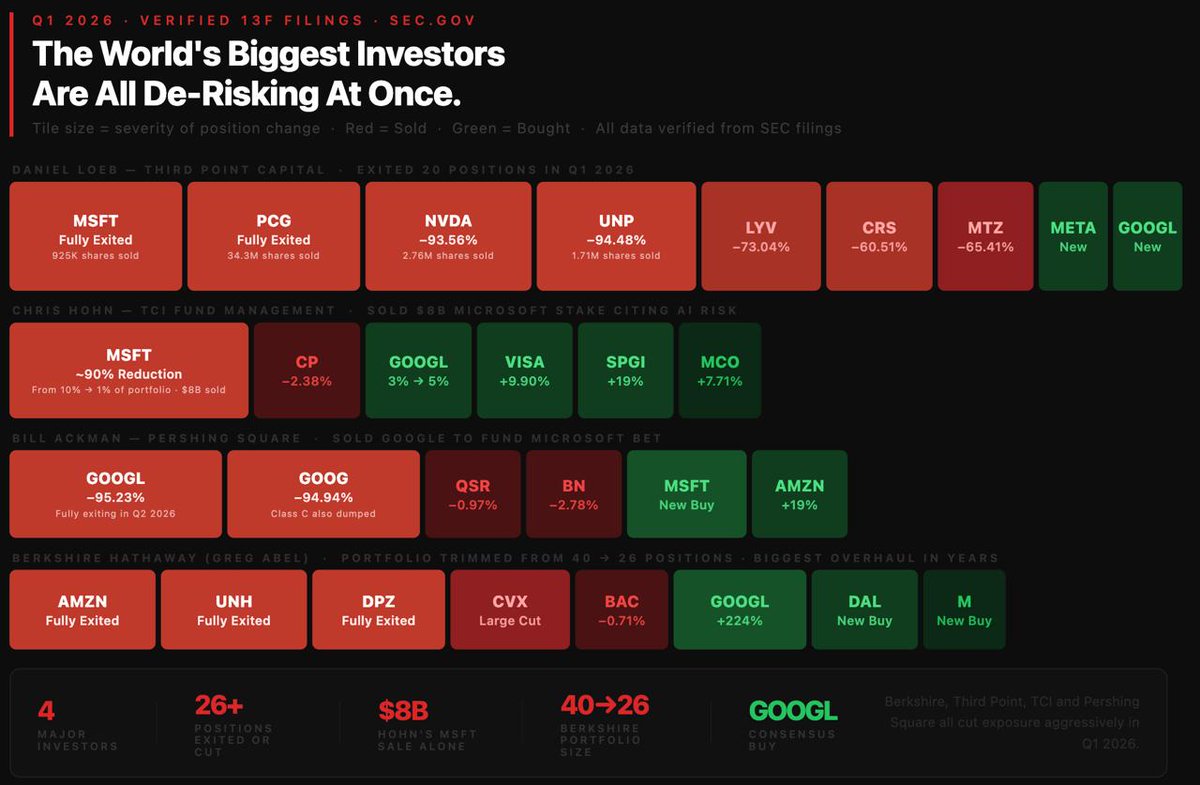
🚨 THE WORLD'S BIGGEST INVESTORS ARE ALL SELLING AT THE SAME TIME. The newly filed Q1 2026 portfolios reveal a massive de-risking wave across Wall Street's smartest money. Warren Buffett's successor Greg Abel trimmed the Berkshire portfolio from 40 positions down to 26, fully exiting Amazon, UnitedHealth, and Domino's while cutting Chevron and Bank of America. Bill Ackman sold 94.94% of his Google Class C shares and 95.23% of his Class A shares, effectively exiting the position entirely. Chris Hohn's TCI Fund sold almost its entire $8 billion Microsoft stake, cutting from 10% of the portfolio down to 1%, citing AI disruption risk to Microsoft's core software business. Daniel Loeb fully exited Microsoft and PG&E, reduced Nvidia by 93.56%, Union Pacific by 94.48%, and exited 20 positions in total during the quarter. The smart money is not trimming around the edges. They are moving to the sidelines in size. When the most successful investors in the world all reduce exposure at the same time, retail is usually the one left holding what they sold.
Bull Theory tweet media
English
169
376
1.8K
179.7K
Asta
Asta@AstaWeb3·
Can i get a GN? 💤
Asta tweet media
English
187
0
209
2.1K
Elite🏝
Elite🏝@Eliteonchain·
The stablecoin story is evolving pretty fast. At first it was: > payments > transfers > liquidity parking Now it’s increasingly about integration into trading infrastructure itself. USD1 getting: 1. BTCUSD1 perpetuals on Binance Futures 2. highest collateral ratio treatment under Portfolio Margin is a good example of how stablecoins are expanding deeper into market structure. Because the more a stablecoin gets embedded into: > collateral systems > margin frameworks > trading pairs > settlement flows the more durable its network effects become. Feels like the market is slowly moving toward stablecoins functioning as full financial operating layers instead of just digital cash.
WLFI@worldlibertyfi

GM 🦅☝️ two major ones for the fam today: → first @Binance Futures USD1 perps → BTCUSD1 goes live May 18, 09:00 UTC. 100x. USDⓈ-margined. AND → USD1 is now at the Highest Collateral Ratio Tier → 99.99% across Portfolio Margin on Binance Futures. binance.com/en/support/ann… binance.com/en/futures/tra…

English
40
1
68
5.5K
Earth
Earth@Earthsfave·
Coinbase now controls USDC deployment on Hyperliquid, making it the only collateral and quote asset across all markets With about 5B already sitting in USDC on the platform, liquidity is already deep enough for that shift to stick without friction. Big win for circle & coinbase
Coinbase 🛡️@coinbase

Today we’re expanding our support for @HyperliquidX by becoming the platform’s official treasury deployer of USDC. Onchain markets operate 24/7 and require collateral that is always available, instantly transferable, and deeply liquid - USDC delivers exactly that. Alongside this, we’ve also significantly increased our position of staked HYPE.

English
0
0
0
29
Coinbase 🛡️
Coinbase 🛡️@coinbase·
Today we’re expanding our support for @HyperliquidX by becoming the platform’s official treasury deployer of USDC. Onchain markets operate 24/7 and require collateral that is always available, instantly transferable, and deeply liquid - USDC delivers exactly that. Alongside this, we’ve also significantly increased our position of staked HYPE.
Coinbase 🛡️ tweet media
English
445
643
3.9K
880.2K
CoinGecko
CoinGecko@coingecko·
Making a list of people using our charts:
CoinGecko tweet media
English
94
107
589
19.7K
Earth retweetledi
Bull Theory
Bull Theory@BullTheoryio·
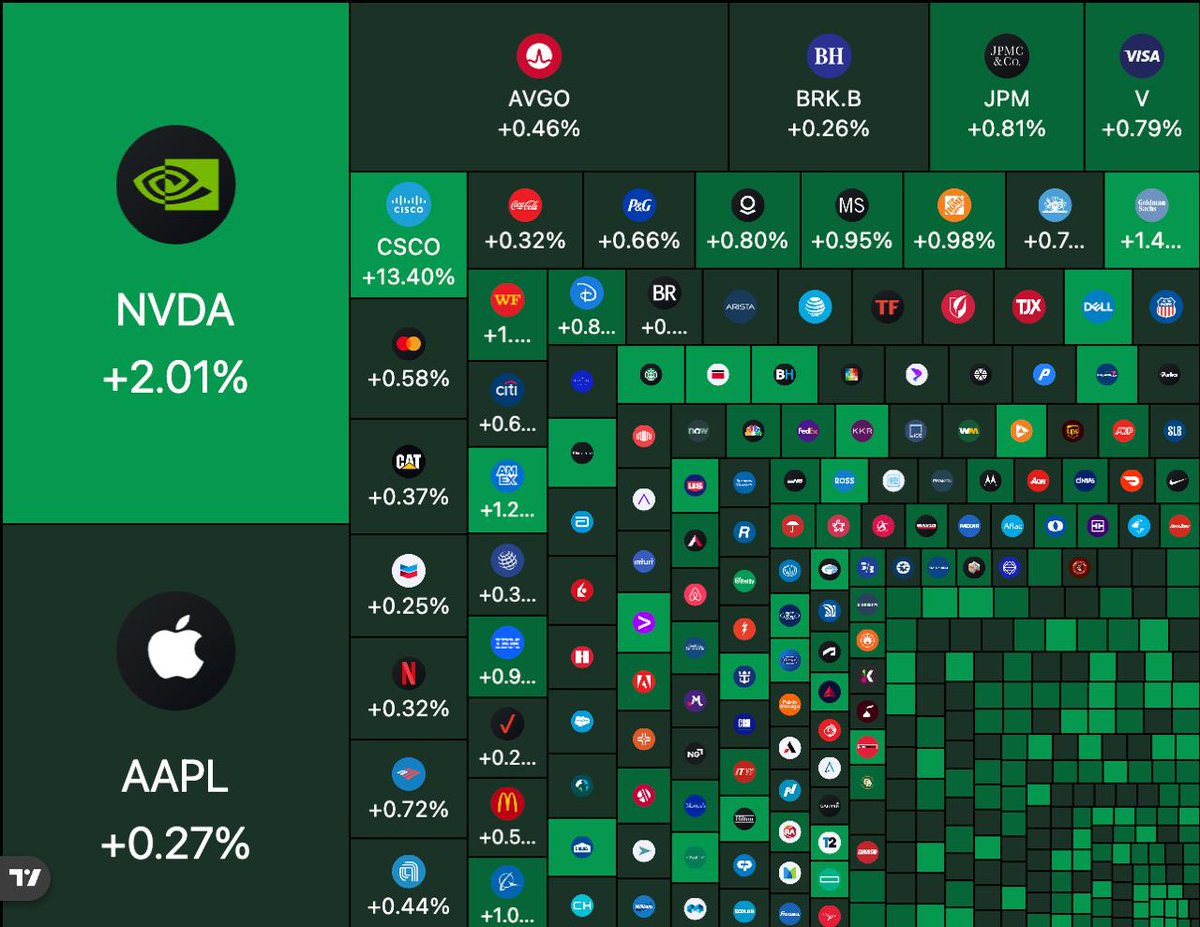
BREAKING: The US stock market just hit an all time high, crossing $77 trillion in market cap for the first time in history.
Bull Theory tweet media
English
272
1.4K
9.5K
443.3K
Elite🏝
Elite🏝@Eliteonchain·
Why do 90% of traders skip exchange comps? because they assume the pool is rigged for whales and most of the time, theyre right but I went through the @LBank_Exchange x @Nobodysausage $100K round line by line and the tier structure tells a different story position 50 = 500K volume = ~200 USDT position 31 to 30 = 1M volume = ~200 USDT position 11 to 20 = 2.5M volume = ~200 to 500 USDT the whales fight for 1st place the rest of the board is yours if you just show up biggest filter isnt skill, its registration no register = no count, even if you trade 100M 14 days, futures only, single round ends May 14, 15:59 UTC most people lose comps before they start dont be most people Go check it out : lbank.com/event/elitecha…
Elite🏝 tweet media
English
74
14
175
8.7K
Elite🏝
Elite🏝@Eliteonchain·
Here’s everything you need to know about River Conversion 3.0. @River4fun now runs in seasons. In each season, you earn River Pts, claim them within a set window, and can choose when to convert. S5 is ongoing, from S6, each season runs for 3 months(quarterly). The new point conversion is so flexible. For example, if you earn 20,000 pts in S5, you can claim your points within the window and then decide when to convert. There's also a rate for conversion and it changes every time. For S5, the base rate is 10,000pts → 100 $RIVER Staking is live also. You can lock for 3 to 24 months, and the staked tokens will earn river points during the lock. The Unstake date is fixed by the Season. Imo, this conversion model will reward long term commitment without forcing the same outcome on everyone.
River@RiverdotInc

x.com/i/article/2052…

English
30
1
64
2.3K
Earth retweetledi
Elite🏝
Elite🏝@Eliteonchain·
Money markets were supposed to be the final form of DeFi lending. Deposit collateral. Borrow against it. Earn spread. Repeat. But the market is starting to split into three completely different lending systems: 1. Money markets 2. Vault markets 3. Credit markets And each one optimizes for a different type of capital. That distinction becomes clearer now because the biggest lending protocols are no longer competing on the same axis. @Aave is still the dominant money market. As of this week: > Aave V3 generated $25.14M in 7d fees > Ethereum alone contributed over $17.08M > TVL remains concentrated around blue-chip collateral efficiency The model is simple: high-liquidity collateral + variable borrow demand + deep liquidity pools. Aave wins because it is the default liquidity layer for majors. But @Morpho changed the competitive layer. Morpho Blue is not trying to be “another Aave.” It turned lending into programmable vault infrastructure. Current data: > Morpho Blue fees: $3.48M (7d) > Active loans: $4.04B > Base TVL alone: $2.81B The important shift is structural: capital allocation is moving from pooled markets into isolated vault strategies. Instead of one shared risk engine, users now choose: > collateral type > liquidation parameters > oracle setup > risk profile > market curator That creates a vault market. Not a universal money market. The result: liquidity fragments, but capital efficiency increases for specialized users. Then there’s the third category: credit markets. This is where @maplefinance enters. Maple’s recent numbers: > fees +275% over 7d > active loans: $1.72B Unlike Aave or Morpho, Maple isn’t optimizing for overcollateralized leverage loops. It’s optimizing for underwritten capital relationships. That changes the entire lending equation. Money markets price collateral. Vault markets price strategy. Credit markets price counterparties. Three different systems. Three different risk models. Three different value accrual paths. And this is probably the real evolution of DeFi lending: not one winner taking all, but specialization by capital behavior. Aave captures generalized liquidity. Morpho captures modular capital allocation. Maple captures institutional credit demand. Same sector. Completely different businesses now.
Elite🏝 tweet media
English
37
4
41
4.4K
Elite🏝
Elite🏝@Eliteonchain·
Most people sell their crypto when they need liquidity. The wealthy do the opposite, they borrow against their assets. @RateHopperAI gives every holder that same playbook, then lets an AI agent make the loan pay itself back. Not just a rate aggregator. A per-user autonomous agent inside your own Safe wallet. TGE May 12th, 3pm CET.
English
21
0
34
3.1K
Earth retweetledi
Ted
Ted@TedPillows·
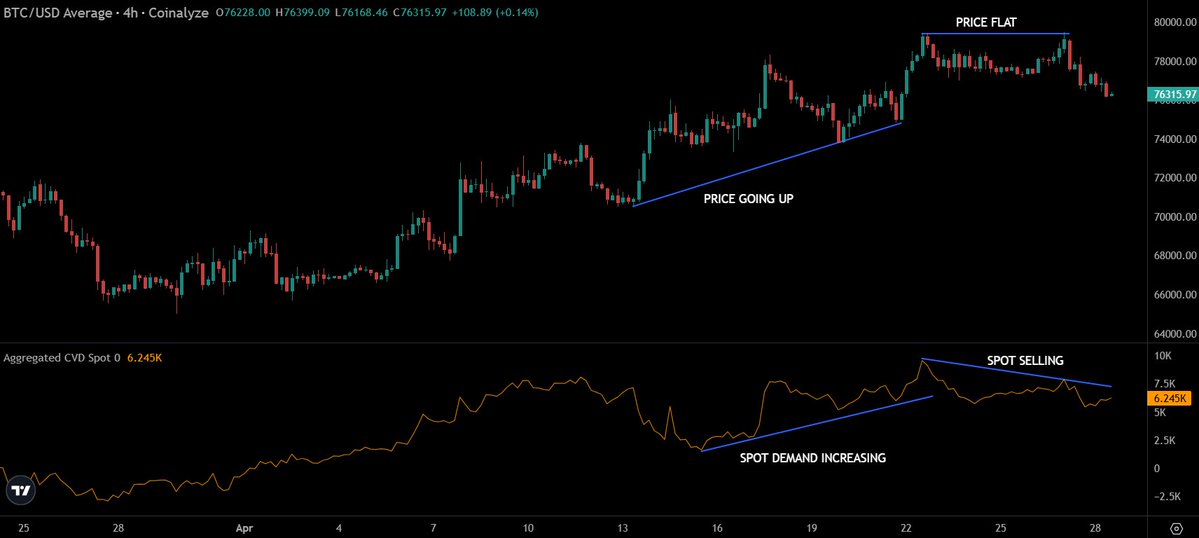
This is why spot demand is so important. $BTC pumped from $70K to $78K with increasing spot demand. Then, spot demand started to decline while Bitcoin tapped $79.5K After that, BTC is down over $3,500 and still looking weak.
Ted tweet media
English
81
69
524
26.6K
Earth retweetledi
Elite🏝
Elite🏝@Eliteonchain·
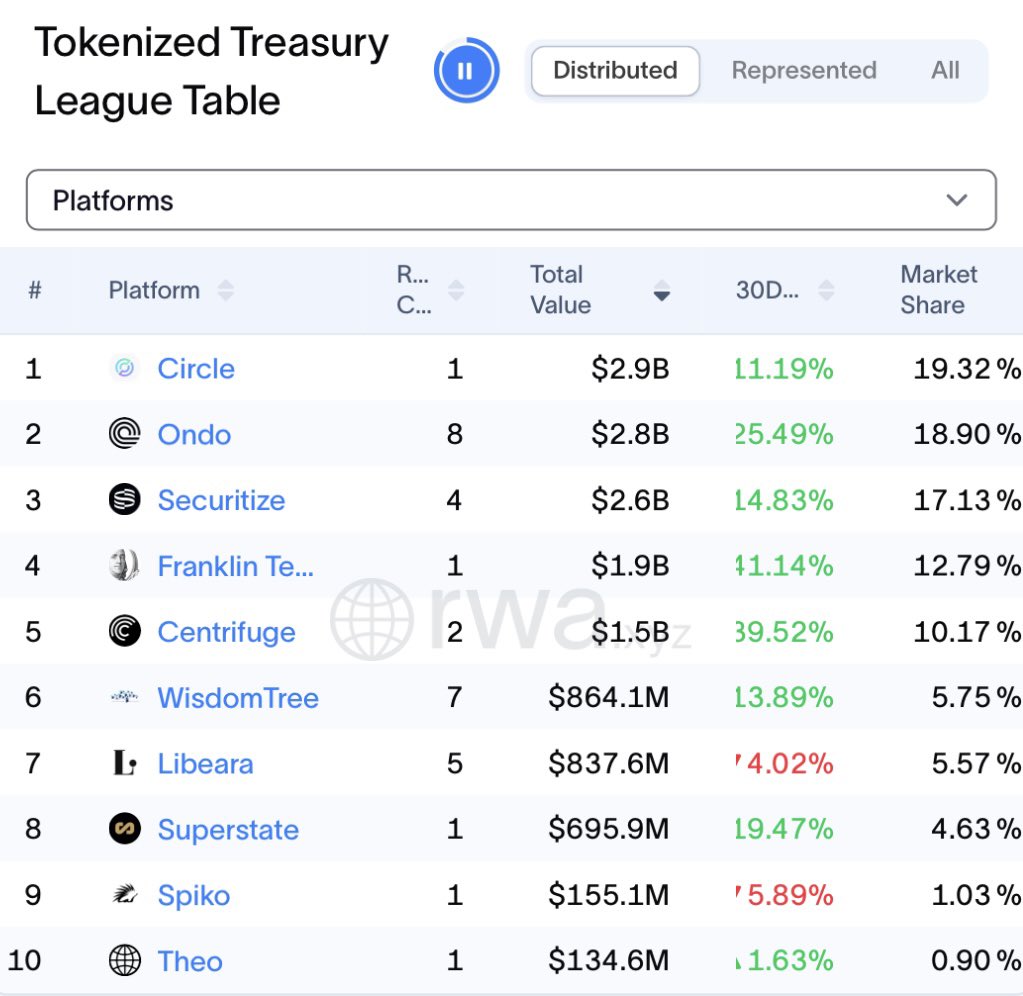
RWA isn’t a chain narrative, It’s an issuer narrative. Everyone tracks which chain is “winning.” Wrong layer. RWAs don’t originate onchain, they’re brought onchain. And that supply is controlled by a small set of issuers: > @BlackRock — BUIDL, tokenized Treasuries > @FranklnTempletn — onchain money market funds > @OndoFinance — USDY, OUSG > @maplefinance — private credit > @centrifuge — asset-backed financing pools These are the entities sourcing assets, structuring them, and pushing them into crypto rails. Chains are just the venue, Issuers are the supply. That’s the asymmetry most people miss: You can have fast chains. Cheap fees. Better UX. And still have zero RWAs. Because without issuers, there is nothing to tokenize. No issuer → no assets → no RWA market.
Elite🏝 tweet media
English
57
4
100
6.4K
spacebyte ⛓
spacebyte ⛓@_thespacebyte·
Perps are not just winning on volume. They are one of the few sectors where usage turns directly into retained revenue. Most of DeFi still blurs activity and earnings. Fees are generated, then redistributed through LPs, lenders, or incentives. What looks like revenue rarely stays with the protocol. Perps are different. — @HyperliquidX • ~$12.1M fees (7d) • ~$10.8M revenue (7d) • ~89% capture • $0 incentives That is a clean model. Traders generate fees. The protocol keeps them. Compare that to the rest of DeFi: DEXs share fees with LPs Lending passes value to suppliers Restaking holds assets with minimal revenue High usage. Low retention. Perps collapse that gap. They convert flow into earnings. The market is starting to split: Activity layers host usage Business models retain it Perps sit in the second group.
spacebyte ⛓ tweet media
English
41
5
67
6.6K