Give Away Alert!!
1. Artificial Intelligence
2. Machine Learning
3. Cloud Computing
4. Ethical Hacking
5. Data Analytics
6. AWS Certified
7. Data Science
8. BIG DATA
9. Python
10 MBA
For 24 Hours only!
To get it:
1. Follow for DM
2. Like & retweet
3. Reply "Send"
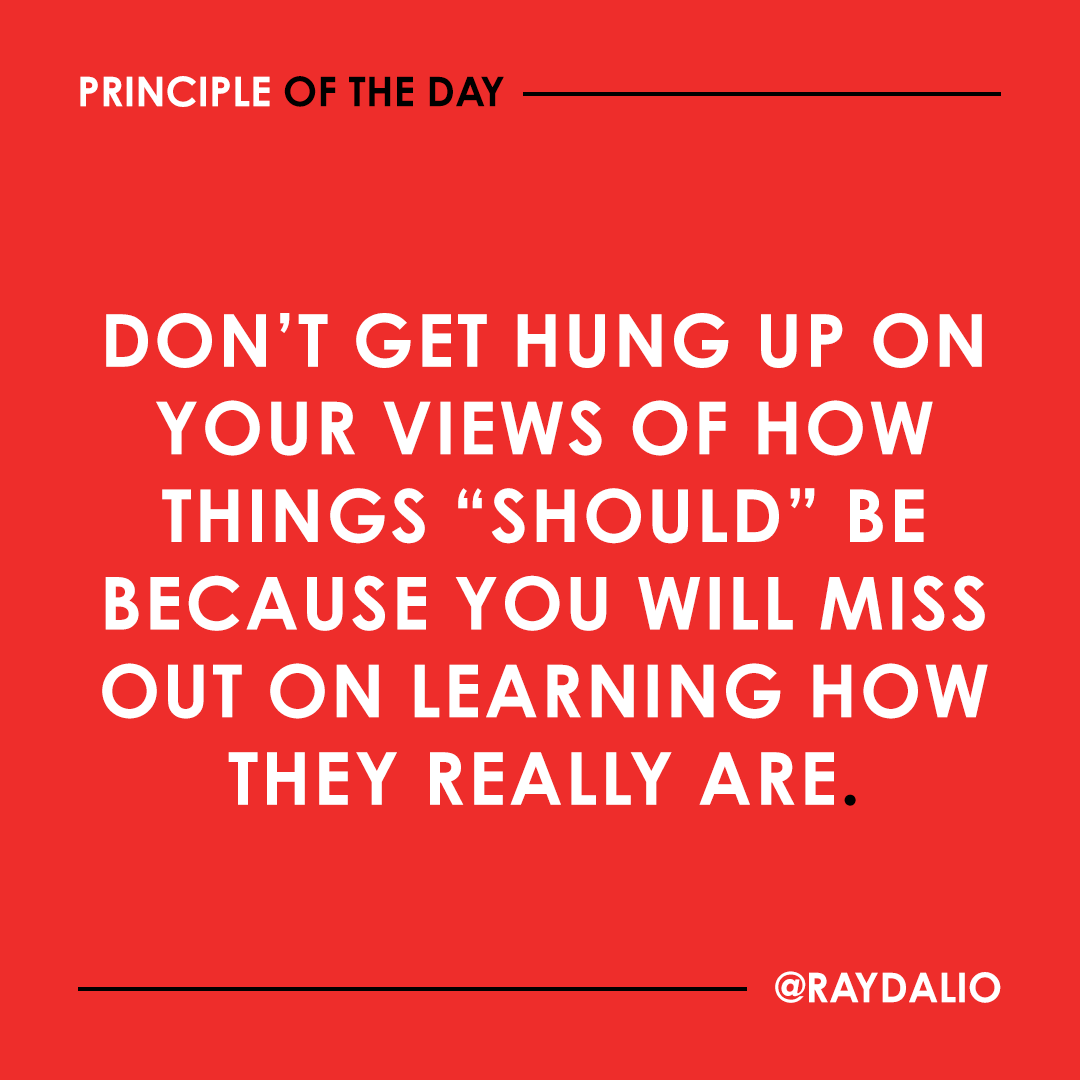
It’s important not to let our biases stand in the way of our objectivity. To get good results, we need to be analytical rather than emotional.
Whenever I observe something in nature that I (or mankind) think is wrong, I assume that I’m wrong and try to figure out why what nature is doing makes sense. That has taught me a lot. It has changed my thinking about 1) what’s good and what’s bad, 2) what my purpose in life is, and 3) what I should do when faced with my most important choices. To help explain why, I will give you a simple example.
When I went to Africa a number of years ago, I saw a pack of hyenas take down a young wildebeest. My reaction was visceral. I felt empathy for the wildebeest and thought that what I had witnessed was horrible. But was that because it was horrible or was it because I am biased to believe it’s horrible when it is actually wonderful? That got me thinking. Would the world be a better or worse place if what I’d seen hadn’t occurred? That perspective drove me to consider the secondand third-order consequences so that I could see that the world would be worse. I now realize that nature optimizes for the whole, not for the individual, but most people judge good and bad based only on how it affects them. What I had seen was the process of nature at work, which is much more effective at furthering the improvement of the whole than any process man has ever invented.
Most people call something bad if it is bad for them or bad for those they empathize with, ignoring the greater good. This tendency extends to groups: One religion will consider its beliefs good and another religion’s beliefs bad to such an extent that their members might kill each other in the mutual conviction that each is doing what’s right. Typically, people’s conflicting beliefs or conflicting interests make them unable to see things through another’s eyes. That’s not good and it doesn’t make sense. While I could understand people liking something that helps them and disliking things that hurt them, it doesn’t make sense to call something good or bad in an absolute sense based only on how it affects individuals. To do so would presume that what the individual wants is more important than the good of the whole. To me, nature seems to define good as what’s good for the whole and optimizes for it, which is preferable.
#principleoftheday