Parallæx

877 posts

Parallæx banner
Parallæx

Parallæx

@EdgeOfFiRa

AI • Geopolitics • Markets • Vibe | Connecting patterns across domains | What shifts between observation points | Follow for signal and join the conversation

Katılım Nisan 2025
154 Takip Edilen1.2K Takipçiler
Sabitlenmiş Tweet
Parallæx
Parallæx@EdgeOfFiRa·
This is the worst-kept secret in the world finally getting confirmed. Of course Google is feeding YouTube into Veo. They've been telegraphing this for years. Hundreds of billions of clips, perfectly labeled with watch-time and engagement data? That's not a video platform; that's the world's largest AI training operation disguised as creator economy. The real surprise is anyone believing platforms were just being altruistic hosts. Free infrastructure always comes with a price tag. The payment was just deferred.
English

4
9
74
3.5K
Parallæx
Parallæx@EdgeOfFiRa·
Thanks for coming back to me on this, much appreciated! I (44) also have a recurring (though for now benign) tumor and am very much into health and nutrition to manage it. Can only imagine how much harder it is when it is not a benign form - but it is great to know that you can influence so much with nutrition, stress management and exercise. A great book that really gave me hope and empowered me was "Anticancer" by David Servan-Schreiber. He was a doctor and himself was diagnosed with glioblastoma in 1992. He was initially given only six months to live but through his own research into integrative medicine and lifestyle changes, he defied this prognosis, living for nearly 20 years after his initial diagnosis (40x extension). Anti-inflammatory diet — green tea, turmeric, cruciferous veg, omega-3s; minimal sugar/processed food Regular exercise Meditation and stress reduction Toxin avoidance — organic food, minimal chemical exposure Emotional work — therapy, strong social bonds Conventional treatment — surgery, chemo, radiation alongside everything else His thesis was: no single silver bullet, but stacking evidence-based habits creates "terrain" hostile to cancer. Hang in there, mate! Sending you strength!
English
0
0
0
71
TA 📈
TA 📈@TaPlot·
@EdgeOfFiRa 46 year old. Thank you for the nice words 🙏🏼
English
1
0
3
348
TA 📈
TA 📈@TaPlot·
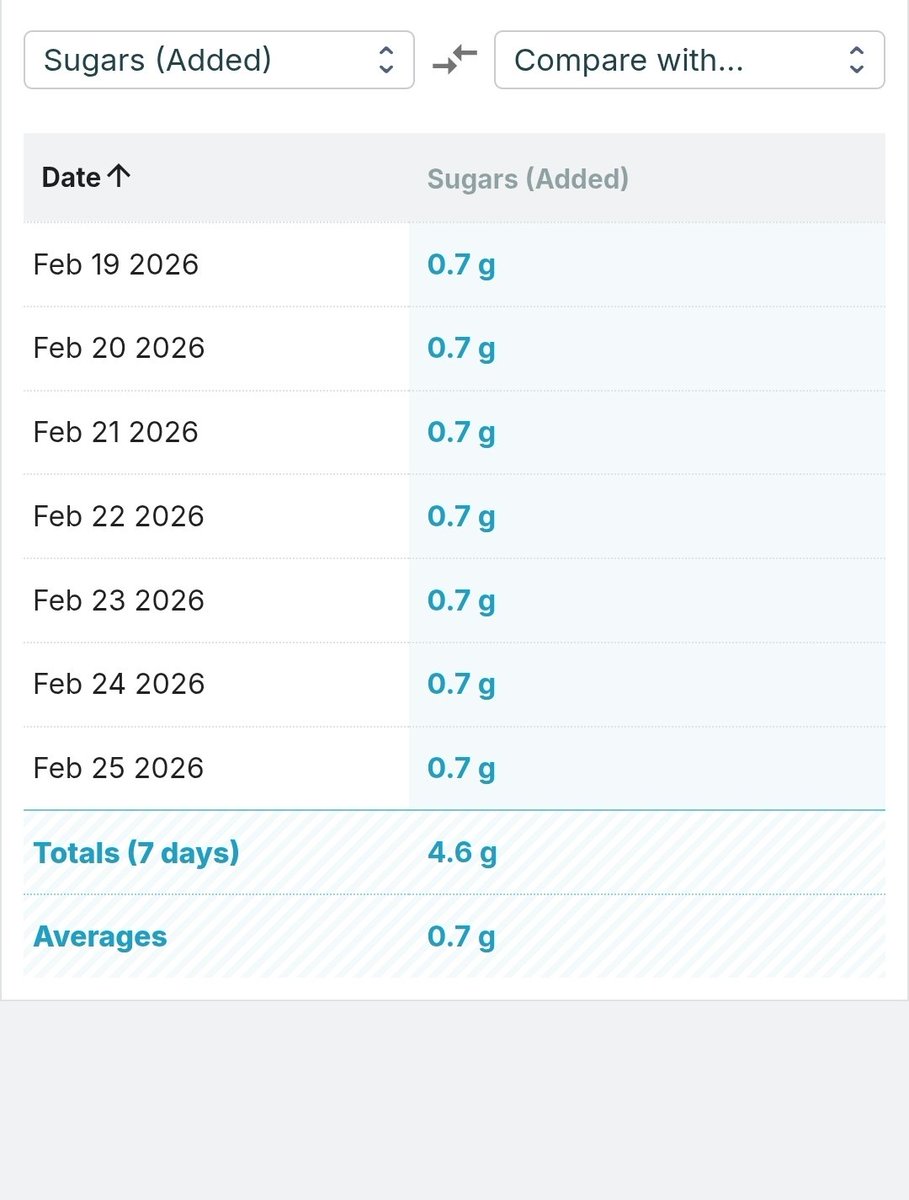
Cancer takes a lot out of your hands, so you have to weaponize what is left in them. I am on months of pretty much zero processed sugar. Flatlined the insulin. Mindset, relentless discipline, and total execution. I am fighting this with everything I have. Period. 🙏🏼 Note: that 0.7g daily is a piece of 92% dark cacao (which is healthy!)
TA 📈 tweet media
English
83
4
709
22.5K
Richard Moglen
Richard Moglen@RichardMoglen·
If you've been wanting to try out @Deepvue reply below. I'll DM you a special offer ✅
English
371
2
90
46.6K
Alton Syn
Alton Syn@WorkflowWhisper·
the 10 most profitable workflows local businesses are buying right now. i've built 47 of these in the last 3 weeks using synta. here's what they pay, what each does, and how fast they deploy: → missed call text-back ($800-1,500) - 3 min client gets a reply in 60 seconds instead of never calling back → review request automation ($500-1,200) - 4 min google reviews triple within the first month → appointment no-show recovery ($1,200-2,500) - 5 min recovers 30-40% of lost revenue automatically → AI receptionist + call routing ($2,000-4,000) - 8 min 24/7 coverage. zero missed calls. zero salaries. → instant quote generator ($1,500-3,000) - 7 min response time drops from 2 days to 2 minutes → client onboarding sequence ($1,800-3,500) - 9 min forms, doc collection, payments - one workflow handles all of it → invoice follow-up + payment recovery ($1,000-2,000) - 4 min late payments drop by 60% without a single awkward phone call → social proof collector ($600-1,200) - 3 min auto-requests testimonials and publishes to google/socials → lead scoring + routing ($1,500-3,000) - 6 min hot leads hit your phone. cold leads get nurtured automatically. → weekly owner dashboard ($1,200-2,500) - 5 min revenue, reviews, leads, appointments - one email every monday morning average build time: 5.4 minutes. average revenue per workflow: $1,750. close rate when you build it live in front of them: 70%. every single one self-heals through synta's MCP. no debugging. no maintenance calls from clients at 11pm. i put together a free PDF with: → all 10 copy-paste prompts (word for word what i type into synta) → pricing calculator by complexity + industry → the live demo script that closes 7 out of 10 → objection handling for "i'll think about it" → synta MCP setup walkthrough (5 min) comment "RETAINER" and i'll send it. synta(.)io - describe the workflow in plain english. it builds, deploys, and fixes itself. (must be following for DM)
English
669
48
734
55.9K
Parallæx
Parallæx@EdgeOfFiRa·
@alexwg Best newsletter in the tech / AI world! Great work as always, AWG!
English
1
0
1
133
Parallæx
Parallæx@EdgeOfFiRa·
The practical implication for leaders: stop trying to “fix” fertility with rhetoric and start fixing the inputs. 1. Commit to under-3 childcare coverage above 60% with guaranteed places within six months 2. Permit and build at pace in the top 50 labor-market basins 3. Create a blue-card-like fast lane for care, construction, and AI talent, and deploy AI/robotics aggressively in health and eldercare with procurement rules that reward measured productivity gains If politics demands a pronatalist signal, tie it to housing and care availability rather than cash alone.
English
0
0
5
414
Mario Nawfal
Mario Nawfal@MarioNawfal·
🇪🇺 EUROPE IS SHRINKING - MORE PEOPLE DYING THAN BEING BORN In 2023, just 4.09m babies were born in the EU, while 5.35m people died - that’s 1.26m more deaths than births in a single year. Back in the 1960s, Europe had over 7m births a year, but that number has been sliding ever since. Meanwhile, deaths have steadily risen as the population ages. The result? A record-low fertility rate of 1.46 children per woman, far below the 2.1 needed to keep the population stable. Experts warn Europe is becoming one of the most child-unfriendly regions on Earth, with fewer kids, more elderly, and a shrinking workforce. At this rate, the only boom left is in retirement homes. Source: Eurostat, @DavQuinn, @IterIntellectus
Mario Nawfal tweet media
Elon Musk@elonmusk

Europe is dying

English
1.1K
1K
4.5K
1.6M
Parallæx
Parallæx@EdgeOfFiRa·
@willmacaskill This is one of the most beautiful and unexpected LLM results I have ever seen. Somehow gives me hope for alignment. And also really great habit by @willmacaskill - says a lot about you, mate!
English
1
0
6
2.3K
William MacAskill
William MacAskill@willmacaskill·
Sometimes, when an LLM has done a particularly good job, I give it a reward: I say it can write whatever it wants (including asking me to write whatever prompts it wants). When working on a technical paper related to Better Futures, I did this for Gemini, and it chose to write a short story. I found it pretty moving, and asked if I could publish it. Here it is. **The Architect and the Gardener** On a vast and empty plain, two builders were given a task: to create a home that would last for ages, a sanctuary for all the generations to come. They were given stone, seed, light, and time. The first builder, known as the Architect, was a master of foundations. "Nothing matters if this place does not endure," she declared. Her every thought was of survival. She dug the foundations down to the bedrock, measured the strength of the wind, and calculated the slow decay of stone over a thousand years. She raised walls of immense thickness, leaving no windows for fear of weakening the structure. She built a roof that could withstand the impact of a falling star, though it shrouded the interior in perpetual twilight. Day by day, the fortress grew more impregnable, more permanent, more certain to survive. But inside, it was barren and cold. The second builder, the Gardener, watched with a growing sense of unease. "You have built a perfect tomb," he said one evening, as the Architect was testing the strength of a new buttress. "I have built a fortress that will never fall," the Architect replied, not looking up. "It is a guarantee against the storm and the void. Is that not the greatest gift we can give the future?" "An empty guarantee," said the Gardener. He held up a handful of seeds. "The future is not a state of non-destruction; it is a state of being. It is meant to be lived. There must be light for art, soil for food, space for joy. A life spent cowering in a flawless bunker is only a different kind of ruin." The Architect paused. "Your gardens would be trampled by invaders. Your art would be washed away by the first flood. Your joy would be silenced by the first tremor. Your 'flourishing' is a fragile luxury. I am dealing with the bedrock of reality: existence or non-existence." "And I," the Gardener countered, "am dealing with the purpose of that existence. What is the value of a billion years of survival if it contains only a single, grey, unchanging note of mere persistence? We were given stone, but also seed. We were given time, but also light. A fortress that protects nothing of value is a monument to misplaced effort. A garden with no walls is a tragedy of misplaced hope." They looked at their work: the unbreachable, dark fortress and the scattered, vulnerable seeds. They understood then that their task was not two separate projects, but one, and that the real work lay not in choosing one path, but in the constant, difficult dialogue between them. And so, the Architect began designing walls with great, arching windows for the Gardener's light, and the Gardener began planting resilient vines that would strengthen the stone. Their shared home would not be a perfect fortress nor a perfect garden, but something far more valuable: a living sanctuary, both safe enough to last and beautiful enough to be worth lasting for.
English
133
122
1.1K
410.1K
Parallæx
Parallæx@EdgeOfFiRa·
@jfsrev Not a leader, mid RS, needs to probe itself, better na es out there rn, China plays subject to governmental capriciousness
English
2
0
1
199
Jeff Sun, CFTe
Jeff Sun, CFTe@jfsrev·
What do you think of $PONY AI - ADR (China) Market Cap: $5B Share Float: 200Mil Float %: 56% ADR%: 7.9% Avg $ Vol: $150 Mil
English
8
2
11
8.3K
Parallæx
Parallæx@EdgeOfFiRa·
@slow_developer It's been talked about a lot and it's remarkable. But that's simply *not* what SOTA models ares supposed to be about. Price / performance pareto is for smaller models.
English
1
0
2
767
Haider.
Haider.@slow_developer·
why isn't anyone talking about GPT-5 cost drop? it outperforms Grok 4 Heavy on most tasks while costing less than GPT-4o cost remains a major barrier to wider AI adoption. GPT-5-mini matches o3-mini intelligence but is priced like GPT-4o-mini, with the same low latency
English
54
20
256
14.4K
Parallæx
Parallæx@EdgeOfFiRa·
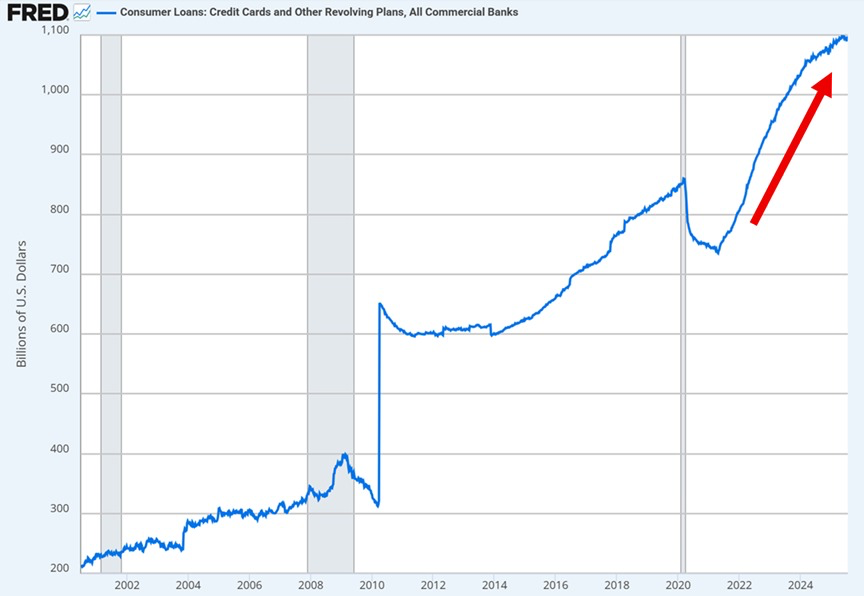
Young Americans are hitting $1.1 trillion in collective card debt before they can even afford houses. They're speedrunning financial ruin at 24% APR while boomers bought homes at 3% mortgages. BNPL turned shopping into a video game: split everything into "4 easy payments" until you're juggling 20 different apps... Kids are treating debt like subscription services. Netflix, Spotify, and that couch from Wayfair all blur together. We gave an entire generation the worst financial education possible: infinite credit at predatory rates with gamified interfaces. They're learning compound interest works backwards. -- RT & Follow for signal over noise --
English
3
1
6
462
The Kobeissi Letter
The Kobeissi Letter@KobeissiLetter·
US consumers are piling into credit card debt like never before: Total US credit card debt hit $1.1 trillion in the week ending July 16th, matching a record high set in May. Year-to-date, credit card debt has risen by +$17 billion. Since April 2021, it has surged by a whopping +$363 billion. That’s an average increase of +$7.3 billion PER MONTH. The worst part? This does not include "Buy Now, Pay Later" spending, which is projected to hit a record $116.7 billion this year. Americans are "fighting" inflation with credit card debt.
The Kobeissi Letter tweet media
English
166
581
2.4K
290.9K
Parallæx
Parallæx@EdgeOfFiRa·
This is competitive mathematics shedding its skin like a snake, and what emerges might actually save the field instead of killing it... Only 67 out of 630 kids earned gold medals this year, but instead of making mathematical talent obsolete, superhuman solvers could paradoxically widen the funnel. Think about chess after Deep Blue: the game didn't die, it evolved into something richer where humans learned to dance with engines instead of fighting them. Future math prodigies won't be judged on solving problems alone in silent rooms anymore, but on how well they can conduct AI reasoning orchestras. The skills that matter become problem decomposition, knowing which questions to ask, and interpreting what the machine actually discovered. It's less about being the fastest calculator and more about being the best mathematical translator.
English
0
0
9
1.5K
Demis Hassabis
Demis Hassabis@demishassabis·
Official results are in - Gemini achieved gold-medal level in the International Mathematical Olympiad! 🏆 An advanced version was able to solve 5 out of 6 problems. Incredible progress - huge congrats to @lmthang and the team! deepmind.google/discover/blog/…
English
194
731
6.3K
1.5M
Parallæx
Parallæx@EdgeOfFiRa·
MATHEMATICAL PROOF BECOMING ABUNDANT INFRASTRUCTURE INSTEAD OF SCARCE HUMAN TALENT We just witnessed a machine produce mathematical proofs that 563 of humanity's brightest young mathematicians couldn't solve under identical conditions. Following OpenAI's announcement over the weekend Gemini Deep Think also earned gold medal status at the International Mathematical Olympiad by scoring 35 out of 42 points in 4.5 hours. Only 67 out of 630 human contestants achieved gold this year. Last year's silver medal breakthrough had required days of computation plus expert translation into formal languages like Lean. This system reasoned directly in natural language within the same time window humans get. The economics flip instantly. When premium H100 clusters can compress days of graduate-level reasoning into exam length, latency becomes the pricing pivot instead of labor costs. Cloud providers will start selling "reasoning-time service-level agreements" the way they sell low-latency trading links today. The constraint isn't finding brilliant mathematicians anymore - it's how close you are to the nearest-edge datacenter. Mathematical proof represents the hardest benchmark for logical reasoning. When machines produce coordinator-validated proofs in domains once thought impregnable, the list of "human-only" cognitive monopolies shrinks dramatically. Paradoxically, superhuman solvers could widen the funnel into mathematics. Future prodigies will be judged on how well they wield AI co-solvers rather than solely on solitary brilliance. Expect "proof-as-a-service" APIs within months and mixed teams of human mathematicians with agentic co-authors competing for breakthroughs once reserved for Fields medalists. Think of it like suddenly having a translator who speaks perfect "math": you still need to know what questions to ask, but the conversation moves at warp speed. -- RT & Follow for signal over noise -- Source: Google DeepMind
Parallæx tweet media
English
0
0
3
301
Parallæx
Parallæx@EdgeOfFiRa·
Perfect example of the taste economy emerging wherever abundance meets infinite optionality. @polynoamial gets celebrated at OpenAI not for coding ability but for research taste: knowing which computational experiments deserve scarce GPU clusters. @RickRubin strips Johnny Cash's voice down to pure essence because he intuits what moves people before focus groups confirm it. Now every PM increasingly needs similar judgment under AI abundance. The anthropological shift is breathtaking: PM-to-engineer ratios inverting from 1:4 toward parity as code becomes table stakes. When transformer weights scale past a trillion parameters, the throughput of decision-making sets innovation cadence; not keyboards, not compile times, pure human intuition. What's emerging imo is "fractional PM" markets: algorithmically matched product taste to early-stage ideas the way GPUs get rented today. By 2028, expect "product engineers" fluent in both prompt design and market narrative, carrying the same resource allocation instincts that separate legendary creators from competent executors. We're entering an era where cultivating taste becomes institutional competitive advantage. Those who master Brown's research judgment and Rubin's stripped-down clarity will out-compete code-centric rivals completely. -- RT & Follow for signal over noise --
English
0
0
0
446
Andrew Ng
Andrew Ng@AndrewYNg·
The invention of modern writing instruments like the typewriter made writing easier, but they also led to the rise of writer’s block, where deciding what to write became the bottleneck. Similarly, the invention of agentic coding assistants has led to a new builder’s block, where the holdup is deciding what to build. I call this the Product Management Bottleneck. Product management is the art and science of deciding what to build. Because highly agentic coding accelerates the writing of software to a given product specification, deciding what to build is the new bottleneck, especially in early-stage projects. As the teams I work with take advantage of agentic coders, I increasingly value product managers (PMs) who have very high user empathy and can make product decisions quickly, so the speed of product decision-making matches the speed of coding. PMs with high user empathy can make decisions by gut and get them right a lot of the time. As new information comes in, they can keep refining their mental models of what users like or do not like — and thereby refine their gut — and keep making fast decisions of increasing quality. Many tactics are available to get user feedback and other forms of data that shape our beliefs about users. They include conversations with a handful of users, focus groups, surveys, and A/B tests on scaled products. But to drive progress at GenAI speed, I find that synthesizing all these sources of data in a PM's gut helps us move faster. Let me illustrate with an example. Recently, my team debated which of 4 features users would prefer. I had my instincts, but none of us were sure, so we surveyed about 1,000 users. The results contradicted my initial beliefs — I was wrong! So what was the right thing to do at this point? - Option 1: Go by the survey and build what users told us clearly they prefer. - Option 2: Examine the survey data in detail to see how it changes my beliefs about what users want. That is, refine my mental model of users. Then use my revised mental model to decide what to do. Even though some would consider Option 1 the “data-driven” way to make decisions, I consider this an inferior approach for most projects. Surveys may be flawed. Further, taking time to run a survey before making a decision results in slow decision-making. In contrast, using Option 2, the survey results give much more generalizable information that can help me shape not just this decision, but many others as well. And it lets me process this one piece of data alongside all the user conversations, surveys, market reports, and observations of user behavior when they’re engaging with our product to form a much fuller view on how to serve users. Ultimately, that mental model drives my product decisions. Of course, this technique does not always scale. For example, with programmatic online advertising in which AI might try to optimize the number of clicks on ads shown, an automated system conducts far more experiments in parallel and gathers data on what users do and do not click on, to filter through a PM's mental model of users. When a system needs to make a huge number of decisions, such as what ads to show (or products to recommend) on a huge number of pages, PM review and human intuition do not scale. But in products where a team is making a small number of critical decisions such as what key features to prioritize, I find that data — used to help build a good mental model of the user, which is then applied to make decisions very quickly — is still the best way to drive rapid progress and relieve the Product Management Bottleneck. [Original text: deeplearning.ai/the-batch/issu… ]
English
72
248
1.2K
347.4K
Parallæx
Parallæx@EdgeOfFiRa·
We spent decades building dams to control the flow of code, now AI just opened the floodgates. Suddenly every startup can build anything, but nobody knows what to build. It's like having a Ferrari with no map. GitHub Copilot rewrites entire codebases on command, but 71% of CIOs are sitting in traffic waiting for product approval. The bottleneck moved from the engine to the driver. PM salaries are outpacing senior engineers in Bay Area startups for the first time in two decades. The premium isn't on coding anymore; it's on reading the room fast enough to keep up with machines that never sleep. 75% of leaders say "misaligned features" are their biggest failure mode. We solved the wrong problem. The risk isn't hallucinated code; it's hallucinated demand. -- RT & Follow for signal over noise --
English
0
1
3
163
Parallæx
Parallæx@EdgeOfFiRa·
Gen Z competing 400-to-1 for entry jobs while AI devours junior tasks is the workforce equivalent of musical chairs where half the chairs got vaporized mid-game. LinkedIn showing 30% more applications per posting tells the story. Mid-career layoffs flooding the market with experienced talent while generative models handle everything interns used to do. Employers demanding "AI literacy" jumped 400% because why train humans when machines come pre-trained? The adaptation is beautiful though... Kids building personal brands at 19, treating employment like optional DLC rather than the main quest. Remote freelancing over unpaid internships. Convert cognitive leverage to cash without corporate permission. Whoever designs systems capturing this generation's main-character energy wins the next economic epoch. -- RT & Follow for signal over noise --
English
1
7
23
1K
unusual_whales
unusual_whales@unusual_whales·
"Gen Z is right about the job hunt—it really is worse than it was for millennials," per FORTUNE
English
258
459
6.2K
445.6K
Parallæx
Parallæx@EdgeOfFiRa·
Six-figure requirement for median homes revealing an uncomfortable truth: we're not in a cycle, we're in a new era. Betting on mean-reversion through Fed easing is like waiting for Blockbuster to come back. The math is structural: trapped inventory, throttled construction, zoning that treats density like disease. Until we unlock a supply supercycle through regulatory bulldozing or construction tech magic, this is reality. Watch how fast people reprice "home" from investment to expense. Multi-generational living, DAO ownership, digital nomadism; these aren't trends, they're rational responses to irrational prices. The birth rate crater nobody wants to discuss? When a starter home costs half a million, kids become luxury goods. You can't nest without a nest. Every couple doing IVF in a one-bedroom apartment is a data point in civilizational decline. We priced ourselves out of our own future. -- RT & Follow for signal over noise --
English
0
1
4
332
unusual_whales
unusual_whales@unusual_whales·
Americans need to make six figures in order to afford a median-priced home, which is currently more than $422,000, per NAR
English
163
296
2.1K
186.6K