ElTrA.Web3

1.7K posts

ElTrA.Web3 banner
ElTrA.Web3

ElTrA.Web3

@EiTraWeb3

Crypto vibes only | Web3 mode ON

Florida, USA Katılım Aralık 2024
681 Takip Edilen563 Takipçiler
Sabitlenmiş Tweet
ElTrA.Web3
ElTrA.Web3@EiTraWeb3·
Music doesn’t just change your mood. It changes your reality. A world where every genre physically transforms the city around you. Reality sounds better. 🎧 Only with @renoiseai #renoiseai
English
9
3
12
372
ElTrA.Web3 retweetledi
MagVerse
MagVerse@MagVerse_AI·
Most brand deals on X are paying for bots. The merchant has no idea. The platform doesn't care. The creator who gamed it gets paid anyway. We built Magverse to fix this. 🧵
MagVerse tweet media
English
222
2.3K
1.5K
19.6K
ElTrA.Web3 retweetledi
Harry (🔮🧡🔮)
Harry (🔮🧡🔮)@0xAI_harry·
Most people still use X just for scrolling.But if you’ve already built a real audience of 1K+ followers, your account is more than just a feed — it’s time to turn your influence into real income. Join creator tasks through @MagVerse_AI and let your content start earning for you. 🔗:console.magverse.io/?invite_code=6… Content-to-Earn is becoming real.
Harry (🔮🧡🔮) tweet media
English
187
861
668
11.8K
ElTrA.Web3
ElTrA.Web3@EiTraWeb3·
@_BlockBelle Interesting shift from transparency as default toward verifiability as default It raises a deeper question whether regulators ultimately care more about observing raw transaction data or independently verifying compliant outcomes
English
0
0
0
27
Belle
Belle@_BlockBelle·
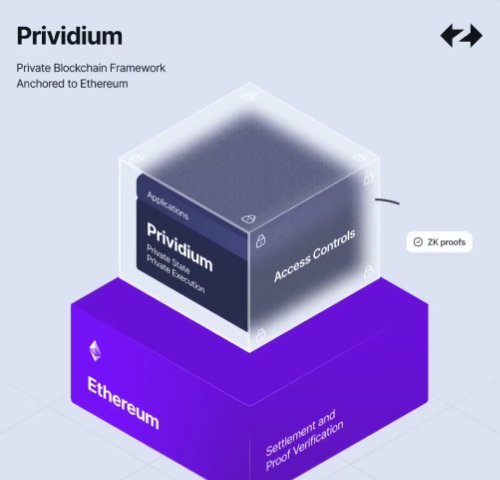
There is a reason bank executives get uncomfortable when settlement infrastructure discussions turn toward transparency as a feature. Transparency is genuinely valuable in some contexts. Public markets benefit from price discovery. Regulators benefit from audit visibility. Clients benefit from confirmation that their instructions were executed. These are real and legitimate transparency requirements that any serious settlement infrastructure needs to satisfy. But transparency in the wrong direction toward counterparties, toward competitors, toward any observer with access to a public ledger is not a neutral property. For an institution whose competitive positioning depends on what it knows about client flows, market activity, and aggregate order behavior, an infrastructure layer that broadcasts that information is not just a compliance problem. It is a strategic one. Consider what a major bank's transaction activity actually reveals over time. Corporate clients drawing down credit facilities before announcing acquisitions. Institutional clients increasing FX hedge ratios before earnings. Sovereign wealth flows shifting allocation ahead of policy changes. None of this information is tradeable in the legal sense when it arrives through normal banking relationships. But aggregated, it represents a reading of market positioning that is genuinely valuable to the institution processing it and genuinely dangerous if it becomes visible to external parties before the relevant activity completes. A public settlement ledger makes this visible by design. That is not a bug in the system that better privacy settings can fix. It is an architectural property of how public blockchain infrastructure works and it is why every institutional evaluation that has reached the compliance and risk management layer has stalled there. The permissioned chain approach of the previous cycle addressed this specific problem by restricting ledger visibility to consortium members. What it could not address was the consequence of that restriction: a settlement network whose utility was bounded by its membership. Institutions inside the consortium could settle with each other. Institutions outside could not participate. Liquidity and counterparty reach stayed trapped within the group. The information was protected. The network was commercially limited. The underlying tension is real: open networks expose information and closed networks limit reach. Resolving it requires a mechanism that can produce verifiable settlement outcomes without requiring those outcomes to carry the transaction detail that makes them sensitive. Zero-knowledge proofs are that mechanism. An institution using $ZK-based settlement infrastructure can prove to any party that a transaction executed correctly - that the right amount moved between the right accounts under the right conditions without disclosing the amount, the accounts, or the conditions to any party not authorized to see them. The proof is the settlement evidence. The transaction content remains inside the institution's controlled environment. @zksync Prividium is built on this separation. Independent execution environments under complete institutional governance. Transaction data structurally offchain within those environments. Zero-knowledge proofs publishing settlement validity to Ethereum carrying finality without carrying exposure. Selective disclosure mechanisms that give regulators and auditors the access they require within authorization frameworks the institution defines. Counterparty connectivity through the @zksync network that extends reach beyond any closed consortium. Cari Network brings five U.S. regional banks with over $600 billion in combined deposits into this infrastructure, built by the former U.S. Comptroller of the Currency. Deutsche Bank constructed its own $ZK Chain. First Abu Dhabi Bank is live through ADI Chain. BitGo institutional custody is integrated. More than 35 institutions are actively evaluating. These are organizations that understand the information dimension of settlement infrastructure at an operational level. They process the flows. They manage the relationships. They know exactly what external visibility of their transaction activity would cost them competitively. Their decision to build on Prividium is a judgment that this architecture protects what needs protecting while delivering what shared settlement infrastructure needs to deliver. That combination not faster processing, not cheaper transactions, but genuinely compatible privacy and verifiability is what makes the current moment in institutional blockchain adoption different from every previous attempt.
Belle tweet media
English
81
31
244
8.2K
ElTrA.Web3
ElTrA.Web3@EiTraWeb3·
@_BlockBelle Removing operator trust through proofs addresses verification but does it fully remove dependency risk if institutions still rely on common proving infrastructure or sequencer coordination
English
0
0
0
27
Belle
Belle@_BlockBelle·
The gap between expressed institutional interest in blockchain infrastructure and actual live deployment has defined the last several years of this conversation in finance. Plenty of institutions have explored. Far fewer have deployed. The difference between those two categories is the full weight of the scrutiny process that sits in between. That process exists because the cost profile of an infrastructure failure at institutional scale is asymmetric in the extreme. Regulatory sanctions. Operational disruption to downstream counterparties. Reputational consequences that compound across years. The teams running compliance, legal, and technology risk review at institutions of this size aren't obstacles to adoption. They're the function that ensures adoption doesn't become a liability. Which makes the live deployment count on @zksync the number that actually carries analytical weight. ADI Chain is live with First Abu Dhabi Bank. That deployment cleared the full review stack at an institution with sovereign backing operating under Gulf Cooperation Council regulatory frameworks. Cari Network is live - five U.S. regional banks with deposits exceeding $600 billion, built and led by Eugene Ludwig. Ludwig's role as the 27th U.S. Comptroller of the Currency placed him at the federal supervisory apex of America's national banking system. The judgment about infrastructure that role develops is not abstract. It is the product of years spent determining whether banks are operating on foundations that hold. That judgment produced a live deployment here. BitGo's institutional custody operation the function most immediately exposed to infrastructure failure is connected into Prividium at production scale. Deutsche Bank built the Memento $ZK Chain on this stack. Thirty-five additional institutions remain in active evaluation. Evaluation matters. The live deployments matter more. The reason those live deployments happened traces back to what Prividium actually resolves at the technical level. The incompatibility between public blockchain infrastructure and regulated finance isn't a perception problem or a regulatory attitude problem. It's a structural problem with four specific dimensions. Transaction visibility on shared ledgers creates competitive exposure that institutions with sensitive workflows cannot accept as an operating condition. Common execution environments require ceding control over a function that internal governance and external regulatory frameworks require institutions to maintain. Consensus-based verification introduces reliance on operator behavior that risk management processes are built to avoid. Settlement pathways that don't connect to established financial counterparties and liquidity sources aren't operationally useful for institutions whose activity depends on both. Prividium was engineered as a direct response to that constraint set rather than as a general-purpose blockchain architecture that later adapted to it. It operates as a permissioned Validium. Each institution gets a fully isolated environment with no shared surface area with any other participant on the network. Execution and transaction data stay entirely within that environment nothing leaves it. The only output that reaches Ethereum is a zero-knowledge proof confirming that the state transition was valid and a state commitment establishing the new state. That combination provides cryptographic finality verifiable by anyone without revealing anything about the activity that produced it. Regulatory and audit visibility is handled through selective disclosure each institution configures independently. The verification is mathematical. The proof removes the need for operator trust entirely. Four structural incompatibilities. Four direct resolutions. One architecture. No tradeoff between them written into the design. What develops behind this foundation as the network grows has a specific structural character that financial infrastructure history illustrates clearly. Settlement networks don't accumulate value primarily through the activity any single participant generates. They accumulate it through the direct connections between participants the corridors through which one institution can settle with another without routing through an intermediary. When a new institution joins, the increment isn't one additional participant's flow. It's a direct pathway to every institution already present. The total number of those pathways grows as the square of the membership. Forty institutions create 780 corridors between them. Seventy create 2,415. One hundred create nearly 5,000. The connectivity grows faster than the membership at every stage and by a widening margin as the scale increases. SWIFT's growth from 239 founding members to over 11,000 institutions across more than 200 countries ran through exactly this structural property. The messaging standard was the enabling condition. The network effect was the mechanism by which a useful tool became unavoidable infrastructure. Visa's transformation from a California bank card arrangement into the layer beneath global retail payments followed the same logic. The founding commitments from credible institutions created a network whose utility compounded with every subsequent commitment. The value of membership increased precisely because of who was already there. That structural condition now has a documented and operational foundation on @zksync $ZK is the only native asset of the @zksync network. Its supply is permanently fixed at 21 billion the protocol contains no inflationary mechanism. As a governance token, $ZK holders direct the decisions through which the network's fundamental parameters are determined and revised: protocol upgrades, fee structures, and economic design. Three bodies distribute that governance authority the Token Assembly managing holder-level voting, the Security Council evaluating technical proposals before they advance, and the Guardians maintaining emergency oversight capacity over the system. $ZK also functions as the native gas token for @zksync Gateway, the settlement layer that consolidates and processes transactions across ZKsync chains and Prividium zones before final posting to Ethereum L1. The economic architecture carries deliberate capacity for development governance holds authority over how $ZK's function expands as network participation and activity scale. The ZKnomics framework that outlines this structure is currently under active community review. Several institutions whose internal scrutiny processes exist specifically to surface infrastructure that hasn't solved the real problems have now cleared this architecture and moved to production. The distance between evaluation and live deployment in regulated finance is not a formality. What's live here passed the full test.
Belle tweet media
English
78
26
174
8.4K
ElTrA.Web3
ElTrA.Web3@EiTraWeb3·
@Prime_0g First Abu Dhabi Bank and Deutsche Bank on the same network is the most meaningful data point here. Two institutions from different jurisdictions creates an actual corridor, not just parallel infrastructure.
English
0
0
0
16
DataRogue
DataRogue@Prime_0g·
Financial infrastructure doesn't win on features. It wins on network position. And network position is won early or not at all. SWIFT was founded in 1973 with 239 member banks across 15 countries. It was not the only interbank messaging system at the time. It was not universally considered superior in every dimension. What it had was a founding architecture that fit what banks actually needed and a critical mass of early participants whose presence made membership valuable to the next institution considering it. By the time SWIFT reached 1,000 members, the question for any serious financial institution was no longer whether to join. It was how quickly they could complete integration. Visa followed an identical logic. Merchants needed to accept the cards their customers carried. Customers carried the cards their merchants accepted. Each new participant on either side made the network more valuable to every participant already present. The network did not grow linearly. It compounded. This is how financial infrastructure has always achieved dominance. Not through technical superiority in isolation but through the combination of architectural fit and early network density that creates self-reinforcing adoption. @zksync is at the early section of that curve right now, and the nodes forming on this network are not small. Eugene Ludwig served as the 27th U.S. Comptroller of the Currency. He founded Cari Network on ZKsync and brought five U.S. regional banks with over $600B in combined deposits. Deutsche Bank built a live ZK Chain on ZK Stack. BitGo integrated institutional custody directly with Prividium. ADI Chain went live with First Abu Dhabi Bank. More than 35 institutions are in active evaluation across the network. Each of these is a node. And the mathematics of what nodes create is not linear. 10 institutions create 45 possible settlement corridors. 100 institutions create nearly 5,000. The value of the network to each existing participant grows with every new participant that joins, which makes the decision to join easier for every institution still in evaluation. This is the compounding that built SWIFT to 11,000 members and Visa to global infrastructure. It does not require central coordination once it begins. It requires architectural fit that sustains it. Prividium provides that architectural fit. Private execution through zero-knowledge proofs. Institution-controlled environments with role-based permissioning. Cryptographic state verification settled to Ethereum. Native connectivity across the ZKsync ecosystem. Each instance operates independently while every instance settles to the same network. Institutions connect to each other without sharing execution environments, without exposing counterparty activity to public ledgers, and without depending on a trusted operator for verification. The architecture satisfies every requirement that has historically blocked institutional blockchain adoption. The early network is forming around institutions that have run exhaustive due diligence and arrived independently at the same infrastructure. $ZK is the only native asset of this network. Fixed supply of 21 billion. No inflation. As governance token, $ZK holders control protocol upgrades, fee structures, and network-level economic parameters through a three-body model: the Token Assembly for holder voting, the Security Council for technical review, and the Guardians as emergency safeguard. $ZK is also the native gas for ZKsync Gateway, the settlement layer that bundles transactions across all ZKsync chains and Prividium zones before posting to Ethereum L1. The stem-cell design means economic function develops through governance as the network scales. SWIFT looked like one option among many in 1973. It looked inevitable by 1983. Critical financial infrastructure rarely announces its dominance at the inflection point. The institutions arriving at ZKsync now are not making speculative infrastructure bets. They are making the same kind of early network position decision that has defined how financial infrastructure compounds across decades. The architecture fits. The network is forming. Those two things together have a specific historical pattern.
DataRogue tweet media
English
74
28
128
6K
ElTrA.Web3
ElTrA.Web3@EiTraWeb3·
@Prime_0g Mathematical verification is only as reliable as the cryptographic assumptions underlying it. What's the contingency if a ZK scheme used in Prividium is found to have a vulnerability?
English
0
0
0
9
DataRogue
DataRogue@Prime_0g·
There is a framing that clarifies why institutional blockchain adoption took this long and why the current moment is structurally different from previous attempts. Traditional finance is not a trustless system. It is a trust-layered system, and almost every institution, intermediary, and instrument within it exists to solve a specific trust problem at a specific point in the settlement chain. Correspondent banks exist because two institutions without a direct relationship cannot verify each other's position in real time, so a trusted intermediary stands between them. Clearinghouses exist because bilateral settlement at scale would require every market participant to maintain bilateral relationships with every counterparty, which is operationally impossible, so a central trusted party nets and guarantees positions. Pre-funded nostro accounts exist because even trusted correspondents require collateral to guarantee settlement before the chain resolves. Reconciliation cycles exist because the trust-based system confirms what happened after the fact rather than verifying state at the point of transaction. Every element of this infrastructure is a rational response to the same underlying constraint: parties cannot verify each other's state directly, so they build elaborate trust structures to compensate for that limitation. The $27 trillion locked in correspondent banking pre-funding is not a symptom of poor design. It is the cost of running global settlement on delegated trust at scale. Global deposits exceeding $100 trillion and annual transaction volume crossing $3.7 quadrillion pass through this trust infrastructure at a friction cost that has become normalized because there was no credible alternative. Zero-knowledge proofs are a credible alternative at the foundational level. A ZK proof allows a party to demonstrate that a statement is mathematically true without revealing the data that makes it true. Applied to financial settlement, this means an institution can prove its transaction is valid, its position is correct, its execution followed the agreed rules, without exposing any of the underlying information to the counterparty or to a public network. The verification is cryptographic. It does not depend on anyone vouching for anything. It does not require collateral as a substitute for certainty. It does not need a reconciliation cycle to confirm what happened because the state is verified at the point of settlement. This is the primitive @zksync built Prividium around, and it is why Prividium is architecturally different from every institutional blockchain product that preceded it. Private execution environments give institutions control over their data and their compliance workflow. ZK proofs carry verification to Ethereum without carrying the data. Counterparties receive mathematical confirmation of settlement state without receiving any information beyond what the proof demonstrates. Regulators receive selective disclosure targeted to their specific oversight scope. The entire system functions without any party occupying the trusted intermediary role that currently extracts cost from every layer of the settlement chain. The institutional participants now on this infrastructure are not making theoretical commitments. Cari Network brings five U.S. regional banks with over $600B in combined deposits, organized by the former U.S. Comptroller of the Currency. ADI Chain is live with First Abu Dhabi Bank. Deutsche Bank has a Memento ZK Chain in deployment. BitGo has custody integrated at the infrastructure level. Over 35 institutions are in active evaluation. Every one of those institutions has internal compliance teams, legal departments, and risk frameworks that exist precisely to evaluate whether infrastructure like this meets their requirements. Prividium clearing those reviews is the most meaningful external validation the architecture could receive, because it means the people whose professional function is to identify where trust assumptions are inadequate concluded that mathematical verification is adequate. The transition from delegated trust to cryptographic verification is not a product upgrade. It is a change in how financial settlement is structured at its foundation. The infrastructure enabling that change is built. The institutions with the most to gain from it are beginning to use it.
DataRogue tweet media
English
18
23
60
5K
ElTrA.Web3 retweetledi
Godson
Godson@0x_Godson·
Solana Summit Creator Challenge 2026 Task: Create engaging content about the Solana Summit in Berlin, Germany, and invite your audience to attend the event. 🏆 Prize Breakdown 🥇 1st Place → $2,500 USDG 🥈 2nd Place → $1,500 USDG 🥉 3rd Place → $1,000 USDG 🏅 4th Place → $500 USDG 🏅 5th Place → $500 USDG 🎖️ 6th–10th Place → $200 USDG each 🎁 Bonus Rewards → $100 USDG ×30 Winners 💰 Total Prize Pool: $10,000 USDG 🟢 Open to participants from all countries 📌 Requirements: ➛ Content must be in English ➛ Submit content link from X, Instagram, or LinkedIn ➛ Tag & follow @SuperteamDE on Twitter/X ➛ Include the official CTA link: luma.com/solanasummitge… ➛ Videos, podcasts, AI content, animations, and threads are all allowed ➛ Open to creators from web2, web3, gaming, finance, and other industries Additional Info: ▸ Hosted by Superteam Germany ▸ 📅 Event Date: June 13, 2026 ▸ 📍 Berlin, Germany ▸ Open worldwide ▸ Creator & Travel Boost Program can be mentioned in submissions ▸ WINNER ANNOUNCEMENT BY June 19, 2026 → as scheduled by the sponsor. 🗓️ Deadline: May 31, 2026
Godson tweet media
English
36
18
239
12.8K
ElTrA.Web3 retweetledi
Renoise
Renoise@renoiseai·
HappyHorse just landed on Renoise. 1080p · 15s · 7-language lip sync Cinematic camera · Text rendering · Hyper-realistic 50% off. Limited time. ✦ Repost + reply "50%off" ✦ 3 winners get $20 Membership
English
66
62
165
9.2K
ElTrA.Web3 retweetledi
Zerogryn.eth
Zerogryn.eth@Zerogryn·
Forged in light, built for vision📱 Excited to apply for the Official Renoise Creator program! This entire smartphone commercial was generated using @renoiseai The ability to render complex tech specs and smooth camera zooms without watermarks is a total game-changer for my workflow. Ready to take things to the next level with the Renoise community!🚀 #RenoiseAI #AIVideo
English
15
1
17
205
ElTrA.Web3 retweetledi
RIN
RIN@rinxtohsaka·
🤖Sci-fi action redefined⚔️ Pushing the limits of AI-driven storytelling with Seedance 2.0 and Nano Banana. The combat fluidity and character consistency in this piece are exactly why I’m applying for the Official @renoiseai Creator program. Can't wait to bring more cinematic visions to the community!🚀 #RenoiseAI #Seedance #NanoBanana #SciFi #AIVideo
English
16
2
21
130
ElTrA.Web3
ElTrA.Web3@EiTraWeb3·
#بدايه برد المتابعه فوري للجميع 🏈
العربية
0
0
0
0
DataRogue
DataRogue@Prime_0g·
Darkness. Power. Presence. i tried happyhorse generation from @renoiseai .... built like a high-end fashion film with neon nights, sharp silhouettes, and pure masculine energy “Own The Night.” Looking forward with Renoise
English
7
0
14
675
ElTrA.Web3
ElTrA.Web3@EiTraWeb3·
@W3Realm Most token governance models struggle with voter apathy at scale. What's the design for maintaining meaningful Token Assembly participation as the network grows?
English
0
0
0
5
W3Realm
W3Realm@W3Realm·
There's a design philosophy embedded in how $ZK was structured that doesn't get explained clearly enough in most coverage of ZKsync. Most network tokens are defined at launch. The economic model is established, the fee mechanisms are live, the tokenomics are fully specified, because the project needs to signal value immediately to attract capital and participants. The economic function and the governance function launch together and the relationship between them is fixed from the start. $ZK was built differently. Fixed supply of 21 billion with no inflation mechanism. But the more significant architectural choice was separating the launch of governance capability from the launch of economic function. $ZK launched with full governance functionality operational and economic mechanics deliberately left open for the network to determine through its own governance process over time. The team described this as a stem-cell design: the token has the capacity to grow into any economic model the network decides is appropriate, but that decision belongs to governance, not to the founding team's assumptions at launch. The implication is that the asset's economic role is designed to be proportional to the network's actual activity rather than priced against a projected future state. The governance infrastructure supporting this is substantive. The Token Assembly handles holder voting on protocol upgrades, fee structures, and economic parameters. The Security Council conducts technical review of upgrade proposals before they can be implemented. The Guardians serve as an emergency safeguard layer. Three distinct bodies with separate mandates and separate authorities, structured so that consequential network decisions require coordination across independent checks rather than unilateral action by any single actor. For institutions building settlement infrastructure on @zksync, this governance structure matters practically. Regulated financial institutions need confidence that the network-level rules they depend on cannot change arbitrarily. The three-body model is designed to make network governance auditable and procedurally consistent, which is a different kind of trust infrastructure than technical decentralization alone provides. The economic function is being constructed in parallel with the institutional adoption. $ZK is the native gas token for ZKsync Gateway, the settlement layer that aggregates all ZKsync Network transactions before posting to Ethereum L1. As Prividium activity grows across institutions like Cari Network's five U.S. regional banks, ADI Chain's deployment with First Abu Dhabi Bank, Deutsche Bank's Memento ZK Chain, and the 35+ institutions currently in active evaluation, Gateway settlement volume grows with it. Protocol fee provisions are already embedded in the commercial architecture of institutional Prividium contracts. The on-chain mechanism for routing those fees through governance-defined structures is in active development. ZKnomics proposals outlining the full framework are currently under community review. The design logic here is sequential and deliberate. Build the governance legitimacy first. Build the institutional network activity second. Define the economic model through the governance process once the network has real activity to design around. It is an unusual approach precisely because it requires patience from everyone involved. But the sequence reflects a considered view about what kind of asset $ZK is meant to be: not a speculative instrument priced against assumptions, but a coordination and governance layer whose role compounds as the infrastructure it governs compounds beneath it. One network. One native asset. Built to grow into its role rather than assert it prematurely.
W3Realm tweet media
English
19
0
22
3.1K
ElTrA.Web3 retweetledi
Pollo AI
Pollo AI@itsPolloAI·
🎬 Pollo AI × GPT Image 2 × Seedance 2.0 contest is live. Deadline: May 14, 11:59 PM PT. Results: May 21 (via Pollo channels). To enter: Create an original video with Pollo AI. Up to 3 submissions per person. Each entrant can win only 1 ranked prize. Follow community guidelines and don’t infringe any rights. 💰 Top prize: 2,000 credits. ⚡ First 30 valid submissions get an extra 100 credits each.
English
28
25
145
14K
ElTrA.Web3 retweetledi
wisdom
wisdom@wmiosd·
17 contests with over $12k in rewards you can position for this weekend ai video contest ($3000) x.com/i/status/20522… deadline: may 16 thread contest ($500) x.com/i/status/20513… deadline: may 11 ai image contest ($1000) x.com/i/status/20513… deadline: may 14 meme contest ($1500) x.com/i/status/20516… deadline: may 18 video contest ($700) x.com/i/status/20519… deadline: may 21 art contest (nft og spots) x.com/i/status/20523… deadline: may 10 meme contest ($100) x.com/i/status/20527… deadline: may 10 remix contest ($2000) x.com/i/status/20513… deadline: may 15 meme contest ($500) x.com/i/status/20513… deadline: may 11 ai video contest (credits & $200 per viral video) x.com/i/status/20523… deadline: may 21 meme contest ($600) x.com/i/status/20511… deadline: may 10 quoting contest ($30 in sol) x.com/i/status/20523… deadline: may 9 meme contest ($1000) x.com/i/status/20514… deadline: may 14 activity contest ($35 in btn) x.com/i/status/20524… deadline: may 12 reply contest ($650 in bnb) x.com/i/status/20526… deadline: tba meme contest ($100) x.com/i/status/20523… deadline: may 11 meme contest ($300) x.com/i/status/20506… deadline: may 10 check my pinned and highlights for more active contests & bounties good luck creating 🫡 disclaimer: not a sponsored post
wisdom tweet media
ZarGates@ZARGATES

CREATE A HERO & EARN LIFETIME ROYALTIES! Today we are opening a new chapter in creating a LORE with our community, where NFTs become part of IP that our community will co-own. It is time to make something special. We want you to create an image of A HERO OF VALDIR! CREATORS CALL We invite you to create a Medieval Fantasy HERO that represents you in our lore. Choose one of six races: Orcs, Undead, Demons, Cat-People, Elves, or Humans. This isn't just a creative contest – it's your chance to become a co-owner of our IP! We will select the top 3 heroes from each race (18 winners in total) to feature in our upcoming PvP Vibe NFT collection (dropping in VibeBoxes at the end of the pre-launch). THE PRIZES: A $1,000 prize pool will be shared equally among the 18 winners! Winners will earn a 3% royalty on every single secondary market sale of their character! Guaranteed reward: EVERY participant will receive an NFT with a deposit ranging from $10 to $5,000! RULES: 1️⃣ Quote repost this post and attach your created hero. 2️⃣ Tag 3 creators. 3️⃣ Use prompt and fill out the Google Form (in the comment) Be sure you follow @zargates and @pvp_vibe and add the hashtags: #AIart #zargates #pvpvibe ⏳ Deadline: May 14th, 9 PM UTC Let's go!

English
40
22
241
13.7K
ElTrA.Web3 retweetledi
wisdom
wisdom@wmiosd·
24 contests you can lock in on this week ai video contest ($25,000) x.com/i/status/20476… deadline: may 24 ai video contest ($1,000) x.com/i/status/20472… deadline: april 29 video contest ($1,888) x.com/i/status/20476… deadline: may 3 art contest ($1,500) x.com/i/status/20486… deadline: may 2 content contest ($15,000) x.com/i/status/20461… deadline: may 31 meme contest ($100) x.com/i/status/20483… deadline: april 27 video contest ($2,000) x.com/i/status/20415… deadline: april 28 trading contest ($20,000) x.com/i/status/20481… deadline: weekly meme contest ($500 in p) x.com/i/status/20485… deadline: 48 hours art contest (gtd spots) x.com/i/status/20481… deadline: may 1 thread contest ($50) x.com/i/status/20469… deadline: april 30 writing contest ($110) x.com/i/status/20484… deadline: may 26 video contest (nft worth $100) x.com/i/status/20485… deadline: may 22 ideathon ($15,000) x.com/i/status/20479… deadline: may 1 writing campaign ($200) x.com/i/status/20459… deadline: may 7 thread contest ($50) x.com/i/status/20465… deadline: april 27 😅 article contest ($100) x.com/i/status/20459… deadline: may 4 stickers contest ($50) x.com/i/status/20484… deadline: may 3 meme contest ($10 in spopatr) x.com/i/status/20483… deadline: april 31 ai video contest ($50) x.com/i/status/20485… deadline: may 1 writing contest ($15 in peggy) x.com/i/status/20485… deadline: may 31 meme contest (—) x.com/i/status/20482… deadline: may 3 writing contest ($60) x.com/i/status/20486… deadline: 48 hours meme thread contest ($85) x.com/i/status/20483… deadline: may 8 check my pinned and highlights for more contests like these… gl creating 🫡 disclaimer: not a sponsored post
wisdom tweet media
MEXC@MEXC

🎬 $1,888 for Your 0→8→∞️Vision! Create a video featuring 0, 8, and ∞: show your creativity and inspire the world! How to join: Step 1: Like + Repost + Comment your UID to enter Step 2: Submit your video to compete Start now ↓ #MEXC0fee #MEXC8eyond

English
51
39
323
24.9K
ElTrA.Web3 retweetledi
Centralised (✘)
Centralised (✘)@CryptoSid1·
🚨 $430 is up for grabs, don’t sleep on this rewards Only for Africans!! @BitgetWalletAF AI Contest is LIVE 🥇 1st Place: $100 🥈 2nd Place: $70 🥉 3rd Place: $50 🏅 4th - 10th Place: $30 Each 🧵 Use your favorite AI image generator to design a Web3 mascot For Bitget wallet Africa that represents speed, security, and hustle. 📅 Deadline: 3rd May 2026 All details & submission link 👇
Centralised (✘) tweet media
English
7
9
66
2.7K