Misneach PRACTICINGCatholic StinkStankStunk

95.3K posts

Misneach PRACTICINGCatholic StinkStankStunk banner
Misneach PRACTICINGCatholic StinkStankStunk

Misneach PRACTICINGCatholic StinkStankStunk

@Elonech2

Saint Michael Veni in auxilium hominum, quos Deus creavit inexterminabiles, et ad imaginem similitudinis suae fecit, et a tyrannide diaboli emit pretio magno.

Misneach a thabhairt do. Katılım Ağustos 2011
1.1K Takip Edilen694 Takipçiler
Misneach PRACTICINGCatholic StinkStankStunk retweetledi
Otto Von Tweetmarck
Otto Von Tweetmarck@OVTweetmarck·
Otto Von Tweetmarck tweet media
ZXX
55
46
394
9.8K
The People Called Romans Go House
Alright folks, step right up! We've got a black red pool. Black: She's over the deed all together and married this kid for a vacation. Red: She's incredibly dissapointed. Don't forget Place your marker on the DAYS it will take for her to be over him and under someone else!
Trevor Sheatz@TrevorSheatz

My wife was formerly promiscuous. I was a virgin. She was then radically born-again. Committed to church, evangelized constantly, Puritan books in her bedroom, prayer journals, grief over past sexual sin, etc. We got to know each other well for over a year, dated for four months, engaged for two and a half, and didn't sin sexually with one another. Our first kiss with each other was at the altar on our wedding day (reaction pic attached!). We've been married for over five years now, and she's been the most wonderful and godly wife, mother to our three children, and homemaker you could imagine. She's more pure than most virgins, as biblical purity has less to with past sins (though they certainly matter) and more to do with one's current posture of the heart and daily decisions to honor the Lord (Matt. 5:8). We're far too quick to forget the story of the woman labeled as a known "sinner" (likely a prostitute) in Luke 7:36-50 who was washing Jesus' feet with her tears while kissing them too. The Pharisees were shocked that Jesus let a public sinner do this. Jesus responded with a parable about debts being forgiven and ended with this powerful conclusion: "Her many sins have been forgiven; that’s why she loved much. But the one who is forgiven little, loves little" (Luke 7:47). Everyone seems to highlight the benefits of virginity, and it certainly is a blessing. But we forget to highlight the benefits of being forgiven much as well. My wife knows the depths of Jesus' forgiveness more than most people, enabling her to more easily live out a life of passionate love for her Savior. A woman or man's past sexual sin matters. But what matters far more when it comes to deciding who to marry is if the person is truly born again, if their repentance is real, if they truly have a heart for Christ, if they truly follow Jesus and obey his commands. "God has chosen what is foolish in the world to shame the wise, and God has chosen what is weak in the world to shame the strong. God has chosen what is insignificant and despised in the world ​— ​what is viewed as nothing ​— ​to bring to nothing what is viewed as something, so that no one may boast in his presence. It is from him that you are in Christ Jesus, who became wisdom from God for us ​— ​our righteousness, sanctification, and redemption, — in order that, as it is written: 'Let the one who boasts, boast in the Lord.'" (1 Cor. 1:27-31) "Therefore, if anyone is in Christ, he is a new creation; the old has passed away, and see, the new has come!" (2 Cor. 5:17)

English
1
0
2
74
Misneach PRACTICINGCatholic StinkStankStunk retweetledi
C3
C3@C_3C_3·
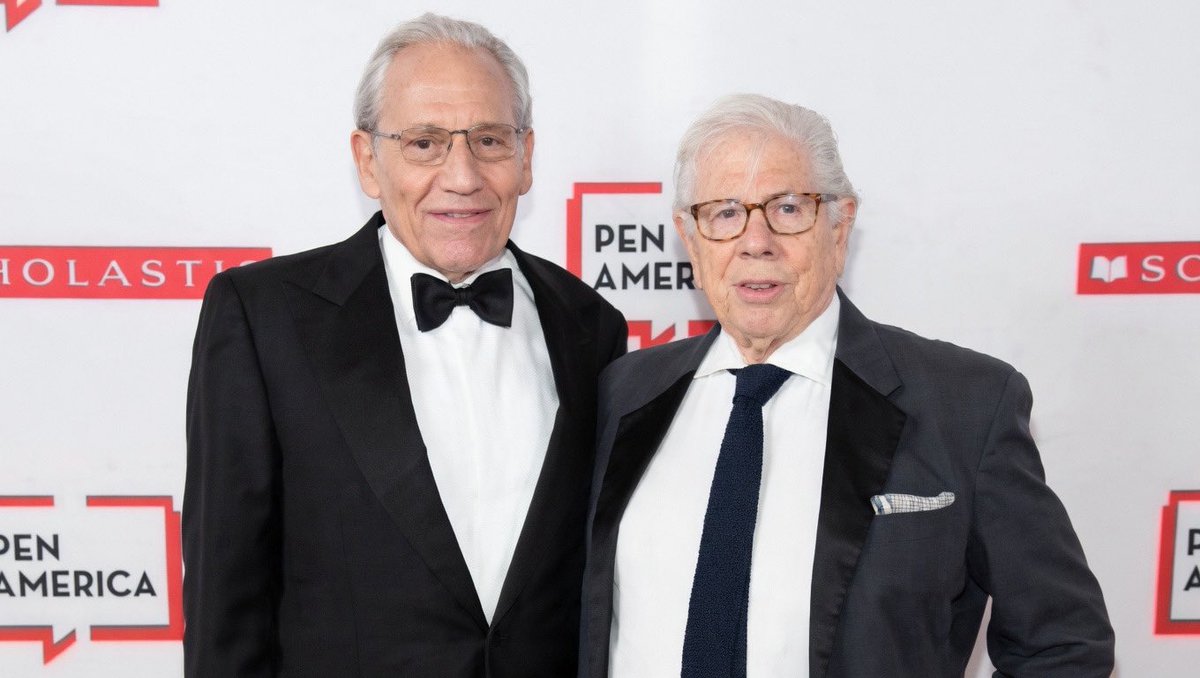
SILVER ALERT: Two elderly men that claim every fake scandal President Trump is accused of is “worse than Watergate” but are now totally missing for Jack Smith and the Biden Administration targeting and spying on political enemies during Arctic Frost.
C3 tweet media
English
121
776
2.7K
23.6K
Phillip Jackson
Phillip Jackson@PEJ1952·
Something I wrote 20 years ago. It still holds up today. Supporting nine out of the first ten Amendments to the Constitution is not enough. I don’t own a gun. I never have, and probably never will. In fact, I’ve never even fired a weapon. Not in anger, not for self-defense, not even for fun. And yet, as someone who has never exercised my Constitutional right to bear arms, I’m as adamant about preserving and protecting this right as I am about preserving and protecting my right to free speech, which I tend to exercise frequently. Over the years I’ve seen many defenses of the Second Amendment. They range from leaving out the “well regulated militia” part and focusing on “the right of the people,” to the general admonition that tyrannical governments prefer a disarmed citizenry. Critics, of course, attack the people’s right to bear arms by assuming that only card-carrying militia members (the kind authorized by the government, not those self-defined groups populating the state of Montana) can own or carry weapons. Or, in an appeal to emotion over Constitutional language, focus on why the average citizens needs an arsenal of pistols, shotguns, rifles, rocket launchers, and AK-47s. A lot of this discussion, in my opinion, misses the point. If I was defending the Second Amendment — and yes, unfortunately, given the state of political education and public discourse today it needs to be defended — I’d approach it something like this: The Bill of Rights The Bill of Rights, although technically no different than any other provision or amendment of the Constitution, does enjoy a political distinction. It was part of an understood agreement that helped ratify the Constitution itself. This means that we must look at Amendments 1-10 through this prism, rather than just say they reflect the thinking of one period of history. By contrast, the 18th Amendment (prohibition) had the same force of law as all other Amendments and original articles/provisions of the Constitution, but it was clearly just a response to an historical moment. Understanding the Second Amendment as part of the overall Bill of Rights, not as a stand-alone 27-word fragment of the Constitution, is important because the making of a Constitutional provision cannot be separated from the politics of the time. Each article of the Constitution and each Amendment to the Constitution has its own “history” that the Court will refer to in order to discern its original intent; assuming, of course, that the individual members of the Supreme Court are actually interested in determining the constitutionality of an issue, rather than imposing their own standards of “fairness” on constitutional matters. With the first 10 Amendments, it is not merely individual histories that matter, but a recognition that each Amendment is part of an additional, over-arching logic and special place in history. They are a “package” so to speak that collectively says something important about the people’s core, basic right to free speech, the right to bear arms, the right against self-incrimination, and so on. Each right is bound to the other; some flowing from a previous right, others there to protect the exercise of the other rights. Changing the Constitution Looking at the Second vs. the Eighteenth amendment (prohibition), another proof of the Bill of Right’s special place is seen. We can overturn the 18th Amendment with the 21st Amendment, as we did in 1933, without provoking a constitutional crisis. We can even change the way a president is elected, the date a president is inaugurated, limit a president’s term in office, and change the line of succession for a president. And each of these constitutional provisions could be changed again at some future point without public outcry. But fundamentally change any one of the first 10 Amendments, and people will perceive that the basic rights embodied in the Constitution itself are under attack. It may be more accurate at this point to say “may” perceive instead of “will” perceive because, as I’ll explain later, the public needs to be aware that a fundamental right is in danger before it will react to that threat. And this recognition depends on a couple of factors that I’ll discuss in more detail shortly. Free speech is one case where the public is generally aware that a basic right exists, although they may not be entirely aware of exactly what that right entails. The First Amendment entitles one to speak freely without undue governmental constraint, with speech defined not just as words being written or vocalized, but encompassing the methods of free speech as well (with the unencumbered use of money being a principle vehicle to exercise this right). It does not, as some people contend, also demand the right to be heard. George Soros has a perfect right to spend millions, if not billions, to spread his bilge. I, however, am not obligated by the First Amendment to listen to his rantings, or if I do listen, believe what he says. In recent years the Supreme Court has eroded some of the protections normally associated with the right of free speech — upholding Campaign Finance Reform, to name the most prominent example — provoking a long, sustained, ongoing public outcry. However, as vociferous as these complaints are to a sizeable section of the population who not only want a full restoration of their Constitutional rights, but fear even further erosions of the Right to Free Speech by political sleights of hand like the “Fairness Doctrine,” this outcry would become a deafening roar if the First Amendment itself was formally overturned and replaced with an entirely new concept. This is why changes to the Bill of Rights are normally of the “frog in boiling water” kind. That is, they are small and gradual modifications whose impact is felt over the long passage of time, like placing a frog in a pan of water and gradually turning up the heat. By the time the cumulative changes have been recognized, the water is at full boil and the frog is dead. No such subterfuge is needed to change a presidential succession policy, or alter the way in which a senator is elected to office. This gives the first 10 Amendments a de facto status over and above any other Amendment, or even any other Articles of the Constitution itself. Interstate commerce has been radically changed over the years through Supreme Court interpretations. And even such things as the president’s power to fight a war has been altered by legislation (the War Powers Act), or simply by the changing world situation that makes formally declaring war no longer practical in all cases. Some people will point to this last example and contend that the Constitution is not simply being changed; it is being subverted. There is room for legitimate debate here, and the passion it provokes is noticeable and real. But that passion and debate is not widespread. The overwhelming majority of those opposed to the use of US military force in Iraq do not point to the Constitution’s declaration of war provisions to ground their argument. This is a debate among academics and ideological political activists. But use the government to close down a newspaper for saying unkind things about Bush, McCain, Hillary or Obama, and even the guy who never heard of Adams, Jefferson, or the Federalist Papers will see a threat to his/her basic Constitutional rights. Unlike the Amendments that followed, or any one of the Constitution’s main provisions itself, too much tinkering with the Bill of Rights is the political equivalent of touching the “third rail” of American politics. Slow and modest changes may be accepted over time, as long as the core issues of each Amendment are left relatively untouched. However, go too far and take away liberties rather than simply modify their expression, and it will provoke a deep and instinctive reaction. Only a couple of later Amendments could invoke the same passion; those ending slavery and extending suffrage. But one could logically argue that these are extensions of the Bill of Rights itself, and thus viewed with somewhat of the same intrinsic reverence as the original 10. State-Federal Relationships It is true that in addition to chipping away at the edges of the First Amendment — and to some people’s way of thinking, doing the same thing to other key elements of the Bill of Rights through the passage of things like the Patriot Act — the Supreme Court has also altered the meaning of the Ninth and Tenth Amendments by allowing the Federal Government to usurp more and more State power. But significantly, even though the Ninth and Tenth Amendments have been dramatically altered since they were first enacted, even to the point of stripping away many of their core components, no individual rights are being “taken away” by this de facto and de jure reinterpretation. Transferring powers to the national government that formerly belonged to the States is not the same thing as eliminating an individual’s right to free speech, or jailing someone without due process. Please understand that I’m not trying to downplay the significant impact the Federal usurpation of State authority can have on individuals. Anything the government does — Federal, State or local — impacts each citizen of the country, and the more distant our elected representatives are, the less inherently accountable they become to our individual wishes. Rather, I’m pointing out the very real distinction in the minds of the public between Amendments that protect their own personal freedoms, and Amendments or Constitutional provisions that regulate and govern the country. The Bill of Rights contains both types of protections, and both are certainly important. But it’s equally true that when pressed to name the Bill of Rights, most citizens fade after “free speech,” “the right to own guns” and the right to “take the Fifth.” Since we’re talking here about individual perceptions of individual rights, it’s fair to say that any significant tampering with the First, Second and Fifth Amendments would invoke immediate outcry, while altering the language of “In suits at common law, where the value in controversy shall exceed twenty dollars, the right of trial by jury shall be preserved . . .” would promote less of a public reaction. In fact, this is one reason why loud lamentations about the inherent danger of the Patriot Act generally fall on deaf ears. No one wants to surrender their right against self-incrimination, but unlike shutting down a newspaper (or your favorite talk radio host), or confiscating your gun collection, the average citizen does not stay up nights worrying that the ghost of J. Edgar Hoover is personally reviewing his public library card records. So, while the preservation of States Rights is a fundamental part of the Bill of Rights, the public is generally willing to allow the details of this Federal-State partnership to be worked out without too much of their personal oversight or involvement. As a consequence, the States are generally allowing this usurpation or erosion of their power to happen as part of an understood political bargain that gives them federal funds in return, or relieves them of certain regulatory and oversight responsibility which can cost them both money and manpower. Of course it’s a Devil’s bargain at times, because the Federal government can use this power to impose unfunded mandates on the States. But we can’t judge the history of what allowed a change to occur by the actions decades, even centuries later of certain parties that now make it seem like a less-attractive deal. Therefore, the fact remains that while States have not always surrendered their powers willingly, neither have they always fought this surrender. To those who want to point to the Civil War as a fight to preserve the States’ powers, and maintain that this trend toward increased federalization is only the case because of Federal occupation of Southern lands following the Civil War, I would point out that erosions of State power occurred well before the 1860s. And, the continuing decisions of the States in the 20th and 21st centuries to accept increasingly diminished power cannot be laid completely on the doorstep of Robert E. Lee’s military failures. The people of modern day Alabama, Georgia, and Mississippi are no different today in surrendering State power to seek increased Federal aid than the people of New York, North Dakota, or California. State leaders who actively and complicitly trade State power for Federal funding of State projects are not driven from office; they are re-elected. Individual-Government Relationships Where matters involve clearly-recognized individual rights, there is less erosion of Bill of Rights provisions, and more of a battle when such a threat occurs. The Court has allowed — and the public has generally accepted — certain changes in the Bill of Rights, in part because new technology and new circumstances require these changes. Electronic evesdropping on overseas phone calls routed through US phone lines is an example of this. Some hyper-sensitive Constitutionalists see this as an infringement on the First, Fourth and Fifth Amendments, even though the conversations are exclusively between foreigners and not US citizens. They fear that, taken to the extreme, the Patriot Act will strip away individual civil liberties if this precedent stands, so they resist. But to most people, warrantless wiretaps of suspected foreign terrorists pose no inherent Constitutional risks. In other areas, such “progress” is met with public resistance. In an effort to protect the people from hateful speech, and in so doing protect the jobs of incumbent legislators, Congress passed the McCain-Feingold campaign finance reform law. The Supreme Court of the United States (SCOTUS) upheld key provisions of that law, provoking a public uproar. The courts are presently re-visiting the law to lessen some of these restrictions and make other appropriate changes, once again demonstrating that unreasonable limitations on the Bill of Rights’ individual rights will not be tolerated, no matter how “noble” the impetus for the change. Reasonable limitations, such as acknowledging that free speech doesn’t permit slander, or the impermissibility of yelling “fire” in a crowded theater, are acceptable to the public. In the same vein a certain level of gun registration has been accepted as a “reasonable” limitation on Second Amendment rights. However, severely restricting the public’s ownership of guns is not. “Reasonable” Limitations of Individual Rights “Reasonable” is partly the product of a political compromise, and partly what the courts and politicians can get away with. Since the Constitution operates in a political environment, it cannot be separated from politics. Politics created the Constitution, and dictated the timing of when the first 10 Amendments were ratified. “Politics” even dictated SCOTUS’ role in declaring a law Constitutional or not, so why should any Supreme Court decision not have a political element to it? The question is not whether politics informs SCOTUS’ judgments, but how and to what degree it does. Because of politics the Supreme Court will sometimes create “new” Constitutional rights. The Right to Privacy, which is inferred, not stated in the Constitution, is then used to create the Right of Choice (abortion). However, these Court-created rights are not necessarily permanent. Already there is talk that SCOTUS went too far in permitting abortion through an implied right to privacy. These Court-created rights are very important to some people, and can cause a lot of turmoil if tampered with. But they ebb and flow over time, strengthening or weakening with the politics of the moment. Limiting First or Second Amendment Rights is a much more difficult thing to do. If the line is crossed all hell will break loose, and it is not hyperbolic to say that we could even have another revolution if free speech was shut down, or if Washington tried to confiscate all the guns in the country. There will also be a lot of protest and commotion if a “Federal Right” to abortion is overturned. But as upsetting as this would be to certain elements of the country, it would not cause a rebellion. The result would be to return the matter to the States for individual decisions to permit or exclude abortions, which is the proper constitutional place for this decision. The battle over the value of unborn human life would continue as it does today, this time fought on the appropriate political terrain. The Language of the Second Amendment As I observed earlier, opponents of the Second Amendment regularly point to part of the language of that Amendment to try to limit these rights (i.e. politically redefine what is “reasonable”). They focus on the phrase “A well regulated militia, being necessary to the security of a free state . . .,” and deduce from this that only government-sanctioned militias can own weapons. However, I don’t believe that a reasonable interpretation of this language limits this right. Rather, I think it simply acknowledges the true nature of the Constitution itself. The Constitution reflects our God-given inalienable rights articulated in the Declaration of Independence. The first ten of these rights are embodied in a special “Bill of Rights,” thus reinforcing this link to our God-given rights. These are not rights bestowed by man, which can be taken away by man. They come, as do all inherent rights, directly from God. God has not dictated that a Federal-State system be established with “the powers not delegated to the United States by the Constitution, nor prohibited by it to the states, [be] reserved to the states respectively, or to the people.” Instead, man’s God-given inalienable right to Life, Liberty, and the Pursuit of Happiness find expression and protection through provisions such as the Bill of Rights. The Bill of Rights is the agreed-upon vehicle to preserve and protect these core values and their associated rights, and thus are tied directly to the justification for creating the United States in the first place; a justification that begins with a reference to universal truths bestowed by the Creator. With rights come responsibilities. According to the Declaration of Independence — which serves as the justification for our government to exist, the Constitution representing the details of government given expression through that declaration —men have a responsibility to act to uphold their inalienable rights. When a government acts contrary to the advancement or protection of these rights, its citizenry is duty-bound to oppose it with force, if necessary. In this case, the militia was a manifestation of the public’s responsibility to defend the Constitution and all it stood for. In effect, the language in the Second Amendment referring to militias wasn’t meant to limit the right to bear arms, but to broaden it! This fundamental right cannot be limited unreasonably, or it will violate the integrity of the Constitution itself. In America, the people give the government its legitimacy; the government doesn’t exist apart from the people. The “government” is not a living thing, and has no rights apart from what the people grant it. Therefore, that artificial creation (“the government”) cannot assert its so-called rights (because it has none) over an individual, and still act in accordance with the purpose and intent of the Constitution. It cannot take away, unreasonably limit or infringe the right (not ‘man-given permission’) of the people to keep and bear arms. It is no accident that the right to bear arms comes after the right to free speech in the Bill of Rights. This is the pecking order of the “special rights” embodied in the Constitution. An individual’s right to bear arms is so important, it even comes ahead of the right to protect against self-incrimination, unreasonable search and seizure, and cruel and unusual punishment. The only right more precious is the right to free speech, which I am using now to defend the other rights embodied in the Constitution. Protecting those rights, however, may ultimately require more than words — which is why we have the Second Amendment.
English
20
1
11
2.4K
Our Own Nation
Our Own Nation@OurOwnNation·
Shaquille Taylor killed Lillian Ludwig, but his IQ is TOO LOW, so courts are debating if he can stand trial. This wouldn't be the first time this has happened.
Our Own Nation tweet mediaOur Own Nation tweet media
English
980
2.1K
7.1K
160.1K
Misneach PRACTICINGCatholic StinkStankStunk retweetledi
The Researcher
The Researcher@listen_2learn·
Russiagate criminal Marc Elias and lawfare squad propagandist Glenn Kirschner want you to know that the Trump administration has weaponized the DOJ, so they have created a group of former DOJ lawyers and FBI agents to prosecute Trump administration officials starting after the midterms or in January 2029. It’s apparently called the America Accountability Project. Before Trump 2.0 was inaugurated, Glenn spoke about the corrupt DC judges being guardrails to holding Democrats accountable. If the corrupt DC judges are not removed from the bench and the DC courts are not abolished, they will allow any and all efforts to put Republicans in prison, just like they did during the four years of the Biden regime, and the same juries that are currently intentionally nullifying any charge brought by the Trump DOJ will be happy to go back to finding all Republicans guilty. Trump needs to find an AG who knows what day it is.
English
81
269
560
12.5K
Misneach PRACTICINGCatholic StinkStankStunk retweetledi
Daniel Knauf 👹🌎
Daniel Knauf 👹🌎@daniel_knauf·
In America, we normally effect “Regime Change” via a free and fair election. However, since these folks advocate for the benefit of a razor-thin minority, that’s not viable, so they resort to lawfare, crooked NGOs and the astroturfed “color revolution” techniques pioneered by the CIA.
Daniel Knauf 👹🌎 tweet media
English
5
4
5
104
TheFelonAttorney
TheFelonAttorney@felonattorney·
@listen_2learn @RonColeman I love the ethics standard for democrats like norm is legal. A lot of bad stuff can be done and are legal. I wonder how the Bar feels about his ethics standard
English
2
2
8
260
Misneach PRACTICINGCatholic StinkStankStunk retweetledi
The Researcher
The Researcher@listen_2learn·
Norm Eisen’s brainwashed sidekick, Jennifer Rubin, said the truth out loud. They are using color revolution tactics to overthrow Trump 2.0 (aka regime change), just as they did with Trump 1.0. That is the grand conspiracy. Norm had to chime in with “peaceful and lawful” to cover themselves.
English
168
1.1K
2K
62.1K
Misneach PRACTICINGCatholic StinkStankStunk retweetledi
The Researcher
The Researcher@listen_2learn·
Norm Eisen and LULAC are apparently working on a lawsuit over ICE agents helping in airports. Lawfare is a color revolution tactic. The worthless republicans should have been working on legislation to reign in people like Norm instead of wasting so much time on the Epstein charade.
English
8
31
64
1.2K
Misneach PRACTICINGCatholic StinkStankStunk retweetledi
Roger Stone
Roger Stone@RogerJStoneJr·
Jake Sullivan was up to his ass in the seditious conspiracy against Donald Trump known as the Russian collusion hoax. Why hasn't he been indicted?
Furkan Gözükara@FurkanGozukara

BOMBSHELL: Jake Sullivan reveals that just days before the US started bombing Iran, Tehran put a massive peace proposal on the table in Geneva. The US negotiators "simply didn't understand what they were being offered" and bombed them anyway!


English
213
629
1.8K
32.8K
AF Post
AF Post@AFpost·
A former University of Kentucky student who was sent to jail for drunkenly saying the n-word has been denied early release and will serve her full one-year sentence. The judge reasoned that early release would “unduly depreciate the seriousness” of the crime. Follow: @AFpost
AF Post tweet mediaAF Post tweet media
English
1.9K
713
5.8K
805.8K