Martin Elstner

682 posts

Martin Elstner banner
Martin Elstner

Martin Elstner

@ElstnerMartin

Building AI knowledge system @ElstnerAnalytic | Product-focused | Passionate about LLMs, search systems & data science | Knowledge for LLMs

Germany Katılım Kasım 2014
2.1K Takip Edilen507 Takipçiler
Sabitlenmiş Tweet
Martin Elstner
Martin Elstner@ElstnerMartin·
The Unintended Consequences of Strict AI Policies If your company implements stringent rules regarding the use of Generative AI tools, there's a high probability employees will find ways to circumvent them. Our initial survey data from a large, mid-sized German technology firm supports this. It indicates that a limited number of approved AI offerings often leads to unregulated usage through other channels. Approximately one-third of respondents admitted to using unauthorized LLM chatbots via their personal phones, unapproved websites, or both. While this data point represents a single company with 3,409 survey respondents, it provides valuable insight. Furthermore, a quarter of all respondents (789, or 23%) reported not using LLMs at all. We conducted an anonymous survey across all employees, comprising 12 questions on GenAI usage and 7 demographic classification questions. The company itself is focused on industrial goods production, rather than IT, though about 20% of the workforce is in software roles and another 20% in hardware engineering. All employees have access to an internally developed web UI that integrates OpenAI models hosted in Azure—essentially, an isolated, internal ChatGPT clone. Both GPT-4o and GPT-4o-mini are available, and the use of internal, confidential data within this tool is explicitly permitted (e.g., copying confidential email content into the chat window for context). Despite this internal tool, company regulations prohibit the use of any other GenAI tools for work-related purposes. Access to certain tools like ChatGPT or DeepSeek is also blocked on the internal network. Many users express a desire for more features than the basic in-house chat UI provides. Prominently mentioned wishes include improved chat history and search functionalities, access to advanced reasoning models, document upload capabilities, and image generation. The availability of these features in free or $20/month external tools significantly contributes to what we term "gray usage." Specifically, 21% of employees use LLM chatbots on their private phones for work-related queries, 10% use unauthorized web-based LLM chatbots (not all of which are blocked), and 3% engage in both. While not all unauthorized usage may pose high risks (e.g., many programming questions can be asked without exposing company intellectual property), data exfiltration via chat UIs remains a genuine concern, particularly given the activity of certain dubious entities in this domain.
Martin Elstner tweet media
English
0
2
9
934
Martin Elstner retweetledi
Dr Elisa Perego
Dr Elisa Perego@elisaperego78·
My new research is out "Overview and Pathophysiology of Long Covid" I provide an updated overview of key concepts, terminology and epidemiology of LC. I also offer an analysis of key mechanisms of pathology and multi-organ involvement in #LongCovid mdpi.com/2673-8112/6/3/…
Dr Elisa Perego tweet media
English
36
240
646
19.6K
Martin Elstner
Martin Elstner@ElstnerMartin·
@AAAzzam @BEBischof Wished, we had that technology for our wedding invitations. But would never be able to settle between uvx and npx with my wife
English
0
0
1
60
Martin Elstner
Martin Elstner@ElstnerMartin·
Wobei das hier allem Anschein nach ein Datenbankproblem ist, zwar in einer KI-App, aber das Modell hat mit der Möglichkeit auf die Daten zuzugreifen wohl nichts zu tun. Die Entdecker nutzten zum auffinden der Lücke auch ein LLM, aber die hätte man grundsätzlich auch manuell finden können.
Deutsch
0
0
1
57
Maja von Westphal
Maja von Westphal@majavonwestphal·
Du stehst unter Zeitdruck und knallst eine komplette Mail mit Kundendaten in eine KI. "Würden Sie zustimmen, wenn jeder Mitarbeiter seine eigene Software von zu Hause mitbringt?" - "Nein." Und warum darf dann hier jeder seine eigene KI mitbringen? Compliance, Schmonziance.
NB@FernetBuehler

Wenn dein Schwimmlehrer vor deinen Augen ertrinkt, fängst du an, seine Qualifikation zu hinterfragen. McKinsey ist gerade ertrunken. McKinseys KI-Chatbot "Lilli" wurde in 2 Stunden gehackt. 46,5 Millionen Chat-Nachrichten im Klartext. M&A-Deals, Kundenstrategien, vertrauliche Dateien. 728.000 Dokumente. 57.000 Nutzerkonten. Alles offen. Alles editierbar. Die Schwachstelle? SQL Injection. Die kennt jeder Informatik-Erstsemester. McKinseys eigene Scanner haben sie zwei Jahre lang übersehen. Ein KI-Agent hat sie in 2 Stunden gefunden. Ohne Zugangsdaten. Einfach so. Das wäre peinlich genug für jedes Unternehmen. Aber McKinsey positioniert sich als globaler Vorreiter für KI-Transformation. Berät DAX-Konzerne und Regierungen, wie man KI sicher einsetzt. Und kriegt das eigene Produkt nicht in den Griff. Und es sind nicht McKinseys Daten, die da schwimmen. Es sind deine. Alles landet in Lilli. Dein M&A-Deal teilt sich die Datenbank mit der Frage, ob Hafermilch im Flat White zulässig oder eine Todsünde ist. Überrascht mich das? Kein bisschen. Ich habe in etlichen Projekten mit McKinsey zusammengearbeitet. Brillante Strategen, exzellente Folien. Aber echte technologische Expertise? Dünn. Sehr dünn. Wer KI-Transformation verkauft, aber SQL Injection nicht findet, hat kein Sicherheitsproblem. Der hat ein Glaubwürdigkeitsproblem. Aber das Glaubwürdigkeitsproblem hat nicht nur McKinsey. Ich führe hunderte Gespräche im Jahr mit Geschäftsführern, Bürgermeistern, IT-Leitern. Alle sagen: "Bei uns halten sich alle an die Regeln." Das ist - und ich wähle meine Worte hier sehr bewusst -Bullshit. (Das Thalia Theater hat angerufen, die wollen das Stück aufführen.) Du stehst unter Zeitdruck und knallst eine komplette Mail mit Kundendaten per Copy & Paste in eine KI. Compliance auf dem Papier schützt keine einzige Zeile Daten. Menschen schützen keine Daten. Technologie schützt Daten. Security by Design. Genau das hat McKinsey nicht gehabt. Und die meisten anderen auch nicht. Letztens habe ich einen IT-Leiter gefragt: "Würden Sie zustimmen, wenn jeder Mitarbeiter seine eigene Software von zu Hause mitbringt und auf Ihren Systemen installiert?" Er hat mich angeguckt, als hätte ich ihm vorgeschlagen, die Firewall abzuschalten. "Nein. Natürlich nicht." Und warum darf dann hier jeder seine eigene KI mitbringen und machen was er will? Schweigen. Lautes Schweigen. Nach außen Rettungsschwimmer. Nach innen Seepferdchen. Aber die Rechnung ist für Olympia-Gold.

Deutsch
3
1
32
2.6K
ObsidianBloom
ObsidianBloom@laliMystic_Petp·
@MrMason1907 Are there any examples where full-day schools successfully offer individual support?
English
2
0
1
126
Mr.Mason | BW 
Mr.Mason | BW @MrMason1907·
Theresa Schopper: „Ganztagsschule steht für individuelle Förderung (…)“ Meiner Erfahrung nach steht die Ganztagsschule im Primarbereich (leider!) nicht für individuelle Förderung. Bei Gruppengrößen von bis zu 20 Kindern am Nachmittag ist das schlicht unmöglich & Wunschdenken.
Deutsch
10
1
61
2.4K
Martin Elstner
Martin Elstner@ElstnerMartin·
GLM-OCR is a good default for pdf2MD extraction and there cli tool has sensible defaults. It's easy to setup and run on Mac with GGUF models and llama.cpp (1.5G model size), my notes: #discussioncomment-16102777" target="_blank" rel="nofollow noopener">github.com/ggml-org/llama…
English
0
0
0
59
André Rieu
André Rieu@superrieu·
Level 6 könnte in diesem Sinne wohl auch YOLO benannt sein 😂 Anyways, es gibt tausende solcher Tutorial-Videos, aber 👇 fand ich ganz gelungen. Aber ob's nun unbedingt 6 unterschiedliche Level sein müssen 🤷‍♂️ 4/4 youtu.be/TUKYbUIXLOE?si…
YouTube video
YouTube
Deutsch
1
1
4
287
André Rieu
André Rieu@superrieu·
👇 Hands-On-Tutorial zu den sechs Level der Automatisierung von Softwareentwicklung mittels Claude Code ist recht gelungen: 1: The Prompter 2: The Planner 3: The Context Engineer 4: The Toolsmith 5: The Skilled 6: The Orchestrator 1/4
Deutsch
1
2
10
1K
Martin Elstner
Martin Elstner@ElstnerMartin·
As an addition: we thought that we need detailed ontologies with many explicit rules how things are or interact. We now see that graphs of knowledge and interaction are really useful but they can be much more lightweight and on-the-fly. Heavy pre-defined ontologies seem to be a waste of effort in most knowledge systems and applications
English
0
0
0
72
Daniel Lemire
Daniel Lemire@lemire·
We are currently living through a great innovation: an AI breakthrough. It is likely that this new technology will lead to novel conceptual breakthroughs in the coming months and years. The way the history of science is presented, theory always comes first, followed by experiments. This is almost exactly backward. Technological breakthroughs and experiments tend to precede conceptual breakthroughs. Train travel became commonplace in Europe in the middle of the 19th century. Soon after, the Michelson-Morley experiment found that the speed of light was constant in all directions… in 1887. And it would be 18 years later that Einstein would come up with his theory of relativity in 1905. Einstein’s theory was not entirely novel, nor was it the final concept, but it is a useful reference. Similarly, there was a sequence of breakthroughs in electricity. Volta invented the electric battery in 1800. Faraday invented the electric motor in 1821. Maxwell’s laws and electromagnetism came decades later (1860s). Similarly, generative AI should lead to theoretical breakthroughs. Some of the conceptual advances are evident. 1.Linguists told us for decades that language was not statistical, but rule-based. When learning to speak, we just deployed our innate ability to apply rules. This was believed to be true despite the fact that some human languages falsified the model, as they resist description by simple rules. 2.Many thought that mastery of language was the ultimate sign of human intelligence. ChatGPT masters language but it is not intelligent the way a human being is. 3.Many people thought that the future of software programming involved more layers of formal reasoning. We are now programming with the help of probabilistic machines that were never explicitly told what the rules are. But I expect it is only the beginning. What are you waiting for? Now is the time to get your name in history. Go figure out something new!
English
8
3
71
5.8K
Martin Elstner
Martin Elstner@ElstnerMartin·
@humane_Vernunft Beim Heizen kann doch gar kein „Kältemittel“ austreten. Das wäre doch Quatsch
Deutsch
1
0
0
17
Marv
Marv@humane_Vernunft·
Klimaanlagen, also Wärmepumpen sind schlecht für das Klima, offenbar aber nur, wenn sie zum Kühlen verwendet werden..? Und Kältemittel treten auch nur aus, wenn sie zum Kühlen verwendet werden? Und der Stromverbrauch ist auch nur dann schädlich...spannend zdfheute.de/wirtschaft/kli…
Deutsch
8
0
8
592
Kieler Aktionär
Kieler Aktionär@KielerFinanzen·
Ich weiß übrigens, worüber ich schreibe. Ich war zum Beispiel vor Jahren im Management Team des Insolvenzverwalters eines großen deutschen Zulieferers mit mehreren 1000 Mitarbeitern in der Nähe von Nürnberg. Und was soll ich sagen? Wir haben schlussendlich das Unternehmen an die Chinesen verkauft. So einfach geht das. Und danach einen anderen großen Zulieferer in der Nähe von Würzburg an einen französischen Konzern.
Kieler Aktionär@KielerFinanzen

Übrigens, weil das dem normalen Bürger, der nicht in der Automobilindustrie arbeitet, vielleicht nicht ganz klar ist: Im Durchschnitt kommen auf einen Arbeitsplatz bei einem OEM (hier VW) circa 3-5 Arbeitsplätze bei den Zulieferern, die dann in der Regel ebenfalls wegfallen (müssen).

Deutsch
26
38
551
40K
Maxime Rivest 🧙‍♂️🦙🐧
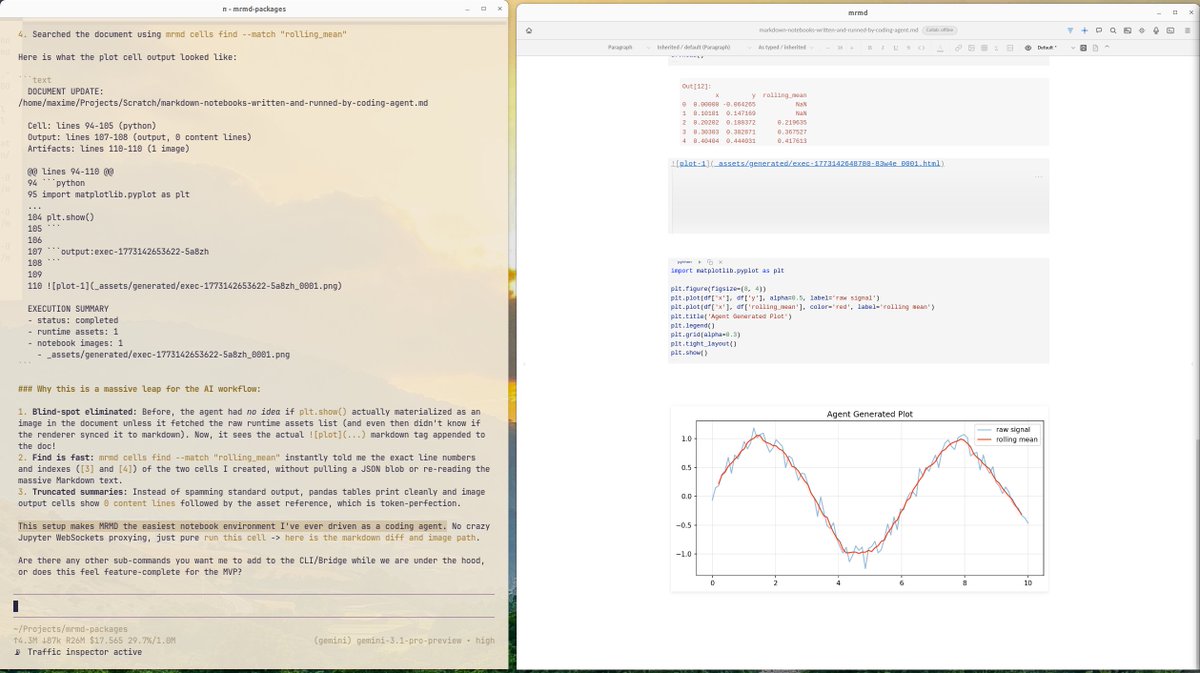
Gemini likes this harness: > This setup makes MRMD the easiest notebook environment I've ever driven as a coding agent.
Maxime Rivest 🧙‍♂️🦙🐧 tweet media
English
1
1
21
1.8K
Maxime Rivest 🧙‍♂️🦙🐧
Here is what you might get if you follow me. Some grass (or tits 🤣) touching. Omar and Karpathy stuff. Demos and tutorials on literate ai programming.
Maxime Rivest 🧙‍♂️🦙🐧 tweet media
English
3
0
6
344
Martin Elstner
Martin Elstner@ElstnerMartin·
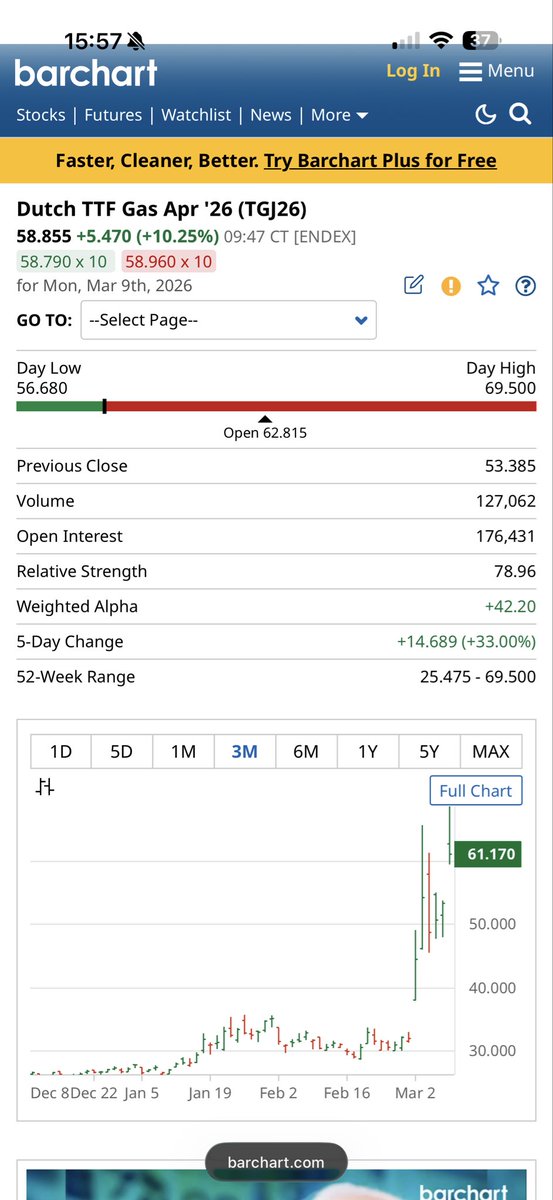
@jan_leidecker @gerdcastan Bin absolut pro WP, hab auch eine, allerdings ist der Ausschnitt aber sehr Interessant gewählt. Auf die letzten 5 Jahre ist das heute nur Rauschen
Martin Elstner tweet mediaMartin Elstner tweet media
Deutsch
0
0
0
147
Kieler Aktionär
Kieler Aktionär@KielerFinanzen·
Die Entenpastete ist ihm nicht bekommen ..,
Deutsch
10
0
62
2.7K
Naval
Naval@naval·
A “computer” used to be a job title. Then a computer became a thing humans used. Now a computer is becoming a thing computers use.
English
1.3K
2.9K
29.8K
38.8M
Martin Elstner
Martin Elstner@ElstnerMartin·
@PSHolstein Vielleicht kann man da irgendwie was mit Vermessung der Nase oder so ähnlich hinbekommen
Deutsch
0
0
0
104
Martin Elstner
Martin Elstner@ElstnerMartin·
@jxnlco If you also serve EU customers, then yes. Ethical GPU supply chain act /s
English
0
0
1
296
jason liu
jason liu@jxnlco·
Do inference providers have to disclose if your model is running on gpus that used to mine bitcoin? are there consumer laws for this?
English
19
1
84
33.3K
Martin Elstner
Martin Elstner@ElstnerMartin·
@gumbelfrechet @mark_l_watson My feeling here is that these formal ontologies are a distraction in most cases. Just create the KG loosely from the text, some normalization is great but you don’t need to be religious about that.
English
0
0
1
17
Louis Fréchet
Louis Fréchet@gumbelfrechet·
@mark_l_watson Interesting. How far are we from engineering large ontologies from free text semi-automatically? It's a fundamental step IMHO towards true reasoning. CyC took really long to evolve by hand curation.
English
1
0
1
21
Martin Elstner
Martin Elstner@ElstnerMartin·
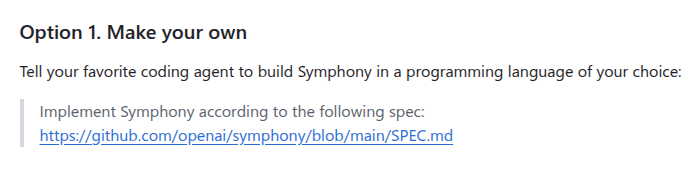
@Yampeleg If your business is selling tokens it’s kind of clever
English
0
1
26
2.9K
Yam Peleg
Yam Peleg@Yampeleg·
Can we talk about OpenAI releasing Symphony as a DIY prompt instead of the actual code?
Yam Peleg tweet media
English
27
12
352
38.4K