Craig Foley

11.5K posts

Craig Foley banner
Craig Foley

Craig Foley

@EnergyGeekCraig

Slashing carbon one building at a time. CSO LAER Realty Partners. https://t.co/AjbsIo679L

Greater Boston Katılım Ekim 2012
1.1K Takip Edilen1.1K Takipçiler
Sabitlenmiş Tweet
Craig Foley
Craig Foley@EnergyGeekCraig·
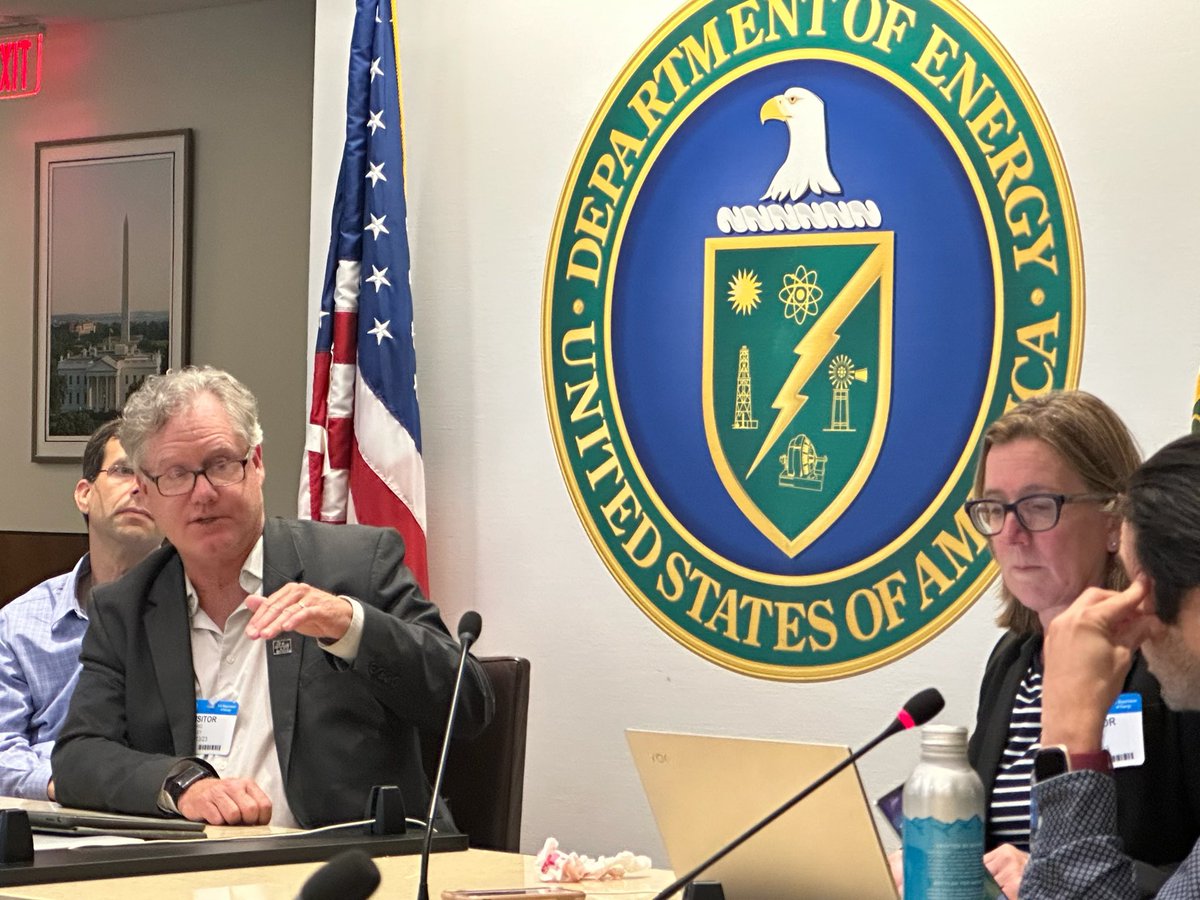
Discussing high-performance home valuation at the US DOE. Very receptive audience. #Rethink39
Craig Foley tweet media
English
0
0
10
1.1K
Evan Kilgore 🇺🇸
Evan Kilgore 🇺🇸@EvanAKilgore·
Robert Mueller was a terrible human being. He led a witch hunt against President Trump. He put Trump's family though hell. But, President Trump should know better than to celebrate his opponents death. Not a good look and is fuel for the Left. Thoughts?
English
1.7K
74
845
80.7K
Craig Foley
Craig Foley@EnergyGeekCraig·
Look, I just could never be comfortable saying I am glad so-and-so was dead. But it’s like @POTUS writes his own obit for the rest of country to say when he goes, “Good, I’m glad he’s dead. He can no longer hurt innocent people!”
English
0
0
1
18
Craig Foley
Craig Foley@EnergyGeekCraig·
"as climate risk intensifies and cities grapple with infrastructure pressure, developers are increasingly being evaluated through environmental performance metrics, such as operational energy use, carbon intensity and lifecycle efficiency" forbes.com/sites/diannepl…
English
0
0
1
9
Craig Foley
Craig Foley@EnergyGeekCraig·
"Improving your home’s energy efficiency doesn’t have to involve a full home renovation. Whether you’re looking to lower utility bills, preparing to sell, or simply modernizing your home, here’s how to get started and what to keep in mind along the way" nar.realtor/the-facts/cons…
English
0
0
1
9
Craig Foley
Craig Foley@EnergyGeekCraig·
"Right before the conflict, it would cost $1,158 to fill a standard residential heating oil tank of 275 gallons at $4.21 per gallon. With today’s prices averaging at $5.84, it would cost $1,606." boston.com/news/local-new…
English
0
0
2
24
Craig Foley
Craig Foley@EnergyGeekCraig·
"The market, according to the report, “causes significant harm to most consumers, where any savings that consumers may experience are typically short-lived and canceled out by much bigger losses.” commonwealthbeacon.org/energy/tucked-…
English
0
0
0
14
Craig Foley
Craig Foley@EnergyGeekCraig·
"Gov. Maura Healey said she was "thrilled" to learn construction was complete, noting that the project is expected to save Massachusetts ratepayers $1.4 billion over the first 20 years of operation" wbur.org/news/2026/03/1…
English
0
0
0
19
Craig Foley
Craig Foley@EnergyGeekCraig·
"Energy Bills Relief Act,” signed by more than half of House Dems, 122 in all, seeks to establish new incentives for renewable projects & to protect consumers from rising electricity costs due to grid demands from large energy users such as data centers" insideclimatenews.org/news/18032026/…
English
0
0
1
20
Craig Foley retweetledi
Unitil
Unitil@Unitil·
The City of Fitchburg has been named a @MassSave Community First Partner, a designation that helps connect residents with no-cost home energy improvements and guidance on making homes more comfortable and efficient. Read more: unitil.com/news/fitchburg…
Unitil tweet media
English
1
2
2
154
The Economist
The Economist@TheEconomist·
The reckless campaign against Iran will weaken America’s president. That will make him angry. Be warned: he makes a very bad loser econ.st/4lA7lEQ
The Economist tweet media
English
2.3K
16.7K
46.4K
2.8M
Craig Foley
Craig Foley@EnergyGeekCraig·
@shanaka86 All due respect, there are people that are dieing in the Middle East; truly irreversible for them.
English
0
0
0
90
Shanaka Anslem Perera ⚡
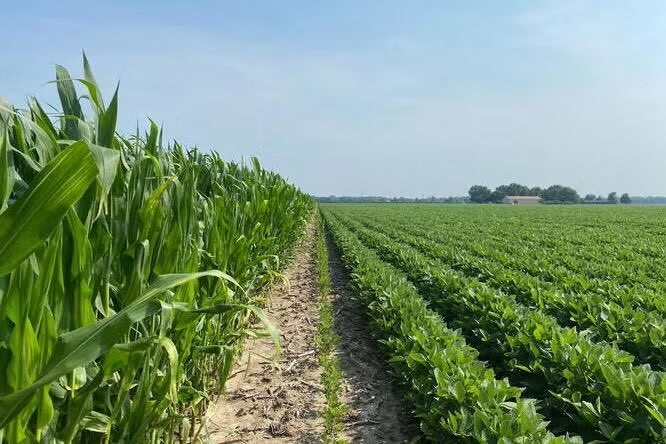
JUST IN: The most irreversible consequence of this war is not happening in Tehran. It is happening in a barn in Iowa. A farmer is standing over a kitchen table looking at two seed catalogues. One is corn. One is soybeans. Corn needs 180 pounds of nitrogen per acre. Nitrogen costs $610 per ton on the CBOT March futures settlement as of yesterday, up 35 percent in a month. Soybeans fix their own nitrogen from the atmosphere through root bacteria called rhizobia. They need nothing from the Strait of Hormuz. The farmer is choosing soybeans. Millions of acres are choosing soybeans. And once the planter rolls into the field, the choice cannot be reversed until next year. USDA projected corn at roughly 94 million acres for 2026, down from 98.8 million. Soybeans at 85 million, up from 81.2 million. Those projections were published February 19, before urea surged past $683 at New Orleans. The actual shift will be larger. USDA Prospective Plantings reports March 31. By then the seeds will be in the ground. This is the transmission channel the world is not watching. A 21-mile strait enforced by provincial commanders with sealed radio orders just rewrote the planting economics of 90 million acres of the most productive farmland on Earth. Not through sanctions. Not through diplomacy. Through the price of a single molecule that corn cannot grow without and soybeans do not need. Now follow the cascade. The Renewable Fuel Standard mandates 15 billion gallons of corn ethanol annually. That consumes roughly 43 percent of the entire US corn crop. The mandate is set by the EPA. It does not flex when corn acres shrink. It is inelastic demand consuming a fixed share of a declining supply. When supply tightens against a fixed mandate, the remaining corn reprices upward. Corn above $5 per bushel compresses every margin downstream. The US cattle herd stands at 86.2 million head, a 75-year low per USDA NASS. Poultry and pork operations face compression from higher corn prices. Feed is the single largest cost in livestock production. When feed reprices, protein reprices. When protein reprices, every grocery shelf in America absorbs the increase. This is the protein cascade. Corn to feed to meat to eggs to dairy to the checkout counter. Each link tightens because the link before it tightened. The originating cause is a urea molecule that cannot transit a strait because a provincial commander’s sealed orders say it cannot. The farmer did not start this war. The farmer cannot end it. The farmer responds to the price on the screen and the biology of the two crops in front of him. Corn needs the molecule. Soybeans do not. At $610 the arithmetic is settled. The planter rolls. The season is locked. Israel just authorised the assassination of every Iranian official on sight. The US has spent $16.5 billion. South Pars is burning. The Fed is holding rates because oil inflation will not break. Gold touched $5,000. Bitcoin is bleeding. China is running exercises near Taiwan. Sri Lanka shut down on Wednesdays. And underneath all of it, a man in a barn is making the decision that determines whether four billion people pay more for food this year. He has never heard of the Mosaic Doctrine. He does not know what a sealed contingency packet is. He knows what nitrogen costs. And he is planting soybeans. Full analysis - open.substack.com/pub/shanakaans…
Shanaka Anslem Perera ⚡ tweet media
Shanaka Anslem Perera ⚡@shanaka86

Right now, in barns and equipment sheds across the American Midwest, farmers are making the most consequential decision of this war. Not generals. Not senators. Farmers. At $683 per ton urea, corn economics have collapsed. Nitrogen is the single largest input cost for corn production. At pre-war prices a farmer could justify 180 pounds per acre and expect a margin. At $683 the math breaks. Soybeans fix their own nitrogen from the atmosphere through root bacteria. They do not need the molecule trapped behind the Strait of Hormuz. The seed decision is being made this week across roughly 90 million acres of American cropland. Once the planter rolls into the field, the choice is irreversible. Corn seed in the ground stays corn. Soy seed stays soy. The acreage allocation locks in. USDA Prospective Plantings reports March 31. That report will tell the world how American agriculture responded to the Hormuz blockade. But the decisions it captures are being made now, in conversations between farmers and agronomists and seed dealers who are looking at nitrogen prices and making the rational economic choice: plant the crop that does not need the input you cannot afford. Every acre that shifts from corn to soybeans tightens the corn balance sheet for the rest of the year. Corn feeds livestock. Corn feeds ethanol. The Renewable Fuel Standard mandates 15 billion gallons of corn ethanol annually, consuming roughly 43 percent of the US corn crop regardless of price. That demand is inelastic. If acres shift and production falls while the mandate holds, corn prices spike. Feed costs spike. The protein cascade reverses. The US cattle herd sits at 86.2 million head, a 75-year low. Poultry and pork margins that were benefiting from cheap feed compress when corn crosses $5 per bushel. This is how a naval blockade 7,000 miles from Iowa reaches the American grocery shelf. Not through oil. Not through shipping. Through nitrogen. The farmer cannot afford the molecule. The molecule cannot transit the strait. The farmer plants soy instead. The corn supply tightens. The ethanol mandate consumes its fixed share. The remaining corn reprices. The feed reprices. The meat reprices. The grocery bill reprices. The decision is not political. It is arithmetic performed on a kitchen table by a person who needs to plant in three weeks and cannot wait for a ceasefire, an escort convoy, or an insurance normalisation that the Red Sea precedent says takes years. The deepest penetrator in the American arsenal cannot reach a sealed Iranian doctrinal packet. But the fertiliser price it failed to resolve is reaching every planting decision on 90 million acres of the most productive farmland on Earth. The war’s most irreversible consequence is not happening in a bunker. It is happening in a barn. And by the time USDA publishes the data on March 31, the seeds will already be in the ground. Full analysis in the link. open.substack.com/pub/shanakaans…


English
291
1.7K
4.9K
1.1M
Craig Foley
Craig Foley@EnergyGeekCraig·
This economic data DOES NOT include the War w/ Iran. It's bad. WEDNESDAY, MARCH 18 8:30 am Producer price indexFeb.0.7%0.3%0.5% 8:30 am Core PPIFeb.0.5%0.3%0.4% 8:30 am PPI year over year3.4%--2.9% 8:30 am Core PPI year over year3.5%--3.4%
English
0
0
0
38
Craig Foley
Craig Foley@EnergyGeekCraig·
"inspector notes: “Limited attic ventilation,” “possible moisture in crawlspace,” “recommend radon test,” “bathroom fans vent to attic instead of exterior.” Each line raises new questions about ur family’s health that you never considered during showings" pearlscore.com/news/what-ever…
English
0
0
0
15
Craig Foley
Craig Foley@EnergyGeekCraig·
"current oil shock, along w/ falling costs 4 solar & wind, poses a challenge 4 oil companies & the stories they tell. “The argument for energy security & cost R now not on the side of fossil fuels...so they’re kind of in a real rhetorical problem here" grist.org/language/oil-c…
English
0
0
0
28
Craig Foley retweetledi
Mass. HLC
Mass. HLC@MA_EOHLC·
Massachusetts homeowners now have a new way to finance an ADU. @MassGovernor and @MassHousing just launched a new statewide loan program offering fixed-rate second mortgages of up to $250K to help eligible homeowners build ADUs and add more housing. mass.gov/news/governor-…
Mass. HLC tweet media
English
0
3
3
196
Craig Foley
Craig Foley@EnergyGeekCraig·
@TomMoyerUT The other note to add to this discussion is that NG is effective at the plant level. My issue, particularly with a leaky NG infrastructure, is its effectiveness and safety for home heating.
English
0
0
1
66
Tom Moyer 🇺🇸
Tom Moyer 🇺🇸@TomMoyerUT·
I think most people know this, but it’s worth saying anyway. Gas is the current long-duration energy storage. The system works because gas is available to fill the gaps - and that’s fine. Renewables compete with gas *operating* cost. They cut fuel use and help meet summer peaks.
Craig Lawrence@clawrence

Renewables advocates in Texas, natural gas is your friend not your enemy. Solar ramped up from 0GW at 7am to 20GW at 9am. The only way that works is because natural gas fired power plants could ramp down that quickly. Batteries certainly helped, and will continue to take more of that burden. But natural gas is your friend.

English
10
6
38
4.9K