
Eric Edmeades

25.8K posts

Eric Edmeades banner
Eric Edmeades

Eric Edmeades

@EricEdmeades

Evolutionary Mismatch Consultant. Performance · Longevity · Leadership Behavior Change #StopIt Father. Husband. Honorary Hadza. CAD Senate 150 Medal Recipient

Earth Katılım Ocak 2008
340 Takip Edilen11.6K Takipçiler
Sabitlenmiş Tweet
Eric Edmeades
Eric Edmeades@EricEdmeades·
Your immune system is nearly magical in its ability to protect and heal you; when it is well taken care of. When you fall, your immune system responds so quickly that it begins preparations to heal the possible injuries *before* you hit the ground. A thread on immunity. 1/13
English
91
548
2.6K
0
Christian James
Christian James@ChristianJsays·
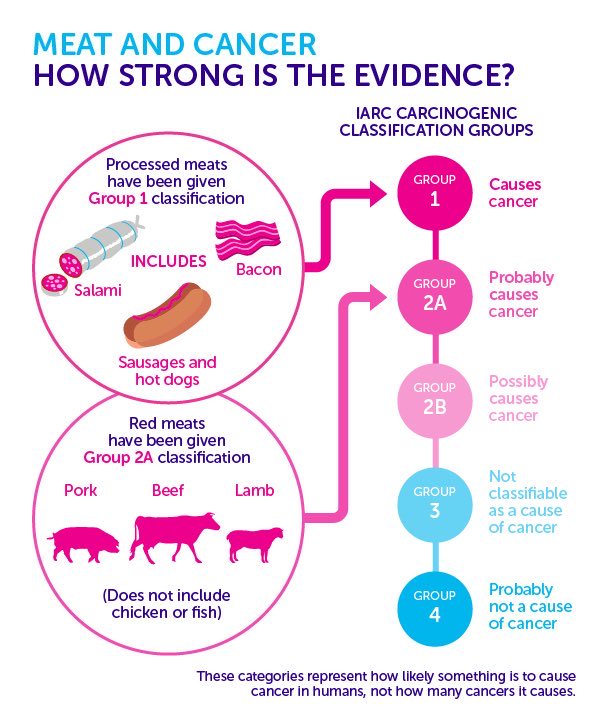
Eating Animals Causes Cancer. Eat Whole Food Plants & Plant-Based instead.
Christian James tweet media
English
52
39
123
3.1K
Eric Edmeades
Eric Edmeades@EricEdmeades·
If you had to chose one island, one island only: 1) Carnivore Island. An island with abundant well raised meat, fish, eggs and poultry but no access to any other foods; or 2) Vegan Island. An island with abundant fruits, nuts, legumes, veggies but no access to other foods... Which would you choose?
English
0
0
0
3
Andrew Scott
Andrew Scott@ScottAppliedSci·
Increasingly, I think we need a deprogramming guide for the families of kids caught up in the carnivore cult.
English
11
1
17
767
Eric Edmeades
Eric Edmeades@EricEdmeades·
@AvgTofuEnjoyer @ChristianJsays I only proved it for a basic level of intelligence and logic; those without that, or with ideologically dishonest leanings, will avoid the questions I asked and question the logic I presented. Otherwise known as trolling.
English
0
0
0
12
Eric Edmeades
Eric Edmeades@EricEdmeades·
@TyBealPhD Nutrient dense is interesting but.. bioavailable? I mean, wood might well be 'nutrient dense' for a termite.. but not available for us. Is this chart only focused on nutritional density or overall nutritional value?
English
1
0
2
201
Ty Beal
Ty Beal@TyBealPhD·
🔥 It's out! We rated 289 foods by nutritional value—here's what we found 👇 Nutrient-dense foods like fish, meat, and non-starchy vegetables top the list.
Ty Beal tweet media
English
197
161
917
218.9K
John Cleese
John Cleese@JohnCleese·
Does this silly little man not understand that Islam is a very aggressive belief system, threatening death to anyone who does not convert to Islam The Buddhists, the Taoists, the Scottish Presbyterians, the Hindus and the Sikhs and the Confucians and the Catholics don't go around shouting about beheading people they disagree with Is this too much for your tiny little brain to take in ? Oh. The doorbell rang. The police I assume...
Gad Saad@GadSaad

Indeed. Whenever Jews are attacked (typically by Muslims), it is important to redouble our efforts to fight against Islamophobia.

English
4.5K
2.6K
19.9K
2.3M
Eric Edmeades
Eric Edmeades@EricEdmeades·
This is the goal. That when a founder is thinking about something, that your book is what they recommend. Today, in the discussion around launching Eneo membership program we had a conversation about waitlists and so, I shared this with the team: #oversubscribed @DanielPriestley
Eric Edmeades tweet media
English
0
0
1
59
Eric Edmeades
Eric Edmeades@EricEdmeades·
Except, unless you supplement with B12, you run into one of the most interesting ironies of nature: One of the symptoms of B12 deficiency is anti-social behavior. The reason this is ironic is that it is likely an evolved trait to make sure that members of the clan who are not getting enough meat become aggressive enough to get their share. So that means that there are some aggressive vegans out there that are aggressive and anti-social BECAUSE they don't get enough meat. Nature is amazing.
English
1
0
1
55
Christian James
Christian James@ChristianJsays·
Plant blood makes you chill. Animal blood makes you stressed. Magnesium is to plants as Heme iron is to animals Eat more plants and chill the fuck out.
English
4
6
49
815
Nick Norwitz MD PhD
Nick Norwitz MD PhD@nicknorwitz·
Good for chuckles—@MohammedAlo is at it again—making causal claims that keto diets "lead to more disordered eating" based on a study he himself describes as “pretty well done.” There’s a lot I could say, but I’ll leave it at this: They defined a “low-carb diet” by asking participants: “Have you tried a low-carb diet in the last three months?” Options: Yes, No, I don’t know what a low-carb diet is That should tell you everything you need to know. P.S. To anyone who thinks this study is "pretty well done" ... their brain just might be starving of ketones.
Nick Norwitz MD PhD tweet media
English
42
32
313
14.5K
Eric Edmeades
Eric Edmeades@EricEdmeades·
@ShalinGala You have never, ever had it? A life long vegan? Please tell me more about that. I have yet to meet one, so I am really curious!
English
0
0
3
200
Eric Edmeades
Eric Edmeades@EricEdmeades·
@HellwegBernhard @simonmaechling Bernard, you are either talking in circles or assuming something not in evidence. I have not argued against genetic engineering; I am arguing against Maechling's persistent efforts to shut down questions or expressions of concern.
English
1
0
1
20
Bernhard Hellweg
Bernhard Hellweg@HellwegBernhard·
@EricEdmeades @simonmaechling If you don't do something worthwhile well, you also take risks. In this case, those risks would be crop failures and famine. We've been using genetic engineering for over 60 years; where are the risks?
English
1
0
0
42
Simon Maechling
Simon Maechling@simonmaechling·
Genetic engineering is one of the greatest achievements in human history. Period.
English
38
29
330
13.2K
Bernhard Hellweg
Bernhard Hellweg@HellwegBernhard·
@EricEdmeades @simonmaechling In times of climate change and rapid global population growth, we urgently need to adapt crops quickly. Only in this way can we obtain appropriately resilient plants and feed humanity.
English
1
0
2
35
Eric Edmeades
Eric Edmeades@EricEdmeades·
The first statement here may be true. The problem is the period. Because that period gives the game away. It is not an invitation to think. It is an instruction not to. It tells people the matter is settled, the risks are irrelevant, and anyone still asking questions can be dismissed as a crank. But powerful technologies do not become safe just because someone says “period” at the end of a sentence. Genetic engineering may be one of the greatest inventions of humankind. It may also be one of the most dangerous. Both are true enough to deserve serious discussion. The moment someone tries to shut down that discussion with slogans, certainty, and social pressure, they are no longer defending science. They are defending a narrative. And that is exactly what Simon is attempting to do here. Period
Simon Maechling@simonmaechling

Genetic engineering is one of the greatest achievements in human history. Period.

English
0
0
2
127
Eric Edmeades
Eric Edmeades@EricEdmeades·
Absolutely. Here’s a more human version: I think this is where the conversation can get a little too caught up in technical definitions and miss the bigger point. We can argue over the genetic details, but what really matters is the ecological reality. In nature, organisms evolve in relationship with other organisms over long stretches of time. Predator and prey, parasite and host, plant and pollinator, bacteria and immune system. They shape each other gradually. If you suddenly give one side a real advantage, it might look like a good thing at first. Imagine cheetahs that are suddenly 10 or 15% faster. At first, that sounds great for the cheetahs. Hunting gets easier. More survive. More reproduce. It looks like a win. Until it doesn’t. If that advantage lets them hammer the gazelle population faster than it can recover, then the whole system starts to wobble. The prey crashes, and eventually the predator suffers too. What looked like an advantage turns into a destabilizing force. That’s really the concern. And of course, we are not really talking about cheetahs and other charismatic animals. We are mostly talking about plants, bacteria, and viruses. Things that reproduce faster, spread faster, and can change ecosystems or health outcomes much more quickly and much less visibly. Which is exactly why the speed and scale of intervention matter. So my point is not that every genetic intervention is the same, or that every GMO is dangerous. It’s that once humans can introduce changes faster than ecosystems can adapt, we are messing with dynamics that evolution normally works out slowly over time. When you bypass that pace, caution is not paranoia. It is just common sense.
English
1
0
0
11
Bernhard Hellweg
Bernhard Hellweg@HellwegBernhard·
@EricEdmeades @simonmaechling Most cultivated plants contain mutagenesis, a form of genetic engineering. This intervenes much more broadly in the genome than newer genetic engineering techniques. Furthermore, the older genetic engineering techniques using transgenes have not resulted in any disadvantages.
English
2
0
1
29
Eric Edmeades
Eric Edmeades@EricEdmeades·
Let’s drop the line that GMOs are basically the same as old-school breeding, because they’re not. The real difference is speed.. Natural selection is incredibly slow. Big changes take thousands or even millions of years, and ecosystems adapt along the way. Predators, prey, parasites, and competitors; they all shift together over time. Nature doesn’t usually just drop a completely novel organism into a system overnight. Selective breeding is way faster. Humans can reshape plants and animals dramatically over just a few generations. But even then, there’s still some pacing. And we already know this level of intervention can create huge problems when organisms get introduced into places they don’t belong. That’s basically what an invasive species is: something entering an ecosystem that never evolved with it, so the system has no real defense. The new species is either killed off, or the system is damaged absorbing it. Genetic engineering takes that to another level entirely. Now we’re not just selecting from existing traits over generations; we’re directly inserting, deleting, or redesigning traits in a single step, sometimes in ways conventional breeding could never produce at all. That’s not a minor difference. That changes the game. The issue isn’t just that we’re changing life. Life is always changing. The issue is how fast we’re doing it, how novel the changes are, and how little real-world testing ecosystems get before they have to deal with the consequences. And when something new gets loose, it rarely ends cleanly. Best case (for us), it fails. Worst case, it spreads, outcompetes native species, disrupts food chains, alters habitats, and causes damage that may never fully be reversed. We’ve already seen that with invasive species all over the world. Genetic engineering raises the stakes because it lets us create change faster than evolution ever would. The speed is different. The novelty is different. And the potential consequences are different. That means we need real guardrails—serious testing, strong containment, transparent oversight, and a lot more humility. Because when we start changing life at a speed ecosystems can’t adapt to, we’re not just innovating. We’re gambling.
English
1
0
0
23