Eric Scott Dawson

7.7K posts

Eric Scott Dawson

Eric Scott Dawson

@EricScottDawson

Speaker, Writer, Co-Founder of @nuclearny, published in @NRO appeared on @reason @WCNYPBS @CapitalTonight 🇺🇸

New York, NY Katılım Aralık 2011
252 Takip Edilen525 Takipçiler
Sabitlenmiş Tweet
Eric Scott Dawson
Eric Scott Dawson@EricScottDawson·
Thanks to @poozer87 & @WCNYPBS for having me on CONNECT NY to discuss reliable zero-emission nuclear energy in New York at your roundtable! I’m very passionate about this subject, so hopefully audiences will show me some grace if I got too excited. Watch online (link below).
Eric Scott Dawson tweet media
WCNY@WCNYPBS

CONNECT NY: New Nuclear Energy | Watch 3/31 at 9 p.m. on WCNY On this edition of “CONNECT NY,” host David Lombardo will lead a panel discussion about the future of nuclear power in the Empire State, including its impact on greenhouse gas emissions, public safety & energy costs.

English
3
3
22
3K
Eric Scott Dawson retweetledi
David Senra
David Senra@davidsenra·
"Capitalism created the possibility of the win win win. It used to be a zero sum game where somebody won, somebody else lost. The biggest mistake people make, intellectuals in particular, they still think we're in a zero sum world. They're obsessed with some billionaires because Bernie Sanders thinks that Jeff Bezos and Elon Musk somehow stole the money from the people. They don't understand that it's this prosperity machine that's creating more, not just for those billionaires, but for everything that they're touching. They're creating value for their customers, they're creating value for their employees. Their suppliers are flourishing, their investors are seeing their capital go up. It can be reinvested and compound. All philanthropy ultimately comes from business. That's where the profits are. Where does all the taxes come from? It ultimately comes from business as well. This is the engine that's lifting humanity out. The entrepreneurs are the drivers of that engine. Somebody like Elon Musk, he gets a very, very, very tiny sliver of the value that he creates for the whole world." — @iamjohnmackey
English
310
1.7K
7.7K
445.9K
Eric Scott Dawson retweetledi
Polymarket
Polymarket@Polymarket·
JUST IN: Anti-data center activists are reportedly using AI to give them advice on stopping new AI data centers from being built.
English
403
577
7.3K
903.9K
Eric Scott Dawson retweetledi
Brivael - FR
Brivael - FR@BrivaelFr·
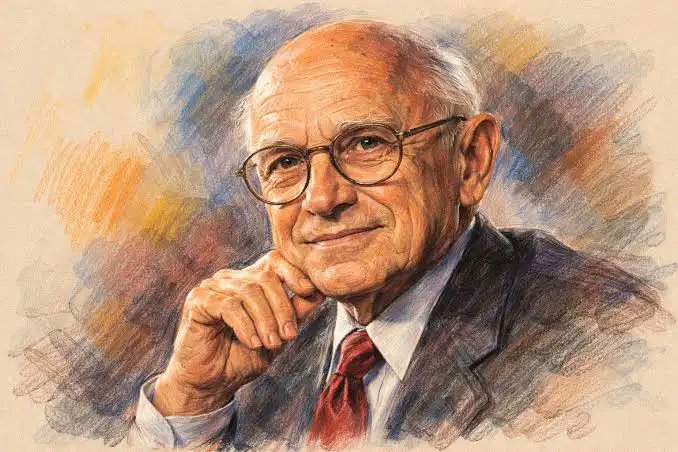
Milton Friedman (prix nobel d'économie) a dit un truc il y a 50 ans qui est encore plus vrai aujourd'hui. Et quasiment personne ne le comprend. 🧵 On lui pose la question : "Sans régulation sur les médicaments, des gens pourraient mourir en prenant des produits dangereux. Vous ne trouvez pas ça grave ?" Sa réponse est un des retournements logiques les plus brillants de l'histoire de l'économie. Oui, dit Friedman. Un médicament non régulé peut tuer des gens. C'est visible. C'est dans les journaux. C'est un scandale. Tout le monde le voit. Mais ce que personne ne voit, c'est les gens qui meurent parce qu'un médicament qui aurait pu les sauver a été bloqué pendant 10 ans par le processus de régulation. Ce mort là, personne ne le compte. Personne ne fait sa une. Personne ne connaît son nom. Parce qu'il est mort de l'absence de quelque chose qui n'a jamais existé. C'est l'asymétrie fondamentale de la régulation. Le régulateur a deux types d'erreurs possibles. Erreur 1 : approuver un médicament dangereux. Résultat : scandale public, procès, le régulateur perd son poste. Erreur 2 : bloquer un médicament qui aurait sauvé des vies. Résultat : rien. Personne ne sait. Personne ne proteste. Les morts silencieux n'ont pas de porte-parole. Du coup, le régulateur rationnel optimise pour éviter l'erreur 1. Toujours. Il rajoute des études. Des phases. Des comités. Des délais. Chaque couche de "sécurité" supplémentaire le protège, lui, au détriment des patients qui attendent. Friedman estimait que la FDA avait probablement tué plus de gens en retardant des bons médicaments qu'elle n'en avait sauvé en bloquant des mauvais. C'est impossible à prouver précisément. Mais la logique est imparable. Un exemple concret. Le bêta-bloquant Propranolol était disponible en Europe des années avant d'être approuvé aux États-Unis. Pendant ces années, des Américains mouraient de crises cardiaques qui auraient pu être évitées. Combien ? On ne le saura jamais. Parce qu'on ne compte pas les morts de l'inaction. C'est le même principe partout. Pas que dans la médecine. En France, les taxis autonomes sont bloqués par la régulation. Chaque année de retard, ce sont des accidents de la route qui auraient pu être évités. Mais personne ne compte ces morts là. On compte uniquement le premier accident d'un taxi autonome, qui fera la une de tous les journaux. L'IA dans la médecine est ralentie par des processus d'approbation qui prennent des années. Des diagnostics qui pourraient être faits en secondes par un algorithme attendent des validations pendant que des patients attendent des mois pour un rendez-vous. Le nucléaire a été bloqué pendant des décennies par la peur. Combien de gens sont morts de la pollution des centrales à charbon qui ont tourné à la place ? Personne ne les compte. Le pattern est toujours le même. On voit le risque de l'action. On ne voit jamais le risque de l'inaction. Et comme le risque de l'inaction est invisible, le régulateur choisit toujours l'inaction. Parce que l'inaction ne produit pas de scandale. Friedman résumait ça en une phrase : "Les gens qui ont été sauvés par la FDA sont visibles. Les gens qui sont morts à cause des retards de la FDA sont invisibles. Et dans une démocratie, le visible gagne toujours contre l'invisible." La prochaine fois que quelqu'un vous dit "il faut plus de régulation pour protéger les gens", posez une seule question : combien de gens meurent en attendant que la régulation les autorise à vivre ? La réponse est toujours plus grande que ce qu'on imagine. Mais personne ne la calcule. Parce que les morts de l'inaction n'ont pas de visage.
Brivael - FR tweet media
Français
226
1.7K
4.9K
357.2K
Eric Scott Dawson retweetledi
Nicole
Nicole@nicolegelinas·
The best ever natural experiment for this theorem was the 1990 (not 1990s, 1990!) NYC subways. Nothing at all changed in 1990 about the economy, the schools, the jobs, the lead paint, the healthcare, the water, the housing, the pretty butterflies floating in the air. The ONLY thing that changed was policing on the subways. And crime fell immediately because of better policing and stayed that way ... until 2020.
Peter Moskos@PeterMoskos

In 1990s NYC, murders dropped by 70%. And poverty? It increased 20%. I'd love for sociologists who insist we need to reduce poverty to reduce crime to explain this. How did crime plummet while the number of people living in poverty increased?

English
17
222
1.6K
94K
Eric Scott Dawson retweetledi
Shooter McGavin
Shooter McGavin@ShooterMcGavin·
No World War 3 the week of The Masters
English
41
337
7.3K
248.7K
Eric Scott Dawson retweetledi
Brian Gitt
Brian Gitt@BrianGitt·
I used to believe three things about energy. I was wrong on all three. • Using less energy is good • Wind and solar are the best solution • And that believing this made me a good person Here’s what changed my mind:
Brian Gitt@BrianGitt

x.com/i/article/2041…

English
39
113
462
38K
Eric Scott Dawson retweetledi
Michael McLean
Michael McLean@cornoisseur·
It will be a decade before any other nuclear vendor has a reference plant in America. The AP1000 is an incredibly important asset for the country and we should build more of them.
Westinghouse Nuclear@WECNuclear

As part of our plans for a fleet of AP1000® power plants in the United States, Westinghouse has submitted a Design Control Document (DCD) to @NRCgov that establishes Plant Vogtle's Unit 4 reactor as the standard AP1000 reference plant for future reactors. A DCD defines the technical aspects of a standard reactor design to ensure it meets all regulatory and safety requirements. Learn more about this important step toward an AP1000 reactor fleet in the U.S.: info.westinghousenuclear.com/news/westingho… Pictured: Plant Vogtle Unit 4 in the foreground, with Unit 3 in the background. Both AP1000 reactors in the state of Georgia are setting performance records since entering commercial operation. (Photo courtesy of Georgia Power)

English
11
11
97
5.1K
Eric Scott Dawson retweetledi
Michael Shellenberger
Michael Shellenberger@shellenberger·
The Hormuz Strait was a disaster waiting to happen. The only solution is to diversify energy production and for Gulf nations to build pipelines to export their oil and gas via the Red Sea and Mediterranean. More war will result in more harm and higher energy prices for longer.
Michael Shellenberger tweet media
English
63
81
769
77.4K
Eric Scott Dawson retweetledi
Eric Spracklen 🇺🇸
Eric Spracklen 🇺🇸@EricSpracklen·
Tim Dillon is literally speaking for all of us.
English
433
4.3K
26.4K
2.7M
Eric Scott Dawson retweetledi
Ann Coulter
Ann Coulter@AnnCoulter·
NYT's sorrowful article on wealthy farmer who wants you to pay for his cheap Mexican labor rather than use robotic milking machines available for 30 years now, that also monitor cow health and collect milk quality data. <>
English
45
164
1.3K
102.7K
Eric Scott Dawson
Eric Scott Dawson@EricScottDawson·
@gr_ashford “The incident nonetheless raised questions about the ease with which someone’s political party could be altered. Under state law, no identification is required to file or change voter registration.” — @gr_ashford in @nytimes
English
0
0
0
179
Grace Ashford
Grace Ashford@gr_ashford·
NEW: When Assemblyman Andrew Hevesi learned his party registration had been changed, he was blindsided. Now he suspects his political rival: a perennial candidate who's practice of donating via a FB led the NYPost to dub him the ‘The Sperminator.’ nytimes.com/2026/04/06/nyr…
English
5
26
72
46.1K
Eric Scott Dawson
Eric Scott Dawson@EricScottDawson·
@sarthakgh They will be replaced by government-run horse-and-buggies (w/ full voting rights given to the horses).
English
0
0
0
356
Karol Markowicz
Karol Markowicz@karol·
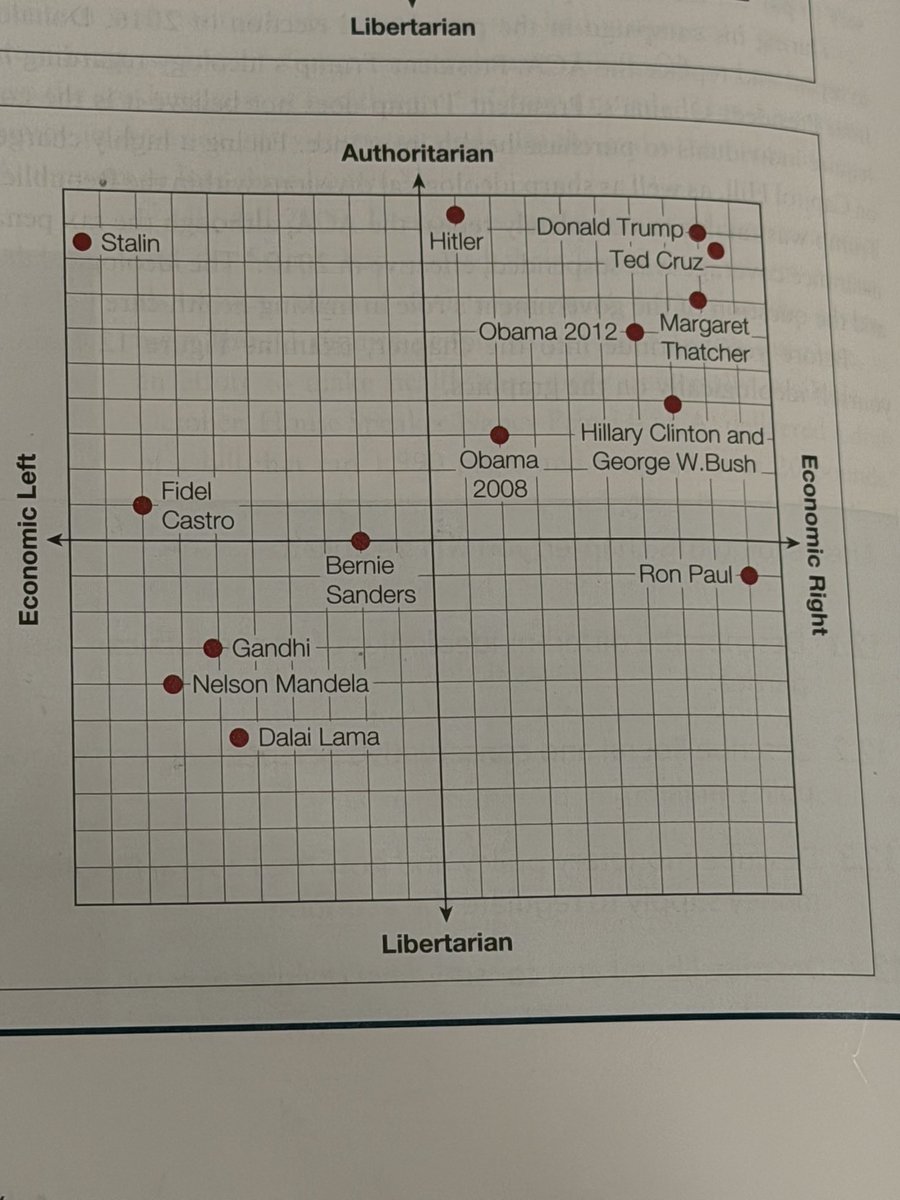
A teen cousin showed me this in her AP American Government book. Trump is similar ideologically to Hitler and Bernie Sanders is a touch off the center to the left.
Karol Markowicz tweet mediaKarol Markowicz tweet media
English
1.1K
1.3K
9.8K
1.5M
Eric Scott Dawson retweetledi
Michael Shellenberger
Michael Shellenberger@shellenberger·
Renewables are the key to preventing resource scarcity, argue European leaders, California Governor Gavin Newsom, and Ezra Klein and Derek Thompson, whose bestselling book Abundance became one of Barack Obama’s favorite books of 2025 and launched a political movement dedicated to what Klein calls “a politics of plenty.” The logic is straightforward and appealing. Solar panel costs have fallen more than 90% since 2010. Wind power costs have dropped by 70%. Battery storage prices have collapsed. If governments would simply clear the regulatory obstacles to building solar farms, wind turbines, and transmission lines, the abundance argument goes, clean energy would flow so abundantly that fossil fuel dependence would become a choice rather than a necessity. “The miracles of solar and wind and battery power,” Klein told the Long Now Foundation, “have given us the only shot we have to avoid catastrophic climate change.” But if renewables could prevent resource scarcity, then the world would not be in the midst of what the International Energy Agency’s Executive Director Fatih Birol called “the greatest global energy security challenge in history,” with global supply losses now totaling 12 million barrels per day, compared to about 5 million during each of the 1973 and 1979 crises. The United Kingdom is receiving its last shipment of jet fuel from the Middle East with nothing behind it. Australia saw over 500 gas stations run dry. And South Korea is considering driving restrictions for the first time since 1991. “In April,” warned Birol, “there is nothing.” It is true that solar and batteries have made enormous progress. Solar electricity costs roughly 3 to 5 cents per kilowatt-hour at the point of generation, cheaper than any fossil fuel in most locations. Battery costs have fallen below $115 per kilowatt-hour. China produces more solar panels than the rest of the world combined. But the world has installed more than 1,600 gigawatts of solar capacity and over 1,000 gigawatts of wind, and still we are in crisis. Global green energy investment was $2.3 trillion in 2025 alone. And yet when Iran closed the Strait of Hormuz, none of that capacity mattered, because solar panels do not produce jet fuel, diesel, ammonia, or the petrochemical feedstocks that underpin modern civilization. Electricity accounts for roughly 20% of final energy consumption worldwide. The other 80%, the part that moves ships, flies planes, heats buildings, and makes fertilizer, runs overwhelmingly on oil and gas. Solar and wind cannot substitute for these fuels at any price, because the energy density of liquid hydrocarbons exceeds batteries by a factor of 40 to 80 by weight. Klein and Thompson, to their credit, also support some forms of nuclear power. Abundance opens with a vision of cities powered by “clean (nuclear) and renewable (wind and solar) energy sources.” They lament America’s nuclear stagnation compared to France’s successful buildout. Klein has said that he supports advancing nuclear power alongside renewables. But, the new nuclear power plants that Klein and Thompson support do not exist. The “small modular reactors” that populate the abundance fantasy have not produced a single commercial kilowatt-hour of electricity. NuScale, the most advanced American SMR developer, canceled its flagship project in 2023 after costs doubled. No SMR has received a commercial operating license anywhere in the world. The first commercially operating SMR, if all goes well, may produce power in the early 2030s, but SMR developers have for years said that their reactors are just a few years away. Scaling to a meaningful share of global energy supply would take decades, as opposed to building conventional nuclear plants, which Japan and China have shown they can build in just two years, so long as they are standardized and the same construction crews are used. Democrats, progressives, environmental groups, and left-wing parties across Europe diverted hundreds of billions of dollars over the last two decades from developing the new oil and gas production, pipelines, refineries, and LNG terminals needed to make energy cheap and abundant. California’s aggressive climate mandates drove residential electricity prices to 34 cents per kilowatt-hour, nearly double the national average, while the state simultaneously blocked new natural gas infrastructure. And global investment in oil and gas exploration and production peaked at roughly $780 billion in 2014 and fell to approximately $350 billion by 2020, a decline driven by deliberate policy choices to restrict fossil fuel development. The European Union’s Green Deal, America’s Inflation Reduction Act, and climate policies across the developed world channeled subsidies toward solar and wind while imposing carbon taxes, windfall levies, and permitting restrictions on fossil fuel projects. The UK’s Energy Profits Levy, introduced in 2022, discouraged investment in the North Sea at precisely the moment when more domestic production was needed. The UK Labor government then banned new exploration licenses in November 2025. Germany’s Energiewende spent over €500 billion on renewables while shutting down its nuclear plants, leaving the country dependent on Russian gas and then, after the Ukraine war, on LNG that must now compete with Asian buyers for cargoes that can no longer transit Hormuz. And the UK has lost a third of its refineries in the last 18 months, meaning that even if crude oil arrived tomorrow, the country lacks the capacity to refine it into the jet fuel, diesel, and heating oil its citizens need. The only energy abundance solution that works at the scale of civilization right now is piped natural gas and oil. A pipeline delivers energy continuously, at near-zero marginal cost per unit delivered, with no exposure to shipping chokepoints, insurance markets, or geopolitical disruption. A ton of natural gas moved through a pipeline costs a fraction of what the same gas costs when liquefied, shipped by tanker across an ocean, and regasified at a terminal. The logical endpoint is a world powered by natural gas delivered through continental pipeline networks, eventually transitioning to hydrogen produced from natural gas and nuclear power. America built pipelines while Europe and Asia built LNG dependency. Saudi Arabia’s East-West pipeline, which has ramped from 770,000 barrels per day to 2.9 million since the war began, is the emergency proof of concept. If the Gulf states had built sufficient pipeline capacity to bypass Hormuz before the war, the crisis would be a fraction of its current severity. So why do so many on the Left continue to preach renewables as the solution to a crisis that renewables manifestly cannot solve?... x.com/shellenberger/… Please subscribe now to support Public's award-winning investigative reporting, read the rest of the article, and watch the rest of the video! x.com/shellenberger/…
English
39
195
819
126.8K