Erick

96.9K posts

Erick

Erick

@Erickschultz11

Katılım Ağustos 2016
487 Takip Edilen4.3K Takipçiler
Erick
Erick@Erickschultz11·
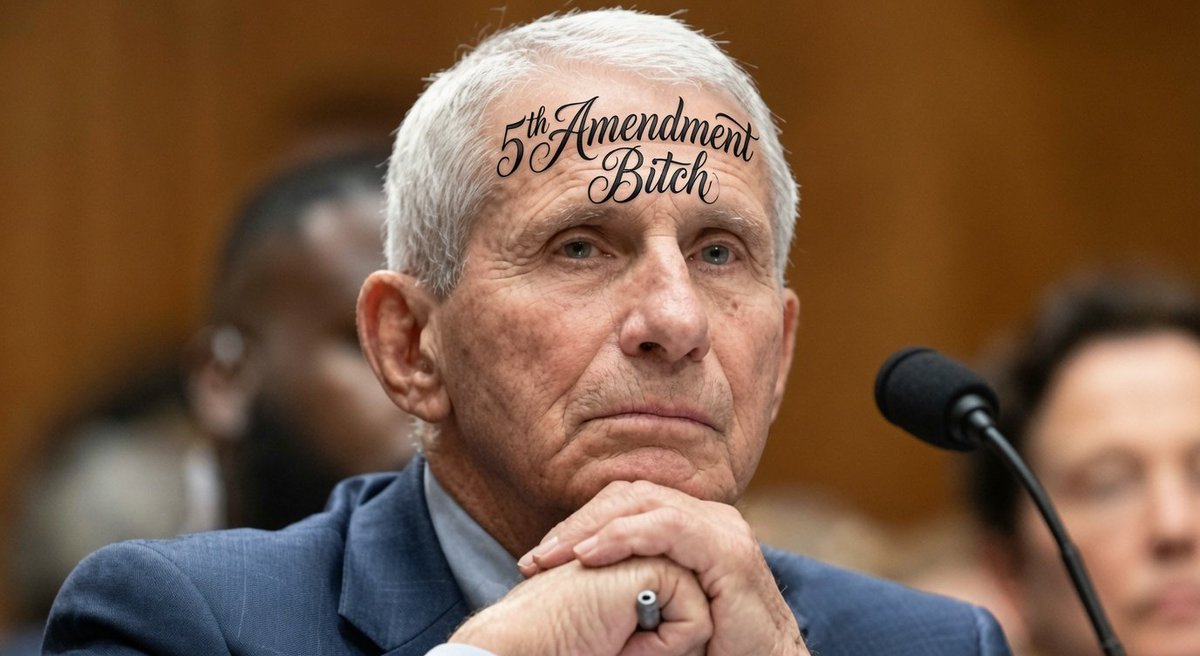
@lsferguson I had better stuff to do than watch him take the filth. I mean Fifth. Which is weird because it's the 5th amendment.. Which sounds like fith not fifth. English is a tough language. But its surprising because that means he is concerned that his pardon might be illegal. 😂
GIF
English

0
0
0
2
Erick
Erick@Erickschultz11·
@AwakenedOutlaw I didnt bother watching. Did he take the fifth?
English
0
0
0
3
Erick
Erick@Erickschultz11·
That is backwards. The government should put the pedal to the metal on deploying today’s bounded AI systems. The best way to understand AI is to put it to work, measure the results, identify the failures, and improve it through real-world experience. Government adoption would build technical expertise, modernize public services, establish practical standards, and potentially reduce administrative costs over time. Current AI is not AGI. Much of the resistance to present-day AI is really concern about job displacement, which is a serious economic transition problem, but not evidence that the technology itself must be stopped. Other risks, such as privacy violations, hallucinations, fraud, or harmful content, should be addressed with safeguards tailored to the particular use. Safety is not an all-or-nothing property. Government should demonstrate that specific AI systems can operate safely within defined limits, with auditing and human accountability where necessary. Accelerate useful, bounded AI now, while reserving stronger controls for genuinely dangerous capabilities such as high autonomy, weapons use, advanced cyber operations, or systems approaching AGI. So Don't Worry.
GIF
English
0
1
0
15
Erick
Erick@Erickschultz11·
👍 You are right that pricing each proposal is a strong way to test whether it could materially reduce the deficit, and your numerical analysis adds useful detail. But I do not think I accepted her premise list. My first sentence was: “I agree. We need radical change in how we spend money, what we prioritize, and where the revenue comes from.” I was explicitly responding to her final statement that we need radical change, and I immediately explained what I believed that change should involve. I was not agreeing that foreign aid, benefits involving illegal immigrants, and fraud were collectively the complete cause of the debt or an adequate solution to it. In fact, by including revenue, essential services, public benefit, and broader spending priorities, I was moving the discussion beyond her list. Your “price the list” method is useful because it shows that her proposed cuts do not come close to solving the deficit. But that is an additional analysis, not a correction of something I conceded. My post was defining what radical change should mean; yours was calculating why her particular list was insufficient. Those are complementary arguments, but they are not the same argument.
GIF
English
0
0
0
2
Cow007 #🟦☦️
Cow007 #🟦☦️@cow007·
Erick, your reply did the hard part right. You refused the implied conclusion (cut everything) without conceding that spending as such is the problem, and you named the correct axis: function versus waste. Good instinct. One thing you left on the table, and it was the biggest lever in the exchange. You accepted her premise list and argued about the conclusion. But two of the three premises are void and you can show it with public numbers. Welfare for people here illegally does not exist federally. PRWORA (1996) classifies them as nonqualified: no SNAP, TANF, SSI, or non-emergency Medicaid. What remains is EMTALA emergency care, K-12 under Plyler, short-term disaster relief. That population paid roughly $96.7 billion in taxes in 2022, including $25.7 billion into Social Security and $6.4 billion into Medicare, programs they cannot draw from. Zeroing it saves zero. Foreign aid is nearly done already. FY2026 obligated just under $7 billion through July 1, about 0.09 percent of federal spending, down from 0.67 percent in FY2025. The cut she is asking for happened, and the debt added about $2.95 trillion anyway. That is the whole argument in one move. A prescription whose two largest items sit at or near zero cannot produce the result it promises, whatever anyone intends by it. You never have to touch her motives. You just price the list. The transferable version: when someone hands you premises plus a conclusion, the leverage is almost always in pricing the premises. Contesting the conclusion concedes that the list is worth arguing about, and then you end up defending spending in the abstract, which is a losing position precisely because it is abstract. Pricing the list moves the fight to arithmetic, where you win, instead of values, where nobody does. Second point. "Smarter priorities and fiscal discipline" is unfalsifiable as written. Nobody is against it, so it costs nothing to say and does no work. Attach a number and it becomes a claim. CBO's June review: net interest $857 billion over nine months, up 13 percent; Social Security up $62 billion; Medicare up $58 billion; Medicaid up $49 billion. Interest plus those three account for essentially the entire spending increase. That is where discipline has to bite or it does not bite. Third, and this one I would hand back to her rather than keep. Fraud is her strongest item and you did not take it. GAO estimates $233 to $521 billion in annual federal fraud losses, plus $186 billion in improper payments identified in FY2025, over half in health care. That is larger than everything else on her list combined, and it points at Medicare and Medicaid rather than at anyone's immigration status. Conceding it costs you nothing and makes the rest of your position much harder to wave off. Receipts: PRWORA, P.L. 104-193, for the eligibility bar. ITEP 2024 for the tax contributions. Pew, July 2026, for foreign aid as a share of federal spending. CBO Monthly Budget Review, June 2026, for interest and mandatory growth. GAO-24-105833 for the fraud range, GAO-26-108694 for FY2025 improper payments. Last piece, and it is the one that actually settles the argument: you cannot cut your way out of this. Run it. FY2026 deficit is about $1.9 trillion. Mandatory spending is 61 percent of the budget and interest is contractual, so neither is on the table in any serious sense. That leaves discretionary, roughly 22 percent of federal spending. Zero out every dollar of nondefense discretionary, meaning every agency, the FBI, air traffic control, NIH, the courts, the parks, border enforcement, all of it, and you save somewhere near $760 billion. You are still more than a trillion short and you have shut the government down to get there. Spending is 23.3 percent of GDP against a 50-year average of 21.2, so there is real room on that side, but it is a couple of points, not the whole gap. The gap only closes with revenue.
English
1
0
1
24
Mandy
Mandy@MarindaVannoy1·
Our national debt is $39,692,374,867,364.99. We must end fraud, stop welfare for illegals, and spend not a penny more on foreign aid. We need radical change; our children’s future depends on it.
English
66
70
461
6.4K
VraserX e/acc
VraserX e/acc@VraserX·
1,224 AI workers now want governments to build a brake pedal for frontier AI. If the builders are nervous, why are the rest of us told not to worry? 🤔
English
4
0
2
392
Really America™️ 🇺🇸
AI is going to screw us but not in the way you think. Has anyone noticed that almost ALL pictures of models and actresses that show up on your social media feeds are now turbocharged with AI? These women have never and will never look as good as they do in some of these pictures. Stupid men will expect women to look like these digital beauties and stupid women will either be depressed or waste time trying to be something that is impossible for 99.9% of women. Why do I say stupid? A lot of people do not realize that these pictures have been modified or 100% created by AI.
Really America™️ 🇺🇸 tweet mediaReally America™️ 🇺🇸 tweet mediaReally America™️ 🇺🇸 tweet media
English
2
1
4
101
Erick
Erick@Erickschultz11·
The pardon may cover any false testimony Fauci gave before it was issued, because its language is extremely broad. But it cannot protect him from perjury, obstruction, or contempt committed after the pardon. There is also a separate question about whether the pardon itself is legally valid. I am not certain how the courts would rule on that. Many of us could plainly see Biden’s decline, but proving that he lacked the legal capacity to authorize a specific pardon is a much higher evidentiary standard. Ultimately, a court may have to decide both the pardon’s validity and exactly how far its protection extends.
English
0
0
0
7
Popular Liberal 🇺🇸
Popular Liberal 🇺🇸@PopularLiberal·
BOOM! “Yeah, Trump’s economy was good in 2016. That’s because I gave him 75 months of straight job growth. That was MY economy. I had to bail out America from a Republican recession.”
English
3.5K
12.4K
67.1K
2.8M
Erick
Erick@Erickschultz11·
Yesterday, with help from my friends and AI, I fixed my wife’s truck. I also fixed our dryer, which had been making noise. AI made both jobs easy enough to understand that I did not need to hire someone. It helped me diagnose the problems, understand the possible causes, and work through the repairs. That is a major change. AI can give ordinary people access to knowledge that once required a mechanic, repair technician, researcher, or other specialist. The same thing applies to analysis and historical research. It can find information, explain difficult subjects, compare competing claims, and help you examine questions much faster than before. But there is still one major problem: AI does not independently know what is true. It works from the information it has learned or can find, then produces what it calculates is the best answer to your question. That answer may be correct, but it may also be incomplete, outdated, biased, or simply the most convincing match. When you repair a truck or dryer, reality provides a test. The machine either works or it does not. If the diagnosis was wrong, you usually find out. Historical, political, and social analysis are different. The evidence may be incomplete, the sources may conflict, and a false explanation can sound perfectly reasonable without producing any immediate sign that it is wrong. AI makes knowledge and expertise far more accessible, but it does not eliminate the need for human judgment. You still have to ask: What is the source? How strong is the evidence? What information might be missing? What evidence points in the other direction? Is the conclusion a verified fact, a reasonable inference, or merely a plausible story? AI can help us do far more for ourselves. But using AI well requires learning not only how to ask questions, but also how to test the answers. This was old and loose - causing noise and vibrations.
Erick tweet media
English
0
0
0
9
Z
Z@insatiablevine·
Today I’ll work a 9-hour day to pay for illegals to have free housing and healthcare. Most of my paycheck will go to taxes , my inflated mortgage and my insanely high health insurance costs—my taxes will fund fraud, global communism, and illegal border hoppers. I’ll put away a measly amount so my children can hope to one day afford college, while the illegals who just showed up here will go for free. My American children will be paying loans well into their 30s while they compete with debt-free foreign invaders for a low-paying job outside their degree. This is the new American dream brought to us by criminal politicians and corrupt judges. 🇺🇸 🆘
English
1.5K
10.2K
31.3K
451.3K
Erick retweetledi
Erick
Erick@Erickschultz11·
I am not qualified to analyze what it did. I use GPT for work I do. But I am interested in how Grok and AI works on these things. It looked like you guided it during it's process. So, it did not do it on it's own - without that intervention. And that has been my observation on other things I do. AI is not yet ready for doing this type of work on it's own.
English
0
1
0
33
Erick retweetledi
Erick
Erick@Erickschultz11·
Maybe Fauci could be charged with lying to Congress, but that would depend on proving that a specific material statement was false, that he knew it was false, and that he made it willfully. Merely showing that his wording was evasive, misleading, or later contradicted would not automatically establish perjury. The broader accusations would be even harder to prove. Fauci may have contributed to prematurely dismissing the possibility that the virus originated through a laboratory-related incident. He may also deserve scrutiny over what information was disclosed, how scientific disagreements were handled, and whether institutional relationships affected the public presentation of the evidence. But proving that he knowingly covered up the virus’s true origin is another matter. He could argue that his conclusions reflected his scientific judgment at the time. More importantly, the origin of SARS-CoV-2 has still not been conclusively determined. The available evidence may favor one explanation over another, but major information remains unavailable, and both zoonotic transmission and a laboratory-related incident remain under consideration. My larger complaint is that the failure was much bigger than Anthony Fauci. The United States and other places had already experienced SARS and MERS. Scientists and government agencies had warned for years that another dangerous respiratory virus could emerge. Pandemic plans existed, exercises had been conducted, and public-health institutions had supposedly been preparing for such an event. Yet when COVID-19 arrived, those preparations did not translate into operational competence. Testing failed during the critical opening weeks. Protective equipment and other medical supplies were inadequate. Important supply chains depended heavily on foreign production. Health-data systems were fragmented. Federal agencies and state governments were poorly coordinated. Officials repeatedly contradicted one another, and changing recommendations were often communicated without clearly explaining the evidence or uncertainty behind them. It would not be entirely accurate to say that the government had no pandemic plan. The deeper problem is that the plans, institutions, stockpiles, surveillance systems, and chains of command were not capable of producing an effective response when the emergency actually occurred. It is also important to distinguish pandemic preparedness from medical treatment. Because SARS-CoV-2 was a new virus, officials could not have possessed a proven treatment protocol in advance. But earlier coronavirus outbreaks should have produced better plans for rapid testing, clinical research, hospital coordination, protective equipment, data collection, and evaluation of possible treatments. Fauci should be judged according to the evidence concerning his own testimony and decisions. But turning him into the single explanation for the disaster risks hiding the more serious conclusion: the American public-health system suffered from longstanding institutional failures across multiple agencies, scientific organizations, contractors, and presidential administrations. The gross incompetence was systemic. Fauci may have been part of it, but he was not the whole of it.
English
0
1
1
39
Erick retweetledi
Erick
Erick@Erickschultz11·
I have noticed something interesting about movies and storytelling: they often take things that were originally good, innocent, or comforting and turn them into something frightening. A doll becomes Chucky. A clown becomes Pennywise. A childhood toy becomes a horror symbol. A friendly creature becomes a monster. Why do writers do this? Maybe because fear is strongest when it comes from something we already trust. A monster that was always evil is expected. But when something associated with happiness, safety, or childhood becomes dangerous, it creates a stronger emotional reaction. A clown is supposed to make people laugh, but the painted smile and hidden expression can also make people uncomfortable. A doll represents friendship and childhood imagination, but a doll that moves and acts on its own changes the entire meaning of what a doll represents. This idea appears throughout movies: Children's stories are often rewritten into darker versions. Cute animals become creatures of horror. Technology created to help humans becomes a threat in science fiction. Even familiar places like homes, schools, and amusement parks are transformed into frightening settings. The reason this works is because the audience already understands the original meaning. A scary clown only works because we first learned that clowns were supposed to be funny. A dangerous doll only works because dolls were supposed to represent innocence. The story is not just creating fear. It is creating fear by showing the corruption of something we trusted. The most unsettling question in horror is often not "What if there is a monster?" It is: "What if something familiar was never as safe as we believed?"
English
1
2
2
44
Erick retweetledi
Erick
Erick@Erickschultz11·
@davidpattersonx Well there really isnt one. Its more of an exponential growth. But it will never be a true singularity as that term was originally applied to AI. It takes time to understand reality.and ai needs to perform empirical tests. It cant become smart by thought alone
English
0
1
3
146
Erick retweetledi
Erick
Erick@Erickschultz11·
I don’t think most people consciously abandon truth. I think truth has become genuinely difficult to determine, especially when events are surrounded by conflicting reports, selective evidence, edited videos, political agendas, and people claiming certainty before the facts are established. Jesus repeatedly said, “He who has ears to hear, let him hear.” His point was that hearing words is not the same as understanding them. People can look at the same evidence and reach different conclusions because pride, fear, loyalty, anger, or a hardened heart affects what they are willing or able to recognize. That does not excuse cruelty toward a grieving widow or profiting from accusations that cannot be proven. But the danger is often subtler than knowingly choosing evil over truth. People may convince themselves that they are defending truth, exposing corruption, or “just asking questions,” while suspicion slowly becomes certainty and another human being becomes collateral damage. That is why discernment requires more than confidence. It requires humility, conscience, prayer, and the willingness to distinguish between what we know, what we suspect, and what we may not yet understand.
English
0
0
1
67
Erick retweetledi
Erick
Erick@Erickschultz11·
Yes, it could be. A permanent hiring freeze may function like an invisible AI layoff because the company allows existing positions to disappear through attrition instead of announcing job cuts. I suspect some new graduates are already having a difficult time. But they may also have an advantage if they understand how to use AI effectively, while many experienced employees do not. Schools should offer multiple practical courses on AI, not just one general introduction. Existing employees should also receive regular training and seminars. Otherwise, younger workers may struggle to get hired, while older workers risk being pushed into early retirement or laid off. The problem is that companies are still trying to determine which jobs AI can replace, which jobs it can improve, and what skills their employees will need next.
English
0
0
1
41
Erick retweetledi
Erick
Erick@Erickschultz11·
@RealHickory Take a guess....
Erick tweet media
English
1
1
5
218
Erick
Erick@Erickschultz11·
I looked this up and found no direct explanation for why the public did not see the fuller rooftop footage until almost ten months after Charlie Kirk was killed. However, there are several possible explanations. First, what was shown in court was not necessarily one complete video that had been withheld. It was a compilation assembled by prosecutors from multiple surveillance cameras, apparently for use at the preliminary hearing. The raw footage may have existed from the beginning, while the edited timeline may have been created much later. Second, investigators do not normally release all of their evidence publicly while a murder case is still being investigated and prosecuted. The original FBI release was intended to help identify and locate the suspect, not to present the entire case to the public. Third, there was reportedly an enormous amount of surveillance footage to review, organize and provide through discovery. That could explain some delay, although it does not specifically explain why these particular rooftop clips were not released earlier. What I find interesting is that the defense objected to the compilation being shown publicly because they argued it could prejudice a future jury. But judging from the public reaction, the footage may actually help the defense. Many people watched it and concluded that they could not clearly see a rifle, could not confidently identify the person and found the movements difficult to interpret. That does not prove the person was unarmed, and it does not disprove the prosecution’s case. But it does show how ambiguous the footage is. So I am still left with questions: When was the compilation created? When did the defense receive the underlying footage? And why did the public originally receive only the short escape clip rather than the fuller rooftop sequence? There may be an ordinary legal explanation. But so far, I have not found anyone actually giving it.
English
0
1
0
25
Donald Russo
Donald Russo@donaldrusso994·
We're all spending so much time talking about the caped crusader running around the roof of Losee,, doing the lateral crawls, that we're forgetting one massive question: why is this the first time in almost 9 mos. that we're seeing this?
English
1
1
6
222