Erol Kaymak

1.6K posts

Erol Kaymak

Erol Kaymak

@ErolKaymak

Katılım Ocak 2011
591 Takip Edilen304 Takipçiler
Erol Kaymak
Erol Kaymak@ErolKaymak·
@nikstankovic_ You're right about Biden's lack of resolve. The proverbial ball is in Netanyahu's court. Let's hope he opts to save face (limited damage from the strikes) rather than retaliate.
English
0
0
1
35
Nik Stankovic
Nik Stankovic@nikstankovic_·
Iran struck a bit more forcefully than I thought they would (200 missiles), but that probably included the fact that they had to break through (overwhelm) air defense that was waiting for them. There was no element of surprise like with an Israeli strike. Interestingly, Israel says a number of missiles were shot down by "partners in the region". This is probably US Patriot batteries in Qatar and elsewhere. It seems like a number of military targets were successfully struck (there is video). Israel says damage is light. Good, so there is no need to retaliate. Then that should be it. This response is significant not so much for whatever damage was caused, but because Iran has finally shown teeth. Israel should now known that any similar strike in the future on Iranian interests (and there have been many in the past), will invite another attack on Israel like today. That of course is an optimistic scenario. This could still escalate and re-escalate. Biden has called on Israel not to retaliate, but I don't think anyone listens to Biden anymore. If Biden really wanted to threaten he should say if you strike again, next Iranian retaliation you're on your own. No more help from US Patriot batteries in the region. And no more weapons for Gaza. But of course he will not say that either. The situation is obviously very volatile and could go into several directions.
English
18
17
197
14.7K
Erol Kaymak
Erol Kaymak@ErolKaymak·
@vtchakarova The symmetric deference (i.e., mutual 'respect') you refer to isn't just dyadic; it's a message to third countries that relates to the doctrine of sovereign equality as opposed to the rules based order.
English
0
0
0
115
Velina Tchakarova
Velina Tchakarova@vtchakarova·
‼️ The #DragonBear 🇨🇳🇷🇺 is neither an alliance or an entente nor a “marriage of convenience”, but a temporary asymmetrical relationship, in which China predominantly sets the tone but remains dependent on Russia in many ways. While China enjoys trade, economic, and financial dominance, Russia continues to rely on its defence and, in many respects, diplomatic complex networks through its regional power projection and various military operations around the globe. China is still reluctant to consider boots on the ground in protection of its geoeconomic interests. The unequal collaboration is cemented by the shared geopolitical interest in creating a credible counterweight to US global influence in international affairs based on a systemic coordination of a wide range of policies, partnerships and actions. Moreover, the ‘DragonBear’ is intensifying due to the common goal of responding collectively to major turbulences in the global economy, finance, and trade; but both countries keep in mind the rapidly changing strategic alliances and partnerships amidst the Fourth Industrial Revolution (4IR). They assume that the global order is undergoing a systemic transformation (I call it the Bifurcation of the Global System), the outcome of which is unpredictable, but likely with a variety of unforeseen implications for Russian and Chinese interests. Thus, the ‘DragonBear’ is not a classic alliance according to Western ideas and concepts. Rather, China and Russia have tactically entered into a comprehensive geopolitical rapprochement to manage the uncertain transitional phase of the bifurcation without the need to announce a strategic alliance, let alone a military one. They may have indeed signed a secret defence pact ahead of Russia‘s war on Ukraine and China‘s penetration of Taiwan. China is evidently the stronger partner economically and financially, but it treats Russia as an equal rather than a subordinate counterpart. Mutual respect plays an exceedingly important role in this bilateral relationship, in which Putin and Chinese President Xi Jinping have met more than 40 times now. The relationship reached its culmination during the opening ceremony of the Olympic Games on 4 February 2022 in Beijing when the two leaders signed a “Joint Statement of the Russian Federation and the People’s Republic of China on the International Relations Entering a New Era and the Global Sustainable Development.” China and Russia have also settled their long-standing territorial disputes and amicably demilitarised their common border. In the energy sector, their interests are complementary, as Russia is the world’s largest combined supplier of oil and gas, while China remains the largest energy consumer. The main common denominator is not only the goal of demonstrating a credible counterweight to US global power. It is also about creating a significant Arctic and Eurasian connectivity in response to US maritime dominance in the Indo-Pacific region, ensuring security of supply in the event of future sea lane blockages. Russia and China openly share the objective of reducing US and European influence in Eurasia. Moscow is emerging as a global security provider that could act on behalf of China’s geoeconomic interests in Eurasia and other parts of the world. The ‘DragonBear’ may have discovered a successful formula of task-sharing—Russia is the security provider, and China is the financial and economic provider—that can be applied in other parts of the world. Russia is emerging as a major free rider in the global power competition between two systemic rivals, the US and China. With the show of force in Ukraine, Russia wants to demonstrate its unique geopolitical weight as an indispensable player, without which neither the US nor China can win the competition against each other in the future. For the US, a modus vivendi between China and Russia and, thus, a two-front scenario against it, will be extraordinarily threatening. #Velsig #geopolitics
English
34
78
260
42.7K
Velina Tchakarova
Velina Tchakarova@vtchakarova·
‼️Long post on #KissingerIsDead In my extensive conversations with Dr Harald Malmgren (@Halsrethink), who has served under four U.S. presidents, I've gained valuable insights into Henry Kissinger's geopolitical approach. Regarding #realpolitik, Kissinger and Nixon's initiation of ties with China in the 1970s wasn't primarily for the significant economic developments that followed in the next half-century. Their focus was on disrupting the military and security alliance between the Soviet Union and China at that time. The same phenomenon of modus vivendi of strategic coordination between Russia and China in the military-defence complex as well as space is happening once again nowadays (the #DragonBear). The subsequent evolution of U.S.-China economic relations was mainly shaped by the actions of later U.S. presidents, notably including China's entry into the WTO under President Clinton. Kissinger's connection with Vladimir Putin dates back around several decades, starting when Putin left the KGB to become Deputy Mayor of St. Petersburg in the 90s. Harald Malmgren, went to St. Petersburg during the post-USSR period, both met and dined with Putin at that time. In 1991, at the Russia-U.S. Commission in St. Petersburg, Yevgeny Primakov, Russia's counterpart to Kissinger, introduced Malmgren to Putin, predicting Putin's ascent in Russian politics. Both Primakov and Kissinger have been the pivotal influences on Putin's geopolitical trajectory. Dr Malmgren wrote a piece on his experience with Putin. unherd.com/2022/06/putins… I very much hope that he will write a memoire on his experience with many US and world leaders, inclusing Kissinger, one day. Many people don’t know these highly interesting facts from the world of #Kissinger.
English
12
26
108
23.6K
Nassim Nicholas Taleb
Nassim Nicholas Taleb@nntaleb·
My Netanyahu/Erdogan anecdote: In Davos 2009, Erdogan stormed out of the Gaza debate with Netanyahu. As I don't attend conference sessions, I was hanging around a coffee counter near the building's exit, chatting with @Nouriel. We saw Erdogan hurrying out, followed by his bodyguards, who started a melee with those of Bibi! About a dozen bodyguards on each side were pushing one another, like in a rugby match, and shouting in Turkish and Hebrew until the Swiss police arrived. The incident was not reported in the press.
English
90
188
1.7K
531.8K
Dahlia Scheindlin
Dahlia Scheindlin@dahliasc·
@ErolKaymak @newrepublic Agreed that was a major incentivizing factor for both sides then. Still, both sides here have plenty of interests in stabilizing situation, tho different ones. Also: got any other ideas?
English
1
0
0
31
Erol Kaymak
Erol Kaymak@ErolKaymak·
@Yascha_Mounk Maybe the criticism of Israel and antisemitism ends up being a difference without distinction, despite your efforts. That's where we are, unfortunately.
English
0
0
0
11
Yascha Mounk
Yascha Mounk@Yascha_Mounk·
It’s not anti-Semitic to criticize the Israeli government. It’s not anti-Semitic to put the current conflict in historical context. It’s not anti-Semitic to mourn the death of Palestinian civilians. But if you describe the slaughter of 1,400 civilians as “military action” or call for a ceasefire without mentioning the toddlers who are still in the clutches of a terrorist organization, people will rightly wonder why you don’t seem to give a single shit about the lives of innocent Jews.
English
1.6K
4.5K
28.7K
3.6M
Erol Kaymak
Erol Kaymak@ErolKaymak·
@vtchakarova Makes sense. But too many Westerners apply a manichean lens and say that any criticism of its Russia policy citing Palestinians is whatsboutism. Obviously, the global south will not be controlled nor contained.
English
0
0
0
32
Velina Tchakarova
Velina Tchakarova@vtchakarova·
Must Read 👇
Arnaud Bertrand@RnaudBertrand

Absolutely masterful interview on Gaza of Dominique De Villepin, former Prime Minister of France, who famously led France's opposition to the Iraq war and who, IMHO is the best diplomat the West has produced in decades. This is so important, so incredibly well argued, that I decided to translate it in full: "Hamas has set a trap for us, and this trap is one of maximum horror, of maximum cruelty. And so there's a risk of an escalation in militarism, of more military interventions, as if we could with armies solve a problem as serious as the Palestinian question. There's also a second major trap, which is that of Occidentalism. We find ourselves trapped, with Israel, in this western bloc which today is being challenged by most of the international community. [Presenter: What is Occidentalism?] Occidentalism is the idea that the West, which for 5 centuries managed the world's affairs, will be able to quietly continue to do so. And we can clearly see, even in the debates of the French political class, that there is the idea that, faced with what is currently happening in the Middle East, we must continue the fight even more, towards what might resemble a religious or a civilizational war. That is to say, to isolate ourselves even more on the international stage. This is not the way, especially since there's a third trap, which is that of moralism. And here we have in a way the proof, through what is happening in Ukraine and what is happening in the Middle East, of this double standard that is denounced everywhere in the world, including in recent weeks when I travel to Africa, the Middle East, or Latin America. The criticism is always the same: look at how civilian populations are treated in Gaza, you denounce what happened in Ukraine, and you are very timid in the face of the tragedy unfolding in Gaza. Consider international law, the second criticism that is made by the global south. We sanction Russia when it aggresses Ukraine, we sanction Russia when it doesn't respect the resolutions of the United Nations, and it's been 70 years that the resolutions of the United Nations have been voted in vain and that Israel doesn't respect them. [Presenter: Do you believe that the Westerners are currently guilty of hubris?] Westerners must open their eyes to the extent of the historical drama unfolding before us to find the right answers. [Presenter: What is the historical drama? I mean, we're talking about the tragedy of October 7th first and foremost, right?] Of course, there are these horrors happening, but the way to respond to them is crucial. Are we going to kill the future by finding the wrong answers... [Presenter: Kill the future?] Kill the future, yes! Why? [Presenter: But who is killing whom?] You are in a game of causes and effects. Faced with the tragedy of history, one cannot take this 'chain of causality' analytical grid, simply because if you do you can't escape from it. Once we understand that there is a trap, once we realize that behind this trap there has also been a change in the Middle East regarding the Palestinian issue... The situation today is profoundly different [from what it was in the past]. The Palestinian cause was a political and secular cause. Today we are faced with an Islamist cause, led by Hamas. Obviously, this kind of cause is absolute and allows no form of negotiation. On the Israeli side, there has also been a development. Zionism was secular and political, championed by Theodor Herzl in the late 19th century. It has largely become messianic, biblical today. This means that they too do not want to compromise, and everything that the far-right Israeli government does, continuing to encourage colonization, obviously makes things worse, including since October 7th. So in this context, understand that we are already in this region facing a problem that seems profoundly insoluble. Added to this is the hardening of states. Diplomatically, look at the statements of the King of Jordan, they are not the same as six months ago. Look at the statements of Erdogan in Turkey. [Presenter: Precisely, these are extremely harsh statements...] Extremely worrying. Why? Because if the Palestinian cause, the Palestinian issue, hasn't been brought to the forefront, hasn't been put on stage [for a while], and if most of the youth today in Europe have often never even heard of it, it remains for the Arab peoples the mother of all battles. All the progress made towards an attempt to stabilize the Middle East, where one could believe... [Presenter: Yes, but whose fault is it? I have a hard time following you, is it Hamas's fault?] But Ms. Malherbe, I am trained as a diplomat. The question of fault will be addressed by historians and philosophers. [Presenter: But you can't remain neutral, it's difficult, it's complicated, isn't it?] I am not neutral, I am in action. I am simply telling you that every day that passes, we can ensure that this horrific cycle stops... that's why I speak of a trap and that's why it's so important to know what response we are going to give. We stand alone before history today. And we do not treat this new world the way we currently do, knowing that today we are no longer in a position of strength, we are not able to manage on our own, as the world's policemen. [Presenter: So what do we do?] Exactly, what should we do? This is where it is essential not to cut off anyone on the international stage. [Presenter: Including the Russians?] Everyone. [Presenter: Everyone? Should we ask the Russians for help?] I'm not saying we should ask the Russians for help. I'm saying: if the Russians can contribute by calming some factions in this region, then it will be a step in the right direction. [Presenter: How can we proportionally respond to barbarism? It's no longer army against army.] But listen, Appolline de Malherbe, the civilian populations that are dying in Gaza, don't they exist? So because horror was committed on one side, horror must be committed on the other? [Presenter: Do we indeed need to equate the two?] No, it's you who are doing that. I'm not saying I equate the faults. I try to take into account what a large part of humanity thinks. There is certainly a realistic objective to pursue, which is to eradicate the Hamas leaders who committed this horror. And not to confuse the Palestinians with Hamas, that's a realistic goal. The second thing is a targeted response. Let's define realistic political objectives. And the third thing is a combined response. Because there is no effective use of force without a political strategy. We are not in 1973 or in 1967. There are things no army in the world knows how to do, which is to win in an asymmetrical battle against terrorists. The war on terror has never been won anywhere. And it instead triggers extremely dramatic misdeeds, cycles, and escalations. If America lost in Afghanistan, if America lost in Iraq, if we lost in the Sahel, it's because it's a battle that can't be won simply, it's not like you have a hammer that strikes a nail and the problem is solved. So we need to mobilize the international community, get out of this Western entrapment in which we are. [Presenter: But when Emmanuel Macron talks about an international coalition…] Yes, and what was the response? [Presenter: None.] Exactly. We need a political perspective, and this is challenging because the two-state solution has been removed from the Israeli political and diplomatic program. Israel needs to understand that for a country with a territory of 20,000 square kilometers, a population of 9 million inhabitants, facing 1.5 billion people... Peoples have never forgotten that the Palestinian cause and the injustice done to the Palestinians was a significant source of mobilization. We must consider this situation, and I believe it is essential to help Israel, to guide... some say impose, but I think it's better to convince, to move in this direction. The challenge is that there is no interlocutor today, neither on the Israeli side nor the Palestinian side. We need to bring out interlocutors. [Presenter: It's not for us to choose who will be the leaders of Palestine.] The Israeli policy over recent years did not necessarily want to cultivate a Palestinian leadership... Many are in prison, and Israel's interest - because I repeat: it was not in their program or in Israel's interest at the time, or so they thought - was instead to divide the Palestinians and ensure that the Palestinian question fades. This Palestinian question will not fade. And so we must address it and find an answer. This is where we need courage. The use of force is a dead end. The moral condemnation of what Hamas did - and there's no "but" in my words regarding the moral condemnation of this horror - must not prevent us from moving forward politically and diplomatically in an enlightened manner. The law of retaliation is a never-ending cycle. [Presenter: The "eye for an eye, tooth for tooth".] Yes. That's why the political response must be defended by us. Israel has a right to self-defense, but this right cannot be indiscriminate vengeance. And there cannot be collective responsibility of the Palestinian people for the actions of a terrorist minority from Hamas. When you get into this cycle of finding faults, one side's memories clash with the other's. Some will juxtapose Israel's memories with the memories of the Nakba, the 1948 catastrophe, which is a disaster that the Palestinians still experience every day. So you can't break these cycles. We must have the strength, of course, to understand and denounce what happened, and from this standpoint, there's no doubt about our position. But we must also have the courage, and that's what diplomacy is... diplomacy is about being able to believe that there is light at the end of the tunnel. And that's the cunning of history; when you're at the bottom, something can happen that gives hope. After the 1973 war, who would have thought that before the end of the decade, Egypt would sign a peace treaty with Israel? The debate shouldn't be about rhetoric or word choice. The debate today is about action; we must act. And when you think about action, there are two options. Either it's war, war, war. Or it's about trying to move towards peace, and I'll say it again, it's in Israel's interest. It's in Israel's interest!"

English
35
53
265
74.5K
Erol Kaymak
Erol Kaymak@ErolKaymak·
@KimIversenShow The problem with your (nihilist?) argument is that you could flip it and argue that Palestinians have no inherent rights, either. Of course, that's not what you mean. The reasonable argument is that Israel's self defense must be proportionate and not tantamount to war crimes.
English
0
0
1
17
Erol Kaymak
Erol Kaymak@ErolKaymak·
@vtchakarova The mutually assured destruction doctrine isn't water tight. WW3 can happen.
English
0
0
2
440
Velina Tchakarova
Velina Tchakarova@vtchakarova·
‼️ What we are witnessing in Ukraine (Eastern Europe), South Caucasus), in the Middle East right now, and soon in the Indo-Pacific (North Korea, South China Sea, Strait of Taiwan), is the manifestation of the Cold War 2.0 between the US and the #DragonBear 🇨🇳🇷🇺. There can‘t be World War 3 in a scenario where the three key system players have nuclear weapons. There can‘t be a direct military clash between them. There won‘t be a nuclear weapons exchange (no use of nuclear weapons). The Cold War 2.0 involves: 👉 the Political Economy (Bifurcation of the Global System - global trade, economy, finances, capital, agriculture, commodities, raw materials, supply chains etc.), 👉 Tech (Who‘s going to be the winner of 4IR (AI, Quantum, Nanotech, Cyber, Space, etc) 👉 Ideology (Who sets the Rules of the new game, its Norms & Standards, Values etc) as well as 👉 Alliances, Partnerships and International and Regional Organisations. #Velsig #ColdWar2
English
47
163
525
102.8K
Erol Kaymak
Erol Kaymak@ErolKaymak·
@vtchakarova More likely, something between your first and second scenarios, because the status quo in Gaza most likely will not be affected minus an incursion. Regional escalation may or may not occur, depending on the US' extended deterrence.
English
0
0
0
135
Velina Tchakarova
Velina Tchakarova@vtchakarova·
‼️ A very long post on the Middle East. In recent weeks, I've delved deeply into the complex geopolitical landscape of the Middle East, spotlighting the pivotal roles of major global players such as the US, China, and Russia, as well as regional actors including Saudi Arabia, Iran, Qatar, Turkey, among others. Now, I'd like to share my strictly personal perspective. I'm a staunch supporter of the two-state solution, upholding the Palestinians' right to their own state - a sanctuary where Gazans and Palestinian refugees from surrounding Arab countries can live in harmony, dignity, and freedom. Hailing from Bulgaria - a country that endured two centuries under Byzantine dominion and five centuries under Ottoman rule - I cherish freedom immensely. Throughout our 13-century existence as a state, the core of Bulgarian identity has been firmly anchored in our enduring spirit of freedom, dignity and justice. Currently, Bulgaria is home to the largest percentage of Muslims in Europe, surpassing 13%. Yet, we stand as a beacon of mutual respect, tolerance, and peaceful coexistence. A poignant chapter in our history is also our successful effort to save our whole Jewish community during WWII, even when aligned with Nazi Germany. Through my lens as a Bulgarian, I grasp the profound trauma for Israel stemming from Hamas' terrorist acts on October 7. The gruesome acts conducted against babies, children, women and civilians of any age, cannot be justified by anything, even the right of resistance. However, I cannot condone a potential ground invasion by Israel, out of apprehension it might pave the way for the forced displacement of millions of Palestinians in the face of sustained military combat. Regarding Hamas, I perceive it as a terrorist organization that doesn't truly echo Palestinian interests. I am convinced that even if a Palestinian state emerges, their violent pursuits would not cease. Entities mirroring the malevolence of ISIS must be unequivocally dismantled and destroyed. Lastly, in my capacity as an Austrian citizen and as a European, I firmly condemn any actions by pro-Palestinian groups or diasporas in Europe that put Jewish lives at risk. My position on this remains steadfast. At present, two potential outcomes emerge. None of the major global players - be it the US, China, or Russia - desire a war in the Middle East. Regionally, key stakeholders had been actively participating in various diplomatic endeavors to normalize relations and seemed poised for progress. However, it appears Hamas had intentions of disrupting the budding normalization between Israel and Saudi Arabia. The first scenario suggests that the direst outcome - a regional war - might be averted by ensuring the safe return of all hostages and by neutralizing Hamas's military leadership. Conversely, the second scenario envisages a ground offensive by Israel, which could potentially escalate tensions, drawing in various regional entities and nations. It is my hope that foresight, regional aspirations, and mutual understanding will supersede vendettas and miscalculations from all parties involved. #Velsig
English
55
39
300
107.4K
Erol Kaymak
Erol Kaymak@ErolKaymak·
@canokar Their sin is to be white collar workers...protectionism
English
0
0
0
379
Erol Kaymak retweetledi
Dimitra Kyranoudi
Dimitra Kyranoudi@KyranoudiD·
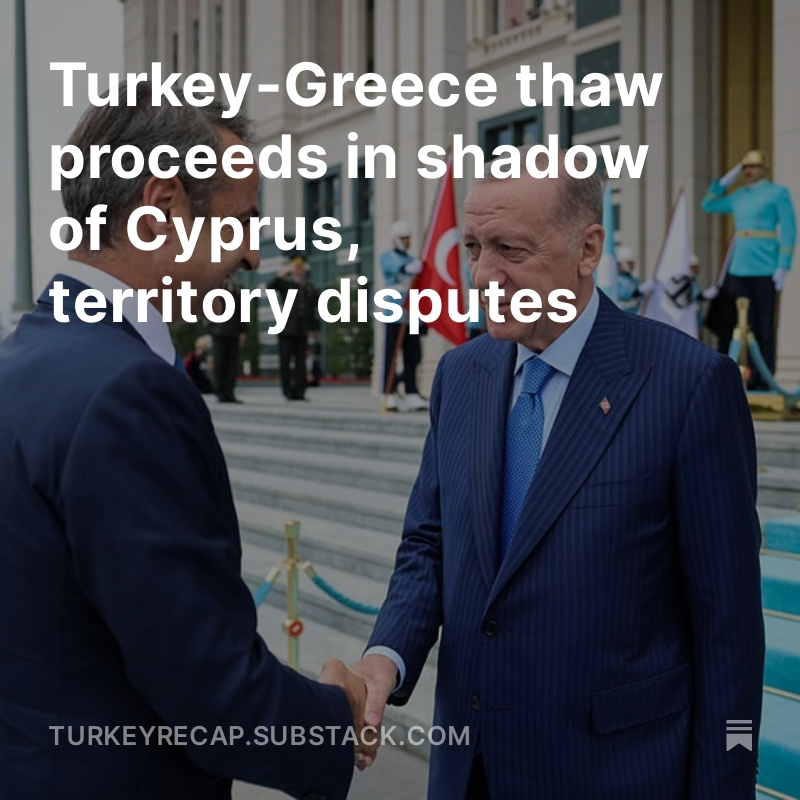
Ποιες είναι τελικά οι θέσεις Τουρκοκυπρίων και Τουρκίας για το #Κυπριακό; Τι σημαίνει «ευελιξία» στη διαπραγμάτευση; Και πώς όλα αυτά συμπλέκονται με την ελληνοτουρκική προσέγγιση στον #ΟΗΕ; Συνέντευξη DW @ErolKaymak @SWPBerlin dw.com/el/%CF%85%CF%8…
Berlin, Germany 🇩🇪 Ελληνικά
0
1
2
252
Caitlin Johnstone
Caitlin Johnstone@caitoz·
Basically the problem is that our whole planet has been gamified. All the Earth's life, resources and geography have been folded into this sick points-scoring game where people commodify them into points called money, for no other reason than to score as many points as possible. A tree is worth a set amount of points in the game. A fish, a liter of water, a barrel of oil, or an acre of land are each worth a set amount of points. Human labor is worth a set amount of points, and the products it produces are worth a greater amount of points. Nothing's what it actually is in the game; first and foremost it's the number of points it can be used to score. Someone who's quite adept at the game never sees things in and of themselves, they see only their point-scoring value. Everything's been reduced to the value of the points it can be used to score, and all of human behavior is driven by this point-scoring game. Food, shelter and resources are not allocated in whatever way would best serve human interests, they're allocated based on the play dynamics of the game. The ecosystem is not treated in ways that benefit its thriving, it's treated in whatever way scores the most points in the game. People are not treated with care and respect, they're treated in accordance with their point-scoring ability in the game. There are a few key differences between this game and other games. Firstly, other games won't leave you homeless and hungry if you lose. Secondly, in most other games the players start out on an even playing field, whereas in this game everyone starts out with a wildly unequal number of points with a wildly unequal ability to score more of them. Thirdly, other games tend to have an end point where a winner is declared and the game is over, whereas in this game players just keep earning as many points as possible for as long as their mortality allows. Fourthly, other games aren't destroying the world. In order to have a healthy planet, we must first de-gamify the earth. We must begin approaching our world in accordance with reality as it actually is, not in accordance with this weird game we made up in our minds. We must build new systems in which we're all collaborating toward the good of everyone and the good of our biosphere, not competing against each other to score more points. Not until we are relating to terrestrial life on terrestrial life's terms will we have the ability to live in health and harmony. At a certain point of maturity you've got to put down the video game controller, go outside, and start living your life. It's as true of our collective species as it is of the individual.
English
149
589
2K
159.3K