Mo Alami

5.5K posts

Mo Alami banner
Mo Alami

Mo Alami

@EuropeanArab1

🇳🇱🇲🇦 father of two, husband of a 🇨🇭🇸🇾☀️, an academic, trying to navigate this chaotic world

🇳🇱🇨🇭 Katılım Kasım 2023
604 Takip Edilen129 Takipçiler
Sabitlenmiş Tweet
Mo Alami
Mo Alami@EuropeanArab1·
14 years of suffering! 14 years of death, destruction, displacement, and injustice! A generation without childhood! Emotions in this video reflect the trauma most Syrians endured, something that can never be understood through the prejudiced narrow-minded lens of Western media!😢
Nathalie | ناتالي@Nath_limited_ed

الرئيس أحمد الشرع وزوجته يذرفون الدموع عند سماعهم لقصص معاناة الشباب السوري خلال حكم الأسد... هل دمعت عيونكم أيضاً مثل ما حصل معي ؟

English
0
2
4
2.3K
Mo Alami retweetledi
Rena Netjes renanetjes@bsky.social
If the CIA was behind this, then it took a damn long time for them to bring down Assad, almost 14 years. And why did they arm and finance Assad's ally YPG/SDF and allow the SDF to supply fuel for all those years to bomb the rest of Syria? Why did the US tolerate Assad, Hezbollah
wvanwagenen@WVanwagenen

@RenaNetjes

English
10
17
67
3.7K
Mo Alami retweetledi
Julia
Julia@zweilicht1985·
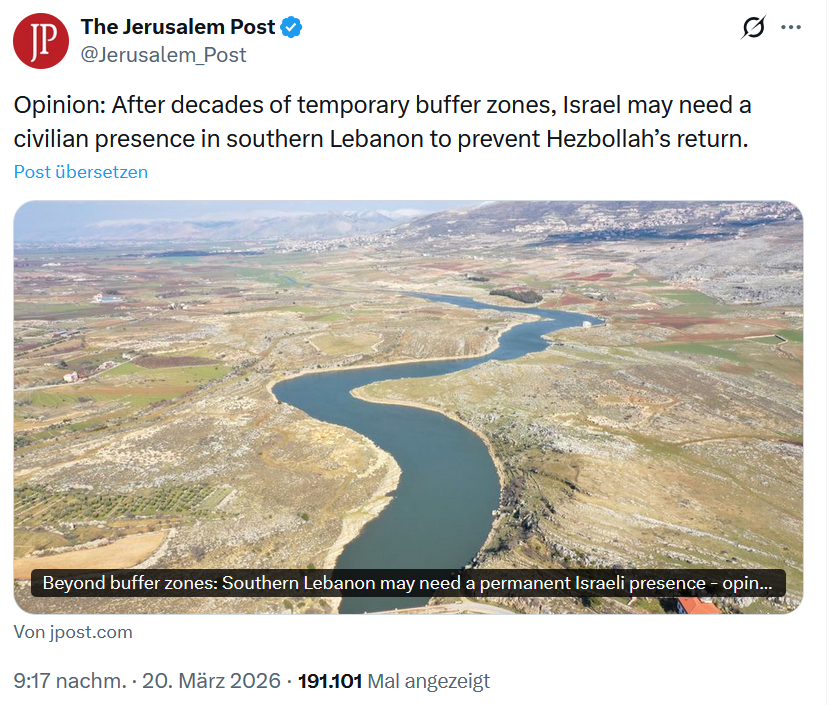
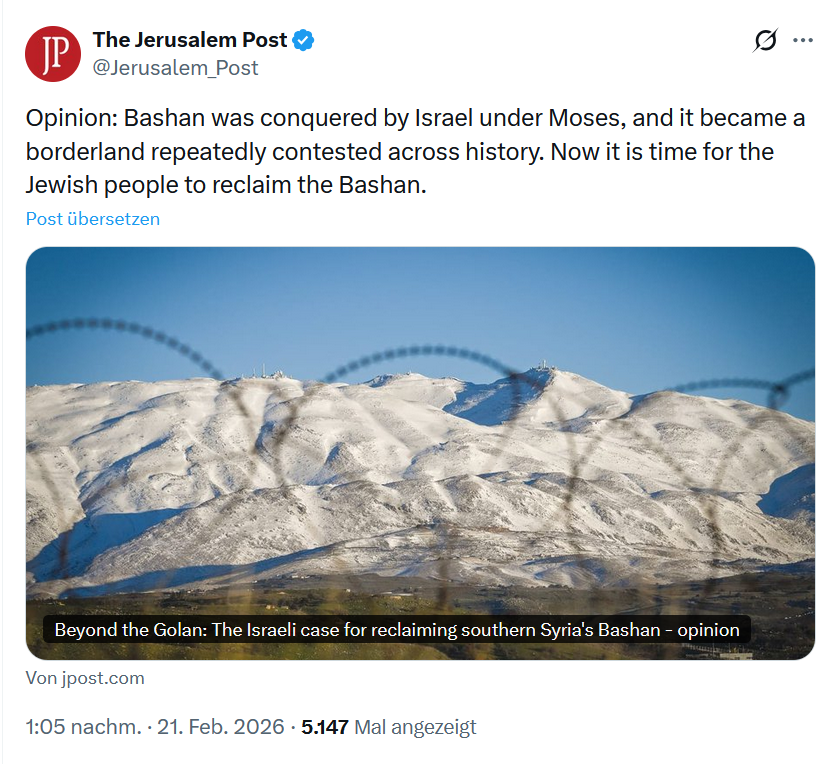
This is now the public discussion in one of Israel's largest newspapers about Lebanon & Syria. But anyone who says this in Germany is considered antisemitic and paranoid and you are told Israel is merely defending itself and is neither expansionist nor revisionist. Tiring.
Julia tweet mediaJulia tweet media
English
3
21
84
2.5K
Mo Alami retweetledi
Abd alhade alani
Abd alhade alani@abdalhadealani·
While American A-10 fighter jets are striking Iranian terrorist militias in Iraq day and night, Abdul Qader al-Karbalai, the military deputy of the (Iranian) Al-Nujaba Movement in Iraq, threatens Syria and the Syrian President, directing severe insults at the Syrian Arab Republic and the Syrian people.
عبد القادر الكربلائي@abdul_qader1oct

English
6
29
110
46.6K
Mo Alami retweetledi
Yulia Pobegailova
Yulia Pobegailova@Y_Pobegailova·
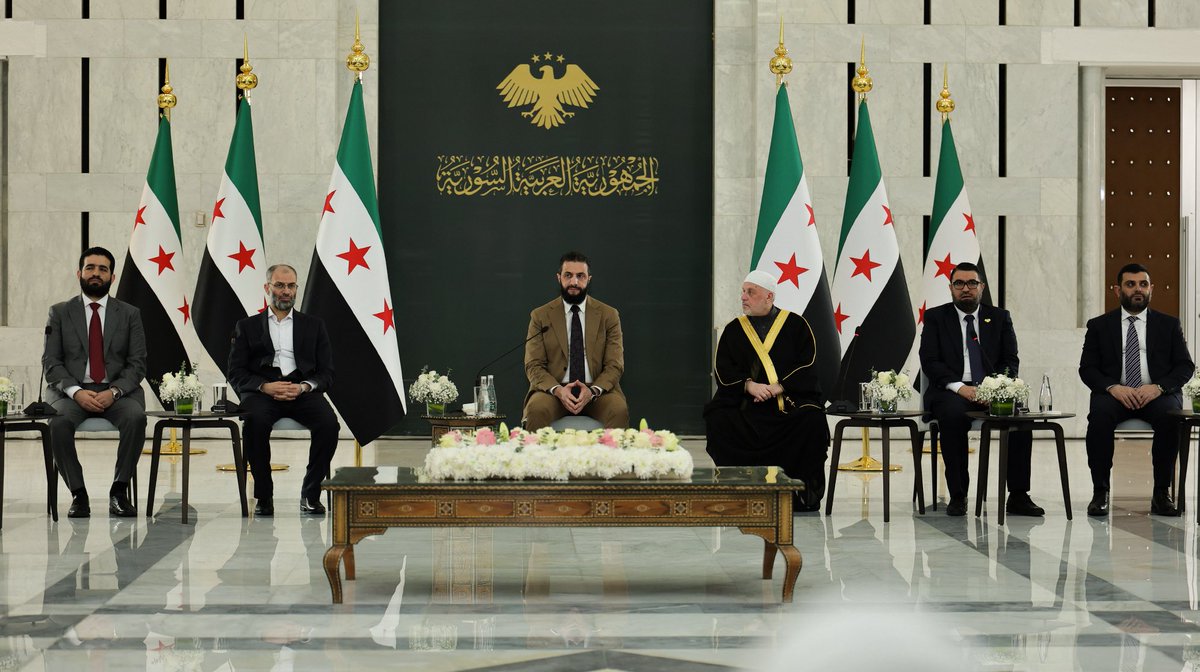
🇸🇾 Syria’s President Ahmed al-Sharaa makes his first public comments on the Iran war: “Our region has not witnessed such escalation since World War II.” “We are calculating our steps with extreme precision and working to keep Syria as far as possible from any conflict that would reopen wounds and suffering.” “Today, we are on good terms with all neighboring countries.” “We stand in full solidarity with Arab states.” @i24NEWS_EN
Yulia Pobegailova tweet media
English
5
21
74
14.7K
Mo Alami
Mo Alami@EuropeanArab1·
@FreedomOnX89 @Osint613 Nope, it is Israel who is exploiting the Iran war and gave air cover to a drugs smuggling gang. Luckily several of those Israeli cartel guys got arrested with together with the drugs they wanted to smuggle to Jordan! x.com/QalaatAlMudiq/…
Qalaat Al Mudiq@QalaatAlMudiq

#Syria: the second Hijri's fighter killed last night during a failed infiltration attempt on the SW. #Suwayda front. It appears the move was coordinated to facilitate a drug smuggling attempt. According to Druze sources, 4 other men from Suwayda province, believed to be smugglers, were also captured by Security forces.

English
1
0
1
119
Freedom
Freedom@FreedomOnX89·
This strike underscores how regional conflicts are intersecting—Israel isn’t just reacting to Iranian threats or Hezbollah; it’s also actively protecting minority communities like the Druze in Syria. Militarily, it’s a show of deterrence, but it also risks further escalation with Damascus and Iran-backed forces. Essentially, Israel is signaling: any attempt to exploit the Iran–Lebanon war to harm its allies won’t be tolerated, but the stakes for wider conflict rise each time
English
4
3
10
3.3K
Open Source Intel
Open Source Intel@Osint613·
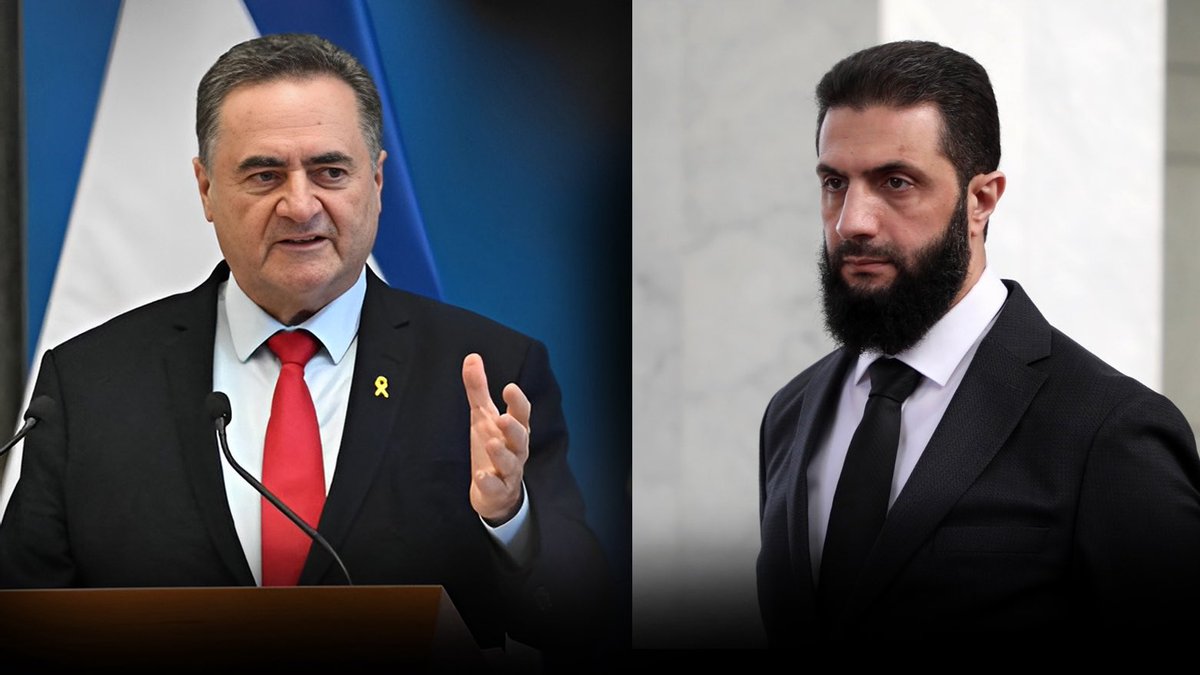
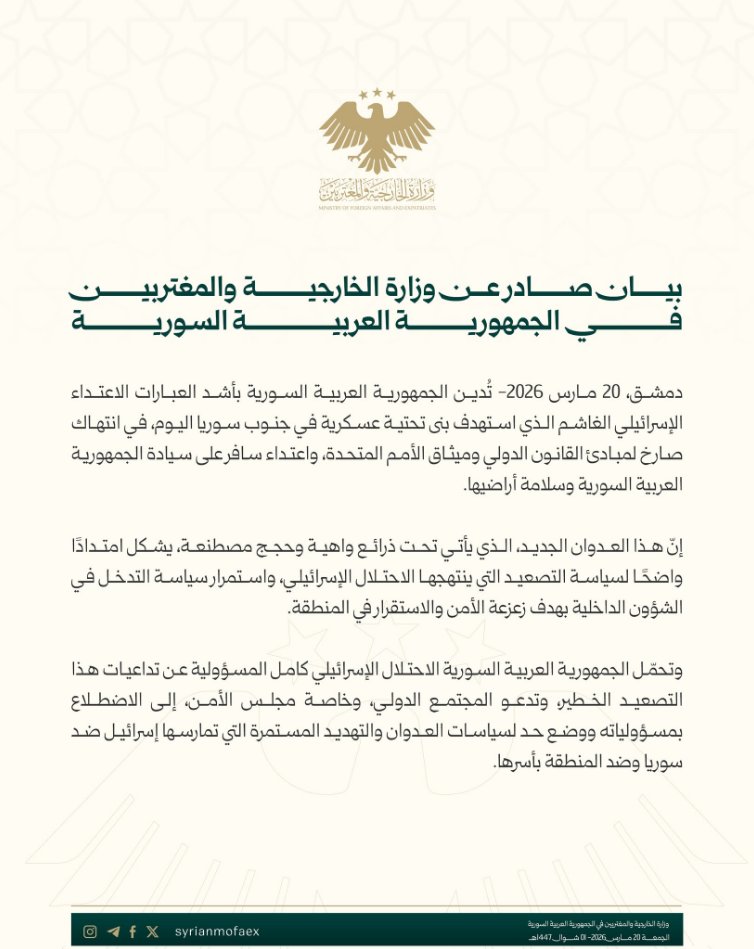
BREAKING 🔴 Defense Minister Katz: We struck Syrian regime infrastructure and will not allow it to exploit the war in Iran and Lebanon to harm the Druze. This comes after Jolani regime attacked the Syrian Druze this week.
Open Source Intel tweet media
English
62
224
1.6K
85.5K
Mo Alami retweetledi
𝐌𝐢𝐜𝐡𝐚𝐞𝐥 𝐀𝐫𝐢𝐳𝐚𝐧𝐭𝐢
No nation has bled more under the Iranian regime than Syria. Targeting a shared victim instead of building an alliance against Tehran is beyond backward- it’s pure idiocy! Israel is sabotaging its only logical ally against Iran! 🇸🇾🇮🇱
𝐌𝐢𝐜𝐡𝐚𝐞𝐥 𝐀𝐫𝐢𝐳𝐚𝐧𝐭𝐢 tweet media
English
26
18
157
10.1K
Mo Alami
Mo Alami@EuropeanArab1·
@zweilicht1985 Israel is not happy about that! It doesn’t help their vision of a “coalition of minorities” in the Middle East. Meanwhile, the European far right doesn’t want Sunni Muslims coming to Europe while at the same time supporting Israel’s expansionist ambitions!
English
0
0
0
127
Julia
Julia@zweilicht1985·
Removal of Assad alone brings irregular migration out of Syria into the EU to the lowest level since 2009. Please take this into account in your future discussions about push and pull factors in irregular migration.
Ben Fève@BenjaminFeve

According to the latest @Frontex figures, only 30 Syrian nationals were detected crossing into the EU irregularly in January 2026, the lowest monthly figure recorded in nearly 30 years (January 2009). This number may be revised upward as data is refined, but the broader 2025 trend is unambiguous: irregular crossings by Syrians have fallen to their lowest level since 2012 (lower even than during the COVID-19 pandemic). Time and again, the data confirms what researchers have long argued: the primary driver of irregular migration is conflict, not the economy. Syria remains one of the poorest countries in the world, with catastrophic levels of deprivation. Yet poverty alone rarely compels people to risk dangerous, illegal crossings. When the immediate threat of violence and arbitrary detention recedes, so does the impulse to flee. The December 2024 transition has not made Syria prosperous... just yet. But it may have made it survivable, which is, in itself, enough for many to stay.

English
8
113
583
32.5K
Mo Alami retweetledi
Charles Lister
Charles Lister@Charles_Lister·
Remarkable. #Israel appears to have launched strikes on #Syria overnight based on misinformation -- in which #Druze militia framed (1) unexploded ordnance, (2) criminal arrests, (3) a failed #Druze militia attack & (4) intercepted drug traffickers as a gov't campaign of violence
Qalaat Al Mudiq@QalaatAlMudiq

#Syria: Israeli strikes last night seem to be based on a misleading Hijri's National Guard statement released hours before the bombardment. The claims are as follows: - "3 people killed in Najran", implying this is a Government attack: 2 deaths are documented, both farmers killed by a mine on their agricultural tractor (📸 2): web.facebook.com/permalink.php?… - "12 civilians arrested" at Metuna checkpoint: the Interior Ministry announced yesterday the arrest of 9 people while trying to smuggle stolen cars into Suwayda (📸 3): x.com/syrianmoi/stat… - "4 young men killed": only 2 fatalities are documented and both were Hijri's fighters trying to sneak into the front (📸 4) - one of them a former Regime fighter. - "7 young men kidnapped": 4 people arrested are reported by Druze sources, believed to be drug smugglers: web.facebook.com/Suwayda.IamaHu… web.facebook.com/Suwayda24/post… - Clashes, use of at least one FPV drone on a National Guard's checkpoint & shelling are confirmed, incl. a house damaged in Suwayda.

English
17
111
414
35.5K
Mo Alami retweetledi
Qusay Noor
Qusay Noor@QUSAY_NOOR_·
Why Did Assad’s Army Collapse So Quickly? How did a military institution once considered one of the pillars of the state fall apart within just a few years? In this documentary, we recount the path of the Syrian army’s disintegration from the first defections and the refusal of some soldiers to carry out orders of repression, to the formation of the Free Syrian Army and the attempts to organize armed factions. We also shed light on how the structure of the army changed over time, as the regime increasingly relied on the most loyal units, while the role of local and foreign militias in battles across Syrian territory steadily grew. The Republican Guard, in reality, functioned as a tool in the hands of the regime’s leadership. It did not follow the orders of the Ministry of Defense or the General Staff. Instead, it acted as the regime’s iron fist at the very top of the power structure. “I know very well that the Syrian people have been waiting for these words since last week. I deliberately delayed speaking until the full picture became clear in my mind, at a time when our enemies work every day in an organized and systematic way to destabilize Syria.” The second stage of the army’s engagement with the uprising soon became evident. The military’s official intervention began under the pretext of defending the homeland against an internal enemy. This marked the beginning of the siege strategy. In April 2011, the armed forces imposed a tight siege on the city of Daraa and carried out large-scale arrest campaigns. Less than two weeks later, between May 7 and 9, 2011, the same model was applied in Baniyas, where the army deployed inside residential neighborhoods and conducted widespread raids and arrests. By the end of May and the beginning of June 2011, the army had entered the city of Homs. Entire neighborhoods were surrounded and stormed, while a continuous flow of blood marked the days, with dozens of victims falling daily. Apparently, this strategy appealed to the military and security leadership. The tactic of besieging cities quickly spread from one province to another, and from one town to the next. Heavy firepower was used extensively artillery, mortar shells, and sometimes rocket launchers. At that stage, the regime’s leadership appeared determined to crush any form of dissent, hoping to prevent anyone from ever daring to rise against the state again. Yet within the military establishment itself, there were officers who showed restraint and wisdom. Some tried to preserve the country’s social fabric and played an important role in limiting the escalation. Nevertheless, the harshness and excessive use of force led to a new phenomenon: defections from within the armed forces. “I am Lieutenant Colonel Hussein Harmoush of the 11th Division. I announce my defection from the army and my joining the ranks of the Syrian youth.” The first defections began to appear in early June 2011. On June 7, First Lieutenant Abdul Razzaq al-Qaseh defected. Two days later, Lieutenant Colonel Hussein Harmoush followed. Shortly afterward, Colonel Riad al-Asaad also defected. Harmoush formed what became known as the Free Officers Movement. Then, on July 4, 2011, Colonel Riad al-Asaad announced the creation of the Free Syrian Army, in an attempt to organize the growing number of armed groups opposing the regime. Initially, most of these factions operated under the umbrella of the Free Syrian Army before other Islamist and non-Islamist groups later entered the conflict. “We never thought about taking up arms except to defend ourselves, our families, our women, and our children. At first, armed groups were formed only to protect demonstrators.” But when the army advanced into villages and cities with heavy weapons, local residents began organizing themselves into armed groups to defend their neighborhoods. These were not foreign fighters. They were ordinary people, shop owners, neighbors, and residents of the same streets who took up arms to defend their homes against what they saw as injustice and oppression. Some formations within the Syrian army were closely tied to foreign powers. The Fifth Corps, for example, operated under Russian influence, while the Fourth Division maintained deep connections with Iran. Local Defense Forces were also linked to Iran, which gradually created a fragmented military structure with competing loyalties. Over time, a new kind of ideology emerged an ideology shaped less by national doctrine and more by whoever provided funding and support. Since the relative calm that settled on most frontlines in 2020, and as the regime regained territorial control, the apparent cohesion of the Syrian army did not reflect genuine institutional strength. Rather, it was largely the result of external support that compensated for the army’s structural weaknesses. This temporary resilience masked deeper problems instead of addressing them. As the revolution entered its tenth year, the army’s institutional fragility remained unresolved. During this period, signs of financial corruption and administrative dysfunction became increasingly visible. The situation worsened after the enactment of the Caesar Act, which significantly restricted the regime’s ability to fund and sustain its military apparatus. The Syrian pound rapidly lost value, reaching record lows. “We used to talk about money all the time,” one former soldier recalls. “Our salaries were extremely low, barely enough for a few weeks, sometimes not even half a month.” As a result, many soldiers resorted to informal arrangements with their superiors. “You might approach a brigadier or a colonel and offer him a certain amount of money,” he explains. “In return, you would be allowed to leave your post for part of the month so you could work elsewhere and earn a living.” This practice became widely known among soldiers as “Tafhish.” Many soldiers would work outside the military and then pay a portion of their earnings to their commanders. Officers themselves were often struggling financially and were looking for ways to supplement their income. Over time, the military institution itself became deeply entangled in corruption. For officers, the priority often shifted from military duty to accumulating money, opening smuggling routes, running illicit trade, and exploiting their positions. Weapons were sometimes sold to various factions, including ISIS and the Syrian Democratic Forces. Fuel, cigarettes, and other goods were smuggled. Even building materials such as rooftop iron were stolen and resold. In some cases, officers arranged contracts to collect materials like nylon and resell them to factories or institutions. Such practices eroded the sense of belonging among soldiers and gradually hollowed out the military institution from within. Between 2015 and 2020, the geography of the Syrian revolution shrank significantly, but its military concentration increased in the remaining opposition-held areas. Within revolutionary circles and among the public base supporting the factions, demands grew for greater unity and coordination. There was increasing pressure to overcome internal divisions and improve military effectiveness. Many believed that concentrating forces in one geographic area, northwestern Syria, would make coordination easier, unlike previous years when fragmented geography hindered joint decision-making. Despite the difficulties, many Syrians believed that hope could emerge from hardship. The devastating earthquake added further pressure on already exhausted communities. This moment reinforced the idea that the revolution needed to move into a new phase if it was to challenge the regime. During this period, a unified military coordination body was formed in the liberated areas: the Al-Fath al-Mubin Operations Room. The operations room was tasked with organizing training plans for participating factions and improving coordination between them. Training camps and military academy-style programs were also established to professionalize fighters. Differences between factions remained, but many leaders emphasized that disagreements should lead to cooperation rather than division. In Idlib, many considered this model a successful experience, one that significantly improved military coordination. On November 27, 2024, the Military Operations Directorate, led by Hay’at Tahrir al-Sham, launched what it called the “Deterrence of Aggression” campaign. What followed shocked many observers who were unfamiliar with the true condition of the regime’s military institutions. Within eleven days, the regime’s structure collapsed. Rebel forces advanced into Damascus, exposing the depth of the institutional decay that had accumulated within the Syrian armed forces over years of war. For example, the Local Defense Forces withdrew from the battles. Iranian-backed formations also pulled back. On the Russian side, early airstrikes were launched, but their involvement quickly diminished. Some formations dissolved entirely. Others switched sides. Units such as the Eighth Brigade abandoned their positions and joined the southern offensives that eventually reached Damascus. The network of international support that had sustained the regime’s military structure began to unravel. Many of the forces fighting on the regime’s side were effectively militias backed by foreign states and once that support stopped, their cohesion collapsed. When opposition forces entered Damascus, they encountered large numbers of soldiers who had already removed their uniforms. The speed of the collapse astonished even those who participated in the offensive. “Liberating Syria in eleven days,” one participant said, “would have sounded unbelievable if we had not witnessed it ourselves.” After the fall of the regime, the new army that began to form inherited both the legitimacy of the revolution and the heavy questions left by the previous military establishment. For nearly fifteen years, that institution had waged war against its own people. The central question now facing Syrians is clear: How can a new army be built on a purely national doctrine, one that serves the country rather than becoming a tool in the hands of those in power? And how can military power be managed within a national framework that rejects domination and repression? Many Syrians now share a conviction: there will be no new Assad. The Syrian people have paid an enormous price, and they are determined not to allow another system of oppression to take root. The challenge ahead is restoring public trust in the military institution, transforming it into a force that the people respect, defend, and feel part of. The new military establishment, many believe, must be born from the people themselves from the children of the revolution, the families of martyrs, the wounded, the displaced, and those who endured the hardships of war. Only then can the army truly belong to the nation.
English
2
29
75
3.6K
Mo Alami retweetledi
Robert Ford
Robert Ford@fordrs58·
Not only a narcotics trafficking ring - also a murderous faction governing Suwaida (recall torture, killing of Shaykhs Matni and Falout among others, and humanitarian aid worker Hamza Amarin still missing, etc).
Oz Katerji@OzKaterji

With all the distractions in the Middle East, it’s easy to miss the fact that the Israeli air force is bombing Syria in order to facilitate a literal narcotics trafficking ring, under the guise of “protecting minorities” (a drug dealing clan linked to the former regime).

English
12
75
231
34.7K
Mo Alami retweetledi
Qalaat Al Mudiq
Qalaat Al Mudiq@QalaatAlMudiq·
#Syria: the second Hijri's fighter killed last night during a failed infiltration attempt on the SW. #Suwayda front. It appears the move was coordinated to facilitate a drug smuggling attempt. According to Druze sources, 4 other men from Suwayda province, believed to be smugglers, were also captured by Security forces.
Qalaat Al Mudiq tweet mediaQalaat Al Mudiq tweet media
Qalaat Al Mudiq@QalaatAlMudiq

#Syria: Hijri's fighter killed last night while trying to infiltrate the SW. #Suwayda front was a former Assad's Military Security element.

English
5
37
186
43.4K
Mo Alami retweetledi
Qalaat Al Mudiq
Qalaat Al Mudiq@QalaatAlMudiq·
#Syria: Hijri's fighter killed last night while trying to infiltrate the SW. #Suwayda front was a former Assad's Military Security element.
Qalaat Al Mudiq tweet mediaQalaat Al Mudiq tweet mediaQalaat Al Mudiq tweet media
Qalaat Al Mudiq@QalaatAlMudiq

#Syria: last night the Security forces thwarted an attempt by Hijri's National Guard to infiltrate the SW. #Suwayda front, near Bosra. At least 2 Hijri's militiamen were killed (one of them pictured).

English
2
33
159
27.4K
Mo Alami retweetledi
Oz Katerji
Oz Katerji@OzKaterji·
With all the distractions in the Middle East, it’s easy to miss the fact that the Israeli air force is bombing Syria in order to facilitate a literal narcotics trafficking ring, under the guise of “protecting minorities” (a drug dealing clan linked to the former regime).
Paweł Wójcik 🦋@SaladinAlDronni

Yeah, here we go again. Hijri - tries to infiltrate Syria - punishes the attempt Israel - punishes Syria It's going to be a never ending story.

English
18
188
712
72.4K
Mo Alami retweetledi
Michael Weiss
Michael Weiss@michaeldweiss·
Israel in fact warned Assad repeatedly to keep Iranian influence in Syria at bay; he was the “devil you know” option much preferred to the alternative. How can we be sure? When Assad was ousted, Israel bombed every piece of military equipment it could find in Syria lest the alternative come into possession of it. newlinesmag.com/reportage/insi…
Ron Kampeas@kampeas

Israel never wanted Assad to go - there were Bush-Sharon tensions in the mid 2000s precisely because Sharon opposed regime change in Syria. It was a better the devil you know calculus for Israel. Kent just makes stuff up.

English
17
143
890
109.2K