Friederike Keating

875 posts

Friederike Keating banner
Friederike Keating

Friederike Keating

@FKeatingMD

Cardiologist | Educator | Multimodality Imaging Nerd | Healthcare Is A Public Good | Tweets are my own @UVMLarnerMed @Reed_College_ @UniGoettingen

Katılım Haziran 2017
669 Takip Edilen559 Takipçiler
Friederike Keating
Friederike Keating@FKeatingMD·
@mmamas1973 And this is not because of the TSA issue. It's simply the long lines when entering the country as a non-citizen. Every European country I've been to has figured out a fast, largely digital way to accomplish this. In the US, there's still hours-long winding lines.
English
1
0
0
105
Friederike Keating
Friederike Keating@FKeatingMD·
@DrSheilaSahni Yeah it took me 9 minutes in Burlington VT with precheck which is 2x normal. But not looking forward to the return trip from Nola…
English
1
0
1
236
Dr. Sheila Sahni
Dr. Sheila Sahni@DrSheilaSahni·
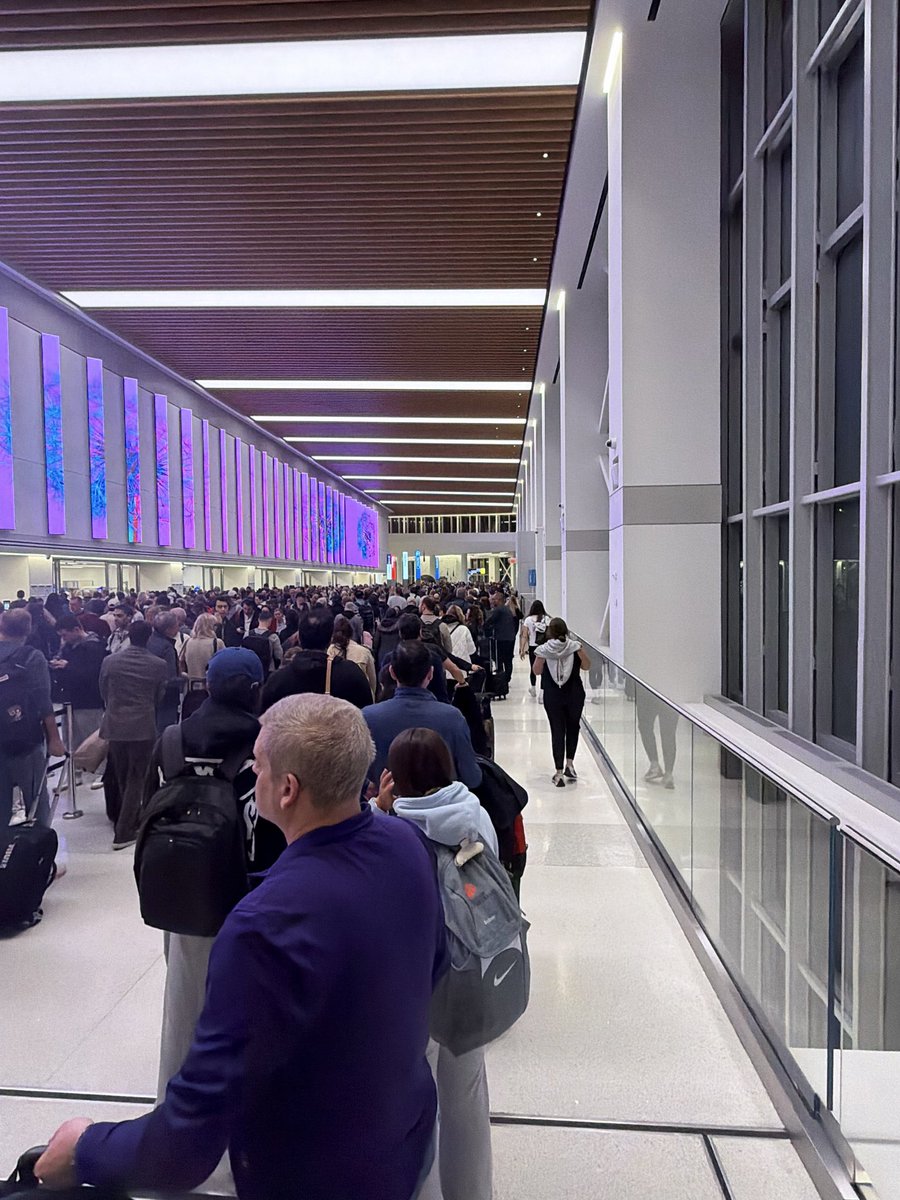
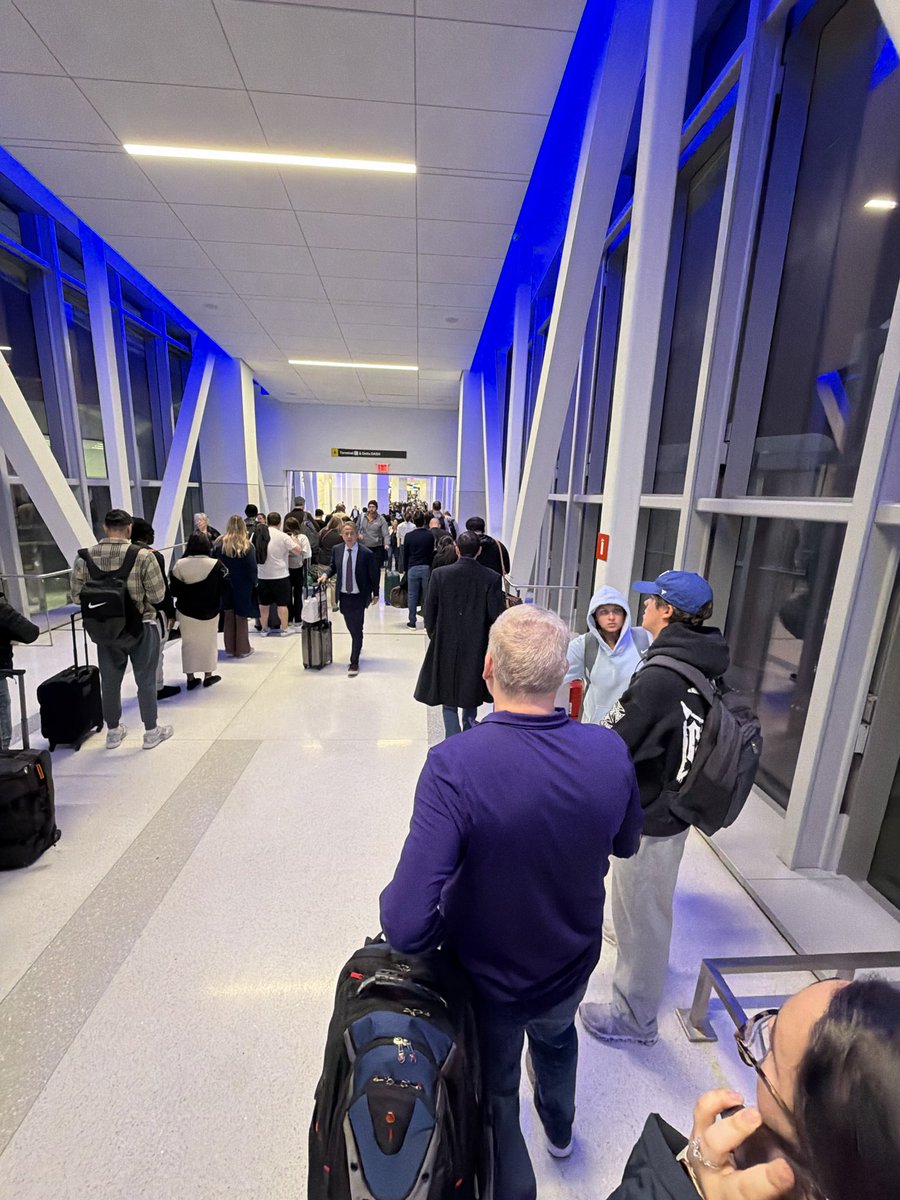
Airport warning for the #ACC26 crowd! ✈️ Leave a minimum of 2 hours to get through security. I'm well over an hour into the CLEAR + TSA Pre line. See you all in NOLA (eventually)! 🎷
Dr. Sheila Sahni tweet mediaDr. Sheila Sahni tweet media
English
5
9
49
12.6K
Friederike Keating retweetledi
Steve Peoples
Steve Peoples@sppeoples·
ICE agents initially claimed Mondragón had tried to flee while handcuffed and “purposefully ran headfirst into a brick wall.” But staff members at Hennepin County Medical Center determined that could not possibly account for the fractures and bleeding throughout the man’s 31-year-old’s brain. ... A CT scan revealed at least eight skull fractures and life-threatening hemorrhages in at least five areas of his brain. Mondragón entered the U.S. in 2022 with valid immigration documents. Minnesota incorporation filings show he founded a company called Castaneda Construction the following year with an address listed in St. Paul. He appears to have no criminal record. apnews.com/article/immigr…
English
416
6.8K
14.9K
1.3M
Friederike Keating
Friederike Keating@FKeatingMD·
@TimothyDSnyder Yes. The SA was a paramilitary group formed to protect Nazi leaders and - most of all - fight members of opposed political groups. The coalition government of the time legalized the SA as a concession when the Nazis became the largest faction. Rest = history.
English
0
2
6
256
Timothy Snyder
Timothy Snyder@TimothyDSnyder·
In the early 1930s the SA was roughing people up, creating chaos in neighborhoods, seeking to terrorize with the occasional killing. By the late 1930s it had been supplanted by the SS, which was much better trained.
Bill Kristol@BillKristol

Also, may I say that I don’t agree with people saying ICE and CBP need “more training.” They’re doing exactly what this administration has trained them to—impose a reign of fear in blue cities. They don’t need more training. They need to be ripped up root and branch.

English
97
2.2K
6.2K
208.5K
Friederike Keating retweetledi
Armand Domalewski
Armand Domalewski@ArmandDoma·
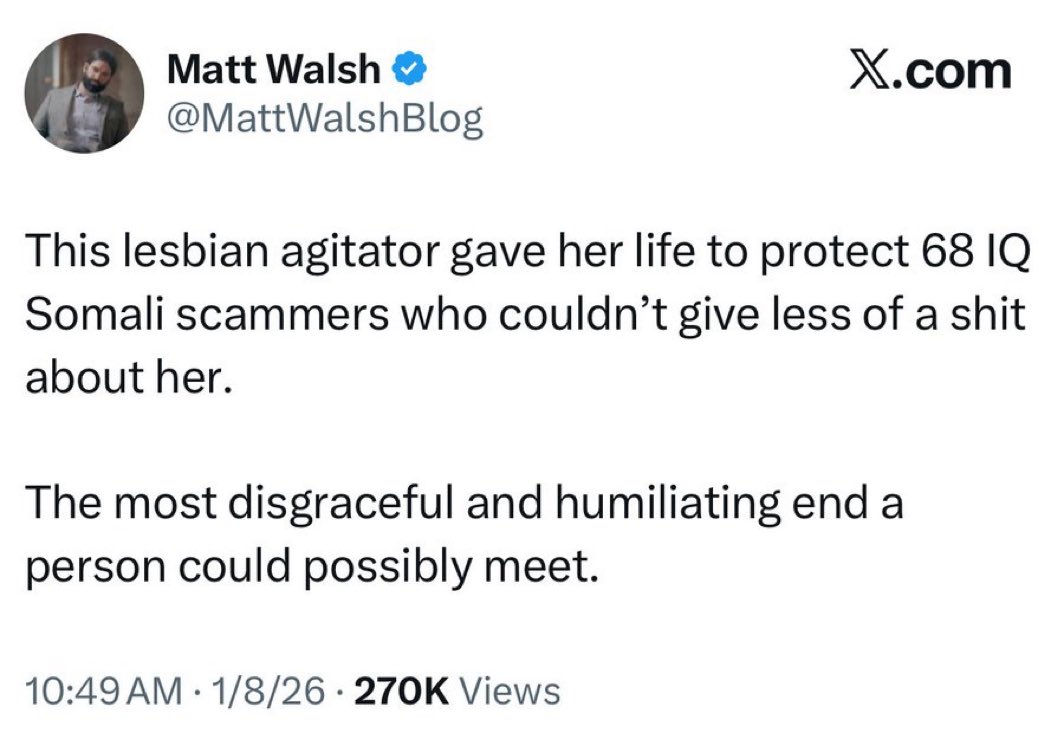
this is the sort of tweet St. Peter reads you before he pulls the lever that opens the trap door to hell
Armand Domalewski tweet media
English
477
2.2K
27.8K
587.7K
Friederike Keating retweetledi
Daractenus
Daractenus@Daractenus·
Maybe I’m too much of a European, but I honestly can’t understand how so many Americans find it perfectly natural to be shot in the head on the spot for the slightest act of disobedience toward any sort of law enforcement. You might wanna revisit that "land of the free" thing.
English
6.1K
17.7K
170.6K
3.3M
John Asghar MD
John Asghar MD@JahangirAsgha10·
To each his own. But the idea that today’s system is better than what we had 20 years ago is simply false. We spend more time documenting, the notes are less accurate, and far less useful. Most clinicians are trapped in rigid templates and cookie-cutter notes that satisfy billing, not medicine. I’d rather poke my eye out and read some of those notes
English
2
0
6
383
John Asghar MD
John Asghar MD@JahangirAsgha10·
People fail to realize how useful traditional medical transcription was in clinic. No matter how efficient I’m told modern systems are, the current workflow dictated by technology is nowhere close. There was no ten-minute login. I dictated the note in front of the patient on an old-fashioned cassette, confirmed everything we discussed in real time, and ensured the information was accurate and appropriate. That process reinforced shared understanding, preserved attention on the patient rather than the screen, and created a better clinical interaction. And the turn around for the note was 48 hours.
Hasan Guven@guvenguvenh

@drmoneymatters As a physician, over 20 years I have also slowly become -Transcriptionist -Billing entry specialist -Order entry specialist -Coding entry supervisor These all erode my time with patients Everyday, physicians are asked to take on additional non-clinical components of care.

English
20
16
96
13.1K
Friederike Keating retweetledi
Jerome Adams
Jerome Adams@JeromeAdamsMD·
Many European countries skip universal hepatitis B birth doses, giving only to high-risk infants & starting routine vax at 6-8 weeks. Why do U.S. Hep B birth dose recs differ from Europe? 🤔 I’m glad you asked! 🧵👇🏽 1/4
English
56
269
1.1K
77.1K
Friederike Keating
Friederike Keating@FKeatingMD·
@BskiMike22802 Assuming that on a large scale this would be organized and administered centrally, it is very much what communism would do, ideally.
English
0
0
1
75
mike bski
mike bski@BskiMike22802·
I need to get something off my chest because I've been stewing on this for MONTHS and I can't stay quiet anymore. I teach in a high-need district. Every single one of my students qualifies for free lunch. I watch these kids every day, and let me tell you something that's going to make the bleeding hearts uncomfortable: these aren't bad kids. These aren't lazy families. They're TRAPPED. Trapped in a system that was never designed to let them out. You want to know the dirty secret nobody in Washington will say out loud? The average welfare recipient stays in the system for EIGHT YEARS. Eight years of checks. Eight years of food stamps. Eight years of housing assistance. And after all that time and all that money, you know what the success rate is? Twenty-five percent. ONE IN FOUR actually escapes poverty. And of those lucky few who make it out? Forty percent end up right back in the system within a few years. We're spending $160,000 per person over their welfare lifetime to achieve a 25% success rate. If I ran my classroom like that, I'd be FIRED. If a business operated like that, they'd be BANKRUPT. But somehow this is "compassion" and anyone who questions it is a heartless monster who wants children to starve. Give me a break. I've been working on something I call the RISE Program. Recovery, Independence, Skills, Employment. And before the left calls me cruel and the right complains about costs, let me explain what makes this different from every welfare reform idea that's come before: This isn't a money program. It's an EDUCATION program. No cash. No EBT cards. No checks to cash. NOTHING to sell. NOTHING to trade. NOTHING to exploit. Everything provided in-kind. Everything designed to TEACH. Here's how it works. Two pathways, because not everyone's in poverty for the same reason. PATHWAY ONE is for folks who hit a rough patch. I'm talking about the guy who got laid off when his plant closed. The single mom whose ex stopped paying child support. The family that got wiped out by medical bills. These people don't need their lives restructured. They need a bridge to get back on their feet. So we give them 12-14 months. Tricare medical coverage so a doctor visit doesn't bankrupt them. Financial literacy classes using Dave Ramsey's stuff because most people were never taught how money actually works. We cap their existing loan interest rates at 6% so predatory lenders can't keep them drowning. No new credit cards during the program because we're not helping them dig out of a hole while they're still digging. But here's where it gets different: NO SNAP. NO EBT CARD. Instead, we do exactly what I proposed for SNAP reform. Partner with Aldi or similar discount grocers. Three standardized weekly meal plans. Real food. Fresh produce. Actual nutrition. Each week you pick Plan A, B, or C, and you either pick up your box of ingredients with printed recipes, or it gets delivered. I feed my family of six on $120-130 a week. Fresh vegetables every day. Chicken seven different ways. Homemade everything. My kids don't know what steak tastes like because we BUDGET. Meanwhile SNAP pays families my size over $1,400 a month in Ohio. That's almost TRIPLE what I actually spend feeding real food to real people. So these meal boxes? They cost what food ACTUALLY costs when you're not buying garbage. And every single box is a LESSON. Printed recipes. Step-by-step instructions. Families aren't just getting food, they're learning HOW TO COOK. They're learning what healthy portions look like. They're discovering that fresh vegetables aren't scary and that you can make chicken a dozen different ways without a deep fryer. More importantly, they're learning HOW TO BUDGET. When you see exactly what ingredients feed your family for a week, you start understanding what food actually costs. You learn that meal planning isn't some middle-class luxury. It's how responsible adults have fed families for generations. You can't sell a meal kit box for drugs. You can't trade pre-portioned chicken breasts for cigarettes. There's nothing profitable to exploit. And honestly? It takes STRESS off these families. No more wandering the grocery store wondering what to buy. Just pick your plan, follow the recipes, feed your family. When they're ready to transition off, they have SKILLS. They know how to shop at Aldi. They know how to stretch a whole chicken across multiple meals. They know homemade pasta sauce costs pennies compared to that jarred garbage. That's Pathway One. A hand UP. One time. Because assistance should be a trampoline, not a hammock. PATHWAY TWO is for the people who need to break the cycle entirely. I'm talking generational poverty. No skills. No structure. No realistic path to a career that can support a family. These folks need more than a bridge. They need a complete reset. This is where it gets controversial and I genuinely don't care. We take underutilized military bases and repurpose them. You want Big Brother's money? Big Brother is getting into your life. You move onto the base. Single people get barracks-style housing. Families get family housing units. Everyone gets fed at the dining facility. Everyone gets medical care. Everyone gets transportation. "But that sounds like the military!" Yeah. It does. Because the military has been taking kids with nothing and turning them into skilled professionals for generations. The structure WORKS. The model is PROVEN. But here's what makes RISE fundamentally different from anything else: EVERYTHING is education. The cafeteria isn't just feeding people. It's TEACHING them. Healthy meals prepared fresh. Proper portions. Balanced nutrition. Families eat together and LEARN what healthy eating looks like. Their kids aren't growing up on Hot Cheetos and Mountain Dew for breakfast. They're learning that vegetables aren't punishment. That protein doesn't have to come from a drive-thru window. How many people in poverty right now have NEVER learned to cook a healthy meal? Never learned what a balanced diet looks like? The cafeteria isn't charity. It's a CLASSROOM. The daycare isn't just babysitting. Kids learn life skills from day one. Basic responsibility. How to clean up after themselves. How to share. How to follow routines. How to respect other people's property. The daycare workers aren't just watching your kids. They're preparing them to break the cycle their parents are breaking. And parents can train to WORK at that daycare. Early childhood education certification. Real credentials. So when they leave, they can get JOBS in childcare, in schools, in Head Start programs. The daycare isn't a convenience. It's a PIPELINE to careers. The housing isn't just shelter. Regular health and wellness inspections, but NOT the kind that punish you. These are EDUCATIONAL. Staff comes in and shows you: here's how to spot mold before it becomes a problem. Here's how to report a maintenance issue properly. Here's how to keep a bathroom clean so it doesn't become a health hazard. Here's how to organize a kitchen so food doesn't spoil. Here's what landlords look for when they inspect units. How many people have NEVER been taught how to properly maintain a living space? Never learned what causes pest infestations? Never had anyone patiently explain that the way they're storing food is going to make their family sick? When someone graduates RISE and moves into their first apartment, they KNOW how to keep it. They know how to communicate with landlords. They know how to spot problems before they become emergencies. They know how to create a healthy home for their kids. THAT'S how you break generational poverty. Not by handing people money and hoping they figure it out. By TEACHING them everything they were never taught. Everyone takes an ASVAB-style assessment. We figure out what you're actually GOOD at. Then you train. Welding. Electrical work. Plumbing. HVAC. Factory operations. Real skills that employers are DESPERATE for. Skills that pay $50,000-$80,000 a year in most markets. You stay until you're CERTIFIED. Not some arbitrary time limit where we kick you out ready or not. You stay until you can actually DO THE JOB. Then we PLACE you in employment. We cover moving expenses. We give you a $10,000 housing establishment stipend to get set up in your new life. You leave with a CAREER. With SKILLS. With the knowledge of how to budget, how to cook, how to maintain a home, how to raise kids with structure. You leave as a complete package ready to succeed. "That sounds expensive!" Does it? Let me do some math. The intensive program costs about $120,800 per person over 18 months average. The bridge program costs about $51,800 over 14 months. Even if someone uses BOTH? That's $172,600 over roughly 32 months. Traditional welfare? $160,000 over EIGHT YEARS. With a 25% success rate. And 40% of those who "succeed" come right back. RISE projects 75% success rate. THREE TIMES the current rate. Only 15% returning to the system instead of 40%. Per 1,000 recipients over 10 years: current system costs $210 million. RISE costs $182 million. That's $27.7 million in savings per thousand people while TRIPLING the number who actually escape poverty. But here's what the numbers don't capture: the DIGNITY. A welder making $65,000 a year doesn't need food stamps. An electrician supporting his family doesn't need Medicaid. A woman who learned to budget doesn't end up back in the system when her transmission goes out because she has an emergency fund like a responsible adult. And her KIDS? They grew up eating healthy meals. They learned life skills in daycare. They watched their mom maintain a clean, healthy home. They saw their dad learn a trade and BUILD something. They're not going to end up in the system because they were TAUGHT how to avoid it. "But it's voluntary, right? What if people don't want to do it?" Completely voluntary. You don't want structure? You don't want to learn skills? You don't want to put in the work? Fine. Don't participate. But there are no other welfare programs sitting there as alternatives. This isn't punishment. This is the OFFER. Take it or don't. The current system says: "You're helpless. Here's money. Stay helpless." RISE says: "You're CAPABLE. Here's opportunity. Here's education. Let's get you where you deserve to be." The poverty industry will HATE this. They'll call it cruel to expect people to learn skills. They'll call it demeaning to provide structure. They'll call it patronizing to teach people how to cook and clean. You know what's ACTUALLY patronizing? Assuming poor people are too stupid or too broken to learn. Assuming they can't handle structure. Assuming they don't WANT better for their kids. Assuming the best we can do is mail them a check and hope for the best. I see these kids every day. I see their potential. I see what they could become if someone actually INVESTED in them instead of just managing their poverty. The current system creates dependents. RISE creates taxpayers. Quinn's First Law: "Liberalism always generates the exact opposite of its stated intent." Welfare was supposed to be a temporary bridge, not a permanent lifestyle. Time to actually BUILD that bridge instead of just maintaining the trap. But what do I know. I'm just a teacher who watches the system fail kids every single day and had the audacity to imagine something better. #WelfareReform #RISE #BreakTheCycle #TeachDontHandout #EducationNotDependency #SkilledTrades #PersonalResponsibility #EndGenerationalPoverty #RealSolutions #WelfareToWork #JobTraining #LifeSkills #NoCashJustEducation #BudgetingWorks #HealthyFamilies #MedicaidSavings #TaxpayersMatter #MAGA #Trump
English
439
782
2.7K
79K
Friederike Keating
Friederike Keating@FKeatingMD·
@JahangirAsgha10 You need to think of taxes instead of premiums, which makes things predictable and universal, and you can spread the delivery over several public-accountable carriers. Then you have to reduce cost on the other end, separate problem.
English
0
0
0
52
John Asghar MD
John Asghar MD@JahangirAsgha10·
The funniest part is we can’t even pay for Medicare as it exists today. The program carries roughly $8 trillion in unfunded liabilities under current law, and that number is projected to accelerate sharply over the next 10–15 years as the trust fund heads toward insolvency. Her version doesn’t fix that. It dramatically expands Medicare’s benefits—adding vision, dental, long-term care, and eliminating cost-sharing—so the price tag rises far beyond the already-unfunded baseline. To cover the current Medicare obligations alone—not the expanded version—the federal government would need 60 to 80 percent more revenue. That means individual taxes would have to rise substantially before we even break even with the status quo. That’s the part no one talks about. The math doesn’t work now, and adding more benefits doesn’t make it cheaper.
Melanie D'Arrigo@DarrigoMelanie

Medicare for All would: ✅ cover everyone ✅ save 68k lives per year ✅ save families money by eliminating premiums, deductibles, copays and prescription costs ✅ cover dental, hearing, vision and long term care ✅ create millions of jobs ✅ boost small businesses Demand it.

English
20
24
119
6.7K
Friederike Keating
Friederike Keating@FKeatingMD·
@DutchRojas For some reason X keeps showing me your posts. And I think you are right here. The cost end of things is completely messed up by the edifice of hospitals / "delivery systems". Need to reform this along with the payment end
English
1
0
3
178
Dutch Rojas
Dutch Rojas@DutchRojas·
Mark, insurers do plenty of damage. Yet the U.S. doesn’t have a simple “insurer problem.” We have a vertically integrated system where the largest nonprofit health systems own or control the insurance plans, the PBMs, the pharmacies, the physician practices, the referral pathways, and the facility-fee engine. In many parts of the country, including Dallas, the “carrier” and the “provider” are the same enterprise. That’s why costs never fall, you’re negotiating with a monopoly on both sides of the transaction. We see it in Pennsylvania (UPMC), Utah (SelectHealth), California (Kaiser), Michigan (HAP), Wisconsin (Dean), Oregon (Providence), New Mexico (Presbyterian), Florida, Texas… everywhere. Breaking up insurers without breaking up delivery monopolies leaves the core problem untouched. You can’t regulate your way out of a market where one entity owns the premium, the price, the network, and the facility. Until physicians can compete again own facilities, build capacity, and contract directly, the cost curve won’t bend. The middlemen matter, but the monopolies matter more.
Mark Cuban@mcuban

Alex, the US taxpayer rarely pays doctors directly. They typically send money to states (Medicaid) Hospitals and Providers(traditional Medicare), to insurance carriers (MA and ACA), and indirectly through tax savings for individuals and employers ) You are right that we overpay. We spend far too much on healthcare. We overspend because we send the most money to the carriers and give them every good reason, to scale as big as possible , to contract at inflated prices, to invent fees and to delay and deny care when they can. Then there are the PBMs etc etc Break up the big carriers by vertical , make intercompany transfers at Medicare rates or best price until then , remove formularies from their PBMs, make extra cash purchase count against the deductible , make non profit hospitals and providers publish every general ledger entry , stop 340b abuse, I can go on for days on how we can reduce the cost of healthcare. As far as over treating , there are lots of reasons. Lots of paperwork, lots of lawsuits, lots of economic incentives to generate more revenues. But of all I just mentioned, the people that benefit the least financially, are the actual caregivers. Doctors and nurses get shit on regularly. They should be able to open their own practice and survive financially. They shouldn’t be at the mercy of insurance companies. They should get the same Medicare rates that hospitals get for the same work. The best part of this is that you can help. Where do you get your insurance and who is your PBM Alex ? How many companies have you educated to walk away from the biggest insurance carriers and their PBMs ?

English
23
42
182
11.8K
Dutch Rojas
Dutch Rojas@DutchRojas·
They did it in Vermont. They have effectively done it in Mass. The results… Abysmal. Highest insurance premiums. No competition. Just academic and non profit health systems ripping off the population.
SDL@SocDoneLeft

Every single blue state should enact Medicare For All. Popular. Saves money. Saves lives. Not one has enacted a universal public option. A few tiny "pilot" programs, run by private firms, all under 3% enrollment. A pathetic failure of the Democratic Party.

English
31
35
225
34.4K
Friederike Keating
Friederike Keating@FKeatingMD·
@DrDiGiorgio I agree that all "rights", be it so-called human rights, rights for states to exist, the Bill of Rights, etc etc are human-made and not inherent. That's why I prefer "public good". Something we agree on as a society. Or not. Shouldn't make anyone a servant.
English
0
0
0
54
Anthony DiGiorgio, DO, MHA
Anthony DiGiorgio, DO, MHA@DrDiGiorgio·
This is why I push back when people say healthcare is a right. There are folks who want to turn doctors into indentured servants.
Drew Comments@sjs856

@sdixitmd Yes they do. If you’re in healthcare you’re a public servant. The public has a right to that service

English
491
89
1.3K
49.9K