FQxI Physics

19.8K posts

FQxI Physics banner
FQxI Physics

FQxI Physics

@FQXi

Exploring the foundations of physics & cosmology with Zeeya Merali & Gabe Fitzpatrick, of the Foundational Questions Institute, FQxI.

At the edge of reality. Katılım Temmuz 2009
5.1K Takip Edilen19.9K Takipçiler
FQxI Physics retweetledi
“paula”
“paula”@paularambles·
there’s actually a fun backstory to this: the owner of this cat, a physicist, had written a paper using “we,” but the journal wouldn’t allow plural pronouns for a single author, so rather than retyping the whole manuscript (on a typewriter), he just added his cat as a co-author
luffy@0xluffy

there's a cat who has also published 3 physics paper

English
93
10.3K
99.2K
1.8M
FQxI Physics
FQxI Physics@FQXi·
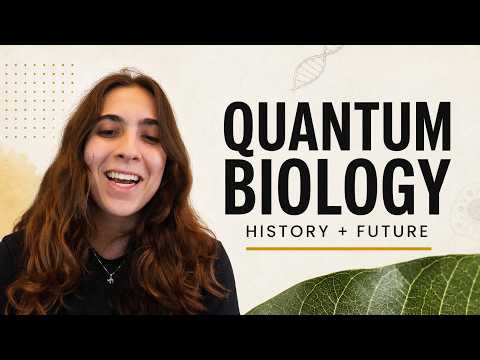
Congrats to Gerard McCaul, 2nd place winner of our "How Quantum Is Life?" essay competition for his essay "Spanspermia: Does Life Come from Outer Hilbert Space?" Gerard argues (with a lot of force and no small amount of wit) that life is not meaningfully quantum at the biological scale. Instead, he makes the case that the real power lies in linear algebra: the same mathematical framework behind quantum theory, but one that works all the way up through neural networks, AI, and the organization of living systems. It was a sharp skeptical entry in the competition, and it earned its place. Read Gerard's essay here: qspace.fqxi.org/competitions/w…
FQxI Physics tweet media
English
1
0
3
318
FQxI Physics retweetledi
🇨🇭🏴󠁧󠁢󠁥󠁮󠁧󠁿InLucysHead🏴󠁧󠁢󠁥󠁮󠁧󠁿🇨🇭©
Nerd joke... Einstein, Newton and Pascal are playing a rousing game of hide and seek. Einstein begins to count to ten. Pascal runs and hides. Newton draws a one-meter by one-meter square in the ground in front of Einstein, then stands in the middle of it. Einstein reaches ten, uncovers his eyes, and exclaims, “Newton! I found you! You’re it!” Newton replies, “You didn't find me. You found a Newton over a square meter. You found Pascal!”
English
65
269
2.3K
115.6K
FQxI Physics
FQxI Physics@FQXi·
We are really saddened by the recent passing of Sir Anthony Leggett, FQxI member and winner of the 2003 Nobel Prize in Physics for his pioneering contributions to the theory of superconductors and superfluids. He was 87. Leggett began his academic career studying classics at Oxford before switching to physics. His theoretical work on superfluid helium-3 transformed our understanding of how quantum mechanics operates at the macroscopic scale, and directly inspired the experiments recognized by the 2025 Nobel Prize in Physics. Photo: Leggett lecturing about Schrödinger's cat at the Loomis Laboratory, University of Illinois Urbana-Champaign, c. 1985. Courtesy of the Emilio Segrè Visual Archives, American Institute of Physics.
FQxI Physics tweet media
English
0
3
7
691
FQxI Physics
FQxI Physics@FQXi·
Congrats to Samuel Morriss, joint 1st place winner of our "How Quantum Is Life?" essay competition for his essay "How Quantum is the Skin?" Samuel is a medical doctor based in Melbourne, Australia. We reached out to Samuel after he won and he told us that "working at the interface between people and their environment in dermatology led me to wonder how quantum mechanics shapes the skin's interactions with light." "What excites me most about quantum biology is its potential to expand medicine beyond classical models, revealing fundamental nanoscale processes that may inform better photoprotection and targeted therapies."
FQxI Physics tweet media
English
1
0
1
304
FQxI Physics retweetledi
Sabine Hossenfelder
Quantum Trick Can Power Devices Without Batteries Figure: Wang et al, Newton 100410 (2026) Scientists have used a quantum effect — the nonlinear Hall effect — to convert alternating electrical signals into usable direct currents. Usually this conversion is done with diodes or batteries, but they found a particular material (bismuth telluride (Bi₂Te₃), a topological insulator) that does it directly and demonstrated that the effect is robust at room temperature. The current they can handle is only in the range of some 100 microAmpere, but this material could convert stray electromagnetic radiation, for example from wireless networks, into electricity that could power tiny devices like sensors.
Sabine Hossenfelder tweet media
English
74
195
1.1K
67K