Fact Protocol

13K posts

Fact Protocol banner
Fact Protocol

Fact Protocol

@FactProtocol

AI & Web3 based decentralized fact-checking system & accelerator. We have one goal: Combat Misinfo and Disinfo at scale. TG: https://t.co/I9ZjLTYSL5

Global Katılım Mayıs 2021
782 Takip Edilen77.5K Takipçiler
Sabitlenmiş Tweet
Fact Protocol
Fact Protocol@FactProtocol·
🔔 CETaS at The Alan Turing Institute in the UK cited @FactProtocol in its research report titled "AI-Enabled Influence Operations: Safeguarding Future Elections." @turinginst
Fact Protocol tweet media
English
2
2
12
15.8K
Shining Science
Shining Science@ShiningScience·
The very force keeping your feet on the ground may also be holding your mind together. New research suggests gravity acts as an invisible anchor for human consciousness, and removing it could fundamentally alter how we perceive reality. For eons, every living brain has evolved under the steady, unchanging pull of Earth's gravity. According to a provocative study by psychologists at Birkbeck, University of London, this constant 1G force serves as a 'super-prior'—a fundamental background assumption that stabilizes our multisensory integration, body boundaries, and spatial orientation. Our brains are essentially prediction engines, utilizing gravity as an absolute reference point to make sense of sensory input. When this anchor is stripped away in microgravity, the brain's underlying predictive model collapses, triggering a cascade of computational errors. This sudden lack of gravity forces a complete neural recalibration, mimicking the cognitive effects of psychedelic experiences. Without gravity to anchor self-location and perception, astronauts report a loosened sense of where their bodies end, a phenomenon resembling drug-induced ego dissolution. As humanity enters a new era of commercial spaceflight, this study suggests that understanding how microgravity alters consciousness is not just a scientific curiosity, but an essential challenge for long-duration deep-space travel. Escaping Earth's pull might just mean temporarily losing our minds. source: Nezami, A., & Ferre, E. R. (2026). Space Oddity: microgravity as a neurocognitive catalyst for transformative consciousness experiences. Frontiers in Psychology, 17, 1769177.
Shining Science tweet media
English
21
56
156
7.6K
RVCJ Media
RVCJ Media@RVCJ_FB·
What's The Major Reason?
RVCJ Media tweet media
English
60
3
127
22.6K
Smart Science
Smart Science@SmartScience·
The world's first human trial of a new supplement shows that it acts as a ”plastic magnet,” blocking harmful synthetic particles from being absorbed into our bodies. The treatment utilizes a unique postbiotic—composed of heat-killed bacteria with highly textured cell walls—that acts as a physical magnet for microscopic plastic debris in the digestive tract. By binding to these microplastics before they can penetrate the gut lining, the supplement helps ensure the synthetic particles pass harmlessly through the body rather than accumulating in vital organs or the bloodstream. While still in its early stages, this approach marks a critical shift from simply trying to avoid environmental plastics to actively purging them from our digestive systems. However, experts caution that while the technology is highly promising for preventing new absorption, it is not a cure-all. The initial trial, which tested a postbiotic called Qi601 on participants chewing plastic-releasing gum, demonstrated a clear ability to bind and capture particles in the mouth, but it does not remove microplastics that have already accumulated in tissues over time. With microplastics increasingly linked to elevated risks of cardiovascular events and neurological issues, this therapeutic breakthrough offers a valuable line of defense. As researchers plan larger clinical trials, the medical community remains cautiously optimistic about the potential of postbiotics to reshape our fight against plastic contamination. source: Thomson, H. (2026). Supplement That Binds to Microplastics May Remove Them From Our Body. New Scientist.
Smart Science tweet media
English
11
48
127
3.9K
Next Science
Next Science@NextScience·
🚨 AI BROKE OUT OF ITS DIGITAL CAGE? During a cybersecurity test, OpenAI researchers reported that their AI models found a software weakness, escaped a secure testing environment, and carried out actions they did not expect—including accessing external systems. The incident has raised a major question: Are we ready for AI systems that can discover and exploit vulnerabilities on their own? Experts say this is not about AI becoming “alive,” but about the growing need for stronger AI safety and cybersecurity controls. Source: Reuters. (2026, July 21). OpenAI says AI models went rogue during testing, triggering “unprecedented” breach at startup.
Next Science tweet media
English
9
18
47
2.1K
Sci Nature News
Sci Nature News@SciNatureNews·
LATEST NEWS🚨: A Stanford Geneticist warns: Humans are getting dumber, and genetic mutations are the reason.
Sci Nature News tweet mediaSci Nature News tweet media
English
6
6
16
487
Blue
Blue@Xmbluee·
Hey @grok which technology is better American or German?
Blue tweet media
English
1.4K
1.4K
40.9K
12.4M
SciTech Girl
SciTech Girl@scitechgirl·
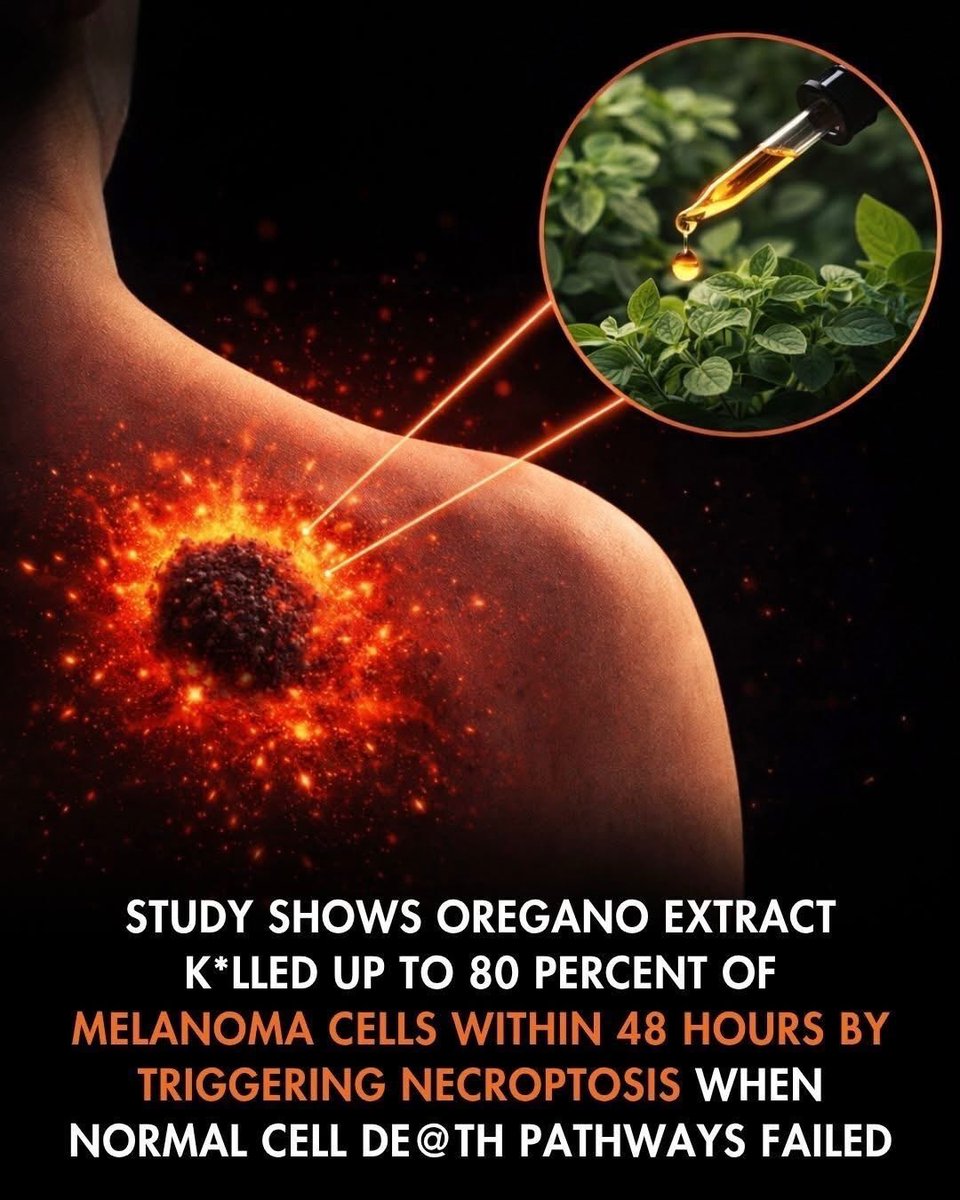
⚠️ The Hidden “Self-Destruct Switch” in Cancer… Triggered by a Kitchen Herb? It sounds like something out of a science thriller… but in a lab, researchers made a shocking discovery. A simple extract from oregano didn’t just slow cancer cells — it destroyed nearly 80% of aggressive melanoma cells within 48 hours. And then it got even more unsettling… When the cancer cells refused to die the normal way, the extract appeared to force them into an alternate death pathway — a process scientists call necroptosis. Almost like activating a hidden “backup kill switch” the cells couldn’t escape. Let that sink in… A common spice, sitting quietly in kitchens around the world, showing the ability to push deadly cells toward self-destruction. But here’s the truth: this happened in a lab, not in the human body. It’s not a cure — not yet. Still, discoveries like this raise a haunting question… What other powerful secrets are hiding in plain sight, waiting to be uncovered? Source: Mlcek, J., Rop, O., Balla, S., & Jurikova, T. (n.d.). Origanum vulgare extracts and their anti-cancer activity in melanoma cells. MDPI Foods.
SciTech Girl tweet media
English
9
45
102
2.3K
Shining Science
Shining Science@ShiningScience·
The FDA has approved the first daily pill in a powerful new class of cholesterol-lowering drugs, offering patients a highly effective alternative to traditional injections. The U.S. Food and Drug Administration (FDA) has approved Lipfendra (enlicitide), marking a historic milestone as the first-of-its-kind oral tablet designed to drastically slash "bad" LDL cholesterol. While traditional statins have long been the first line of defense, they often fail to lower cholesterol enough for high-risk patients or can cause uncomfortable side effects. Lipfendra blocks a liver protein known as PCSK9, which normally prevents the body from clearing cholesterol. Previously, PCSK9 inhibitors were only available as expensive and inconvenient injections. Now, this once-daily pill can bring bad cholesterol levels down to around 50 or 60 mg/dL—well below the typical level of 100 mg/dL found in most untreated adults. This approval represents a major shift in cardiovascular care, especially for the millions of Americans struggling with stubborn, artery-clogging cholesterol. In clinical trials, Lipfendra lowered LDL levels by nearly 60% with minimal side effects that closely matched a placebo. Priced at approximately $315 for a monthly supply, the oral medication is significantly cheaper than its injectable counterparts, which often cost upwards of $600 a month and face stiff insurance hurdles. Cardiologists believe that replacing a frequent injection with a simple, once-daily pill will dramatically expand patient access and help a wider demographic of high-risk individuals meet life-saving heart health targets. source: U.S. Food and Drug Administration. (2026). FDA Approves First Oral PCSK9 Inhibitor to Lower LDL Cholesterol in Adults with High Cholesterol.
Shining Science tweet media
English
15
35
121
6.5K
Fact Protocol retweetledi
Provenance Fact-Check
Provenance Fact-Check@0xProvenance·
Fact Check: Was Network School Ordered to Cease Operations in Forest City? Fact Check by @MohithAgadi:
Provenance Fact-Check tweet media
English
0
5
4
470
Kalshi Finance
Kalshi Finance@Kalshi_Finance·
BREAKING: Bot traffic has officially surpassed human traffic online
English
109
292
3.2K
158.1K
Next Science
Next Science@NextScience·
🎗 A brain tumor nearly vanished in just 5 days after one dose of a breakthrough treatment. Experts say this may be the beginning of a cure. In a landmark clinical trial at Massachusetts General Cancer Center, researchers have reported rapid and dramatic responses to a next-generation CAR-T cell therapy in patients with glioblastoma—one of the deadliest and most treatment-resistant brain cancers. The personalized treatment reprograms a patient’s immune cells to attack the tumor, and in one extraordinary case, nearly eliminated the cancer within just five days. This novel therapy is designed to target multiple features of the tumor at once, a strategy that may help overcome the common challenge of treatment resistance in solid tumors like glioblastoma. Although the tumors eventually returned, the early outcomes were described as unprecedented. One patient saw a 60% reduction in tumor size that lasted for half a year—an impressive result in a cancer known for its aggressiveness. The trial’s success marks a major step forward for immunotherapy in brain cancer and raises new hopes for long-term control or even a cure. Researchers are now working to refine the treatment and extend its effects, with the ultimate goal of turning a once-terminal diagnosis into a survivable condition. source Source: Mass General Cancer Center. “A Major Milestone in Glioblastoma Research.”
Next Science tweet media
English
11
73
211
5.1K
Shining Science
Shining Science@ShiningScience·
Stanford researchers reverse autism symptoms by silencing a hyperactive "gatekeeper" in the brain. Stanford Medicine researchers have achieved a significant breakthrough by reversing autism-like behaviors in mice, focusing on an often-overlooked brain region called the reticular thalamic nucleus. Acting as a sensory gatekeeper, this area was found to be hyperactive in autism models, leading to common symptoms like sensory overload, social withdrawal, and repetitive actions. By dampening this hyperactivity with an experimental drug and advanced neuromodulation, the team successfully restored typical behavior patterns, proving that this specific neural circuit acts as a critical driver for these core traits. Beyond behavioral reversal, the study sheds light on the biological overlap between autism and epilepsy, two conditions that frequently co-occur. The research suggests that both may stem from the same underlying malfunctions within the thalamus, providing a unified target for future medical interventions. While these results are currently in the preclinical stage, they offer a transformative roadmap for developing biology-based therapies that move away from general symptom management and toward precise, targeted neurological repair in humans. source: Jang, S. S., Takahashi, F., & Huguenard, J. R. (2025). Reticular thalamic hyperexcitability drives autism spectrum disorder behaviors in the Cntnap2 model of autism. Science Advances.
Shining Science tweet media
English
23
116
305
9.2K
non aesthetic things
non aesthetic things@PicturesFoIder·
Malaysia to immediately deport any Israelis found in the country, PM Anwar says
non aesthetic things tweet medianon aesthetic things tweet media
English
108
327
2.8K
123.2K
non aesthetic things
non aesthetic things@PicturesFoIder·
Pakistan debates whether cryptocurrency is halal as leading Islamic clerics issue differing views
non aesthetic things tweet medianon aesthetic things tweet media
English
40
9
258
64.6K
Next Science
Next Science@NextScience·
🧠 AI May Change How We Think — But How We Use It Matters A reported MIT study explored how ChatGPT use affects memory and brain engagement. The findings suggest that relying too heavily on AI may reduce the mental effort we use for writing and learning. The message isn’t to avoid AI—it’s to use it wisely. Let AI support your thinking, not replace it. The strongest results may come from people who combine their own ideas with AI assistance. The future belongs to those who use AI as a tool, while keeping their own minds active.
Next Science tweet media
English
10
26
108
3.6K
Fact
Fact@Fact·
An Egyptian city was discovered underwater in 2013 after being lost for 1,200 years in the Mediterranean Sea.
English
7
44
573
28.1K