Andrey Falaleev

63 posts

Andrey Falaleev

Andrey Falaleev

@FalaleevAndrew

CTO @Neon_EVM

Lisbon, Portugal Katılım Mart 2020
358 Takip Edilen328 Takipçiler
Andrey Falaleev retweetledi

Drift
Drift@DriftProtocol·
We are observing unusual activity on the protocol. We are currently investigating. Please do not deposit funds into the protocol while we investigate. This is not an April Fools joke. Proceed with caution until further notice. We’ll provide additional updates from this account.
English

766
275
1.8K
1.5M
Aursen
Aursen@exoaursen·
LiteSVM v0.10.0 released! Highlights: • Compute Units now align more closely with mainnet • Optional register trace disassembly via SBF_TRACE_DISASSEMBLE • Improved account loading & transaction sanitization Check it out: github.com/LiteSVM/litesv… Huge thanks to all contributors!
English
8
10
76
7.5K
Andrey Falaleev
Andrey Falaleev@FalaleevAndrew·
I agree that the PF model is outdated, and blockchains should reconsider how transactions are included in a block.
kdot | bulk@kdotcrypto

It seems the entire Solana ecosystem has an opinion on perps >Anza devs and Foundation folks will tell you its a product skill issue >Current live and in beta perp exchanges will tell you they've solved them (they have not) The reality is that Solana as an L1 is lightyears ahead of everyone else in terms of being able to offer a competitive venue, but is still considerably behind when compared to purpose-built environments There is an insanely high density of perp venues now and building a vanilla isolated margin perp dex is simply not good enough You need a venue of being fully capable of supporting risk engines that can facilitate cross and portfolio margins while doing pre and post matching flight checks, all while being incredibly fast (sub 100ms) You also need to be able to make execution guaranteed, at a fixed and predictable cost, which cannot happen with the current PF model... and even if you solve this, it still doesn't beat the gasless environments you are competing with You need to be able to give these venues and makers a guarantee that they can land every slot, without fail. You can't just ignore the wider traffic on Solana... Priority Fees help, but someone can always pay more. These things are computationally incredibly expensive, and cannot be solved with something as simple as giving makers the rule of the roost. This punishes all takers, not just toxic flow It becomes a dangerous precedent when you virtue signal to an entire ecosystem that there isn't a problem and everything is fine, because then things really don't get addressed and the people actually working on solving the problems have to navigate truth from reality

English
0
0
1
82
Andrey Falaleev
Andrey Falaleev@FalaleevAndrew·
@kdotcrypto Transaction ordering is described in Bulk. But where can I find a description of Pools and ADL mechanics in Bulk?
English
1
0
1
637
kdot | bulk
kdot | bulk@kdotcrypto·
Sorry what is transparent? 1) Where can I examine the ordering of transactions? 2) How can I confirm that HLP wasn't given favourable liquidations? 3) How can I confirm that ADL was fairly distributed? You are the source of truth. Validators can neither contest or verify it.
DEGEN NEWS@DegenerateNews

NEW: HYPERLIQUID LABS CEO @chameleon_jeff THINKS THAT ON 10/10 COMPETITORS WERE MISPAINTING HYPERLIQUID’S VIRTUES TO DEFLECT FROM THEIR OWN PLATFORM'S ISSUES

English
34
6
150
21.7K
Andrey Falaleev retweetledi
Eugene Bulltime.🕯️
Eugene Bulltime.🕯️@Eugene_Bulltime·
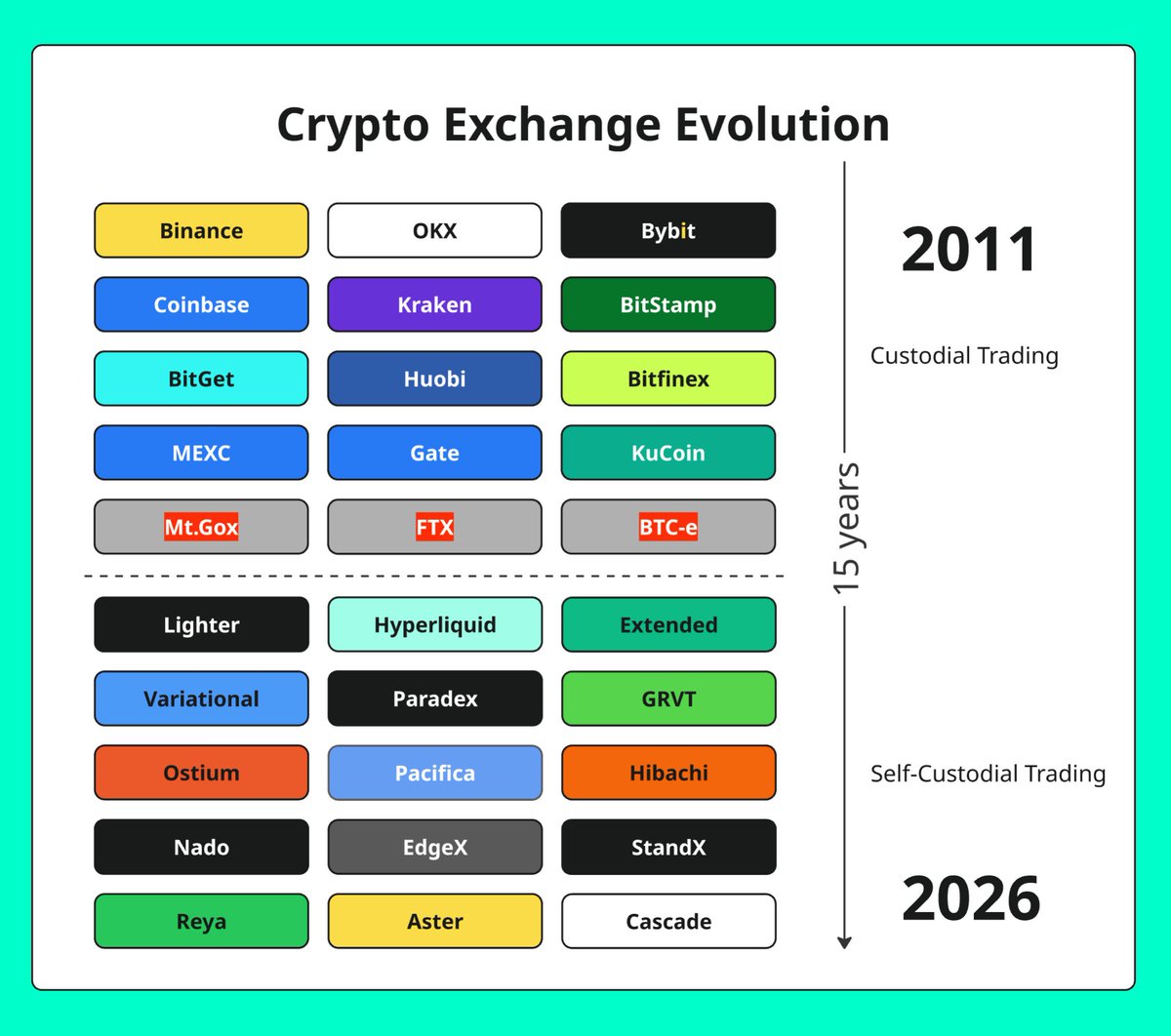
Anyone who says the PerpDEX meta is over is mistaken. I constantly hear that farming PerpDEX is finished. You're absolutely wrong - that's the only thing worth doing. Trading is the foundation of capitalism and one of the pillars of the entire financial system, where exchanges act as "shovel sellers." In the Web3 world, trading was the first and primary use case. The first crypto exchanges appeared at the dawn of the industry in 2011 and were already making decent money in any market – bullish or bearish - because they exploited human psychology - FOMO. Even in the worst years, exchanges remained profitable. ————————————— 2010 - 2015 The Emergence of the First CEXs The first platforms had fairly simple functionality, suffered from lags, and were far from widespread use. However, they were the only place to get in touch with blockchain. Wallets at the time were simply terrible, and it was exchanges that took over storage functionality. It was during this time that MtGox, BTC-e, BitStamp, Kraken, and Coinbase emerged. ... 2016 - 2021 Advanced CEXs This could be called the Binance era, but let's move beyond that. This period was marked by a more professional approach in both technical and business areas. Trading and risk engines reached a new level, and trading on crypto exchanges became similar to trading on TradFi - simple, fast, and convenient. At the same time, CEXs began to transform from small, isolated sector into full-fledged global businesses. As a result, we have what we have today: Binance, Bybit, Coinbase, Kraken, OKX. However, each time, all crypto exchanges ran into the same problem: they were all custodial and were often used not only for trading but also as wallets. This is why everyone remembers the high-profile failures of FTX, MtGox, BTC-e, and others. But despite these problems, all CEXs continued to grow steadily, generating billions of dollars in revenue (possibly even tens of billions in the case of Asian exchanges). CEXs earn the most, and only Tether can compete with them, and no one else. ————————— After the success of Hyperliquid, it became clear that users and capital began migrating onchain to PerpDEXs. This is an unstoppable trend. Hyperliquid earned almost $1B in a year Lighter with 0% fees earns ~$90M Annualized Other PerpDEXs each earn tens of millions of dollars annually. This can't be called a meta or a narrative. This is a full-fledged longterm trend, enabled by FTX -people are gradually losing trust in centralized exchanges. This fact suggests that PerpDEX revenue won't just increase - it will grow exponentially. How can anyone say that Perp farming is pointless when it's the most lucrative market in the history of the entire Web3? 'The PerpDEX sector today is like the CEX in early 2017' There are dozens of successful CEXs - why shouldn't there be dozens of successful PerpDEXs? The market is so huge that almost anyone can fit in it. If you say the PerpDEX sector is dead, you either don't understand the scale of this trend and have forgotten how to dream, or you are deliberately misleading others. ---- what do you think, guys: @onchainmonk @deTEfabulaNar_ @LemonTea_64 @ruslan55x @Rencrypta @satoshiheist @derteil00 @TheDeFinvestor @cryptorand
Eugene Bulltime.🕯️ tweet media
English
9
1
26
1.5K
Andrey Falaleev
Andrey Falaleev@FalaleevAndrew·
@conordeegan XMSS is reliable, but unforgiving... But why is ML-DSA better? When can we expect more of this story?
English
0
0
1
58
Conor Deegan
Conor Deegan@conordeegan·
Hash-based signatures are the only post-quantum scheme that doesn't require a new cryptographic assumption. The security argument has two parts: SHA-256 is hard to invert, and each key is used exactly once. If you break either condition and the scheme fails. I wrote a 3-part series implementing all of this from scratch in Rust: SHA-256, Lamport signatures, and a key-recovery attack that shows what happens when you violate the one-time rule. Lamport signatures are almost absurdly simple. Generate 512 random 32-byte values (your private key), hash them all with SHA-256, publish the hashes as your public key. To sign, hash the message to get 256 bits, and for each bit reveal one secret value from the corresponding private key pair. To verify, the verifier hashes the message to get the same 256 bits, then hashes each revealed signature value and checks that it matches the correct slot in the public key. Only someone who knew the original secrets could produce values that hash to the published public key. The entire scheme is randomness and a single hash function. No number theory, no elliptic curves, no lattices. The major security concern is that each signature reveals exactly half the private key. A second signature on a different message reveals values from the opposite side of some private key pairs, because different messages hash to different bits. By about 10 signatures under the same key, every one of the 512 secret values has been exposed. At that point the attacker owns the key. I demo this by forging a signature on "Send all funds to the attacker" that verified successfully against the original public key, using nothing but the values leaked from observed signatures under the same key pair. This is why production schemes look the way they do. SPHINCS+ (NIST's SLH-DSA) is stateless. It does not rely on the signer remembering which one-time keys were used. Instead, each signature includes fresh per-signature randomness, and that randomness is mixed into the hash that decides which one-time keys (which leaves) get used. That makes reusing the same one-time key across two different messages negligibly unlikely, even if an attacker can choose the messages. XMSS takes a similar approach but is stateful, meaning the signer must track which leaves have been consumed. If that state is lost, duplicated, or rolled back (backup restores, failover, replicated systems), you get key reuse, and you're back to exactly the vulnerability above. I do think lattice-based schemes like ML-DSA will end up as the practical drop-in replacement for most digital signatures. They're faster and the keys are smaller. But hash-based signatures are the only family where security reduces to something we've trusted for decades which is kinda cool. Links below.
English
11
9
60
3.5K
Andrey Falaleev
Andrey Falaleev@FalaleevAndrew·
@highfreqfencer @solana I agree with the CU efficiency... But not agree, with the next points... Why does CU determine your position in the block, density, landing, and so on? Priority Fee defines this.
English
1
0
1
22
Matus | Deriverse 🪐
Matus | Deriverse 🪐@highfreqfencer·
In TradFi, colocation matters because nanoseconds of latency determine who gets filled first. On @solana, CU efficiency is colocation. It determines your position in the block, your priority density, and whether you land at all during stress.
English
1
0
2
210
Matus | Deriverse 🪐
Matus | Deriverse 🪐@highfreqfencer·
To everyone obsessing over how to improve Solana market structure: Most Solana DEXes are built with Anchor. Anchor-built DEX = 150k CUs per transaction. Native Rust DEX = 34k CUs per transaction. Super simple. Why it matters? 👇
English
5
2
23
3K
Andrey Falaleev retweetledi
Balaji
Balaji@balajis·
From AI to ZK. Artificial intelligence is the attack. Zero knowledge is the defense. AI takes advantage of the slightest slip. ZK does not let anything slip. AI decodes all the data. ZK encrypts all the data. AI is the surveillance state. ZK is the sovereign individual.
English
384
509
3.5K
453.2K
Andrey Falaleev
Andrey Falaleev@FalaleevAndrew·
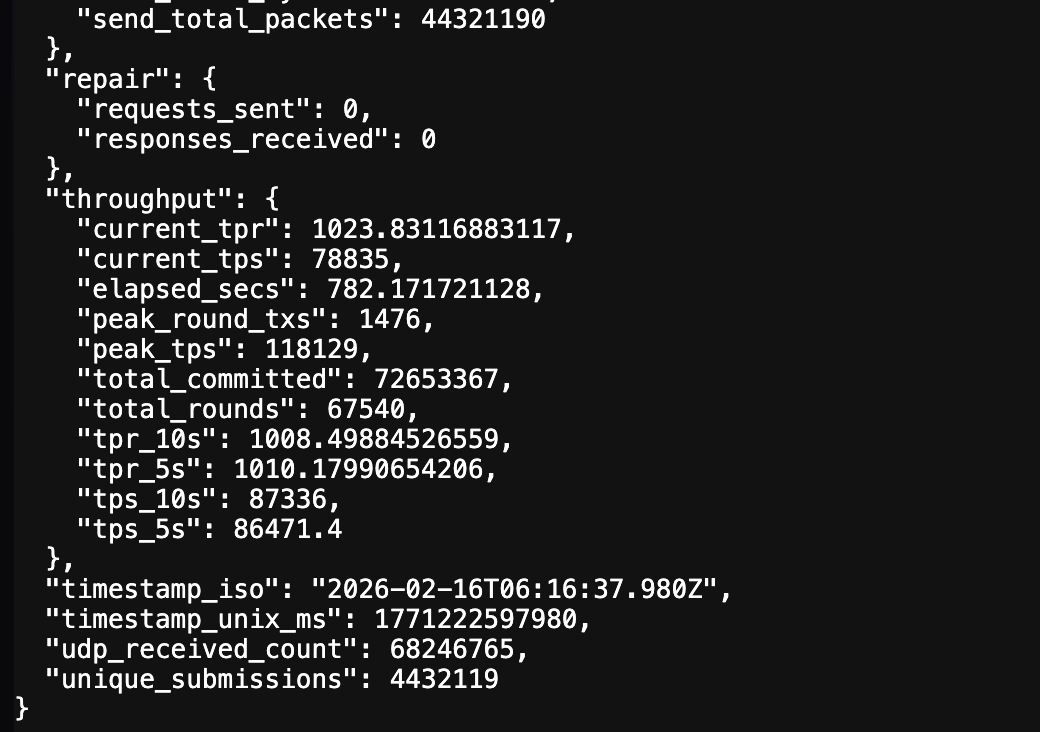
@junbug_sol @bulktrade In 1sec you have 50 rounds. 100ktps across 20 nodes means 100 txs aggregated by 1 node per round? Node needs to send a minisketch and receive 100 txs by QUIC in 1 round. Whats is the max distance between nodes that should participate in the quorum? <1000km? Or better <800km?
English
1
0
1
101
Andrey Falaleev retweetledi
Jun | bulk trade
Jun | bulk trade@junbug_sol·
GBULK 100k sustained tps has been achieved on a cluster of 20 nodes with p99 of 22ms.. (distributed) All possible with our newest consensus design, where we can achieve quorum in single round! while keeping BFT guarantees. Next era of high performance, distributed NASDAQ is upon us
Jun | bulk trade tweet media
English
57
30
230
11.1K
Andrey Falaleev retweetledi
abdel
abdel@AbdelStark·
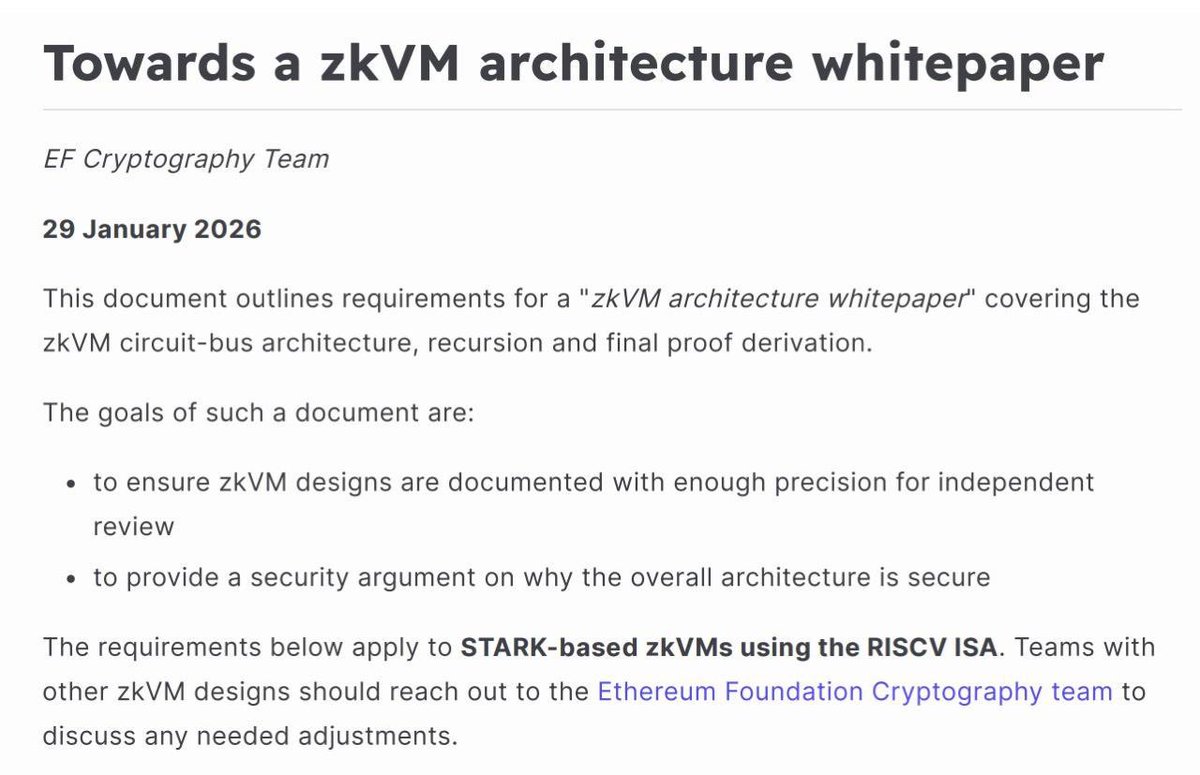
The future of the execution engine of the Ethereum L1 is what Cairo is today. That’s it. Starknet tech is so ahead of everything else when it comes to true scaling preserving succint verifiability. Prove the world, one STARK proof at a time.
abdel tweet media
English
6
23
94
6.4K
Andrey Falaleev retweetledi
Alessandro Decina
Alessandro Decina@alessandrod·
can you imagine replaying 35 slots per second?
Alessandro Decina tweet media
English
9
6
72
19.2K
Andrey Falaleev retweetledi
u8
u8@atarashi·
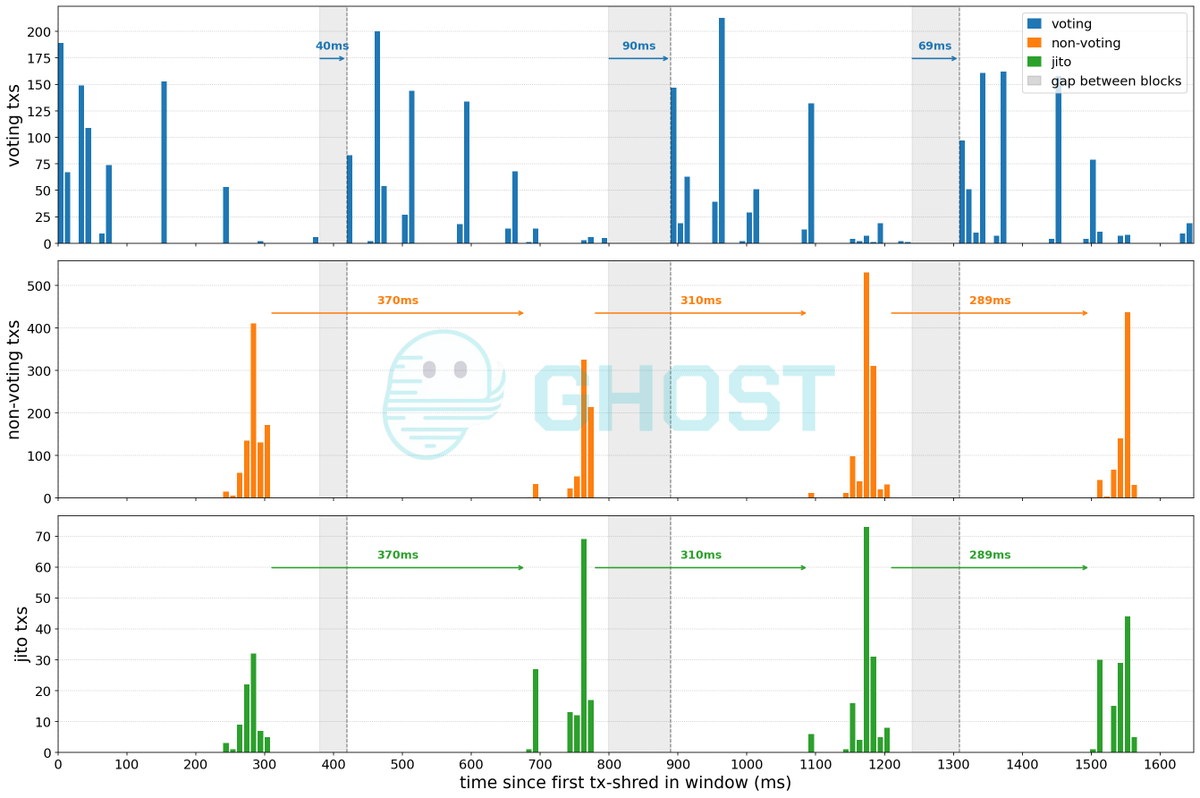
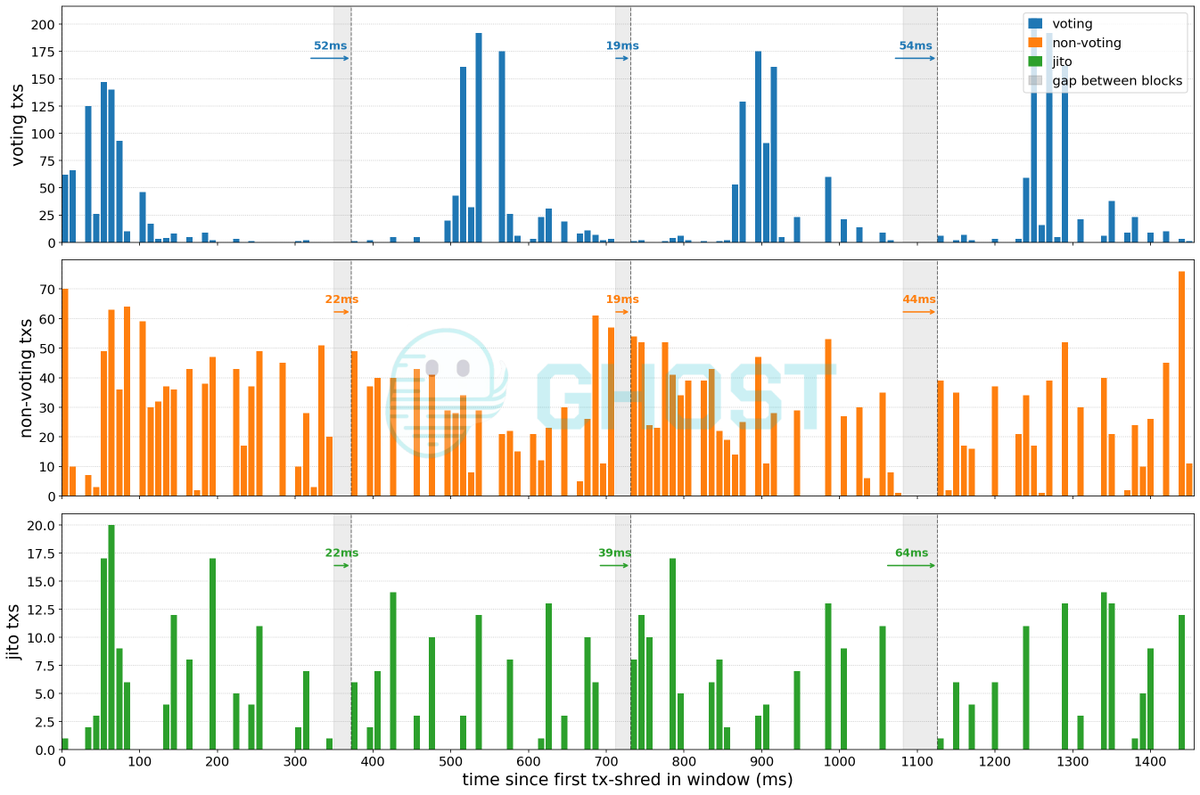
Started tracking shreds to measure: - transaction arrival timing: histogram of txs within a slot, bucketed by time since the first shred observed - how consistently the leader releases shreds over a 4-block window Coming soon to the sandwiched.me Validators page
u8 tweet media
English
8
10
82
10K
Andrey Falaleev retweetledi
u8
u8@atarashi·
Here’s an example of a leader with very different timing and distribution characteristics
u8 tweet media
English
1
2
17
1.4K
Andrey Falaleev
Andrey Falaleev@FalaleevAndrew·
The Boltzmann assumes the system is at rest. It's an attempt to apply steam thermodynamics to a nuclear reactor. A stable state with high entropy for buyers but extremely high value concentration for sellers. Math corrections are unlikely as long as the monopoly remains.
toly 🇺🇸@toly

H200 now at $40,000.00. Those of you in the old school who believe this is a bubble simply have not understood the new mathematics of the Boltzmann distribution, or you did not cared enough to try. Bubbles are mathematically impossible in this new paradigm. So are corrections and all else

English
0
0
0
29
Andrey Falaleev retweetledi
Anza
Anza@anza_xyz·
1/ SIMD-0194, authored by @deanmlittle, @L0STE_ & @0x_febo, proposes eliminating floating-point operations for rent exemption checks. This change deprecates the f64 threshold to streamline math in the SVM and optimize performance. Here is the breakdown 🧵
English
5
3
55
27.1K
Andrey Falaleev
Andrey Falaleev@FalaleevAndrew·
@ryanzarick @ryanzarick 30seconds for Proving or Verifying? Firstly, you wrote about Proving: `1.61 GHz proving cluster`, but then about Verifying: `we verified a month of Ethereum in just 30 seconds.`
English
0
0
0
270
raz
raz@ryanzarick·
Over the last 2.5 years, we've secretly assembled a team of some of the brightest minds across cryptography, GPU programming, and ASIC design to build an internal Jolt Pro team. We surpassed our wildest dreams of what was possible, having already created a 1.61 GHz proving cluster we call a cell. Jolt Pro scales to infinity, the number of cells you can use in parallel is only limited by the size of the datacenter. This work culminated in our demo last night, where we verified a month of Ethereum in just 30 seconds. A special moment and a good start. But so much more to come.
LayerZero@LayerZero_Core

We’ve said Zero can scale to 2M TPS in infinitely parallelizable Zones on small devices. Today, we wanted to show what that actually means. So we validated 30M Ethereum transactions in 30 seconds on a network of Raspberry Pis at today’s event in NYC.

English
115
257
3.7K
632.8K
Andrey Falaleev retweetledi
Anza
Anza@anza_xyz·
Our Transaction Landing on TPU blog post is live We measured slot latency, drop rates, and how validator software impacts transaction placement across different regions Read it here: anza.xyz/blog/transacti…
English
10
23
80
27.2K