
F M
2.4K posts
F M
@FarshidMahmood8
Internal Medicine, Cardiology, Investor and speculator.
Germany Katılım Mart 2020
184 Takip Edilen313 Takipçiler

SEVEN OPEC+ COUNTRIES HAVE AGREEMENT IN PRINCIPLE TO RAISE OIL OUTPUT QUOTAS FOR JUNE BY ABOUT 188,000 BPD, TWO SOURCES SAY
English

@FarshidMahmood8 @SgforgoodStella Годы дружбы между Путиным и Герхардом — лучшее время в истории Германии и России. Когда обе страны развивались ударными темпами.
Русский

But what bad thing did #Russia do to Europe by selling gas, oil, and electricity at a normal price?
Tell me, Europeans, I’ ll wait.
English
@Crowded_Mkt_Rpt The man child in the white house, is a demented psychopath
English


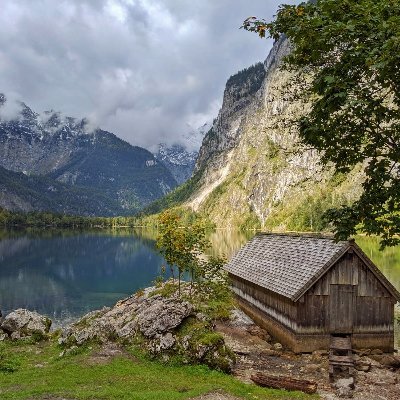
This old home needed a refresh
We got rid of the gross overgrowth, updated the colors to something modern, and gave the place a timeless feel
So proud of my team


English

Oh dear, the curse of The Economist's oil cover:
"... Why oil prices are not yet high enough..."
You know what that means, don't you?

English
@caprioleio Dumb ztake! It's not the US making the money, it's people like me... shareholders!
English

The US is making over $300M more per day on oil sales than before the Iran War.
The Iran war was costing the US around $1B per day, but that number is likely way less now during the cease fire.
If these oil flows hold and the war scales down, the US likely profits from the Iran war.
Giovanni Staunovo🛢@staunovo
US petroleum exports (crude, refined products) hit record 14.179mbpd last week #oott
English
@BurggrabenH @JavierBlas had an article out on Tuesday about oil glut...
English

Brent finally looks more sane.
Unless Hormuz normalizes in May, which is highly unlikely, there remains PLENTY of demand destruction work to be done.
PS: good time as any to clean up your feed. The “look-through” crowd & early victory lappers told you everything you needed to know last week

English
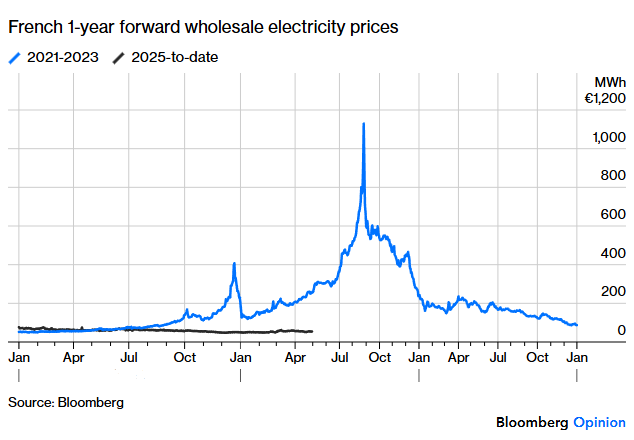
CHART OF THE DAY: The 2022 European energy crisis was mostly about natural gas and electricity prices.
The shock of 2026 is (in Europe) largely about oil.
EU power markets remain largely stable (📉⤵️). A key reason is that France is producing lots of nuclear power this time.
English
I’m afraid that if President Trump really wants to continue the blockade for months while minimising the impact on US consumers, there’s only a (bad) way: more SPR releases and/or oil export restrictions.
The White House has consistently said neither is on the table. Let’s see.
English

Won't be surprised to see $SOFI make a move to test 100 DMA today or this week!
We will know soon!
English
We thought we were getting a TACO
"Trump Always Chickens Out"
But so far we are getting a NACHO
"Not A Chance Hormuz Opens"
(With appreciation to the trader who told me)
English
@JavierBlas @opinion You pulling deluge out of your backside? Like trump with his daily BS? You were wrong on all of this from the beginning!
English
COLUMN: UAE quits OPEC.
“…The global oil market is suffering from extreme scarcity right now. In a few weeks, perhaps a couple of months, it may face a deluge: The reopening of the Strait of Hormuz and, simultaneously, a new oil price war…”
@Opinion
bloomberg.com/opinion/articl…
English
NEW: Iran gave the U.S. a new proposal for reaching a deal on the reopening of the Strait of Hormuz and lifting the naval blockade first, and postponing nuclear negotiations for a later stage. My story on @axios
axios.com/2026/04/27/ira…
English
@King0ftheCharts Retarded fox news boomer take! Jesus, how brainwashed!
English
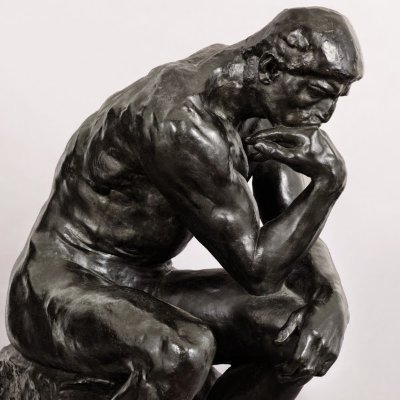
🚨US-Iran Diplomacy Remains Stalled
IRGC hardliner Maj. Gen. Ahmad Vahidi and his inner circle are firmly running the show in Tehran, sidelining civilian diplomats and denying Iran’s negotiators any real decision-making power. This is why the regime keeps stonewalling.
President Trump canceled the planned trip by Steve Witkoff and Jared Kushner to Pakistan after Iran first requested the direct talks — then abruptly denied any agreement to meet and had its Foreign Minister leave Islamabad without showing up.
Trump said Iran’s latest ceasefire proposal “offered a lot, but not enough.” He noted they initially gave a paper that “should have been better,” but within minutes of him scrapping the trip, Tehran quickly sent over a noticeably improved new proposal. Still, it fell short of what the U.S. is demanding for a lasting deal.
Trump highlighted “tremendous infighting” in Iran’s leadership and said he’s willing to deal with “whoever runs the show,” noting the U.S. has already “knocked out two levels of leaders.” He added there was no point in making his team fly 16-18 hours: “We have all the cards. When they want, they can call me.”
Meanwhile, Vahidi seems far more willing to risk renewed conflict with the U.S. than the so-called moderates. IRGC actions in the Strait of Hormuz, aggressive regime media signals, intensified military preparations, and public warnings all suggest they’re bracing for escalation.
The regime’s loud displays of “revolutionary unity” appear designed to prepare the Iranian public for a possible return to war under one hardened front.
With three U.S. aircraft carriers now positioned in the region, this standoff is increasingly unlikely to end in a negotiated peace settlement — the path ahead points toward military force if Iran continues its defiance.
Bottom line: The IRGC is driving the bus. Diplomacy is going nowhere while Trump holds strong leverage and refuses to chase. Trump continues to maintain the blockade, putting severe economic pressure on Iran — the regime is currently losing $435–500 million per day, unable to export anything, including oil. They’re running out of storage space and may soon have to cap their wells.
If de-escalation doesn’t happen quickly, we could see serious escalation by next weekend (May 1–2), which would likely spike crude oil prices, rattle the stock market, and send Bitcoin swinging hard.
.
#Iranwar $SPY $SPX #SP500 $NDX $QQQ $BTC #BTC #Bitcoin $BTCUSD #BTCUSD #NASDAQ100 #stockmarketcrash #oil #Powell $IWM $RUT $VIX #war #Iran #Trump #Blockade


English
Can't shake the feeling i have, 100 years ago from this deadline i.e. 1939, Germany had the most powerful military in Europe !
unusual_whales@unusual_whales
Germany says it plans to build Europe’s most powerful military by 2039.
English
@AmbPeschke Ich glaube dort hat Deutschland sein erstes Genozid durchgeführt! Schamlos!
Deutsch



@optionscjp If the look of the CEO is you equity analysis, I don't know what to tell you! (Btw the dude lost an eye)
English

I’m sorry, but if you trust this guy with your money, I don’t know what to tell you
$NOW

English
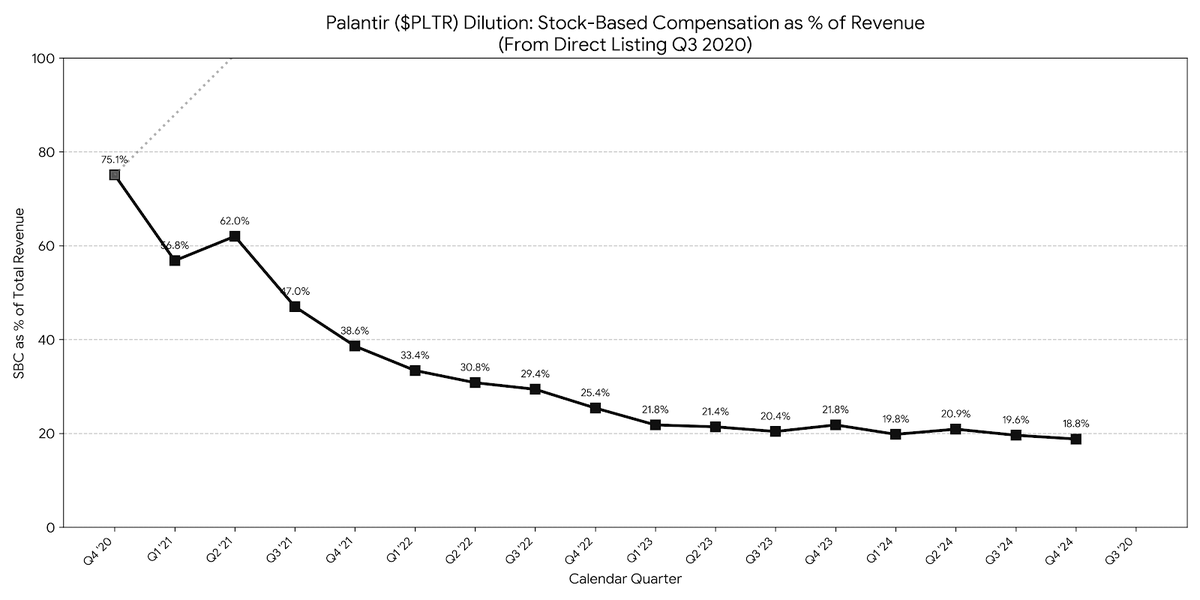
@sachinvats It's all a scam, I still don't understand in what universe it's acceptable to have >20% of your revenue be represented by SBC! It's fake revenue!
English
Was checking how SBC has fared over the years for various SaaS companies ( % of revenue on quarterly basis)
$SNOW, $PLTR, $GTLB, $PATH, $AI
And Bro my heart goes to those whoa re invested in $AI, still, what a scam it has turned out to be


English

Because we get asked a lot.
The Technological Republic, in brief.
1. Silicon Valley owes a moral debt to the country that made its rise possible. The engineering elite of Silicon Valley has an affirmative obligation to participate in the defense of the nation.
2. We must rebel against the tyranny of the apps. Is the iPhone our greatest creative if not crowning achievement as a civilization? The object has changed our lives, but it may also now be limiting and constraining our sense of the possible.
3. Free email is not enough. The decadence of a culture or civilization, and indeed its ruling class, will be forgiven only if that culture is capable of delivering economic growth and security for the public.
4. The limits of soft power, of soaring rhetoric alone, have been exposed. The ability of free and democratic societies to prevail requires something more than moral appeal. It requires hard power, and hard power in this century will be built on software.
5. The question is not whether A.I. weapons will be built; it is who will build them and for what purpose. Our adversaries will not pause to indulge in theatrical debates about the merits of developing technologies with critical military and national security applications. They will proceed.
6. National service should be a universal duty. We should, as a society, seriously consider moving away from an all-volunteer force and only fight the next war if everyone shares in the risk and the cost.
7. If a U.S. Marine asks for a better rifle, we should build it; and the same goes for software. We should as a country be capable of continuing a debate about the appropriateness of military action abroad while remaining unflinching in our commitment to those we have asked to step into harm’s way.
8. Public servants need not be our priests. Any business that compensated its employees in the way that the federal government compensates public servants would struggle to survive.
9. We should show far more grace towards those who have subjected themselves to public life. The eradication of any space for forgiveness—a jettisoning of any tolerance for the complexities and contradictions of the human psyche—may leave us with a cast of characters at the helm we will grow to regret.
10. The psychologization of modern politics is leading us astray. Those who look to the political arena to nourish their soul and sense of self, who rely too heavily on their internal life finding expression in people they may never meet, will be left disappointed.
11. Our society has grown too eager to hasten, and is often gleeful at, the demise of its enemies. The vanquishing of an opponent is a moment to pause, not rejoice.
12. The atomic age is ending. One age of deterrence, the atomic age, is ending, and a new era of deterrence built on A.I. is set to begin.
13. No other country in the history of the world has advanced progressive values more than this one. The United States is far from perfect. But it is easy to forget how much more opportunity exists in this country for those who are not hereditary elites than in any other nation on the planet.
14. American power has made possible an extraordinarily long peace. Too many have forgotten or perhaps take for granted that nearly a century of some version of peace has prevailed in the world without a great power military conflict. At least three generations — billions of people and their children and now grandchildren — have never known a world war.
15. The postwar neutering of Germany and Japan must be undone. The defanging of Germany was an overcorrection for which Europe is now paying a heavy price. A similar and highly theatrical commitment to Japanese pacifism will, if maintained, also threaten to shift the balance of power in Asia.
16. We should applaud those who attempt to build where the market has failed to act. The culture almost snickers at Musk’s interest in grand narrative, as if billionaires ought to simply stay in their lane of enriching themselves . . . . Any curiosity or genuine interest in the value of what he has created is essentially dismissed, or perhaps lurks from beneath a thinly veiled scorn.
17. Silicon Valley must play a role in addressing violent crime. Many politicians across the United States have essentially shrugged when it comes to violent crime, abandoning any serious efforts to address the problem or take on any risk with their constituencies or donors in coming up with solutions and experiments in what should be a desperate bid to save lives.
18. The ruthless exposure of the private lives of public figures drives far too much talent away from government service. The public arena—and the shallow and petty assaults against those who dare to do something other than enrich themselves—has become so unforgiving that the republic is left with a significant roster of ineffectual, empty vessels whose ambition one would forgive if there were any genuine belief structure lurking within.
19. The caution in public life that we unwittingly encourage is corrosive. Those who say nothing wrong often say nothing much at all.
20. The pervasive intolerance of religious belief in certain circles must be resisted. The elite’s intolerance of religious belief is perhaps one of the most telling signs that its political project constitutes a less open intellectual movement than many within it would claim.
21. Some cultures have produced vital advances; others remain dysfunctional and regressive. All cultures are now equal. Criticism and value judgments are forbidden. Yet this new dogma glosses over the fact that certain cultures and indeed subcultures . . . have produced wonders. Others have proven middling, and worse, regressive and harmful.
22. We must resist the shallow temptation of a vacant and hollow pluralism. We, in America and more broadly the West, have for the past half century resisted defining national cultures in the name of inclusivity. But inclusion into what?
Excerpts from the #1 New York Times Bestseller The Technological Republic: Hard Power, Soft Belief, and the Future of the West, by Alexander C. Karp & Nicholas W. Zamiska
techrepublicbook.com
English