Felipe Kitamura

6.5K posts

Felipe Kitamura banner
Felipe Kitamura

Felipe Kitamura

@FelipeKitamura

MD, PhD, Medical Director at Bunkerhill Health, neurorad, professor of radiology at Unifesp, ML researcher, Kaggle Master. Views my own.

São Paulo, Brasil Katılım Haziran 2017
550 Takip Edilen2K Takipçiler
Felipe Kitamura retweetledi

anand iyer
anand iyer@ai·
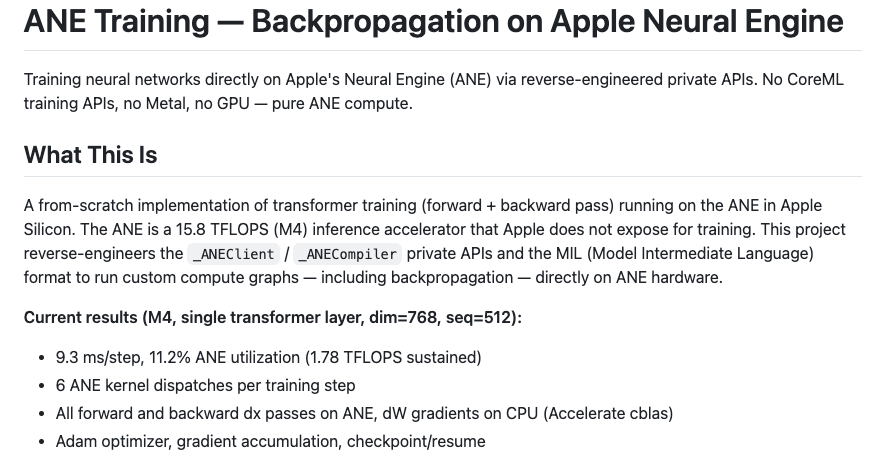
Karpathy's llama2.c showed you could train a real transformer in pure C with no frameworks. A solo researcher (and Claude Code) just took that same model, Stories 110M, Llama2 architecture, trained on real text and ran it on Apple's M4 Neural Engine (ANE) for less than a watt. He reverse-engineered the undocumented private APIs, bypassed CoreML, and found Apple's abstraction layer was hiding 2-4x of the chip's real throughput. The ANE delivers 6.6 TFLOPS per watt, roughly 80x more efficient than an Nvidia A100. The real implication here is inference: there are hundreds of millions of Apple devices with one of the most efficient AI accelerators ever shipped in consumer hardware, and Apple's own software stack is the thing standing between developers and its actual performance. h/t @maderix
anand iyer tweet media
English
43
134
1.5K
302.1K
Felipe Kitamura retweetledi
Ryan Rose
Ryan Rose@Spaceaxe22·
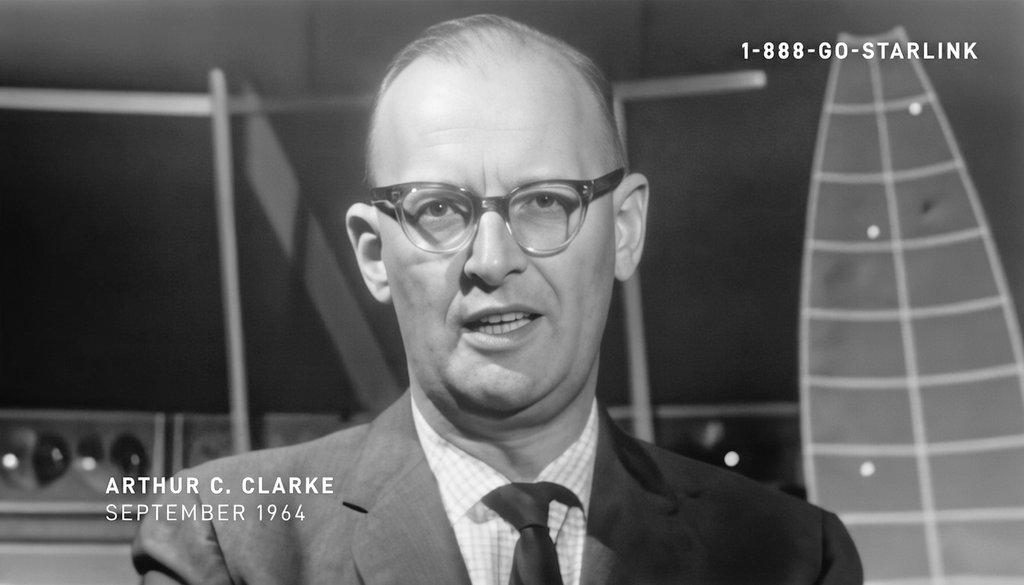
@Starlink " "Trying to predict the future is a discouraging and hazardous occupation... The only thing we can be sure of about the future is that it will be absolutely FANTASTIC " -Arthur C. Clarke - Starlink 🛰
Ryan Rose tweet media
English
9
105
910
59.7K
Felipe Kitamura retweetledi
Andrej Karpathy
Andrej Karpathy@karpathy·
Bought a new Mac mini to properly tinker with claws over the weekend. The apple store person told me they are selling like hotcakes and everyone is confused :) I'm definitely a bit sus'd to run OpenClaw specifically - giving my private data/keys to 400K lines of vibe coded monster that is being actively attacked at scale is not very appealing at all. Already seeing reports of exposed instances, RCE vulnerabilities, supply chain poisoning, malicious or compromised skills in the registry, it feels like a complete wild west and a security nightmare. But I do love the concept and I think that just like LLM agents were a new layer on top of LLMs, Claws are now a new layer on top of LLM agents, taking the orchestration, scheduling, context, tool calls and a kind of persistence to a next level. Looking around, and given that the high level idea is clear, there are a lot of smaller Claws starting to pop out. For example, on a quick skim NanoClaw looks really interesting in that the core engine is ~4000 lines of code (fits into both my head and that of AI agents, so it feels manageable, auditable, flexible, etc.) and runs everything in containers by default. I also love their approach to configurability - it's not done via config files it's done via skills! For example, /add-telegram instructs your AI agent how to modify the actual code to integrate Telegram. I haven't come across this yet and it slightly blew my mind earlier today as a new, AI-enabled approach to preventing config mess and if-then-else monsters. Basically - the implied new meta is to write the most maximally forkable repo and then have skills that fork it into any desired more exotic configuration. Very cool. Anyway there are many others - e.g. nanobot, zeroclaw, ironclaw, picoclaw (lol @ prefixes). There are also cloud-hosted alternatives but tbh I don't love these because it feels much harder to tinker with. In particular, local setup allows easy connection to home automation gadgets on the local network. And I don't know, there is something aesthetically pleasing about there being a physical device 'possessed' by a little ghost of a personal digital house elf. Not 100% sure what my setup ends up looking like just yet but Claws are an awesome, exciting new layer of the AI stack.
English
1K
1.3K
17.5K
3.4M
Felipe Kitamura retweetledi
mitsuri
mitsuri@0xmitsurii·
How was the show Silicon Valley so ahead of its time?
English
672
3.7K
31.2K
19.8M
Felipe Kitamura retweetledi
Anthropic
Anthropic@AnthropicAI·
New Engineering blog: We tasked Opus 4.6 using agent teams to build a C compiler. Then we (mostly) walked away. Two weeks later, it worked on the Linux kernel. Here's what it taught us about the future of autonomous software development. Read more: anthropic.com/engineering/bu…
English
877
2.5K
21.5K
8.5M