Ferry

14 posts

Ferry banner
Ferry

Ferry

@Ferry815196

🇳🇱

Haarlem, Nederland Katılım Ocak 2026
295 Takip Edilen71 Takipçiler
Ferry
Ferry@Ferry815196·
@yianisz Do they still have 90% of revenue coming from one single client? Thats risky
English
0
0
0
125
Yiannis Zourmpanos
Yiannis Zourmpanos@yianisz·
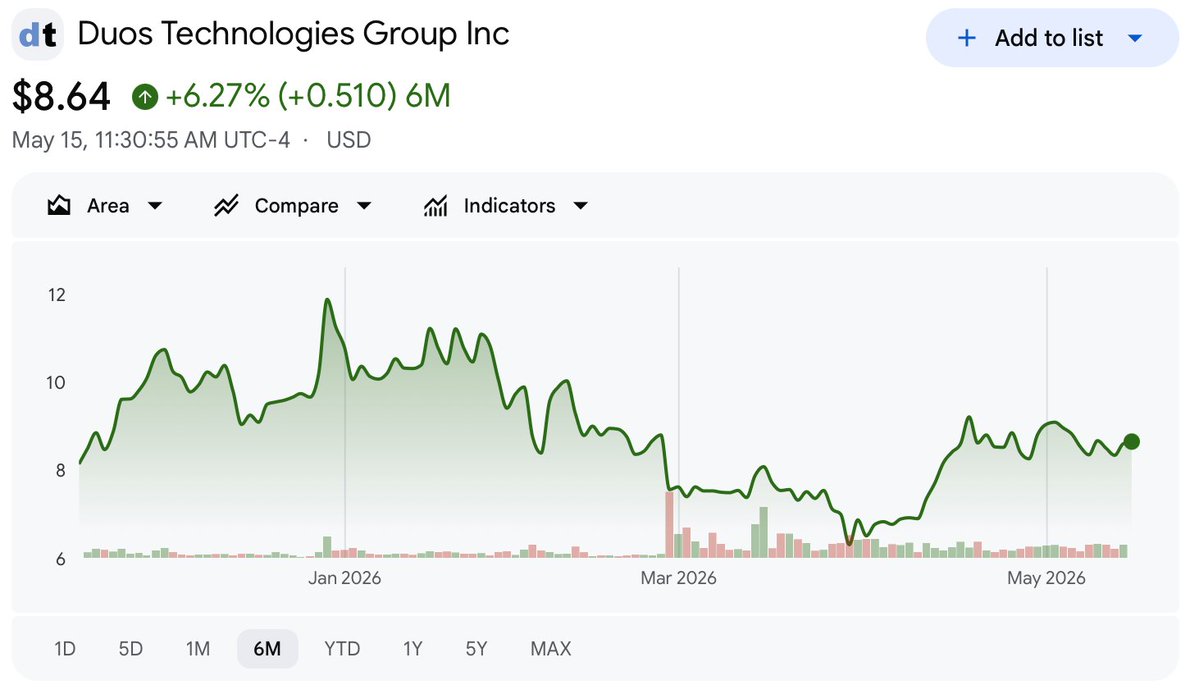
$DUOT might quietly become one of the most interesting second-order AI infrastructure plays. Everyone is chasing hyperscalers and massive AI factories. Meanwhile Duos is building distributed edge compute exactly where power, fiber, and deployment bottlenecks actually matter. - Tiny market cap. - Real contracts. - $NVDA AI Grid alignment. This one feels very early.
Yiannis Zourmpanos tweet media
Yiannis Zourmpanos@yianisz

I’ll give you a hint of what I’m looking at next.. For AI to stay responsive and economical at scale, compute has to move closer to where data is created and intelligence is actually used. The market still underestimates what that means for: $NBIS $CRWV $IREN $CIFR


English
11
7
54
11.3K
Chris Ray
Chris Ray@itschrisray·
Just trimmed my highest cost excess $OUST shares (64 total) at $32. Now riding with my core 1,000 shares at a $26.49 average cost. 😎
English
7
0
59
8.2K
Daniel Koss
Daniel Koss@daniel_koss·
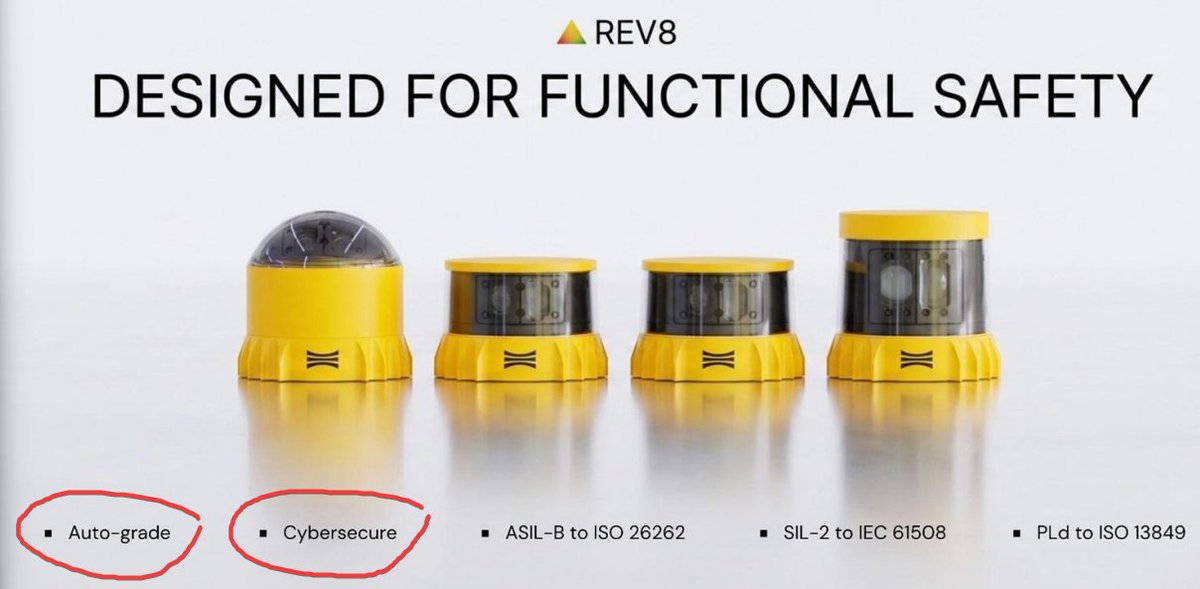
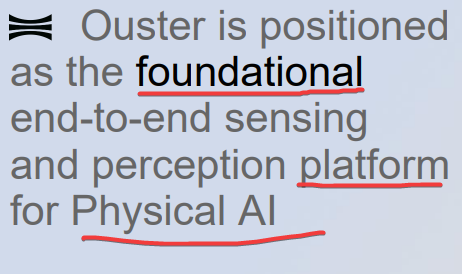
$OUST Q1 2026 - My Full Thoughts! They reported earnings yesterday. I listened to the full call. Here are my thoughts, notes & interpretation: Quick disclaimer first: My portfolio changes quickly, but I'm very bullish on $OUST, and it's currently 30% of my portfolio. I see huge upside from here. 𝗙𝗶𝗻𝗮𝗻𝗰𝗶𝗮𝗹𝘀: • Revenue grew 49% YoY to $49M - very nice! • GAAP gross margin: 43% - strong. • Adjusted EBITDA: -$7M - improving. • Cash: - strong balance sheet, no debt. • Q2 guide: $49.5M–$52.5M - fine, not explosive. 𝗠𝘆 𝗶𝗻𝘁𝗲𝗿𝗽𝗿𝗲𝘁𝗮𝘁𝗶𝗼𝗻: • Very good growth, only down QoQ because Q4 had one-time royalty revenue! Maybe that's making a good quarter and fantastic future outlook look bad to algos? • As always, Ouster is most likely sandbagging next quarter revenue. Demand is probably very strong, and we see very clear proof that Physical AI is starting to scale hard in 2026! • 43% GAAP gross margin and 46% non-GAAP gross margin is very strong for a lidar/hardware company. 𝗧𝗵𝗲𝗶𝗿 𝗻𝗲𝘄 𝗥𝗲𝘃𝟴 𝗽𝗿𝗼𝗱𝘂𝗰𝘁 𝗳𝗮𝗺𝗶𝗹𝘆 𝗶𝘀 𝘁𝗵𝗲 𝗿𝗲𝗮𝗹 𝗻𝗲𝘄𝘀! • Native color lidar at silicon level is differentiated. • Drop-in upgrade from Rev7 lowers adoption friction. • Designed to be more affordable/scalable than Rev7. • Functional safety / auto-grade positioning expands addressable markets. • Strong customer involvement and incredible potential. 𝗜𝗺𝗽𝗼𝗿𝘁𝗮𝗻𝘁 𝗾𝘂𝗼𝘁𝗲𝘀 𝗳𝗿𝗼𝗺 𝘁𝗵𝗲 𝗰𝗮𝗹𝗹: “Behind the scenes, we worked incredibly closely with a set of key customers for more than 1 year to make sure that Rev8 met their needs.” → I believe a lot of customers were waiting for the new Rev8 product to make big orders and scale! “Long-term I expect the vast majority of our customer base to adopt Rev8 over time.” → I don't think he'd say that without a ton of customers already confirming strong interest or already making big orders. That means I expect very strong revenue growth over the next quarters, because we will potentially see: 1. Orders from customers that intentionally delayed orders to get the new products ② Bigger orders for scaling use cases 3 Many old customers upgrading simultaneously This triple demand driver makes me very bullish, and I think over the next couple of earnings, we could see really strong expectation beats. “Rev8 is a big deal when it comes to the automotive world because Rev8 is an auto-grade sensor. They’re designed for functional safety.” → As the automotive world is scaling and obviously offers a massive TAM, this could be a big unlock for fast growth in this market. I'm personally very bullish on autonomous trucking (like $AUR). This clearly will be a huge market. “I’m expecting some pretty significant things there.” → Vague, but he obviously knows something and wants confirmation before announcing some big deals. “Training AI models with a colorized point cloud data set is the final frontier... They call it the Holy Grail.” I think this is a MASSIVE bullish confirmation of what most people here on X, and of course the analysts, overlook! Ouster products are becoming insanely valuable for companies that want to train Physical AI models. If Ouster becomes the gold standard for training Physical AI models, or even gets a decent % of that market, we're going to easily 10x from here. People are completely sleeping on how big this market is. “The multibillion-dollar opportunity for functionally safe devices is a brand new area for us to expand in.” This is one of the bigger TAM expansion comments. Rev8 is positioned to replace legacy 2D laser scanners and cameras in industrial safety. “I can’t wait to continue to update everyone... for the rest of the year on Rev8’s adoption.” I think we can expect some really big customers and massive orders for very cool use cases with huge markets. There might be NDAs, or contracts need to be finished, but the demand is very clear, and Ouster knows they are incredibly well positioned. 𝗠𝗼𝘀𝘁 𝗶𝗺𝗽𝗼𝗿𝘁𝗮𝗻𝘁 𝘀𝘁𝗿𝗮𝘁𝗲𝗴𝗶𝗰 𝘀𝗶𝗴𝗻𝗮𝗹 𝗰𝘂𝘀𝘁𝗼𝗺𝗲𝗿𝘀 👇 𝗚𝗼𝗼𝗴𝗹𝗲: Validates AI / mapping / robotics relevance, though use case is undisclosed. → I just want to clearly highlight here that I fully expect Google to be the future leader in Physical AI models. This is literally the most important customer in the entire world for this industry, and they are an Ouster customer. Expect this to be very significant. Demis Hassabis, CEO of Google DeepMind, has mentioned many, many times in podcast interviews, etc. how important Physical AI and real-world models are going to be. 𝗩𝗼𝗹𝘃𝗼 𝗔𝘂𝘁𝗼𝗻𝗼𝗺𝗼𝘂𝘀 𝗦𝗼𝗹𝘂𝘁𝗶𝗼𝗻𝘀: Validates long-range autonomous trucking. 𝗦𝗸𝘆𝗱𝗶𝗼: Explicitly tied to drone surveying and payload simplification on the call. 𝗟𝗶𝗲𝗯𝗵𝗲𝗿𝗿 / 𝗘𝗽𝗶𝗿𝗼𝗰: Validates rugged heavy industrial and mining autonomy. 𝗣𝗹𝘂𝘀𝗔𝗜: Validates highway autonomy / robotrucking. 𝗦𝗲𝗲𝗴𝗿𝗶𝗱 / 𝗧𝗵𝗶𝗿𝗱 𝗪𝗮𝘃𝗲 / 𝗔𝗧𝗜: Validates warehouse automation and AMRs. Below some screenshots of my favorite parts of the presentation.
Daniel Koss tweet mediaDaniel Koss tweet mediaDaniel Koss tweet mediaDaniel Koss tweet media
English
20
16
217
25.7K
Yogi
Yogi@Houseofyogi·
Spirit Airlines died tonight at the hands of the socialist crusader, Elizabeth Warren She must be so proud to add another casket to her achievements. Tonight at 3am, Spirit turns off the lights. 14,000 jobs gone. 30+ smaller airports lose service. JetBlue offered $3.8 BILLION in cash to buy Spirit in 2022. Shareholders, flight attendants union, literally everyone voted yes. The combined company would have held 9% of the US market against a Big 4 that already owned 80%. For anyone who understands numbers: 9% isn’t a monopoly against 80%. Warren said no. She wrote letters. She pressured Buttigieg. Biden’s DOJ sued. A federal judge killed the deal in January 2024. Her argument: the merger would cost consumers $1 billion a year. Now look at her collateral damage she dusts under the rug. 510 pilots gone in the months after. 1,800 flight attendants furloughed in December. 14,000 jobs in 2023. 7,500 last week. Zero tonight. And that’s just the people in Spirit uniforms. Catering goes. Fuel guys go. Baggage crews, gate agents, airport coffee shops, hotels and rental cars in 70 cities Spirit flew to. Every airline job carries 3 more on its back. 40,000 people out of work because of one woman’s moronic crusade against the market. And the math ain’t mathing. Spirit abandoned 90 routes during the death spiral. Fares on those routes are up 14% on average. Oakland to Newark: $135 to $288. Fort Myers to San Juan: $92 to $219. Kansas City to Newark up 66%. That’s reality. Not some BS number from a “study.” So @SenWarren tell me how this saves the consumer money? Cheap carriers in a market drop fares 21% across the board. Southwest did this in the 90s and saved Americans $68 BILLION over 20 years. Warren killed it. That’s what moronic politicians led by socialism do. Then with her own blind arrogance, she tweeted Spirit’s collapse is “a Biden win for flyers.” A win. 14,000 people are reading termination letters tonight. And she’s taking credit. This is socialism in 2026. A senator who’s never made payroll thinks she knows how to run a market better than the people who own and work in the company. She saved you a billion on imaginary paper. She cost you ten times that in real life. She didn’t protect consumers from anything. 14,000+ will go from working to welfare. She will make sure to blame billionaires, hardworking tax payers, AI, capitalism and whatever monster they will make up tomorrow hiding under your bed. Higher taxes. Fewer jobs. More expensive everything. She called it a win. I hope you enjoy winning.
English
5.9K
33.5K
124.4K
6.6M
Ferry
Ferry@Ferry815196·
@TheLongInvest You guys have 350m ppl and howcome this clown is the best you can get?
English
1
0
2
155
Rose Celine Investments 🌹
Rose Celine Investments 🌹@realroseceline·
You can already see hints of this dynamic in how the stock reacts. Strong revenue growth, record originations, and rising members sound like exactly what investors want. But when forward growth slows even slightly or guidance doesn’t move enough, the stock sells off. That tells you how dependent the narrative is on continued momentum. At a higher level, this is where I think most investors make a mistake. When you start investing, you’re given a clean canvas. You can choose any business model in the world to own, and that choice matters hugely. You can own something like $MA or $MSCI, where there is no credit risk and the model is structurally advantaged. Theyre in the middle, collect ping fees, and scale with volume without taking balance sheet risk. It’s essentially a toll bridge where more traffic simply means more revenue, without worrying about who fails on the other side. Or you can choose a bank, any bank. And the moment you do that, you’re choosing a completely different game. You’re choosing a model that depends on the credit cycle, interest rates, and funding, all things you don’t control. If the Fed moves rates, your entire business changes overnight whether you like it or not. That’s what makes it so difficult, especially for younger investors trying to compound over long periods of time. You’re voluntarily selecting a fragile model when you could be compounding in something far more durable. It’s not even about $SOFI specifically, it’s about the structure of banking itself. The oil business is good example. You can have a great operator but you’re still at the mercy of the commodity price, because the underlying driver sits outside your control. Oil goes up or down and the entire business changes with it. Banking works the same way, just with credit and rates instead of oil prices. If you study the history of banking, the pattern becomes very clear. There is a graveyard full of smart managers, strong growth stories, and businesses that looked flawless at the peak. Everything appears stable right up until the moment it isn’t. At a high level, this is why the banking model is fragile to me. It depends on the credit cycle, requires ongoing growth to sustain the narrative, and operates in a competitive and commoditized space. There isn’t a structural advantage that protects it when conditions change. The business can perform very well, but only under the right set of circumstances. $SOFI may look like a scalable tech platform on the surface, but economically it behaves like a leveraged lending business. That creates a tension between how it is perceived and how it actually operates. Those two realities don’t coexist cleanly over long periods of time. Eventually, the market forces that gap to close. And when it does, it usually doesn’t happen slowly. Leveraged lending businesses tend to look strong, stable, and growing right before the risk shows up. By the time it becomes obvious, most of the damage has already been done. Then again what the hell do I know, I am named after a flower 🌹 2/2
English
7
3
73
6.3K
Rose Celine Investments 🌹
Rose Celine Investments 🌹@realroseceline·
Thoughts on $SOFI Regardless of how you dress it up, $SOFI is a lending business at its core. No matter how you package it, they make money by issuing loans and earning the spread, which ties everything to credit quality, interest rates, and funding costs. That’s not just a detail, thats literally the business. The issue is that lending businesses are cyclical, whether people want to admit it or not. When the cycle turns even a little, defaults rise, charge offs increase, and margins compress. It doesn’t take a crisis, just a shift in conditions for things to tighten. This is not a durable model that compounds smoothly, it is a conditional model that works best when the environment is supportive. The risk is also more concentrated than most people realize, which makes it even more fragile. A large portion of the book is in personal loans, which are unsecured and highly sensitive to unemployment and consumer stress. That’s where the first place cracks show up in any downturn. So it’s not just credit risk, it’s concentrated exposure to the weakest part of the credit system. The growth looks great on the surface, and that’s exactly why it’s seductive and pulls people in. But in lending, growth can actually hide risk rather than eliminate it. The real question is not how fast originations are growing, but whether the loans being made are improving in quality or simply increasing in volume. Those two paths look identical in the short term, but lead to very different outcomes over time. Another things I see people miss is how these books are accounted for in practice. A lot of what you see is effectively marked to model, not fully marked to reality yet, because losses are estimated before they are realized. That allows earnings to appear smooth and controlled while risk builds underneath the surface. When the cycle turns, provisions rise and charge offs hit, and what looked stable changes very quickly. This is where the structure of the model really matters, because lending does not scale in a straight line. In good times you see steady growth, low defaults, and stable spreads, which creates the illusion of consistency. In weak conditions, defaults jump, funding tightens, growth slows, and margins compress. The downside tends to accelerate faster than the upside, which is what makes the model fragile. At the same time, $SOFI is trying to position itself as something much broader than a lender. It’s a bank, fintech platform, technology provider, and a financial super app all in one. That sounds compelling, but in practice it makes the business harder to value, harder to execute, and harder to dominate in any one category. It becomes a bit of everything, but not clearly the best at anything. The super app idea also sounds better in theory than in reality. Financial products tend to have low engagement, low loyalty, and are highly substitutable for most users. People don’t build daily habits around their lending apps the same way they do with social, simply out $SOFI is no Instagram. Funding is another critical piece thats underestimated. Even with a bank charter, the model still depends on cost of deposits, securitization markets, and access to capital. If someone else can fund more cheaply, they can price more aggressively and take share. That means the real product is not the app or the interface, it is the cost of capital behind it. Management will always emphasize member growth, product expansion, and engagement metrics. Those are important, but they are not the core driver of value in a lending business. The real driver is risk adjusted returns on the loans being originated. Those two things can diverge for a long time, which is why the story can look strongest right before it starts to weaken. 1/2 👇
English
21
11
180
45.5K
David Perlmutter
David Perlmutter@Muzzlebuster·
1/ I'm doing this write-up as a partial response to @realroseceline's post about $ZETA yesterday, linked below. Rose’s post was absolutely top-class, and I admire the writing and thought process very much. If by some strange miracle you are following me and not yet following Rose, stop what you are doing and go follow that account immediately. Some of my own views on the topic contrast some of Rose’s, so I wanted to write about it. No pressure of course, but if @realroseceline or @wealthmatica, or anyone else for that matter, would like to share thoughts on this, I would welcome it.
Rose Celine Investments 🌹@realroseceline

What is $ZETA? There are a lot of $ZETA bulls on this platform and they have strong opinions, strong conviction, and they point to the growth, which is fair. But in most of the conversations I’ve observed, it’s clear the understanding of what $ZETA actually does is pretty shallow. So instead of arguing back and forth, I’m just going to break it down in a simple way so it’s clear what the business really is and where it actually fits. Most people hear “identity graph” or “data” and think it’s some magical AI system that finds new customers out of thin air, but that’s not what it is at all. An identity graph is simply matching that connects some sort of information like emails, devices, cookies, and logins to a person, which means it’s not discovering new customers, it’s organizing existing ones. That distinction sounds small, but it completely changes how you should think about the business. Every time someone visits your site, opens an email, or logs into an app, they leave behind small pieces of data that can be collected, think of it like cookies. $ZETA takes those pieces and builds a profile so it can recognize the same person across channels like email, display, mobile, etc. Once that profile exists, $ZETA AI can decide what to show them, when to show it, and where to show it in a precise way. This is where $ZETA is genuinely strong, because the more data you already have on a person, the better the system performs. If someone is already in your business, even if they just visited once or opened an email, $ZETA can segment them, score them, and push them closer to conversion with high efficiency. The entire advantage comes from having identity and context, not from discovering brand new people. That is not new customer acquisition, it’s called lifecycle marketing. Lifecycle marketing is what happens after someone already exists in your business in some form, whether they are a customer, a visitor, or just someone who engaged once with your email or app. The goal is to move them forward, get them to buy, come back, spend more, convert or simply not disappear. Remarketing is just a more specific version of that same idea, where someone has already shown intent and you are trying to bring them back. They clicked, browsed, or almost purchased, and now you are targeting them again with more relevant messaging. This is exactly where identity graphs shine, because the system already has enough info to recognize and act on. The reason the results here look so strong is not because the system is magically better at marketing, it’s because the starting point is easier. If you run a simple thought experiment, it becomes obvious very quickly. Take 100,000 completely cold users and assume 1% click and 1% of those convert, you end up with 10 customers, which is what real acquisition looks like (1% click rate + 1% conversion rate). Now take 10,000 users who already visited your site and showed some level of intent, perhaps 10% click and 5% convert, you end up with 50 customers from a 10 times smaller base. Nothing about the system had to be extraordinary, the only thing that changed was the quality of the audience. That’s why lifecycle and remarketing consistently produce better looking economics for advertisers. This is also where attribution creates a lot of confusion, because platforms tend to take credit for conversions that were already likely or perhaps easier to happen. If someone visits your site, thinks about buying, and then later sees an ad and converts, the system attributes the sale to the ad. In reality, the intent already existed, and the platform simply captured it more efficiently. The real question is not attribution, it’s incrementality. Would that person have converted anyway if the ad never existed? That is a much harder question, and most systems are not designed to answer it honestly. 1/ 👇

English
10
0
25
21.1K
The Long Investor
The Long Investor@TheLongInvest·
You beat everyone for the next 5 years with this: US Market: $ZETA $UNH $HIMS $GOOG & $NVDA (after they correct) CHINA: $BABA $BIDU $JD BONDS: $TLT EMERGING MARKETS: $EWZ $SE $GRAB CRYPTO: $ETH $BTC EUROPE: $ASML $NVO DIVIDEND: $UPS $PFE DATA: $NBIS $AMD $DELL SAAS: $NOW $ORCL BIO: $TMDX CONSUMER: $LULU $NKE $ONON FINTECH: $SOFI $NU DISRUPT: $OSCR $HOOD $ONDS MOAT: $ASTS $ADUR
English
52
191
1.5K
280K
Ferry
Ferry@Ferry815196·
@ariaradnia Arent you afraid of $APP being blown out of the market by the big guys?
English
1
0
0
236
Aria Radnia 🇮🇷
Aria Radnia 🇮🇷@ariaradnia·
Stocks I don't own that I'm bullish on $NOW $MA $NFLX $META $RDDT $APP $GE $ADYEN $WISE
English
24
4
148
11.8K
Remote Navigator 🧭
Remote Navigator 🧭@RemoteNavigator·
What is your number 1 largest holding at the moment?
English
30
1
6
4.9K
Ferry
Ferry@Ferry815196·
@RepLuna You adore a president saying ‘Whole Civilization Will Die’? Just think. Can you?
English
0
0
1
11
Rep. Anna Paulina Luna
Rep. Anna Paulina Luna@RepLuna·
I just spoke with the President and would like to publicly congratulate him on this. Some of my not-so-smart Democrat colleagues will soon be forced to issue public statements of support when they understand the terms of what the agreement is. To be clear, President Trump has been consistent and precise in his messaging from the beginning. Only weeks ago, Iran was viewed as an existential threat to the US and most of Europe. NATO exposed who they really are. Many people got exposed. Those who try to use this to sow division or just straight-up lie have also outed themselves. To be clear, from the beginning, this was about saving American lives. President Trump has truly accomplished something that no other POTUS could have pulled off. PEACE WILL ULTIMATELY PREVAIL.
Rep. Anna Paulina Luna tweet media
English
5.1K
4.9K
23.4K
740.3K
Ferry
Ferry@Ferry815196·
Komt #amd onder de $200? Lijkt wel alsof ik iemand hoor roepen “wie maakt me los” 😱 #amazing
Nederlands
0
0
4
105