Ministry of Finance, Government of Pakistan

10.4K posts

Ministry of Finance, Government of Pakistan banner
Ministry of Finance, Government of Pakistan

Ministry of Finance, Government of Pakistan

@Financegovpk

Official Account of the Ministry of Finance, Government of Pakistan

Islamabad, Pakistan Katılım Haziran 2014
14 Takip Edilen262.2K Takipçiler
Ministry of Finance, Government of Pakistan
Finance Minister Senator Muhammad Aurangzeb Leaves for China to Attend Pakistan’s Inaugural Panda Bond Issuance Ceremony Federal Minister for Finance and Revenue, Senator Muhammad Aurangzeb, has departed for China to participate in the issuance ceremony of Pakistan’s inaugural Panda Bond in Beijing. The Finance Minister will attend the official ceremony marking Pakistan’s first-ever Panda Bond issuance, a landmark development through which Pakistan is gaining access to China’s domestic capital market for the first time. China’s bond market is regarded as one of the largest and deepest capital markets in the world. The ceremony will be held in the Pakistan embassy in Beijing. The issuance of the Panda Bond represents a major milestone in Pakistan’s financial strategy, aimed at diversifying the country’s financing sources, further strengthening investor confidence, and expanding Pakistan’s presence in international financial markets. Pakistan is steadily moving towards market-based financing alongside traditional funding avenues. Through the Panda Bond, Pakistan will, for the first time, access the Chinese capital market, reflecting the country’s economic recovery and the growing confidence of global investors in Pakistan’s economy. The overall Panda Bond programme has been set at US$1 billion, while the inaugural issuance will amount to US$250 million equivalent. The issuance is being supported by the Asian Development Bank (ADB) and the Asian Infrastructure Investment Bank (AIIB), which is expected to further enhance confidence among international investors. This historic development not only reflects the improving credibility of Pakistan’s economy but also demonstrates the confidence of international financial institutions and investors in Pakistan’s macroeconomic stability, reform agenda, and economic direction. Positive trends in exports, remittances, and key economic indicators in recent months have provided a stronger foundation for sustainable economic growth. Pakistan and China share an enduring friendship built on mutual trust, strategic cooperation, and strong people-to-people ties. China has consistently stood by Pakistan in difficult times, while initiatives including the China-Pakistan Economic Corridor (CPEC) have opened new avenues for economic collaboration between the two countries. The issuance of the Panda Bond marks another important step towards strengthening this longstanding partnership in the fields of finance and investment. The ceremony in Beijing will be attended by representatives of leading Chinese government and financial institutions, international financial organizations, investors, and banking sector stakeholders. Distinguished participants are expected from the Ministry of Finance of China, the People’s Bank of China (PBOC), the Asian Development Bank (ADB), the Asian Infrastructure Investment Bank (AIIB), China International Capital Corporation (CICC), Bank of China, Standard Chartered Bank, Hongta Securities, and other prominent institutions. During the ceremony, a special presentation on Pakistan’s economy and investment opportunities will also be showcased. Addressing the gathering, the Finance Minister will highlight Pakistan’s economic recovery, reform measures, investor-friendly policies, and the government’s future economic vision. The event will also provide an opportunity to explore new avenues of economic cooperation between Pakistan and China. During his visit to China, the Finance Minister is also expected to hold meetings with investors, financial institutions, and senior Chinese officials to discuss bilateral economic cooperation, promotion of investment, and future financial collaboration. He will also engage with Chinese media to highlight Pakistan’s economic progress and investment potential at the international level. The Government of Pakistan considers this historic initiative a major milestone in the country’s economic diplomacy, access to international financial markets, and pursuit of sustainable economic stability. The issuance of the Panda Bond will not only further strengthen economic cooperation between Pakistan and China but will also showcase Pakistan’s emerging economic potential before the global investor community.
Ministry of Finance, Government of Pakistan tweet media
English
0
9
33
1.6K
Ministry of Finance, Government of Pakistan retweetledi
Bureau of South and Central Asian Affairs (SCA)
As I mentioned during my meeting today with Finance Minister Aurangzeb, the United States commends Pakistan for continuing to work with the IMF to implement structural economic reforms.  I look forward to exploring mutually beneficial commercial opportunities that will empower American companies and foster a more prosperous future for both our countries. - S. Paul Kapur
Bureau of South and Central Asian Affairs (SCA) tweet media
English
9
43
267
13.7K
Ministry of Finance, Government of Pakistan retweetledi
Pakistan TV
Pakistan TV@PakTVGlobal·
Finance Minister Muhammad Aurangzeb holds a meeting with the visiting IMF mission led by Mission Chief Iva Petrova in Islamabad to review Pakistan’s macroeconomic outlook, upcoming budget preparations, and ongoing reforms aimed at strengthening economic stability and sustainable growth. Senior officials from the State Bank of Pakistan and the Federal Board of Revenue also attended. @Financegovpk #PakistanIMF #EconomicReforms #PakistanBudget2026 #MacroeconomicStability #PakistanTV
English
0
2
2
605
Ministry of Finance, Government of Pakistan
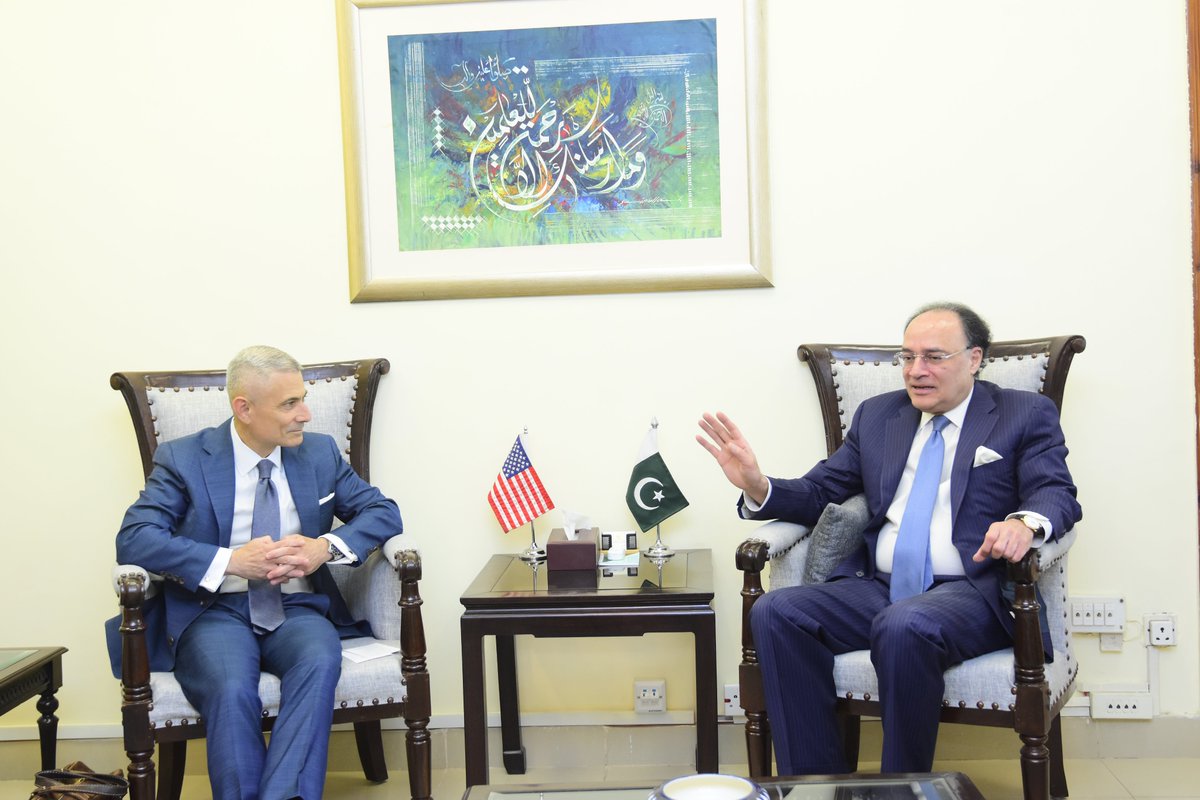
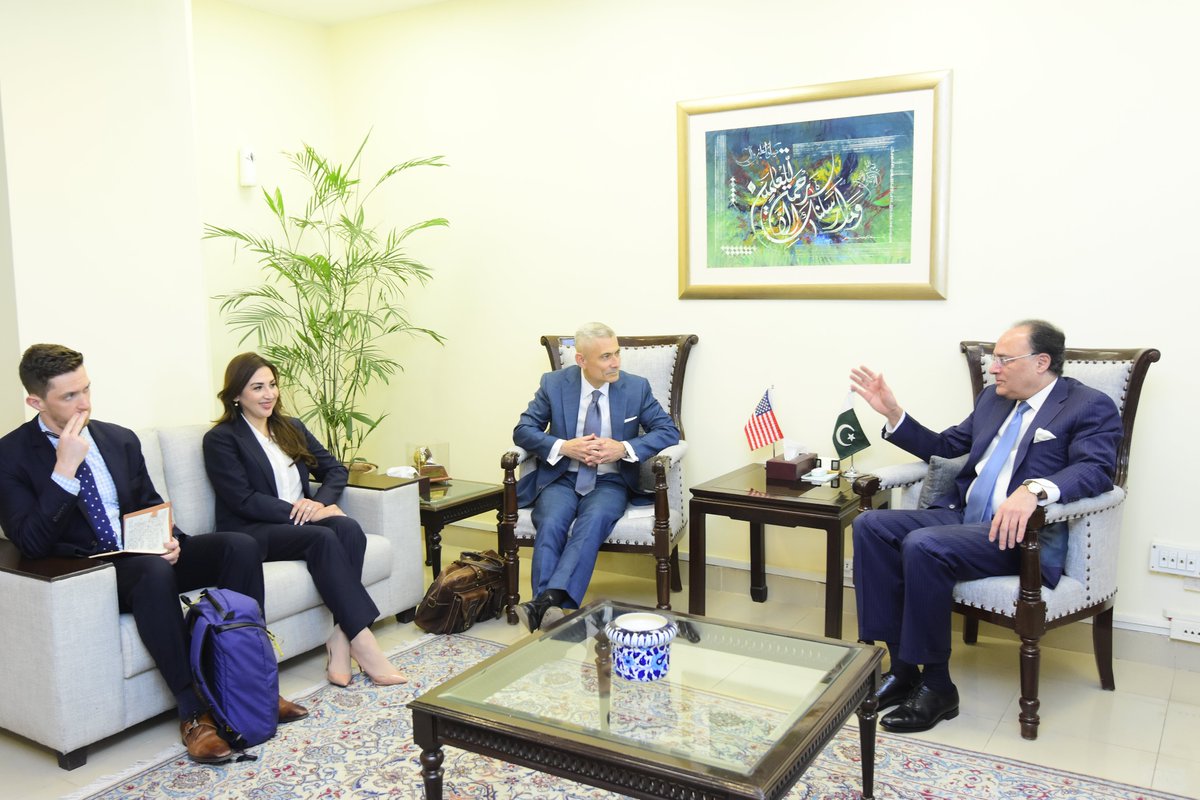
Finance Minister Meets U.S. Assistant Secretary to Discuss Economic Cooperation and Investment Federal Minister for Finance and Revenue Senator Muhammad Aurangzeb held a meeting today with Mr. S. Paul Kapur, Assistant Secretary, Bureau of South and Central Asian Affairs, United States, at the Finance Division. Mr. Kapur was accompanied by U.S. Chargé d’Affaires Ms. Natalie A. Baker. The meeting focused on Pakistan-U.S. economic cooperation, investment opportunities, trade relations, and the Government’s ongoing reform agenda aimed at strengthening macroeconomic stability and improving the business and investment climate in the country. Both sides exchanged views on enhancing bilateral economic engagement and expanding cooperation in areas of mutual interest. Welcoming the U.S. delegation, Senator Aurangzeb appreciated the positive trajectory of Pakistan-U.S. relations and underscored the Government’s commitment to fostering a transparent, predictable, and investor-friendly environment. He highlighted Pakistan’s ongoing economic stabilization efforts, progress on reforms, and measures aimed at improving fiscal sustainability, broadening the tax base, accelerating digitization, and promoting financial inclusion. The Finance Minister also shared recent positive trends in key economic indicators, including remittances, external inflows, and renewed access to international capital markets. He emphasized the Government’s focus on attracting long-term investment, particularly in sectors such as energy, mining, infrastructure, technology, and digital finance. Mr. S. Paul Kapur acknowledged Pakistan’s ongoing economic reform efforts and emphasized the importance of maintaining a competitive and predictable business environment to encourage greater foreign investment and commercial engagement. He expressed the United States’ interest in expanding economic cooperation with Pakistan and noted the strong interest of American companies in exploring long-term investment opportunities in the country. U.S. Chargé d’Affaires Ms. Natalie A. Baker appreciated the Government of Pakistan’s continued engagement with American companies and acknowledged the efforts being made to facilitate a more enabling and investor-friendly business environment. She noted the growing interest among U.S. businesses in exploring opportunities in Pakistan across a range of sectors. Discussions also covered opportunities for enhanced collaboration with U.S. businesses and investors, with both sides recognizing the importance of a conducive business environment and continued engagement between public and private sector stakeholders. The U.S. side expressed interest in expanding economic and commercial cooperation with Pakistan and appreciated the Government’s efforts to support economic reforms and facilitate investment.
Ministry of Finance, Government of Pakistan tweet mediaMinistry of Finance, Government of Pakistan tweet media
English
1
9
59
2.7K
Ministry of Finance, Government of Pakistan
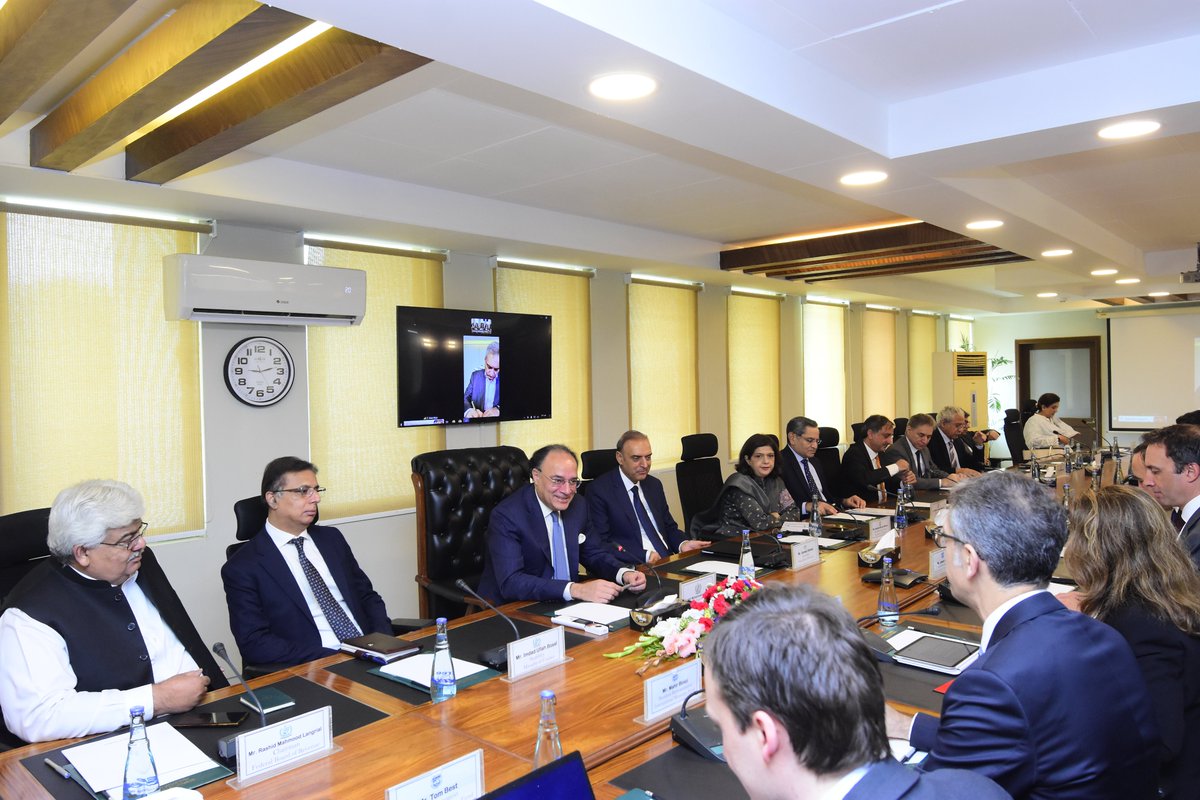
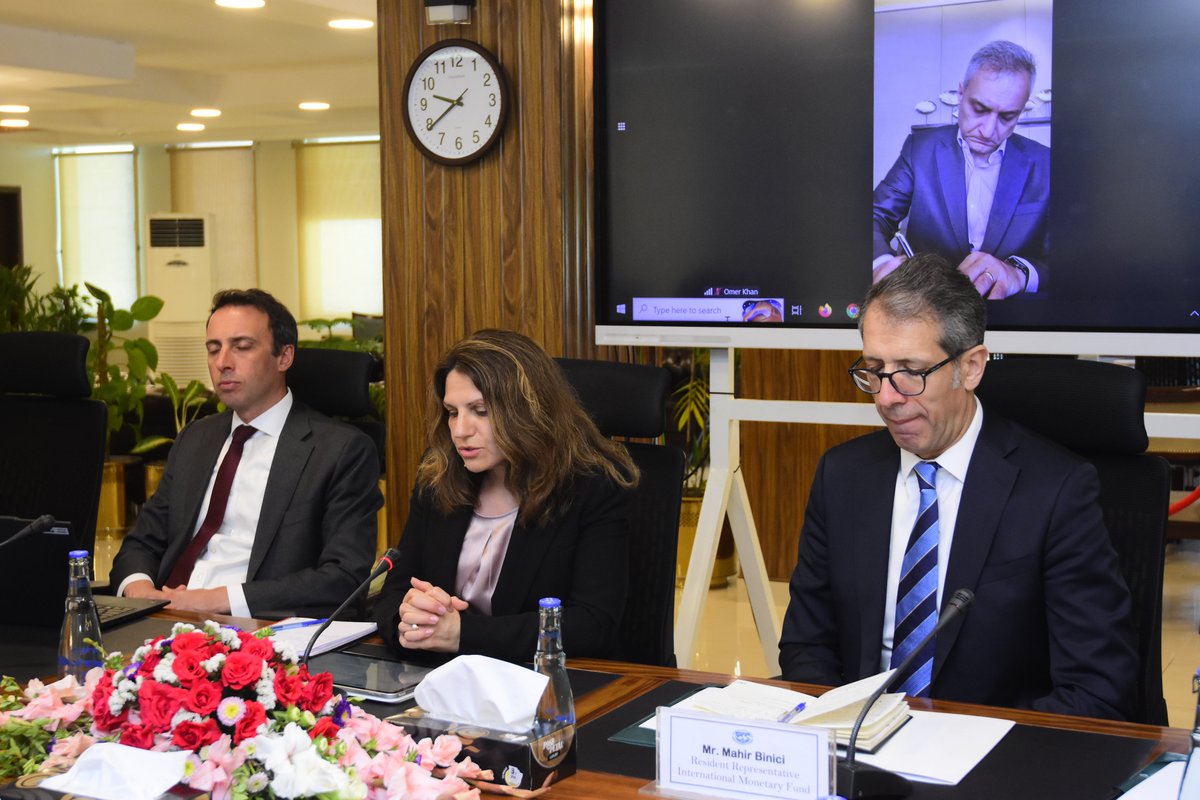
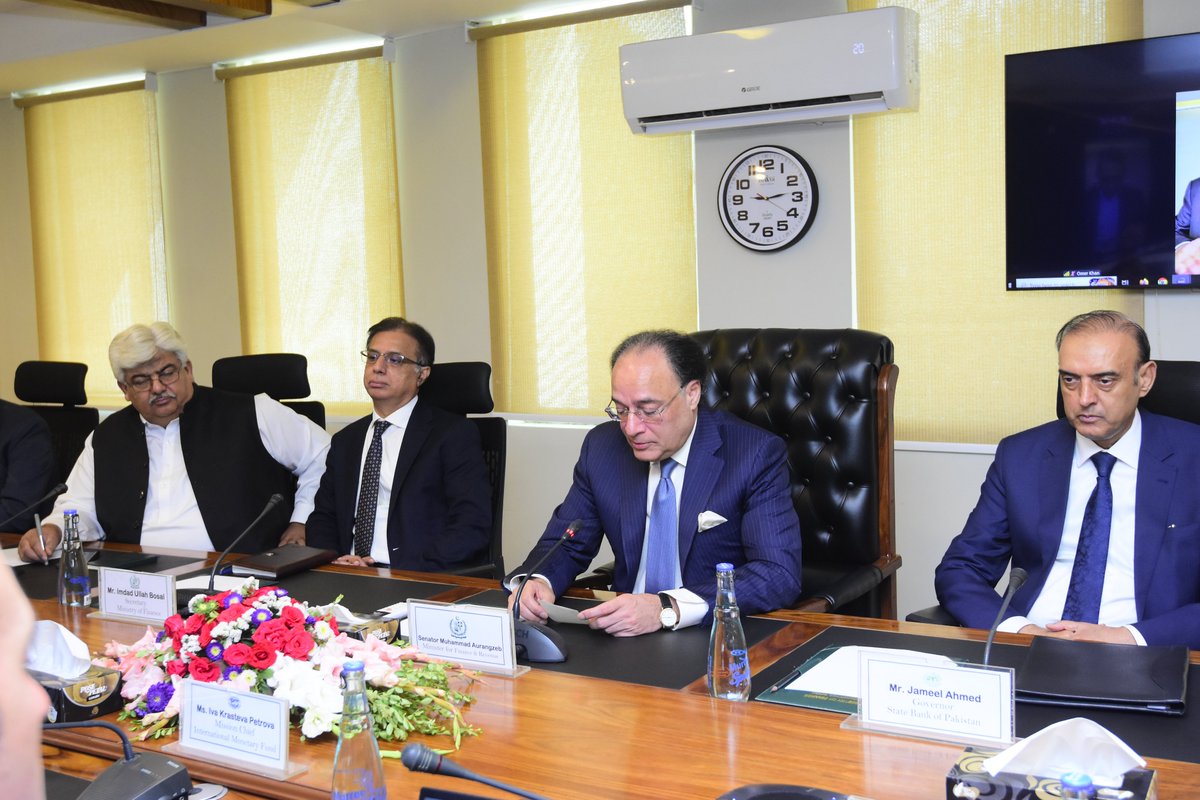
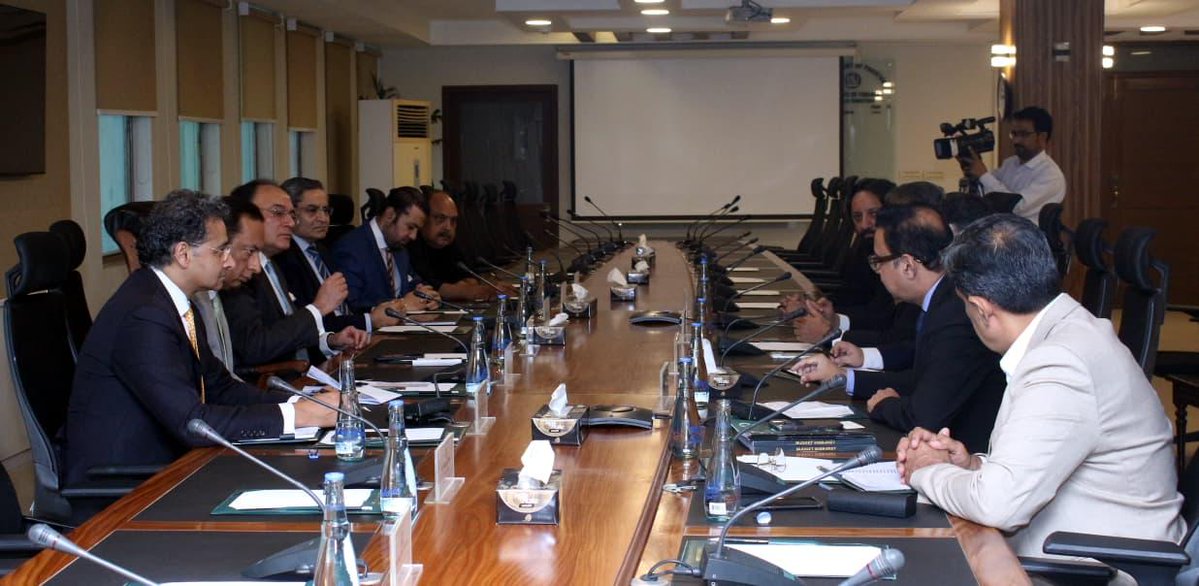
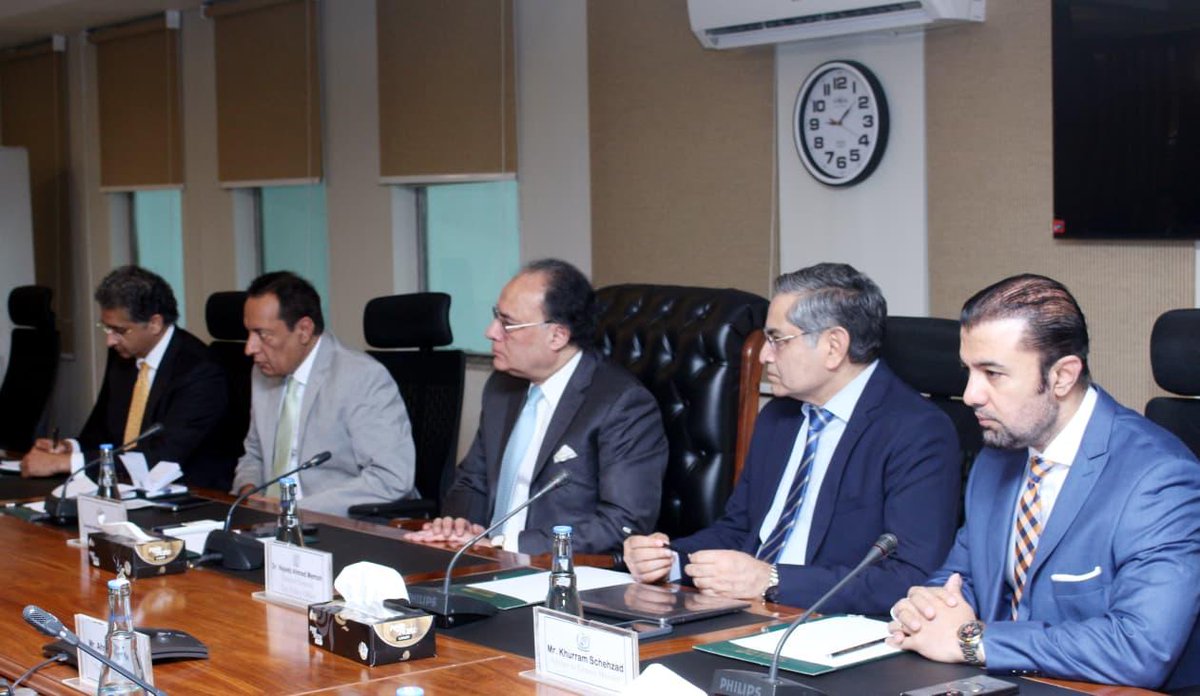
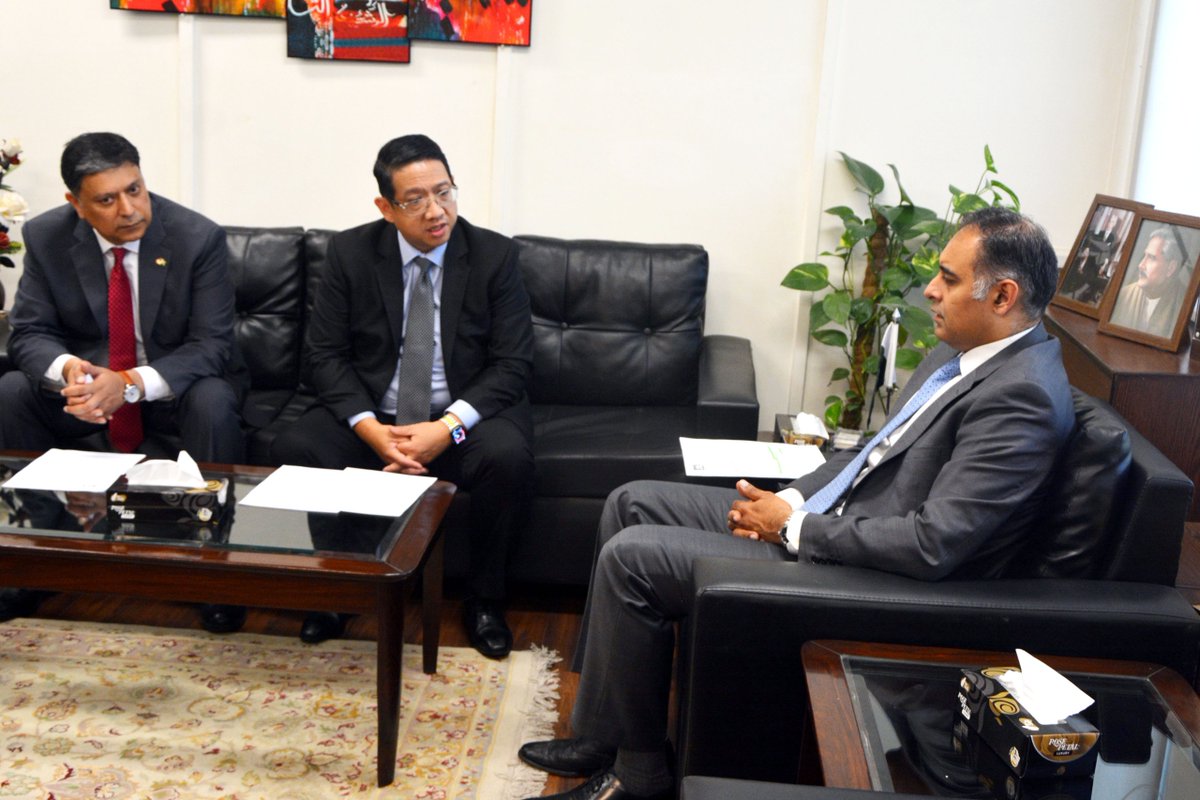
Finance Minister Senator Muhammad Aurangzeb Briefs Visiting IMF Mission Federal Minister for Finance and Revenue, Senator Muhammad Aurangzeb, today briefed the visiting International Monetary Fund (IMF) Mission on Pakistan’s macroeconomic outlook, fiscal strategy, reform priorities, and the Government’s ongoing efforts to ensure sustainable economic stability and long-term growth. The discussions focused on Pakistan’s macroeconomic stabilization efforts, preparations for the upcoming federal budget, and the broader reform agenda aimed at strengthening fiscal and external sustainability while fostering sustainable economic growth. Both sides exchanged views on maintaining reform momentum, preserving macroeconomic stability, and advancing structural reforms to promote investment, productivity, and export-led growth within a balanced and forward-looking policy framework. Welcoming the IMF delegation to Islamabad, the Finance Minister appreciated the Fund’s continued engagement and constructive dialogue with the Government of Pakistan. He particularly acknowledged the productive discussions initiated during the Spring Meetings held in Washington earlier this year. Senator Aurangzeb shared encouraging developments regarding Pakistan’s external sector, highlighting positive trends in remittances and export performance. He noted that recent data indicated improvement in exports on both month-on-month and year-on-year basis, reflecting growing resilience in the economy and a gradual strengthening of macroeconomic fundamentals. The Finance Minister emphasized that while economic stabilization efforts had produced encouraging results, the Government remained fully mindful of the structural challenges confronting the economy, particularly external liabilities and the need to accelerate sustainable, export-led growth. He reiterated the Government’s commitment to deepening reforms aimed at strengthening macroeconomic stability without compromising long-term growth prospects. In this regard, he underscored the importance of moving Pakistan away from recurring boom-and-bust cycles through structural reforms, productivity enhancement, deregulation, and improved export competitiveness. Senator Aurangzeb further stated that the Government’s reform agenda had been carefully calibrated in consultation with international experts and economists. He emphasized that the ongoing policy measures were not driven by short-term considerations, but formed part of a broader and technically grounded economic transformation strategy endorsed at the highest level. The Finance Minister also briefed the Mission on Pakistan’s continued engagement with international development partners, including ongoing economic cooperation initiatives with China and efforts aimed at mobilizing long-term investment aligned with the country’s strategic economic priorities. The visiting IMF Mission, led by Mission Chief Ms. Iva Petrova, acknowledged the positive progress made by Pakistan in maintaining macroeconomic stability despite a challenging global and regional environment. The Mission appreciated the Government’s continued commitment to prudent economic management and reform implementation. The IMF team emphasized the importance of sustaining reform momentum, maintaining fiscal discipline, and advancing structural reforms to support durable and inclusive economic growth. Discussions during the meeting also focused on the broader macroeconomic framework, the Government’s reform agenda, and priorities for the upcoming budget. The Mission reaffirmed its commitment to continued engagement and constructive cooperation with the Government of Pakistan in support of the country’s economic reform programme and long-term economic resilience. The meeting was attended by Governor State Bank of Pakistan Mr. Jameel Ahmad, Secretary Finance Division Mr. Imdad Ullah Bosal, Chairman Federal Board of Revenue Mr. Rashid Mahmood Langrial, and senior officials of the Finance and Revenue Division as well as the Tax Policy Office.
Ministry of Finance, Government of Pakistan tweet mediaMinistry of Finance, Government of Pakistan tweet mediaMinistry of Finance, Government of Pakistan tweet mediaMinistry of Finance, Government of Pakistan tweet media
English
0
4
15
1.6K
Ministry of Finance, Government of Pakistan retweetledi
Khurram Schehzad
Khurram Schehzad@kschehzad·
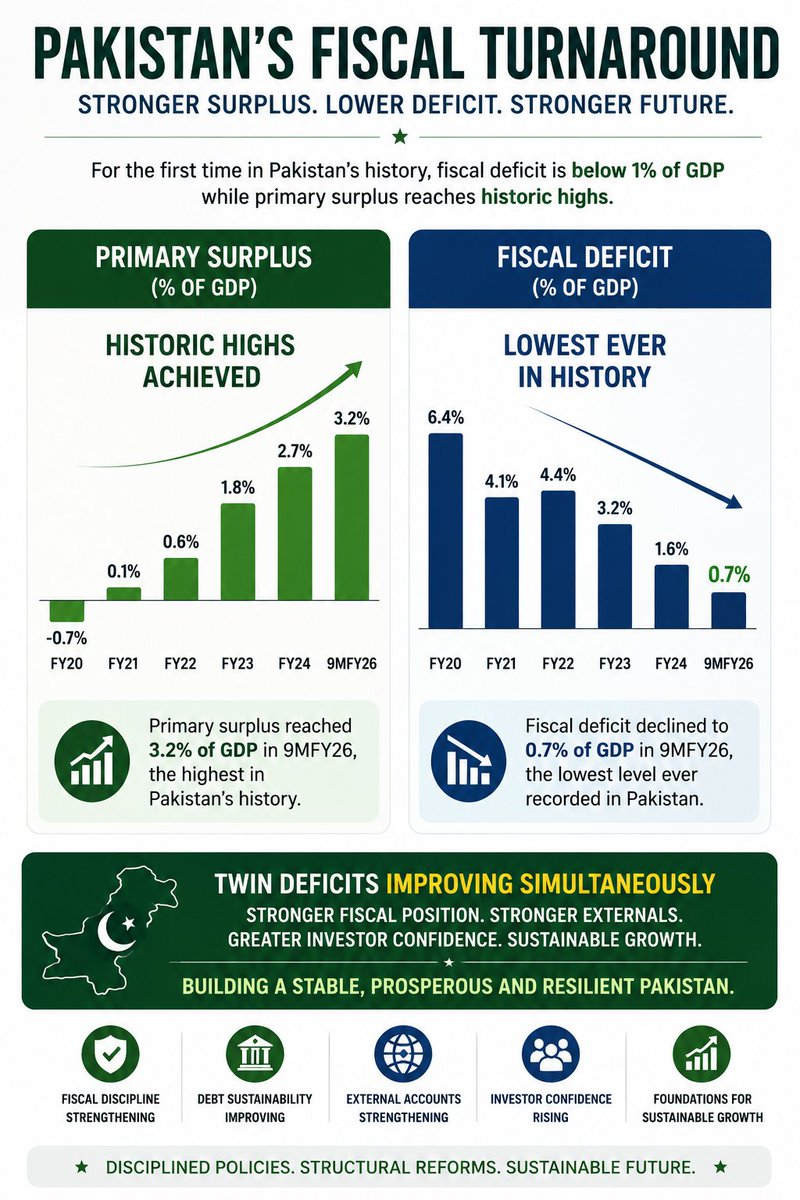
𝗣𝗮𝗸𝗶𝘀𝘁𝗮𝗻 𝗥𝗲𝗰𝗼𝗿𝗱𝘀 𝗙𝗶𝗿𝘀𝘁-𝗘𝘃𝗲𝗿 𝗙𝗶𝘀𝗰𝗮𝗹 𝗗𝗲𝗳𝗶𝗰𝗶𝘁 𝗕𝗲𝗹𝗼𝘄 𝟭% Pakistan’s fiscal story is undergoing a structural transformation. The latest fiscal data reflects a broader shift toward credible macroeconomic management, stronger sovereign fundamentals, and sustainable growth. First time in country's history, the fiscal deficit has fallen below 1% of GDP, alongside record primary surpluses, resilient external account, and strengthening macroeconomic stability. 𝗛𝗶𝘀𝘁𝗼𝗿𝗶𝗰 𝗙𝗶𝘀𝗰𝗮𝗹 𝗖𝗼𝗻𝘀𝗼𝗹𝗶𝗱𝗮𝘁𝗶𝗼𝗻 Country’s fiscal deficit declined to just 0.7% of GDP in 9MFY26 vs 2.6% SPLY - the lowest level ever recorded in Pakistan’s history. 𝗧𝗵𝗲 𝗣𝗿𝗶𝗺𝗮𝗿𝘆 𝗦𝘂𝗿𝗽𝗹𝘂𝘀 𝗿𝗲𝗮𝗰𝗵𝗲𝗱 𝟯.𝟮% 𝗼𝗳 𝗚𝗗𝗣 𝗶𝗻 𝟵𝗠𝗙𝗬𝟮𝟲, following an exceptionally strong surplus of 3.0% in 9MFY25 - reflecting prudent and disciplined fiscal management. This reflects improving public finances alongside economic stability and growth recovery. 𝗥𝗲𝘃𝗲𝗻𝘂𝗲 𝗣𝗲𝗿𝗳𝗼𝗿𝗺𝗮𝗻𝗰𝗲 𝗜𝗺𝗽𝗿𝗼𝘃𝗶𝗻𝗴 𝗦𝘁𝗿𝘂𝗰𝘁𝘂𝗿𝗮𝗹𝗹𝘆 Tax-to-GDP and total revenue-to-GDP have continued to improve steadily over the last 2 years. Tax revenues continued to rise - among the strongest improvements in recent years. The improvement reflects sustained reforms, stronger compliance, digitization, and better fiscal administration. 𝗘𝘅𝗽𝗲𝗻𝗱𝗶𝘁𝘂𝗿𝗲 𝗗𝗶𝘀𝗰𝗶𝗽𝗹𝗶𝗻𝗲 𝗦𝘁𝗿𝗲𝗻𝗴𝘁𝗵𝗲𝗻𝗶𝗻𝗴 𝗙𝗶𝘀𝗰𝗮𝗹 𝗖𝗿𝗲𝗱𝗶𝗯𝗶𝗹𝗶𝘁𝘆 Total expenditures remain well controlled despite global inflationary pressures and legacy debt servicing obligations. Current expenditure has stabilized, while development spending has been maintained to support long-term growth. Defence expenditure as % of GDP has broadly remained contained over time, highlighting overall fiscal discipline. 𝗗𝗲𝗯𝘁 𝗦𝘂𝘀𝘁𝗮𝗶𝗻𝗮𝗯𝗶𝗹𝗶𝘁𝘆 𝗮𝗻𝗱 𝗦𝘁𝗿𝗼𝗻𝗴𝗲𝗿 𝗣𝘂𝗯𝗹𝗶𝗰 𝗙𝗶𝗻𝗮𝗻𝗰𝗲𝘀 Sustained primary surpluses are improving Pakistan’s debt dynamics and strengthening sovereign sustainability. Public debt ratios are gradually declining, refinancing risks are easing, and debt maturities are improving. The fiscal adjustment is reducing vulnerabilities and strengthening the foundations of long-term macroeconomic stability. 𝗧𝘄𝗶𝗻 𝗗𝗲𝗳𝗶𝗰𝗶𝘁𝘀 𝗜𝗺𝗽𝗿𝗼𝘃𝗶𝗻𝗴 𝗦𝗶𝗺𝘂𝗹𝘁𝗮𝗻𝗲𝗼𝘂𝘀𝗹𝘆 Historically, Pakistan’s economy faced persistent fiscal and external deficits. As of 9MFY26, both have improved simultaneously: ▪︎ 𝗙𝗶𝘀𝗰𝗮𝗹 𝗗𝗲𝗳𝗶𝗰𝗶𝘁: 𝟬.𝟳% 𝗼𝗳 𝗚𝗗𝗣 ▪︎ 𝗖𝘂𝗿𝗿𝗲𝗻𝘁 𝗔𝗰𝗰𝗼𝘂𝗻𝘁: 𝗜𝗻 𝗦𝘂𝗿𝗽𝗹𝘂𝘀 This reinforces macroeconomic stability through fiscal consolidation, reserve accumulation, exchange rate stability, moderating inflation, and improving investor sentiment. 𝗜𝗻𝘃𝗲𝘀𝘁𝗼𝗿 𝗮𝗻𝗱 𝗚𝗹𝗼𝗯𝗮𝗹 𝗖𝗼𝗻𝗳𝗶𝗱𝗲𝗻𝗰𝗲 𝗦𝘁𝗿𝗲𝗻𝗴𝘁𝗵𝗲𝗻𝗶𝗻𝗴 Pakistan’s improving macroeconomic indicators are increasingly reflected in stronger investor confidence. The country has successfully returned to international capital markets, while manufacturing, corporate profitability, foreign inflows, and IPO activity have strengthened significantly. Multilateral institutions, rating agencies, and global investors are increasingly recognizing the improvement in Pakistan’s fiscal and external fundamentals. 𝗕𝗼𝘁𝘁𝗼𝗺𝗹𝗶𝗻𝗲 Pakistan is transitioning toward greater stability and sustainable growth. Record fiscal consolidation, strong primary surpluses, improving revenues, disciplined spending, and resilient external account are strengthening economic fundamentals. With twin deficits improving simultaneously, Pakistan is emerging as a more stable and credible destination for global investors. 𝗣𝗮𝗸𝗶𝘀𝘁𝗮𝗻’𝘀 𝗵𝗶𝘀𝘁𝗼𝗿𝗶𝗰 𝗰𝗵𝗮𝗹𝗹𝗲𝗻𝗴𝗲 𝗵𝗮𝘀 𝗮𝗹𝘄𝗮𝘆𝘀 𝗯𝗲𝗲𝗻 𝘁𝘄𝗶𝗻 𝗱𝗲𝗳𝗶𝗰𝗶𝘁𝘀. 𝗧𝗼𝗱𝗮𝘆, 𝗯𝗼𝘁𝗵 𝗵𝗮𝘃𝗲 𝗶𝗺𝗽𝗿𝗼𝘃𝗲𝗱 𝘀𝗶𝗺𝘂𝗹𝘁𝗮𝗻𝗲𝗼𝘂𝘀𝗹𝘆 - 𝘀𝘁𝗿𝗲𝗻𝗴𝘁𝗵𝗲𝗻𝗶𝗻𝗴 𝘀𝘁𝗮𝗯𝗶𝗹𝗶𝘁𝘆, 𝗿𝗲𝘀𝗶𝗹𝗶𝗲𝗻𝗰𝗲, 𝗮𝗻𝗱 𝗶𝗻𝘃𝗲𝘀𝘁𝗼𝗿 𝗰𝗼𝗻𝗳𝗶𝗱𝗲𝗻𝗰𝗲. @PakPMO
Khurram Schehzad tweet media
English
103
102
186
25.7K
Ministry of Finance, Government of Pakistan
Finance Minister Holds Detailed Consultation with Textile Sector Representatives on Budget Proposals and Industrial Reforms Federal Minister for Finance and Revenue Senator Muhammad Aurangzeb held an extensive meeting today with a high-level delegation representing Pakistan’s textile and apparel sector, comprising leading chambers, associations, exporters and industry stakeholders from across the country. The delegation presented a comprehensive set of proposals and recommendations for the Federal Budget 2026–27 aimed at strengthening the competitiveness, sustainability and long-term growth of the country’s textile sector and export industry. During the meeting, the delegation highlighted the textile sector’s vital contribution to Pakistan’s economy as a major source of exports, employment generation, industrial activity and foreign exchange earnings. The representatives emphasized the importance of maintaining a stable, growth-oriented and internationally competitive policy environment to enable the industry to effectively respond to evolving global market dynamics and increasing regional competition. The delegation shared a broad range of policy recommendations focusing on taxation reforms, energy affordability, export facilitation, industrial modernization, liquidity management, investment promotion and ease of doing business. The proposals were aimed at reducing the cost of production, improving industrial efficiency, enhancing exporters’ liquidity position, encouraging technological upgradation and creating a more predictable and investor-friendly business environment. The industry representatives stressed that timely policy support and structural reforms would help strengthen Pakistan’s export competitiveness, promote value-added manufacturing, attract fresh domestic and foreign investment and facilitate greater integration into international supply chains. They noted that improving the operating environment for exporters would support industrial expansion, employment generation and economic growth while also contributing positively towards fiscal stability and foreign exchange inflows. The delegation also emphasized the importance of addressing long-standing operational and structural challenges affecting industrial productivity and export performance, including the need for efficient refund mechanisms, rationalized energy pricing structures, facilitation for exporters and measures aimed at reducing the compliance burden on businesses. It was highlighted that such reforms could significantly improve cash flow management, enhance investor confidence and enable industries to allocate greater resources towards expansion, modernization and workforce development. The proposals further underscored the importance of a policy framework that supports innovation, encourages value addition, facilitates small and medium enterprises and promotes industrial diversification in line with changing global demand patterns. The delegation noted that strengthening the competitiveness of Pakistan’s textile sector would have positive multiplier effects across the wider economy through increased exports, higher industrial output, enhanced job creation and stronger economic resilience. Federal Minister for Finance and Revenue Senator Muhammad Aurangzeb appreciated the constructive engagement and valuable input provided by the representatives of the textile sector. He reaffirmed the government’s commitment to maintaining regular and meaningful consultations with the business community through the dedicated Tax Policy Office of the Ministry of Finance to institutionalize continuous engagement with chambers, trade bodies and associations throughout the year. He stated that the initiative is intended to move beyond the previous practice of engaging with stakeholders only in the few months preceding the federal budget and instead ensure a sustained consultative process to support more informed, transparent and responsive economic policy-making. The Finance Minister also discussed the government’s ongoing efforts to promote transparency, documentation and improved compliance through digital monitoring systems across key sectors of the economy. He informed the delegation that digital monitoring mechanisms had already been introduced in several major sectors including sugar, cement, beverages and tobacco, emphasizing that the initiative had been implemented across the board without exception, including in sectors where business units owned by the Prime Minister’s family also operate. He stated that the objective of the initiative is to improve transparency, enhance efficiency, promote fair competition and strengthen revenue administration through technology-driven systems. The Finance Minister invited the textile sector to extend its cooperation towards the gradual implementation of similar digital monitoring mechanisms within the textile industry. During the discussion, it was shared that certain textile sector associations and industrial units had already been engaging with FBR teams on the matter and that pilot initiatives relating to digital monitoring had also commenced in some units. Representatives of the textile sector acknowledged the importance of transparency and documentation and agreed to continue consultations with the government and relevant authorities to explore workable solutions that take into account the unique operational structure, supply chain dynamics and complexities of the textile industry. The participants agreed that continued engagement between the government and industry stakeholders would help develop a practical and mutually beneficial implementation framework. The Finance Minister acknowledged the importance of the textile sector in driving economic growth and exports and assured the participants that the recommendations and proposals presented during the meeting would be carefully reviewed as part of the budget formulation process. The meeting was attended by leading representatives of the textile sector including Khurram Mukhtar, Javed Bilwani, Fawad Anwar, Rehman Naseem, Shahzad Asghar, Amer Abdullah, Kamran Arshad, Shahzad Saleem, Sohail Pasha and Khawaja Masood. The joint industry presentation was submitted by representatives of APTMA, PTEA, PHMA, PTC, PRGMEA, APBUMA, TMA, PDMEA, PBEA and PAKSEA as part of the textile sector’s unified recommendations for the Federal Budget 2026-27.
Ministry of Finance, Government of Pakistan tweet mediaMinistry of Finance, Government of Pakistan tweet mediaMinistry of Finance, Government of Pakistan tweet mediaMinistry of Finance, Government of Pakistan tweet media
English
5
6
25
3K
Ministry of Finance, Government of Pakistan
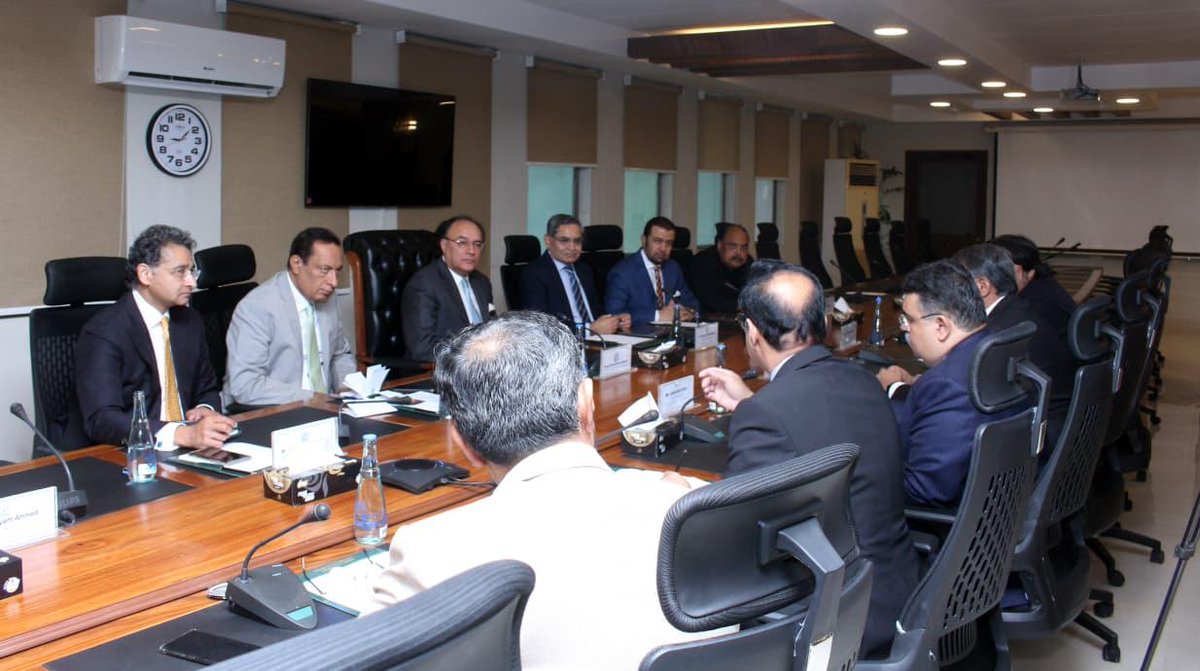
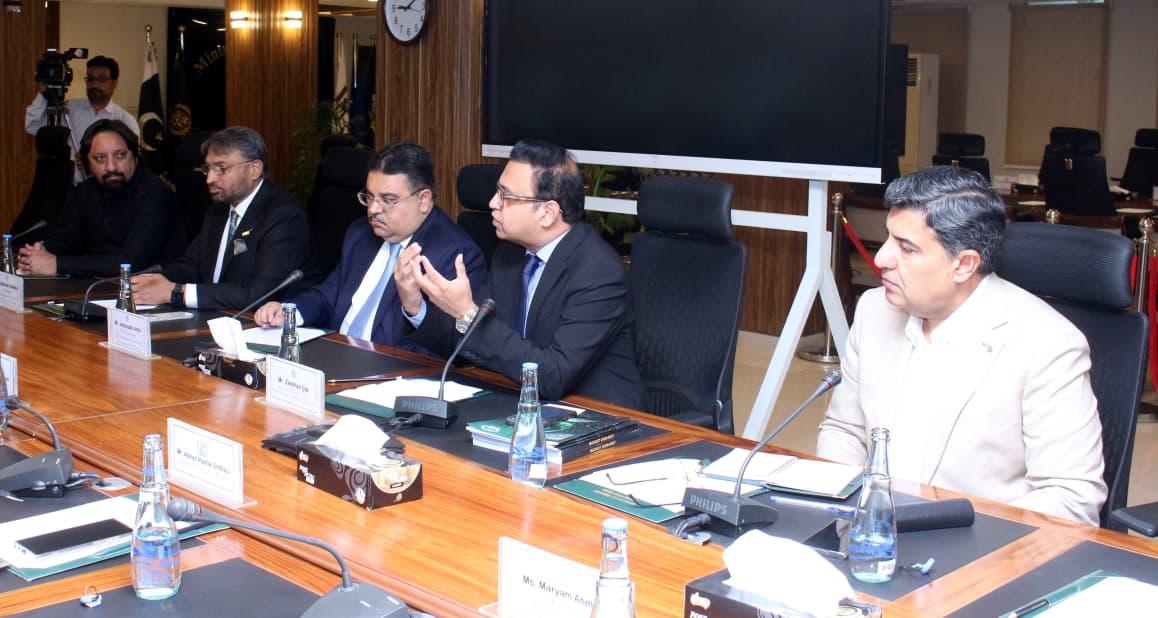
Finance Minister Reaffirms Commitment to Technology-Driven Tax Reforms, in Meeting with ICAP Federal Minister for Finance and Revenue, Senator Muhammad Aurangzeb, held a meeting today at the Finance Division with a delegation of the Institute of Chartered Accountants of Pakistan (ICAP). Welcoming the delegation, the Finance Minister emphasized the importance of continued engagement with professional bodies and industry stakeholders to ensure that economic and taxation policies remain responsive, practical, and aligned with the country’s broader reform objectives. The Finance Minister shared the Government’s ongoing efforts to transform the tax administration system through reforms centered around people, processes, and technology. He underscored the importance of institutional modernization, process simplification, and enhanced automation to improve transparency, reduce unnecessary human intervention, and facilitate taxpayers. In this context, he highlighted the operationalization of the Tax Policy Office under the Finance Division as an important institutional reform aimed at strengthening policy formulation and improving coordination between tax policy and administration. The meeting also covered the growing role of technology and digital systems in strengthening compliance, enforcement, and revenue administration. The Finance Minister noted that AI-led production monitoring and technology-driven oversight mechanisms introduced across various sectors are helping improve documentation, strengthen compliance, and reduce leakages within the system. The delegation presented a range of proposals and recommendations relating to documentation, group taxation structures, export-oriented services, and harmonization of tax treatment across sectors. Discussions also focused on measures aimed at improving competitiveness, facilitating investment, strengthening ease of doing business, and supporting effective revenue mobilization alongside broadening of the tax base. The Finance Minister acknowledged the proposals and recommendations shared by the delegation and noted that these would be carefully reviewed as part of the ongoing budget formulation process. He reiterated the Government’s commitment to building a transparent, technology-driven, and facilitative tax system that supports economic growth, encourages documentation, and strengthens governance and institutional effectiveness. The delegation was led by Mr. Samiullah Siddiqui, President ICAP, and included Mr. Jehanzaib Amin, Vice President ICAP; Mr. Ahmed Raza Mir, Vice President ICAP; and Mr. Zeeshan Ijaz, Council Member ICAP and Chairman Economic Advisory Committee.
Ministry of Finance, Government of Pakistan tweet mediaMinistry of Finance, Government of Pakistan tweet mediaMinistry of Finance, Government of Pakistan tweet mediaMinistry of Finance, Government of Pakistan tweet media
English
1
6
10
1.6K
Ministry of Finance, Government of Pakistan retweetledi
Khurram Schehzad
Khurram Schehzad@kschehzad·
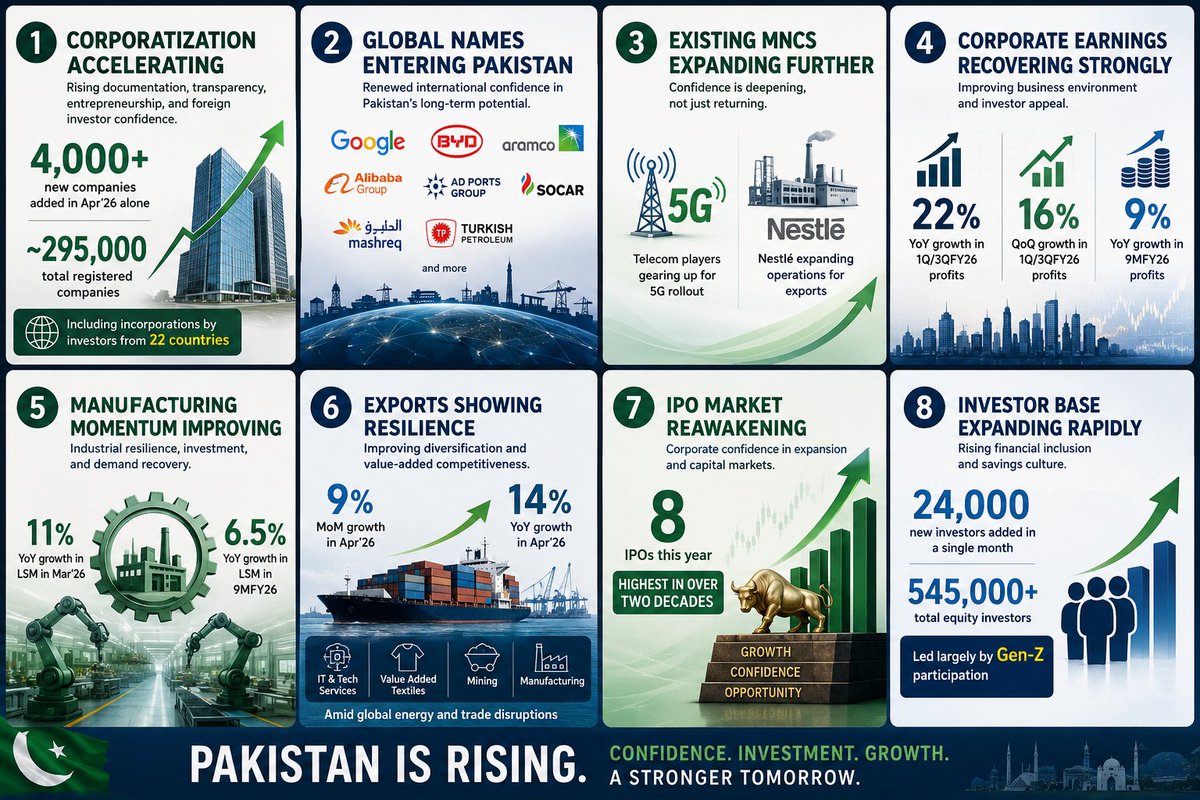
𝗣𝗮𝗸𝗶𝘀𝘁𝗮𝗻 𝗜𝘀 𝗧𝘂𝗿𝗻𝗶𝗻𝗴 𝘁𝗵𝗲 𝗖𝗼𝗿𝗻𝗲𝗿 Let me share some recent factual developments and emerging silver linings that reflect how Pakistan’s story is gradually shifting from stabilization toward expansion. Rising corporatization, renewed multinational interest, improving industrial activity, stronger profitability, resilient exports, and growing investor participation together point toward a more formalized, investment-led, and growth-oriented economy, supported by ongoing structural reforms aimed at long-term sustainability, as recognized by the IMF and other IFIs as well. 𝗞𝗲𝘆 𝗦𝗶𝗴𝗻𝗮𝗹𝘀 𝗗𝗿𝗶𝘃𝗶𝗻𝗴 𝘁𝗵𝗲 𝗣𝗮𝗸𝗶𝘀𝘁𝗮𝗻 𝗦𝘁𝗼𝗿𝘆 𝟭- 𝗖𝗼𝗿𝗽𝗼𝗿𝗮𝘁𝗶𝘇𝗮𝘁𝗶𝗼𝗻 𝗔𝗰𝗰𝗲𝗹𝗲𝗿𝗮𝘁𝗶𝗻𝗴: - Over 4,000 new companies were added in Apr’26 alone, growing into double-digit, taking total registrations close to 295,000, including investors from 22 countries. - Shows: Rising documentation, transparency, entrepreneurship, and foreign investor confidence. 𝟮- 𝗚𝗹𝗼𝗯𝗮𝗹 𝗡𝗮𝗺𝗲𝘀 𝗘𝗻𝘁𝗲𝗿𝗶𝗻𝗴 𝗣𝗮𝗸𝗶𝘀𝘁𝗮𝗻 - While most focus exits, but new entrants include Google, BYD, Aramco, Gunvor, Alibaba Group, AD Ports, US Minerals, Binance and HTX, SOCAR, Mashreq, Raqami, Turkish Petroleum, and many others. - Shows: Renewed international confidence in Pakistan’s long-term potential. 𝟮- 𝗚𝗹𝗼𝗯𝗮𝗹 𝗡𝗮𝗺𝗲𝘀 𝗘𝗻𝘁𝗲𝗿𝗶𝗻𝗴 𝗣𝗮𝗸𝗶𝘀𝘁𝗮𝗻 - Telecom players, e& (Etisalat), Zong (China Mobile) and Jazz (VEON), who bid for half a billion $ auction are preparing for the 5G rollout, while firms like Nestlé continue expanding export-focused operations. - Shows: Confidence is deepening, not just returning. 𝟰- 𝗖𝗼𝗿𝗽𝗼𝗿𝗮𝘁𝗲 𝗘𝗮𝗿𝗻𝗶𝗻𝗴𝘀 𝗥𝗲𝗰𝗼𝘃𝗲𝗿𝗶𝗻𝗴 𝗦𝘁𝗿𝗼𝗻𝗴𝗹𝘆 - Corporate profits rose 22% YoY and 16% QoQ in 1Q/3QFY26, with 9MFY26 earnings up 9% YoY. - Shows: Improving business environment, stability dividends with investor appeal. 𝟱- 𝗠𝗮𝗻𝘂𝗳𝗮𝗰𝘁𝘂𝗿𝗶𝗻𝗴 𝗠𝗼𝗺𝗲𝗻𝘁𝘂𝗺 𝗜𝗺𝗽𝗿𝗼𝘃𝗶𝗻𝗴 - Large Scale Manufacturing grew 11% YoY in Mar’26 and 6.5% YoY in 9MFY26. - Shows: Industrial resilience, investment, and demand recovery. 𝟲- 𝗘𝘅𝗽𝗼𝗿𝘁𝘀 𝗦𝗵𝗼𝘄𝗶𝗻𝗴 𝗥𝗲𝘀𝗶𝗹𝗶𝗲𝗻𝗰𝗲 - Despite global energy and trade disruptions, exports grew 9% MoM and 14% YoY, led by IT, value-added textiles, mining, and manufacturing. - Shows: Improving diversification and value-added competitiveness. 𝟳- 𝗜𝗣𝗢 𝗠𝗮𝗿𝗸𝗲𝘁 𝗥𝗲𝗮𝘄𝗮𝗸𝗲𝗻𝗶𝗻𝗴 - Pakistan has seen 8 IPOs (initial public offerings/company listings to raise money/to expand) this year - the highest in over two decades. - Shows: Corporate confidence in stability, growth and expansion. 𝟴- 𝗜𝗻𝘃𝗲𝘀𝘁𝗼𝗿 𝗕𝗮𝘀𝗲 𝗘𝘅𝗽𝗮𝗻𝗱𝗶𝗻𝗴 𝗥𝗮𝗽𝗶𝗱𝗹𝘆 - A record 24,000 investors were added in a single month, taking the equity investor base above 545,000 (+220k last 2 years), led largely by Gen-Z participation. - Shows: Deepening capital market, rising financial inclusion and savings culture. 𝗕𝗼𝘁𝘁𝗼𝗺𝗹𝗶𝗻𝗲 The signals across Pakistan’s economy are increasingly aligning: more businesses are formalizing, more investors are participating, more global players are entering, and more industries are expanding. Backed by ongoing structural reforms, the foundations of a more resilient, transparent, and investment-driven economy are steadily strengthening. #PakistanRising #EconomicRecovery #InvestorConfidence #GrowthAndReforms #CorporatePakistan #EconomicResilience #ConfidenceInvestmentGrowth @Financegovpk @GovtofPakistan @PakPMO @MoIB_Official
Khurram Schehzad tweet media
English
88
80
154
8.5K
Ministry of Finance, Government of Pakistan retweetledi
Khurram Schehzad
Khurram Schehzad@kschehzad·
𝗭𝗲𝗿𝗼 𝗥𝗲𝗳𝗼𝗿𝗺? 𝗧𝗵𝗮𝘁 𝗠𝗶𝘀𝗹𝗲𝗮𝗱𝗶𝗻𝗴 𝗖𝗹𝗮𝗶𝗺 𝗖𝗼𝗹𝗹𝗮𝗽𝘀𝗲𝘀 𝗨𝗻𝗱𝗲𝗿 𝗙𝗮𝗰𝘁𝘀. Some factions on social media are branding some of the most politically difficult structural reforms undertaken in decades as “zero reform” - a claim that is not just misleading, but completely disconnected from the scale of changes actually underway. Calling this “zero reform” is not criticism - it is simply misleading, selective, and disconnected from the actual policy actions undertaken over the last 2 years. One may debate the pace, sequencing, or eventual success of reforms - that is fair. But to claim that no reforms are taking place ignores some of the most politically difficult structural decisions Pakistan has seen in decades. 𝗔 𝗳𝗲𝘄 𝗲𝘅𝗮𝗺𝗽𝗹𝗲𝘀: - PIA privatized after nearly 2 decades of failed attempts, following First Women Bank, now power DISCOs going through. - Utility Stores, PASSCO, PWD closed down with others such in queue as well. - 54,000 vacant federal posts abolished; ministries/divisions merged and rightsizing underway. - Circular debt growth significantly slowed with Rs 1.2 trillion refinancing underway, Rs 3.7 trillion savings achieved through IPP renegotiations, and multiple inefficient plants terminated. - Power theft and inefficiencies reduced with overall DISCO improvement of around Rs 193 billion, while DISCO privatization process initiated with first EOIs approved. - Competitive Trading Bilateral Contract Market (CTBCM) operationalized — a major structural shift toward a competitive multi-buyer electricity market. - Pension reforms introduced, shifting new entrants toward contributory systems instead of permanently unfunded liabilities. - Separation of tax policy from tax collection initiated. - Nationwide digital invoicing, POS integration, faceless customs, AI-based audit systems and digital enforcement rolled out. - Pakistan’s first comprehensive tariff reform in decades launched to move away from anti-export protectionism toward competitiveness. - Government payments digitization and Digital Pakistan infrastructure now under direct PM-level monitoring. - Independent SOE governance structures and privatization pipelines activated across energy, banking, insurance and infrastructure sectors, while annual SOE losses have materially declined from peak levels. These are not cosmetic announcements. Most were discussed for years, but repeatedly avoided because of the political, institutional, and fiscal cost attached to them. 𝗡𝗼𝘄 𝗼𝗻 𝗱𝗲𝗯𝘁: - Quoting nominal debt growth in isolation - while ignoring the global interest-rate shock, rupee adjustment after years of artificial currency suppression, inherited circular debt pressures, and legacy liabilities - is incomplete analysis at best. The more relevant question is whether sustainability indicators are improving. 𝗔𝗻𝗱 𝘁𝗵𝗲𝘆 𝗮𝗿𝗲: - Fiscal surplus at 0.4% of GDP achieved for the first time in history. - Primary surplus at record levels (~3.2% GDP). - Debt-to-GDP ratio declining from ~75% to ~70% - it never reversed earlier. - Average debt maturity significantly extended. - Early debt repayments of around PKR 4 trillion (~$14bn equivalent) completed - first in history. - Pakistan successfully returned to global capital markets after four years. Similarly on the power sector - yes, circular debt remains a serious structural challenge. But saying “zero reform” while: - renegotiating IPPs, - operationalizing CTBCM, - initiating DISCO privatization, - restructuring NTDC, - auctioning redundant GENCOs, - reducing theft/losses, - and refinancing circular debt liabilities without burdening masses, is simply not factually accurate. And, more importantly... 1/2
English
6
5
11
2K
Ministry of Finance, Government of Pakistan
Finance Minister Senator Muhammad Aurangzeb Highlights Economic Stability, External Sector Gains, and Energy Security Measures Amid Regional Challenges Federal Minister for Finance and Revenue Senator Muhammad Aurangzeb, accompanied by Federal Minister for Petroleum Ali Pervaiz Malik, today addressed a joint press conference to brief the media on the country’s economic performance, external sector developments, and the government’s measures to ensure uninterrupted petroleum supplies amid ongoing regional tensions. Speaking on the occasion, Senator Muhammad Aurangzeb stated that despite the challenging geopolitical environment and the ongoing regional conflict over the past two months, Pakistan’s economy continued to demonstrate resilience and stability. He emphasized that the government’s economic outlook was grounded in factual indicators and improving macroeconomic fundamentals. The Finance Minister informed that Pakistan’s Large-Scale Manufacturing (LSM) sector registered an 11 percent year-on-year growth in April, while cumulative growth during the first nine months of the fiscal year stood at 6.5 percent. He expressed confidence that the country’s GDP growth would approach 4 percent during the current fiscal year, compared to 3.1 percent recorded last year. Highlighting the performance of the external sector, Senator Aurangzeb said exports increased by 9 percent month-on-month and 14 percent year-on-year, driven by strong contributions from value-added textiles, information technology, and other sectors. He noted that the export-led growth reflected the broad-based recovery of the economy. The Finance Minister further stated that workers’ remittances remained strong, with inflows reaching USD 3.5 billion during April after touching USD 3.8 billion in March. He also underscored the growing confidence of overseas Pakistanis in the economy through the Roshan Digital Account (RDA) initiative. He shared that RDA inflows increased significantly from the usual monthly range of USD 180-200 million to USD 260 million in March and further surged to a historic USD 320 million in April. He termed this development a “strong vote of confidence” by overseas Pakistanis in the country’s economic direction. Senator Aurangzeb also highlighted Pakistan’s renewed access to international capital markets after four years, stating that the country successfully raised USD 750 million through Eurobonds despite the prevailing regional conflict. He further announced that Pakistan was preparing to access Chinese capital markets through a Panda Bond issuance next week, which would mark another milestone in diversifying external financing avenues. Discussing foreign exchange reserves, the Finance Minister expressed optimism that Pakistan’s reserves would reach approximately USD 15 billion by the end of June, equivalent to three months of import cover. He stated that the government’s broader objective behind macroeconomic stability was to facilitate industrial growth, ensure opening of Letters of Credit (LCs), support profit and dividend repatriation, and create employment opportunities across the country. Commending the efforts of the Ministry of Petroleum, Senator Aurangzeb praised Federal Minister Ali Pervaiz Malik and his team for ensuring uninterrupted petroleum supplies and maintaining stability in the supply chain despite extraordinary regional circumstances. He noted that the government, in coordination with the National Crisis Management Cell (NCMC), had worked tirelessly to manage logistics and secure supply routes through close engagement with international partners and embassies. He particularly acknowledged the leadership role played by the Deputy Prime Minister and Foreign Minister in coordinating these efforts. The Finance Minister observed that unlike several countries in the region facing shortages, supply disruptions, and law-and-order challenges, Pakistan successfully maintained normalcy and uninterrupted fuel availability. He attributed this achievement to proactive planning and coordinated efforts by the government institutions. Referring to recent fuel price adjustments, Senator Aurangzeb reiterated the government’s commitment to protecting vulnerable segments of society. He explained that while international price fluctuations necessitated fuel price transmission, the government introduced targeted subsidies for motorcyclists, public transport, and small farmers in consultation with provincial governments. He announced that these targeted subsidies had been extended into the third month under the direction of the Prime Minister to continue providing relief to economically vulnerable groups. The Finance Minister also urged the public to exercise restraint and conserve fuel consumption, noting that Pakistan’s oil import bill had increased by over USD 1 billion between March and April. He stressed that while managing the fiscal side was important, maintaining external account stability remained equally critical. Senator Aurangzeb further reaffirmed Pakistan’s commitment to honoring all international financial obligations and maintaining credibility with bilateral and multilateral partners. He emphasized that the government remained committed to fulfilling all external payment obligations responsibly and on time. Concluding his remarks, the Finance Minister appreciated the leadership of Prime Minister Muhammad Shehbaz Sharif, Field Marshal Syed Asim Munir, Deputy Prime Minister Ishaq Dar, and all relevant institutions for their tireless efforts to maintain regional peace and economic stability. He warned that the economic consequences of the ongoing regional conflict could have broader second- and third-order impacts on inflation, GDP growth, remittances, and exports, stressing the need for continued vigilance and coordinated policy actions. Federal Minister for Petroleum Ali Pervaiz Malik, speaking on the occasion, reiterated the government’s resolve to shield the people from the adverse effects of unprecedented global oil price volatility. He stated that despite international oil benchmarks reaching historically high levels, the government had made every effort to protect consumers and ensure uninterrupted fuel supplies across the country. The Petroleum Minister highlighted Pakistan’s successful management of petroleum logistics during the regional crisis, noting that the country remained among the few nations able to maintain stable fuel supplies despite disruptions in key international shipping routes, including the Strait of Hormuz. He acknowledged the support and cooperation extended by friendly countries, particularly Saudi Arabia and Kuwait, in facilitating petroleum supplies to Pakistan during the challenging period. Both ministers reaffirmed the government’s commitment to economic stability, energy security, and public relief measures, while expressing hope for the early restoration of peace and stability in the region.
English
26
4
12
13K
Ministry of Finance, Government of Pakistan retweetledi
ᴏꜰꜰɪᴄᴇ ᴏꜰ ᴛʜᴇ ᴄʜᴀɪʀᴍᴀɴ ꜱᴇɴᴀᴛᴇ, ᴘᴀᴋɪꜱᴛᴀɴ
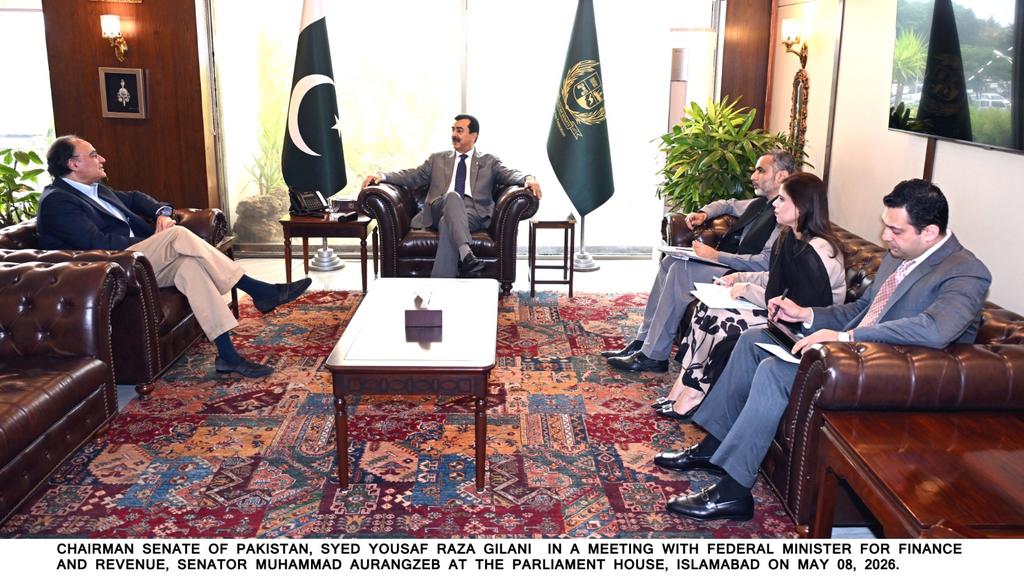
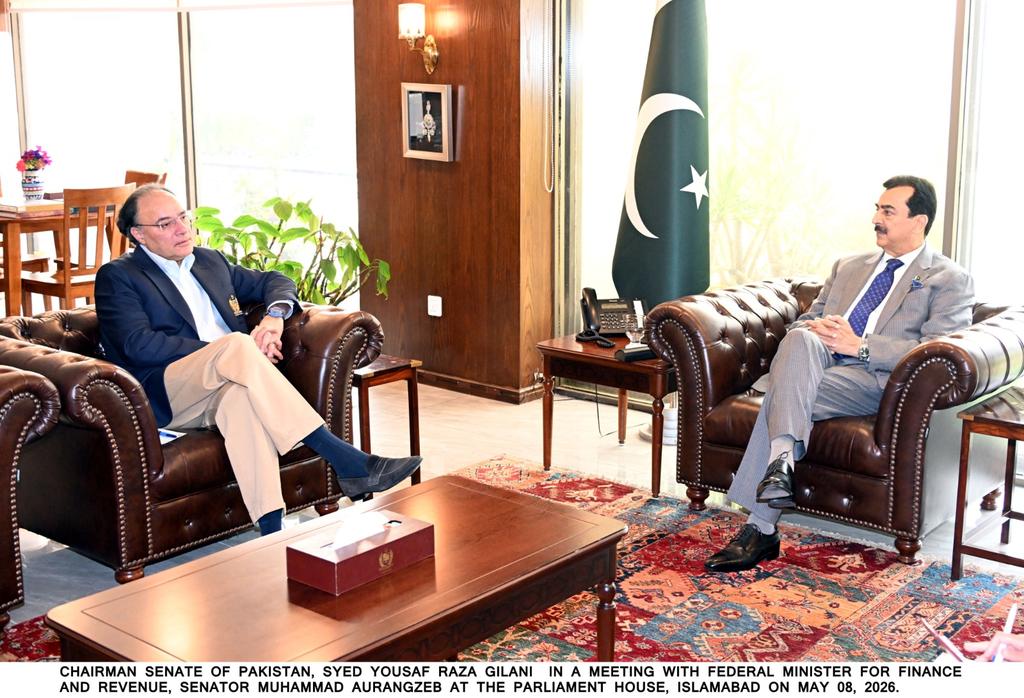
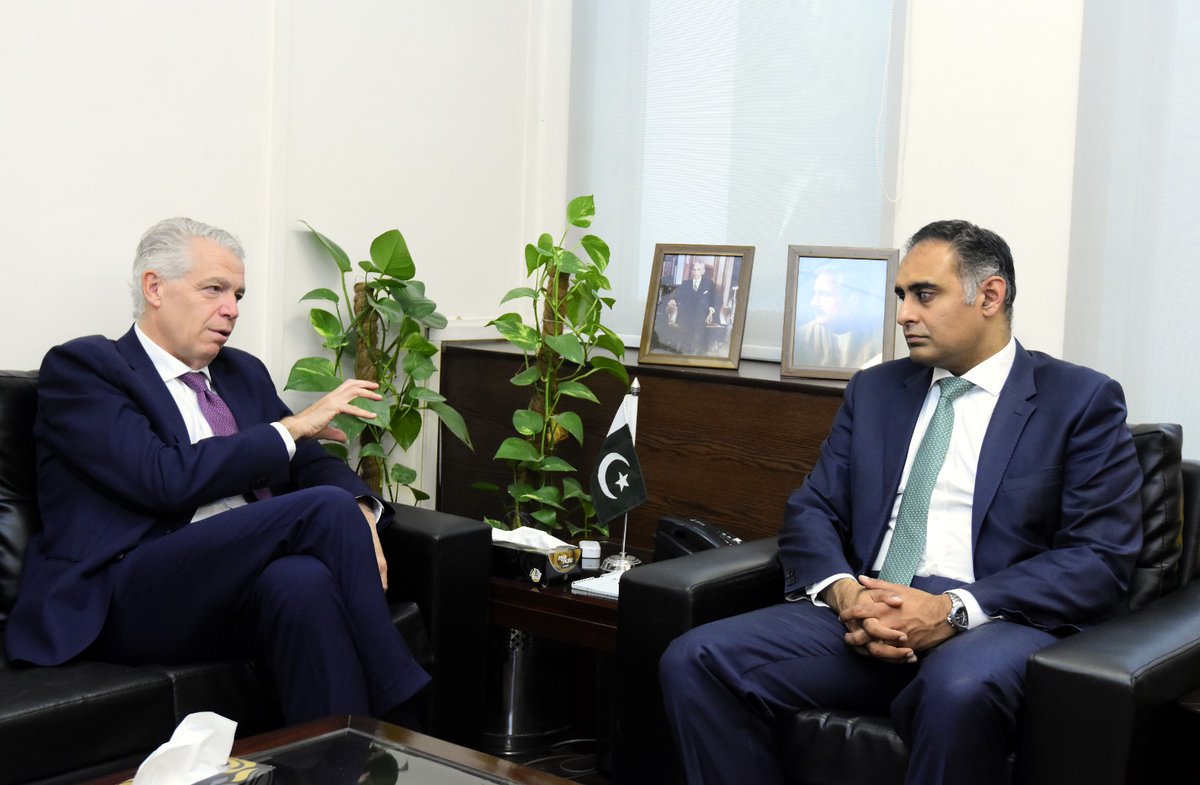
🇵🇰 Chairman Senate Syed Yousaf Raza Gilani met Finance Minister Muhammad Aurangzeb at Parliament House; discuss austerity measures, institutional reforms, financial discipline and economic stabilization. Both leaders emphasized transparency, responsible governance and coordinated efforts for sustainable economic growth. @GovtofPakistan @ForeignOfficePk @MediaCellPPP @MoIB_Official @SenatePakistan @YRGillani @PTVNewsOfficial #SenateOfPakistan #YousafRazaGilani #MuhammadAurangzeb #EconomicReforms #FiscalDiscipline
ᴏꜰꜰɪᴄᴇ ᴏꜰ ᴛʜᴇ ᴄʜᴀɪʀᴍᴀɴ ꜱᴇɴᴀᴛᴇ, ᴘᴀᴋɪꜱᴛᴀɴ tweet mediaᴏꜰꜰɪᴄᴇ ᴏꜰ ᴛʜᴇ ᴄʜᴀɪʀᴍᴀɴ ꜱᴇɴᴀᴛᴇ, ᴘᴀᴋɪꜱᴛᴀɴ tweet media
English
5
12
34
4.2K
Ministry of Finance, Government of Pakistan
“Pakistan’s strong program implementation under the EFF arrangement has continued, which has supported macroeconomic stability and the rebuilding of fiscal and foreign exchange buffers. GDP growth accelerated, inflation remained contained, and the current account was broadly balanced in the first nine months of FY26." IMF Executive Board Completes Third Review of the Extended Arrangement under the Extended Fund Facility and Second Review of the Arrangement under the Resilience and Sustainability Facility with Pakistan share.google/MBo9IvYhhUfSUC…
English
2
2
9
1.7K
Ministry of Finance, Government of Pakistan
Federal Minister for Finance and Revenue, Senator Muhammad Aurangzeb, delivered a keynote address at the Breathe Pakistan International Climate Change Conference 2026, organized by DawnMedia, emphasizing the urgent need for practical measures to tackle climate change and accelerate the transition towards a green economy. Finance Minister highlighted the devastating economic impact of the 2022 and 2025 floods, stressed the importance of proactive preparedness for future climate challenges, and underscored the government’s commitment to sustainable development and climate resilience.
English
2
4
10
1.3K
Ministry of Finance, Government of Pakistan
Federal Minister for Finance and Revenue, Senator Muhammad Aurangzeb addresses the signing ceremony of the Capital Market Development Fund, reaffirming the government’s commitment to economic stability, sustainable growth, and financial sector reforms. Finance Minister emphasized the importance of strengthening capital markets, promoting local investment, achieving self-reliance, and implementing key energy sector reforms, while noting that Pakistan’s economy continues to move in a positive direction despite regional and economic challenges.
English
1
4
12
1.4K
Ministry of Finance, Government of Pakistan
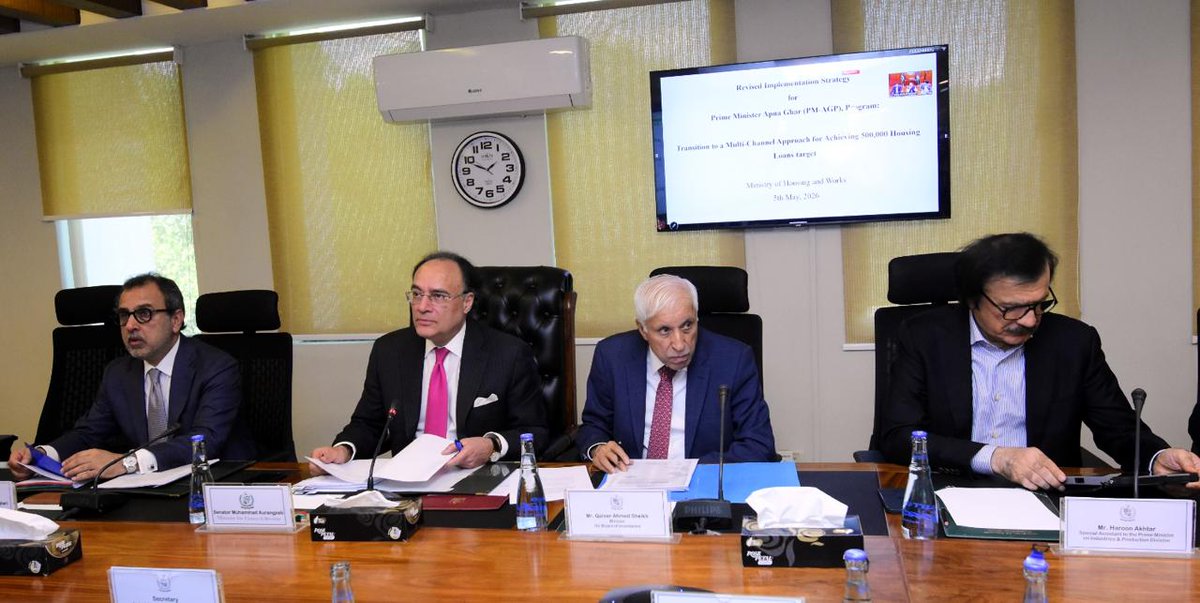
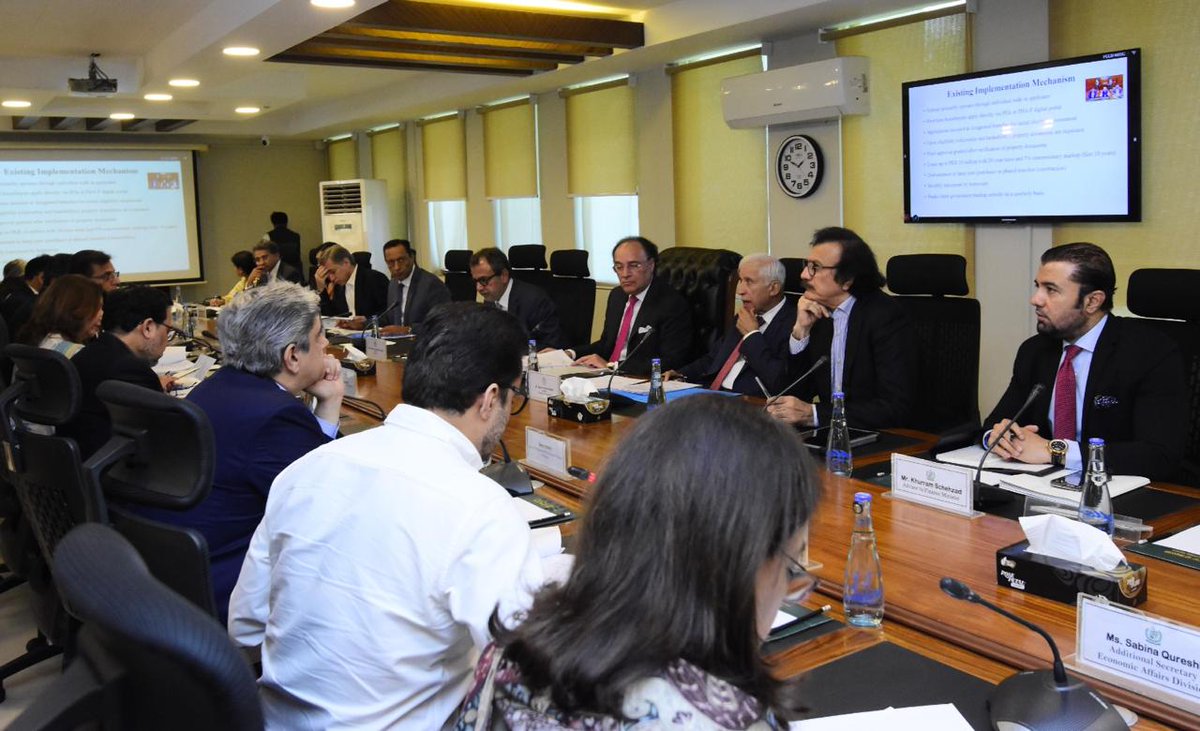
Finance Minister Chairs ECC Meeting, Approves Key Sectoral Initiatives and Technical Supplementary Grants The Economic Coordination Committee (ECC) of the Cabinet met today at the Finance Division under the chairmanship of the Federal Minister for Finance and Revenue, Senator Muhammad Aurangzeb. The ECC approved a summary submitted by the Ministry of Housing & Works to scale up the housing finance outreach for the Prime Minister Apna Ghar (PM-APG) Program. The revised framework includes institutional financing, public-private partnerships, inclusion of overseas Pakistanis, and participation of non-banking financial institutions to support the achievement of the program’s targets. The ECC also approved a summary submitted by the Federal Education and Professional Training Division seeking a Technical Supplementary Grant (TSG) of Rs. 100 million for the project titled “Construction of Faiz Ahmad Faiz Complex, Narowal.” The Committee further approved another summary from the same Division seeking a TSG of Rs. 350 million for Danish School Kuri, Islamabad, to meet operational requirements and support essential expenditures following commencement of academic activities. The Committee also approved a summary submitted by the National Heritage and Culture Division seeking a TSG of Rs. 59.624 million to meet expenditures incurred on Independence Day/Marqa-e-Haq Celebrations 2025. The ECC approved a summary submitted by the Industries and Production Division regarding the rollout of the second phase of the Pakistan Accelerated Vehicle Electrification (PAVE) Program under the NEV Policy 2025–30. The Committee approved proposed adjustments to enhance program efficiency and uptake, including improved verification processes, and expanded access, while emphasizing the importance of strengthened third-party verification arrangements. The ECC further approved a summary submitted by the Interior and Narcotics Control Division seeking a TSG of Rs. 2,500 million for Directorate General Immigration & Passports (IMPASS) during FY 2025–26 to meet operational requirements, including pay and allowances, production consumables, and outstanding liabilities. The ECC also considered and approved a summary submitted by the Petroleum Division regarding allocation and supply of gas to National Steel Complex Limited (NSCL) for revival of its operations. The Committee allowed gas supply for process requirements and captive power generation at applicable tariffs, subject to availability of gas. The ECC further directed that uniform policy should be adopted by the Petroleum Division in terms of relevant forum for such approvals. The Committee also approved a summary submitted by the Power Division regarding uniform application of Use of System Charges (UoSC) across all DISCOs, including K-Electric, to support a level playing field under the Competitive Trading Bilateral Contract Market (CTBCM). The ECC approved the proposed framework with directions that charges be applied uniformly to all wheeling consumers. The meeting was attended by Federal Minister for Investment Mr. Qaiser Ahmed Sheikh, Federal Minister for Power Sardar Awais Ahmed Khan Leghari, Federal Minister for National Food Security and Research Mr. Rana Tanveer Hussain (virtually), Special Assistant to the Prime Minister on Industries and Production Mr. Haroon Akhtar Khan, along with federal secretaries and senior officials from the relevant ministries, divisions, and regulatory authorities.
Ministry of Finance, Government of Pakistan tweet mediaMinistry of Finance, Government of Pakistan tweet mediaMinistry of Finance, Government of Pakistan tweet mediaMinistry of Finance, Government of Pakistan tweet media
English
2
3
9
1.4K
Ministry of Finance, Government of Pakistan
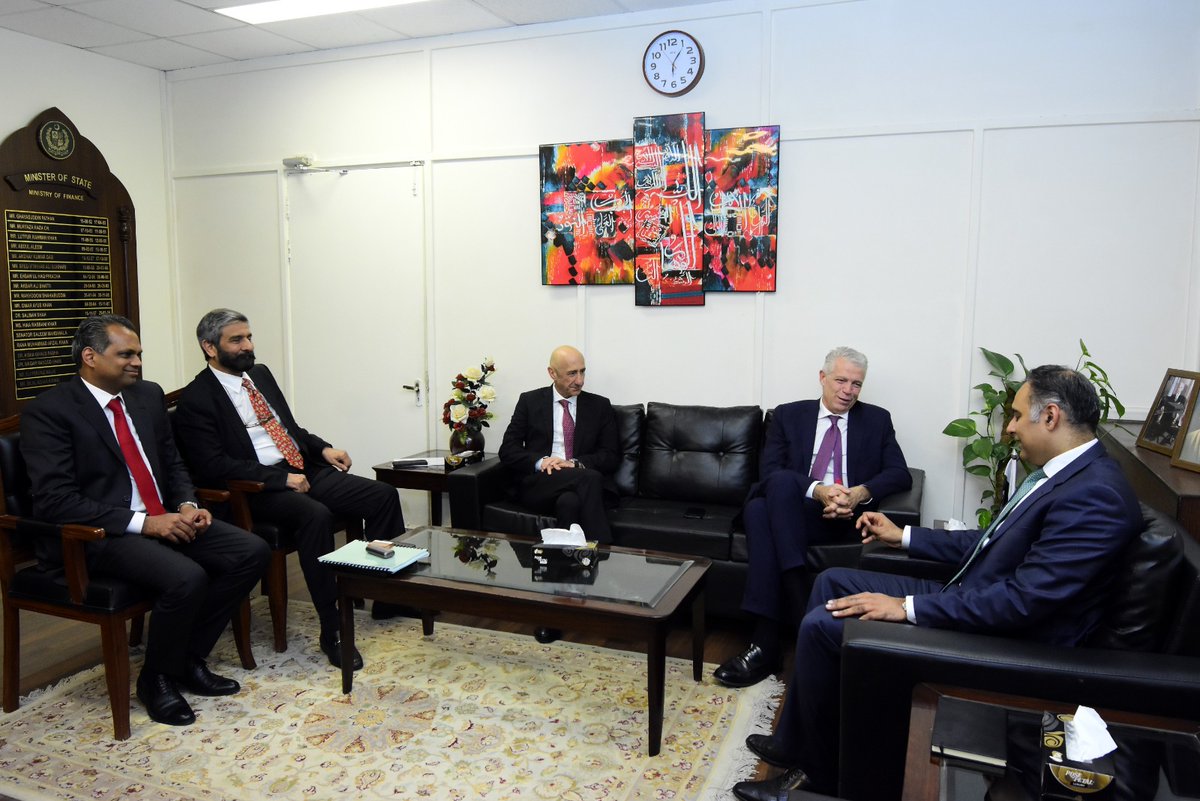
Minister of State for Finance and Revenue Bilal Azhar Kayani Holds Consultative Meeting with Senior Philip Morris International Delegation A high-level delegation from Philip Morris International (PMI) called on Minister of State for Finance and Revenue, Mr. Bilal Azhar Kayani at the Ministry of Finance to discuss the evolving economic landscape and the company’s role in the national industrial sector. The delegation, led by President CIS & Central Asia Mr. Marco Mariotti, provided a comprehensive briefing on the organization’s substantial economic footprint and its contributions to Pakistan’s export and tax base. The dialogue focused on the broader scope of economic cooperation and the necessity of maintaining a stable fiscal environment for large-scale international investors. Both parties discussed the importance of addressing sector-specific challenges to ensure the sustainability of national revenue and the continued viability of legitimate commercial operations. The delegation reaffirmed its support for government strategies aimed at strengthening market regulations and curbing informal trade practices. Minister Bilal Azhar Kayani emphasized the government’s commitment to fostering a business-friendly climate that encourages foreign direct investment (FDI) and ensures a level playing field for all industrial stakeholders. He noted that the administration’s focus remains on stabilizing the economy through robust enforcement of trade regulations and the implementation of sustainable fiscal policies. The meeting concluded with a mutual resolve to maintain an active partnership. This ongoing engagement is expected to facilitate a more predictable regulatory environment, ultimately contributing to the long-term economic stability and growth of Pakistan.
Ministry of Finance, Government of Pakistan tweet mediaMinistry of Finance, Government of Pakistan tweet mediaMinistry of Finance, Government of Pakistan tweet mediaMinistry of Finance, Government of Pakistan tweet media
English
1
5
15
1.9K
Ministry of Finance, Government of Pakistan
Minister of State Bilal Azhar Kayani Chairs Consultative Meeting with Nestlé Pakistan Minister of State for Finance and Revenue, Mr. Bilal Azhar Kayani, chaired a consultative meeting with a delegation from Nestlé Pakistan, led by its Chief Executive Officer, at the Ministry of Finance today. Senior officials of the Ministry, including representatives from the Tax Policy Office, also attended the meeting. The meeting was part of the government’s ongoing stakeholder engagement process in the lead-up to the Federal Budget FY 2026–27. Discussions focused on the broader taxation framework, regulatory environment, and measures aimed at improving efficiency, transparency, and ease of doing business in the consumer goods sector. The potential impact of policy reforms on market functioning, documentation, and consumer welfare also came under consideration. The delegation shared its perspective on key sectoral challenges and offered input on policy approaches that could support improved compliance, streamline tax administration, and enhance transparency in pricing mechanisms. The discussion highlighted the importance of aligning fiscal measures with the objectives of strengthening revenue mobilisation while ensuring a conducive environment for sustainable business growth and consumer protection. The Minister of State appreciated the constructive engagement and reaffirmed the government’s commitment to a consultative and inclusive approach to policy formulation. He assured the participants that their input would be carefully examined in the context of the upcoming budget, in line with the government’s broader fiscal and economic priorities. The meeting concluded with a shared understanding on the importance of continued dialogue between the government and industry stakeholders to support informed policymaking and long-term economic stability.
Ministry of Finance, Government of Pakistan tweet mediaMinistry of Finance, Government of Pakistan tweet media
English
0
1
9
1.4K
Ministry of Finance, Government of Pakistan
Minister of State Bilal Azhar Kayani Meets Delegation from Healthcare Devices Association of Pakistan (HDAP) Minister of State for Railways and Finance & Revenue, Mr. Bilal Azhar Kayani, held a consultative meeting with a delegation of the Healthcare Devices Association of Pakistan (HDAP) at the Ministry of Finance today. The meeting formed part of the government’s ongoing stakeholder consultations in the lead-up to the Federal Budget FY 2026–27. Discussions focused on matters relating to the healthcare devices sector, including the overall policy environment, taxation framework, and measures aimed at improving the availability and affordability of healthcare services, as well as facilitating ease of doing business. The HDAP delegation shared its perspective on the challenges faced by the sector and outlined proposals aimed at supporting sustainable growth, enhancing efficiency, and ensuring better healthcare outcomes. The discussion also touched upon the broader implications of policy measures for public and private healthcare institutions, as well as their potential impact on patients and service delivery. The Minister of State appreciated the constructive engagement and underscored the government’s commitment to a consultative and inclusive budget-making process. He assured the delegation that their input would be carefully considered in the formulation of the upcoming budget, in line with the government’s objective of maintaining fiscal balance while promoting sectoral development and public welfare. The meeting was attended by senior officials of the Ministry of Finance, including the Director General, Tax Policy Office.
English
0
1
3
571