

Aron Meystedt | ValidatorAI.com | Symbolics.com
1.5K posts

Aron Meystedt | ValidatorAI.com | Symbolics.com
@FirstDomain
The front door to early stage founders: ValidatorAI Owner of the first .com ever registered on the Internet: Symbolics Love ideas, collecting, domains.
Orange County, CA Katılım Eylül 2009
423 Takip Edilen2.2K Takipçiler

@lscec22 Amelia
or
Nora
or
Hazel
Română

Estou procurando um nome feminino absurdamente antigo. Pense em um nome tipo bisavó. Muito antigo e raro
Português
@bigbabolat the threat of force
English

Why are Americans still paying taxes? Give me one good reason why every real American in this nation doesn't stop paying taxes right now.
English

@marconoiz the data you collect and analyze
English

Aron Meystedt | ValidatorAI.com | Symbolics.com retweetledi

The entitlement that people have never ceases to amaze me. I suppose he also wants to come to the US and make the same claim on the land and lots I have been acquiring for two decades. We pay the renewal for the domains and the taxes for the lots.
Can't help that you recently decided you want to build something. Go build it on a .ws or a domain that is available
David@dayonefoundry
Website domains need a system where if you don’t build anything for 5 years it automatically goes up for auction. Too many primo domains been squatted on since 1995
English
@BIG_PARMENIDES I'm 46. Had my youngest right around 40.
It's all good.
It's not too late.
Time for my nap.
English

I regret not having kids.
I’m finally ready to admit that to myself.
I mean, I guess I still could but I’m not sure how fair that’d be to do to a child since I’m in my 40’s.
English


@danielgothits Canvas is super cheap and good.
English

Aron Meystedt | ValidatorAI.com | Symbolics.com retweetledi

The very first .com ever registered was Symbolics.соm in 1985. Four decades later it's still online, now owned by domain collector Aron Meystedt, @FirstDomain.
There's a specific feeling to registering your own first domain. A name, a blank page, and the sense that something was about to start.
What was your first domain, and is it still alive or long gone?
English
@ppcbz that's a good one!
MedicalSoftware.com is mine
English

What’s your best health related domain name?
I’ll start…
HealthScore.com
English
@ysolanky @Escrow_com congrats!!! awesome sale.
English

BOOM!! 💥Completed a $3M domain acquisition for a client. (The name is confidential, so please don't ask)
This deal took months of follow-ups, persistence, and staying in the game. At one point it was dead.
Today, it's closed.
A reminder that in domain acquisitions, persistence pays. Forever grateful to the Domain God🙏
#domains #domainbroker

English
I just was shown an epic article about domain names, provenance, digital preservation and Symbolics.com.
Written by a Digital Marketing Agency in Solvakia.
Check it out here:
webiano.digital/symbolics-com-…
This part stood out to me about provenance:
This is one reason Symbolics.com feels more relevant now than it might have felt in 2009. The internet has become obsessed with provenance. Screenshots, usernames, early NFTs, rare handles, old forum accounts, founding documents, first posts, early commits, domain records, and archive links are all treated as proof that something happened before the crowd arrived. People now understand that digital objects can carry history, status, and scarcity even when they are easy to copy visually. Symbolics.com is a cleaner case than most because it is not pretending scarcity exists inside an artificially constrained file. The scarcity comes from the public sequence of domain registration. There is no second first dot com.

English
@SenWarren Jesus the answer is always "give the government more money" so we can F it away
English
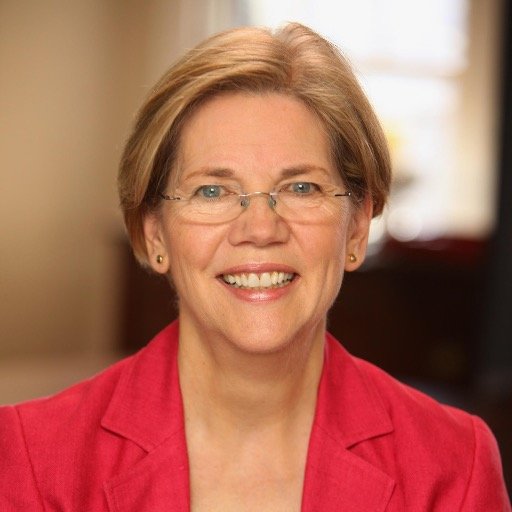
Elon Musk sees a future where AI replaces HALF of all jobs.
If he’s right, our country’s wealth could get sucked up by a handful of billionaires while workers get left behind.
We need to tax AI so Americans share in its growth—and Big Tech pays for the disruption it causes.
English
@SenSanders Yes, the problem is not the government completely robbing the account.
Hey everyone, look over here! Elon is the problem.
English

Today, Elon Musk, a trillionaire, pays the same amount into Social Security as someone making $184,500.
If we end that absurdity and lift the cap on taxable income, we can make Social Security solvent for 75 years and expand benefits by $2,400. My Social Security bill does that.
English

Name one game from 20+ years ago that's still better than modern games.
I'll wait.
English
No offense. Hate this take.
Do all the things you want him to do... do it yourself, on a scale you can afford.
Are you feeding and sheltering the homeless with your extra savings?
I get it, $1T means you can fully solve problems.
But everyone thinks they will be magically benevolent once they hit a figure.
They find at $1M, they don't turn generous.
So maybe at $1B or $1T they would be.
English

I really don’t understand true greed. If I was worth $1 trillion, you’d have to physically stop me from solving as many of the world’s problems as possible.
Everyone would have a home, food on the table, proper healthcare, happiness.
I just don’t get it.
English