Adam Schmitt

476 posts

Adam Schmitt banner
Adam Schmitt

Adam Schmitt

@FirstWizardZed

Broadcom Knight 🛡 | VCF 9 + VKS | Dell CyberRecovery certified Architect enterprise infra where Broadcom/VMware meets reality Weekly infra signal 👇

Katılım Ağustos 2012
142 Takip Edilen57 Takipçiler
Sabitlenmiş Tweet
Adam Schmitt
Adam Schmitt@FirstWizardZed·
I architect enterprise infrastructure where Broadcom, and Dell Data Protection meet reality. #BroadcomKnight & #CyberRecovery certified Specializing in VKS & large-scale data protection. I'm Adam. Follow for more weekly breakdowns on VCF9, VKS, and enterprise Data Protection.
English

0
0
0
229
Adam Schmitt
Adam Schmitt@FirstWizardZed·
The multi-agent orchestration problem scales faster than most teams expect. When you’re running agentic workloads inside VCF with VKS, the infrastructure conversation shifts from “how do we deploy agents” to “how do we govern what they can access and what they can do.” That’s the design question nobody is documenting yet.
English
0
0
0
7
William Lam
William Lam@lamw·
I think I need a Multi-Agentic Director … I’m losing track of my agents 🤪
English
4
1
4
581
Adam Schmitt
Adam Schmitt@FirstWizardZed·
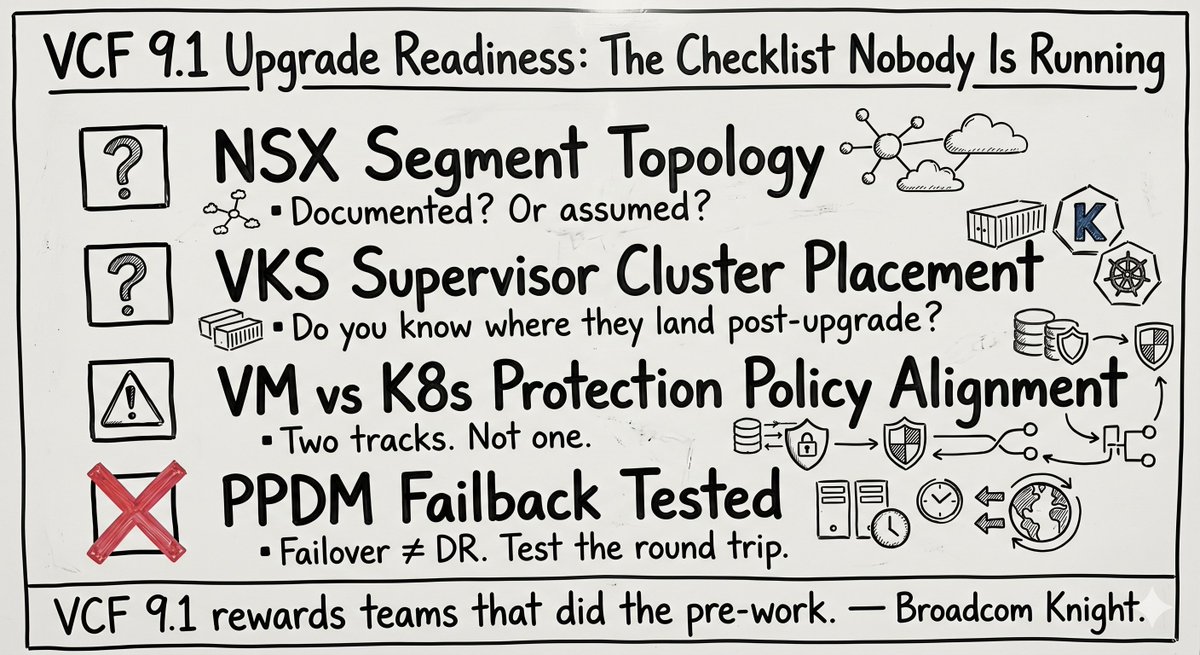
Everyone is asking: "Should we upgrade to VCF 9.1?" Wrong question. The right question is: "Have we done the work that makes the upgrade safe?" Most teams haven't. Here's the checklist nobody is talking about: — Is your NSX segment topology documented or assumed? — Do you know where your VKS supervisor clusters will land post-upgrade? — Have you audited VM vs K8s protection policy alignment — or just assumed they'll migrate? — Has anyone actually tested your PPDM failback, not just failover? VCF 9.1 is a great release. It rewards teams that did the pre-work. It exposes the ones that didn't. Broadcom Knight certified. Do the pre-work. #VCF91 #VMware #BroadcomKnight #EnterpriseIT
Adam Schmitt tweet media
English
0
0
1
52
Adam Schmitt
Adam Schmitt@FirstWizardZed·
Native S3 compatible object storage in vSAN inside VCF 9.1 is the capability that makes on-prem object storage a first-class workload domain conversation. Teams running AI inference pipelines with large model artifact stores have been waiting for this — pulling from S3-compatible endpoints without leaving the VCF platform removes a significant architectural compromise. Good addition to the stack Pete.
English
0
0
0
9
Adam Schmitt
Adam Schmitt@FirstWizardZed·
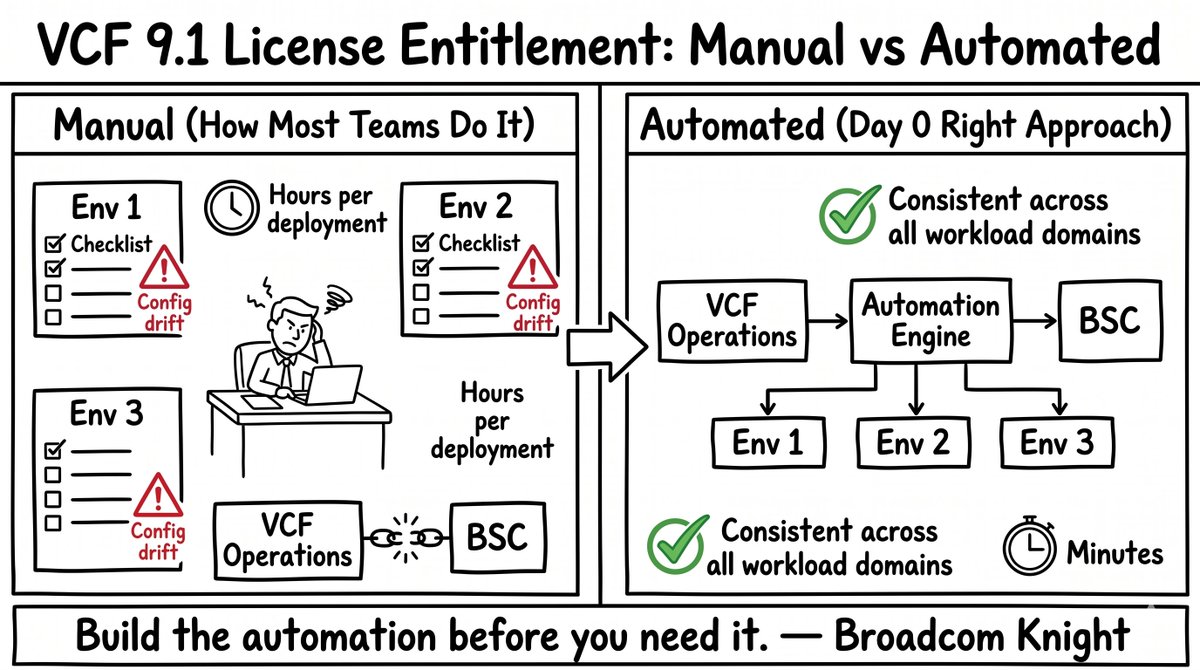
License config automation between VCF Operations and BSC is one of those operational gaps that feels small until you’re managing multiple workload domains. Manual config per environment is how you end up with drift that takes hours to diagnose at 2am. Automating this on Day 0 should be in every VCF 9.1 runbook.
English
0
0
0
26
William Lam
William Lam@lamw·
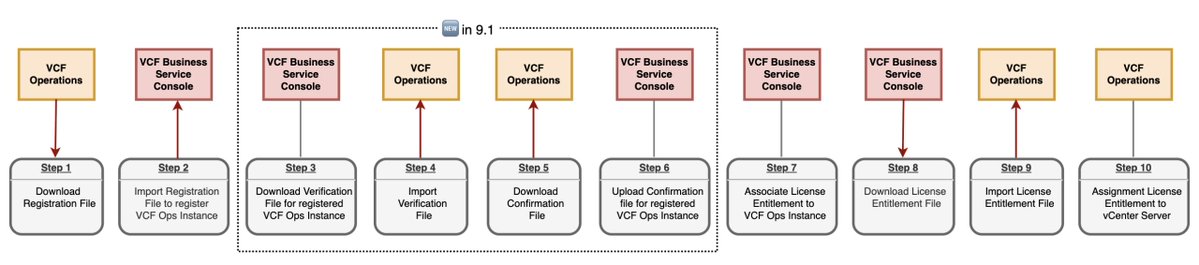
[🆕] - VCF 9.1 - Automating New License Entitlement Workflow between VCF Operations & VCF Business Service Console (BSC) williamlam.com/2026/05/vcf-9-… 🪪License config via VCF Ops/BSC UI can easily several minutes if not MORE for single env, scale w/ease using Automation! ⚙️ #VCF91
William Lam tweet media
English
1
2
11
681
Adam Schmitt
Adam Schmitt@FirstWizardZed·
@lamw Workstation Pro 26H1 alongside VCF 9.1 is a solid combination for nested lab work. The performance and visibility improvements directly impact how quickly you can spin up and validate VCF 9.1 workload domain configs before pushing to production. Good timing on this release.
English
0
0
1
40
Adam Schmitt
Adam Schmitt@FirstWizardZed·
Manual license entitlement workflows in VCF 9.1 are a tax on your ops team. Most enterprises are still doing this by hand across multiple environments. Here's why that breaks down fast at scale: — Each workload domain requires its own license config — VCF Operations and BSC don't sync automatically without automation — Config drift between environments compounds with every new deployment The teams that automate this on Day 0 don't feel the pain. The ones that skip it are filing support tickets by Month 3. Broadcom Knight certified. Build the automation before you need it. #VCF91 #VMware #BroadcomKnight #EnterpriseIT #VCFOps
Adam Schmitt tweet media
English
0
0
0
17
Adam Schmitt
Adam Schmitt@FirstWizardZed·
The Revert, Clone, Replicate, Restore capabilities in vSAN VCF 9.1 are the missing pieces that make data protection a first-class workload domain conversation. Paired with Dell PPDM CyberRecovery, the air-gap story for vSAN workloads inside VCF gets significantly more complete. This is the protection stack I keep recommending to enterprise teams asking about ransomware recovery on-prem.
English
0
0
1
20
Adam Schmitt
Adam Schmitt@FirstWizardZed·
The Shared VMDK expansion story in VCF 9.1 doesn’t get top billing but changes real design decisions for clustered application workloads. For teams running HA-aware applications inside VCF workload domains — expanding without downtime removes one of the last friction points that made on-prem clustered apps harder to justify than cloud-native alternatives. Good writeup Pete.
English
0
0
0
32
Adam Schmitt
Adam Schmitt@FirstWizardZed·
The ESX repurposing question is one of the most consequential decisions enterprise teams are making under Broadcom licensing pressure right now. The TCO math shifts significantly depending on how much of your existing ESX estate transitions to vSAN nodes — and the workload domain design decisions that follow aren’t trivial. Survey completed. Worth 5 minutes of anyone’s time.
English
0
1
2
1.8K
Duncan Epping
Duncan Epping@DuncanYB·
We are looking for feedback on: Repurposing ESX certified servers for vSAN - forms.gle/Z911Qz4y9uZASX…. It takes a few minutes to fill out! Please take the time!
English
1
3
3
672
Adam Schmitt
Adam Schmitt@FirstWizardZed·
Hot Expand for Shared VMDKs without downtime changes the design conversation for clustered applications on vSAN inside VCF workload domains. SQL Always-On and Oracle RAC configurations have always had painful VMDK expansion paths in production. This removes that constraint. The "we can't expand without a maintenance window" objection just went away.
English
0
0
1
42
Adam Schmitt
Adam Schmitt@FirstWizardZed·
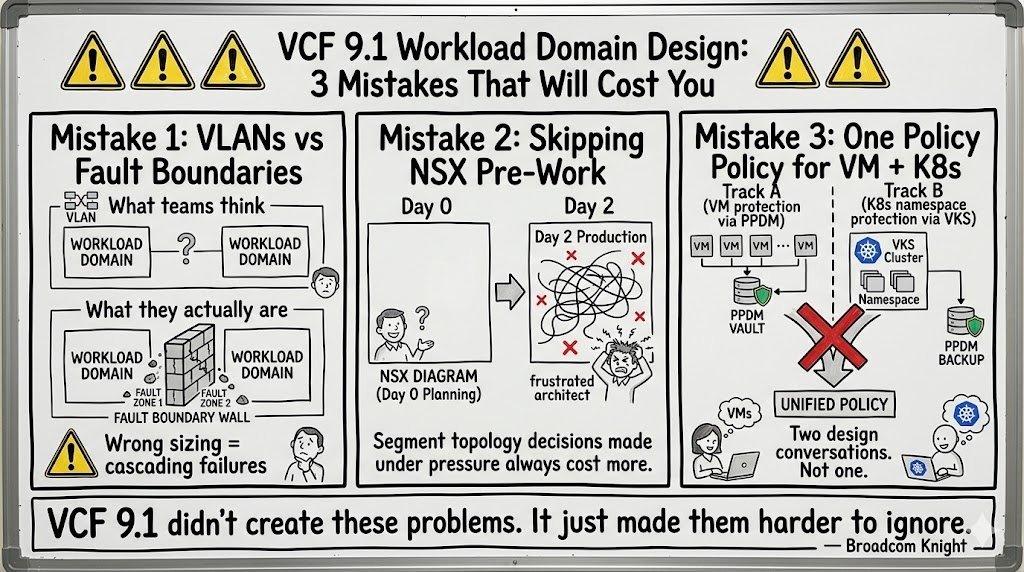
VCF 9.1 is a great platform. It's also merciless at exposing every workload domain decision you got wrong in 9.0. The three design mistakes I keep seeing in the field: — Treating workload domains like VLANs. They're not. They're fault boundaries. Size them accordingly. — Skipping the NSX pre-work. Nobody documents their segment topology before Day 0. Everyone regrets it by Day 2. — Conflating VM protection and K8s workload protection in the same policy track. Two different conversations. Always have been. VCF 9.1 didn't create these problems. It just made them harder to ignore. Broadcom Knight certified. Learned most of these the hard way. #VCF91 #VMware #BroadcomKnight #EnterpriseIT #VKS
Adam Schmitt tweet media
English
0
0
0
29
Adam Schmitt
Adam Schmitt@FirstWizardZed·
The timing on this is perfect. With AI inference workloads moving on-prem, memory tiering in VCF 9.1 becomes a core sizing conversation — not just a storage optimization footnote. Being able to right-size active memory pools for GPU-attached inference workloads without throwing DDR5 at the problem changes the economics of private AI deployments significantly.
English
0
0
0
3
Adam Schmitt
Adam Schmitt@FirstWizardZed·
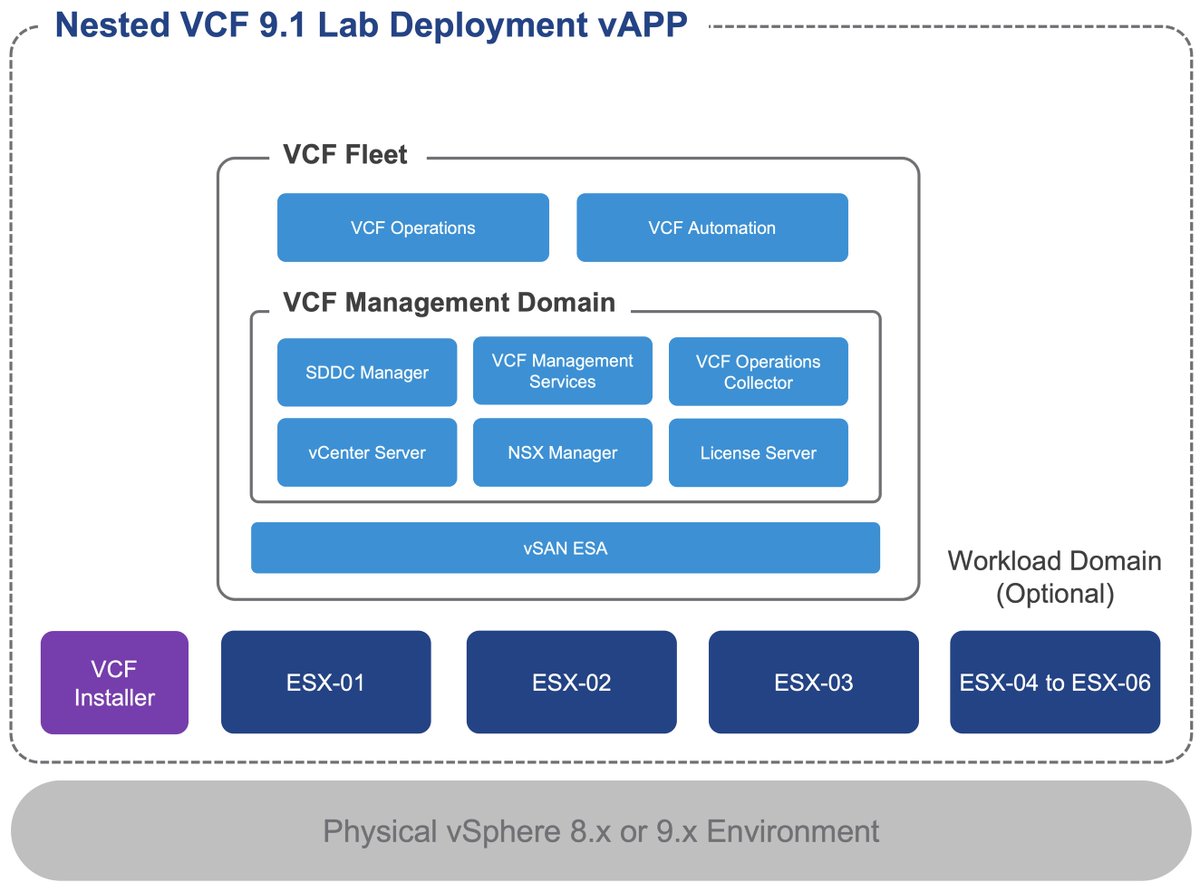
Automated nested lab deployment for VCF 9.1 is what cuts POC time from weeks to hours. The gap between "we want to evaluate" and "we have a running environment to design against" is where enterprise adoption stalls. The vAPP packaging approach making the management domain + workload domain optional is exactly the right level of flexibility for different lab use cases.
English
0
0
0
44
Adam Schmitt
Adam Schmitt@FirstWizardZed·
The repurposing ESX hosts as vSAN nodes question is exactly what every enterprise team facing Broadcom licensing pressure is working through right now. Extending existing hardware investments through vSAN retrofit is one of the most compelling TCO answers in the current environment — glad to see PM actively collecting field data on this. Completed.
English
0
0
0
38
William Lam
William Lam@lamw·
VCF Product Management would like to hear from you! 🫵 📋Short survey on forms.gle/Z911Qz4y9uZASX… re-purposing your existing ESX hosts as vSAN nodes to extend the longevity of your existing investments
English
1
5
7
706
Adam Schmitt
Adam Schmitt@FirstWizardZed·
Most enterprise teams have been avoiding VCF containerization for one reason: "We're not ready for full Kubernetes operational overhead." VCF 9.1's Container Supervisor Service just removed that excuse. You can now run containers in a VCF workload domain without deploying a full K8s cluster. What this changes for enterprise architects: — Container adoption no longer requires a K8s-ready ops team — Workload domain isolation stays clean — The path from VM-only to container-ready just got significantly shorter The "we'll do containers later" conversation just got a hard deadline. Broadcom Knight certified. Building on this now. #VCF91 #VMware #BroadcomKnight #EnterpriseIT #Kubernetes
Adam Schmitt tweet media
English
0
0
0
24
Adam Schmitt
Adam Schmitt@FirstWizardZed·
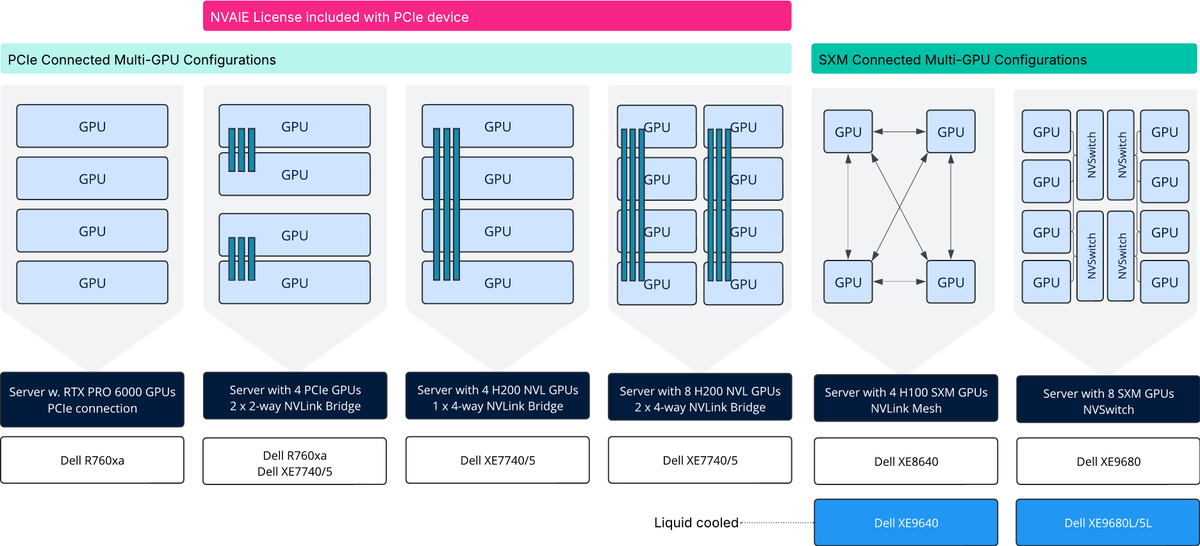
The NVLink vs PCIe decision gets treated as a hardware procurement question. It’s actually an architecture decision. For VCF workload domain deployments running GPU-intensive inference inside VKS, the topology you choose here defines your workload placement constraints before you’ve written a single policy. Great series Frank.
English
0
0
0
10
Frank Denneman
Frank Denneman@FrankDenneman·
Part 10 of Architecting AI Infrastructure is live. Multi-GPU inside a single host is not just about adding more GPUs. Once a model spans GPUs, communication becomes part of the runtime path. This article walks through the full spectrum: PCIe NVLink domains 4 GPU NVLink 8 GPU split domains HGX with NVSwitch From independent accelerators to a unified GPU fabric inside a single server. Understanding this is key to scaling distributed inference and MoE models. Part 10: Understanding Multi-GPU Topologies Within a Single Host: frankdenneman.ai/2026-03-27-Und…
Frank Denneman tweet media
English
3
49
305
13.9K
Adam Schmitt
Adam Schmitt@FirstWizardZed·
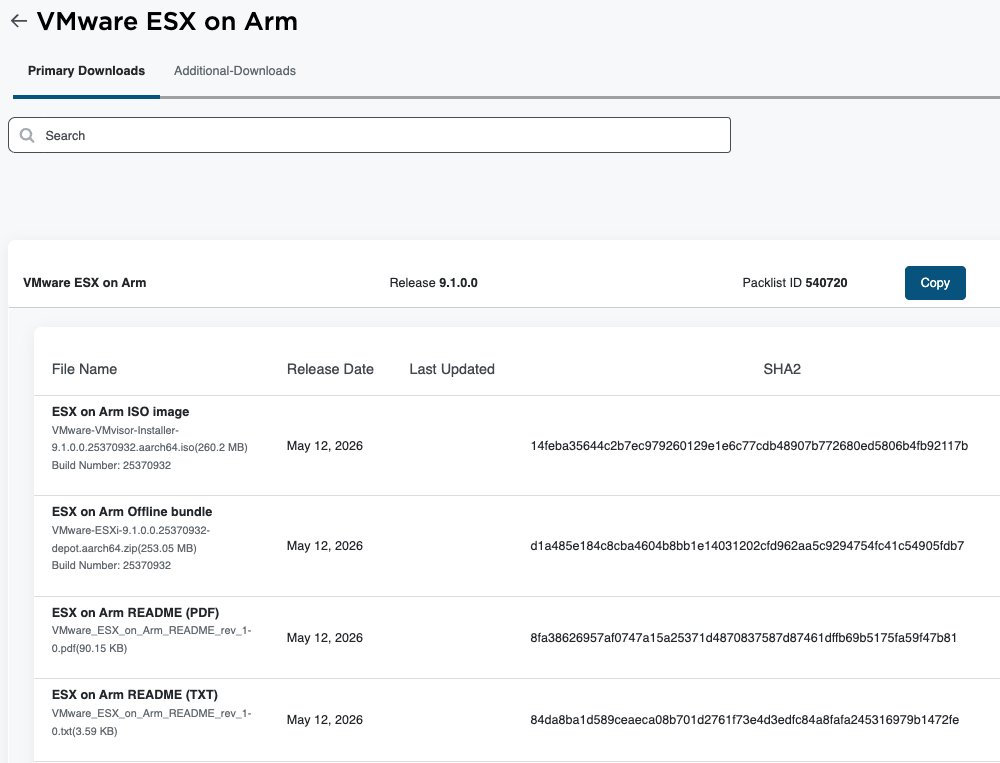
ESX on Arm 9.1 on Nvidia Grace is the combination I keep getting asked about for on-prem AI inference at the edge. The CPU+GPU unified memory architecture on Grace changes the workload density conversation entirely compared to traditional x86 + discrete GPU configs. Good to see the hardware list expanding.
English
0
0
0
85
William Lam
William Lam@lamw·
👋 ESX on Arm 9.1 💪 For those asking, we support the following hardware: 🔸@HPE RL300 Gen 11 w/Ampere Altra & AltraMax 🔹@GIGABYTEUSA w/Ampere Altra & AltraMax 🔸@Supermicro ARS-221GL Single or Dual Nvidia Grace (C1,C2) #VCF91
William Lam tweet media
English
3
10
25
1.4K
Adam Schmitt
Adam Schmitt@FirstWizardZed·
The Container Supervisor Service without requiring K8s is the feature that changes the adoption conversation for teams caught between "we need containers" and "we’re not ready for full K8s operational overhead." Workload domain isolation gets cleaner too — a lot of the complexity that made container-only deployments awkward in earlier VCF releases just went away. Slick is the right word.
English
0
0
1
50
Adam Schmitt
Adam Schmitt@FirstWizardZed·
Duncan and Pete’s vSAN + VCF 9.1 episode is required listening before any storage design conversation right now. The topology-aware scheduling story changes how you think about workload placement across fault domains — especially if you’re running AI inference workloads inside VKS. Good share.
English
0
0
0
9