Fitzpatrick Laboratory

3.3K posts

Fitzpatrick Laboratory banner
Fitzpatrick Laboratory

Fitzpatrick Laboratory

@FitzpatrickLab

Assistant Professor @ZuckermanBrain @ColumbiaBiochem. Lab uses cryo-EM & biophysics to study the cellular, molecular, and structural basis of neurodegeneration.

New York, NY Katılım Ocak 2013
5K Takip Edilen3.4K Takipçiler
Fitzpatrick Laboratory retweetledi
Molecular Cell
Molecular Cell@MolecularCell·
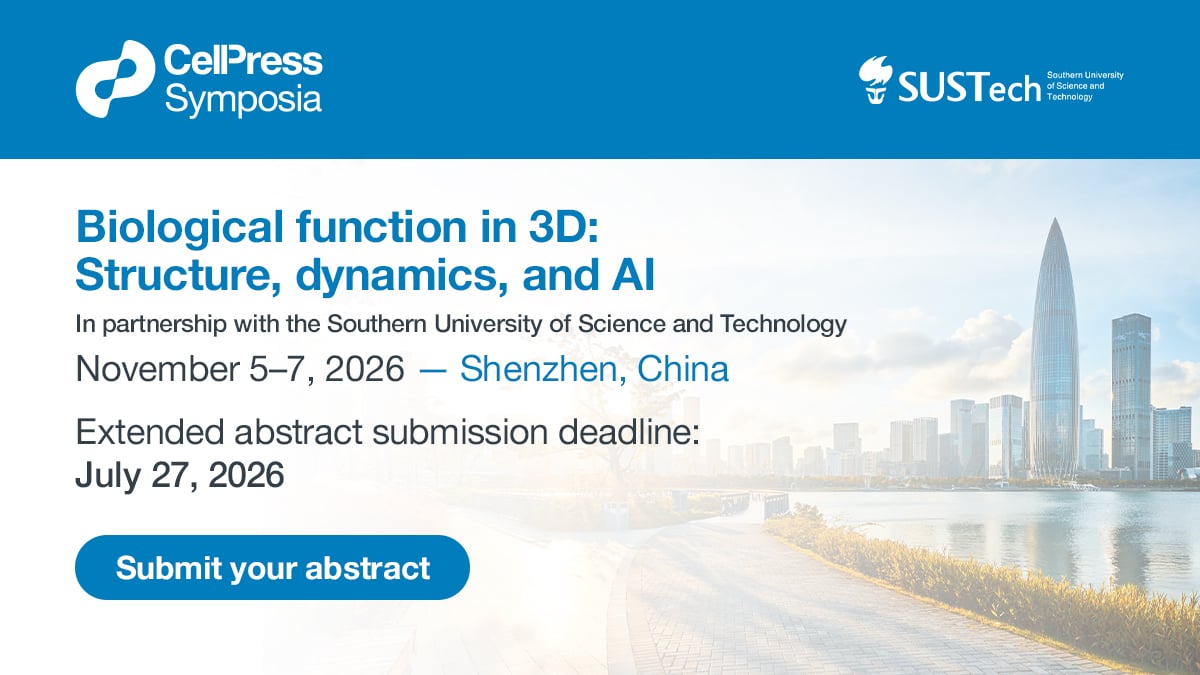
Join speaker Chi-Min Ho @Columbia at #CS3Dbiologicalfunction2026. Chi-Min’s research integrates structural biology approaches to investigate host-pathogen interactions in malaria parasites. Extended abstract deadline: July 27, 2026 hubs.li/Q04p7b7x0
Molecular Cell tweet media
English
0
7
12
3.3K
Fitzpatrick Laboratory retweetledi
Chi-Min Ho
Chi-Min Ho@mimi1inh·
What a beautiful artistic imagining of our structure! I really love your take on our boat theme ❤️⛵ Thank you so much for featuring us @fenguita, we in the @cmholab are huge fans of your work!!
Francisco J. Enguita@fenguita

CryoEM structure of the Plasmodium falciparum moving junction staple - PfAMA1, PfRON2, PfRON4, PfRON5 (PDB code: 9YGJ) Paper: cell.com/cell/fulltext/… #molecularart #plasmodium #membrane #cryoem #RON #AMA1 @mimi1inh @dzine_ai @proteinimaging behance.net/gallery/252146…

English
1
3
24
2.2K
Fitzpatrick Laboratory retweetledi
Chi-Min Ho
Chi-Min Ho@mimi1inh·
Incredibly proud of Messi Haile @mehsehret, a @cmholab founding member, for her beautiful work uncovering the inner workings of a central piece of the malaria parasite invasion machinery: the malarial moving junction, out today in @CellPressNews ! tinyurl.com/4p3md2eb 🦠❄️🔬
Chi-Min Ho tweet media
English
8
35
120
6.9K
Jason Shepherd
Jason Shepherd@JasonSynaptic·
Very excited for our new paper, now out in @CellCellPress! /🧵The protein Tau forms intracellular toxic tangles in neurons in Alzheimer’s disease and Tauopathies. Tau pathology slowly spreads from cell-to-cell but the mechanisms of Tau transmission are not clear. /1
Jason Shepherd tweet media
English
33
96
425
48.5K
Jason Shepherd
Jason Shepherd@JasonSynaptic·
@FitzpatrickLab Thanks! That paper is coming out online Monday in Cell. Looking forward to getting the final version out.
English
1
0
2
197
Fitzpatrick Laboratory retweetledi
So Lab
So Lab@SpermnOocyte·
Why 50% of human fertilized eggs fail to complete pre-implantation development? Latest work from my lab in @CellCellPress now clarifies the two causes that contribute to the low efficiency of early human embryos and provides one of the solutions. (1/7) doi.org/10.1016/j.cell…
English
5
80
338
59.5K
Fitzpatrick Laboratory retweetledi
Matthias Mann Lab
Matthias Mann Lab@labs_mann·
Interactome mapping has been stuck at a few hundred baits over months. HIP-MS changes the regime: ~10,000 pulldowns/week at 500 samples/day, fully automated. A new era for interactomics — and a precursor to high-throughput proteomics writ large. doi.org/10.64898/2026.…
English
1
23
91
7.8K
Fitzpatrick Laboratory retweetledi
Jacob
Jacob@JacobMolBio·
Here's an ESMFold2 demo run by AI agents on Modal for designing potential GLP-1 receptor binders. This test focused on the GLP-1R extracellular domain where semaglutide/Ozempic binds. It measured how well each design recovered the residues that semaglutide contacts. Codex made this neat presentation of the demo with autonomous use of ChimeraX and ElevenLabs.
Thomas Hayes@THayes427

I’m so excited about the launch of ESMFold2, ESMC, and the new ESM Atlas. This was a massive team effort, and I’m grateful to have worked with such an incredible group @biohub. A headline result I’m especially excited about: ESMFold2 can design minibinders and antibodies with nanomolar affinity, target selectivity, and functional activity against therapeutically relevant targets. Today, we’re sharing the full binder design protocol.

English
3
20
139
19.2K
Fitzpatrick Laboratory retweetledi
Polly Fordyce
Polly Fordyce@fordycelab·
Characterizing AI-designed proteins requires quantitative biochemistry at massive scale. Enter Amplicon/Protein Bead Display (APB-Display), a fully in vitro platform that quantifies Kd's for >100,000 variants in <3 days (preprint link below!) @Stanford_ChEMH @czbiohub (1/n)
Polly Fordyce tweet media
English
3
97
442
63.6K
Fitzpatrick Laboratory retweetledi
Jonathan Kipnis 🟦
Jonathan Kipnis 🟦@jonykipnis·
Papers like this are why science remains endlessly exciting. This one made me feel the same wonder I felt at 15 when I first discovered science. || Homing pigeon navigation relies on superparamagnetic macrophages under overcast conditions | Science science.org/doi/10.1126/sc…
English
1
38
212
15.7K
Fitzpatrick Laboratory retweetledi
Benetton
Benetton@benenen12345·
クライオ電顕データセット解析の自動化 CryoSPARC上での生データの撮影像から高分解能の密度マップ生成までの過程を自動化 対象としたGPCRのデータセットのうち8割で分解能が向上 本論文でのパイプラインはダウンロードして利用可能とのこと #BNTNJC biorxiv.org/content/10.110…
Benetton tweet media
日本語
0
23
108
7.1K
Fitzpatrick Laboratory retweetledi
Ruslan Rust
Ruslan Rust@rust_ruslan·
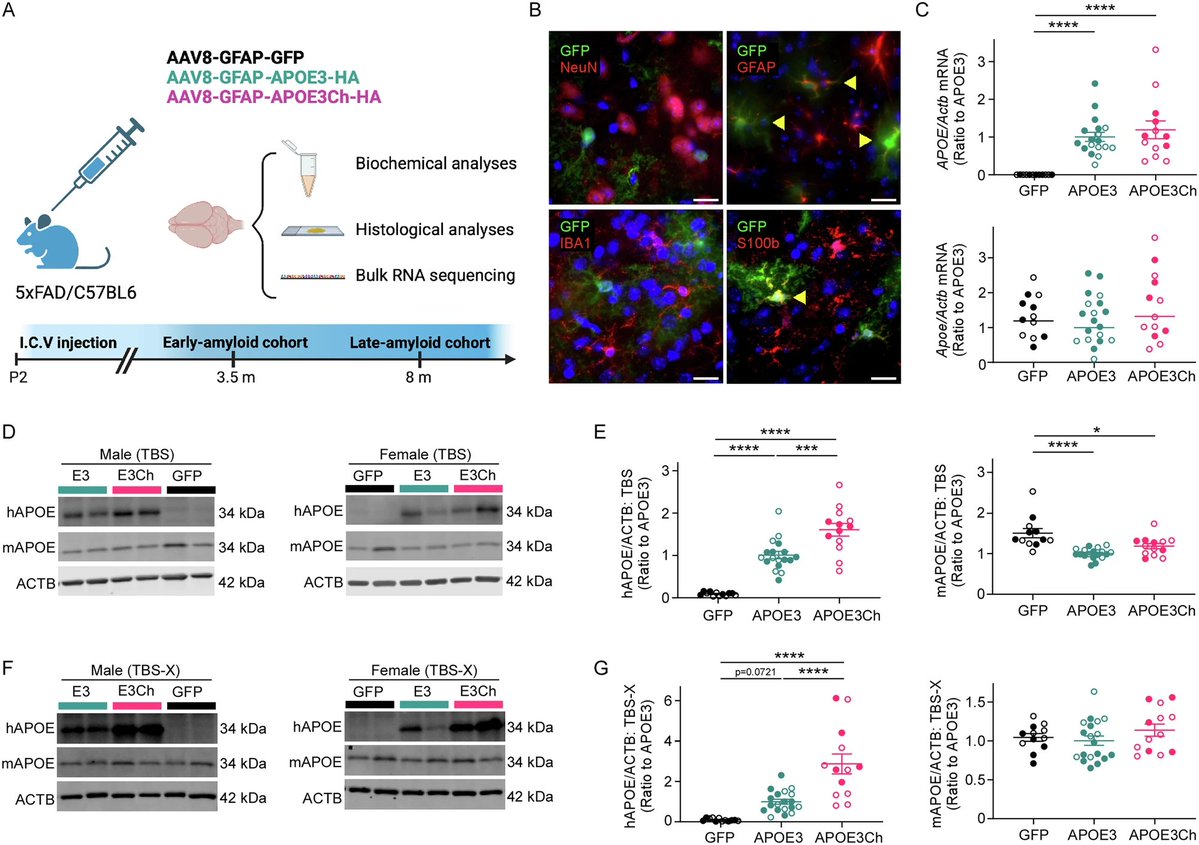
The authors show that a rare APOE3 Christchurch (APOE3Ch) variant (which is linked to protection in familial Alzheimer’s disease) reshapes amyloid pathology when expressed only in astrocytes. Instead of reducing plaques overall, it shifts Aβ toward more compact and less toxic forms, lowers oligomeric Aβ, and reduces neuroinflammatory responses. This highlights APOE3Ch as a potential modifier of disease toxicity rather than just amyloid burden. See full study here: #Sec17" target="_blank" rel="nofollow noopener">nature.com/articles/s4139…
Ruslan Rust tweet media
English
0
7
32
2.4K
Fitzpatrick Laboratory retweetledi
Bo Wang
Bo Wang@BoWang87·
New @CellCellPress paper from Bergles lab at Johns Hopkins just built the most comprehensive map of brain myelin ever made — every oligodendrocyte, across the entire mouse brain, across the lifespan. The scale: >10 million cells per brain, terabyte-scale 3D lightsheet volumes, registered to the Allen Brain Atlas across 417 regions from 2 months to 2+ years of age. The technical stack: Custom tissue clearing (CUBIC-L + SHIELD + uRIMS with 40% urea) to preserve endogenous fluorescence. 3D Mask R-CNN for instance segmentation — not just semantic, instance — so it can distinguish individual cells within dense clusters at scale via overlapping sliding windows. Vision Transformer to classify newly-formed vs. mature oligodendrocytes using soma morphology. All cross-referenced against Allen ISH transcriptomics and MICrONS serial EM. What they found: Oligodendrocyte density varies 10,000-fold across brain regions. Left-right hemispheres: r=0.99. Sex: no significant difference. Strain: matters. The brain never stops myelinating. New oligodendrocytes are still being generated in 2-year-old mice. Prefrontal cortex L6 shows the fastest rates of new myelination into old age — the circuits for executive function keep rewiring throughout life. After demyelination, L4 sensory cortex is the most resilient — oligodendrocytes survive at higher rates. The hippocampus loses nearly everything and barely recovers. Degree of injury doesn't predict rate of recovery. These are independent axes. The Alzheimer's result is the most surprising: Dense-core plaques dominate in cortex and hippocampus. Diffuse/small-core plaques dominate in white matter fiber tracts. Old assumption: diffuse plaques are "less toxic." The data says the opposite — small plaques in fiber tracts cause more myelin loss per plaque than dense-core plaques in gray matter. Plaque load and oligodendrocyte loss are essentially uncorrelated (ρ=0.22). The damage is plaque-type and location specific, not load-dependent. For MS and AD research: you can't read off white matter injury from gray matter plaque burden. The pathology in fiber tracts is running on different rules. Data: bossdb.org/project/xu2024 Paper: cell.com/cell/fulltext/…
English
3
75
260
24.7K