Fizzex retweetledi
Fizzex
20.5K posts

Fizzex retweetledi
Fizzex retweetledi
Fizzex retweetledi

🎥 New video is up.
This seminar presented the results of the first multidisciplinary systematic review of 25 years of academic research on religion and peacebuilding (2001–2025).
▶️Watch here now: bit.ly/3QTVuGt

English
Fizzex retweetledi
Fizzex retweetledi

@Number10cat Or perhaps why we don’t have to suffer bankruptcy if we require medical care.
Thank you Nye Bevan.
A special thanks to everyone who works for our wonderful #NHS 👏👏👏

English
Fizzex retweetledi

“We’re only going to react when the sea level is rising in New York, London and everywhere else, but by then it’ll be 200 years too late,” says renowned conservationist @PaulNicklen
prospectmagazine.co.uk/views/people/7…
English

Fizzex retweetledi

This is the moment a lot of people turned their backs on Labour forever.
Declassified UK@declassifiedUK
The ICC has issued arrest applications for Netanyahu and Gallant for the use of "starvation as a method of war" including "cutting off cross-border water pipelines from Israel to Gaza". Keir Starmer said "Israel does have that right" to cut water and power off from Gaza 👇
English

Fizzex retweetledi

Angles, Saxons, and other groups from northern Europe began arriving in Britain during the 5th century, after Roman administration ended around 410 CE.
They came from areas around present-day Denmark, northern Germany, and the North Sea coast, crossing into eastern and southern Britain. Over time, these settlements expanded inland and developed into early Anglo-Saxon kingdoms.
The overall pattern reflects a gradual process over several generations, with shifting areas of control rather than fixed borders. Brittonic-speaking populations remained in much of the west and north, and settlement involved a mix of migration, local continuity, and cultural change rather than a single wave of replacement.
English

@amazingmap The Norman invasions from Normandy was by the same people really. Vikings that had conquered Normandy.
English are really mostly of norsemen ancestry. All Germanic.
English
Fizzex retweetledi

New #BubbleFox #Comic drops tomorrow! But you can still see how Bubble dropped at the end of the current story!
bubblefox.thecomicseries.com/comics/1417

English
Fizzex retweetledi

⏰ TOMORROW: In this book talk, Reid Pauly presents a fresh explanation for the success – and failure – of coercive demands in international politics.
🗓️ 07 May | 🕑14:00-16:00 | 📍Strand Campus
🔗 ow.ly/TiQy50YpEQw

English
Fizzex retweetledi
Fizzex retweetledi
Fizzex retweetledi
Fizzex retweetledi

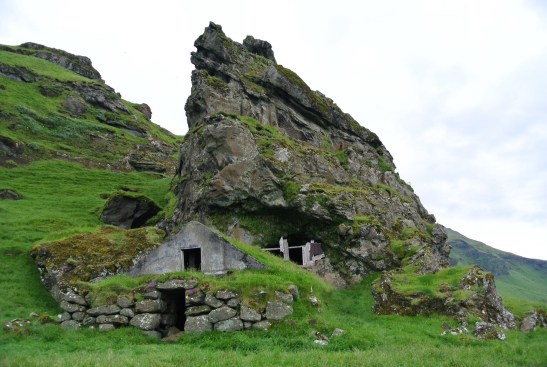
When the vikings first arrived in Iceland in 9th Century CE, they discovered a coarse yet manageable new world ripe for the picking, uninhabited but for a few Gaelic monks on the southern coast. This strange, rugged land was worthy of conquering and survival over their scandinavian homeland stricken with civil strife and running short on arable land. That force of adventure, strength and resourefulness in a new land cultivated Iceland’s ancient survivalist architecture.
It was and still is a vast territory with dramatic rising glacial ranges from moonscape fields that run into coastal beaches of black sand and a land of no native timber. Where necessity became and still is the mother of invention. Homes were constructed of turf and drift wood that would wash upon the shores as well as from the endless supply of lava stones abound in the fields. Stone constrution also proved functionally sensible in this frequent earthquake prone environment, as homes could then “easily” be cobbled back together.
These buildings still exist at the ancient homestead of Keldur in Iceland’s southeastern region. This last remaining and fully intact early settlement farmstead can be found mentioned in Sagas from 12th Century CE. Traditionally a clan would head the farm with extended family living and working on site. Originally all living in the long house, there is evidence to think that a sudden and drastic climate change caused the move to smaller residential spaces to be built and long houses to be divided up to make easier to heat. Additions and improvements at Keldur had been made over the centuries, but the original main hearth room still bears the dirt floors and ancient timbers with fascinating hints of traditional communal living. A tunnel discovered in 1930’s runs from the main hearth room to the nearby small river and was thought to be for defensive purposes. Inside smaller spaces were formed originally for cooking and food storage and a connecting string of smaller turf structures served as various work and storage spaces such as a smithy, a mill, and livestock corral. Newest addition from early 19th Century remains near intact from it’s former glory, furnished with beautiful and simplistic folk furnishings and the silence combined with the spirits of those who still long remain at Keldur.
The last owner, whos family had farmed Keldur for almost two Centuries, knew of its great importance to Icelandic heritage and over the years had collected much history on the site. In 1942, he sold Keldur and his extensive collection to the National Museum of Iceland who continue to care for and manage this amazing historic site.
Upwards of 200 of these man-made caves with wooden or cobbled facades are scattered about 90 farms in the region used over the centuries for storing hay,corralling livestock, smithy’s and even for trade. Forty one of these caves are now protected sites, but many still in use today. We stopped roadside on HWY 1 at Rútshellir, and explored this t-shaped ‘building’. The front entrance to the turf structure is a feeding area for sheep, then stepping up into the cave (approx 6’ft tall and 10 ft wide) where they take shelter. Walking up the left side exterior is an entrance to another connecting cave space much smaller and where a smithy had a shop for many years. Yet another example of Iceland’s people understanding and using Mother Nature to their benefit through their ancient survivalist architecture.
#archaeohistories

English
Fizzex retweetledi
Fizzex retweetledi