Florian M. Kern

4.4K posts

Florian M. Kern

Florian M. Kern

@FlorianMKern

Cheerful Economist, MoPo implementation nerd, Ted Lasso Fan, Techno-crat 🪩 Views must not be mistaken as the Bundesbank's, but are personal

Frankfurt am Main, Deutschland Katılım Temmuz 2015
1.2K Takip Edilen4.2K Takipçiler
Sabitlenmiş Tweet
Florian M. Kern
Florian M. Kern@FlorianMKern·
Zoltan Pozsar is one of the world’s most respected money market specialists and predicted the repo crisis in September 2019. Here he is getting it wrong, as he misses key aspects about the gold market and MoPo implementation in his analysis (1/18)🧵
Joe Weisenthal@TheStalwart

FROM THE NEW ODD LOTS: @tracyalloway and I talked with the legend, Zoltan Pozsar about the state of the world. It was a wide ranging conversation, but he believes this moment could be the beginning of the end for US dollar global dominance. bloomberg.com/news/articles/…

English
25
303
1.1K
0
Florian M. Kern
Florian M. Kern@FlorianMKern·
@schieritz 🇩🇪 stagniert trotz Außenüberschuss von 4% — weil die Binnennachfrage schwach ist. Statt zu diskutieren, wie wir Konsum und Investitionen erhöhen und den Kuchen größer machen, sprechen wir darüber, wie wir einen kleineren Kuchen aufteilen (höhere Steuern vs niedrigere Ausgaben)
Deutsch
3
3
9
600
Florian M. Kern retweetledi
Philippa Sigl-Glöckner
Philippa Sigl-Glöckner@PhilippaSigl·
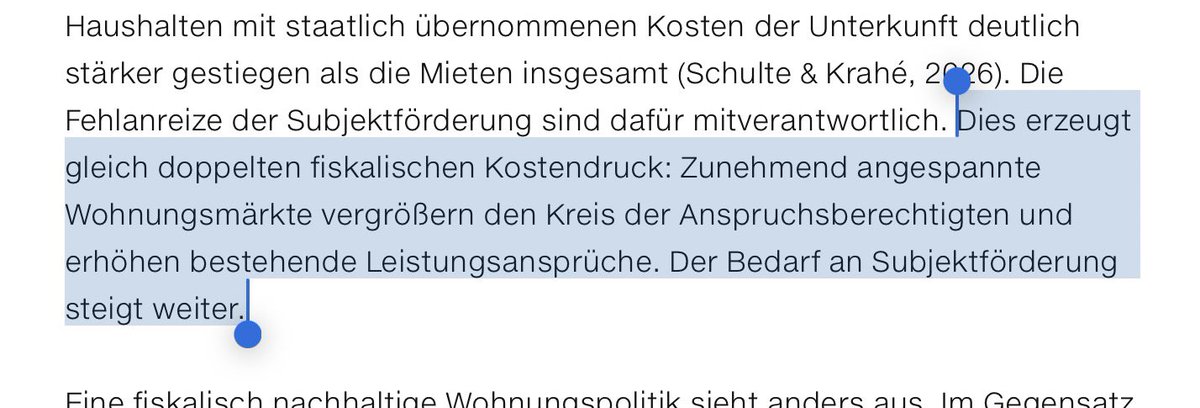
Wie aus dem Ziel besonders sparsam zu sein eine ganz besonders teure Wohnungspolitik wurde 👇von @selschulte @maxkrahe wirtschaftsdienst.eu/inhalt/jahr/20…
Philippa Sigl-Glöckner tweet media
Dezernat Zukunft @dezernatzukunft.bsky.social@DezernatZ

Was in der Wohnungspolitik falsch läuft und wie es besser ginge – darüber schreibt @selschulte im @Zeitschrift_WD. Ein Must-read für alle, die wohnen. Link zum Artikel im 1. Kommentar 👇

Deutsch
2
4
17
3.6K
Florian M. Kern retweetledi
Michael Pettis
Michael Pettis@michaelxpettis·
1/9 Brilliant article by Martin Wolf on global imbalances. Wolf is one of the few economists who have an intuitive sense of the global economy as an economic system, which means he is also one of the few who understands how global imbalances work. ft.com/content/72ab51…
English
10
174
722
85.1K
Florian M. Kern retweetledi
Michael Pettis
Michael Pettis@michaelxpettis·
Germany's reluctance to invest in productive infrastructure isn't a sign of thriftiness, nor does it help Germany keep its debt burden low. If the investment is productive – i.e. if it creates more economic value than it costs in economic resources – then almost by definition the investment will cause GDP to rise by more than the debt rises, and German's associated debt burden will actually decline. The point is that if German infrastructure is in bad enough shape to have become a constraint on productivity growth – and almost everyone agrees that it is – then borrowing to fund infrastructure investment will not only accelerate productivity growth, it will also reduce the debt burden by creating more than enough additional real income to service the additional debt. Granted that it is difficult for a large economy to change institutions and growth models, including fear of debt, that have been in place for decades, but sclerosis isn't strategy, and as East Asian economies fight to continue increasing their share of global manufacturing, while the US works to reverse the decline in its own manufacturing share, it is precisely countries like Germany, for whom manufacturing currently represents a much larger share of the economy than in the rest of Europe, that will pay the highest cost for doing nothing. wsj.com/world/europe/g…
English
31
137
517
52.9K
JohannesBorgen
JohannesBorgen@jeuasommenulle·
16) Bottom line: CMDI is a real regulatory achievement, 27 hierarchies becoming one. The cost: SP is now unambiguously mezz, derivatives remain unclear & banks that "optimized" MREL with deposits have until 2029 to issue more SP/SNP
English
9
3
56
4K
JohannesBorgen
JohannesBorgen@jeuasommenulle·
1) You might have missed it but the EU just published the CMDI package – one of the most consequential pieces of bank regulation. It fixes something that has been really embarrassing about European banking regulation for more than a decade. And the impacts are huge.
English
5
45
281
60.4K
Florian M. Kern
Florian M. Kern@FlorianMKern·
BoE zu Leistungsbilanzungleichgewichten: "IMF scenario analysis suggests that a well-designed combination of policy adjustments across the US, the euro area and China could raise global GDP while bringing current account gaps...closer to warranted levels" bankofengland.co.uk/bank-insights/…
English
0
1
4
177
Florian M. Kern retweetledi
Ricardo Reis
Ricardo Reis@R2Rsquared·
** Reducing the Fed's balance sheet ** Ten days ago, I was part of a discussion at @BrookingsInst on how to shrink the Fed's balance sheet with Darrell Duffie and @WenxinDu. I tried to lay out the discussion in terms that, hopefully, clarify it to a broader set of economists. Here are the main points: 🧵
English
2
57
221
27.1K
Florian M. Kern retweetledi
Philippa Sigl-Glöckner
Philippa Sigl-Glöckner@PhilippaSigl·
Stattdessen: mehr Energiesubventionen, teure ungezielte Maßnahmen, vermutlich eine Umsatzsteuererhöhung (dezernatzukunft.org/droht-jetzt-di…). Die Umsatzsteuererhöhung träfe den Binnenkonsum – den wir so dringend brauchen, um weniger von den Exporten abhängig zu sein. /6
Deutsch
1
1
16
796
Florian M. Kern
Florian M. Kern@FlorianMKern·
@GitaGopinath In democracies, parliament is "responsible" for the budget—and thus the deficits. The more interesting question is whether and how the reserve currency status changes the trade-offs behind the parliament's choices. Would love to read your view!
English
0
0
0
69
Florian M. Kern
Florian M. Kern@FlorianMKern·
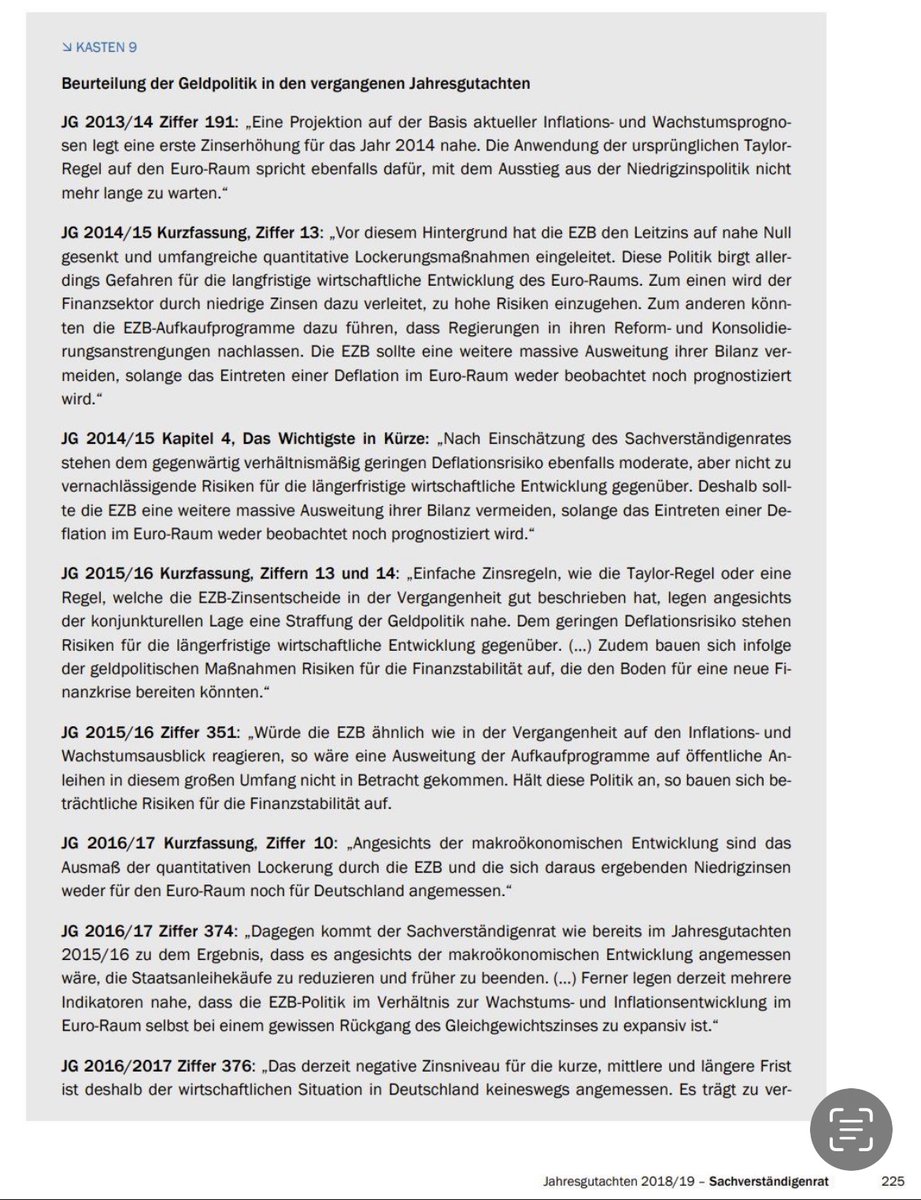
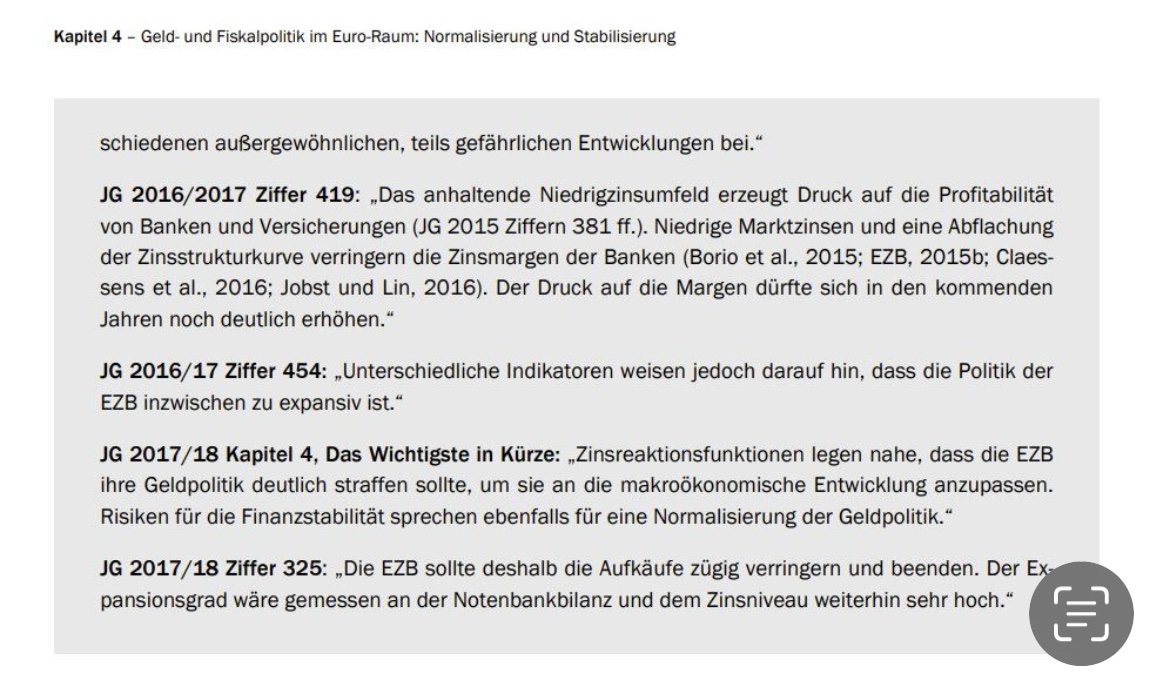
@VeniVidi_Victor Die Kritik an der Geldpolitik war dabei aber nicht "ordnungspolitisch" begründet. Wenn der SVR bei der Geld- und Fiskalpolitik einen bias hatte, dann einen neoklassisch-hawkischen - er gab Risiken für Abweichungen vom Produktionspotenzial nach oben relativ gesehen mehr Raum.
Deutsch
0
0
0
17
Victor 🇪🇺
Victor 🇪🇺@VeniVidi_Victor·
@FlorianMKern Nicht zu vergessen die wiederholten Warnungen vor Inflation und Mahnungen zu strafferer Geldpolitik seit 2014 (!)
Victor 🇪🇺 tweet mediaVictor 🇪🇺 tweet media
Deutsch
1
0
0
20
George Selgin
George Selgin@GeorgeSelgin·
@Brad_Setser But how many of these interpretations allow for the possibility of a balance of payments “crisis” under a floating rate regime?
English
2
0
2
236
George Selgin
George Selgin@GeorgeSelgin·
This isn’t a matter of interpreting section 122: it’s a matter of understanding what a “balance of payments deficit” means. And it isn’t just the WSJ that says it means something that can’t occur in a floating rate regime. 1/2
Brad Setser@Brad_Setser

I equally don't agree with those who interpret 122 in a way that suggests there can be no BoP surpluses or deficits in a floating exchange rate ... that to me as unfortunate echos of the IMF's decision to drop external debt as a variable in its debt sustainability analysis 2/2

English
5
6
53
13.8K
Florian M. Kern
Florian M. Kern@FlorianMKern·
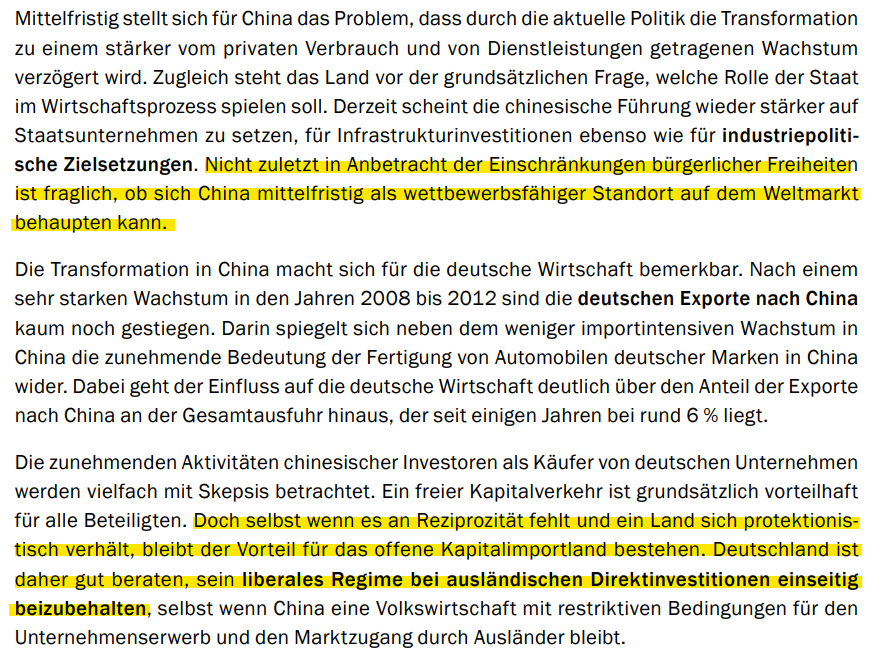
PS: Wer sich für Wirtschaftshistorie interessiert und erfahren möchte, wie es dazu kam, dass wir Industriepolitik hierzulande manchmal nicht verstehen bzw. nur als Foulspiel wahrnehmen, kann hier mehr erfahren (der Titel ist mMn etwas irreführend) (5/5) podcasts.apple.com/us/podcast/jam…
Deutsch
0
1
1
171
Florian M. Kern
Florian M. Kern@FlorianMKern·
Ebenfalls hat es dem SVR mbMn nicht geschadet, ein Mitglied zu haben, dass in Berkeley lehrt und in den USA lebt und das schon deshalb mit etwas Abstand auf die spezifisch deutsche wirtschaftspolitische Debatte blickt, die nicht immer frei von normativen biases geführt wird (4/5)
Deutsch
1
0
0
94
Florian M. Kern retweetledi
David Andolfatto
David Andolfatto@dandolfa·
To give an example, suppose new $ is created to purchase goods from Scrooge McDuck (an individual who plans to hoard $ forever). The redistribution occurs from Scrooge to the rest of society, not the other way around. You're welcome. 😇
David Andolfatto tweet media
George Selgin@GeorgeSelgin

Rothbardians can’t seem to wrap their heads around the fact that, provided it accommodates a like increase in the demand for real money balances, monetary expansion won’t raise prices, and therefore doesn’t “dilute” existing money holders’ purchasing power.

English
1
2
25
2.8K
Florian M. Kern retweetledi
Isabel Schnabel 🇪🇺🇺🇦
Isabel Schnabel 🇪🇺🇺🇦@Isabel_Schnabel·
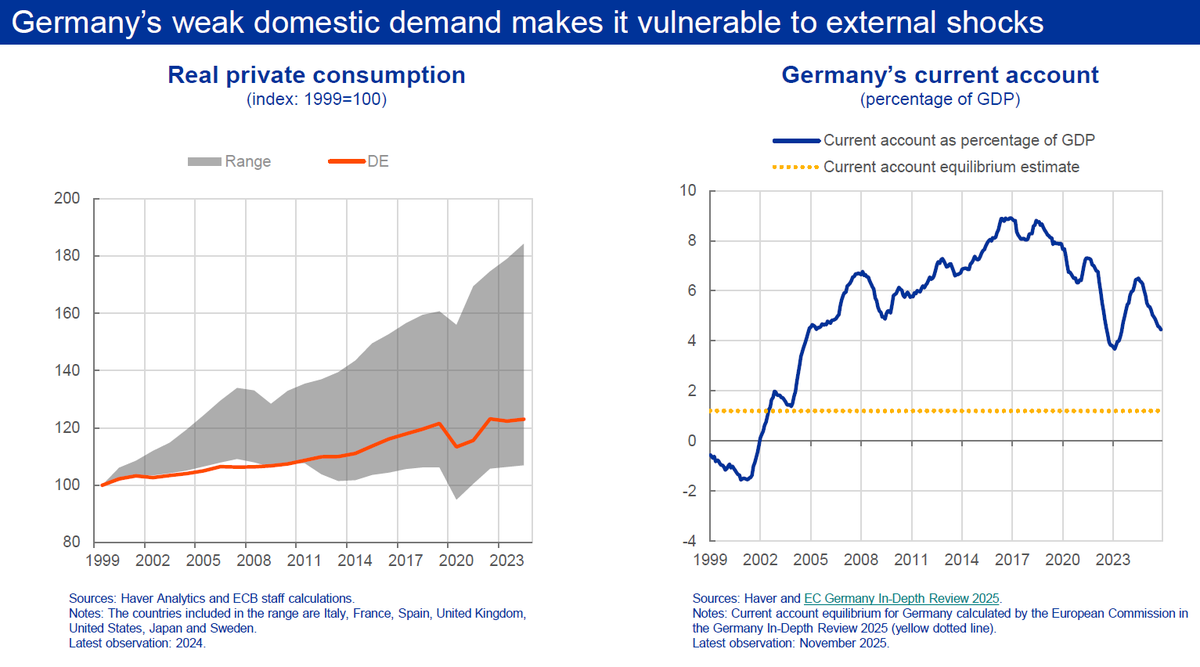
The key shortfall is a sustained weakness in domestic demand. Since 1999 real private consumption in Germany has grown by less than 1% per year. Domestic investment remained subdued as well. This is mirrored in the sharp rise in Germany’s current account surplus. 15/20
Isabel Schnabel 🇪🇺🇺🇦 tweet media
English
4
17
96
9K