

Forest_Gump (i luv this site)
2.8K posts

Forest_Gump (i luv this site)
@ForestGumpFG
United States of Murica Katılım Nisan 2023
6 Takip Edilen22 Takipçiler

Good riddance Pam Bondi! You were every bit as much of a disgrace to this nation as any AG Obama or Biden nominated. Congratulations!
English

Kind of unusual* for Trump to fire someone without denigrating them
But Pam Bondi is officially gone as Attorney General
*unusual, not unheard of. calm down

English
@IsaacKing314 Change is good. I thought you progressives loved change
English

Environmentalists should be broadly in favor of space colonization I think? There's nothing special about the moon or Mars, there are millions of other bodies just like them. What's unique is the Earth, and the longer we stay here, the more it will be changed by human activity.
English

It's kind of crazy we were doing the first manned moon flyby in over 50 years and virtually no one I know is aware it's even happening.
English
@BullandBaird Fake space fake mission fake math
English

Imagine the math required to make this guess and aim 4 people at a point in space
GIF
English
English
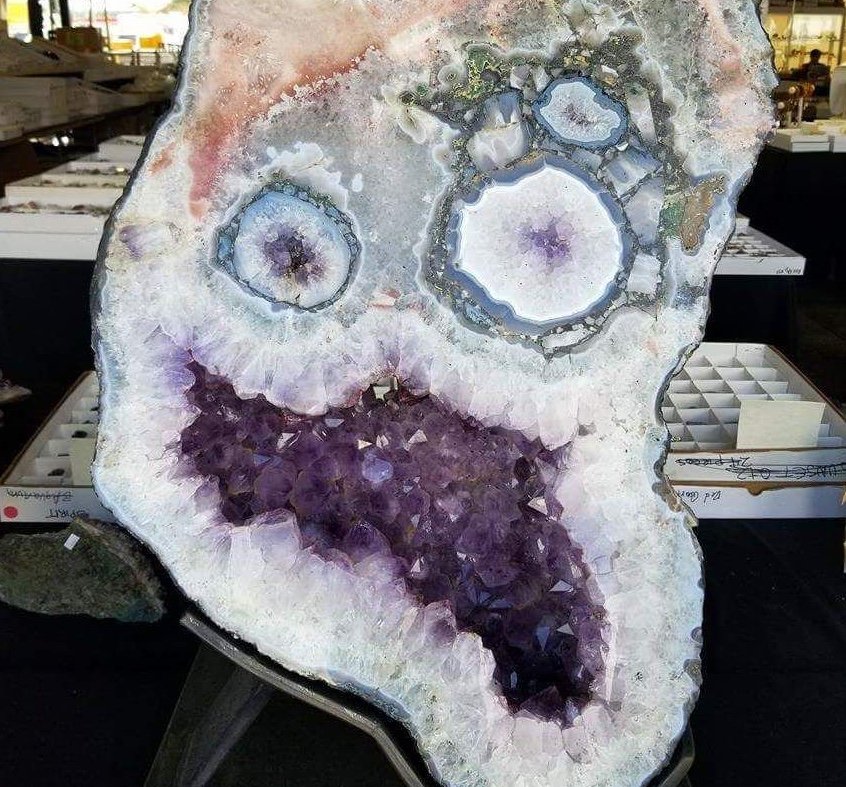
@har20942681 @No_Curve That’s a funny way to misunderstand everything….
English

If the Earth were spinning 😵💫
Why do they need to make up lies to try and prove it 🌎🤥
English
HT

@alexxstation @Bidensballsac @BuckRight According to your logic, Sullenberger's A320 should've dissolved like paper in the Hudson.
English




@snakeeyes182 @BuckRight Plane vs birds = a hole in a plane
Plane vs building with concrete = Building collapse, and creating a bomb inside it
Now, who is the idiot here?
English
@spaugh_tyl39382 @politicriminal @mkettering14 @9mmsmg And they were right. It's night time for everyone.
English

@politicriminal @mkettering14 @9mmsmg By "timezones" I simply mean the fact that it's daytime for half the earth and nighttime for half the earth at the same time
Ancient flat earth cultures like the Babylonians thought the sun went under the earth and it was nighttime everywhere all at once
English

What really sucks about the moon launch is that people are so schizo that even with a ton of evidence, they'll never believe it. There's nothing we can do to prove it, either.
They will say it's impossible because of the Van Allen belt, despite them having no clue what it is. It's just something they heard from another schizo and they repeat it.
Honestly, they'll probably double down and say the moon and space don't even exist.
English

All joking aside…It’s insane how people trust idiots over scientists. I can’t be the only one who feels this?
English
English

@ForestGumpFG @TaylorJSpivey @CanadianXer2 @benwehrman Simple. Garbage in, garbage out. Hundreds of people have “managed to go to space.”
English

Why do encyclopedias before the Antarctic Treaty was signed in the 1950s all talk about there being an edge of a DOME near Antarctica?
The Science industry was just stupid back then, and became way more smart and truthful after the Rothschilds took over everything, right?
English

@BridgesSisco @spikesguides Double it again or I’ll talk more shit.
English
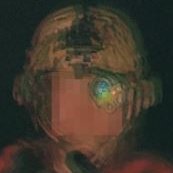
What's crazier is that they have enough funding to survive effectively forever.
Hosting costs them about 3 million dollars.
They took in $184 million in 2025.
The rest gets funnelled into suspicious "charities" and leftists projects with impossible goals.
Some might say its fraud.
∀@PeakPiece31
Wikipedia is the only website whose marketing strategy is threatening to kill itself if you don’t pay
English
English

@rosscoulthart @skdh She has come to demonize every single thing in physics and work that physicists do. She picks a paper, trashes it even tho its meant to be exploratory and research oriented. Integrity is out of the window. She's the female Eric and Avi but much worse.
English
A sign of how unwell contemporary science has become: The well-respected physicist commentator Sabine Hossenfelder @skdh has lost her academic affiliation because she dared to criticise a physicist's research. She delivers a damning condemnation:
"A lot of research and the foundations of Physics is now pseudo-science. It hasn't followed the scientific method for decades."
youtu.be/ZO5u3V6LJuM?si…
She recounts a recent incident where a physicist contacted her, upset that she had judged their research as "100% bullshit", demanded she remove the relevant video, and then complained to people he believed were her supervisors when she refused.
As a result of complaints (including from members of the community upset about her criticism of their research and academic conduct in general), her former academic institution—the Munich Center for Mathematical Philosophy— has discontinued her affiliation.
Sabine is financially independent thanks to her audience support, so she is unbothered by the loss of affiliation or attempts to pressure her; however, she is concerned that many physicists fail to recognize the fundamental problems with their field.
The broader issue in theoretical high-energy physics and foundations of physics is not new: critics like David Lindley ("the end of physics") and John Horgan ("the end of science") have pointed it out, yet the production of low-value "garbage" papers continues daily, gets published, funded, and hyped in the media.
Many experts acknowledge the problems privately but stay silent publicly to protect their reputations and funding; an exception is physicist Will Kinney, who publicly criticized inflation model-building as mostly useless mathematical exercises with no realistic expectation of correctness.
She strongly endorses Jesper Grimstrup's book "The Ant Mill," which describes the crisis in theoretical high-energy physics: no major breakthroughs in ~50 years, a lack of genuinely new ideas, and strong social pressures toward tribalism and groupthink that discourage independent thinking.
She says intelligent people are wasting their time and taxpayer money on unproductive work due to ingrained groupthink; physicists are often shocked by external criticism and refuse to accept responsibility, blaming the critic instead.
Hallmarks of pseudoscience in this area include: it looks like science from the inside (with courses, conferences, and jargon), but involves inventing mathematical "stories" or fictions about non-existent laws, new particles, forces, gravities, the beginning of the universe, multiverses, or extra dimensions—with what she says is zero empirical evidence.
She compares this to naturopathy or other 'pseudoscientific' fields for brainwashing, rejection of challenging views, and overconfidence in one's intelligence; the main difference is that quack medical claims can directly harm people, while quack physics papers mainly waste money and resources.
She highlights the core scientific failure: Science progresses by learning from mistakes and refining what counts as a "worthy" hypothesis. Post-1970s theoretical physics has not done this; instead, it continues guessing "nice" mathematics without basis, producing thousands of falsifiable but ultimately falsified predictions.
Pre-1970s physics successfully solved real problems and made correct predictions (e.g., neutrino masses, Higgs boson); since then, the method of generating hypotheses via mathematical beauty or speculation has failed to yield confirmed breakthroughs, yet the community refuses to update its standards.
The scientific method is misunderstood: it is not just "make a hypothesis and test it." Disciplines learn quality standards from past failures (e.g., random doomsday predictions are dismissed as unscientific because we know they waste time). Theoretical physics has stopped learning in this way for foundational questions.
Many subfields (e.g., high-temperature superconductors, quantum information) are doing "normal science" productively, but the problem is concentrated in areas that invent superfluous, evidence-free hypotheses with no pressing data or consistency issues to solve.
Example with dark matter: Solid evidence exists for it, and simple models suffice, but researchers unnecessarily complicate it with new "dark sectors," fifth forces, etc., that add extra assumptions and soon get ruled out—violating principles of parsimony.
She compares it to the replication crisis in psychology (p-value hacking and irreproducible results), noting that psychology at least attempted reforms, while physics has doubled down on piling up unfruitful guesses (extra dimensions, multiverses, etc.).
She proposes a solution: Journals and reviewers should adopt stricter guidelines—e.g., only publish papers where hypotheses use the minimal necessary assumptions and actually solve a real consistency or explanatory problem, rather than mathematical fiction. This could eliminate ~99% of the issue quickly, though journals resist due to incentives around publication volume and citations.
The field has turned into a self-perpetuating system of producing and rewarding mathematical fiction instead of evidence-driven progress. Public exposure and pressure for reform are needed, even if it makes people uncomfortable. This is quite an important and challenging vent from Ms Hossenfelder. Good luck to her in her new independent role. @EricRWeinstein

YouTube
English
@rosscoulthart @skdh Physics should be banned. It's devil science literally.
English
@roadhardfit @supertrucker My mirrors are fine. It's your attitude that needs to be checked
English

@supertrucker Yep.
1. Always check your mirrors, even if you're not changing lanes.
2. Don't drag your dick next to an 80,000 unstoppable force.
English

Two wrongs making an even bigger, worse wrong.
1. If you’re going to pass a semi, do so with authority, don’t just creep along side them. Lots can go wrong.
2. Driver, mirrors exist. Use them.
English
@supertrucker Next time put better music like Linkin Park
English
@MichaelEMcNeil @TaylorJSpivey @CanadianXer2 @benwehrman Ok let's assume you're right then how come no human ever managed to go to space?
English
The reason one can't see stars during the day but only at night is a thing called “dynamic range.” Neither eyes nor cameras (eyes are better than cameras, but both possess severe limitations in this regard) are capable of seeing extremely (by orders of magnitude) dim objects at the same time as the ambient light is sunlight bright.
As far as eyes are concerned, to be able to see (all of them quite dim) stars after being out in bright sunlight (far brighter than ordinary indoor lighting), one must go into near absolute darkness for minutes. Then one can go out into the night and see not only dim stars but even harder to see phenomena such as the Milky Way and Andromeda galaxies or even comets.
Surely everyone has experienced having to adjust their eyes to the dark! How quickly folks forget what they already knew as a child.
Cameras are even poorer than eyes at dealing with dynamic range. Nowadays cameras cope with their debility in this regard by taking 2 photos in quick succession using very different exposure settings, then marrying the pics together—a facility (when available) called “high dynamic range” (HDR). But HDR wasn't available earlier and hasn't been employed in space photography since—except perhaps for personal cameras aboard space station(s).
English
@ianfmusgrave @benwehrman Other people? So you admit you never beeen and trust some strangers rambling stuff? Do you also trust the bible being word of god?
English

@ForestGumpFG @benwehrman No, lots of other people have (it was scoped out as a telescope site). There is also Dome B and Dome C, similar ice mountains. en.wikipedia.org/wiki/Dome_A
English
English

@ianfmusgrave @benwehrman Have you been there? It clearly says the edge of dome meaning the edge of world, stupid. Earth isn't round like your corrupt teachers claimed to be
English
@benwehrman The dome is an ice mountain, not a dome over the earth.
English