

Q
339 posts

He probably drove her to act like this. What’s shown on camera is definitely not the full story. Men love to portray women as crazy but before the video started he was probably gaslighting her or being harmful herself. Not defending her behaviour but if she was forced to act like that there was probably a reason for it. I hope this doesn’t get in the way of her finding her bachelor.
English

NEW: ABC's "Bachelorette" caught on camera allegedly attacking her ex-boyfriend and throwing a chair at him, which appeared to hit her child.
The "The Secret Lives of Mormon Wives" star is reportedly under investigation for domestic violence.
"The Draper City Police Department in Utah [is investigating] the allegations on both sides after a recent incident," Variety recently reported.
It's unclear if the police are investigating this incident or a separate one.
Paul is set to star in Season 22 of “The Bachelorette," which reportedly starts in 3 days.
Insane.
Video: @TMZ
English


News of the year so far - add this to Clarity, and this will be too much winning! $LINK
Chainlink@chainlink
JUST IN: The U.S. @SECGov and @CFTC issue a joint interpretation officially classifying the LINK token as a digital commodity. We congratulate the SEC and CFTC on this landmark milestone that provides a clear legal framework for the institutional adoption of digital assets.
English
And the Award for the worst App experience ever for March Madness goes to.... @paramountplus
P.S. I'll be ending my $2.99 a month promotion early
English

@Vivek4real_ Seriously though, are we really quoting Michael Fucking Saylor?? He just says words to say words 99.999% of the time. No one should listen to what that ass hat says.
English


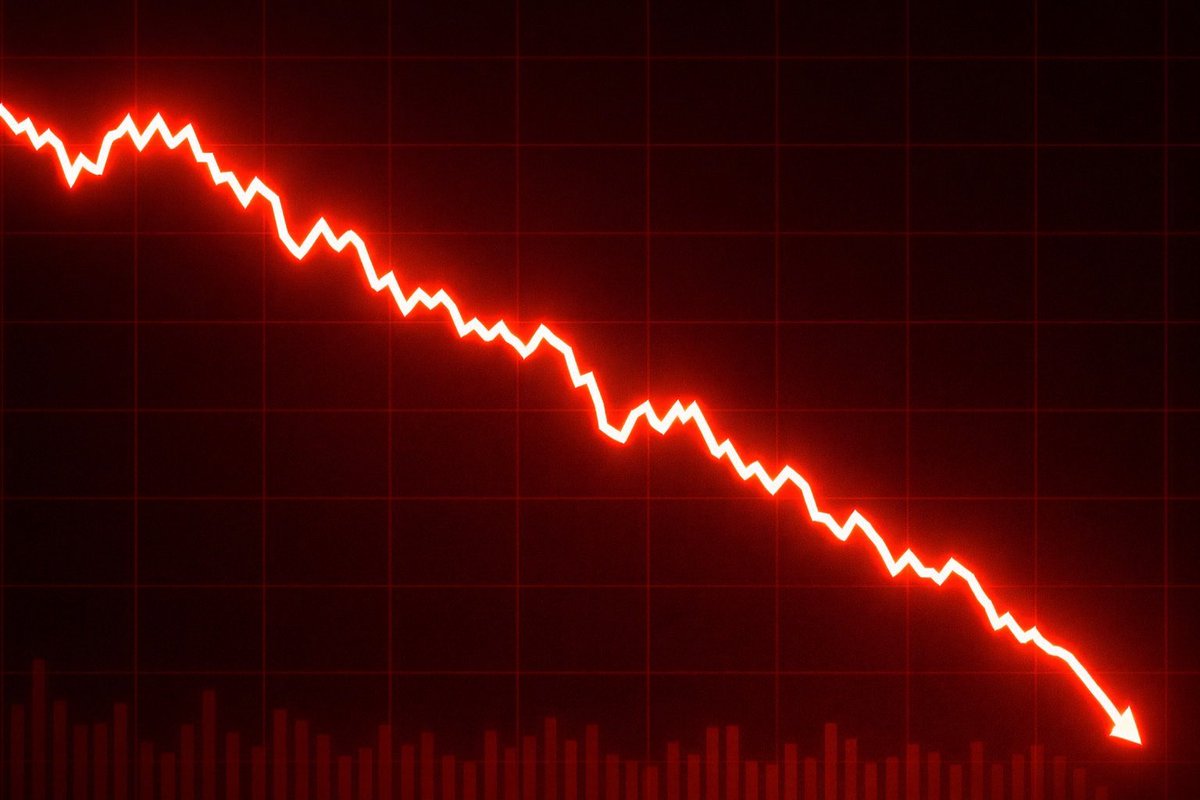
JUST IN: $155,000,000 worth of crypto longs liquidated in the past 4 hours.
English
@Books4dChurch @Xaif_Crypto Yeah bc XRP drags all other crypto down too... Its not bitcoin.
English


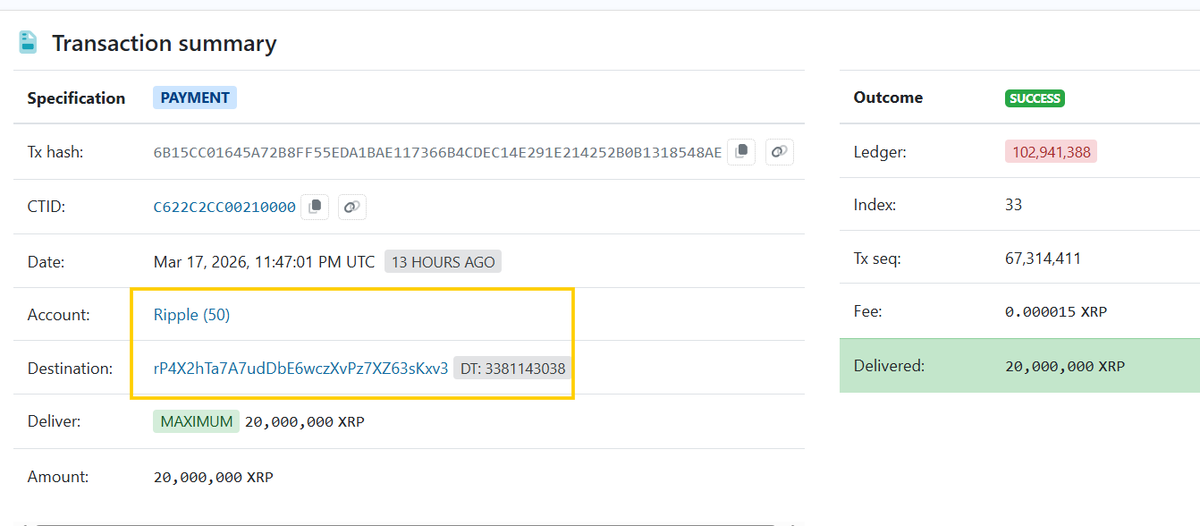
🚨 RIPPLE ALERT 🚨
Ripple just moved 20,000,000 XRP on-chain!
That's 20 MILLION $XRP transferred in a single transaction with a fee of just 0.000015 XRP.
Is something BIG coming? 🐋
English
@JMehoff247365 @NCashOfficial People like you will forever be broke. Your mindset sucks. These are buy prices. Dont buy and just bitch and see where that gets you.
English

@NCashOfficial Yeah really bullish at 9 cents and $1.35. Combined they wont touch 2 bucks by the end of the year
English

Many people will regret not owning $XRP & $HBAR
There are so many incredible options in this space, but the developments happening around these two ecosystems is just so bullish.
English
@BaggooAlan @Vivek4real_ No, no one does. Exact reason it will never even come close to that number.
English

@Vivek4real_ Does anyone want one person controlling 10% of world currency?
English
@Cole_Walmsley Or it's just a psyop that's about to have run its course and served its purpose.
English

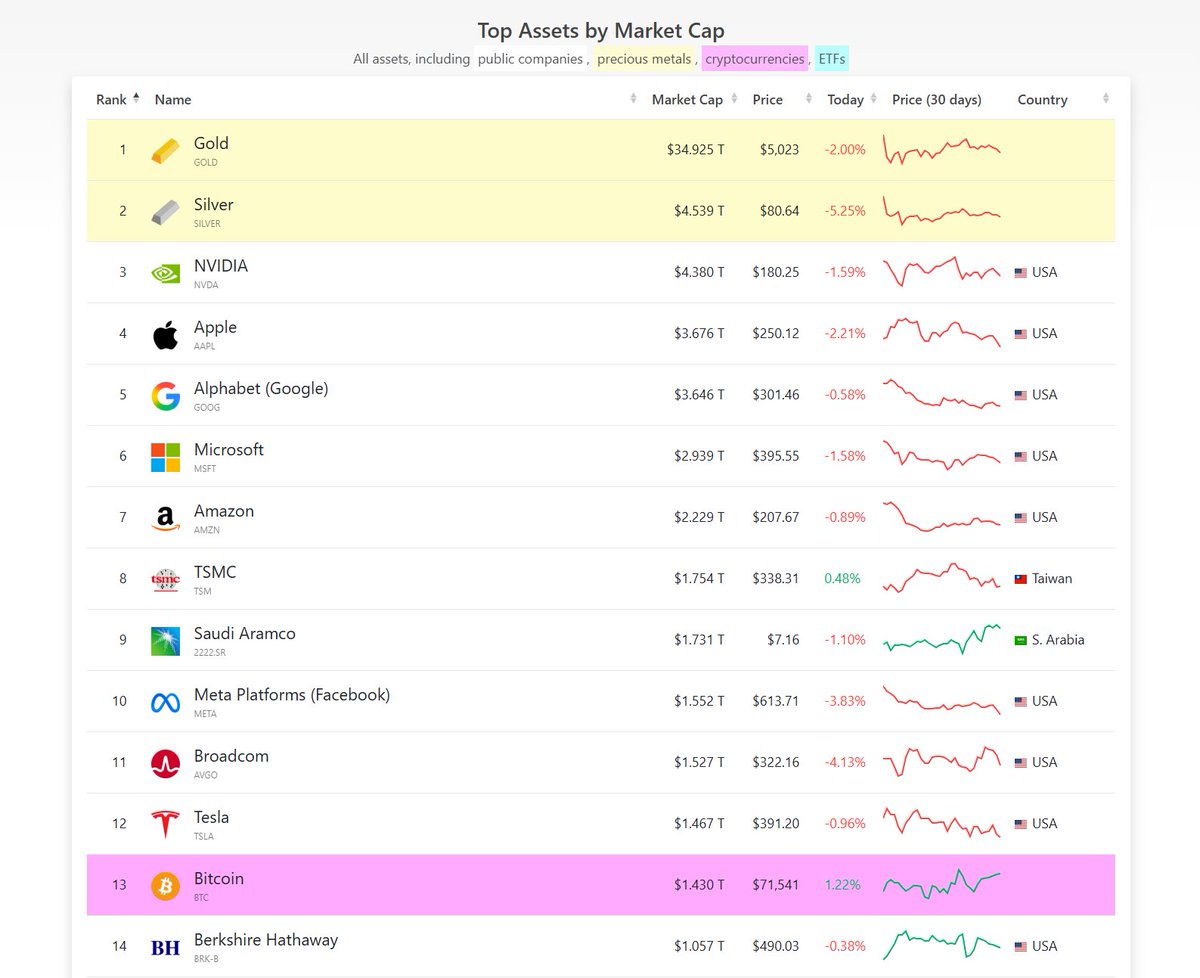
Let me get this straight.
Bitcoin started at zero. Absolute nothing. Worth less than your toenail.
No venture capital. No CEO. Never had an employee.
And it's now the 13th most valuable asset in the world?
And you think it's gonna stop here?
English
@WOLF_Bitcoin_ Fact: Someone once said the same about AOL for the internet.
English

$270 BILLION FINANCIAL ADVISOR RIC EDELMAN SAID
"The notion of Satoshi way back in 2009 that Bitcoin was going to be a new digital currency replacing fiat currencies...
That experiment has FAILED.
Nobody thinks Bitcoin is ever going to have that role."
English
English

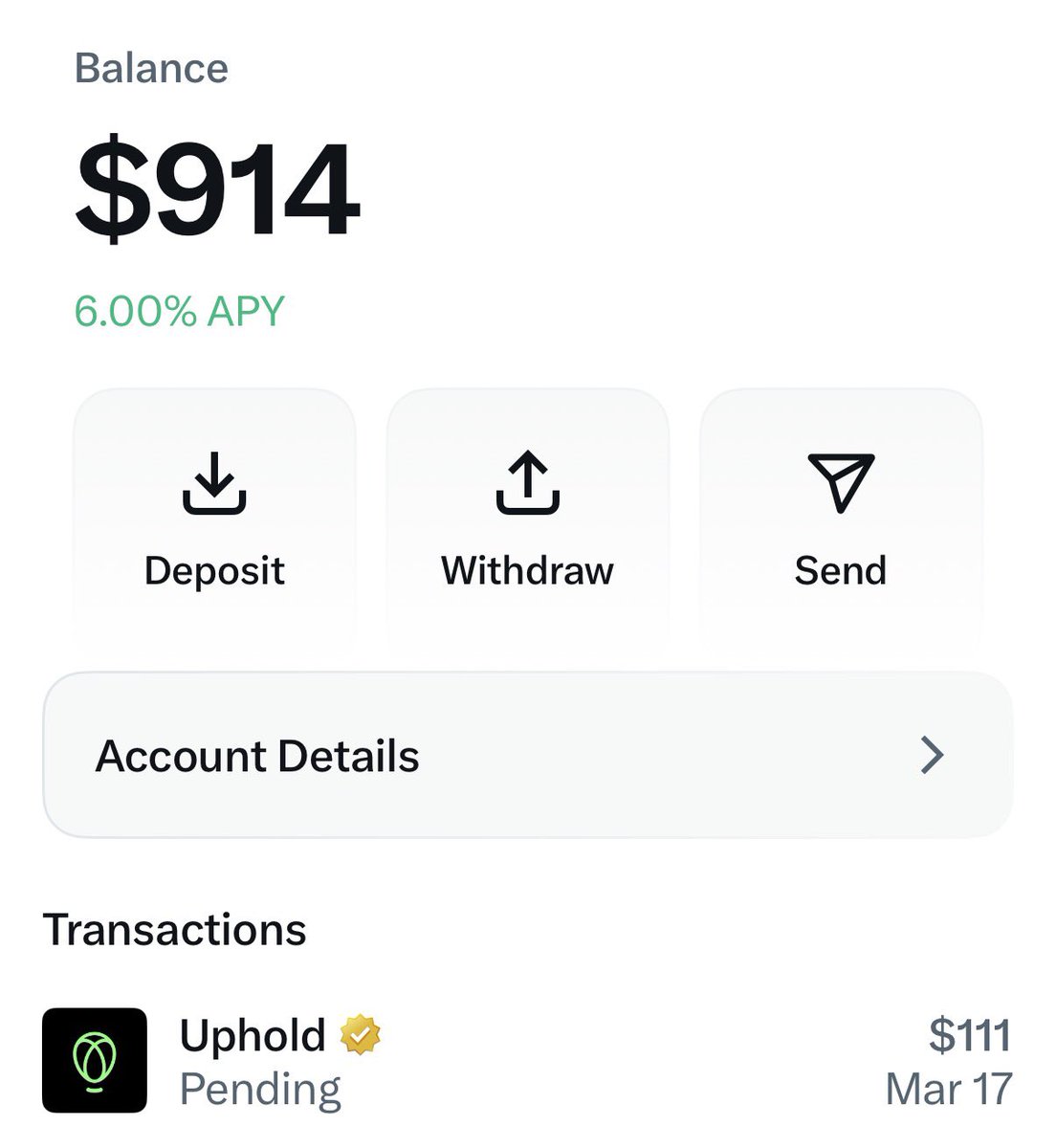
Am I the first person to buy XRP using @xmoney ? 😜
Thanks @UpholdInc 💋
Thanks @WilliamShatner
And Thank you @elon 🙏🏻
English

Someone should check in on @maxkeiser
The gap between narrative and reality is widening..
Max Keiser@maxkeiser
As I’ve been saying, the decision by the government to shut Ripple/XRP down was made long ago. Gary’s job No 1 — is shut it down. The ‘Law’ is whatever the gov says it is in this case. XRP going back to $0.01 #Bitcoin is the ONLY TRULY decentralized commodity and immune.
English
@thepowerfulHRV They realized how dumb it was to only have bitcoin in it seeing as how its useless and all.
English

What ever happened to the Strategic Bitcoin reserve?
The White House@WhiteHouse
America will be the Bitcoin superpower of the world. The Golden Age of America has BEGUN!
English

Everyone in the XRP community has heard every element of the stream of consciousness in your post from the Link community ad nauseum for the last 7 months.
I have not heard a single XRP holder say that they sold XRP because of these criticisms. Most of the criticisms are at best a combination of facts and lack of understanding interpreted based on unstated wrong assumptions and logical fallacies.
Are you another one of the gallant link marines trying to save XRP holders from the ‘scam’.
You guys have no noble motives. Move on. Save your time. It is boring.
Djani@DjaniWhaleSkul
By owning XRP, you are funding a company that has openly stated it will prioritize its equity shareholders over you. Let me explain. Ripple has spent the past decade selling XRP to retail while promoting a narrative of inevitable institutional adoption. In reality, Ripple uses the proceeds from XRP sales to acquire real companies, develop products that don’t rely on XRP, and fund Ripple Labs’ stock buybacks. All of this benefits Ripple Labs’ shareholders, with little to no value created for the XRP token itself. But it gets worse. The idea that XRP is a special bridge currency doesn’t hold up. Any token can fulfill that role. Every Layer 1 gas token already does. Being a bridge currency simply means being the most liquid and widely used trading pair on a blockchain. There is nothing inherently unique about XRP in this regard. Ripple even admitted in court filings that XRP’s bridge currency use case is demand-neutral. It does not impact price. While XRP can act as a bridge currency on its own chain, the XRP Ledger has relatively low adoption among asset issuers. It’s not even in the top 40 by usage, with less than 1% market share in real-world assets and less than 0.01% in stablecoins. Ripple itself issued 90% of its $RLUSD stablecoin on Ethereum and other non-XRP Ledger chains. They don’t even rely on their own infrastructure. No single bridge currency on a siloed blockchain solves liquidity fragmentation, especially when the majority of global value exists outside the XRP Ledger. At this point, XRP’s role appears to be that of a bank-themed meme coin that Ripple sells to retail investors to finance corporate acquisitions and stock buybacks. It’s simple: Ripple externalizes costs to $XRP holders while internalizing value for its shareholders. This is clear to anyone who has spent time critically analyzing Ripple, exploring the counter-thesis, or examining the broader competitive landscape. The only people who don’t see it are those who remain in an echo chamber and never question their assumptions. It’s not too late to step back.
English
@nicksortor @BasedMikeLee Coming from someone who lives in a strict voter ID state its insane every state doesn't have the same law.. No one, and I repeat, NO ONE in my state has EVER bitched about having to show ID to vote. Its common sense.
English

🚨 BREAKING — IT'S OFFICIAL: The SAVE America Act has ADVANCED in the US Senate, 51-48
GREAT WORK, @BasedMikeLee!
KEEP PUSHING, PATRIOTS!
We can get this done! 🇺🇸
English
@DisrespectedThe @nicksortor @GrantBushman @BasedMikeLee The fact that this is even a conversation is a joke. Pass the damn thing, its common sense..
English

English
@CatfishFishy @xrpmickle Da fuk bro... Will you LINK ass hats please shut up?? You guys are sooooo annoying.
English

@xrpmickle x.com/ChainLinkGod/s…
Thoroughly and clearly explained to you.
What does $XRP do? It helps Ripple buy companies for itself, buy its own Ripple stock stock, and buy Larsen multi million dollar lambos.
Zach Rynes | CLG@ChainLinkGod
This is factually and objectively incorrect There is no Chainlink network without the LINK token Users pay in LINK to use Chainlink services (or pay in their preferred method, which is automatically converted to LINK) and network service providers are compensated in LINK, similar to how L1 gas coins function LINK is also staked to back network security and addresses the fundamental chicken and egg problem of bootstrapping a decentralized network by funding oracle reward subsidies for nodes, analogous how blockchains use block reward subsidies for validators If Chainlink didn’t have its own native token, it would face the classic cold start problem Like any crypto, by having its own native digital asset, Chainlink is able to create a shared economic framework where network participants have direct skin in the game and financial exposure to the long term health of the network via being paid in and holding the LINK token The LINK token is a chain agnostic ERC-677 token that is cross chain transferable across 77+ blockchains Chainlink itself is an offchain protocol that enables the deployment of decentralized oracle networks (DONs), and not having a blockchain ledger does not mean there is no native token Your mental model of the crypto world is so simplistic and so outdated that the only lens you have to view crypto assets through is either “blockchain coin” or “not a blockchain coin” blog.chain.link/sustainable-or…
English



Yo @CatfishFishy let me fly you out to my office and let’s do a podcast $XRP vs $LINK debate so everyone can know all of the lies you made about xrp?
You down? The people would love it 🍿 🎥
English